Dreams, the surreal, and the unconscious
Featured Artworks
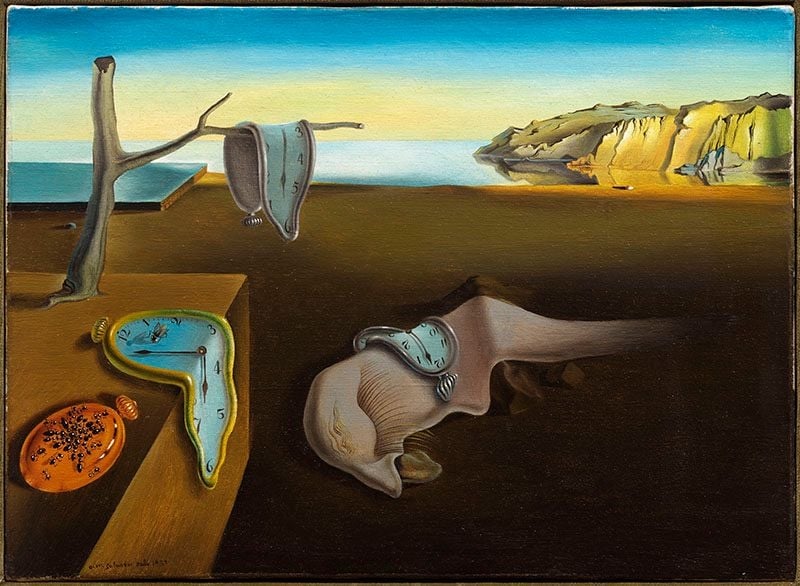
The Persistence of Memory
Salvador Dali (1931)
Salvador Dali’s The Persistence of Memory turns clock time into <strong>soft, malleable matter</strong>, staging a dream in which chronology buckles and the self dissolves. Four pocket watches droop across a barren platform, a dead branch, and a lash‑eyed biomorph, while ants overrun a hard, closed watch—a sign of <strong>decay</strong> and the futility of mechanical order <sup>[1]</sup><sup>[2]</sup>.
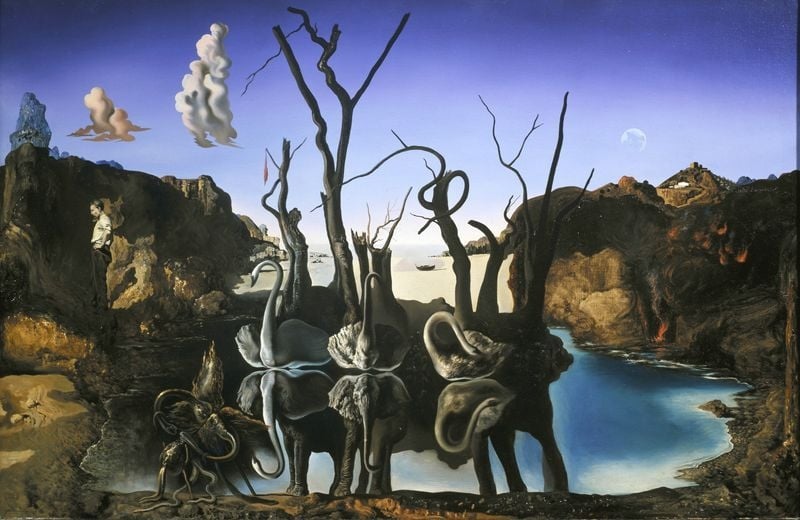
Swans Reflecting Elephants
Salvador Dali (1937)
Swans Reflecting Elephants stages a calm Catalan lagoon where three swans and a thicket of bare trees flip into monumental <strong>elephants</strong> in the mirror of water. Salvador Dali crystallizes his <strong>paranoiac-critical</strong> method: a meticulously painted illusion that makes perception generate its own doubles <sup>[1]</sup><sup>[2]</sup>. The work locks grace to gravity, surface to depth, turning the lake into a theater of <strong>metamorphosis</strong>.
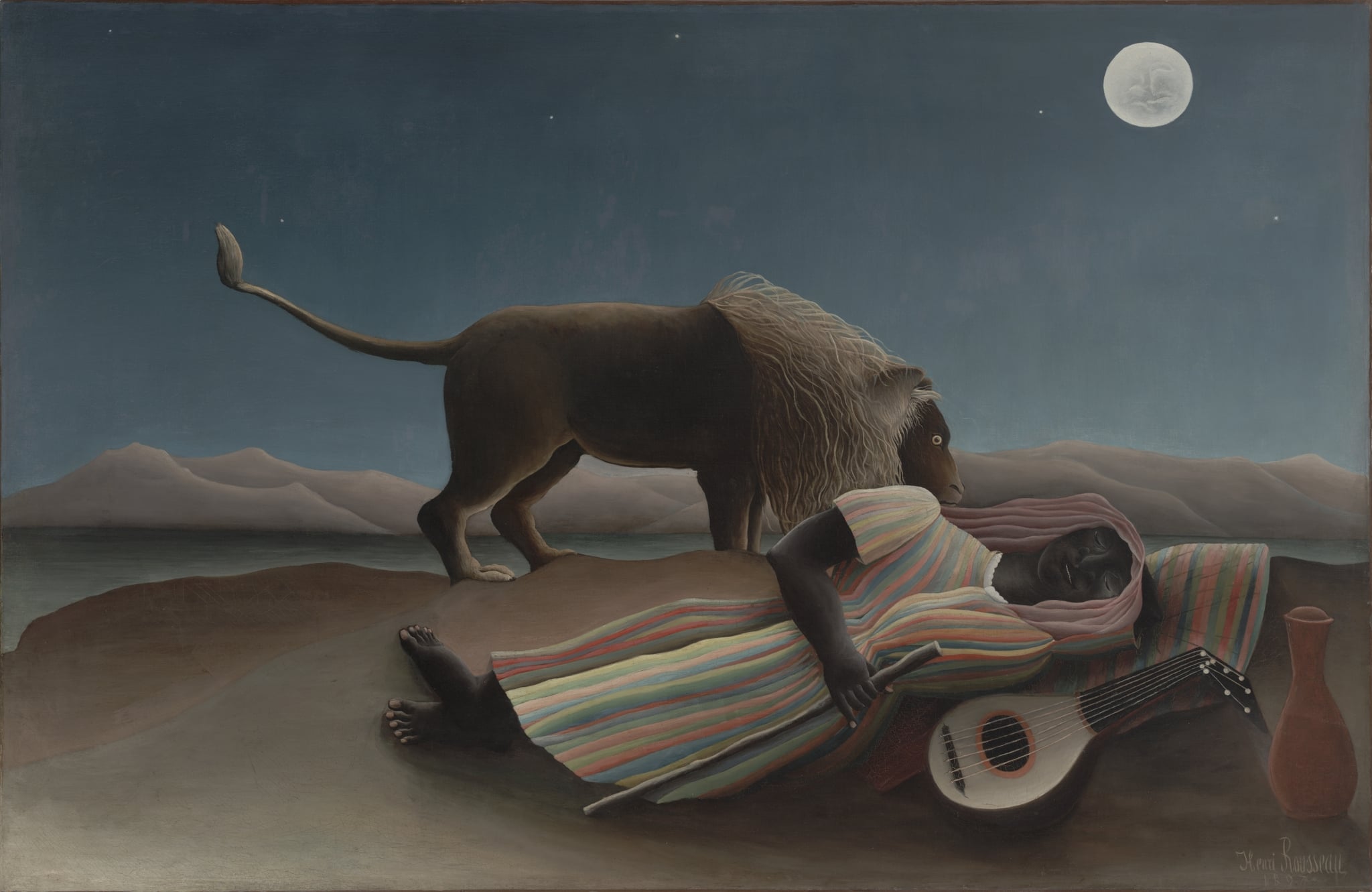
The Sleeping Shepherdess
Henri Rousseau (1897)
In The Sleeping Shepherdess, a moonlit desert holds a poised balance between <strong>vulnerability</strong> and <strong>watchful restraint</strong>. A striped‑clad traveler sleeps on a matching cushion, a <strong>mandolin</strong> and <strong>water jar</strong> at her side, while a lion, paw raised and eye wide, draws close yet does not strike. Rousseau’s flattened forms and echoing stripes create a hypnotic <strong>dream logic</strong> that turns danger into a guarded calm <sup>[1]</sup><sup>[2]</sup>.
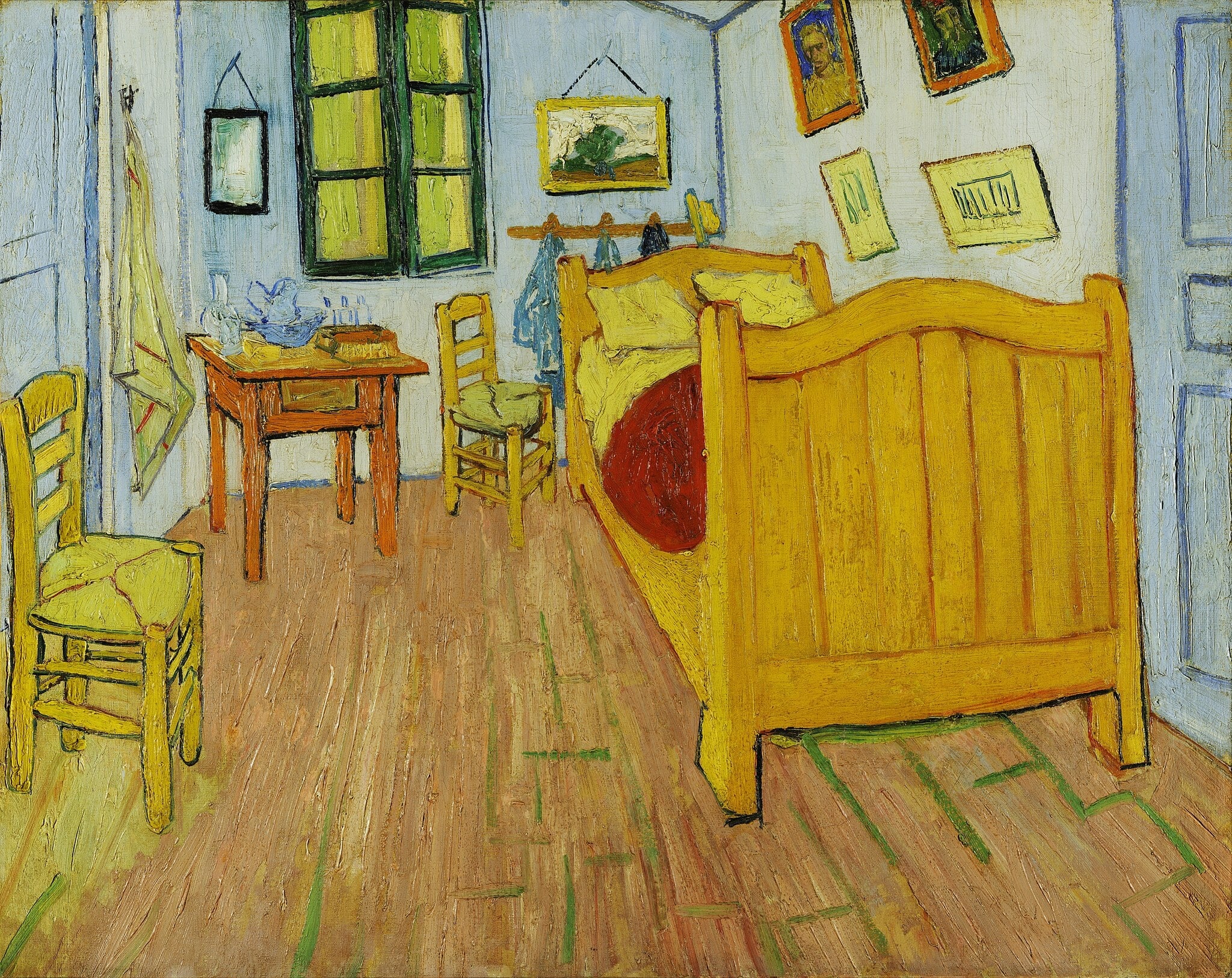
The Bedroom
Vincent van Gogh (1889)
Vincent van Gogh’s The Bedroom turns a modest room into a psychological stage, using <strong>clashing color</strong> and <strong>tilted space</strong> to test whether color alone can evoke rest. The bright yellow bed, twin chairs, and green‑shuttered window press forward as the floor tilts and pictures cant, so that <strong>refuge and unease</strong> exist side by side <sup>[1]</sup><sup>[2]</sup>.
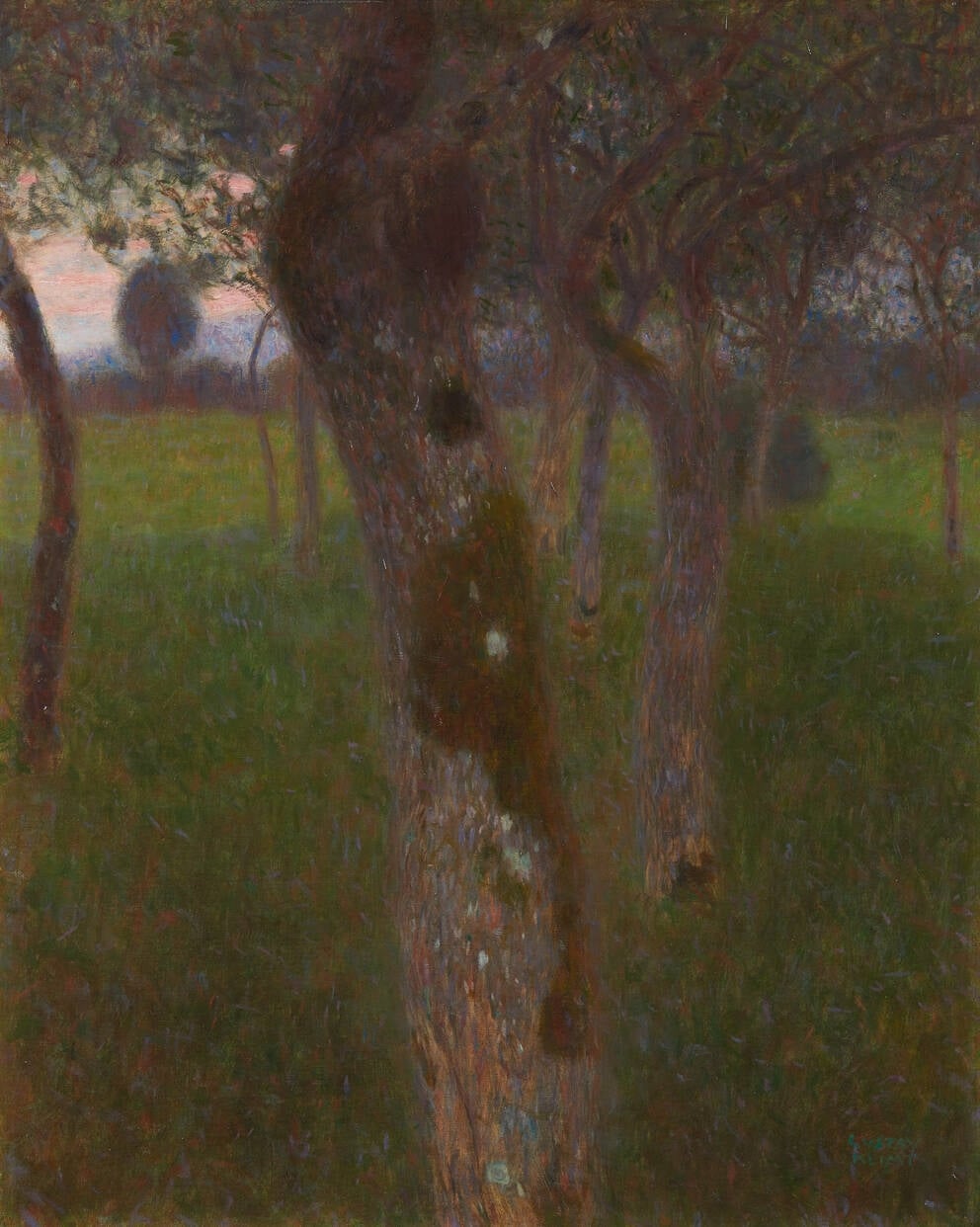
Orchard in the Evening
Gustav Klimt (1898)
Gustav Klimt’s Orchard in the Evening compresses a grove of fruit trees into a shallow, <strong>planar</strong> field where trunks press forward and dusk thins the color. A pale <strong>twilight</strong> band at the high horizon seals the space, turning observed nature into a contemplative, <strong>ornamental</strong> enclosure <sup>[1]</sup><sup>[2]</sup>.
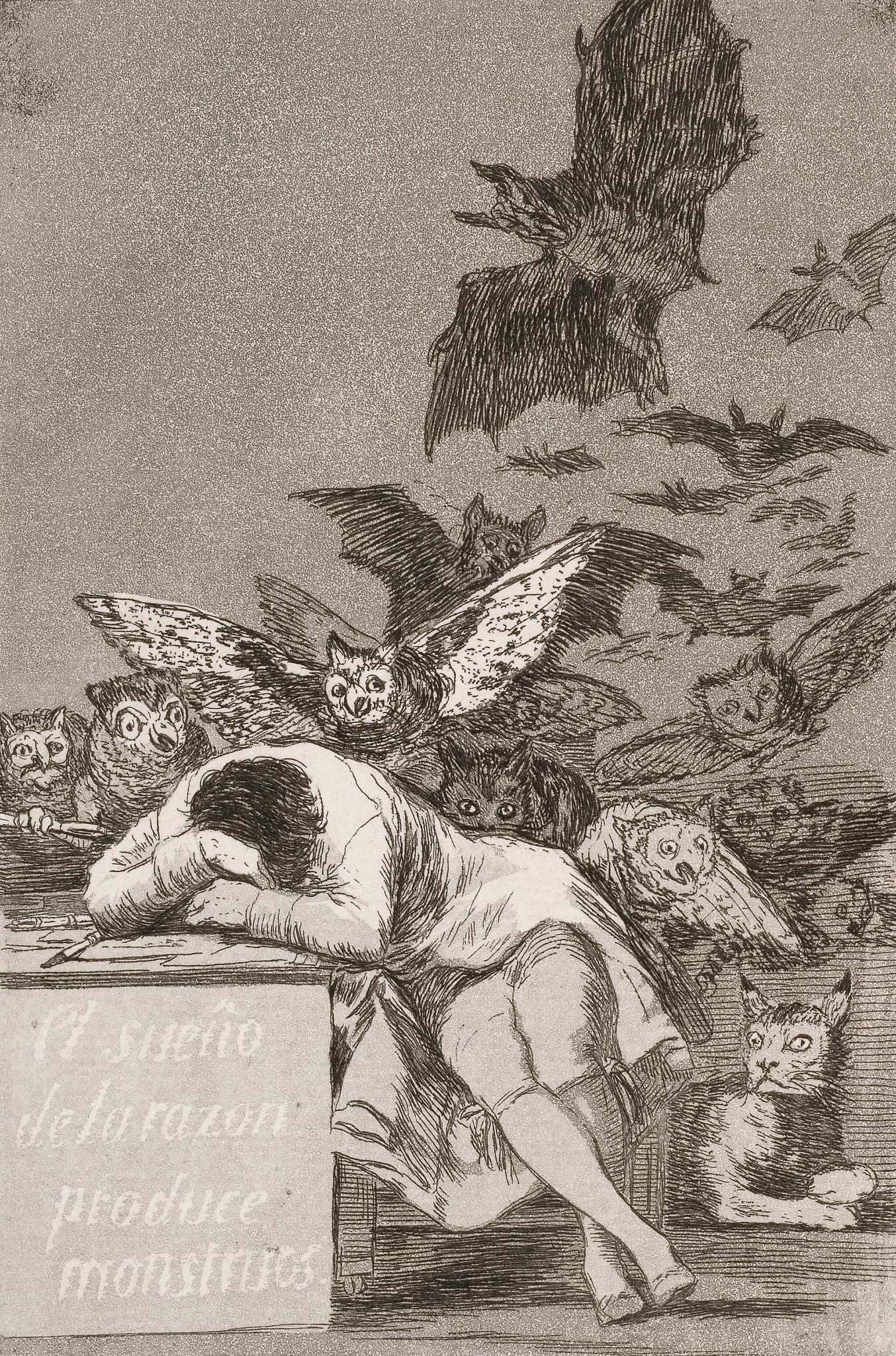
The Sleep of Reason Produces Monsters
Francisco Goya (1799 (published; plates 1797–1798))
In The Sleep of Reason Produces Monsters, a dozing thinker at his desk unleashes a storm of <strong>owls</strong>, <strong>bats</strong>, and a watchful <strong>lynx</strong>, staging Goya’s program for Los Caprichos. The print argues that when <strong>reason</strong> lapses—or when <strong>imagination</strong> is severed from it—social <strong>monsters</strong> of folly and superstition multiply.
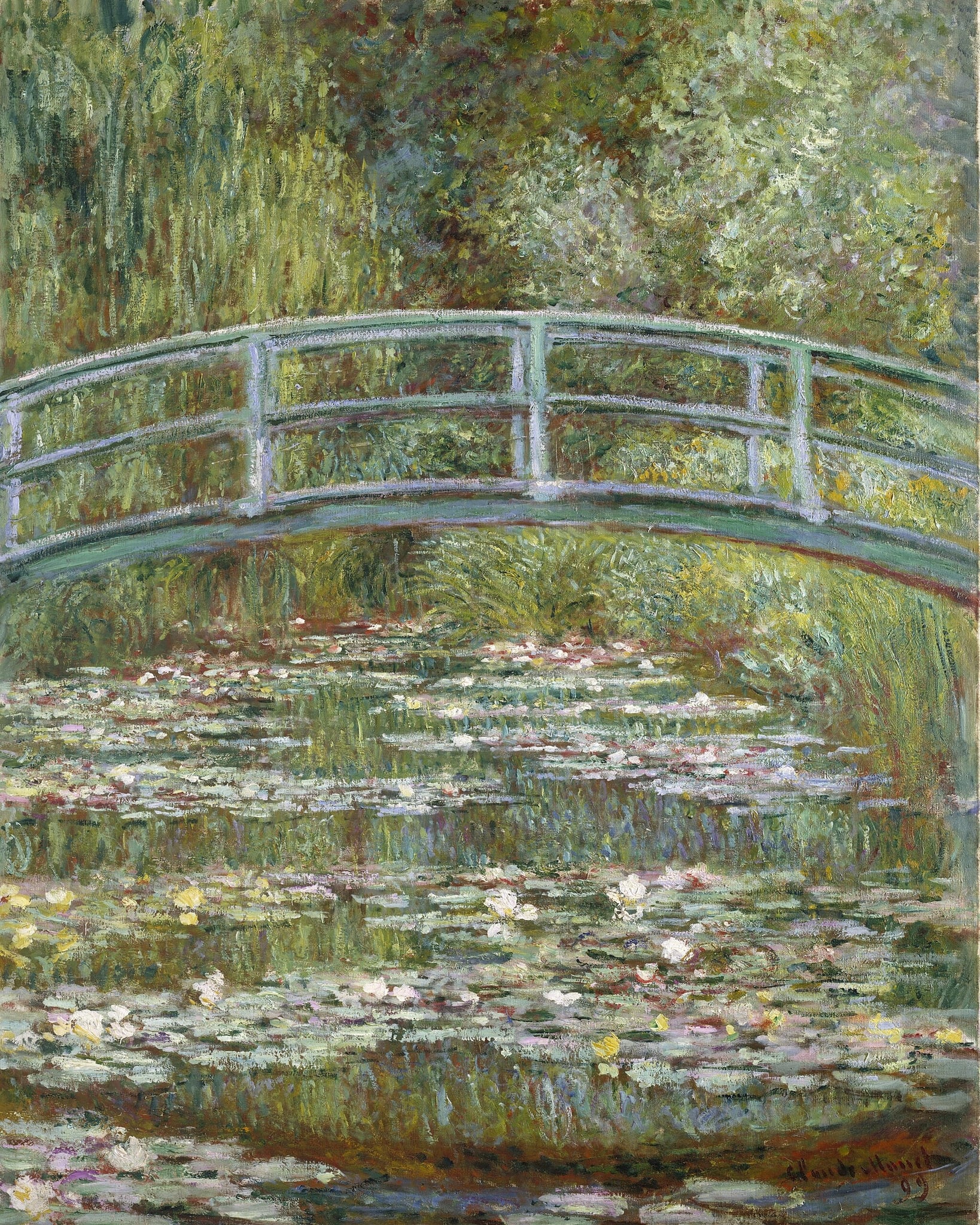
Bridge over a Pond of Water Lilies
Claude Monet (1899)
Claude Monet’s Bridge over a Pond of Water Lilies stages a <strong>threshold</strong> where garden and reflection merge. The cool arc of the <strong>Japanese-style bridge</strong> steadies a field of trembling light, while lilies hover between surface and depth, turning perception itself into the subject <sup>[1]</sup><sup>[2]</sup>.
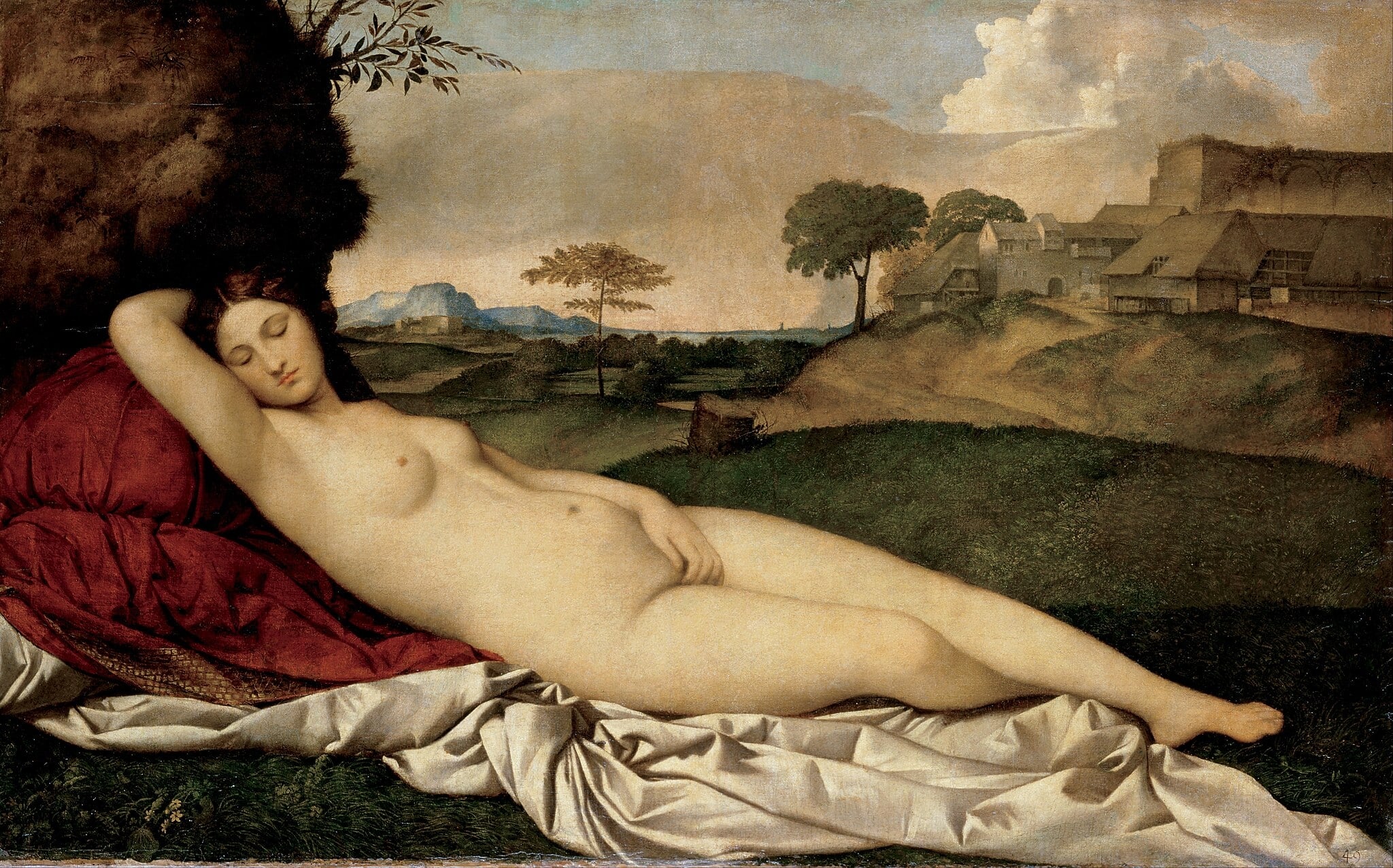
The Sleeping Venus
Giorgione (c. 1508–1510)
In The Sleeping Venus, the goddess reclines across a rolling landscape, her body a serene diagonal that fuses human beauty with nature’s forms. Cool, <strong>silvery drapery</strong> and <strong>deep red cushions</strong> intensify her luminous flesh, while the right-hand <strong>Venus pudica</strong> gesture suspends desire between revelation and restraint. The painting crystallizes the Venetian ideal of poetic harmony (<strong>poesia</strong>) and inaugurates the fully realized reclining nude in Western art <sup>[2]</sup><sup>[4]</sup><sup>[6]</sup>.
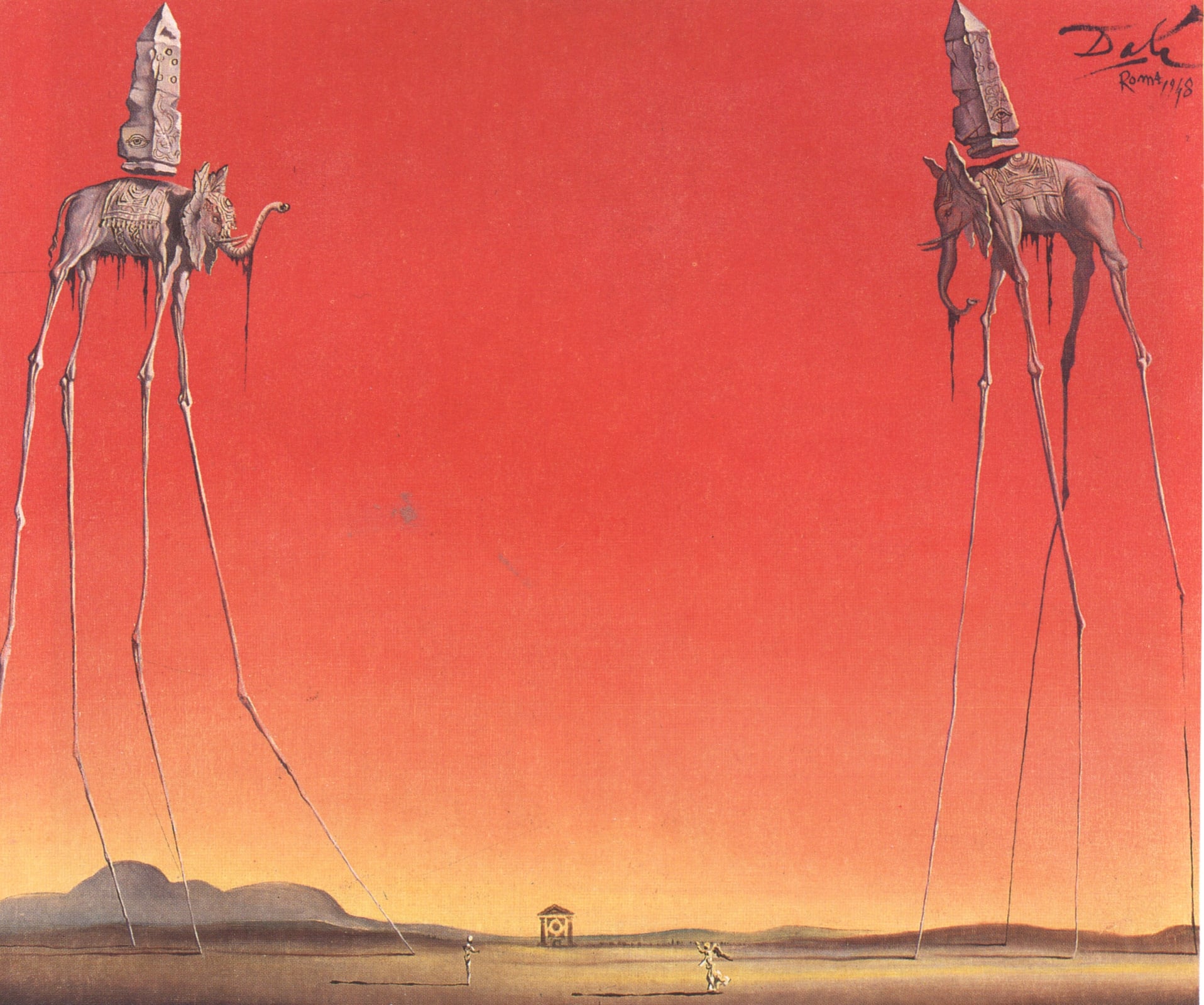
The Elephants
Salvador Dali (1948)
In The Elephants, Salvador Dali distills a stark paradox of <strong>weight and weightlessness</strong>: gaunt elephants tiptoe on <strong>stilt-thin legs</strong> while bearing stone <strong>obelisks</strong>. The blazing red-orange sky and tiny human figures compress ambition into a vision of <strong>precarious power</strong> and time stretched thin <sup>[1]</sup><sup>[2]</sup>.
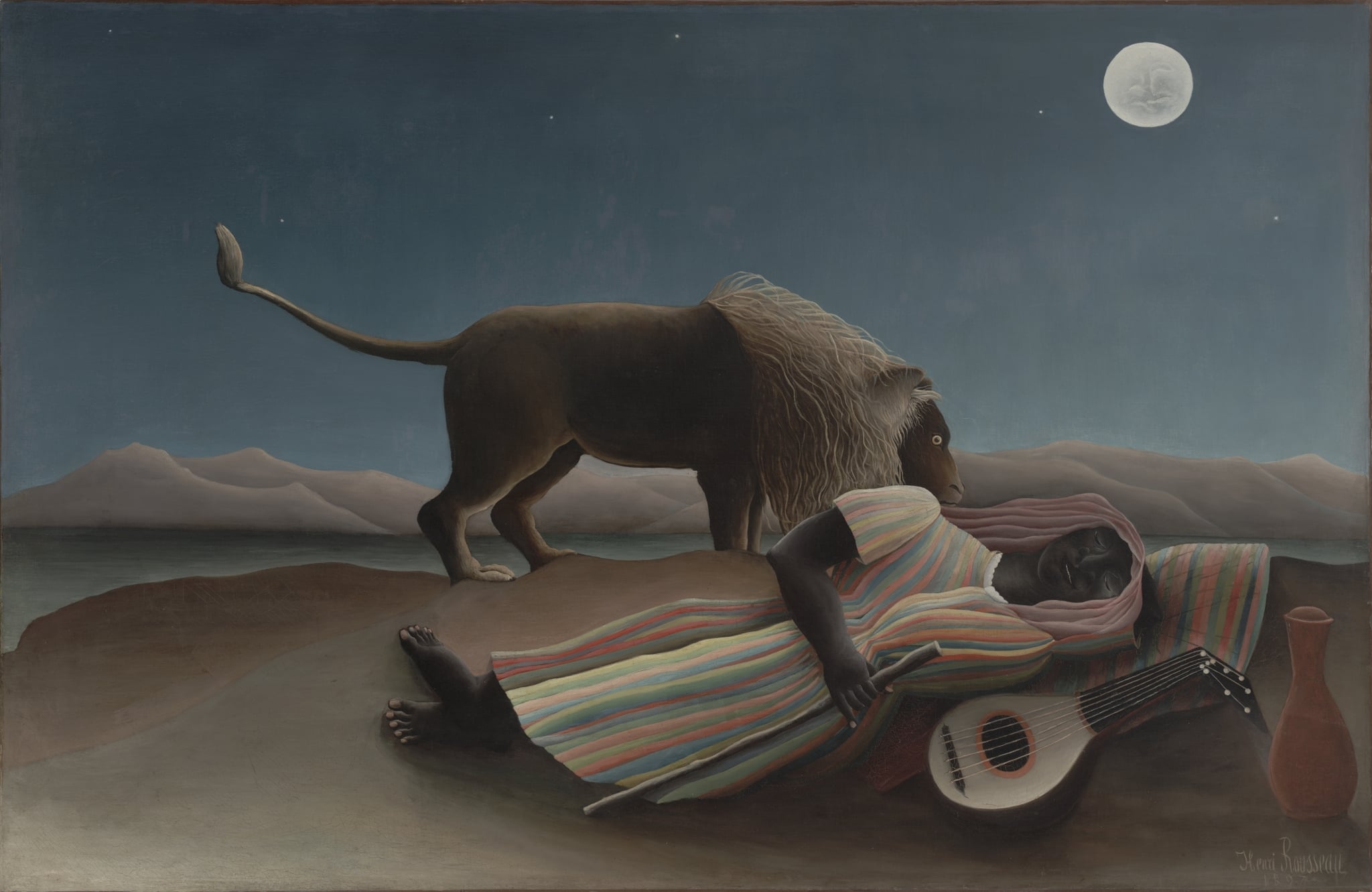
The Sleeping Gypsy
Henri Rousseau (1897)
Under a cold moon, a traveler sleeps in a striped robe as a lion pauses to sniff, not strike—an image of <strong>danger held in suspension</strong> and <strong>imagination as protection</strong>. Rousseau’s polished surfaces, flattened distance, and toy-like clarity turn the desert into a <strong>dream stage</strong> where art (the mandolin) and life (the water jar) keep silent vigil <sup>[1]</sup><sup>[2]</sup>.
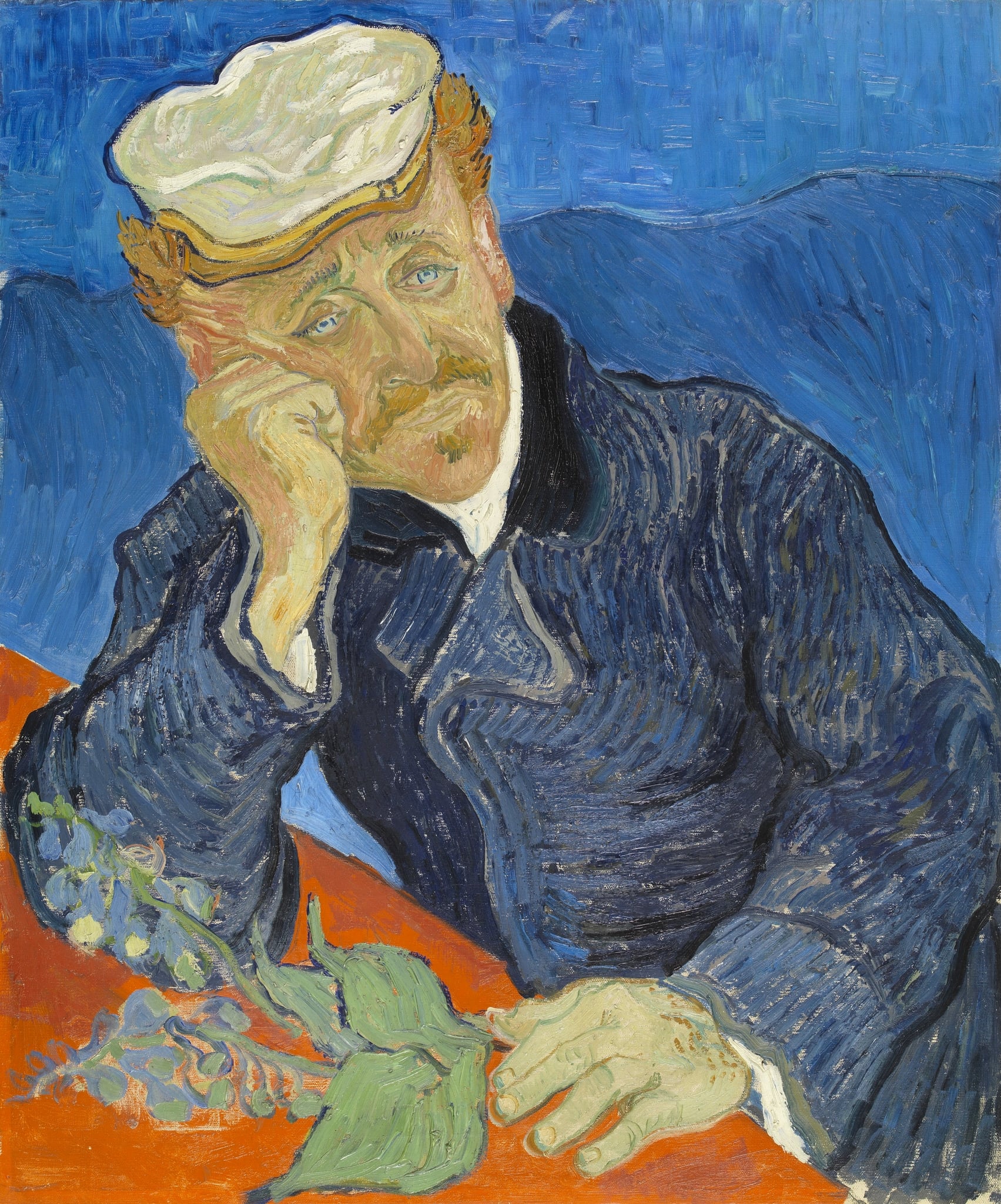
Portrait of Dr. Gachet
Vincent van Gogh (1890)
Portrait of Dr. Gachet distills Van Gogh’s late ambition for a <strong>modern, psychological portrait</strong> into vibrating color and touch. The sitter’s head sinks into a greenish hand above a <strong>blazing orange-red table</strong>, foxglove sprig nearby, while waves of <strong>cobalt and ultramarine</strong> churn through coat and background. The chromatic clash turns a quiet pose into an <strong>empathic image of fragility and care</strong> <sup>[1]</sup><sup>[2]</sup>.
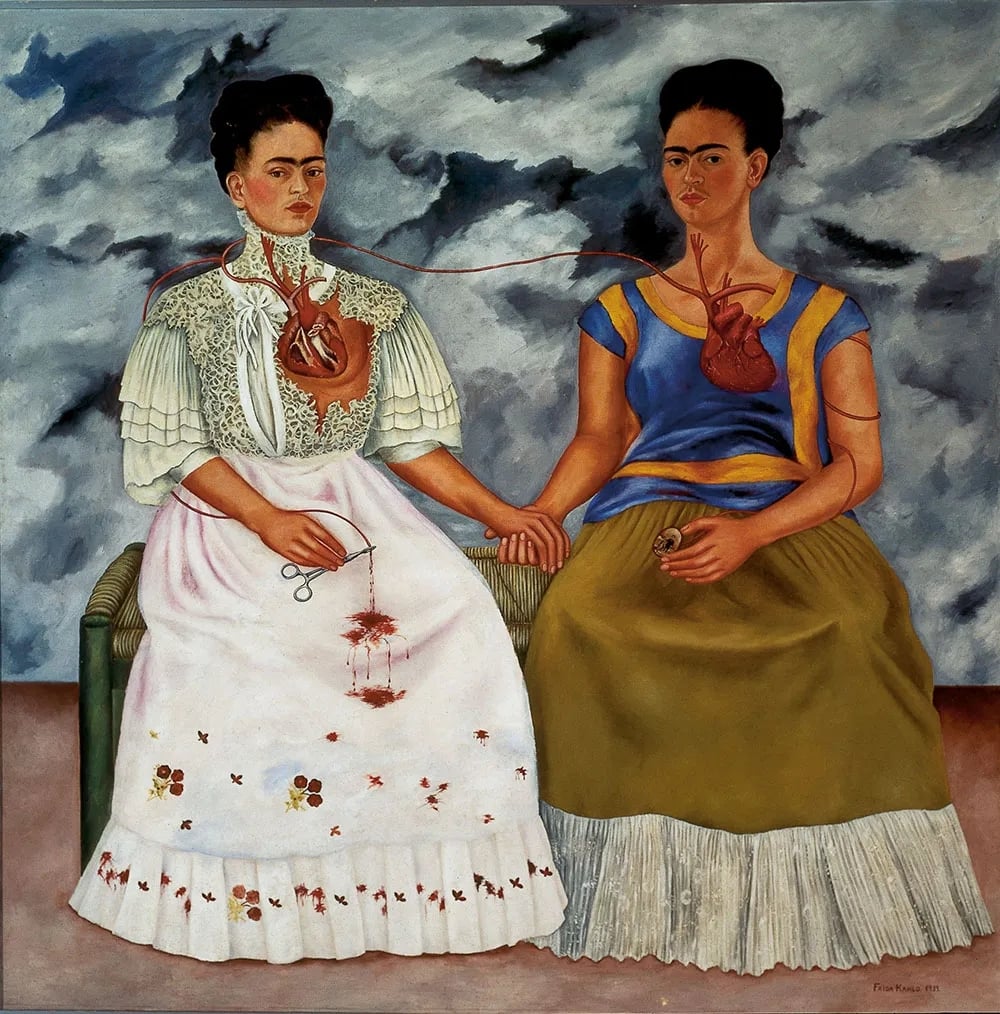
The Two Fridas
Frida Kahlo (1939)
The Two Fridas presents a doubled self seated under a storm-charged sky, their opened chests revealing two hearts joined by a single artery. One Frida in a European dress clamps the vessel with a surgical <strong>hemostat</strong> as blood stains her skirt, while the other in a <strong>Tehuana</strong> dress steadies a locket and the shared pulse. The canvas turns private injury into a public image of <strong>dual identity</strong> and endurance <sup>[1]</sup><sup>[2]</sup>.
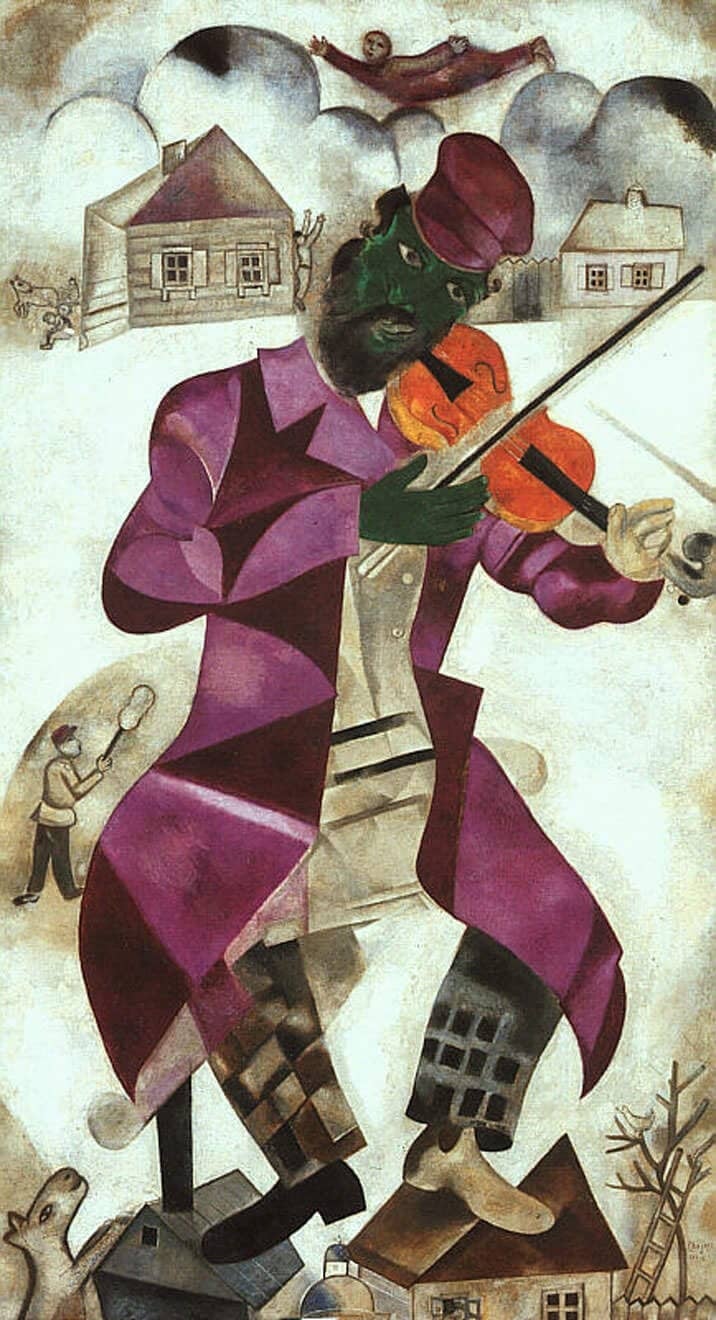
The Green Violinist
Marc Chagall (1923–1924)
The Green Violinist magnifies a village fiddler into a sky‑bridging guardian, his <strong>green face</strong> and <strong>purple coat</strong> turning him into a spiritual emissary rather than a mere entertainer. Striding across crooked <strong>rooftops</strong> without crushing them, he binds the shtetl’s houses, tree, clouds, and wandering figures into one continuous chord. Chagall fuses folkloric memory with modernist facets to assert music as the community’s sustaining force.
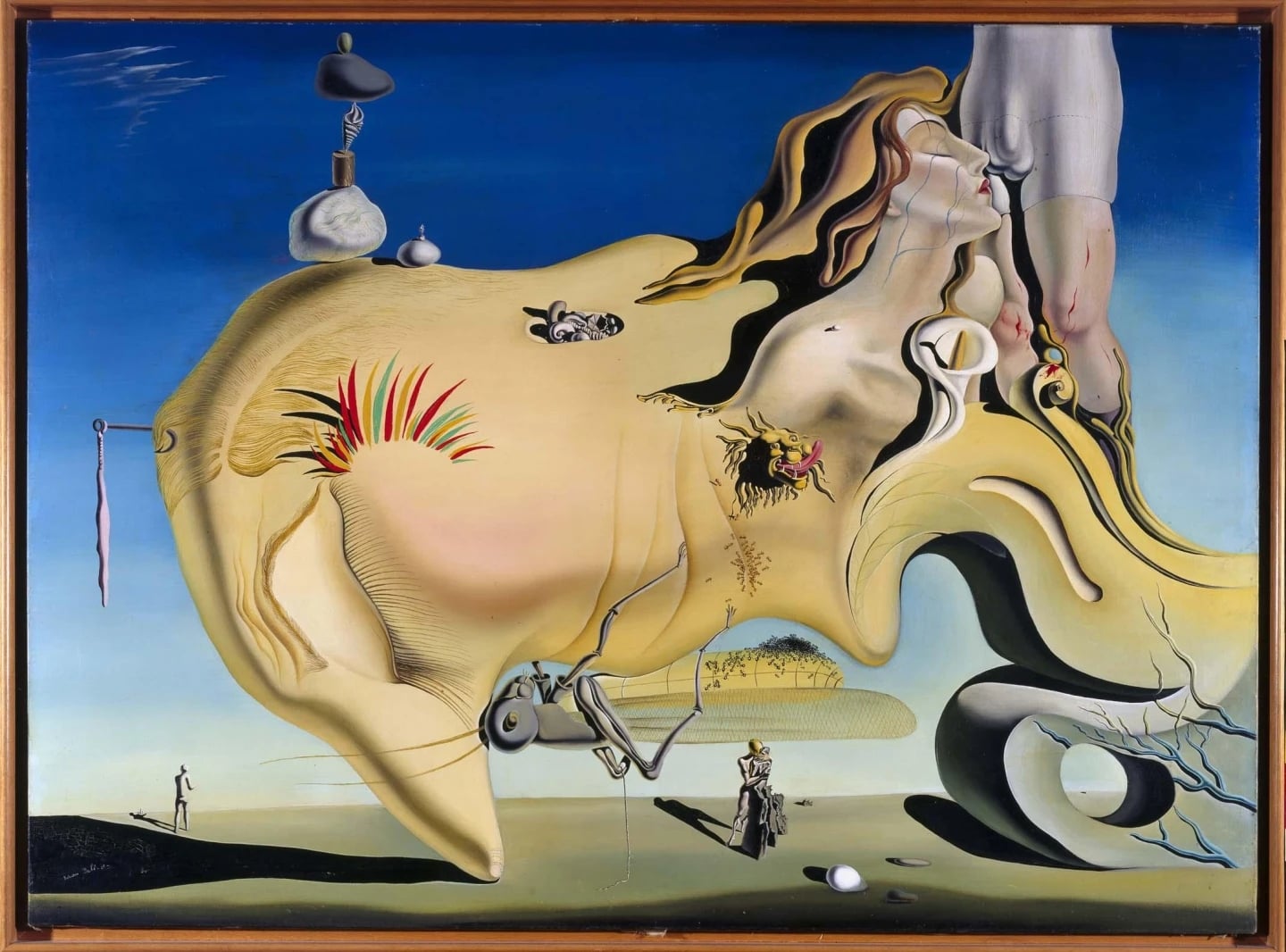
The Great Masturbator
Salvador Dali (1929)
The Great Masturbator condenses Dalí’s newly ignited desire and crippling dread into a single, biomorphic head set against a crystalline Catalan sky. Ants, a gaping grasshopper, a lion’s tongue, a bleeding knee, crutches, stones, and an egg collide to script a confession where <strong>eros</strong> and <strong>decay</strong> are inseparable <sup>[1]</sup><sup>[3]</sup><sup>[4]</sup>. Its precision staging turns autobiography into a <strong>surreal map of compulsion</strong> at the moment Gala enters his life <sup>[1]</sup>.
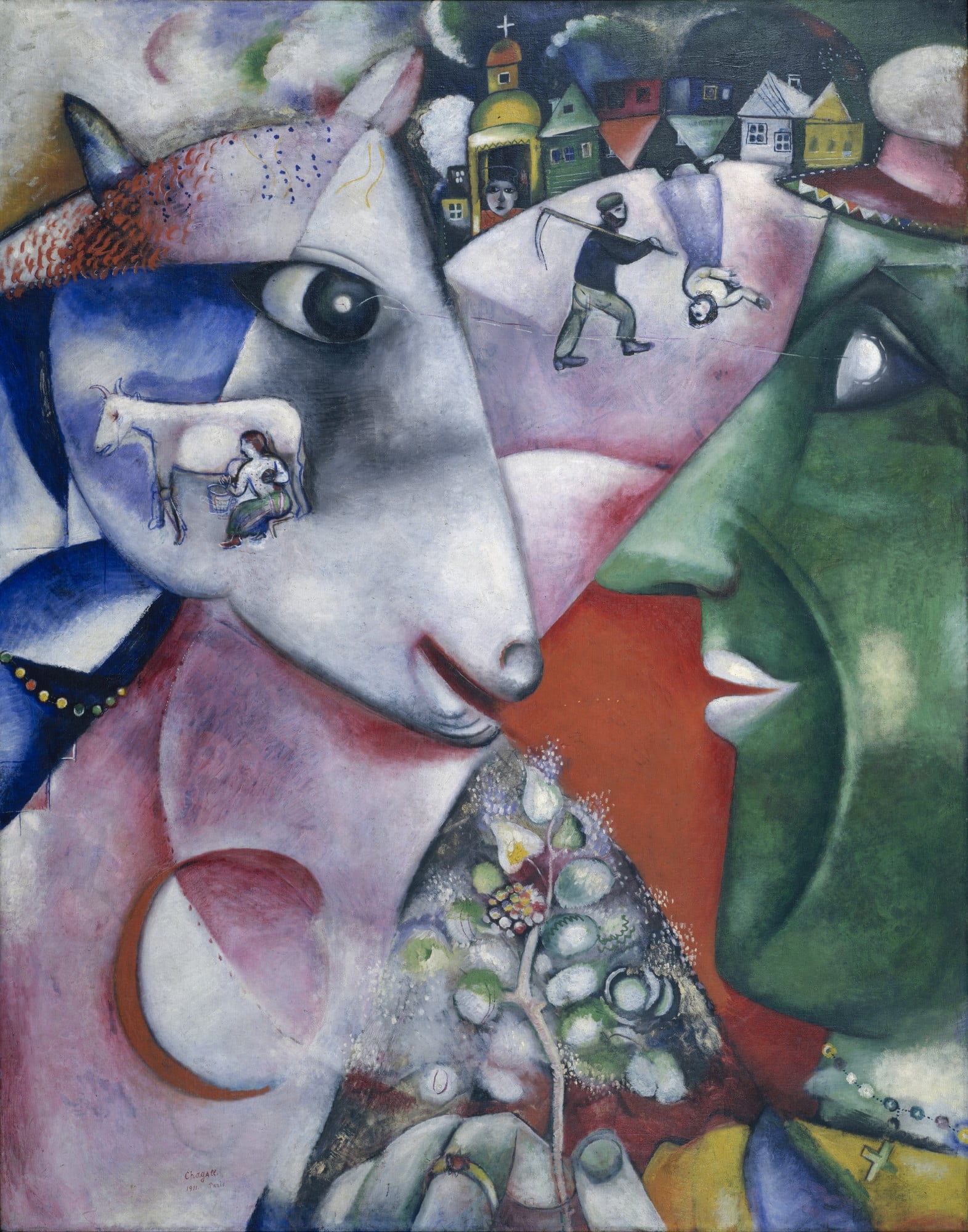
I and the Village
Marc Chagall (1911)
In I and the Village, Marc Chagall fuses <strong>memory, myth, and rural ritual</strong> into a dream‑logic tableau where a green‑faced villager and a pale bovine meet <strong>eye‑to‑eye</strong>. Concentric forms, prismatic color, and floating figures turn Vitebsk’s everyday life into a <strong>cosmic community</strong> where work, faith, and imagination coexist <sup>[1]</sup><sup>[3]</sup>.
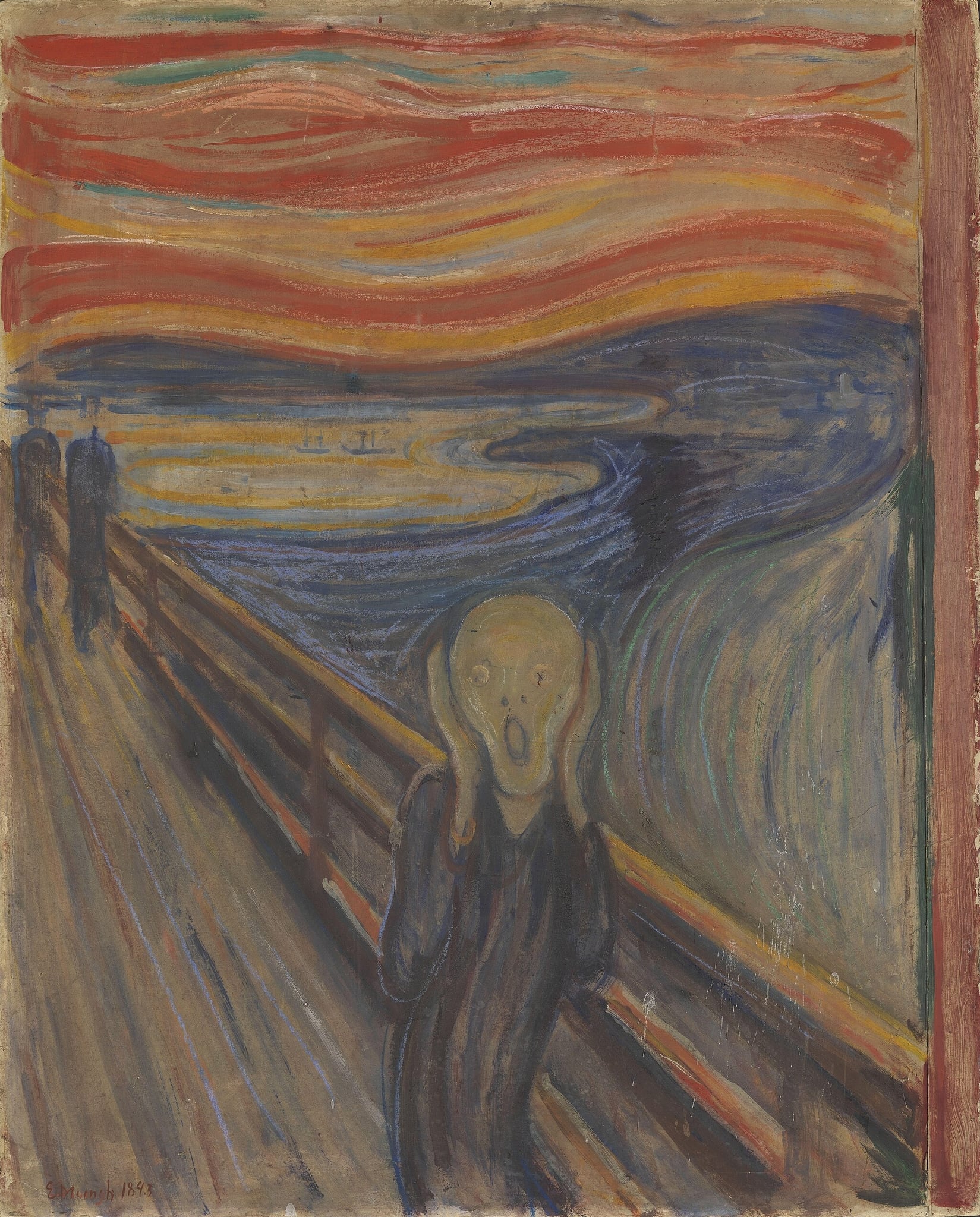
The Scream
Edvard Munch (1893)
Edvard Munch’s The Scream condenses modern dread into an image where the self and the world collapse: an androgynous, skull-like figure grips its head as a <strong>blood-red sky</strong> and <strong>vibrating shoreline</strong> pulse around it. The rigid, receding bridge rails counter the turbulence, staging a clash between <strong>inner panic</strong> and <strong>outer reality</strong> <sup>[1]</sup><sup>[2]</sup>.
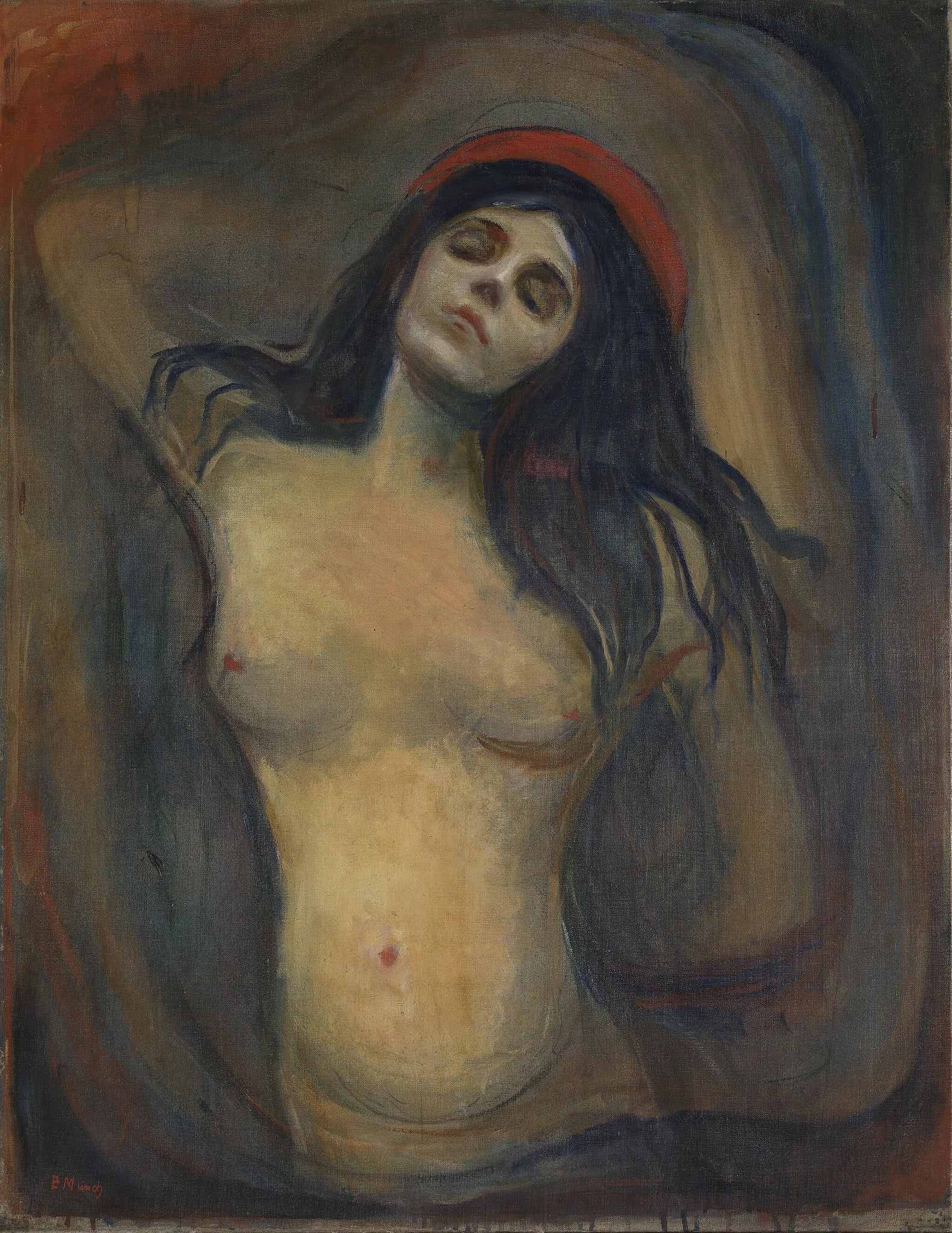
Madonna
Edvard Munch (1894)
Munch’s Madonna stages a collision of <strong>sanctity and sensuality</strong>: a half-length nude, eyes closed, tilts into a crimson nimbus while a dark, tidal field seems to carry her body. With smeared contours and a sparse palette, the figure hovers between emergence and dissolution, turning the Virgin’s icon into a modern emblem of <strong>eros, creation, and death</strong> <sup>[1]</sup><sup>[2]</sup><sup>[3]</sup>.
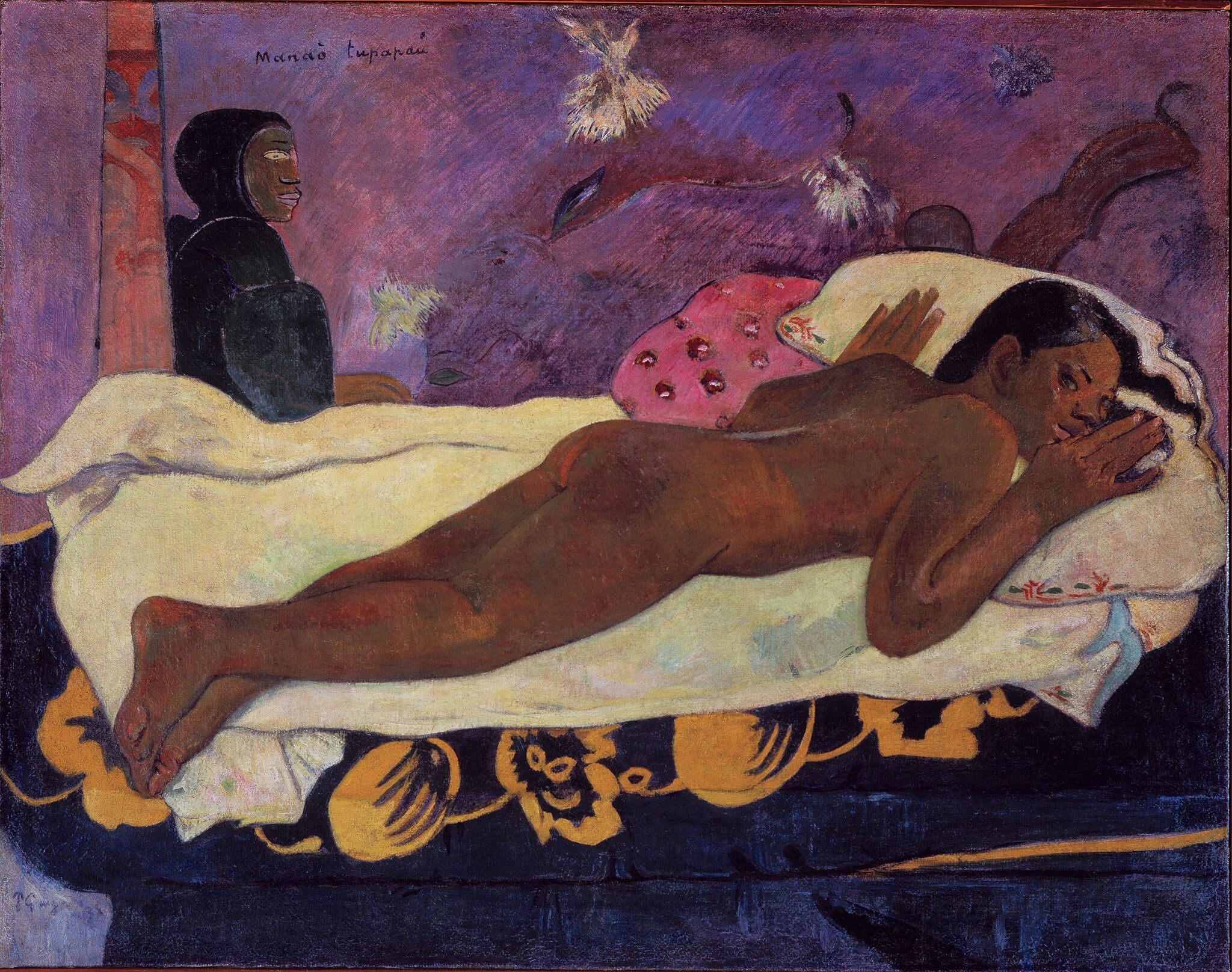
Spirit of the Dead Watching
Paul Gauguin (1892)
Spirit of the Dead Watching stages a nocturnal confrontation between a rigid, prone nude and a dark, hooded presence at the bed’s edge, fusing <strong>desire</strong> with <strong>dread</strong>. Flat patterns, cloisonné outlines, and violet-black fields convert the room into a symbolic plane where a Tahitian <strong>tupapaú</strong> may be either guardian or threat. The work crystallizes Gauguin’s Synthetist aim to make color and contour carry <strong>mythic psychology</strong> rather than mere description <sup>[1]</sup><sup>[2]</sup>.
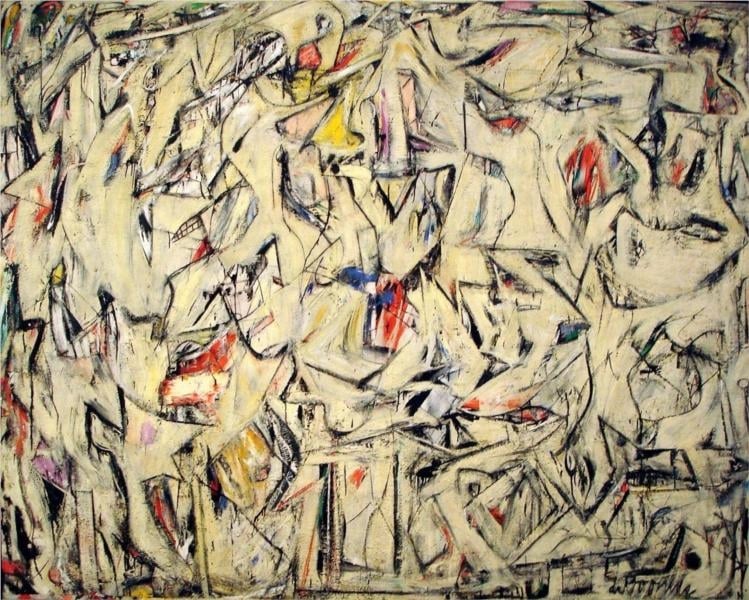
Excavation
Willem de Kooning (1950)
<strong>Excavation</strong> is a 1950 oil-on-canvas by <strong>Willem de Kooning</strong> whose all-over mesh of black, hooked lines rides a chalky, bone-colored ground, flaring with cadmium reds, yellows, and blues. Forms surface—beaklike profiles, teeth, fish, limbs, tool-shapes—then sink back into fragments, staging a <strong>simultaneous making and unmaking</strong> that turns the whole canvas into an active field. The work crystallizes de Kooning’s late-1940s abstractions and foreshadows the Women paintings, marking a pivot in postwar American art <sup>[1]</sup><sup>[3]</sup><sup>[4]</sup>.
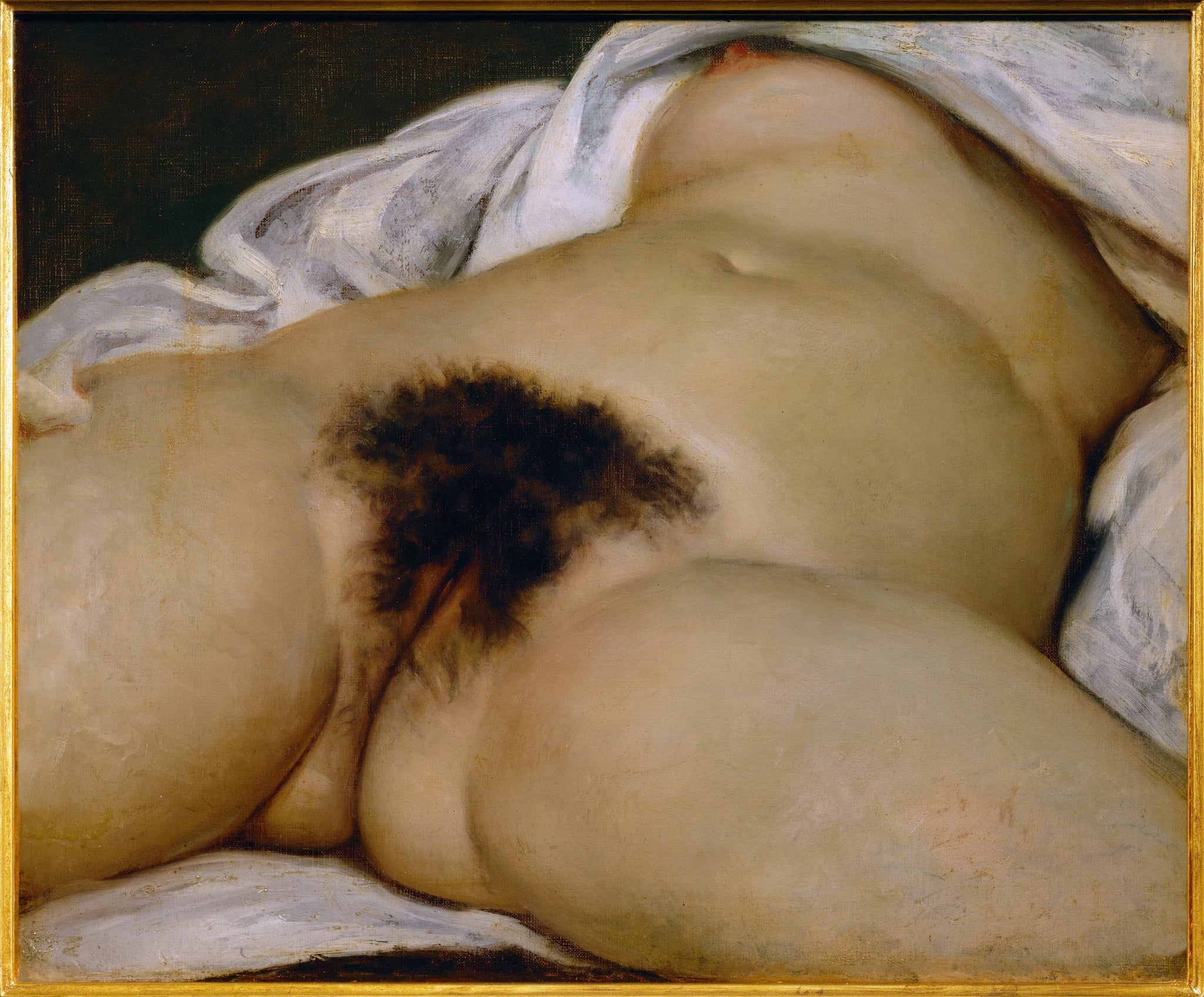
The Origin of the World
Gustave Courbet (1866)
The Origin of the World presents an uncompromising, tightly cropped view of a reclining female torso, setting warm flesh against cool, rumpled linen. With <strong>radical framing</strong> and <strong>unidealized realism</strong>, Gustave Courbet redirects the nude from myth to matter, making the central pubic triangle a compositional and conceptual anchor. The painting asserts a material, bodily <strong>origin</strong> in place of allegory, collapsing eroticism into a claim about life’s beginnings <sup>[1]</sup><sup>[3]</sup>.