The Sleep of Reason Produces Monsters
Study Print Studio
Create a personal study print
Build a companion study sheet around the part of this painting that speaks to you most. Choose a detail, shape an interpretation, and walk away with something personal and display-worthy.
Fast Facts
- Year
- 1799 (published; plates 1797–1798)
- Medium
- Etching and aquatint
- Dimensions
- Plate approx. 21.2 × 15.1 cm; sheet approx. 29.5 × 21 cm
- Location
- The Metropolitan Museum of Art, New York
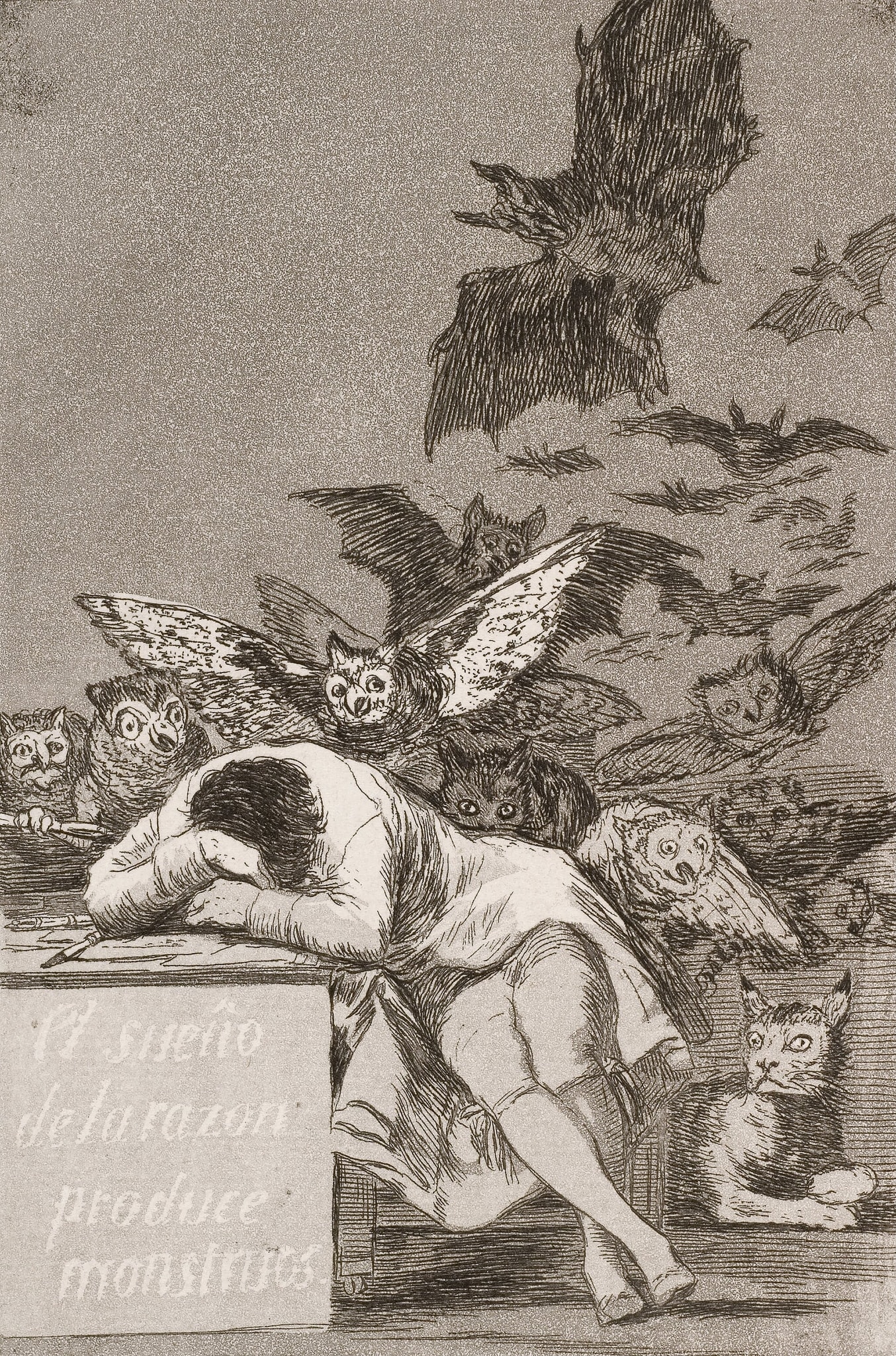
Click on any numbered symbol to learn more about its meaning
Meaning & Symbolism
Explore Deeper with AI
Ask questions about The Sleep of Reason Produces Monsters
Popular questions:
Powered by AI • Get instant insights about this artwork
Interpretations
Formal Analysis: Aquatint as Epistemology
Source: Smarthistory; The Metropolitan Museum of Art
Historical Context: Censorship and the Public Sphere
Source: Library of Congress; Museo Nacional del Prado
Programmatic Reading: From Frontispiece to Hinge
Source: Museo Nacional del Prado (preparatory drawing); The Metropolitan Museum of Art
Iconography: Owls, Bats, and the Lynx in Spanish Visual Language
Source: Smarthistory; The Metropolitan Museum of Art
Biographical-Psychological Lens: Deafness and Inner Night
Source: Smarthistory; Fitzwilliam Museum
Print Culture Lens: Reproducibility as Enlightenment Tactic
Source: The Metropolitan Museum of Art; Museo Nacional del Prado; Library of Congress
Seen in Comparisons
Related Themes
About Francisco Goya
More by Francisco Goya
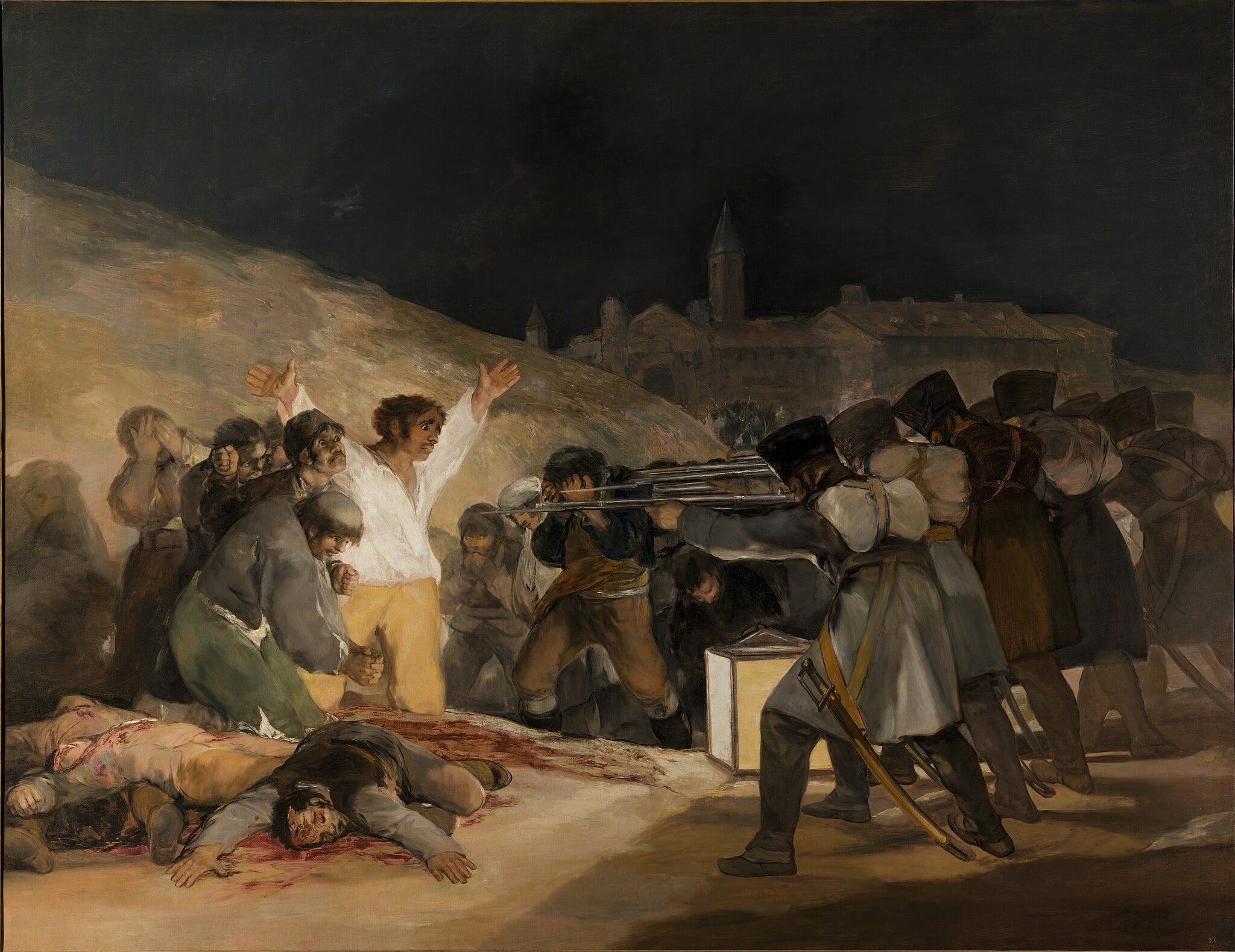
The Third of May 1808
Francisco Goya (1814)
Francisco Goya’s The Third of May 1808 turns a specific reprisal after Madrid’s uprising into a universal indictment of <strong>state violence</strong>. A lantern’s harsh glare isolates a civilian who raises his arms in a <strong>cruciform</strong> gesture as a faceless firing squad executes prisoners, transforming reportage into <strong>modern anti-war testimony</strong> <sup>[1]</sup><sup>[2]</sup>.
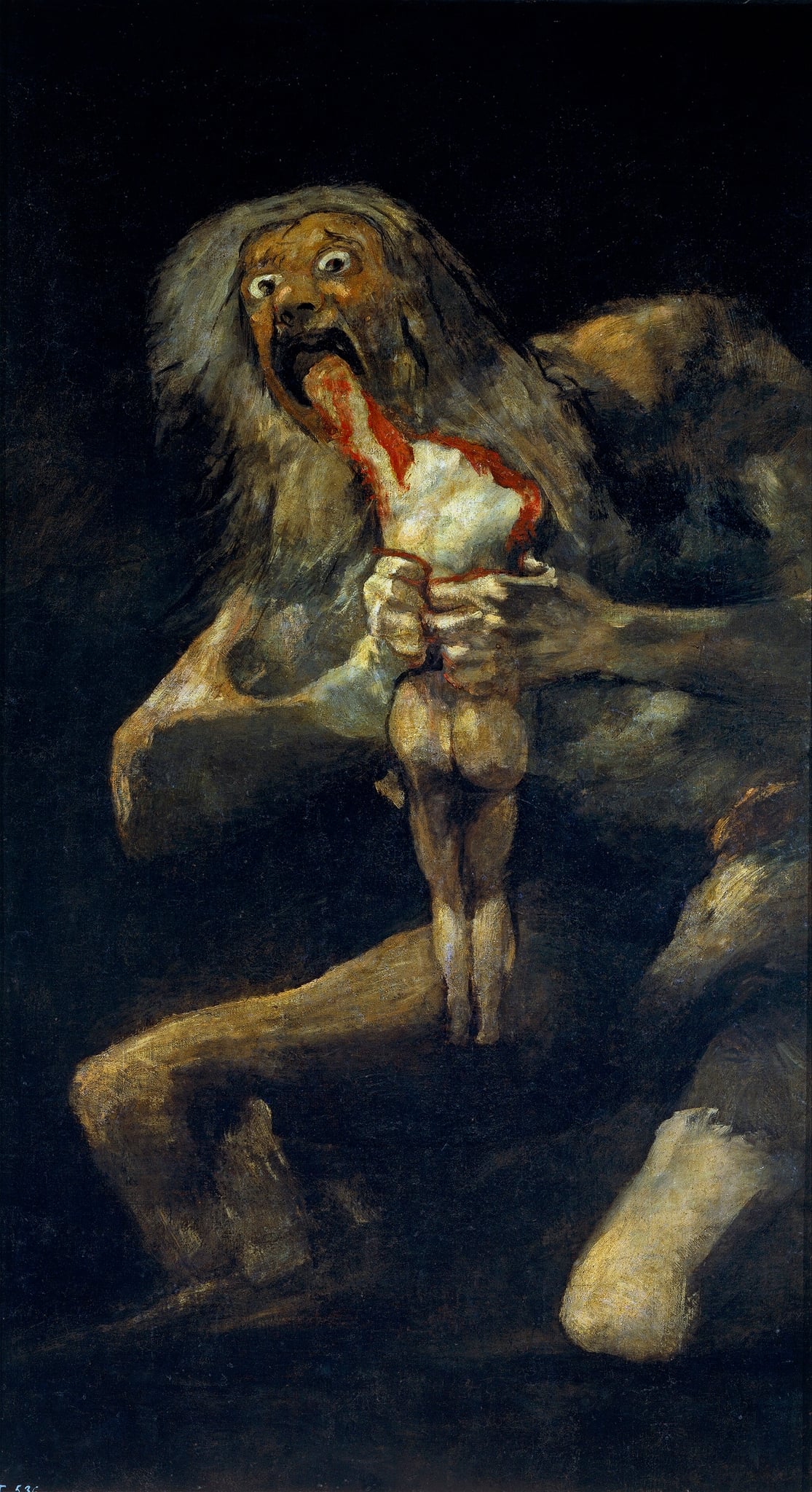
Saturn Devouring His Son
Francisco Goya (1820–1823)
Goya’s Saturn Devouring His Son distills myth into a raw vision of <strong>paranoia, power, and time</strong>: a giant crouches in darkness, eyes blown wide, tearing into a headless body whose blood streaks his hands. Stripped of classical emblems and staged in a near-black void, the scene asserts that fear of dispossession turns paternal authority into <strong>self-consuming violence</strong> <sup>[1]</sup><sup>[4]</sup>.