Prophecy & vision
Featured Artworks
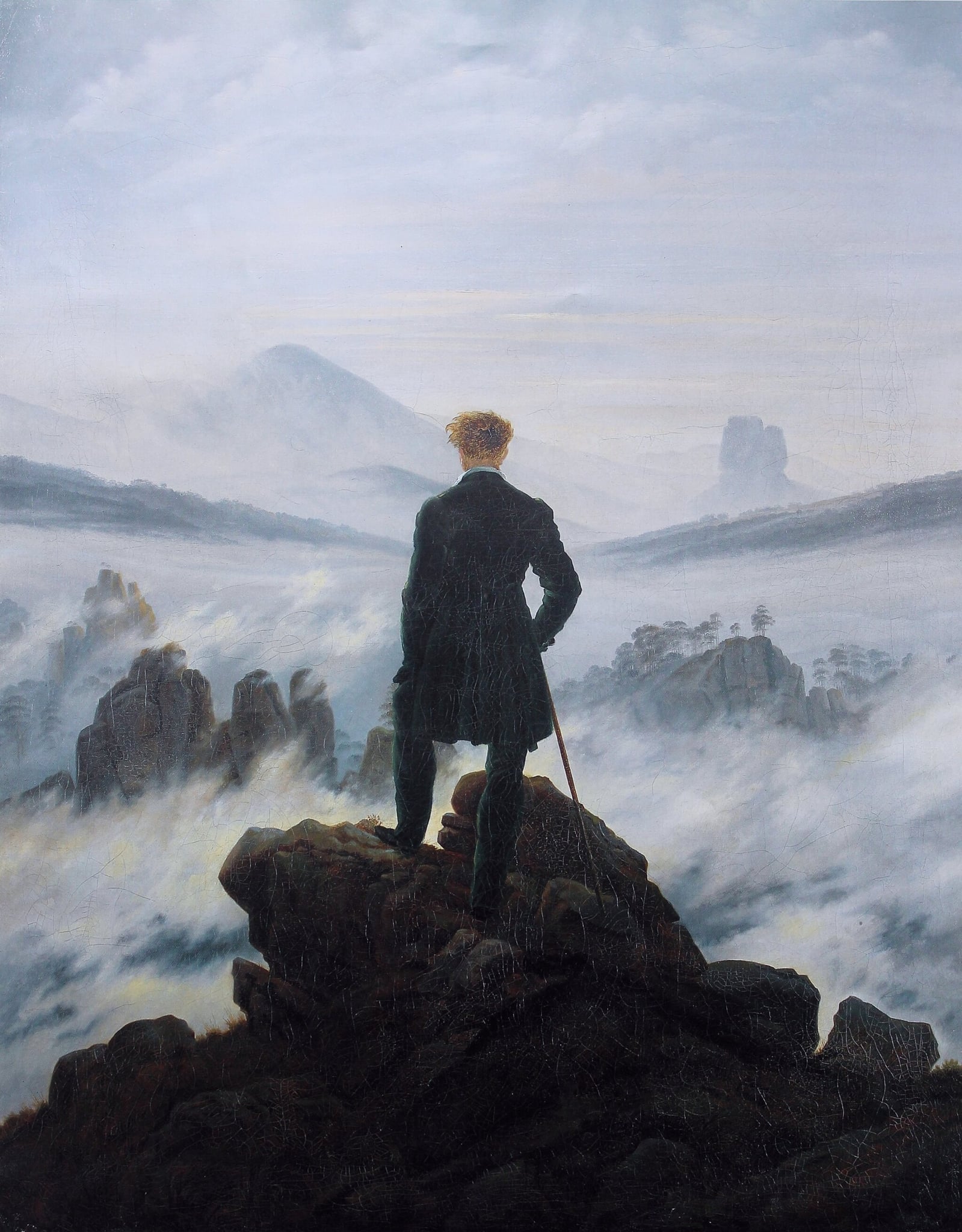
Wanderer above the Sea of Fog
Caspar David Friedrich (ca. 1817)
A solitary figure stands on a jagged crag above a churning <strong>sea of fog</strong>, his back turned in the classic <strong>Rückenfigur</strong> pose. Caspar David Friedrich transforms the landscape into an inner stage where <strong>awe, uncertainty, and resolve</strong> meet at the edge of perception <sup>[3]</sup><sup>[5]</sup>.
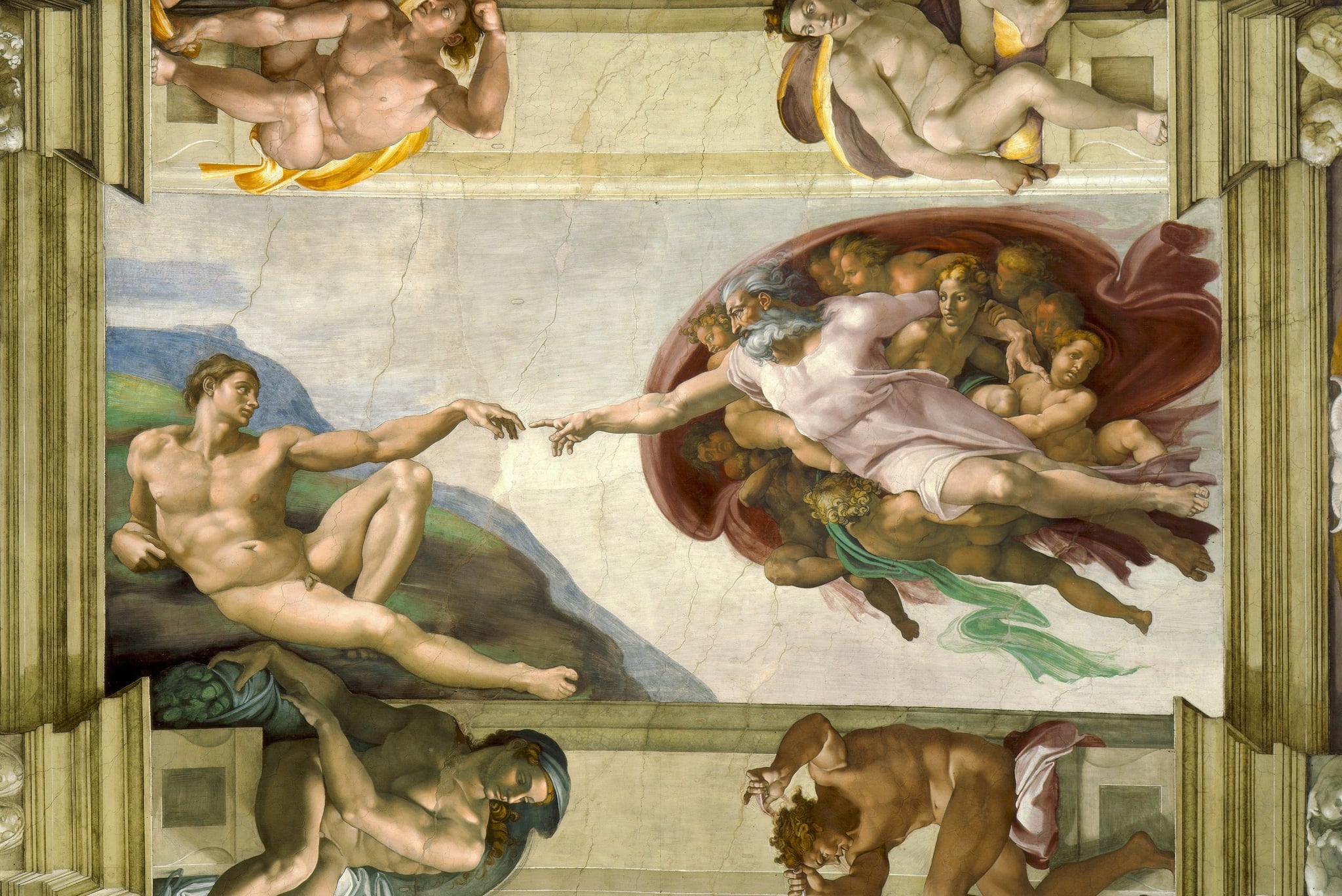
The Creation of Adam
Michelangelo (c.1511–1512)
Michelangelo’s The Creation of Adam crystallizes the instant before life is conferred, staging a charged interval between two nearly touching hands. The fresco turns Genesis into a study of <strong>imago Dei</strong>, bodily perfection, and the threshold between inert earth and <strong>active spirit</strong> <sup>[1]</sup><sup>[2]</sup>.
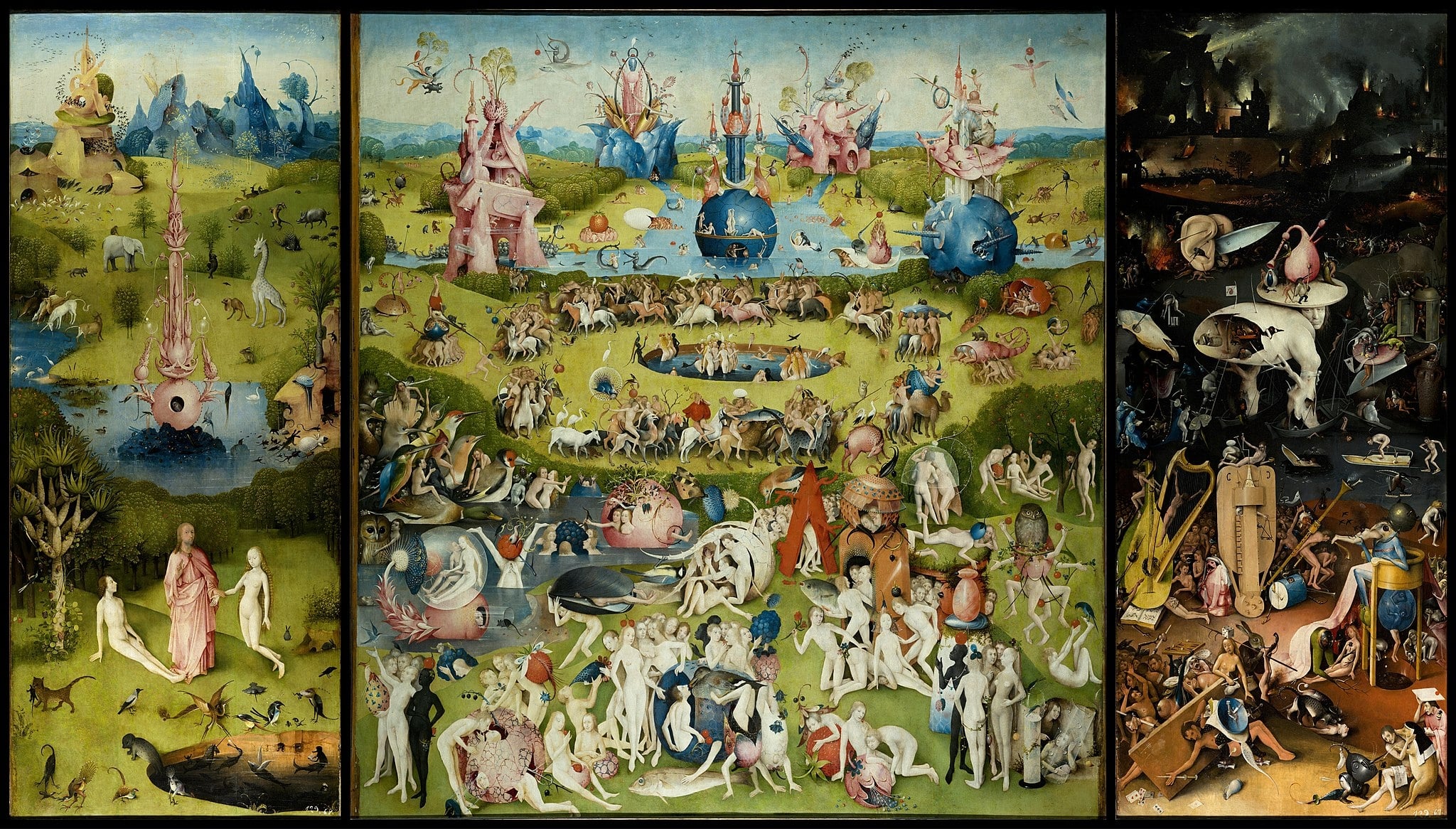
The Garden of Earthly Delights
Hieronymus Bosch (c.1490–1500)
The Garden of Earthly Delights unfolds a three‑act moral narrative—<strong>innocence</strong>, <strong>seduction</strong>, and <strong>retribution</strong>—from Eden to a punitive <strong>Musical Hell</strong>. Bosch binds the scenes through recurring emblems (notably the <strong>owl</strong>) and by echoing Eden’s crystalline fountain in the center’s fragile, candy‑colored architectures, then in Hell’s broken bodies and instruments. The work dazzles with invention while insisting that <strong>sweet, ephemeral pleasures</strong> end in ruin <sup>[1]</sup>.
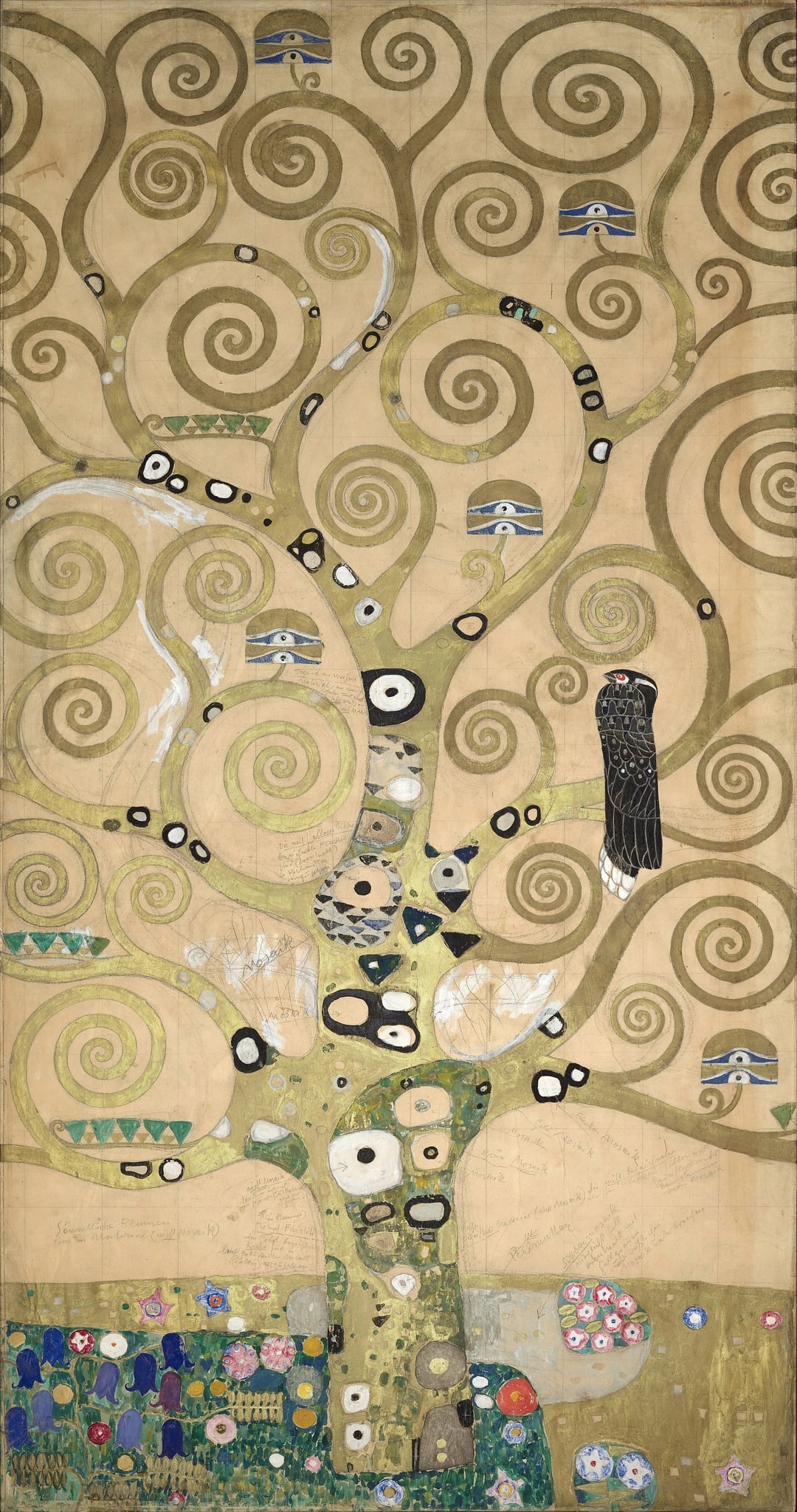
The Tree of Life
Gustav Klimt (1910–1911 (design; mosaic installed 1911))
Gustav Klimt’s The Tree of Life crystallizes a <strong>cosmological axis</strong> in a gilded ornamental language: a rooted trunk erupts into <strong>endless spirals</strong>, embedded with <strong>eye-like rosettes</strong> and shadowed by a black, red‑eyed bird. Designed as part of the Stoclet dining‑room frieze, it fuses <strong>symbolism and luxury materials</strong> to link earthly abundance with timeless transcendence <sup>[1]</sup><sup>[2]</sup>.
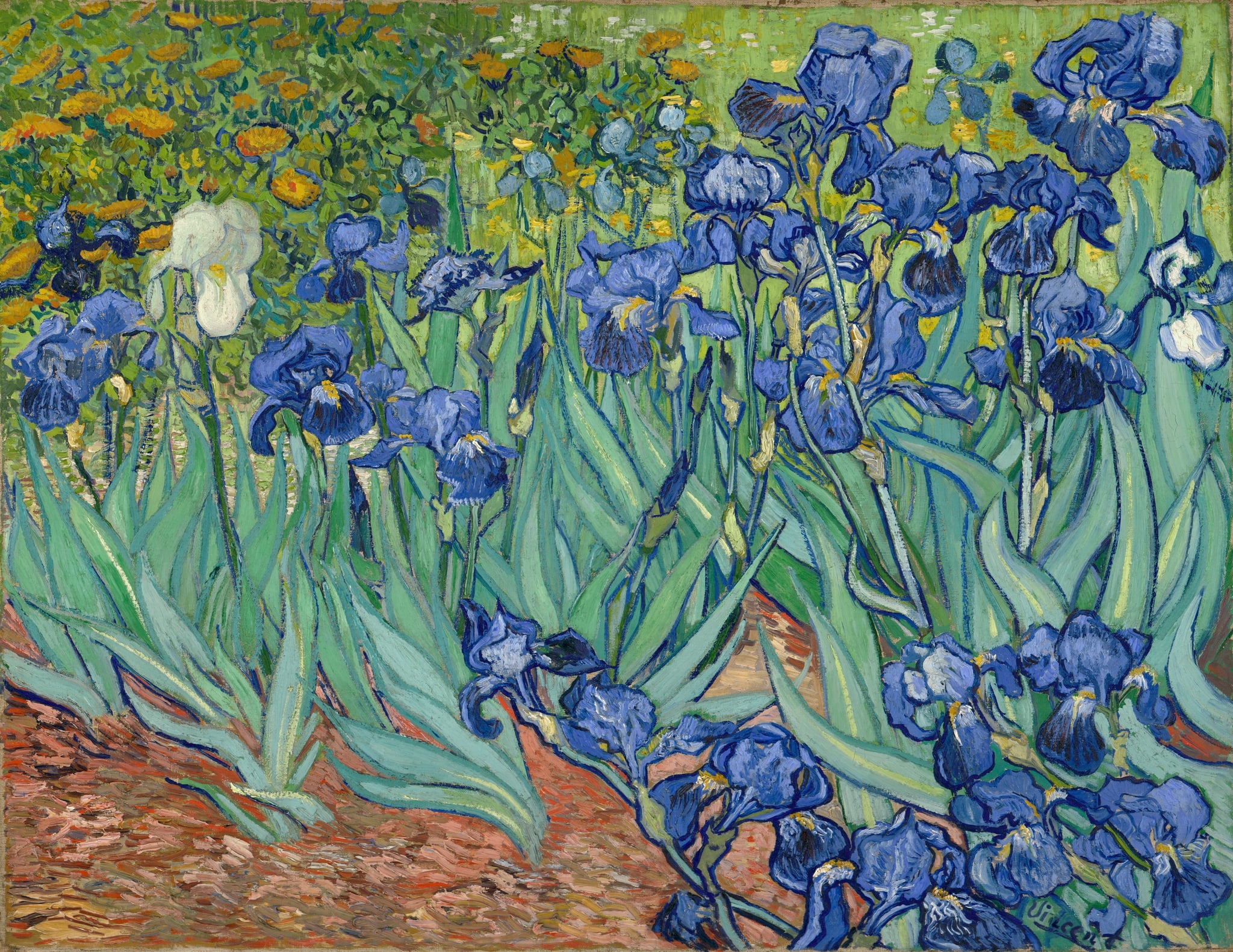
Irises
Vincent van Gogh (1889)
Painted in May 1889 at the Saint-Rémy asylum garden, Vincent van Gogh’s <strong>Irises</strong> turns close observation into an act of repair. Dark contours, a cropped, print-like vantage, and vibrating complements—violet/blue blossoms against <strong>yellow-green</strong> ground—stage a living frieze whose lone <strong>white iris</strong> punctuates the field with arresting clarity <sup>[1]</sup><sup>[2]</sup>.
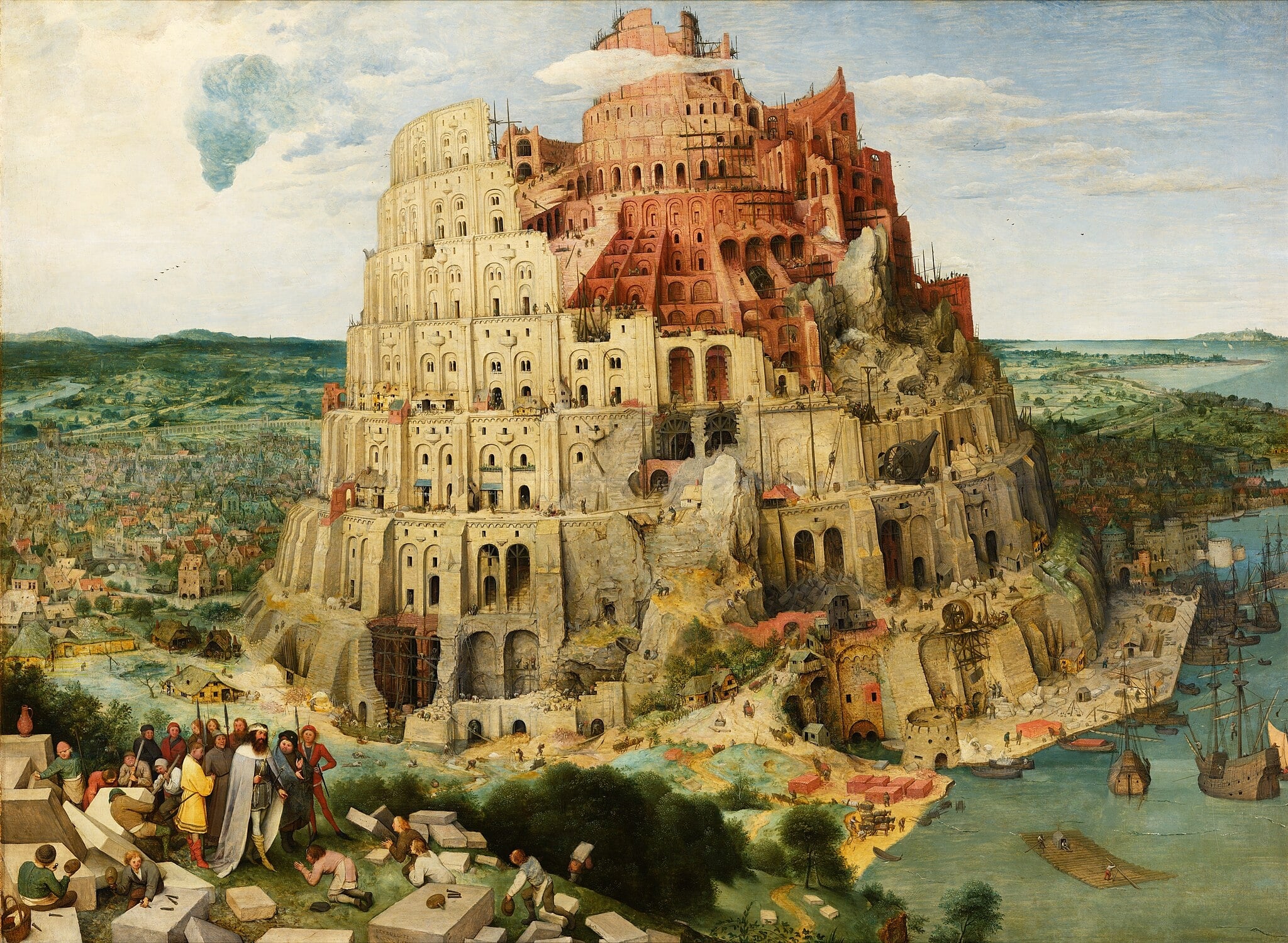
The Tower of Babel
Pieter Bruegel the Elder (1563)
In The Tower of Babel, Pieter Bruegel the Elder stages a spiraling, Roman‑style colossus whose arches, cranes, and swarming labor proclaim <strong>human industry</strong> even as cracked foundations and misaligned tiers foretell <strong>collapse</strong>. The pale, orderly left flank opposes the raw red masonry at right, while a ruler (often read as <strong>Nimrod</strong>) inspects kneeling builders before a bustling Flemish harbor—an image of ambition already undermined from within <sup>[1]</sup>.
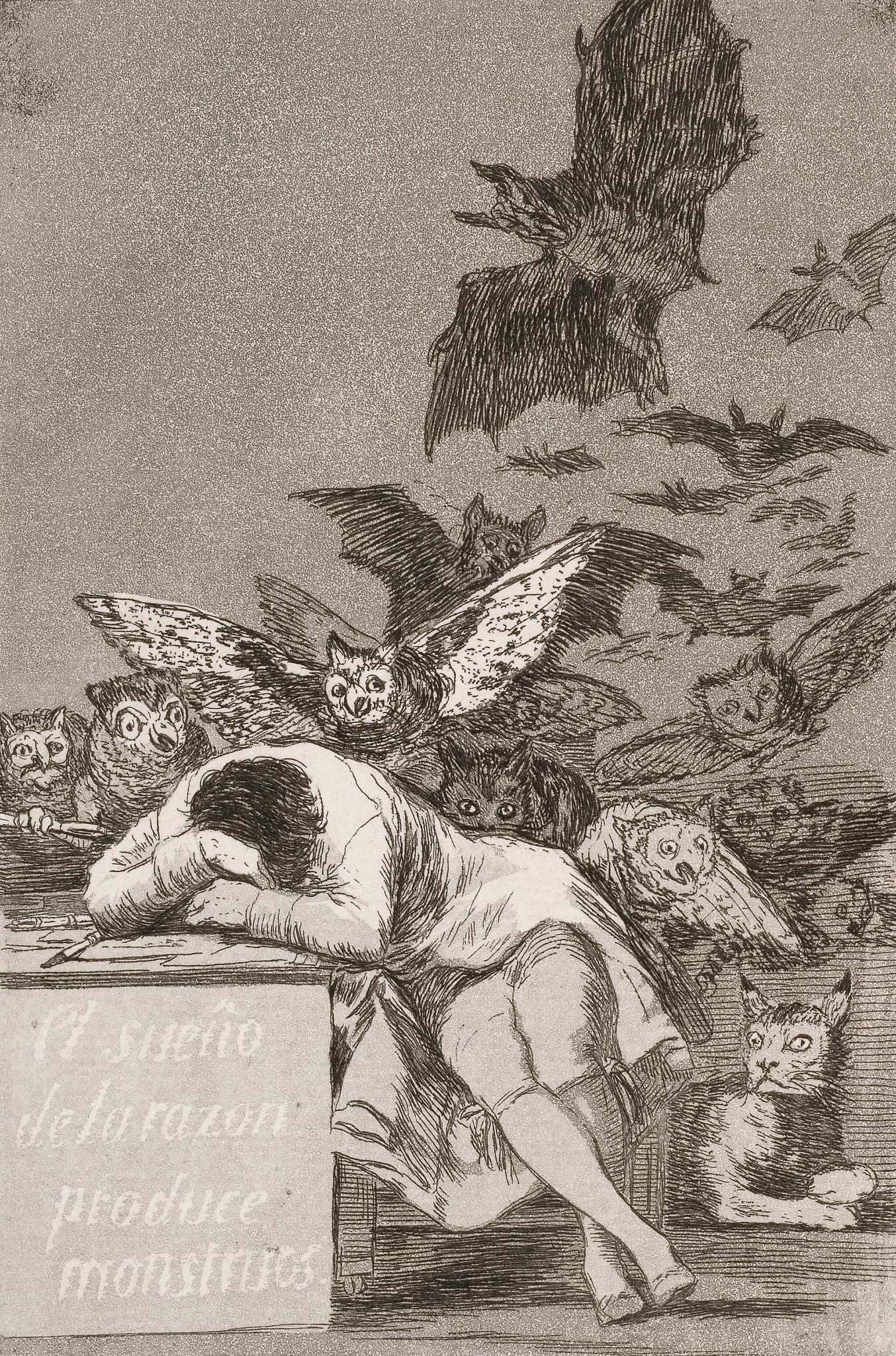
The Sleep of Reason Produces Monsters
Francisco Goya (1799 (published; plates 1797–1798))
In The Sleep of Reason Produces Monsters, a dozing thinker at his desk unleashes a storm of <strong>owls</strong>, <strong>bats</strong>, and a watchful <strong>lynx</strong>, staging Goya’s program for Los Caprichos. The print argues that when <strong>reason</strong> lapses—or when <strong>imagination</strong> is severed from it—social <strong>monsters</strong> of folly and superstition multiply.
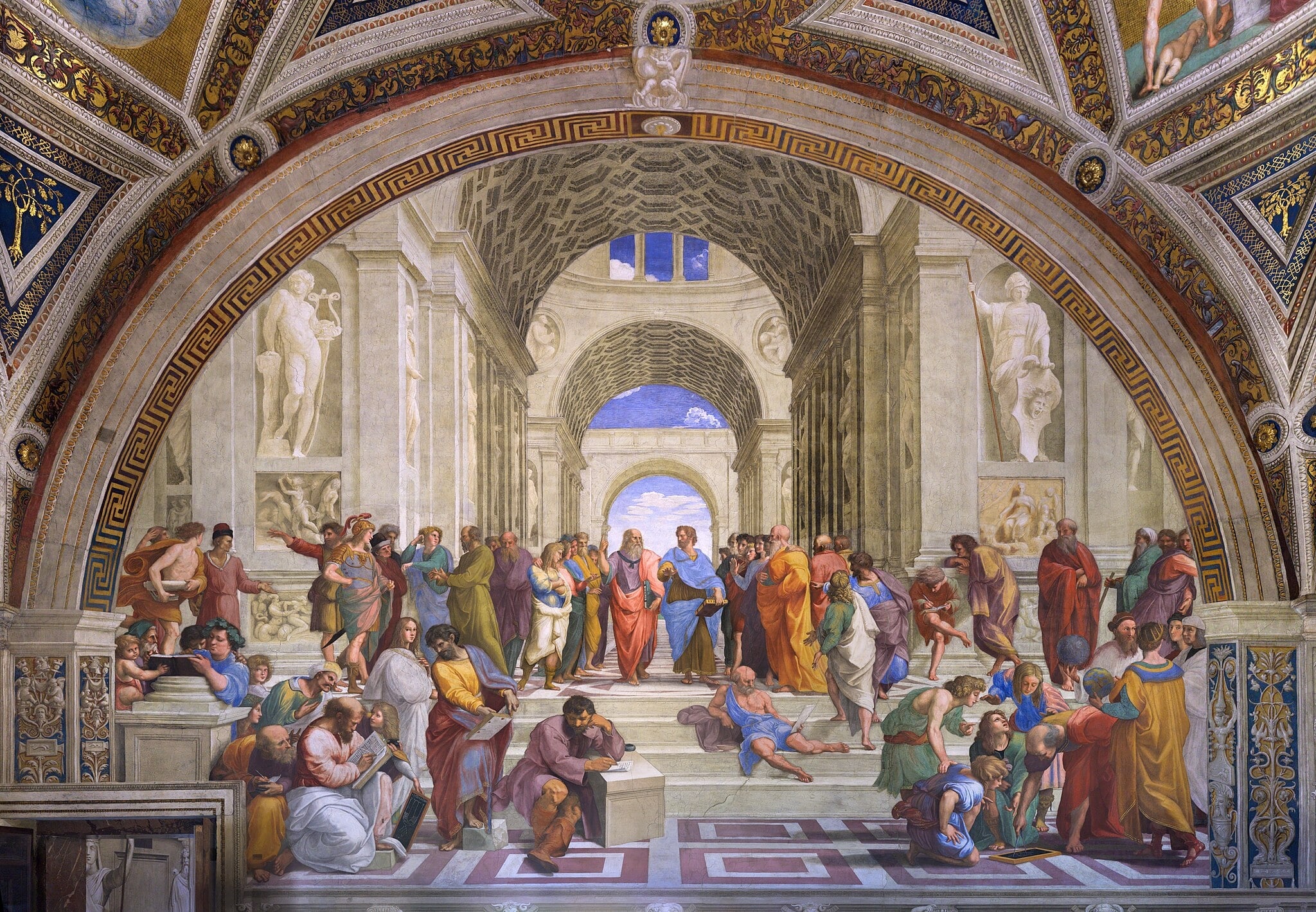
The School of Athens
Raphael (1509–1511)
Raphael’s The School of Athens orchestrates a grand debate on knowledge inside a perfectly ordered, classical hall whose one-point perspective converges on the central pair, <strong>Plato</strong> and <strong>Aristotle</strong>. Their opposed gestures—one toward the heavens, one level to the earth—establish the fresco’s governing dialectic between <strong>ideal forms</strong> and <strong>empirical reason</strong> <sup>[1]</sup><sup>[2]</sup>. Around them, mathematicians, scientists, and poets cluster under statues of <strong>Apollo</strong> and <strong>Athena/Minerva</strong>, turning the room into a temple of <strong>Renaissance humanism</strong> <sup>[1]</sup><sup>[3]</sup>.
Guernica
Pablo Picasso (1937)
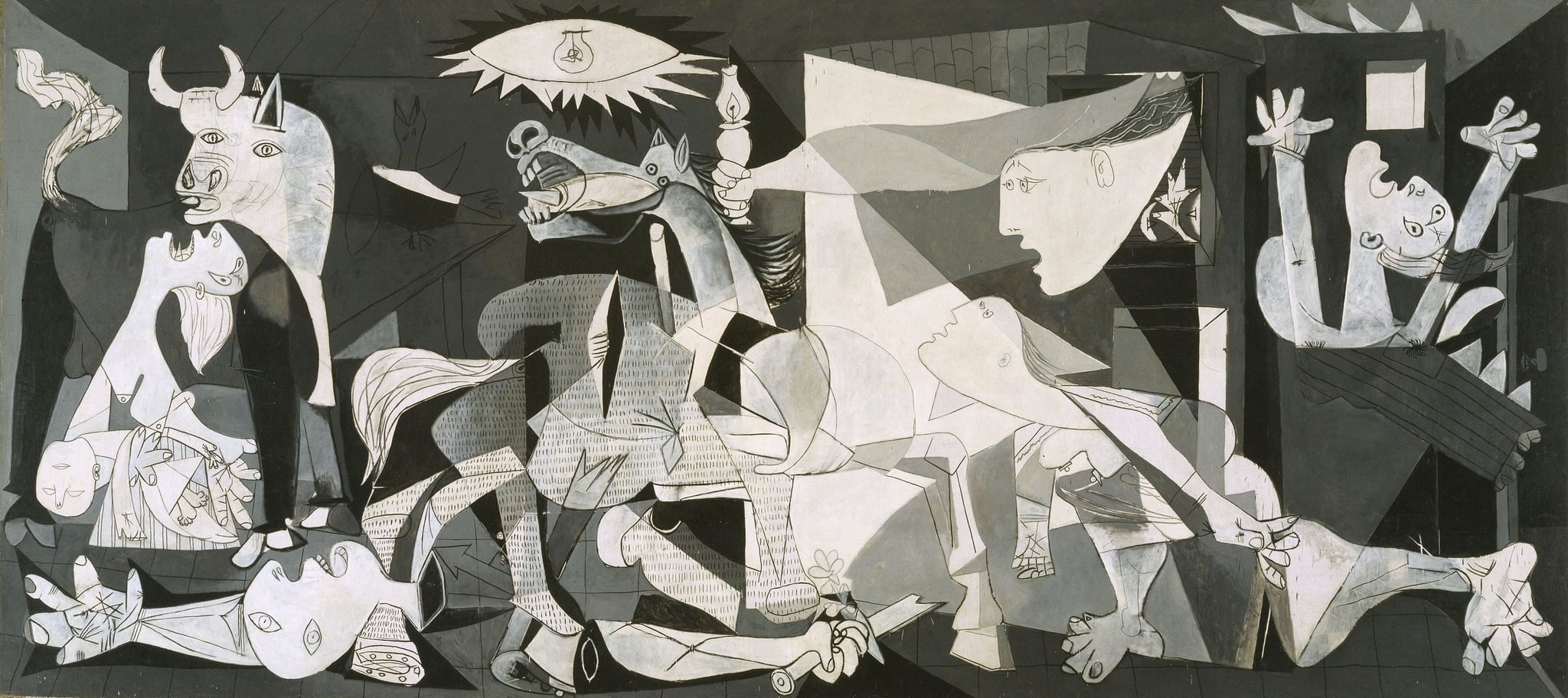
Guernica is a monumental, monochrome indictment of modern war, compressing a town’s annihilation into a frantic tangle of bodies, beasts, and light. Across the canvas, a <strong>shrieking horse</strong>, a <strong>stoic bull</strong>, a <strong>weeping mother with her dead child</strong>, and a <strong>fallen soldier</strong> stage a civic tragedy rather than a heroic battle. The harsh <strong>electric bulb</strong> clashes with a fragile <strong>oil lamp</strong>, turning the scene into a stark drama of terror and witness.
The Supper at Emmaus
Caravaggio (1601)
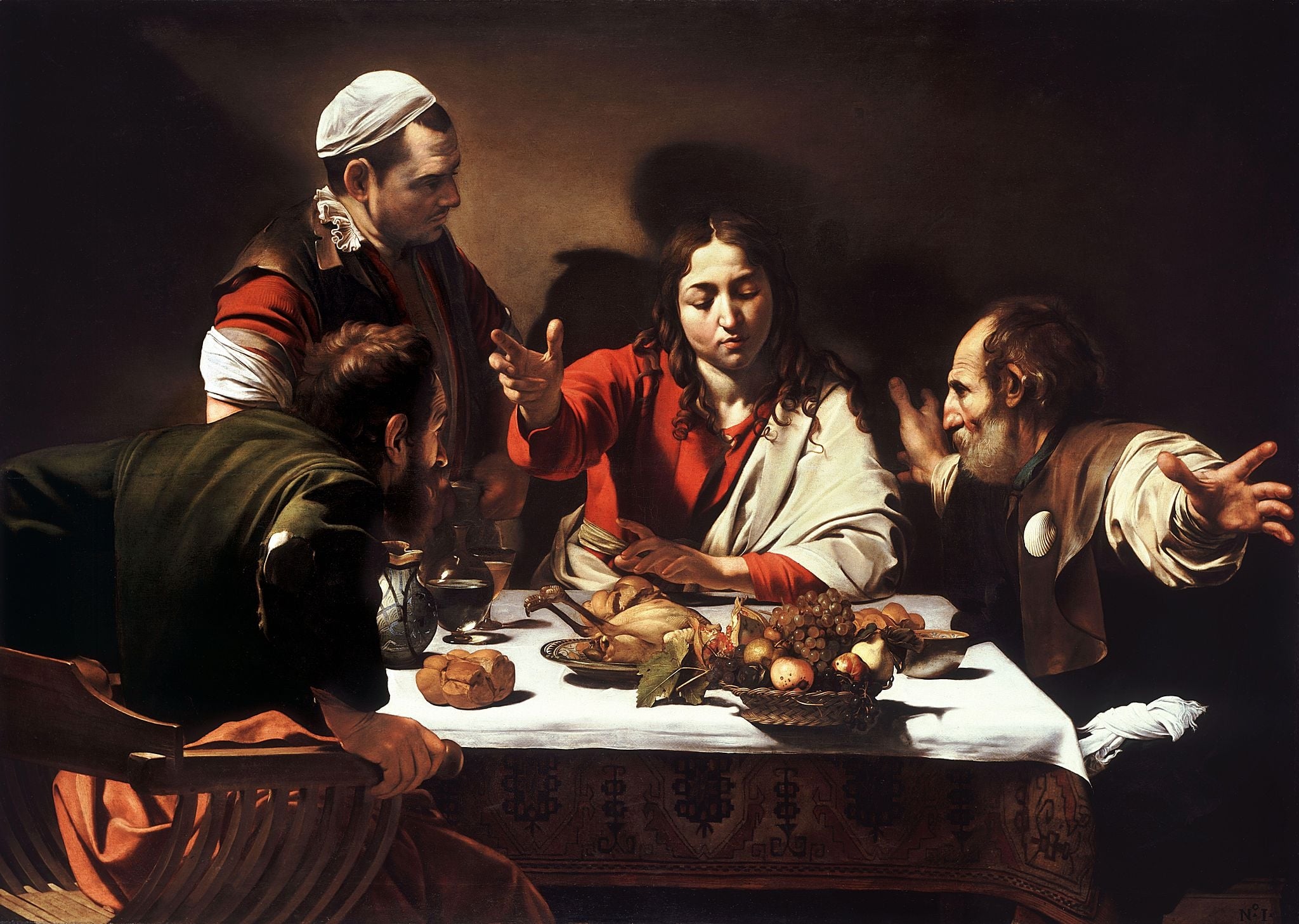
Caravaggio’s The Supper at Emmaus captures the split-second when two disciples recognize Christ in the <strong>breaking of bread</strong>. A raking light isolates Christ’s calm blessing while the disciples erupt—one surging forward with a torn sleeve, the other flinging his arms wide—so the shock of revelation reads as bodily fact. The teetering <strong>basket of fruit</strong> and Eucharistic table amplify themes of abundance and fragility <sup>[1]</sup><sup>[4]</sup>.
The Great Red Dragon and the Woman Clothed with the Sun
William Blake (c. 1805)
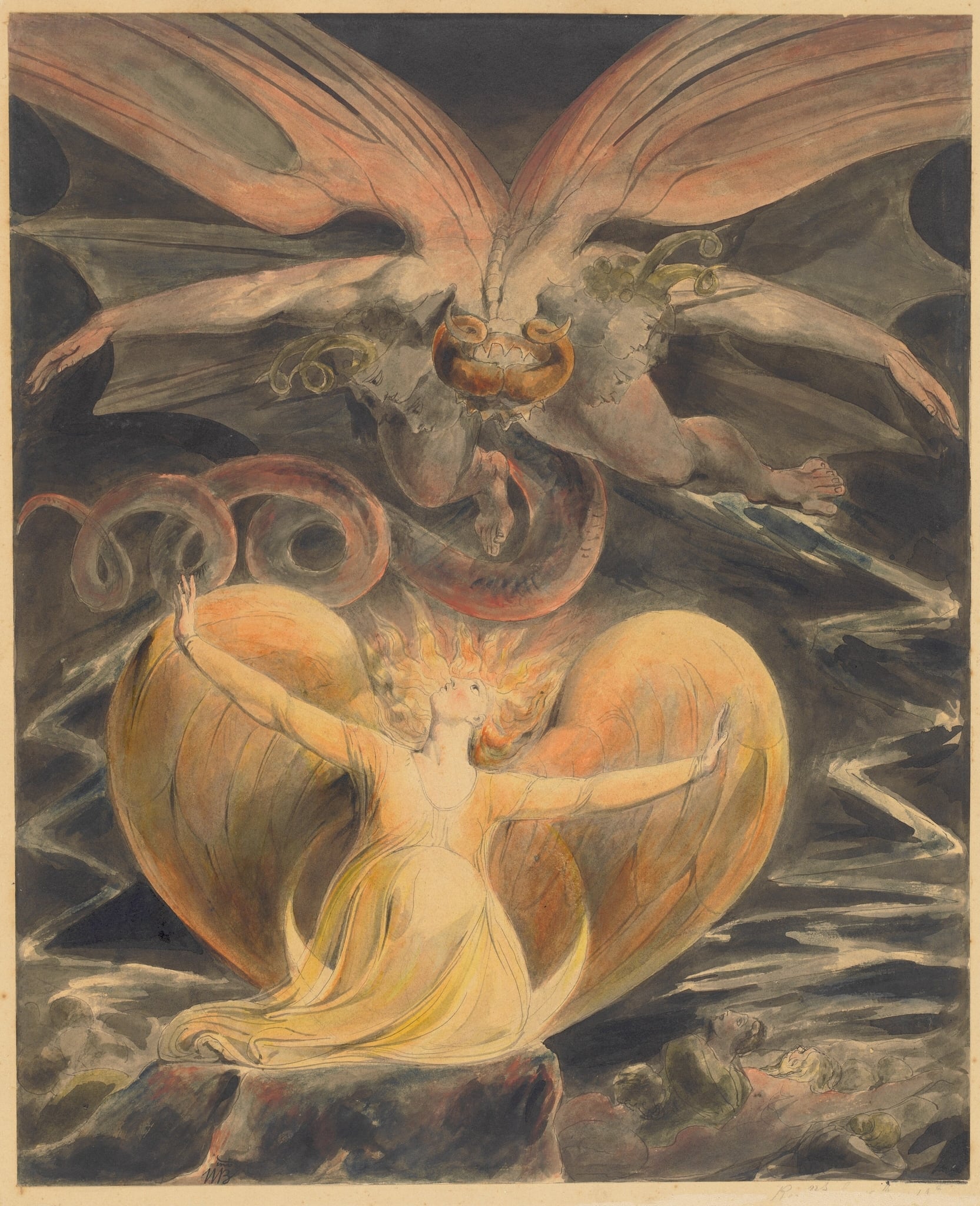
In The Great Red Dragon and the Woman Clothed with the Sun, William Blake pits <strong>radiant innocence</strong> against <strong>predatory tyranny</strong>. A bat‑winged dragon with ramlike horns plunges from a stormed sky as the woman, haloed in light with great golden, heart‑shaped wings, lifts open palms to meet the assault. Blake’s high‑contrast watercolor turns the tableau into a visionary contest of <strong>light versus darkness</strong> <sup>[1]</sup>.
A Morning by the Pond
Gustav Klimt (1899)
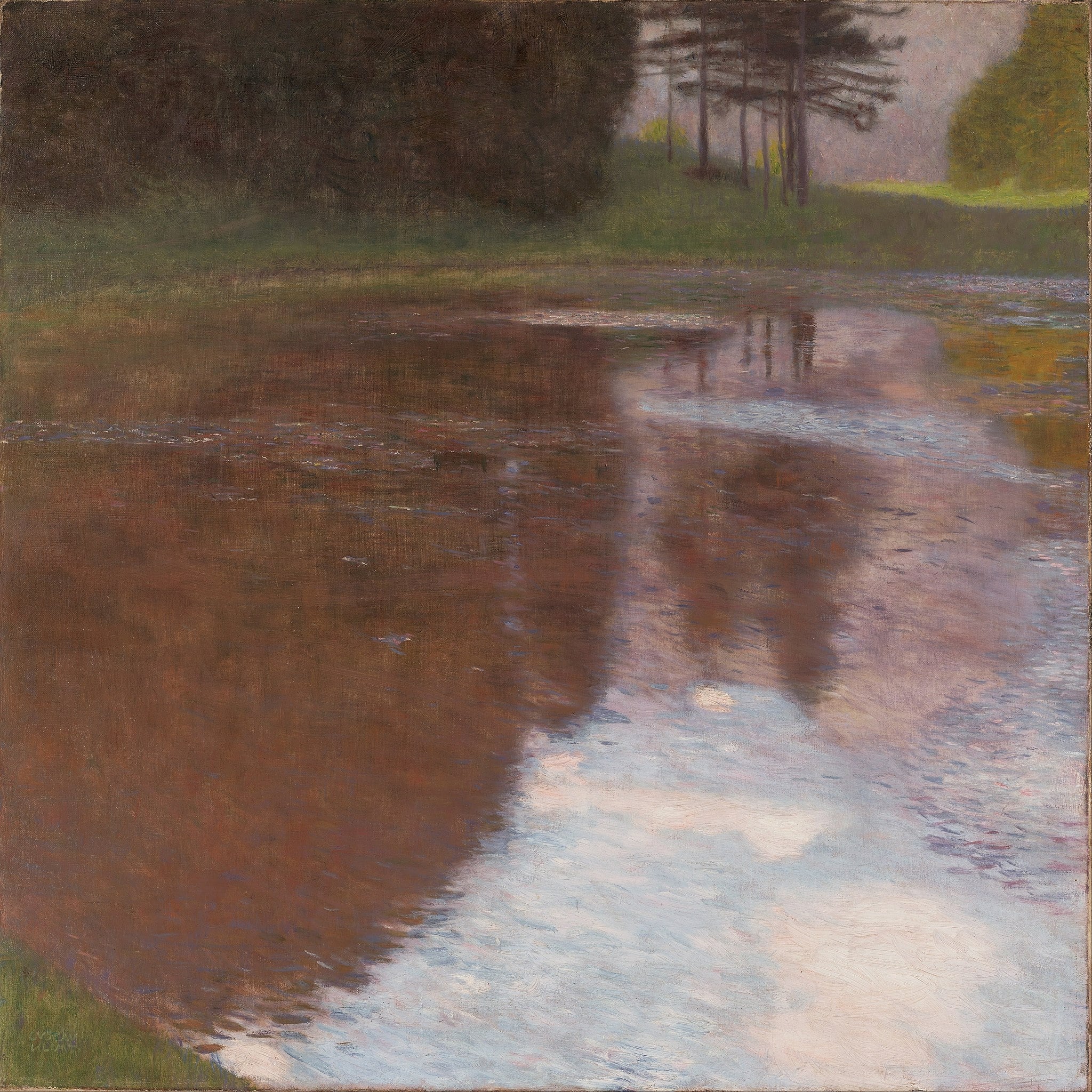
A Morning by the Pond turns a quiet Egelsee shoreline into a field of <strong>reflection</strong> where trees, bank, and sky dissolve into one surface. Klimt’s first <strong>square format</strong> landscape compresses depth and makes water the true subject, staging a luminous <strong>threshold</strong> between night and day. The work establishes perception itself—what we see and how—as Klimt’s modern theme.
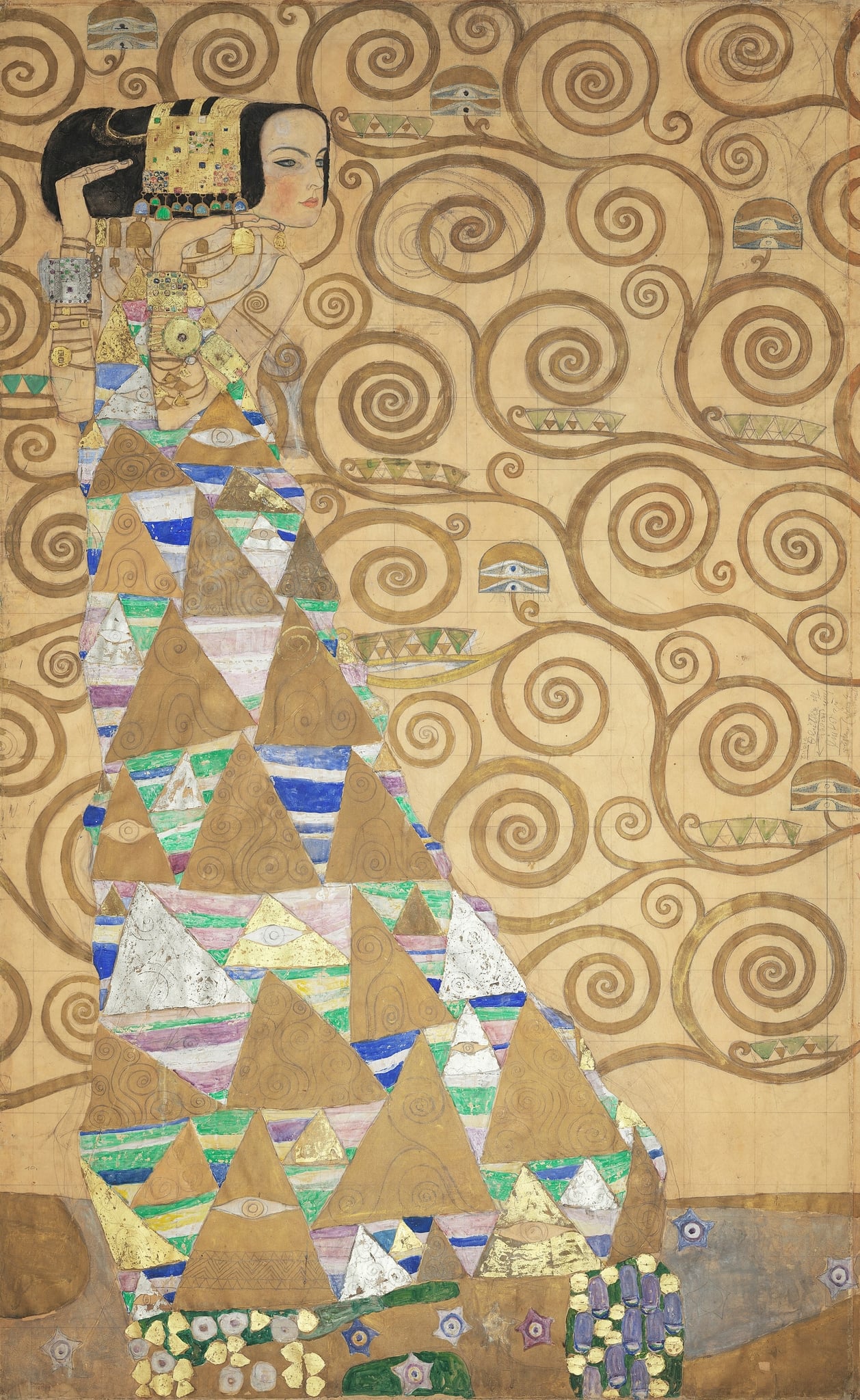
Expectation (Dancer)
Gustav Klimt (1911)
Expectation (Dancer) crystallizes a <strong>charged pause</strong>: a profile figure, rigid as an <strong>Egyptian relief</strong>, advances through a field of spiraling <strong>Tree of Life</strong> coils while a mosaic robe of triangles and watchful <strong>eyes</strong> armors her body. Klimt fuses <strong>ornament and symbol</strong> so that anticipation itself becomes pattern and gold-lit ritual <sup>[1]</sup><sup>[4]</sup>.
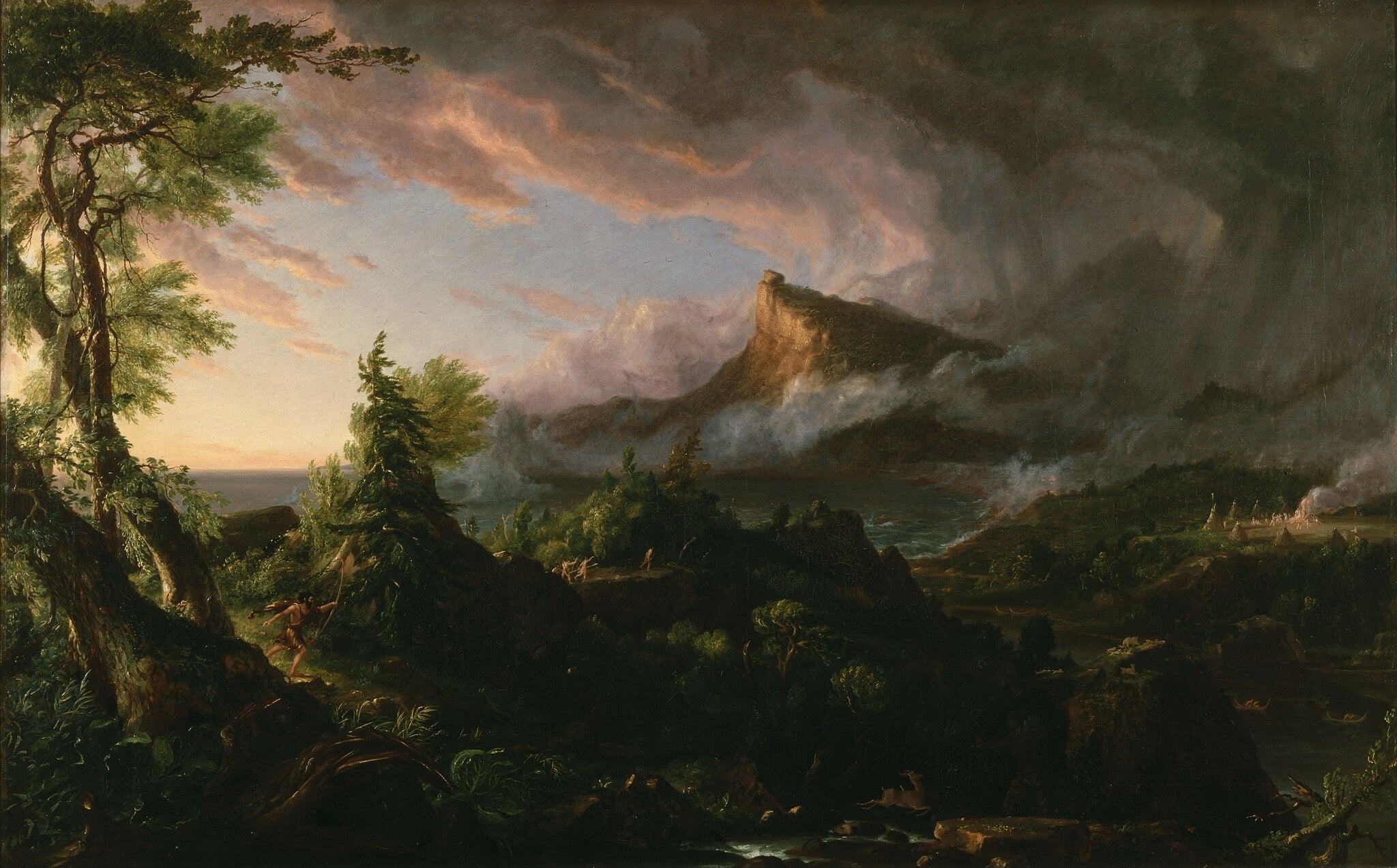
The Course of Empire: The Savage State
Thomas Cole (c. 1834 (series 1834–1836))
Thomas Cole’s The Course of Empire: The Savage State inaugurates his five-part cycle with a landscape ruled by <strong>wildness</strong> and <strong>origin</strong>. Dawn breaks at left as storm clouds rake a flat-topped crag, while a hunter looses an arrow, canoes cut the river, and smoke lifts from skin tents—signals of a society at the threshold of history <sup>[1]</sup><sup>[2]</sup><sup>[3]</sup>.
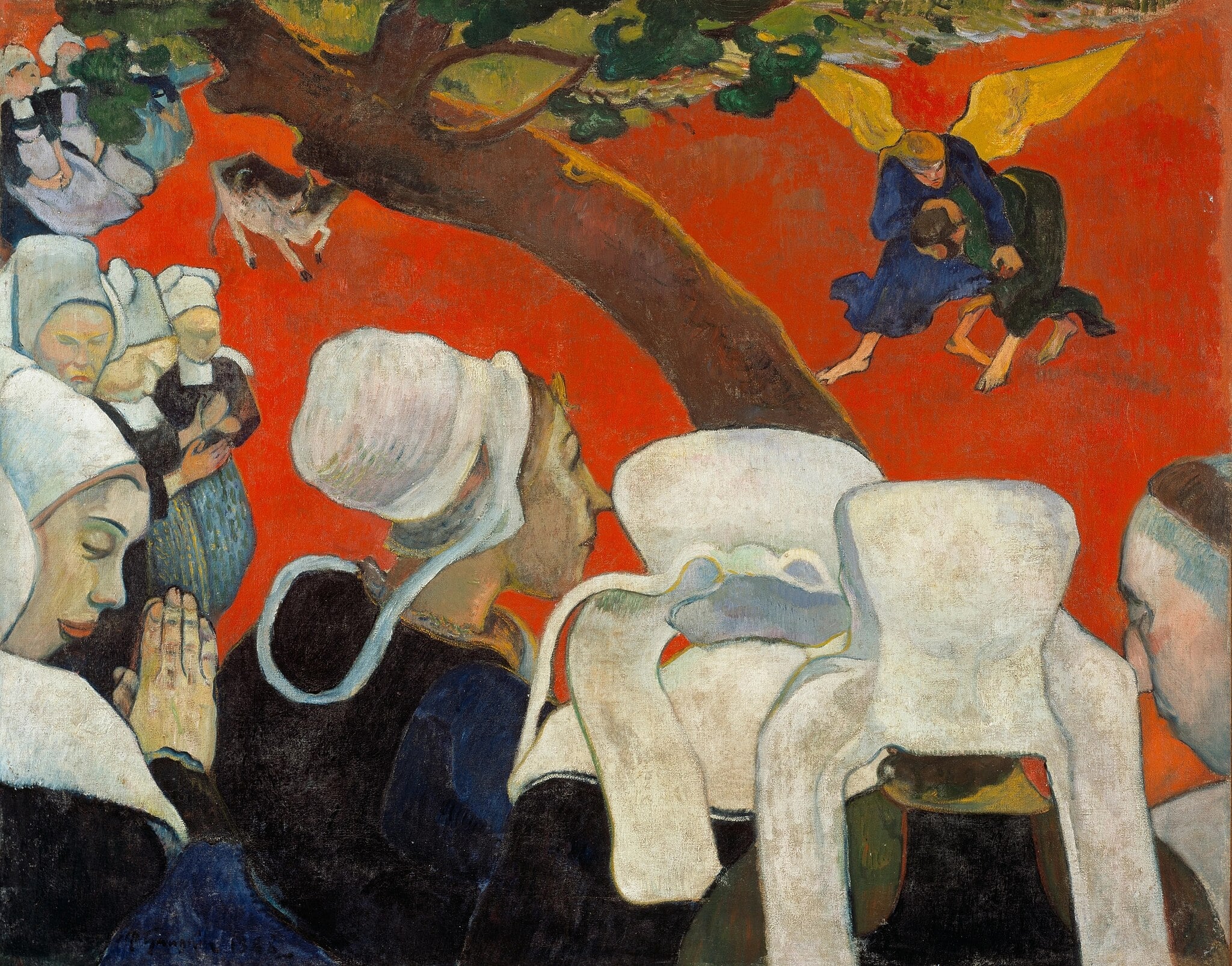
Vision After the Sermon
Paul Gauguin (1888)
Paul Gauguin’s Vision After the Sermon (1888) stages a divide between lived ritual and <strong>collective vision</strong>: Breton women pray in the foreground while, across a diagonal tree, Jacob wrestles an angel on a <strong>flat red field</strong>. With <strong>bold contours</strong> and <strong>non‑naturalistic color</strong>, Gauguin turns faith into pictorial form, making inner experience the painting’s true subject <sup>[1]</sup><sup>[2]</sup>.
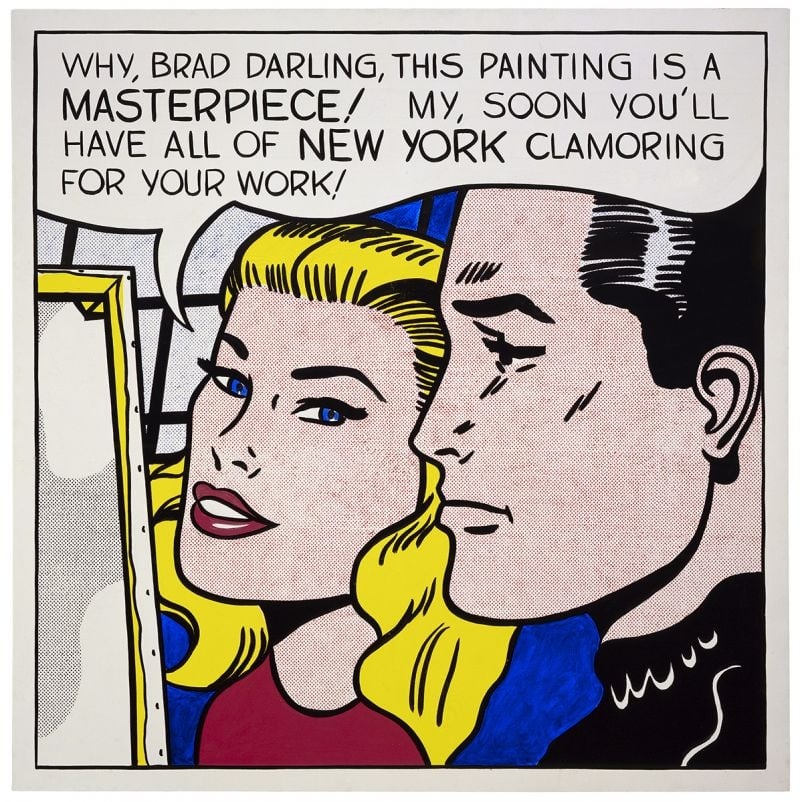
Masterpiece
Roy Lichtenstein (1962)
<strong>Masterpiece</strong> (1962) turns a romance‑comic close‑up into a cool exposé of how praise is manufactured. With a buoyant speech balloon and hand‑made Ben‑Day dots, Roy Lichtenstein converts private flattery into public <strong>promotion</strong>—an image about the image economy itself <sup>[1]</sup><sup>[2]</sup>.
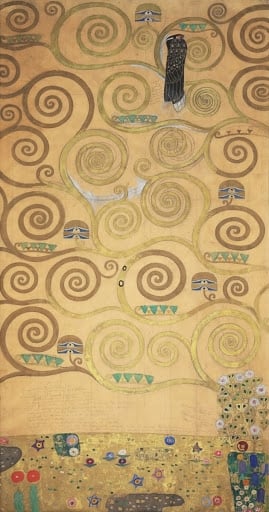
Part of the Tree of Life (Part 3)
Gustav Klimt (1910–1911)
Gustav Klimt’s Part of the Tree of Life (Part 3) is a full‑scale cartoon for the Stoclet Frieze, where a gold ground hosts spiraling branches studded with <strong>Eyes of Horus</strong> and jewel‑like emblems. A perched <strong>Horus falcon</strong> and a carpet of stylized flowers fuse myth, ornament, and cyclical vitality into a single, curling design <sup>[1]</sup><sup>[2]</sup>.
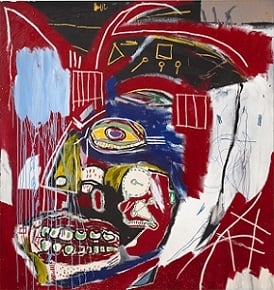
In This Case
Jean-Michel Basquiat (1983)
In This Case thrusts a flayed, X‑ray‑like head against a <strong>searing red field</strong>, where boxed teeth, a target‑bright <strong>single eye</strong>, and schematic glyphs above the brow turn the face into a site of <strong>classification and alarm</strong>. Jean-Michel Basquiat fuses anatomy with street mark‑making to stage a confrontation with <strong>mortality, surveillance, and Black embodiment</strong> <sup>[1]</sup><sup>[2]</sup>.
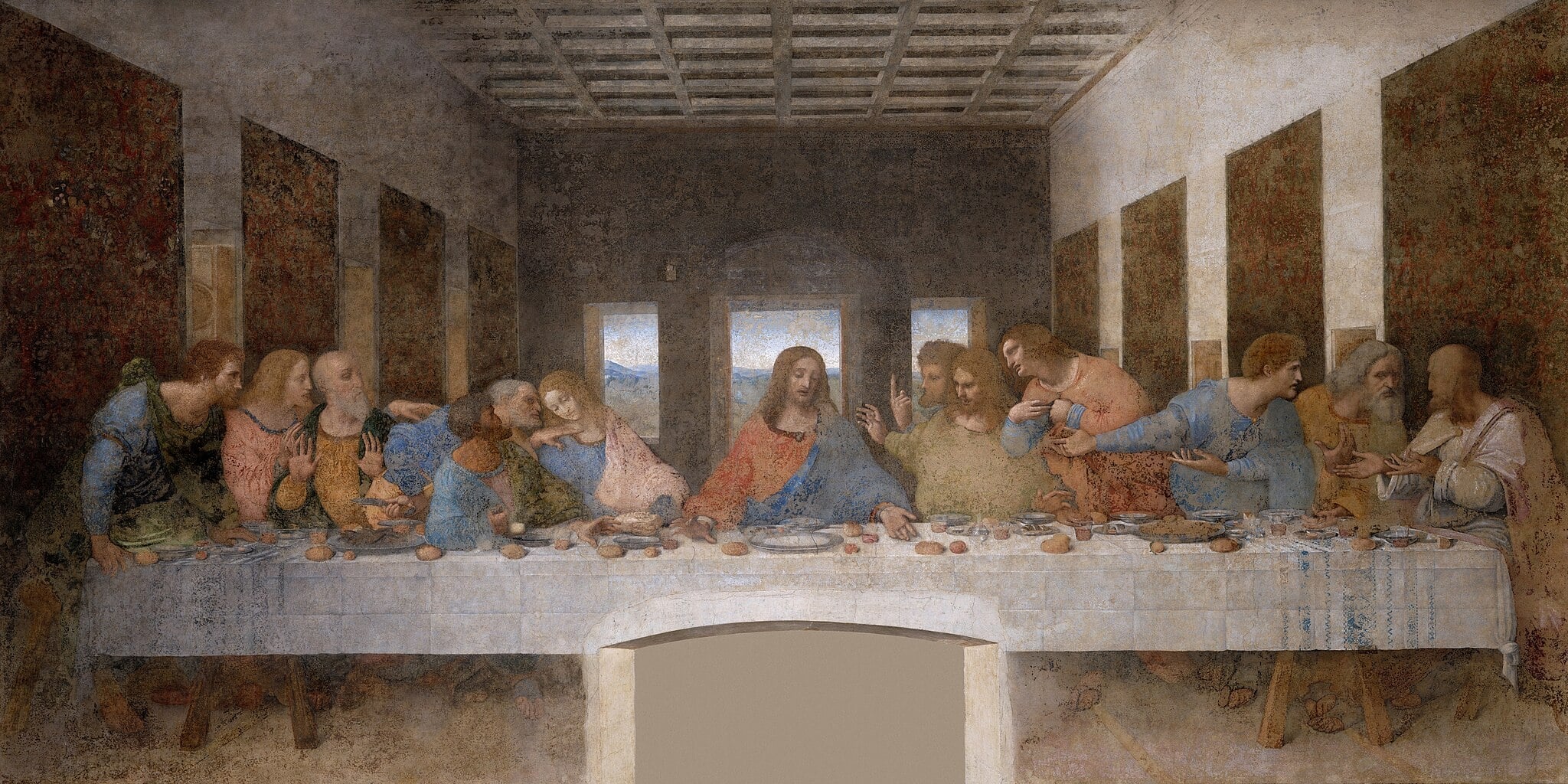
The Last Supper
Leonardo da Vinci (1495–1498)
Leonardo da Vinci’s The Last Supper captures the instant after Christ declares a coming betrayal, freezing divine calm amid human tumult. At the center, Christ’s <strong>triangular stillness</strong> aligns with a one‑point perspective that funnels all space to his head, while bread and wine announce the <strong>Eucharist</strong>. Four flanking trios surge outward in shock, doubt, and protest, with Judas recoiling in shadow and clutching a <strong>purse</strong> of silver <sup>[1]</sup><sup>[3]</sup>.
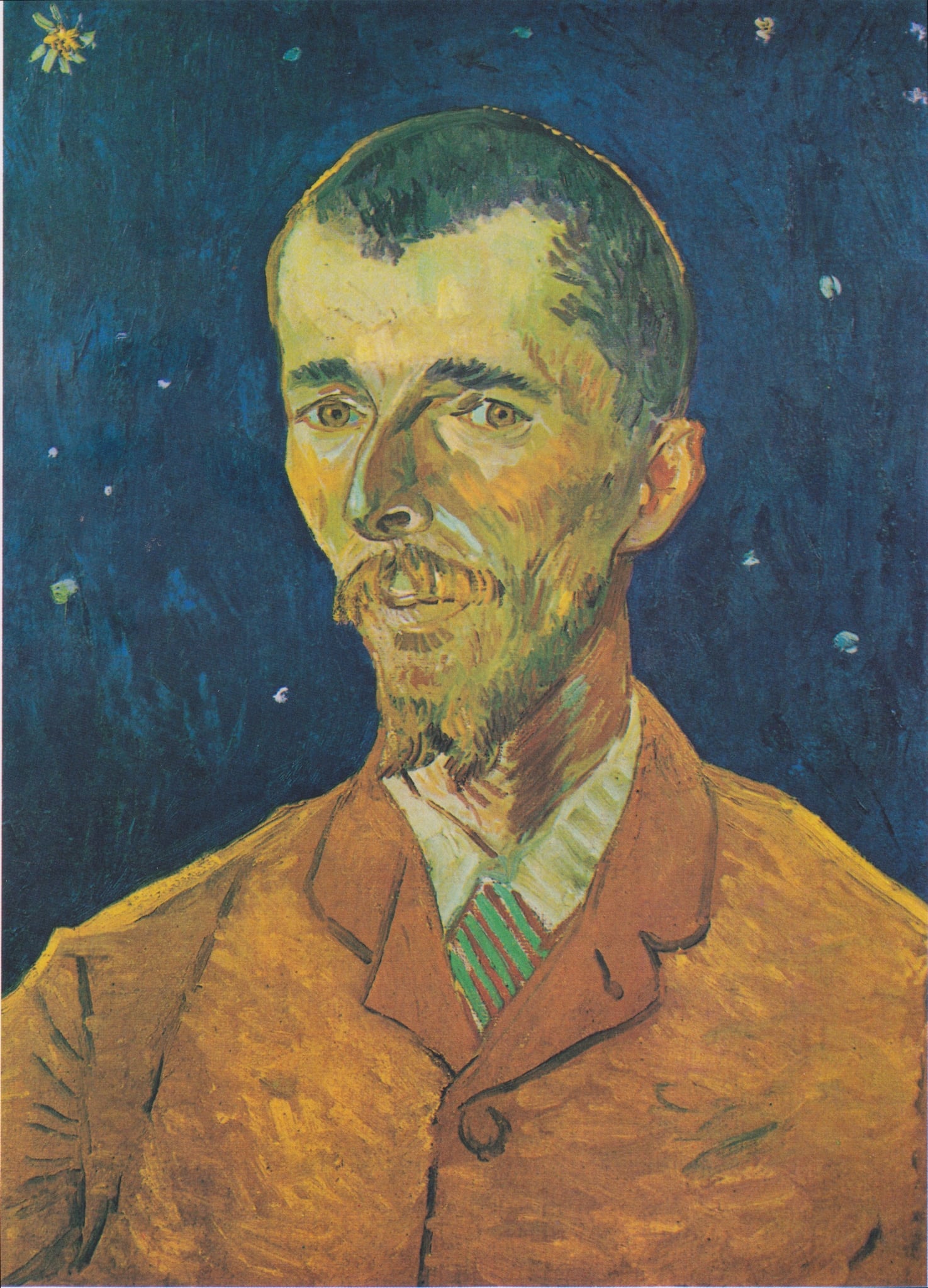
Eugène Boch
Vincent van Gogh (1888)
Vincent van Gogh’s 1888 portrait of <strong>Eugène Boch</strong> turns a friend into a visionary presence: a glowing, ocher head set before an <strong>infinite blue</strong> pricked with stars. The lone bright star at upper left and the cobalt field make the warm face and jacket <strong>vibrate</strong> from the night, declaring art as vocation rather than mere likeness <sup>[1]</sup><sup>[2]</sup>.
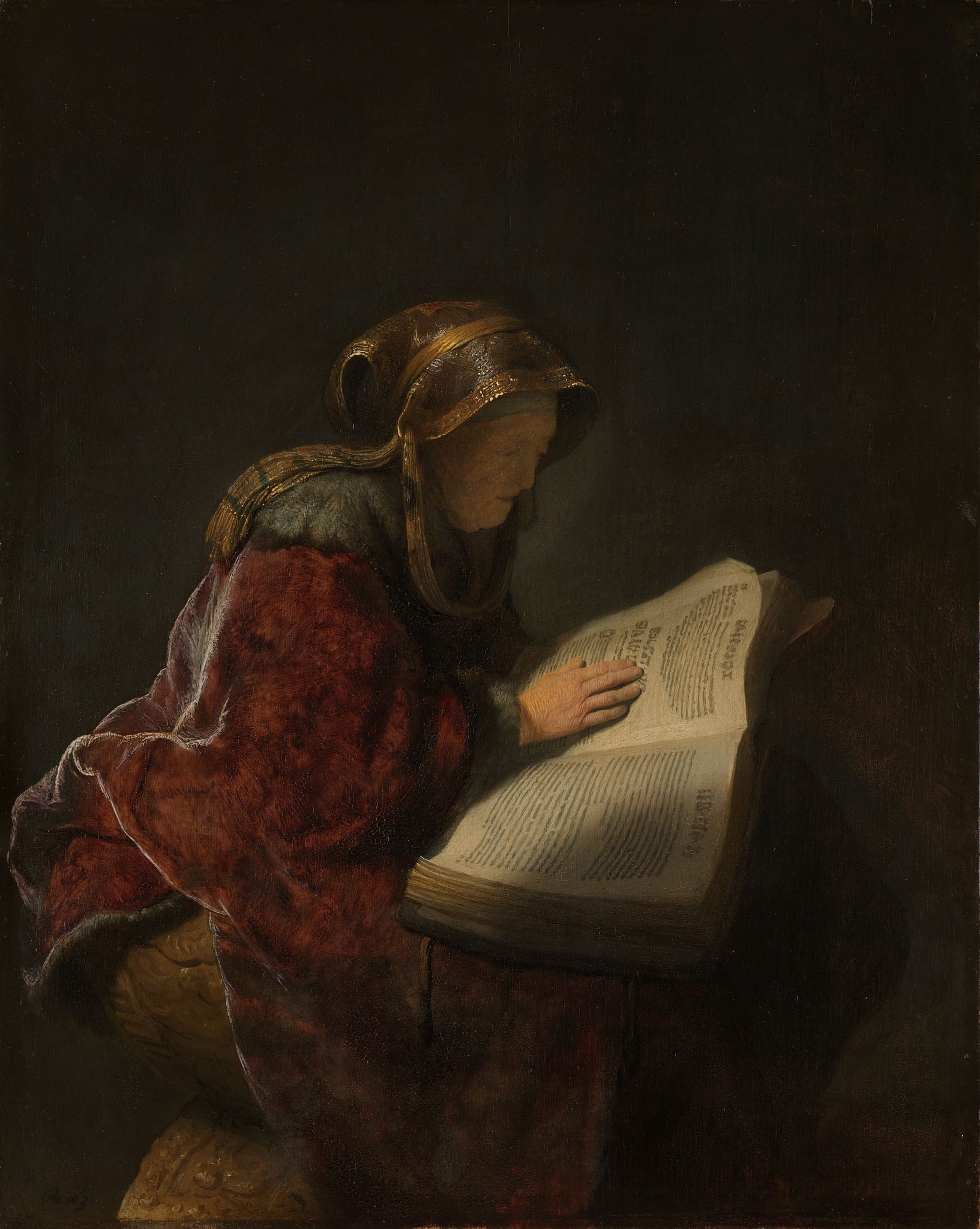
Old Woman Reading, Probably the Prophetess Anna
Rembrandt van Rijn (1631)
A solitary reader bends over a monumental book, its pages and her guiding finger catching the only concentrated light. Rembrandt van Rijn turns this quiet act into a scene of <strong>revelation</strong>, proposing the sitter as <strong>Anna the prophetess</strong>, whose lifelong devotion is embodied in the weight and glow of Scripture <sup>[1]</sup><sup>[4]</sup>.
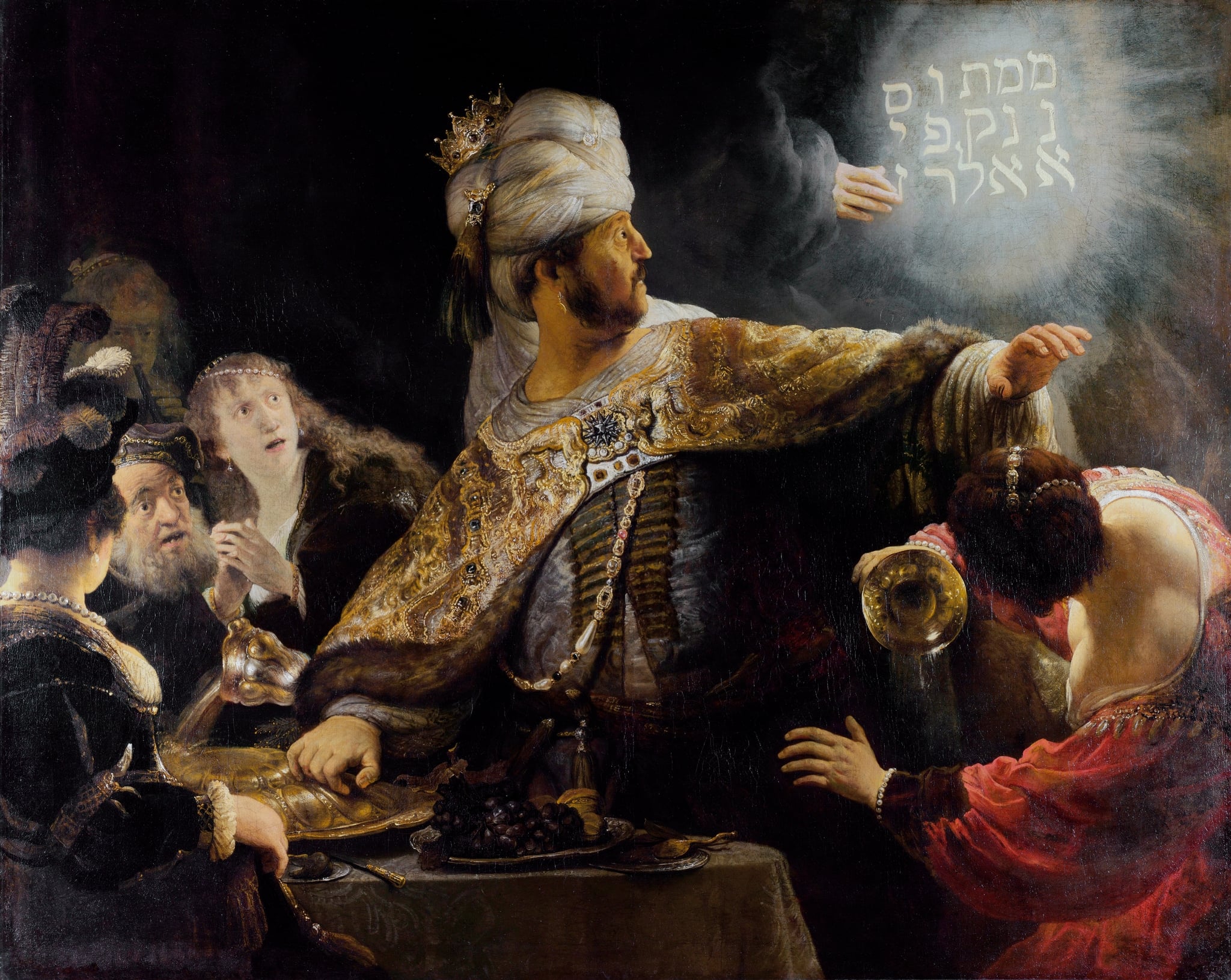
Belshazzar's Feast (study listed separately in some catalogues)
Rembrandt van Rijn (c. 1636–1638)
In Belshazzar's Feast (study listed separately in some catalogues), Rembrandt van Rijn arrests the instant a royal revel is judged by a <strong>supernatural decree</strong>. A radiant hand writes the fateful words while the bejeweled king jerks round, courtiers flinch, and sacred vessels glint—opulence set against <strong>divine judgment</strong> <sup>[1]</sup><sup>[2]</sup>.