Lantern or Flag?
Both artists rebuilt history painting around the urgencies of their own moment. Goya turns events into exposure, staging the viewer as a witness under harsh, man‑made light. Delacroix turns events into a mobilizing emblem, choreographing color and diagonals to unify a crowd. Together they map two durable modern functions of public images.
Comparison frame: Is modern history painting built on Goya’s lantern or Delacroix’s flag—on exposure or enlistment?
Quick Comparison
| Topic | Eugene Delacroix | Francisco Goya |
|---|---|---|
| Core purpose of painting | Exposure: show what power does, without alibis | Mobilization: bind a public around a shared ideal |
| Spectator’s role | Implicated witness at the edge of atrocity | Enlisted participant in a forward surge |
| Formal engine | Localized man‑made light; aquatint blacks; abrasive paint | Orchestrated color harmonies; diagonals; rhythmic crowds |
| Treatment of figures | Victims individualized; executioners as faceless mechanism | Social types coordinated; ideals personified (Liberty, Greece) |
| Allegory | Borrowed sacred codes used critically, without consolation | Allegory in the present tense, dropped into smoke and rubble |
| Preferred formats/context | Serial prints withheld until 1863; private Black Paintings | Large Salon canvases; state purchase and volatile display |
| Emotional effect | Disillusion, testimony, mourning | Exaltation with cost; purpose and pathos |
Shared Ground
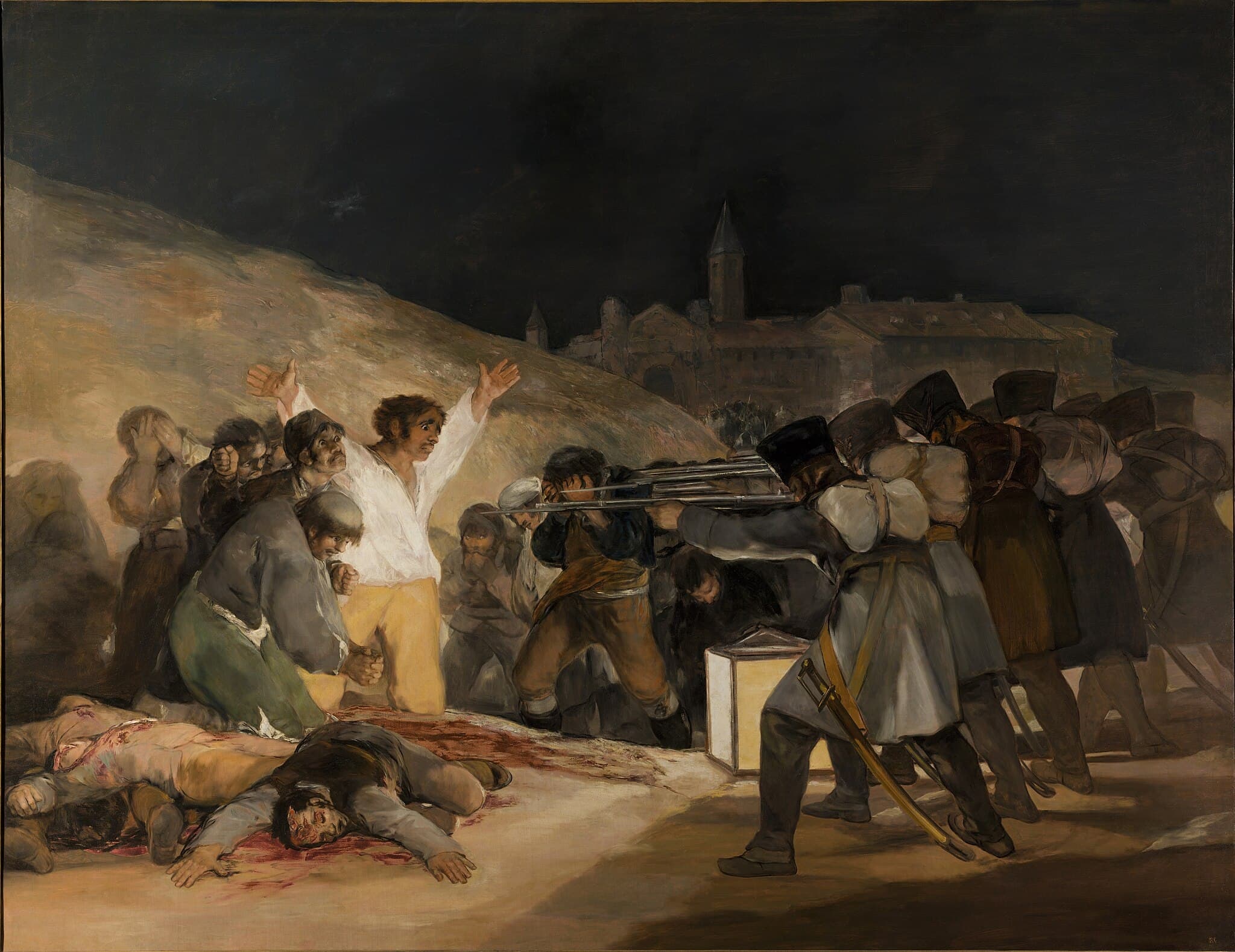
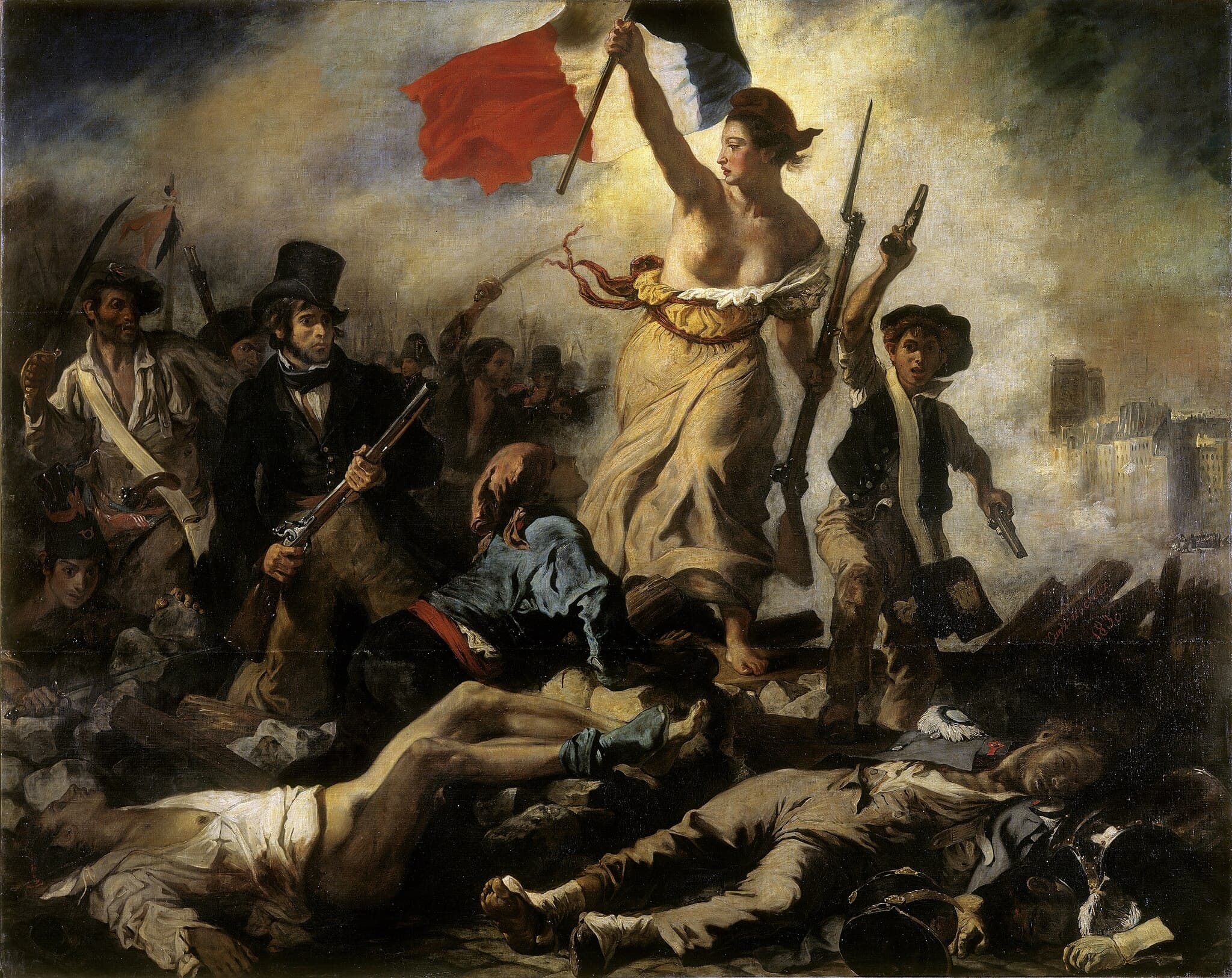
Goya and Delacroix retooled history painting for immediate crises rather than distant dynasties. Each took very recent upheaval and translated it into images built for a modern public sphere. Goya’s The Third of May 1808 shows a night execution just after Madrid’s uprising; Delacroix’s Liberty Leading the People fuses a July 1830 street fight with a lucid emblem. In both cases, “history” is not a court pageant but civic seeing—what a public must look at together.
They also redefined how a picture addresses us. Goya drags the dead and the firing line up to the picture plane under a ground lantern, turning the viewer into a necessary witness. Delacroix composes a forward thrust that visually enrolls us in a collective charge. Form is argument for both: Goya’s chiaroscuro and coarse facture press events into the present; in prints, aquatint’s velvety blacks make night, ignorance, and panic palpable. Delacroix’s chromatic chords and diagonals convert crowd energy into legible purpose at a glance, a color logic he openly championed.
Finally, each renovates allegory for the now. Goya borrows martyr codes—stigmata-like wounds, cruciform poses—only to strip away divine rescue; his light is human, and it exposes procedure, not miracle. Delacroix personifies ideas (Liberty, Greece) and sets them amid smoke, rubble, and news details—Notre‑Dame’s towers, toppled shakos—so that emblem and event co‑exist. On this shared ground, both artists relocate the authority of history painting from court to street, from ceremony to urgency.
Decisive Difference
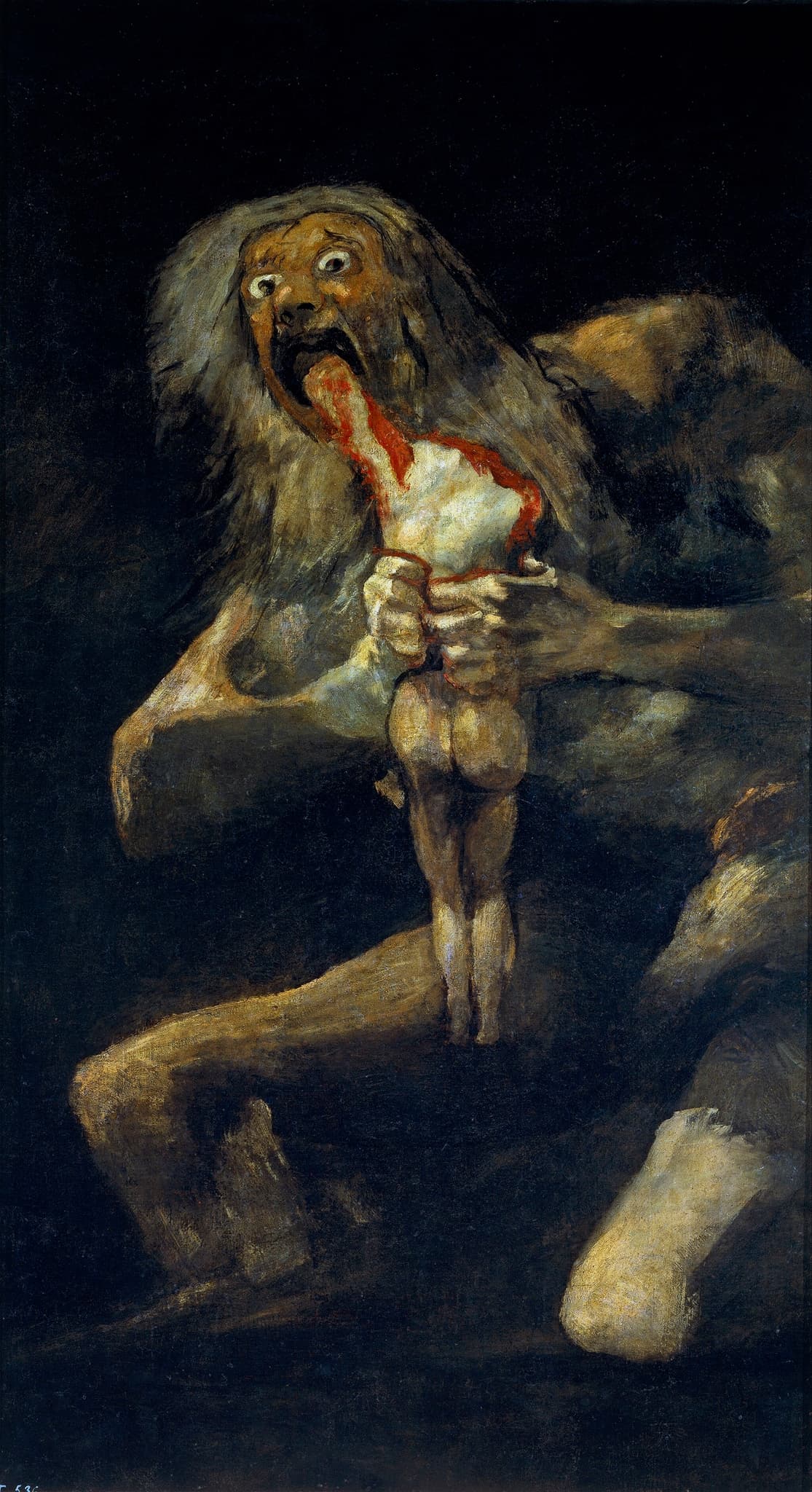
Goya’s project is exposure and disillusion. He shows power as a repeatable mechanism: backs of soldiers fused into a single instrument, a civilian flung into lantern glare, captions like “Yo lo vi” (“I saw it”) in the Disasters of War that declare witness over rhetoric. Even when he taps sacred iconography, the light is man‑made and the victims nameless. His late Black Paintings reduce myth to a bare act inside a void—Saturn’s panic‑struck eyes, no attributes—private indictments that refuse theatrical consolation. With prints withheld until 1863 and murals made on his own walls, his modernity leans on testimony, not spectacle.
Delacroix’s project is mobilizing myth. He rehabilitates allegory for mass politics, arguing—through chromatic drama—that conviction is formed in the eye. Liberty Leading the People coordinates classes with the tricolor as a visual vector; the Louvre’s recent cleaning clarified how blue‑white‑red structures belief. In Scenes from the Massacre at Chios and The Death of Sardanapalus, suffering and tyranny become tragic spectacle—staged pathos, not forensic report—so that feeling coheres around a shared sign. Delacroix’s credo that a painting should be a “feast for the eye” is not mere decoration; it states that sensuous order can enlist disparate viewers into one imagined public. Put simply: Goya asks us to see what power does; Delacroix asks us to see what a people could do together.
Paired Works
Lantern vs Flag
Focus question: How do a lantern and a flag direct public feeling about violence and action?
The Third of May 1808 vs Liberty Leading the People
Testimony vs Tragic Tableau
Focus question: What counts as evidence in an image of atrocity?
The Disasters of War (Plate 44: Yo lo vi) vs Scenes from the Massacre at Chios
Power’s Appetite: Void vs Spectacle
Focus question: How do they picture sovereign violence—private panic or public performance?
Saturn Devouring His Son vs The Death of Sardanapalus
Reason’s Vigil vs Allegory’s Appeal
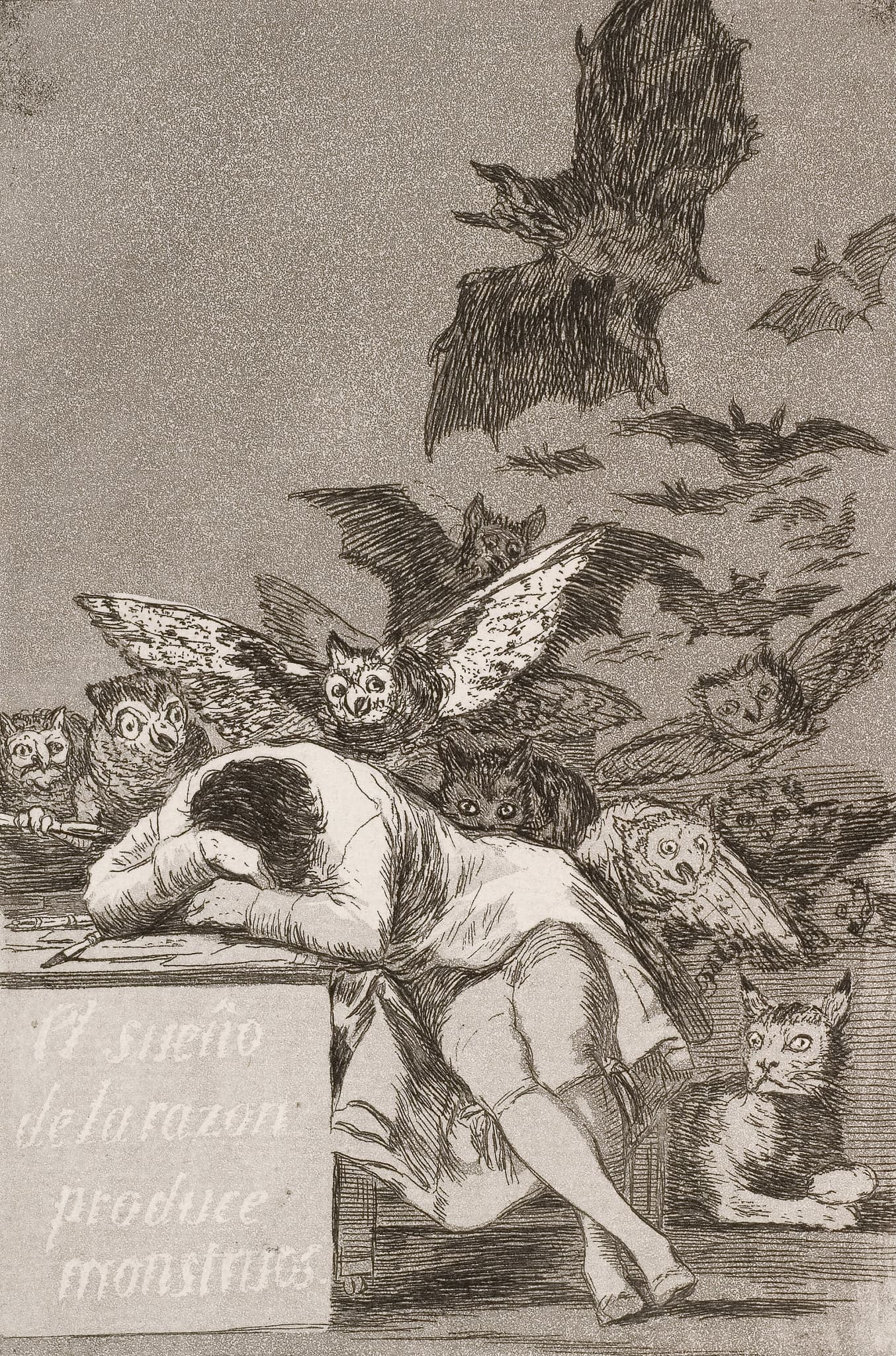
Focus question: Where do they place trust—reason’s vigilance or emblematic solidarity?
The Sleep of Reason Produces Monsters vs Greece on the Ruins of Missolonghi
Why This Comparison Matters
Modern public images still oscillate between Goya’s lantern and Delacroix’s flag. One tradition asks pictures to force acknowledgment—to function as witness, like Goya’s execution and his “I saw it” captions. Another asks pictures to gather will—to function as rallying signs, like Delacroix’s tricolor‑driven charge. Both are potent, both can mislead, and both shape how events enter shared memory.
Seeing the distinction clarifies later art. Manet’s Execution of Maximilian borrows Goya’s witnessing grammar; countless posters and news images borrow Delacroix’s pyramid and flag. The choice is not merely stylistic. It is a decision about trust: do we want art to record what power does, or to help a public imagine what it might do together? Understanding how Goya and Delacroix built these options helps us read the stakes of political imagery now—with sharper eyes for how form, light, and color work on our judgment.
Related Links
Sources
- Museo del Prado – The 3rd of May 1808 in Madrid (context and lantern)
- Britannica – The Third of May 1808
- British Museum – Disasters of War, Plate 44: Yo lo vi
- Britannica – The Disasters of War
- Museo del Prado – Saturn Devouring His Son
- Britannica – Liberty Leading the People
- Smarthistory – Delacroix, Liberty Leading the People
- Louvre Press – 2023–24 cleaning of Liberty Leading the People
- Britannica – The Massacre at Chios
- The Met – Delacroix (catalog; color, “feast for the eye”)
- Open University – The color/line debate (Ingres vs Delacroix background)
- PMC – Goya’s illness and deafness (context)
- MoMA – Manet and Goya’s Third of May (execution motif afterlife)
- Musée des Beaux‑Arts de Bordeaux – Greece on the Ruins of Missolonghi
- Louvre – Delacroix and Colour