The Third of May 1808
Study print
Prefer the curated version?
View the study print we made for this artwork, pairing the full painting with a close reading of one meaningful detail.

Study Print Studio
Create a personal study print
Build a companion study sheet around the part of this painting that speaks to you most. Choose a detail, shape an interpretation, and walk away with something personal and display-worthy.
Fast Facts
- Year
- 1814
- Medium
- Oil on canvas
- Dimensions
- 268 x 347 cm
- Location
- Museo Nacional del Prado, Madrid
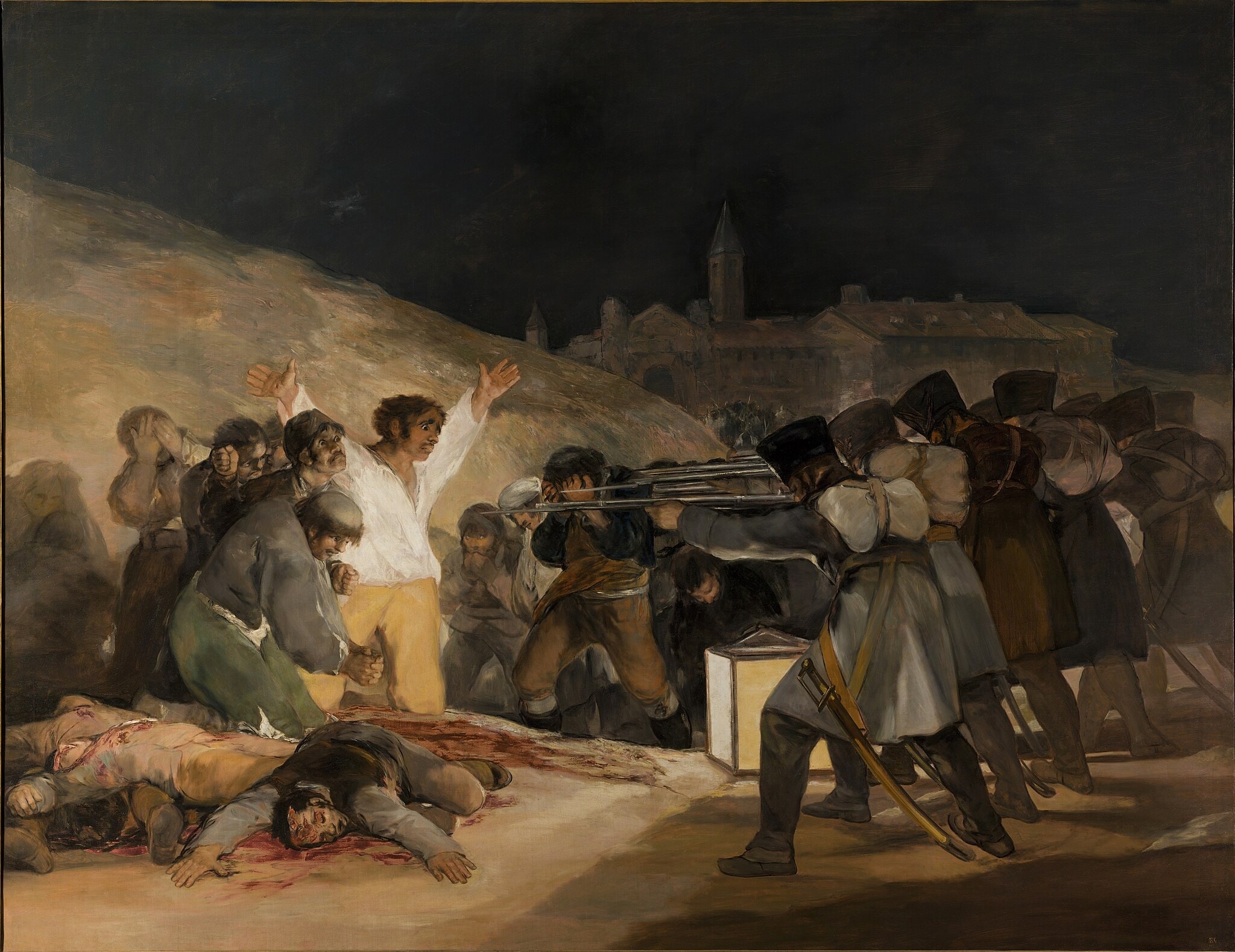
Click on any numbered symbol to learn more about its meaning
Meaning & Symbolism
Explore Deeper with AI
Ask questions about The Third of May 1808
Popular questions:
Powered by AI • Get instant insights about this artwork
Interpretations
Historical Context: Commission, Compliance, and Contradiction
Source: Fundación Goya en Aragón
Formal Analysis: Anti-Baroque Nocturne and the Technology of Light
Source: Smarthistory
Material Modernity: Surface, Speed, and the Birth of the Anti-Heroic
Source: Robert Hughes (Penn Today lecture summary)
Symbolic Reading: Secular Martyrdom and the Crisis of the Sacred
Source: Smarthistory
Social History: Indiscriminate Repression and the Collapse of Status
Source: Britannica
Explore Specific Elements
Dive deeper into individual scenes and details within The Third of May 1808.
The Man in White
At the heart of Goya’s The Third of May 1808 stands the man in white—arms flung wide, palms exposed—who confronts the rifles and our gaze at once. Cast in stark light, he becomes both the memorial face of Madrid’s reprisals and a universal emblem of the innocent under the machinery of state violence.
The Faceless Soldiers
Goya’s firing squad marches as a single, faceless machine: a dark block of bodies whose rifles slice toward the condemned. By stripping the soldiers of individuality and burying them in shadow, Goya converts a specific execution in occupied Madrid into a timeless image of state violence and dehumanized war.
The Lantern Light
Goya’s square ground lantern is the painting’s lone, man‑made sun—thrown between firing squad and captives to flood the condemned with merciless clarity. By forcing the night into visibility, it turns a historical atrocity into a scene the viewer must witness, not avert.
The Stigmata Pose
At the center of Goya’s The Third of May 1808, a white‑shirted man throws his arms wide, palms upturned, a red wound pricking his right hand. This deliberate “stigmata pose” recasts a condemned Madrileño as a modern Christ, using familiar sacred codes to indict mechanized, state violence.
Seen in Comparisons
Related Themes
About Francisco Goya
More by Francisco Goya
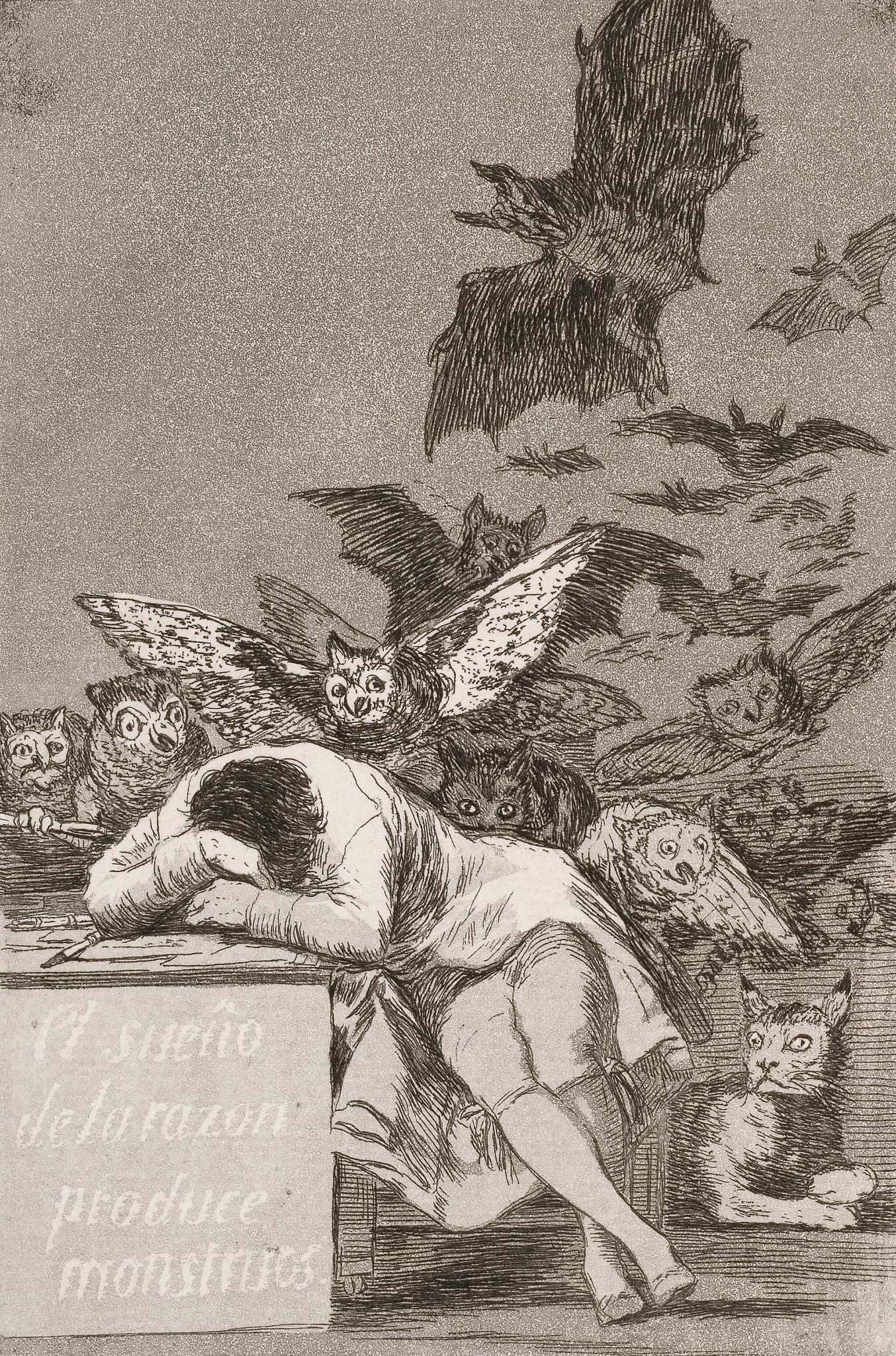
The Sleep of Reason Produces Monsters
Francisco Goya (1799 (published; plates 1797–1798))
In The Sleep of Reason Produces Monsters, a dozing thinker at his desk unleashes a storm of <strong>owls</strong>, <strong>bats</strong>, and a watchful <strong>lynx</strong>, staging Goya’s program for Los Caprichos. The print argues that when <strong>reason</strong> lapses—or when <strong>imagination</strong> is severed from it—social <strong>monsters</strong> of folly and superstition multiply.
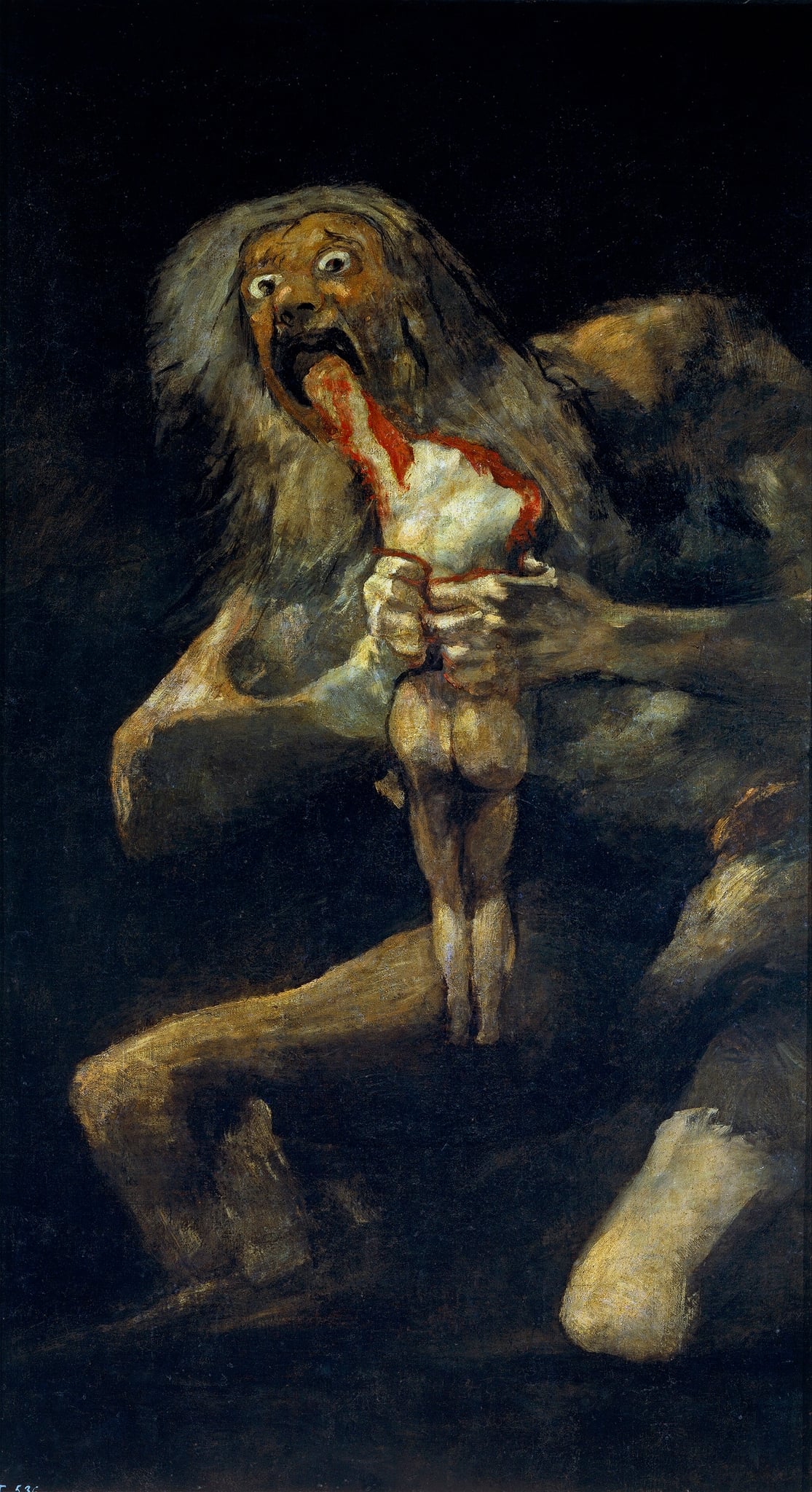
Saturn Devouring His Son
Francisco Goya (1820–1823)
Goya’s Saturn Devouring His Son distills myth into a raw vision of <strong>paranoia, power, and time</strong>: a giant crouches in darkness, eyes blown wide, tearing into a headless body whose blood streaks his hands. Stripped of classical emblems and staged in a near-black void, the scene asserts that fear of dispossession turns paternal authority into <strong>self-consuming violence</strong> <sup>[1]</sup><sup>[4]</sup>.