Mirror and Lantern: Velázquez and Goya
Both painters put the act of seeing at the center of art. Velázquez stages who is allowed to look by folding viewers, sitters, and painter into one calibrated courtly space. Goya turns looking into witness, using lantern light, captions, and direct address to force ethical attention. Their kinship is deep, but their aims diverge: authorization versus indictment.
Comparison frame: How do Velázquez’s mirror and Goya’s lantern redefine what painting makes us see—and what it asks us to answer for?
Quick Comparison
| Topic | Diego Velazquez | Francisco Goya |
|---|---|---|
| Core function of painting | Moral witness and psychological exposure | Calibrated system of appearances under power |
| Primary device of seeing | Man‑made, isolating light (lantern; aquatint blacks) | Mirror, thresholds, interlocking sightlines |
| Viewer’s role | Implicated witness asked to judge | Participant at the sovereign vantage point |
| Court portrait strategy | Floodlit proximity; artist half‑hidden; dispersed gazes | Protocol-centered theatre; mirror ratifies presence |
| War imagery | Execution machine and civilian martyr (Third of May) | Magnanimous exchange and decorum (Breda) |
| The nude | Unallegorized, direct address (The Nude Maja) | Mythic mediation and mirror play (Rokeby Venus) |
| Medium experiments | Etching + aquatint with captions; series as argument | Studio-as-stage; painter’s self‑elevation within the canvas |
| Brushwork/surface | Blunt, expressive facture; late, dark palettes | Air‑filled tonal naturalism; economical touch |
Shared Ground
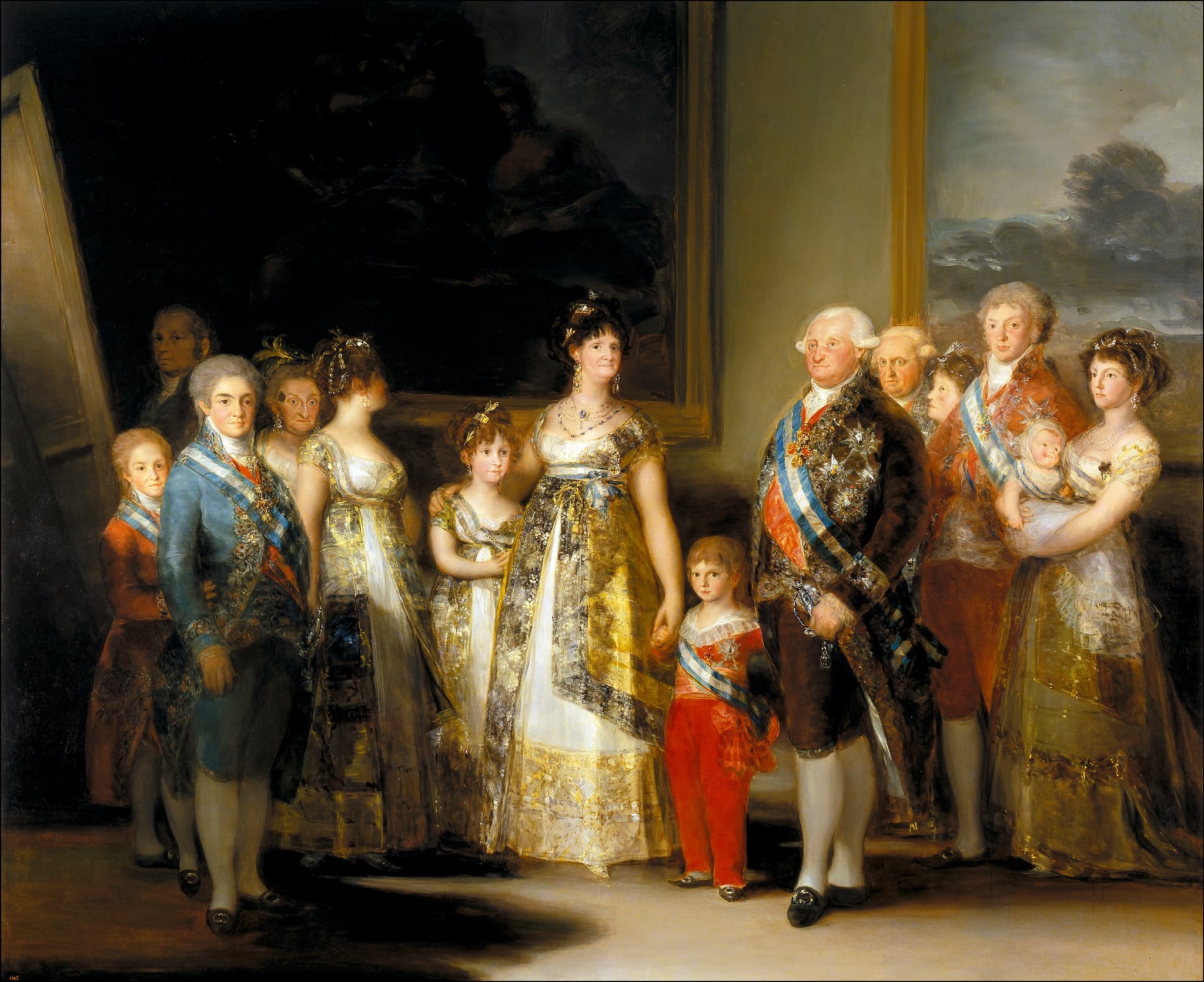
Velázquez and Goya share a foundational concern: not simply what is pictured, but how pictures produce seeing. Velázquez constructs the studio as an instrument of thought—mirrors, doorways, and the backs of canvases make spectatorship visible to itself, with the viewer often occupying a position aligned with power. In Las Meninas the sovereigns materialize in a mirror where our eyes stand, while glances and thresholds braid artist, sitters, and beholder into one staged present. Goya, in a different key, also engineers the viewer’s place. In The Third of May 1808 a man‑made lantern forces the night into visibility and with it an ethical demand; in Los Caprichos the caption converts the image into an argument and asks us to reason as we look. In both, the viewer is installed inside the work’s logic, not outside as a neutral observer.
Crucially, both artists work from within the court to test what painting is for. Velázquez turns protocol into philosophy, dignifying the painter’s role and tying representation to the structures that authorize it. Goya, who served the crown across regimes, uses portraiture, painting, and the print medium to scrutinize those same structures, modernizing picture‑making by privileging the conditions of representation over anecdote. The Surrender of Breda concentrates on the choreography of a humane gesture; The Sleep of Reason Produces Monsters turns aquatint’s velvety night into a civic warning. Even Goya’s late Black Paintings, stripped of allegorical buffers, continue this shared project: the image thinks about looking—and about what looking can and cannot excuse.
Decisive Difference
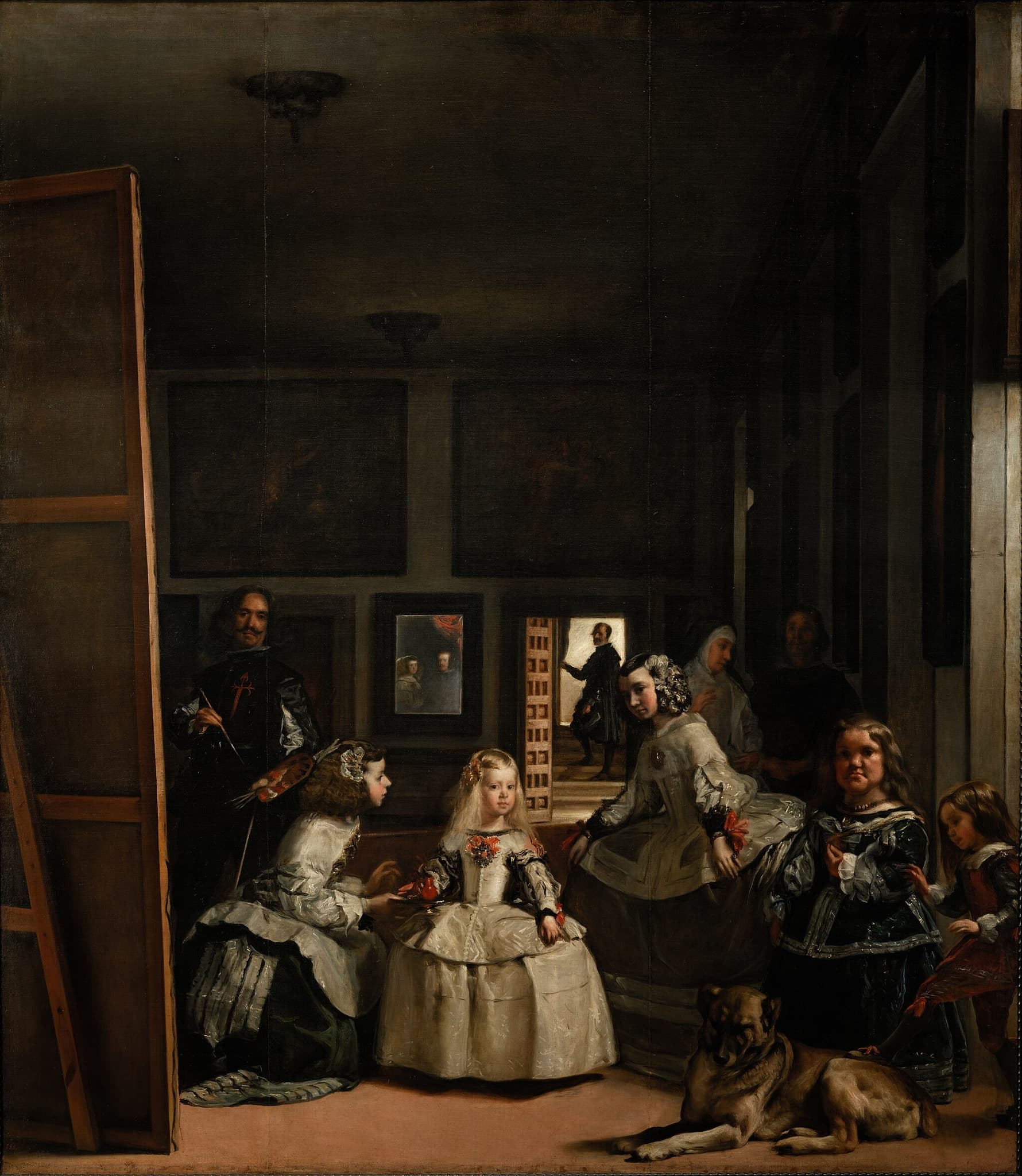
The decisive split is how each painter understands the authority of appearances. For Velázquez, painting is a calibrated system that shows how seeing is organized under power. Las Meninas aligns gazes, mirror, and doorway so that the monarchs, the artist, and the beholder share one visual economy; the studio becomes a courtly machine that naturalizes protocol. His magnanimous war image, The Surrender of Breda, refines that system into a humane tableau around a key‑handing gesture, while his later knighthood—the red cross of the Order of Santiago—folds painting itself into nobility. In short, representation is staged, ranked, and made persuasive through optics, space, and tone.
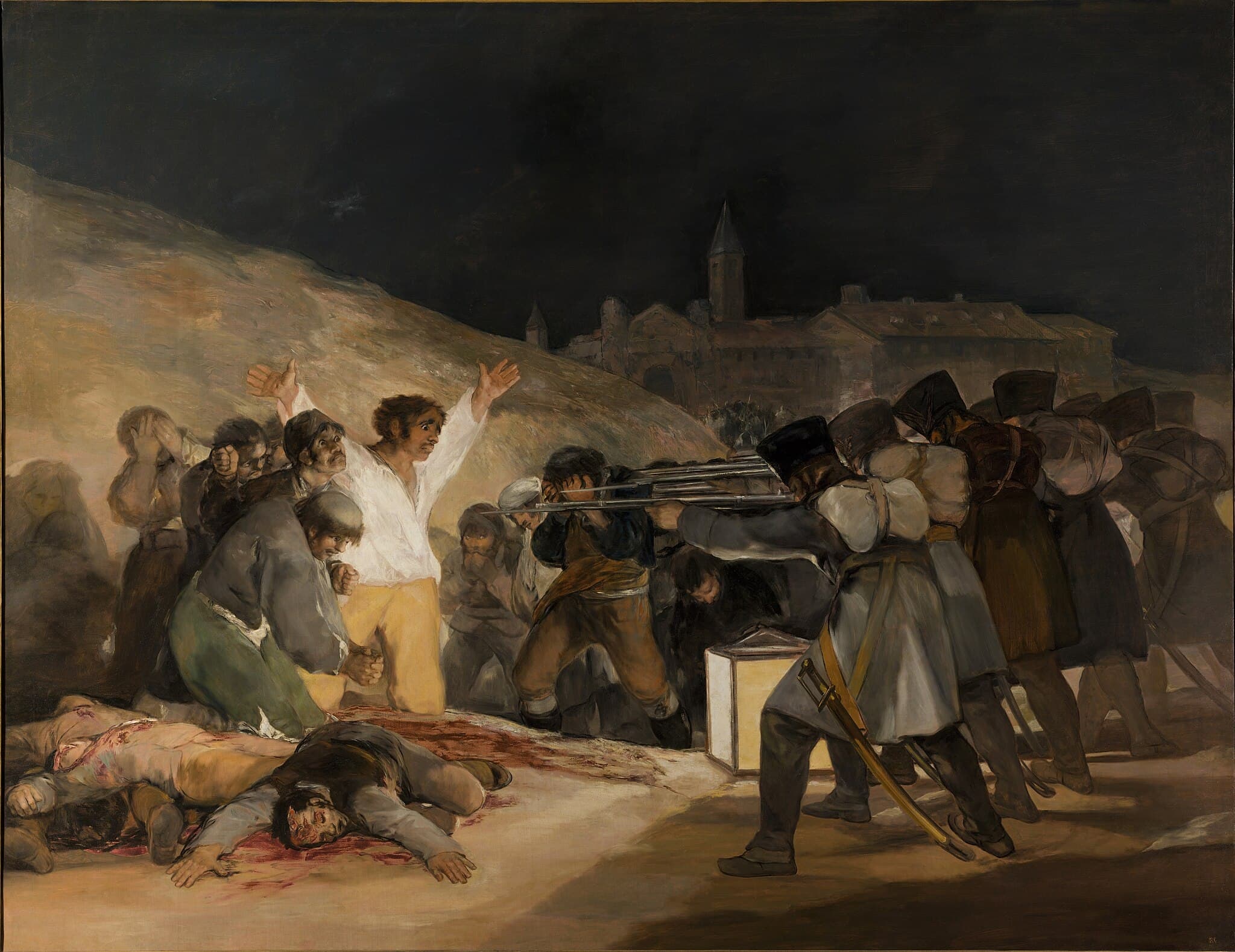
For Goya, painting is a conscience—less a theater that authorizes appearances than a light that exposes what appearances hide. The Third of May 1808 assembles an execution apparatus and answers it with the solitary witness in white; the lantern’s glare is a moral device that asks us to judge. In Los Caprichos, captions and aquatint blacks adjudicate imagination against reason; in the Black Paintings, allegory is stripped away so fear and power are faced directly. Even The Nude Maja refuses mythic cover, meeting our gaze in present tense. Where Velázquez perfects how authority is seen, Goya recasts seeing as a test of authority. If Velázquez’s emblem is the mirror that ratifies presence, Goya’s is the lantern that makes guilt visible.
Paired Works
Court theaters of vision
Focus question: If the artist appears inside the scene, who authorizes the picture?
Charles IV of Spain and His Family vs Las Meninas
War: courtesy or mechanism?
Focus question: How do these pictures decide what war asks us to look at?
The Third of May 1808 vs The Surrender of Breda
The nude and the look‑back
Focus question: What changes when desire loses its mythic alibi?
The Nude Maja vs The Rokeby Venus
Why This Comparison Matters
Seeing these artists together clarifies two durable tasks for images. Velázquez shows how pictures organize authority—how a room, a mirror, and a choreography of attention can make power seem natural. Goya shows how pictures can break that spell, forcing us to see consequences, ask who pays the price, and accept that looking entails judgment. The contrast is not a morality play; it is a toolkit. Museums, news photography, political spectacle, and social media still alternate between authorized appearances and calls to witness. Learning to recognize the mirror’s logic and the lantern’s demand helps viewers read images with more precision and less passivity. Velázquez and Goya make the stakes visible: what an image asks you to inhabit, and what it asks you to answer for.
Related Links
Sources
- Museo del Prado – Las Meninas (overview and structure of seeing)
- Museo del Prado – The Family of Charles IV (context and relation to Las Meninas)
- Museo del Prado – The Surrender of Breda (gesture and magnanimity)
- Museo del Prado – The Third of May 1808 (light, victims vs firing squad)
- Khan Academy – Las Meninas and the Order of Santiago
- National Gallery (London) – The Rokeby Venus
- Fundación Goya – The Nude Maja (Inquisition proceedings)
- Museo del Prado – The Sleep of Reason Produces Monsters (Caprichos 43)
- The Met – Aquatint overview (medium and tonal blacks)
- Britannica – Diego Velázquez (court role and biography)
- Britannica – Francisco Goya (deafness, late works)
- Foucault – The Order of Things (Las Meninas chapter; representation and observer)