Propaganda & ideology
Featured Artworks
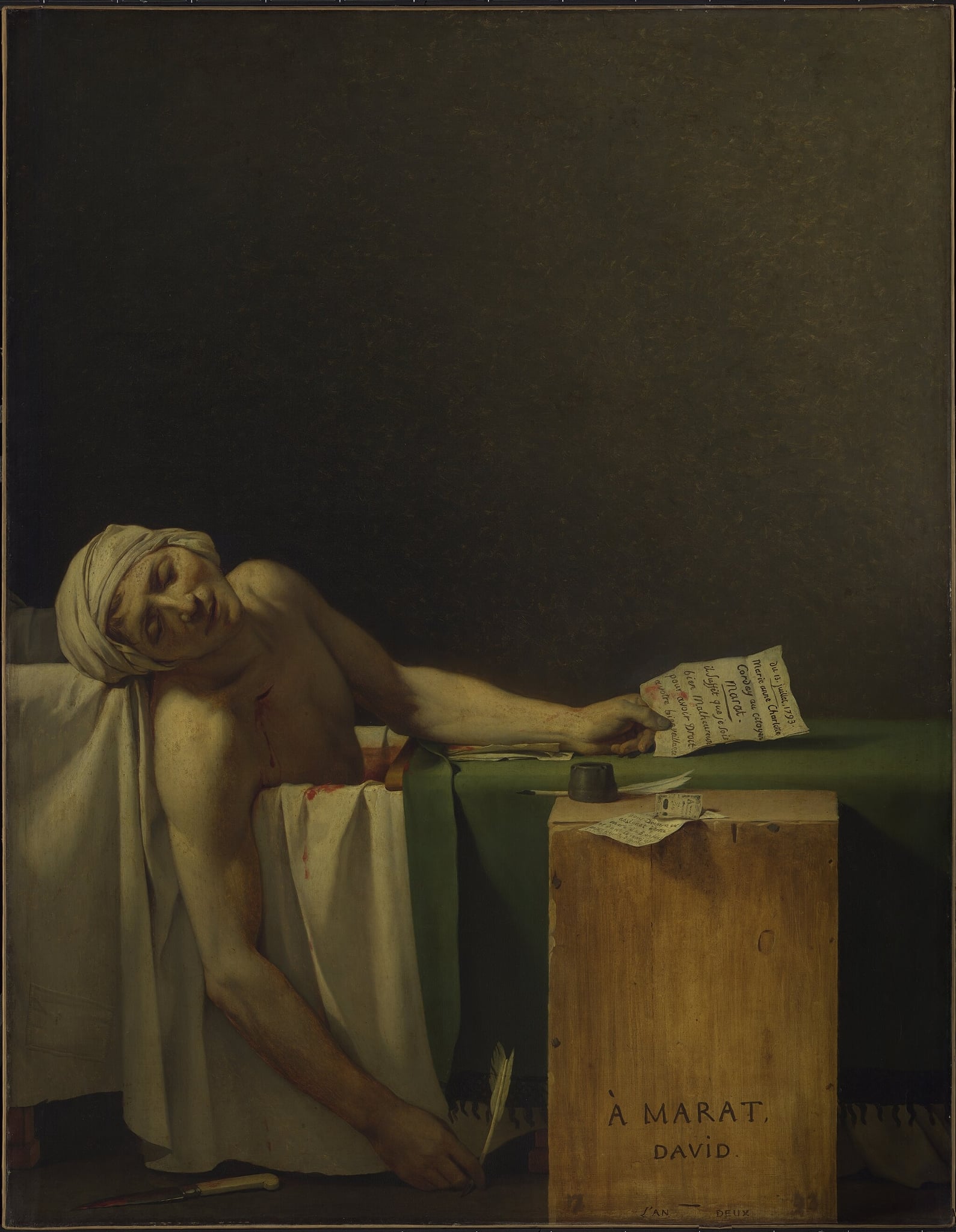
The Death of Marat
Jacques-Louis David (1793)
<strong>The Death of Marat</strong> turns a private murder into a <strong>secular martyrdom</strong>: Marat’s idealized body slumps in a bath, a pleading letter in his hand, a quill slipping from the other beside a bloodied knife and inkwell. Against a vast dark void, David’s calm light and austere geometry elevate humble objects—the green baize plank and the crate inscribed “À MARAT, DAVID, L’AN DEUX”—into civic emblems <sup>[1]</sup><sup>[2]</sup><sup>[3]</sup>.
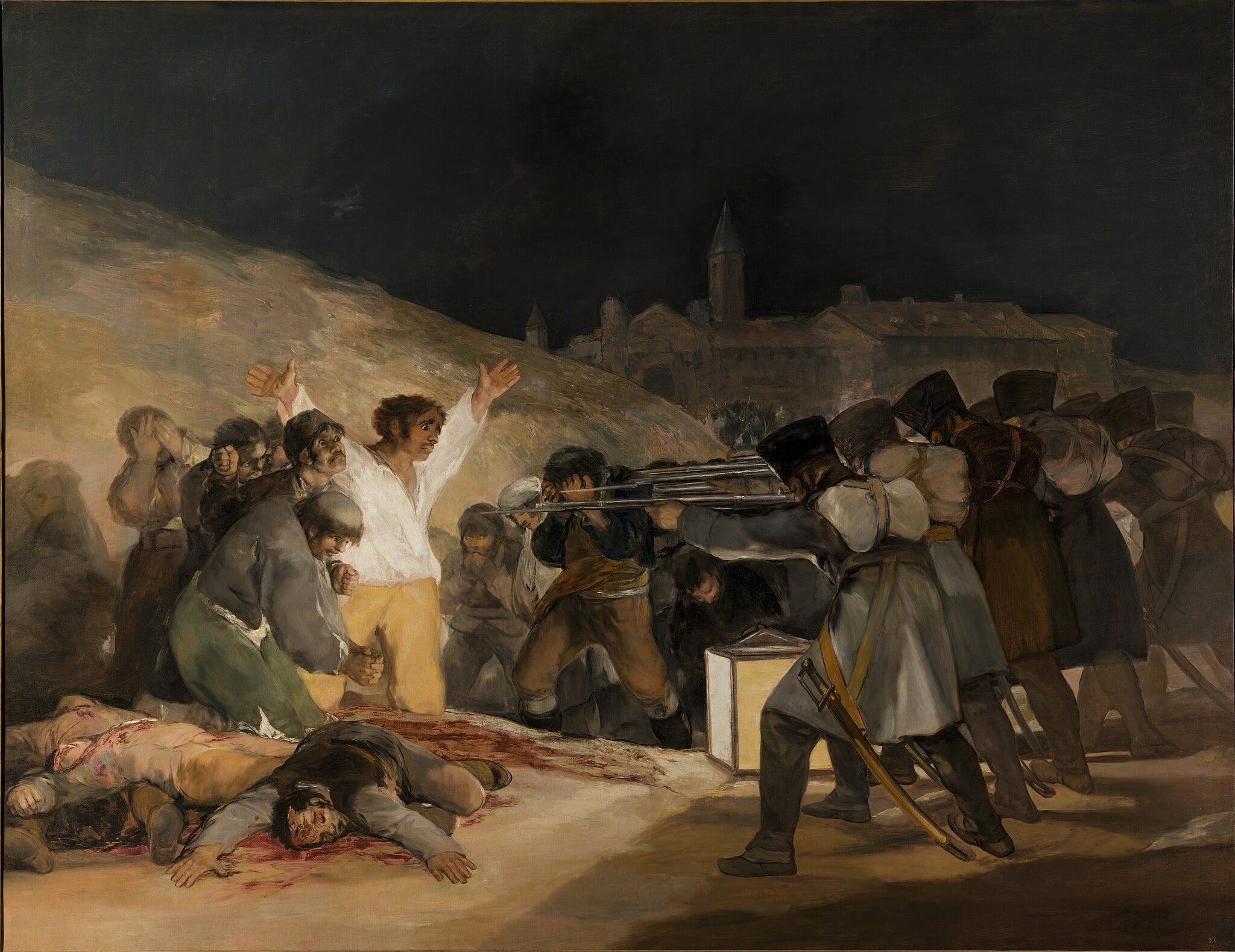
The Third of May 1808
Francisco Goya (1814)
Francisco Goya’s The Third of May 1808 turns a specific reprisal after Madrid’s uprising into a universal indictment of <strong>state violence</strong>. A lantern’s harsh glare isolates a civilian who raises his arms in a <strong>cruciform</strong> gesture as a faceless firing squad executes prisoners, transforming reportage into <strong>modern anti-war testimony</strong> <sup>[1]</sup><sup>[2]</sup>.
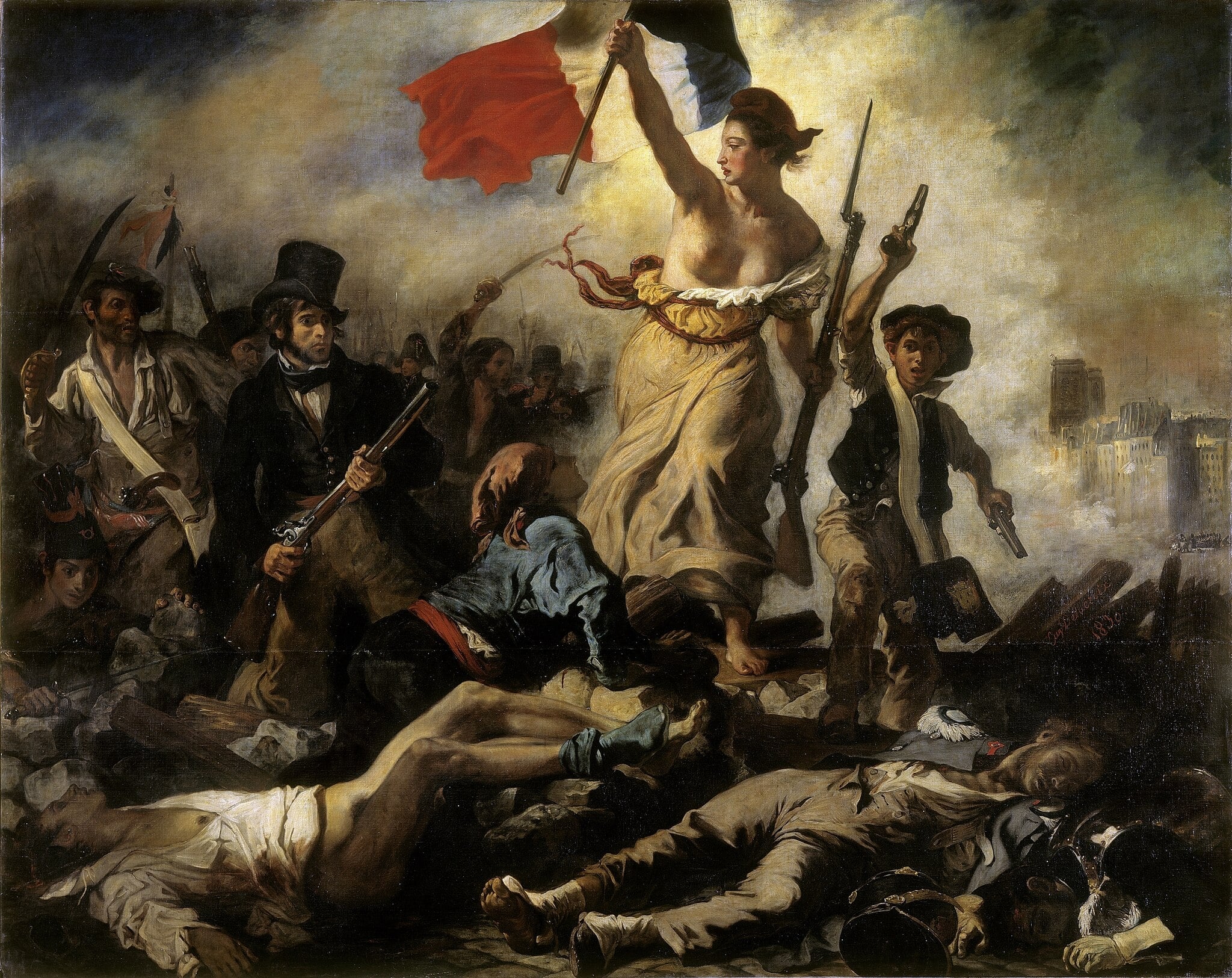
Liberty Leading the People
Eugene Delacroix (1830)
<strong>Liberty Leading the People</strong> turns a real street uprising into a modern myth: a bare‑breasted Liberty in a <strong>Phrygian cap</strong> thrusts the <strong>tricolor</strong> forward as Parisians of different classes surge over corpses and rubble. Delacroix binds allegory to eyewitness detail—Notre‑Dame flickers through smoke, a bourgeois in a top hat shoulders a musket, and a pistol‑waving boy keeps pace—so that freedom appears as both idea and action <sup>[1]</sup><sup>[2]</sup>. After its 2024 cleaning, sharper blues, whites, and reds re‑ignite the painting’s charged color drama <sup>[4]</sup>.
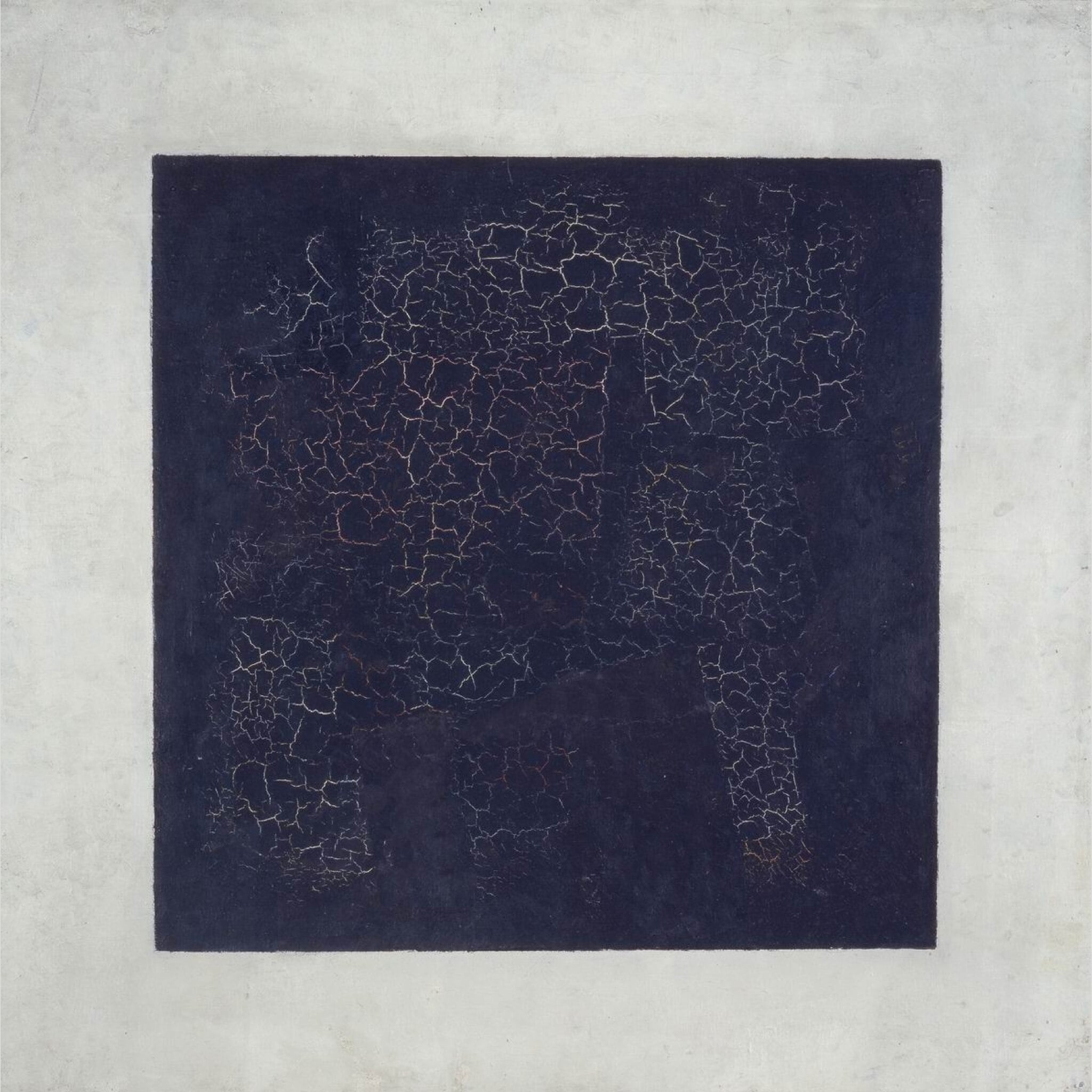
Black Square
Kazimir Malevich (1915)
Kazimir Malevich’s Black Square declares a radical reset: a hand-painted, slightly irregular black form set on a chalky white field, presented as an artistic <strong>zero</strong> and a new spiritual-conceptual space. The hairline craquelure that webs across the dark surface counters any idea of a perfect void, binding utopian claim to material time.
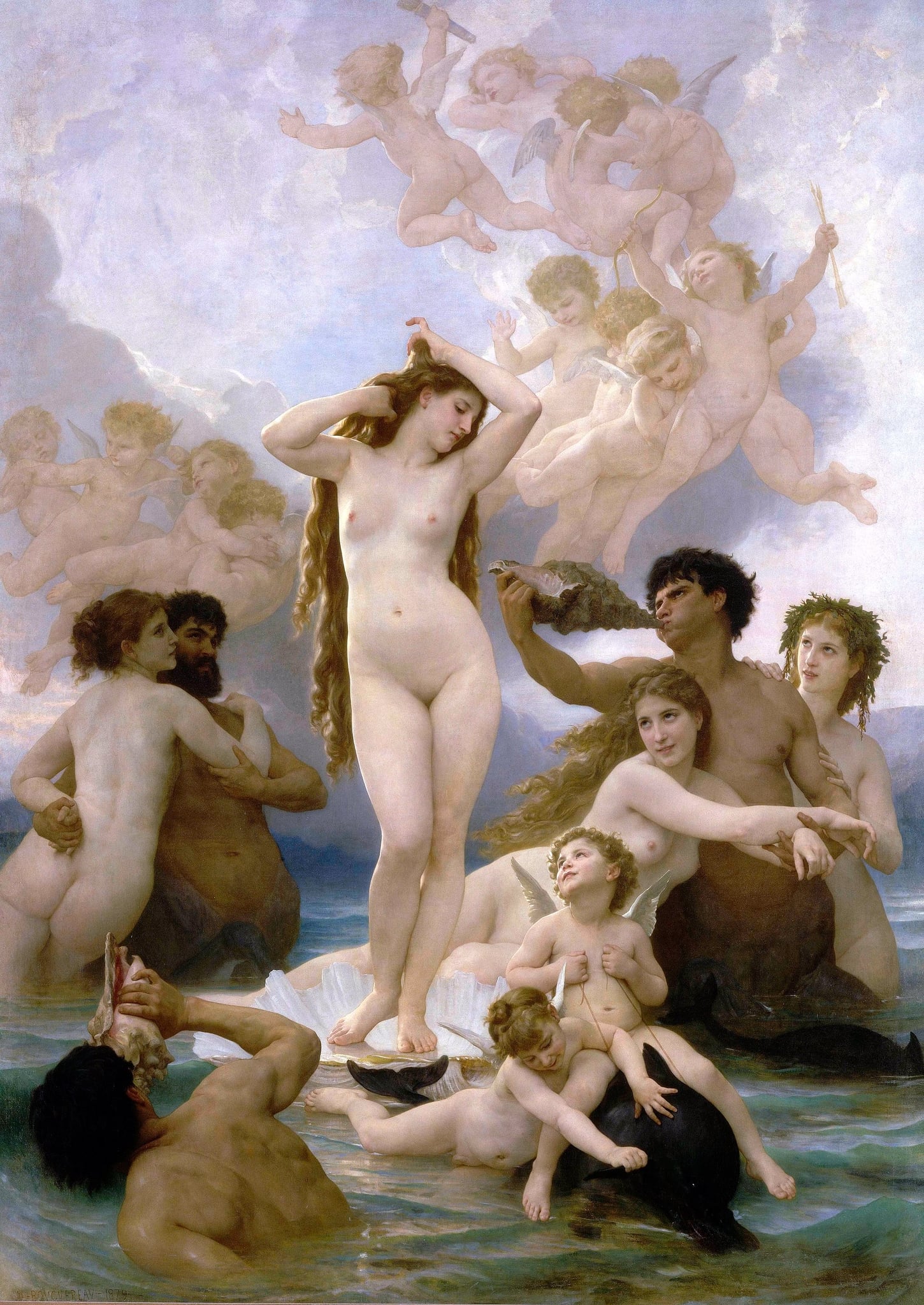
The Birth of Venus (Bouguereau)
William-Adolphe Bouguereau (1879)
A triumphant epiphany of <strong>Venus</strong> rising on a scallop shell, surrounded by tritons, nereids, dolphins, and a swirling halo of <strong>putti</strong>. Bouguereau fuses classical iconography with a porcelain finish to proclaim the civilizing power of <strong>ideal beauty</strong> and <strong>erotic love</strong> <sup>[1]</sup><sup>[5]</sup>.
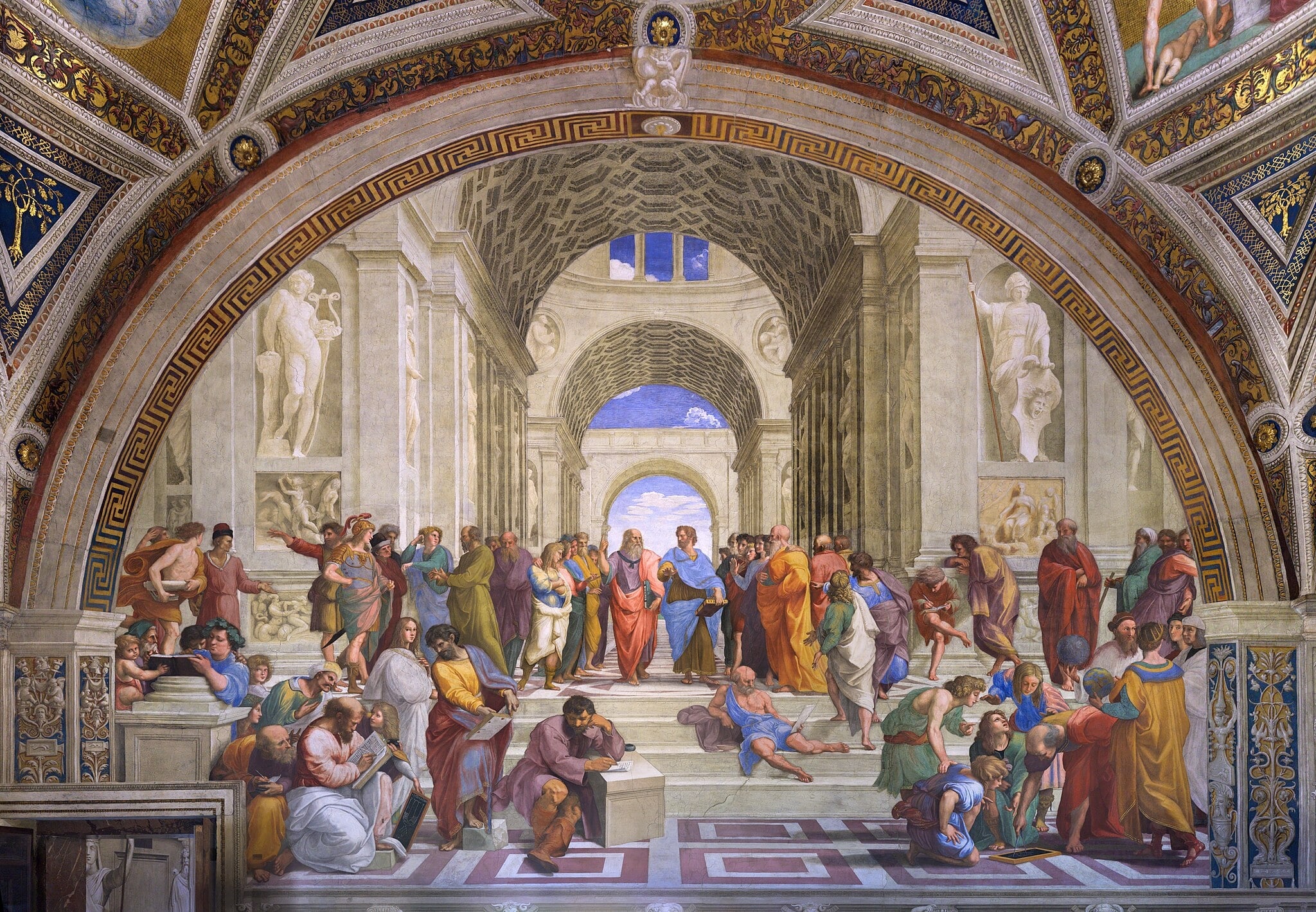
The School of Athens
Raphael (1509–1511)
Raphael’s The School of Athens orchestrates a grand debate on knowledge inside a perfectly ordered, classical hall whose one-point perspective converges on the central pair, <strong>Plato</strong> and <strong>Aristotle</strong>. Their opposed gestures—one toward the heavens, one level to the earth—establish the fresco’s governing dialectic between <strong>ideal forms</strong> and <strong>empirical reason</strong> <sup>[1]</sup><sup>[2]</sup>. Around them, mathematicians, scientists, and poets cluster under statues of <strong>Apollo</strong> and <strong>Athena/Minerva</strong>, turning the room into a temple of <strong>Renaissance humanism</strong> <sup>[1]</sup><sup>[3]</sup>.
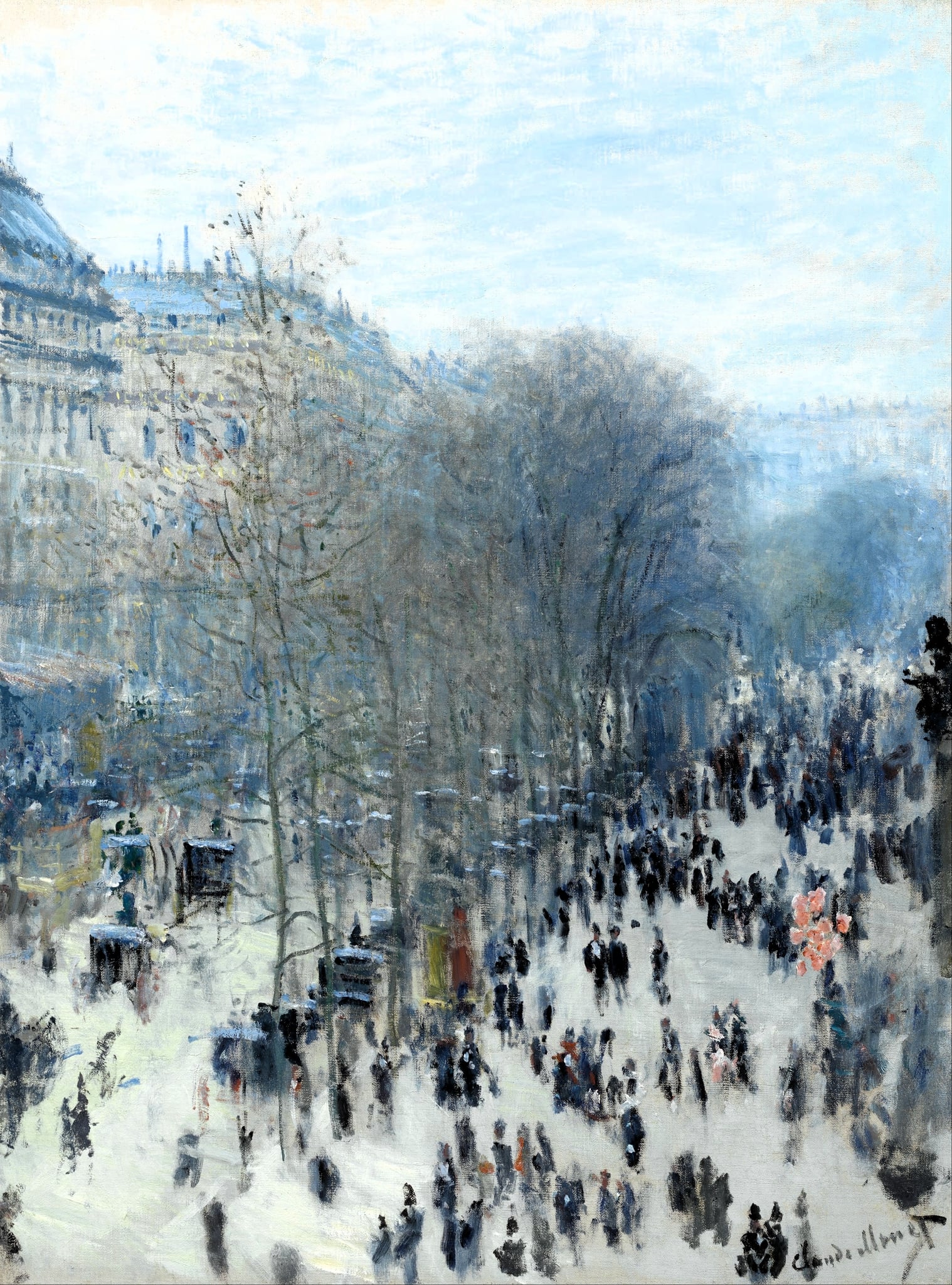
Boulevard des Capucines
Claude Monet (1873–1874)
From a high perch above Paris, Claude Monet turns the Haussmann boulevard into a living current of <strong>light, weather, and motion</strong>. Leafless trees web the view, crowds dissolve into <strong>flickering strokes</strong>, and a sudden <strong>pink cluster of balloons</strong> pierces the cool winter scale <sup>[1]</sup><sup>[2]</sup>.
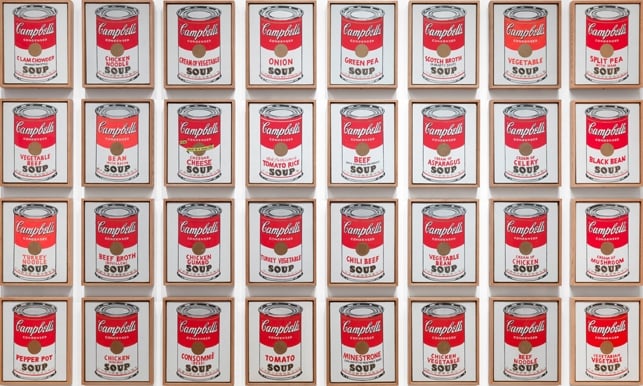
Campbell's Soup Cans
Andy Warhol (1962)
Warhol’s Campbell’s Soup Cans turns a shelf-staple into <strong>art</strong>, using a gridded array of near-identical red-and-white cans to fuse <strong>branding</strong> with <strong>painting</strong>. By repeating 32 flavors—Tomato, Clam Chowder, Chicken Noodle, and more—the work stages a clash between <strong>mass production</strong> and the artist’s hand <sup>[1]</sup><sup>[3]</sup>.
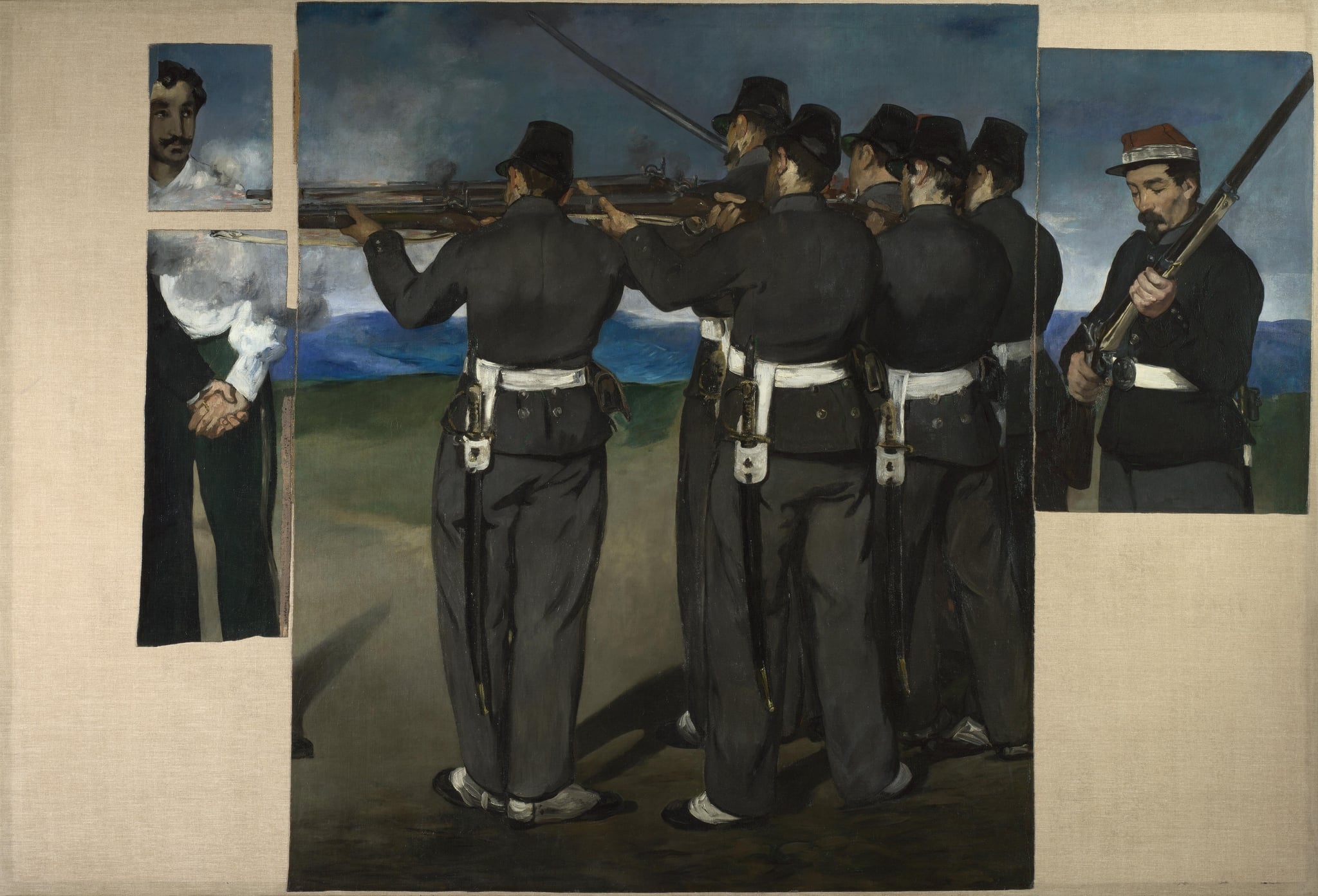
The Execution of Emperor Maximilian
Édouard Manet (1867–1868)
Manet’s The Execution of Emperor Maximilian confronts state violence with a <strong>cool, reportorial</strong> style. The wall of gray-uniformed riflemen, the <strong>fragmented canvas</strong>, and the dispassionate loader at right turn the killing into <strong>impersonal machinery</strong> that implicates the viewer <sup>[1]</sup><sup>[2]</sup>.
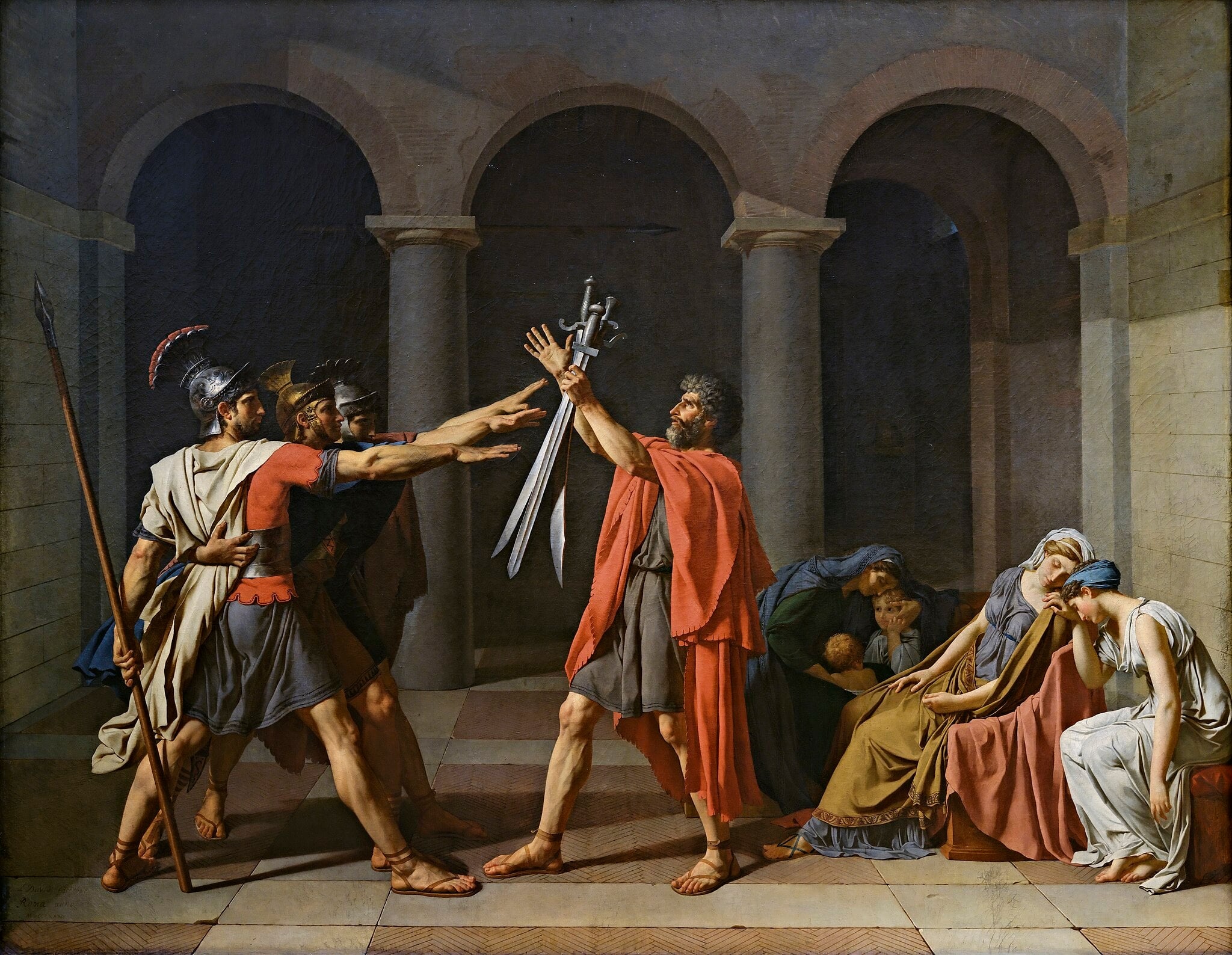
The Oath of the Horatii
Jacques-Louis David (1784 (exhibited 1785))
In The Oath of the Horatii, Jacques-Louis David crystallizes <strong>civic duty over private feeling</strong>: three Roman brothers extend their arms to swear allegiance as their father raises <strong>three swords</strong> at the perspectival center. The painting’s severe geometry, austere architecture, and polarized groups of <strong>rectilinear men</strong> and <strong>curving mourners</strong> stage a manifesto of <strong>Neoclassical virtue</strong> and republican resolve <sup>[1]</sup><sup>[2]</sup><sup>[3]</sup>.
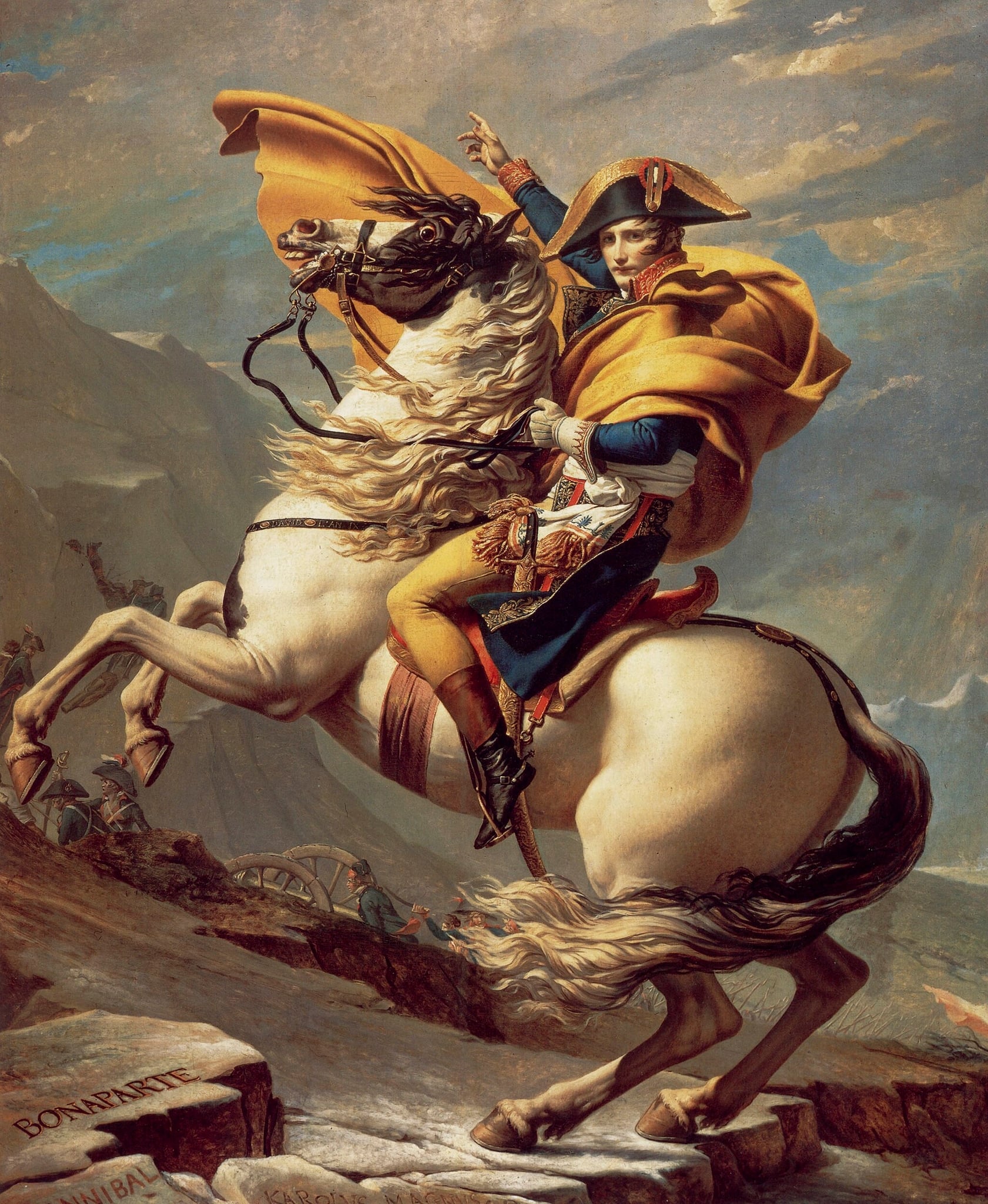
Napoleon Crossing the Alps
Jacques-Louis David (1801–1805 (series of five versions))
Jacques-Louis David turns a difficult Alpine passage into a <strong>myth of command</strong>: a serene leader on a rearing charger, a <strong>billowing golden cloak</strong>, and names cut into stone that bind the crossing to Hannibal and Charlemagne. The painting manufactures <strong>political legitimacy</strong> by fusing modern uniform and classical gravitas into a single, upward-driving image <sup>[1]</sup><sup>[2]</sup><sup>[3]</sup><sup>[4]</sup>.
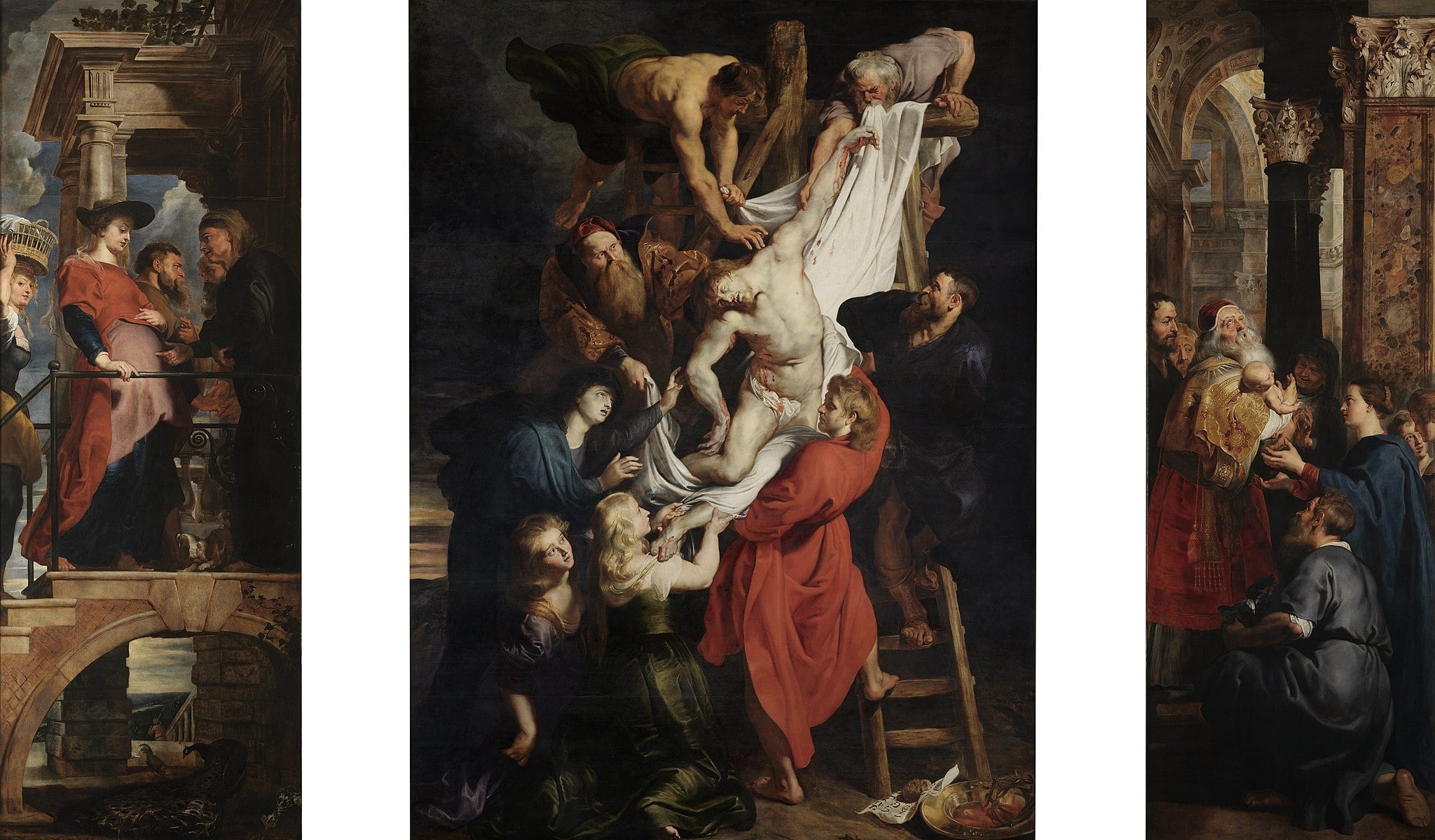
The Descent from the Cross
Peter Paul Rubens (1611–1614)
At night beneath a black sky, The Descent from the Cross stages a solemn transfer of Christ’s body along a luminous <strong>white shroud</strong> that cuts diagonally across the scene. The flanking wings—<strong>The Visitation</strong> and <strong>The Presentation in the Temple</strong>—frame the central tragedy with beginnings and revelation, turning the triptych into a single arc from Incarnation to Redemption. Rubens fuses <strong>Baroque chiaroscuro</strong> with tender, communal gestures to make grief a shared act of devotion.
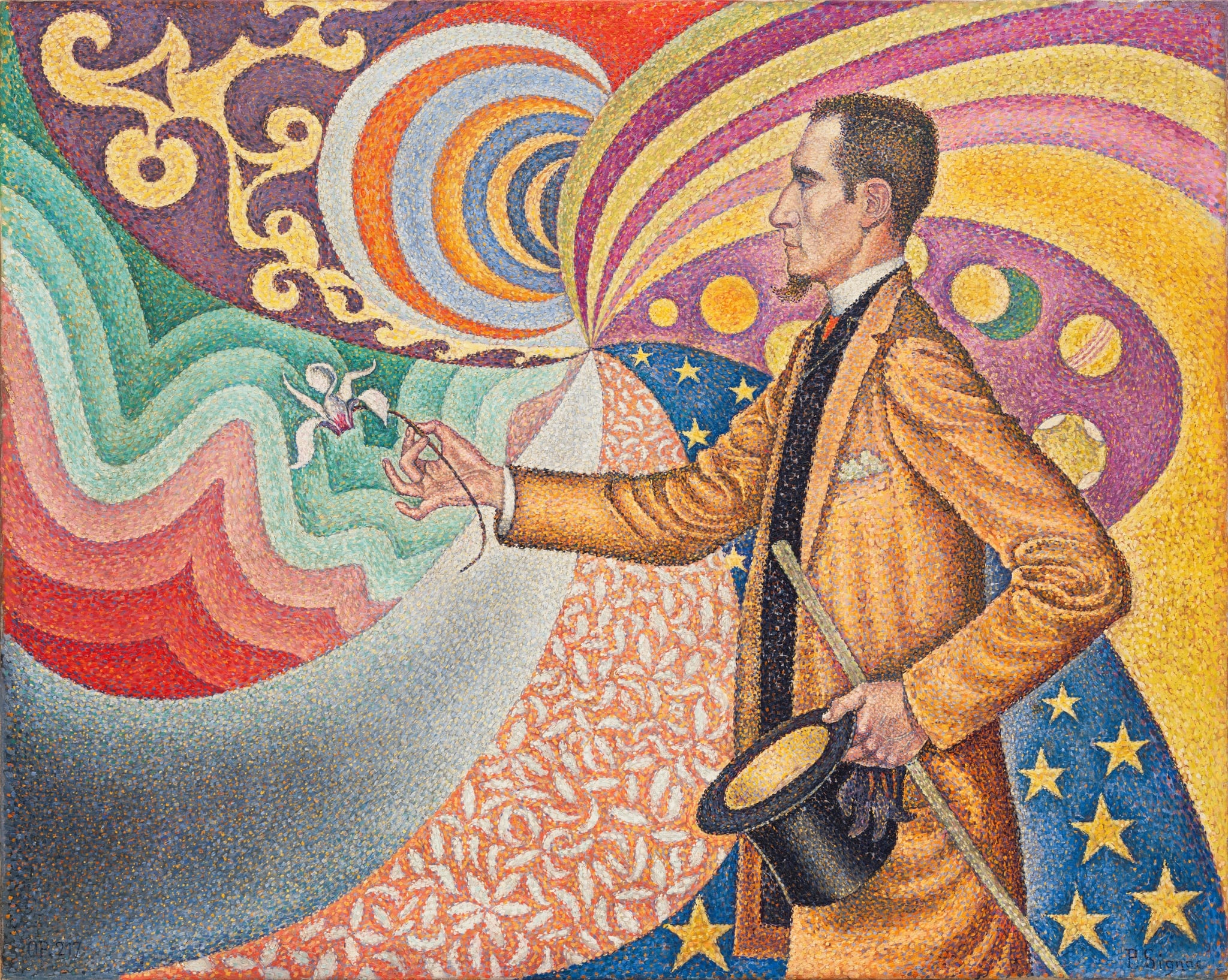
Portrait of Félix Fénéon
Paul Signac (1890)
Portrait of Félix Fénéon turns a critic into a <strong>conductor of color</strong>: a dandy in a yellow coat proffers a delicate cyclamen as concentric disks, whiplash arabesques, stars, and palette-like circles whirl around him. Rendered in precise <strong>Pointillist</strong> dots, the scene stages the fusion of <strong>art, science, and modern style</strong>.<sup>[1]</sup><sup>[2]</sup>
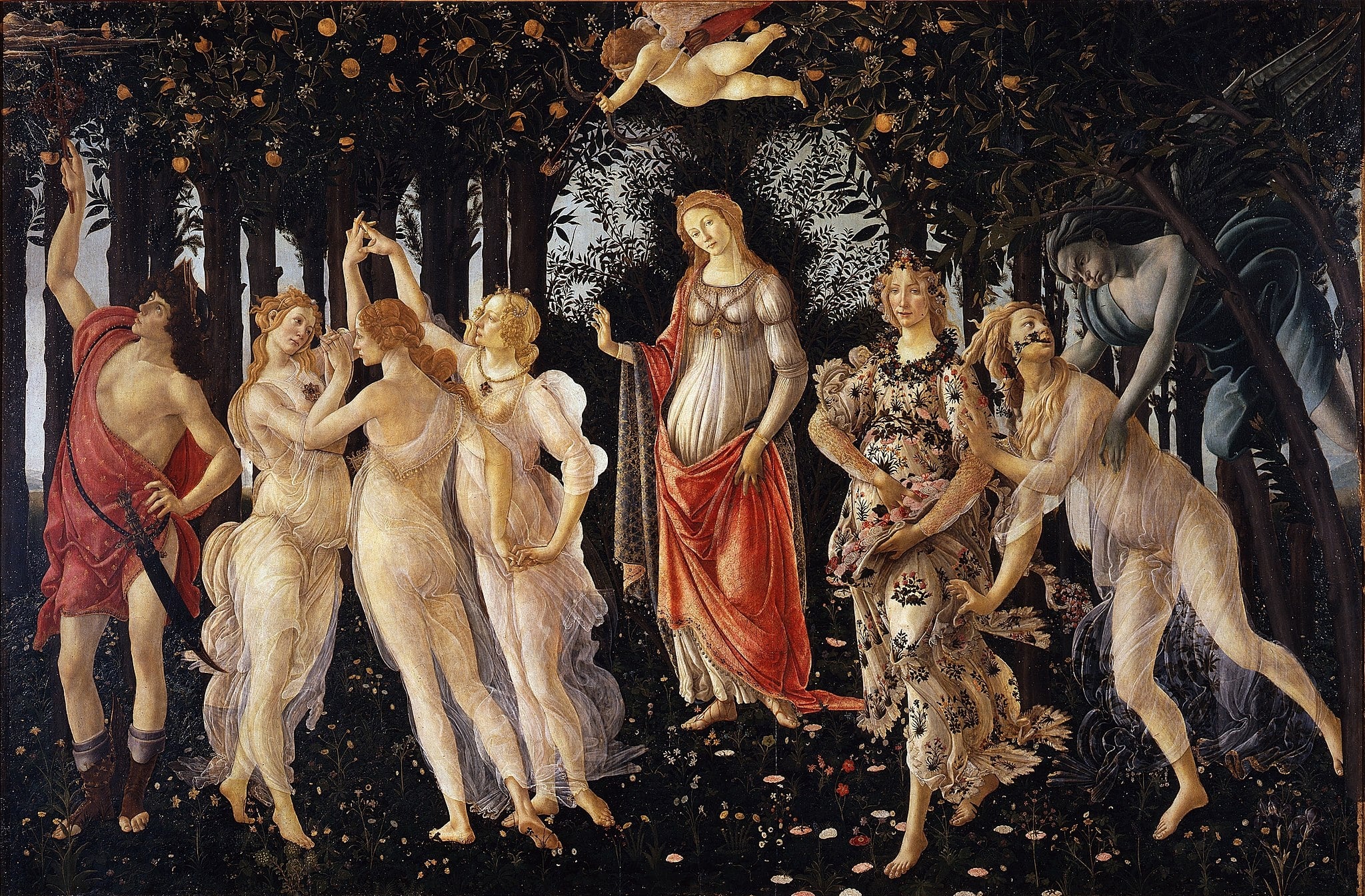
Primavera
Sandro Botticelli (c. 1480 (1477–1482))
Primavera stages a mythic procession of <strong>Spring</strong> in an orange and laurel grove: <strong>Venus</strong> presides beneath a myrtle canopy as <strong>Cupid</strong> looses an arrow, <strong>Mercury</strong> clears the last clouds, the <strong>Three Graces</strong> dance, and <strong>Zephyrus</strong> pursues <strong>Chloris</strong>, who blossoms into <strong>Flora</strong>. The carpet of more than a hundred identifiable flowers and the Medici-laden orchard declare <strong>fertility, peace, and ordered prosperity</strong> under Venus’s benign rule <sup>[1]</sup><sup>[2]</sup>.
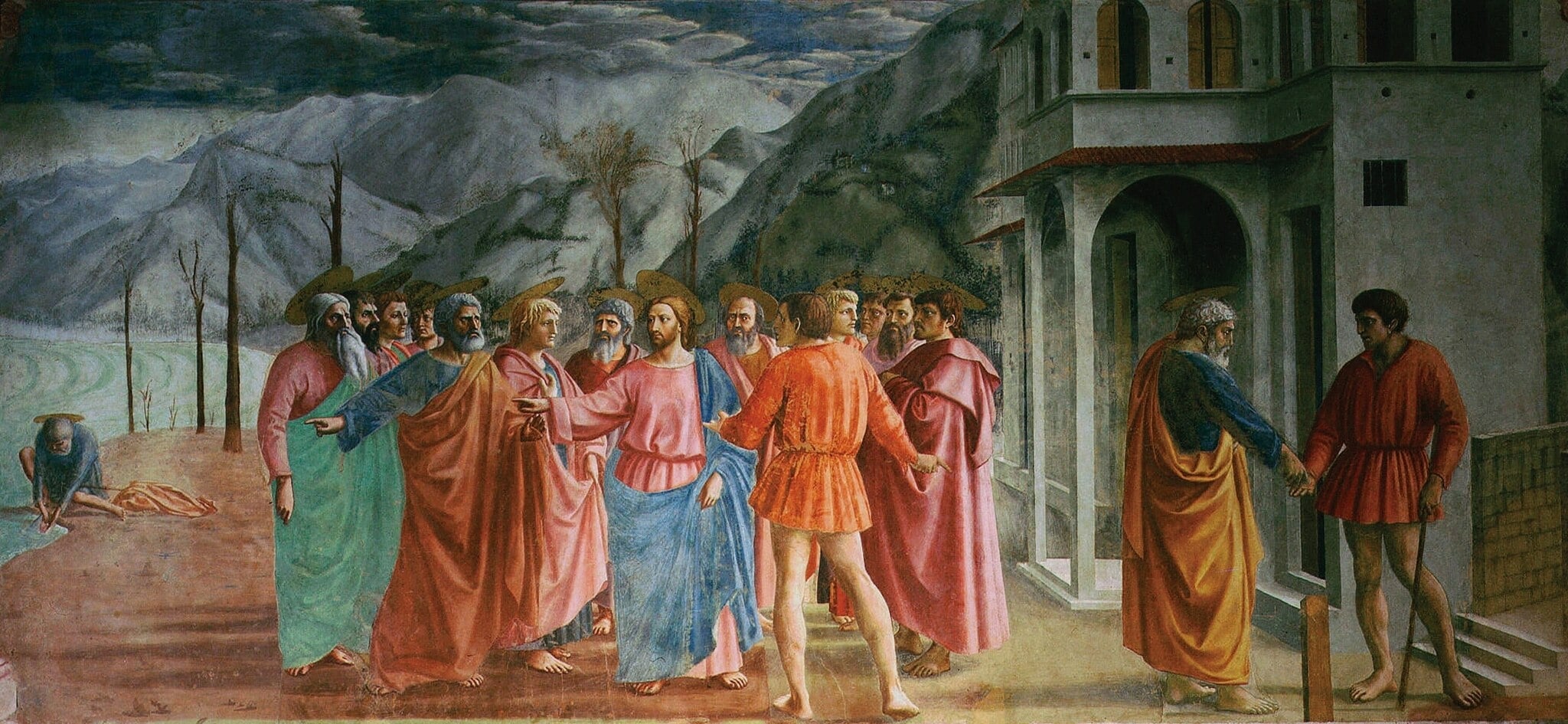
The Tribute Money
Masaccio (c. 1425–1427)
Masaccio’s The Tribute Money unifies three Gospel moments into one rational space, using <strong>continuous narrative</strong>, coherent <strong>light from the right</strong>, and strict <strong>linear perspective</strong> to dramatize Christ’s directive to Peter about the temple tax. The red-clad tax collector confronts the group at center, Peter retrieves the coin at the lake on the left, and he pays the dues at the portico on the right, all bound by emphatic pointing hands and a shared illumination <sup>[2]</sup><sup>[3]</sup>.
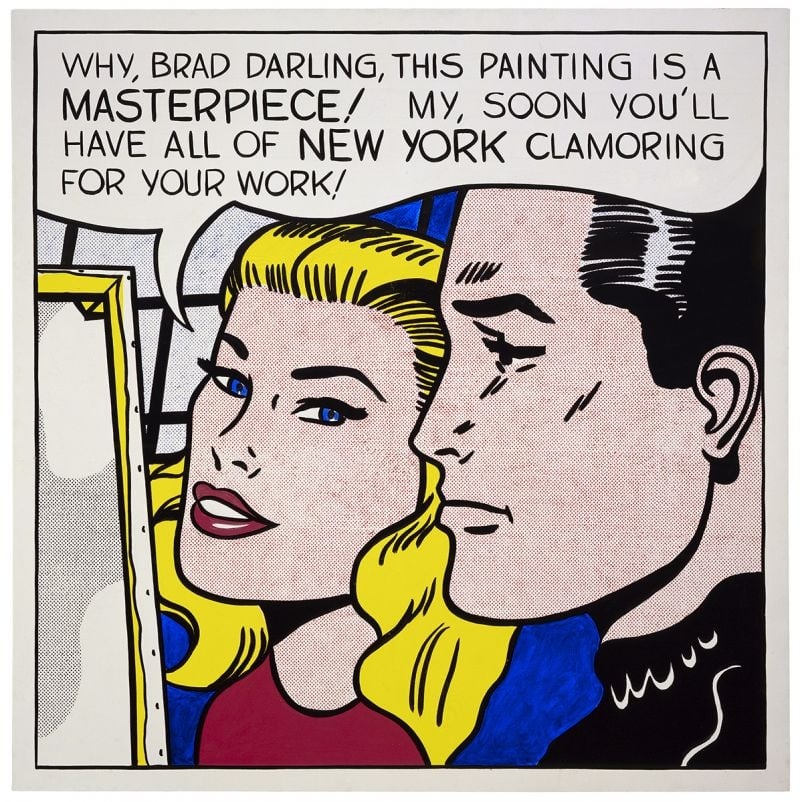
Masterpiece
Roy Lichtenstein (1962)
<strong>Masterpiece</strong> (1962) turns a romance‑comic close‑up into a cool exposé of how praise is manufactured. With a buoyant speech balloon and hand‑made Ben‑Day dots, Roy Lichtenstein converts private flattery into public <strong>promotion</strong>—an image about the image economy itself <sup>[1]</sup><sup>[2]</sup>.
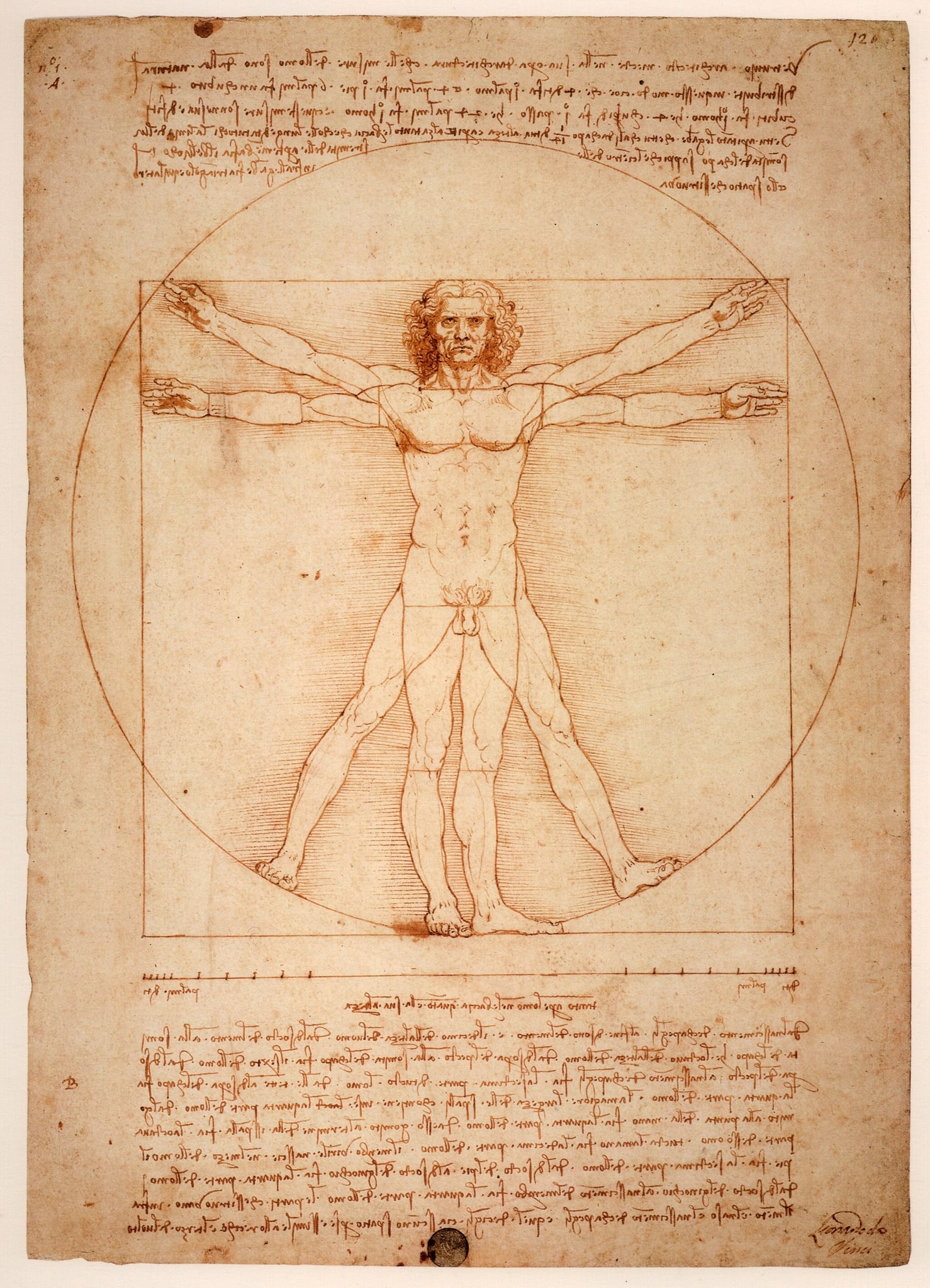
Vitruvian Man
Leonardo da Vinci (1498 (museum catalog; often cited traditionally as c. 1490))
Leonardo da Vinci’s Vitruvian Man fuses <strong>geometry</strong>, <strong>anatomy</strong>, and <strong>humanist philosophy</strong> into a single sheet. A double‑posed male body is inscribed within a circle and a square, with text in mirror writing that tests classical rules against measured observation. The drawing operates as a visual thesis that the human body is a <strong>microcosm</strong> ordered by ratio and reason <sup>[1]</sup><sup>[2]</sup>.
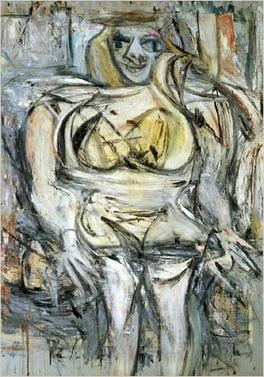
Woman III
Willem de Kooning (1952–53 (often dated 1953))
Woman III stages a face‑off between <strong>figuration and abstraction</strong>: a looming, front‑facing body whose breasts and hips jut forward even as limbs smear into eddies of paint. The mask‑like eyes and toothy grin toggle between <strong>seduction and menace</strong>, while the scraped, turbulent surface asserts painting as a <strong>combat zone</strong> rather than calm depiction <sup>[1]</sup>.
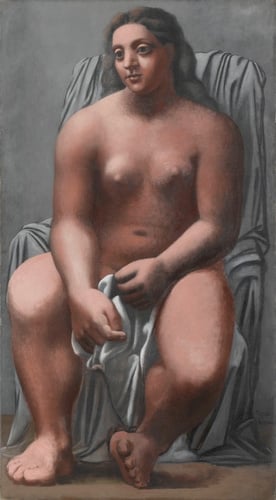
Grande baigneuse
Pablo Picasso (1921)
Picasso’s Grande baigneuse stages a monumental nude as an <strong>archetype of endurance</strong>, not a private individual. Seated frontally on a draped, stone-like chair, with <strong>downcast eyes</strong> and a towel clenched in her hand, she reads as a modernized classical statue—solid, calm, and timeless <sup>[1]</sup>. The painting fuses <strong>compressed modern space</strong> with antique gravitas to assert stability after wartime rupture <sup>[1]</sup><sup>[2]</sup>.
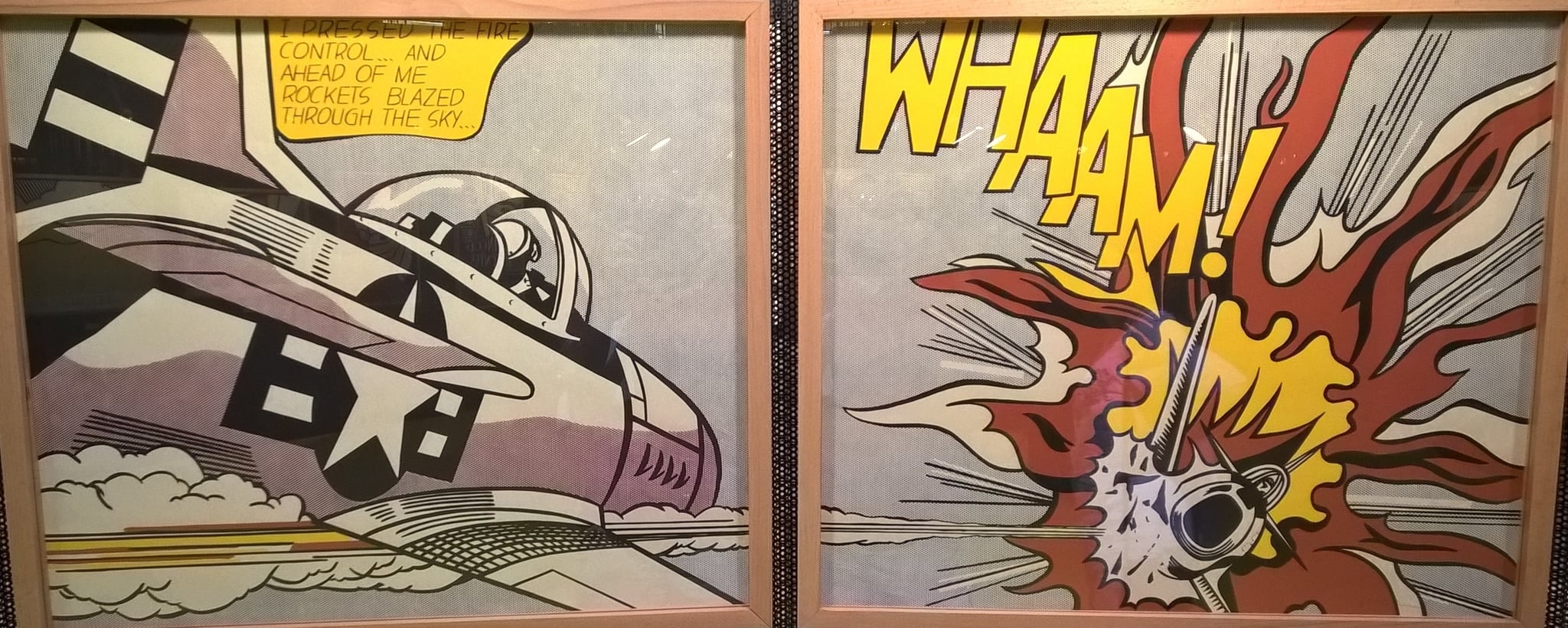
Whaam!
Roy Lichtenstein (1963)
Whaam! stages a split-second airstrike as a two-panel, comic-derived spectacle where <strong>cool control</strong> meets <strong>hot impact</strong>. Lichtenstein converts lethal action into <strong>graphic codes</strong>—Ben-Day dots, speech balloon, and the yellow onomatopoeia “WHAAM!”—to expose how mass media packages warfare as crisp design <sup>[1]</sup><sup>[3]</sup><sup>[5]</sup>.
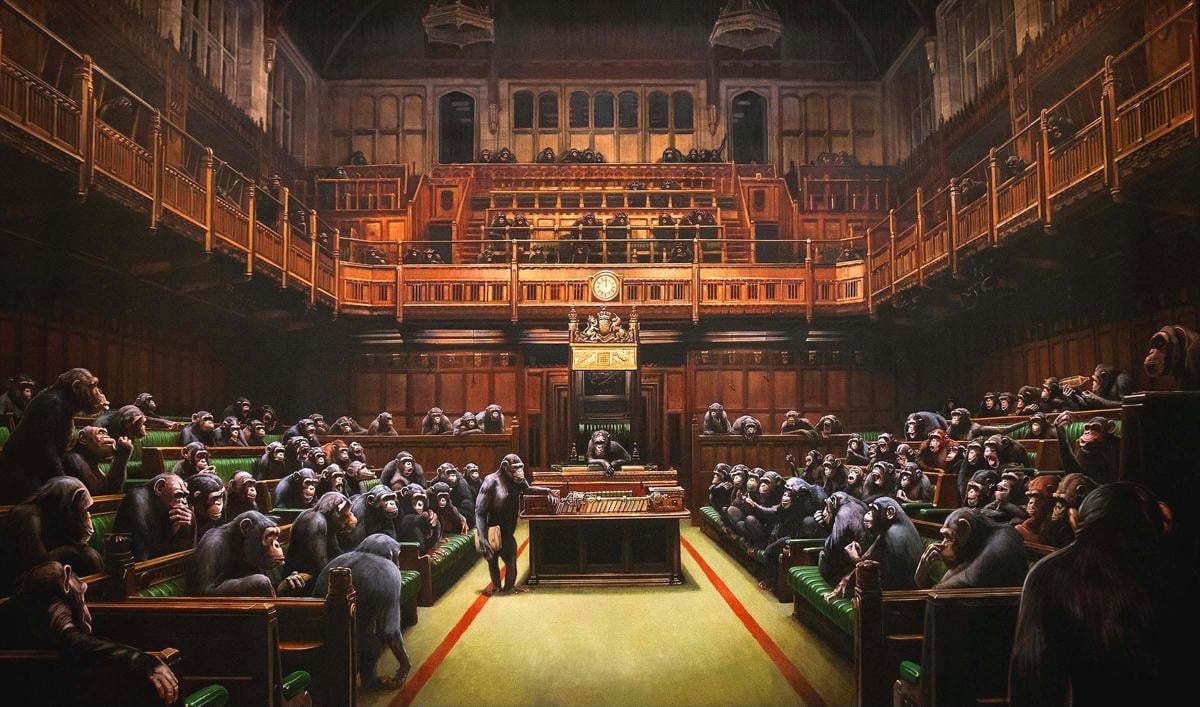
Devolved Parliament
Banksy (2009 (reworked and retitled by 2019))
<strong>Devolved Parliament</strong> is Banksy’s monumental oil painting that replaces Members of Parliament with chimpanzees on the green benches of the House of Commons. Using theatrical light that pools around the dispatch boxes and the Speaker’s Chair, it stages British democracy as a spectacle where ceremony collides with <strong>animalistic pandemonium</strong> <sup>[1]</sup><sup>[3]</sup>.