Napoleon Crossing the Alps
Study Print Studio
Create a personal study print
Build a companion study sheet around the part of this painting that speaks to you most. Choose a detail, shape an interpretation, and walk away with something personal and display-worthy.
Fast Facts
- Year
- 1801–1805 (series of five versions)
- Medium
- Oil on canvas
- Dimensions
- c. 261 x 221 cm (Malmaison version)
- Location
- Musée national des châteaux de Malmaison et de Bois‑Préau, Rueil‑Malmaison
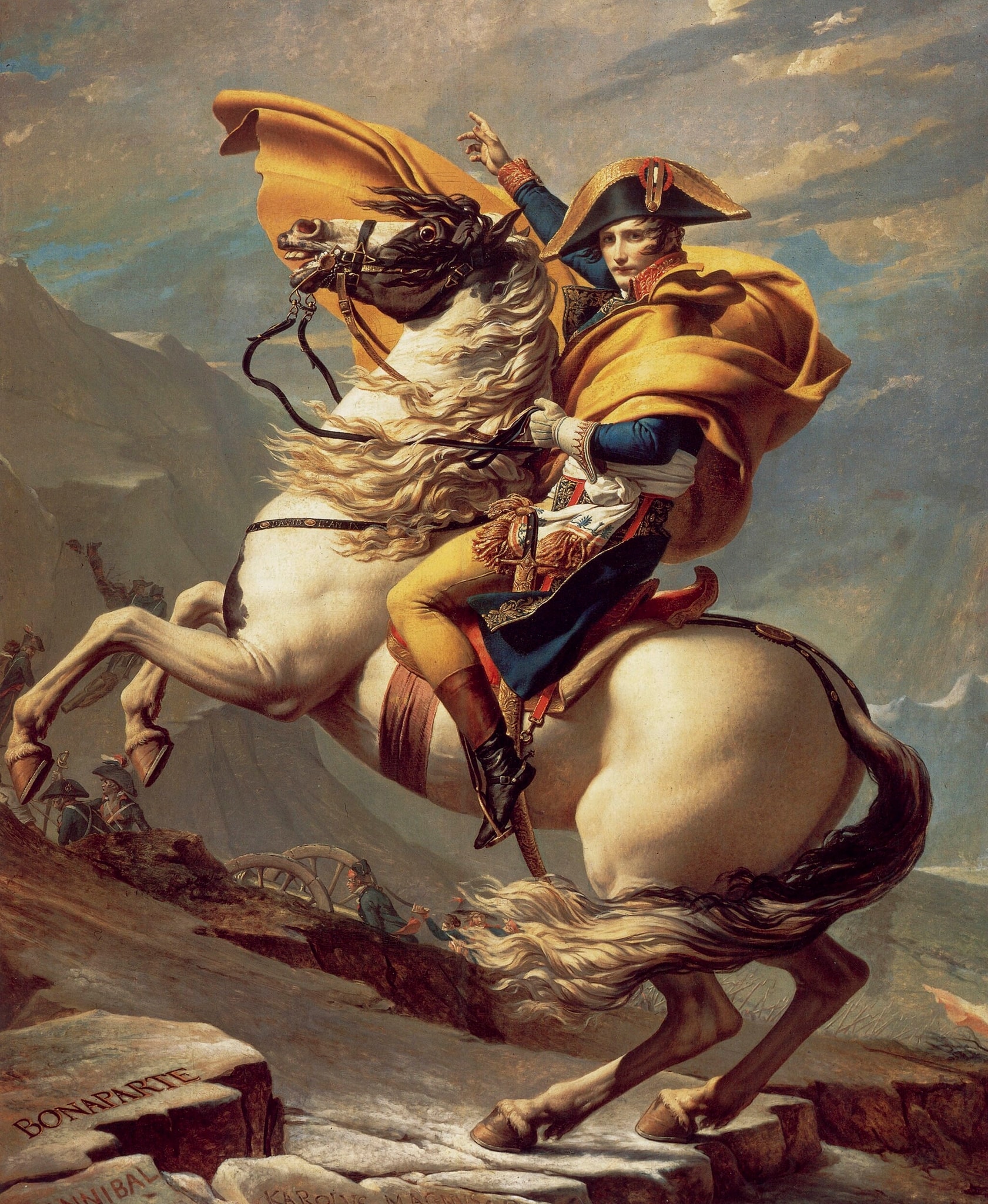
Click on any numbered symbol to learn more about its meaning
Meaning & Symbolism
Explore Deeper with AI
Ask questions about Napoleon Crossing the Alps
Popular questions:
Powered by AI • Get instant insights about this artwork
Interpretations
Historical Context: A Networked Image of Rule
Source: Foundation Napoléon; Malmaison; SPSG Charlottenburg; RMN-Grand Palais; Belvedere
Formal Analysis: Neoclassicism Without Allegory
Source: Smarthistory; Encyclopaedia Britannica; scholarly synthesis via Wikipedia entry
Symbolic Reading: Rock as Imperial Chronicle
Source: Smarthistory; Foundation Napoléon
Psychology of Command: Gesture, Gaze, and Color
Source: Smarthistory; Encyclopaedia Britannica
Art & Representation: Fabrication and Truth-Effects
Source: Encyclopaedia Britannica; scholarly synthesis via Wikipedia entry
Related Themes
About Jacques-Louis David
More by Jacques-Louis David
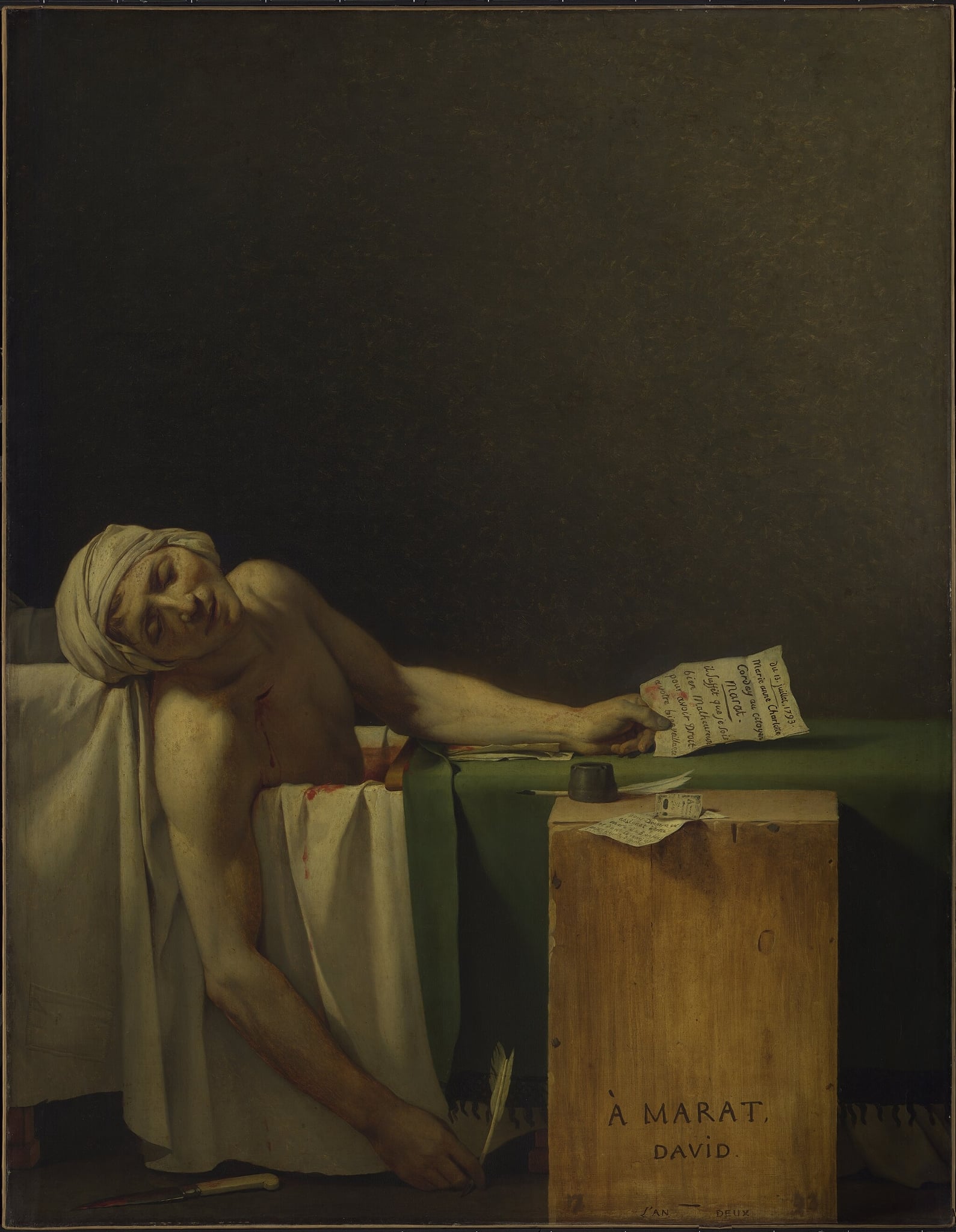
The Death of Marat
Jacques-Louis David (1793)
<strong>The Death of Marat</strong> turns a private murder into a <strong>secular martyrdom</strong>: Marat’s idealized body slumps in a bath, a pleading letter in his hand, a quill slipping from the other beside a bloodied knife and inkwell. Against a vast dark void, David’s calm light and austere geometry elevate humble objects—the green baize plank and the crate inscribed “À MARAT, DAVID, L’AN DEUX”—into civic emblems <sup>[1]</sup><sup>[2]</sup><sup>[3]</sup>.
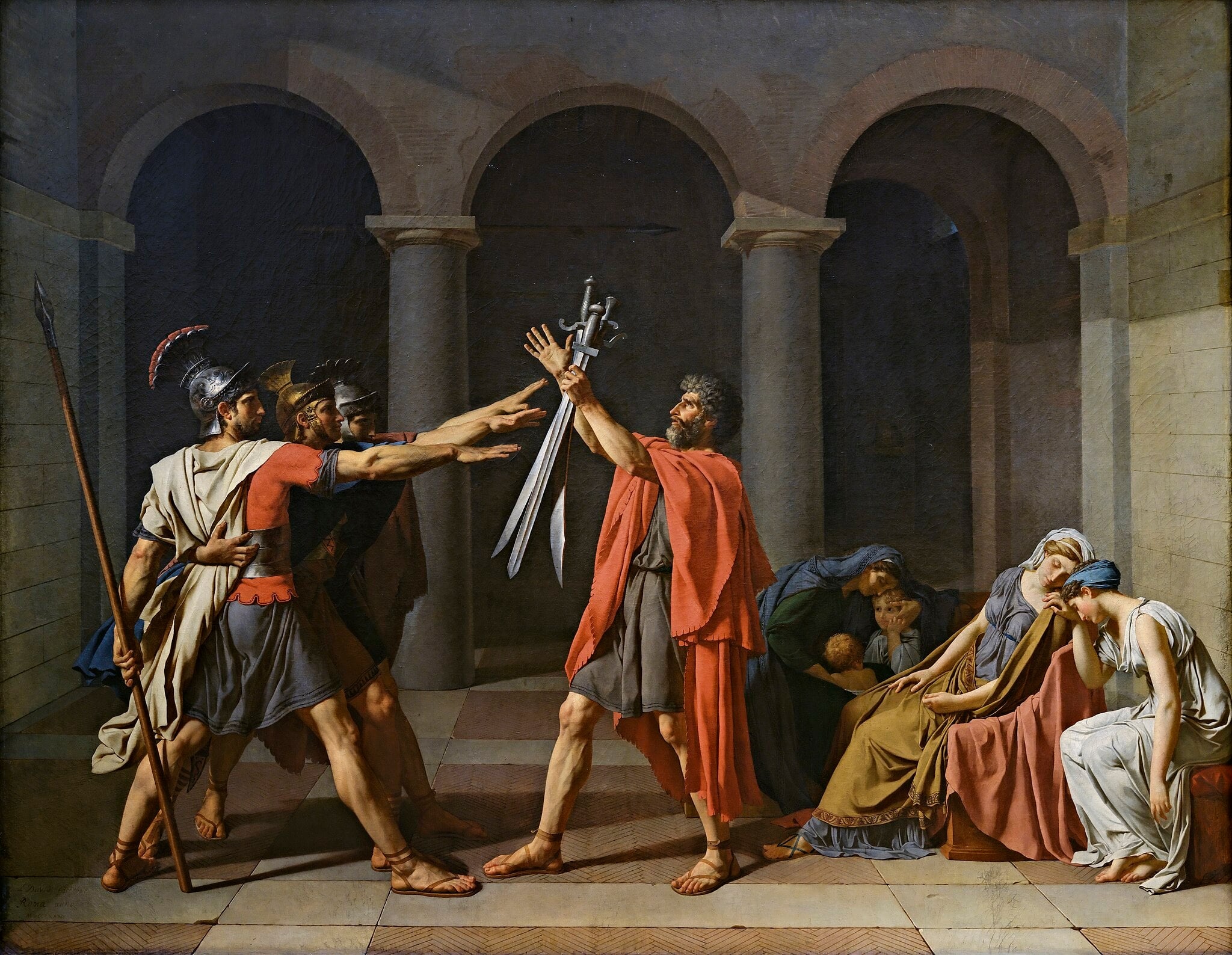
The Oath of the Horatii
Jacques-Louis David (1784 (exhibited 1785))
In The Oath of the Horatii, Jacques-Louis David crystallizes <strong>civic duty over private feeling</strong>: three Roman brothers extend their arms to swear allegiance as their father raises <strong>three swords</strong> at the perspectival center. The painting’s severe geometry, austere architecture, and polarized groups of <strong>rectilinear men</strong> and <strong>curving mourners</strong> stage a manifesto of <strong>Neoclassical virtue</strong> and republican resolve <sup>[1]</sup><sup>[2]</sup><sup>[3]</sup>.