Heroism & the test
Featured Artworks
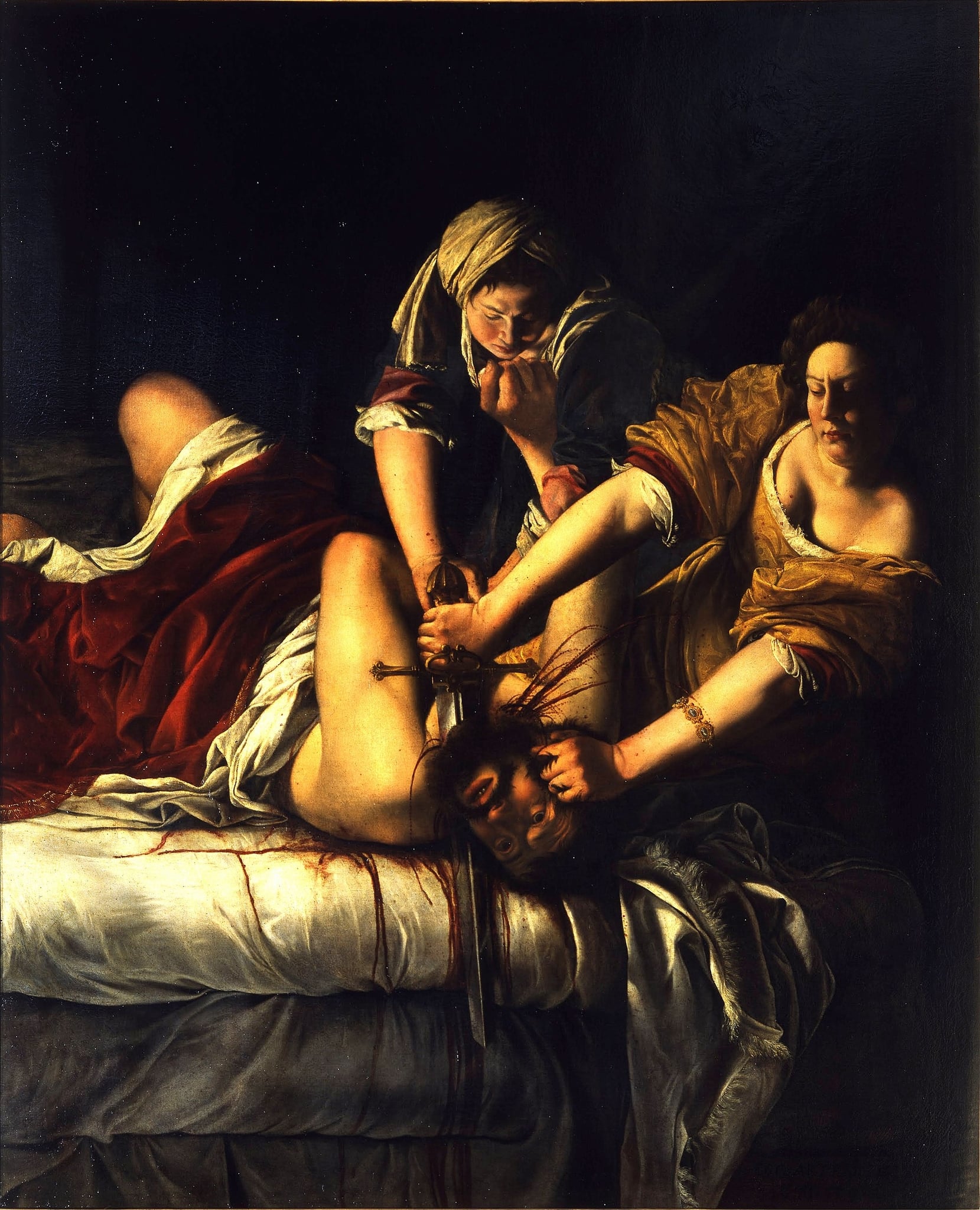
Judith Slaying Holofernes
Artemisia Gentileschi (c. 1612–13)
Artemisia Gentileschi’s Judith Slaying Holofernes hurls us into the fatal instant when Judith and her maid overpower the Assyrian general. In a void of darkness, a hard light chisels out straining arms, a heavy sword, and blood darkening the white sheets—an image of <strong>justice enacted through female collaboration</strong> <sup>[1]</sup><sup>[2]</sup>.
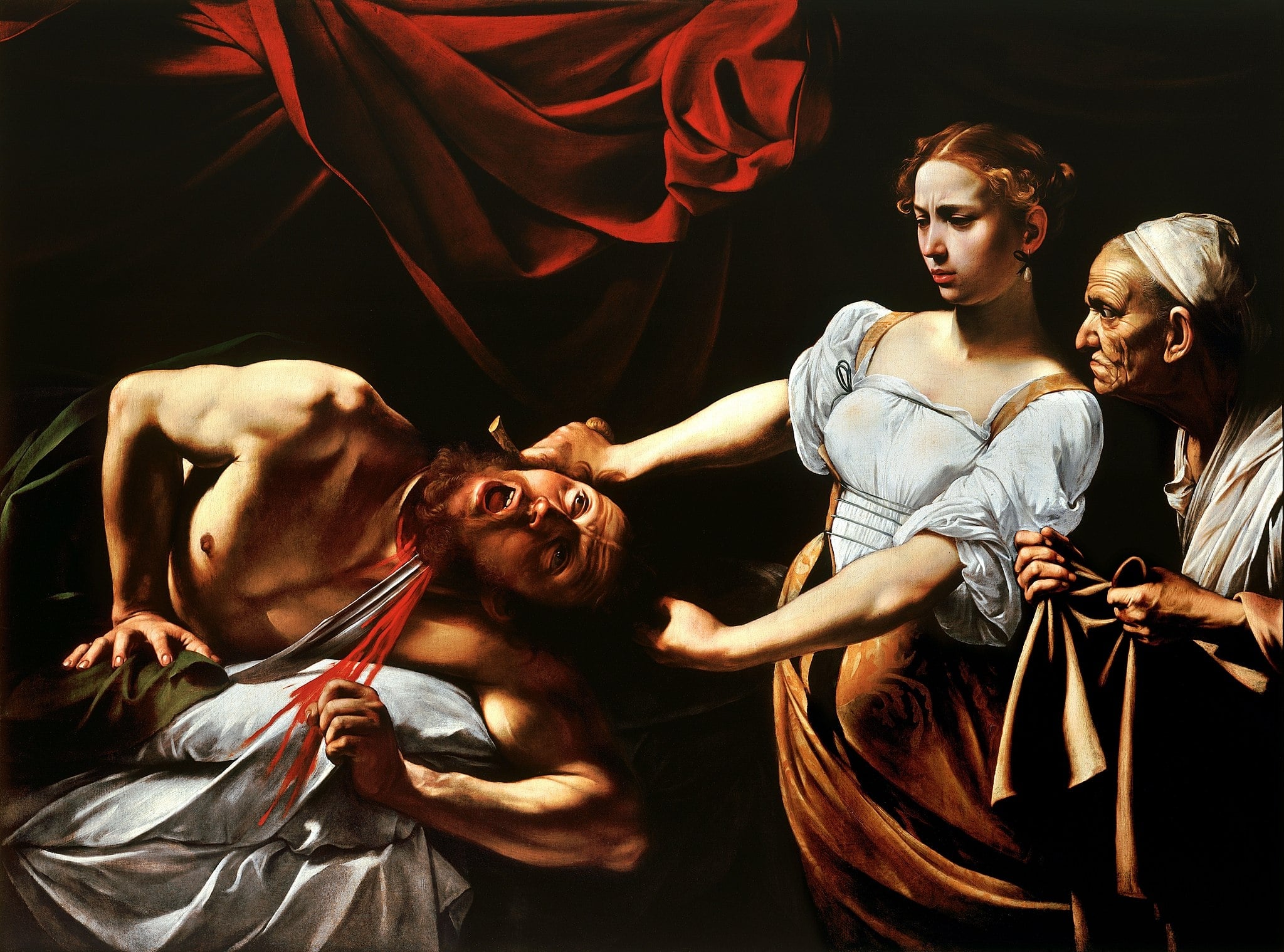
Judith Beheading Holofernes
Caravaggio (1599)
Caravaggio’s Judith Beheading Holofernes stages the biblical execution as a shocking present-tense event, lit by a raking beam that cuts figures from darkness. The <strong>red curtain</strong> frames a moral spectacle in which <strong>virtue overthrows tyranny</strong>, as Judith’s cool determination meets Holofernes’ convulsed resistance. Radical <strong>naturalism</strong>—from tendon strain to ribboning blood—makes deliverance feel material and irreversible.
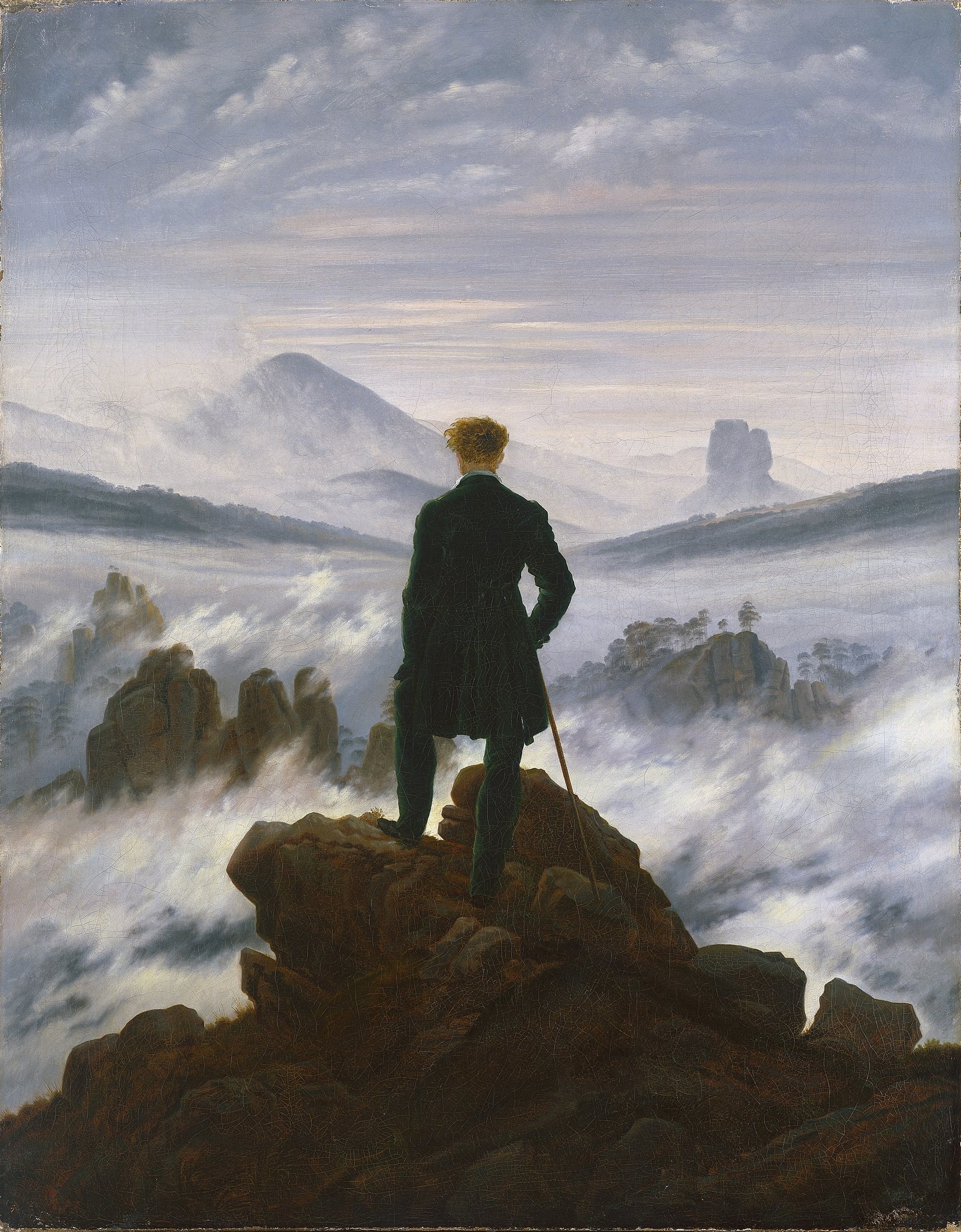
The Wanderer above the Sea of Fog
Caspar David Friedrich (ca. 1817)
Caspar David Friedrich’s The Wanderer above the Sea of Fog distills the Romantic encounter with nature into a single <strong>Rückenfigur</strong> poised on jagged rock above a rolling <strong>sea of mist</strong>. The cool, receding vista and the figure’s still stance convert landscape into an <strong>inner drama of contemplation</strong> and the <strong>sublime</strong> <sup>[1]</sup><sup>[3]</sup>.
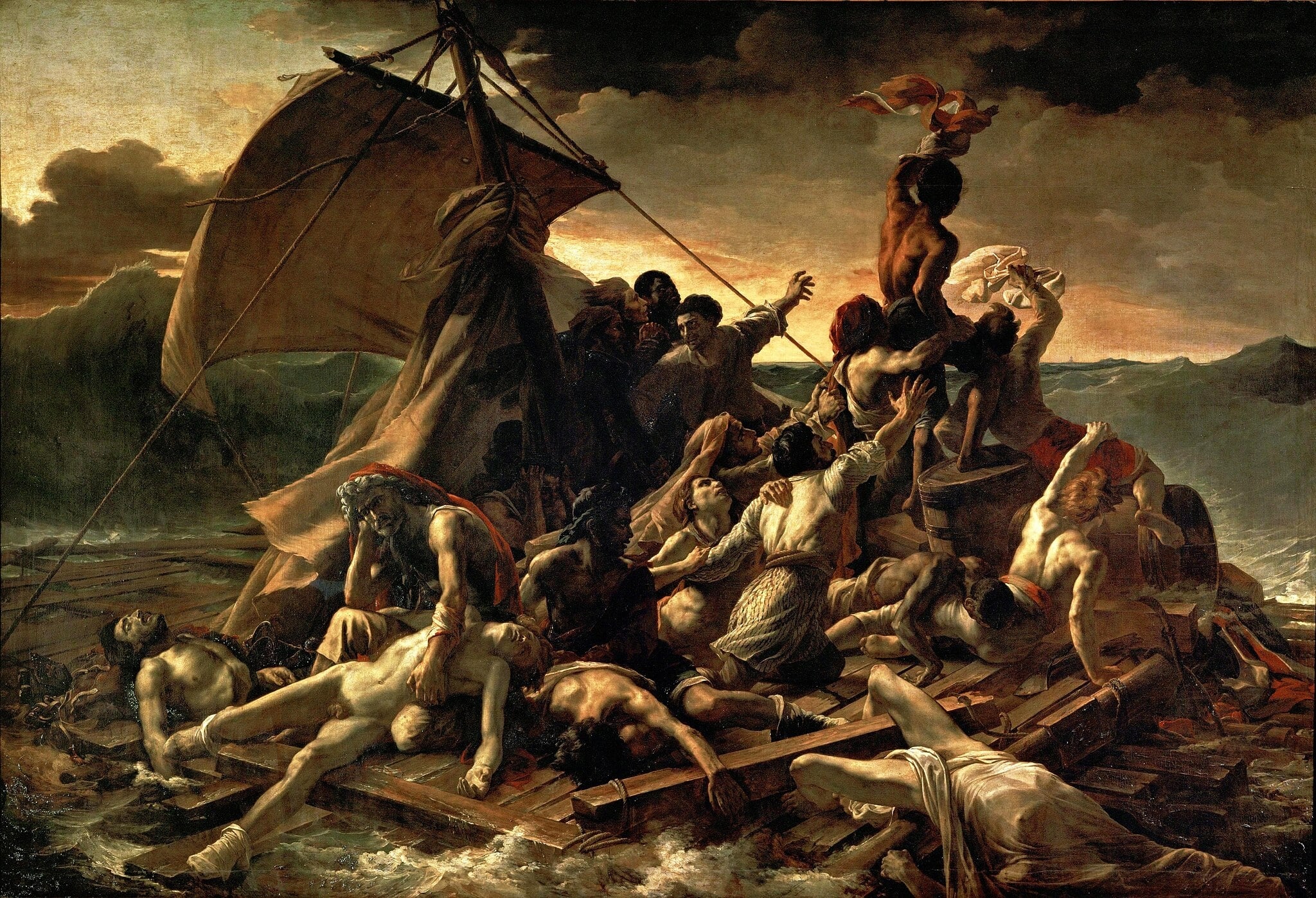
The Raft of the Medusa
Theodore Gericault (1818–1819)
The Raft of the Medusa stages a modern catastrophe as epic tragedy, pivoting from corpses to a surge of <strong>collective hope</strong>. The diagonal mast, torn sail, and a Black figure waving a cloth toward a tiny ship compress the moment when despair turns to <strong>precarious rescue</strong> <sup>[1]</sup><sup>[2]</sup>.
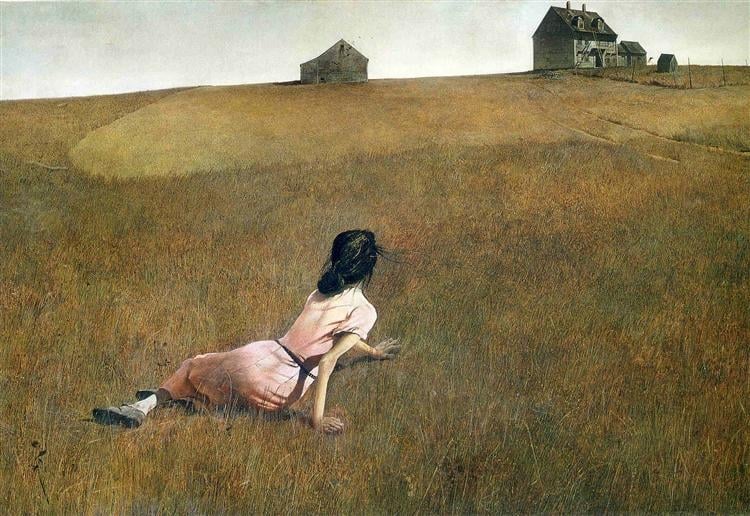
Christina's World
Andrew Wyeth (1948)
Andrew Wyeth’s Christina’s World distills vast rural space and human resolve into a single, charged image: a woman in a <strong>faded pink dress</strong> braces on the <strong>up-slope</strong> toward a weathered farmhouse. The diagonal pull between her body and the <strong>Olson House</strong> turns distance itself into <strong>yearning and endurance</strong> <sup>[1]</sup><sup>[4]</sup>. Wyeth’s spare, <strong>egg tempera</strong> surface makes every brittle grass blade feel like an act of will <sup>[1]</sup><sup>[3]</sup>.
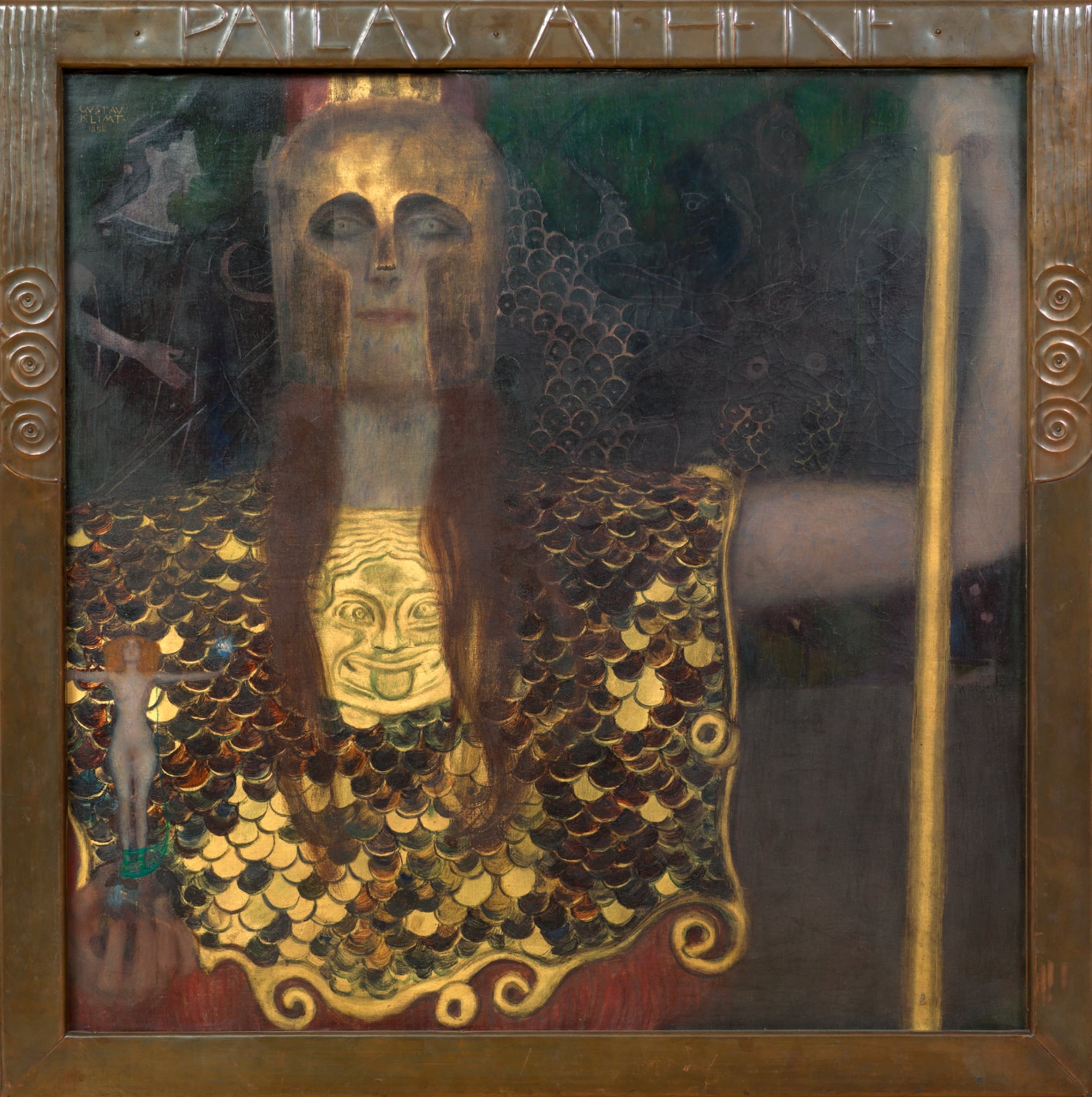
Pallas Athena
Gustav Klimt (1898)
Pallas Athena confronts the viewer as a <strong>frontal icon of power</strong>: helmeted, impassive, and armored in <strong>gleaming scale aegis</strong> crowned by a <strong>gorgoneion</strong>. Klimt fuses archaic authority with modern ornament to proclaim <strong>Vienna Secession</strong> ideals—reason, strategy, and artistic truth held in a single, implacable image <sup>[1]</sup><sup>[2]</sup>.
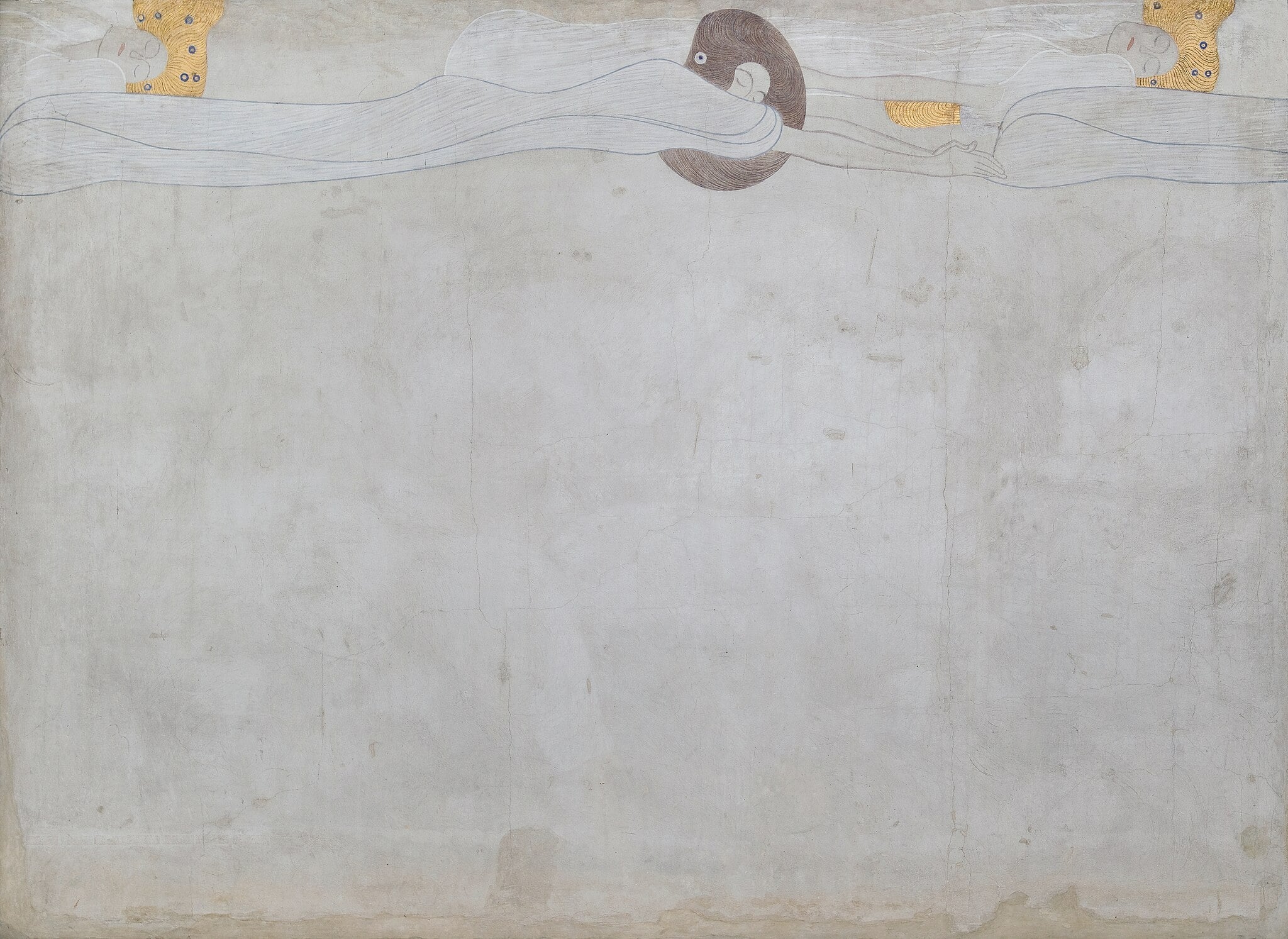
Beethoven Frieze
Gustav Klimt (1901–1902)
Gustav Klimt’s Beethoven Frieze visualizes Beethoven’s Ninth as a <strong>quest from suffering to joy</strong>, using weightless, ribbon-like bodies and <strong>gold-gleaming ornament</strong> to translate sound into sight. In the panel shown, floating genii drift horizontally while <strong>islands of gold studded with eye-like jewels</strong> punctuate a vast, chalky void, suspending time like a long musical rest. The work fuses <strong>line, flatness, and precious materials</strong> to promise transcendence through art <sup>[1]</sup><sup>[3]</sup>.
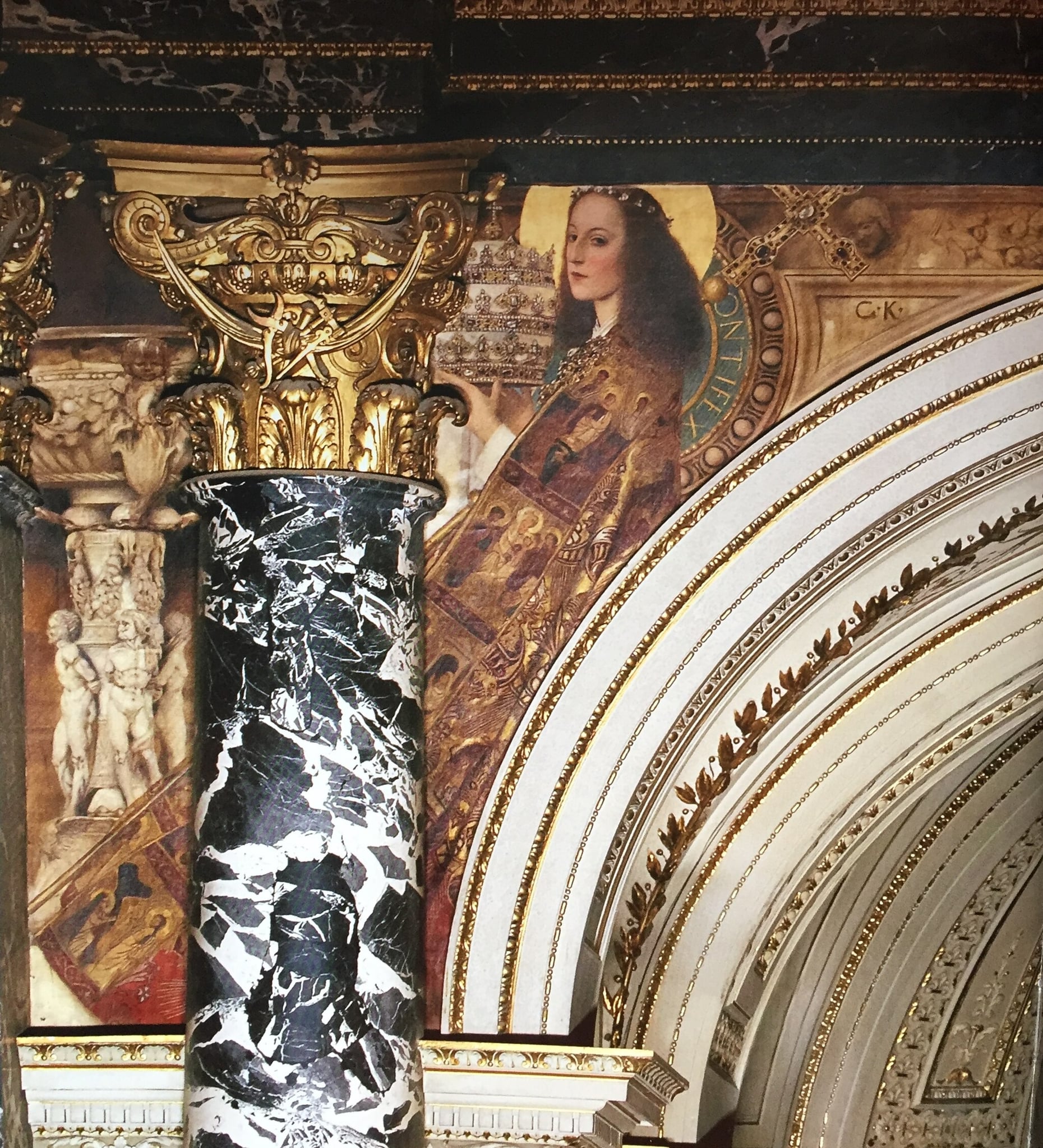
Roman and Venetian Quattrocento
Gustav Klimt (1891)
Gustav Klimt’s Roman and Venetian Quattrocento crowns the Kunsthistorisches Museum’s staircase with a didactic panorama of the Italian fifteenth century, balancing <strong>papal Rome</strong> and <strong>civic Venice</strong>. In the spandrel shown, a saintly female personification in <strong>pontifical vestments</strong> presents the <strong>papal tiara</strong> before a field of classicizing reliefs and Latin script, framed by real marble and gilded capitals. The ensemble fuses architecture and allegory, previewing Klimt’s later <strong>ornamental gold</strong> idiom while teaching viewers to read art through symbols <sup>[1]</sup><sup>[2]</sup>.
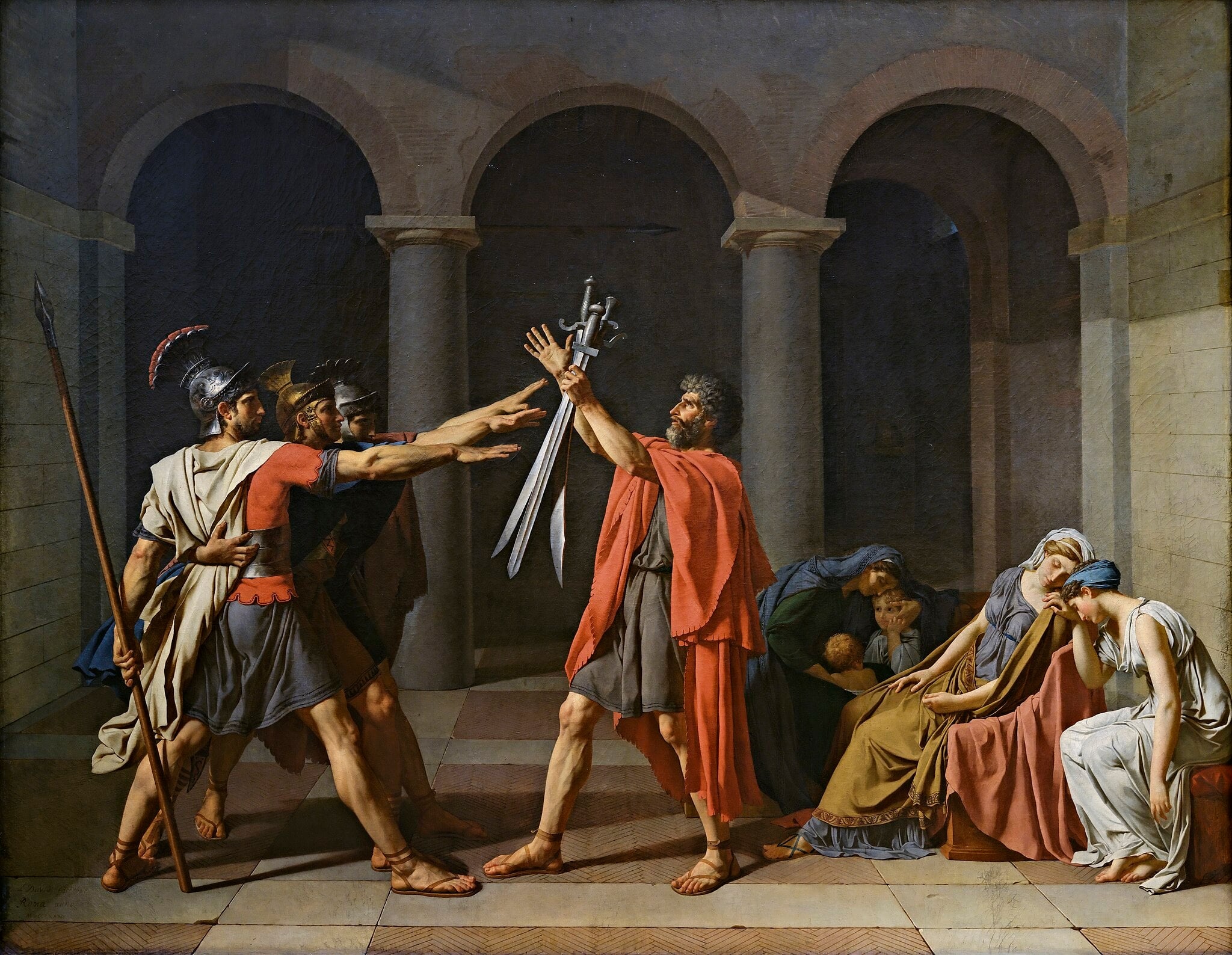
The Oath of the Horatii
Jacques-Louis David (1784 (exhibited 1785))
In The Oath of the Horatii, Jacques-Louis David crystallizes <strong>civic duty over private feeling</strong>: three Roman brothers extend their arms to swear allegiance as their father raises <strong>three swords</strong> at the perspectival center. The painting’s severe geometry, austere architecture, and polarized groups of <strong>rectilinear men</strong> and <strong>curving mourners</strong> stage a manifesto of <strong>Neoclassical virtue</strong> and republican resolve <sup>[1]</sup><sup>[2]</sup><sup>[3]</sup>.
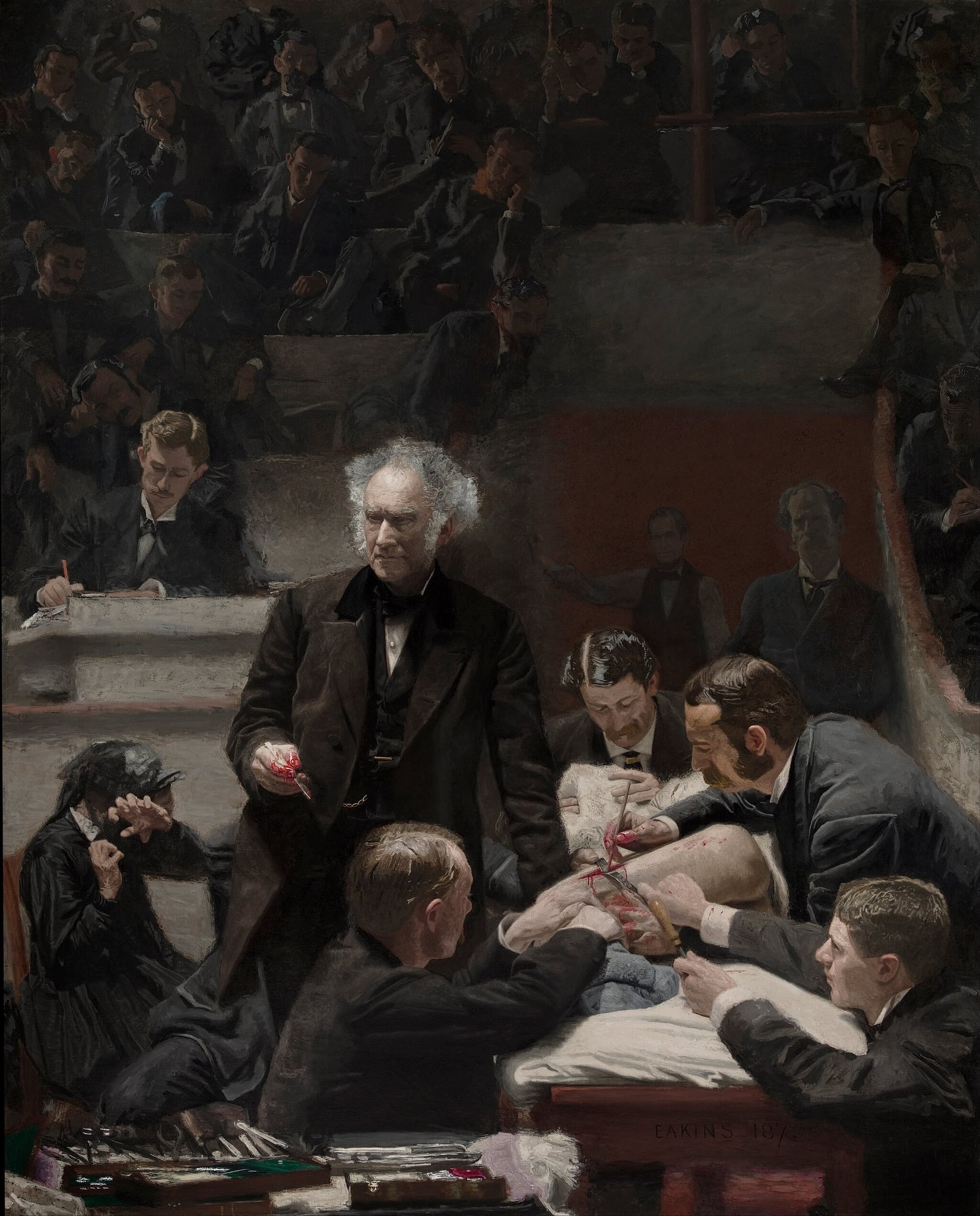
The Gross Clinic
Thomas Eakins (1875)
Thomas Eakins’s The Gross Clinic turns a surgical lesson into civic drama, casting a blaze of light on the surgeon’s white hair and bloodied fingers while students fade into shadow. With the veiled woman recoiling at left and a clerk calmly recording at right, the painting frames <strong>science as spectacle</strong> and <strong>witness as ethics</strong> <sup>[1]</sup><sup>[2]</sup>.
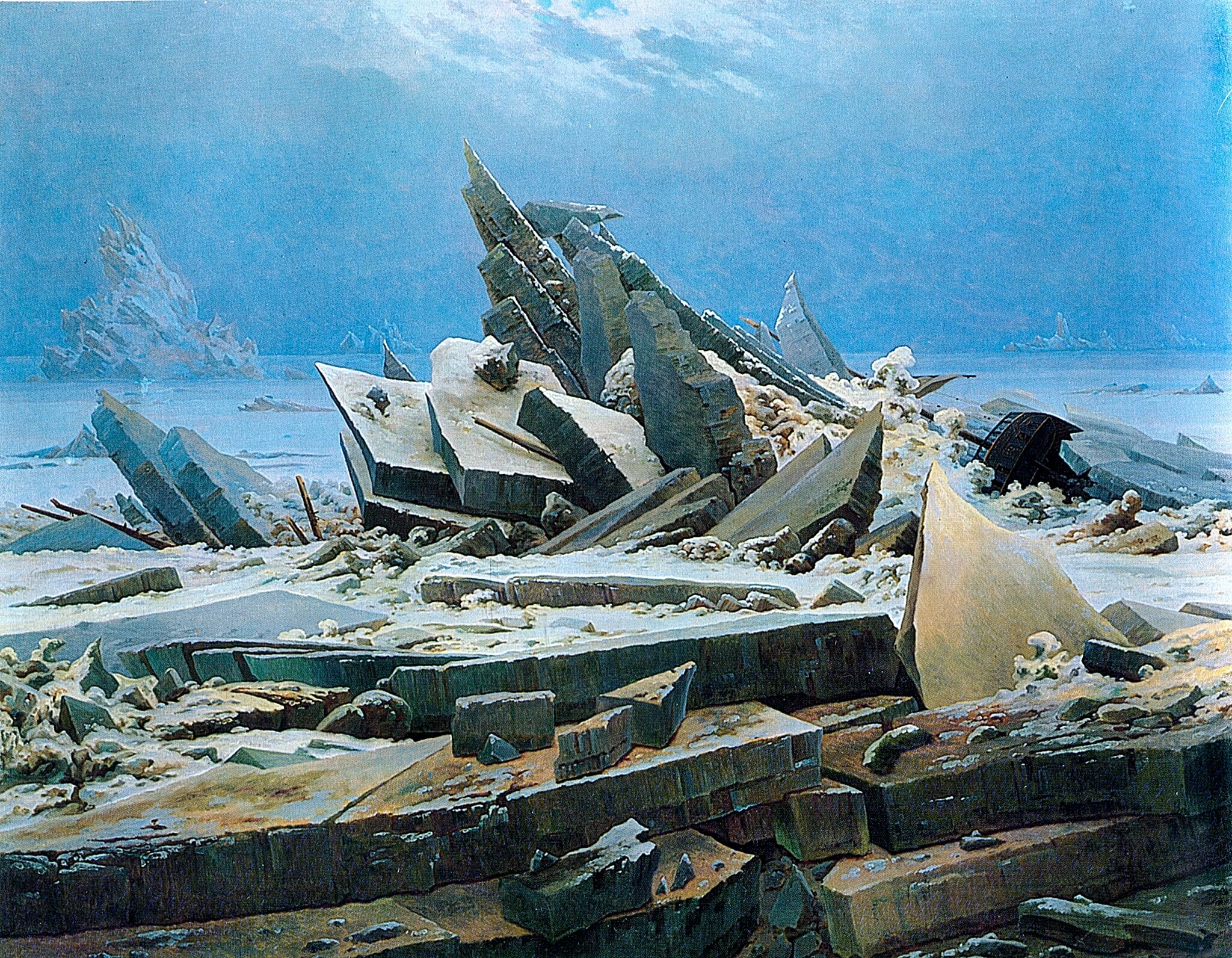
The Sea of Ice
Caspar David Friedrich (1823–1824)
Caspar David Friedrich’s The Sea of Ice turns nature into a <strong>frozen architecture</strong> that crushes a ship and, with it, human pretension. The painting stages the <strong>Romantic sublime</strong> as both awe and negation, replacing heroic conquest with the stark finality of ice and silence <sup>[1]</sup><sup>[3]</sup>.
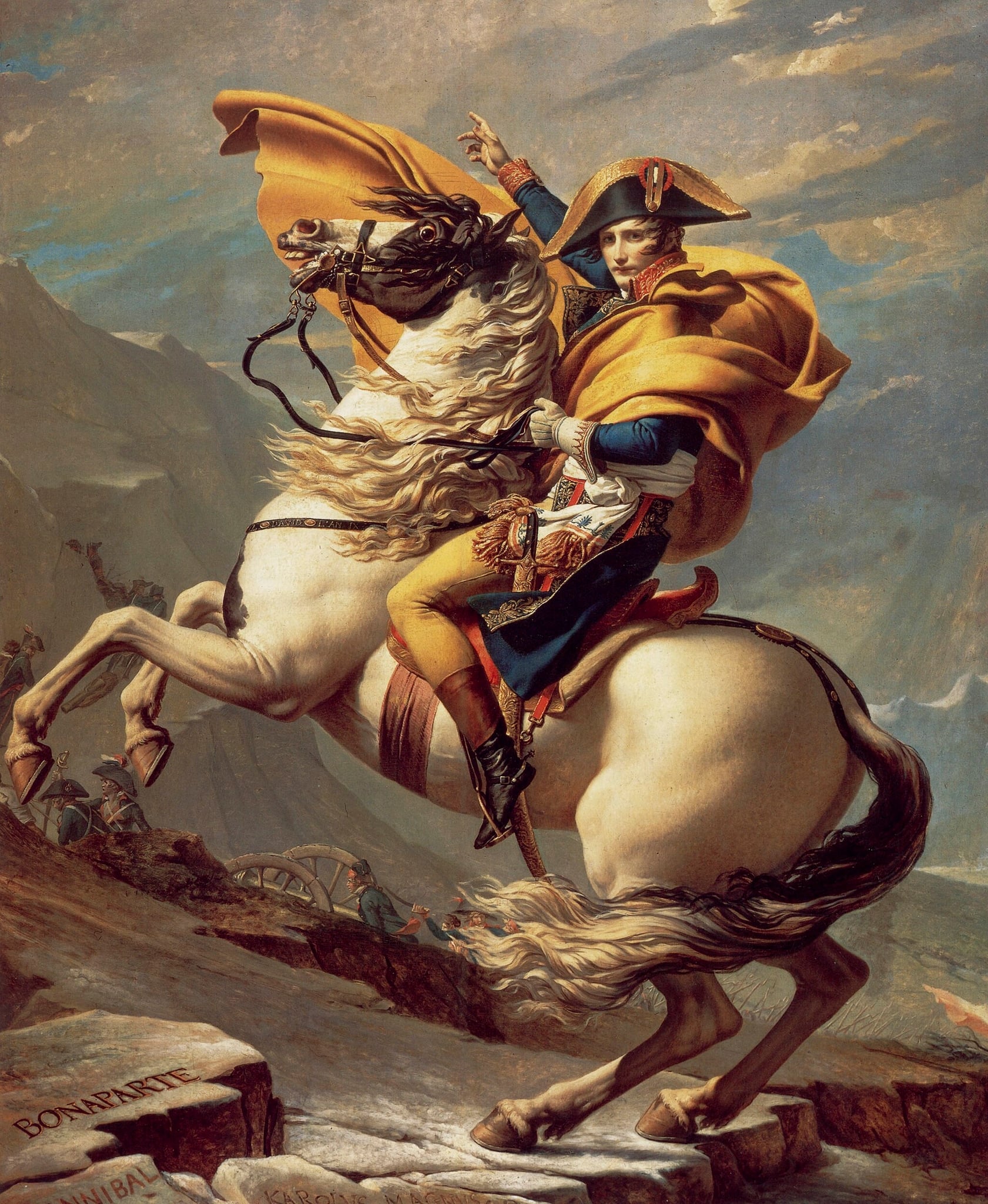
Napoleon Crossing the Alps
Jacques-Louis David (1801–1805 (series of five versions))
Jacques-Louis David turns a difficult Alpine passage into a <strong>myth of command</strong>: a serene leader on a rearing charger, a <strong>billowing golden cloak</strong>, and names cut into stone that bind the crossing to Hannibal and Charlemagne. The painting manufactures <strong>political legitimacy</strong> by fusing modern uniform and classical gravitas into a single, upward-driving image <sup>[1]</sup><sup>[2]</sup><sup>[3]</sup><sup>[4]</sup>.
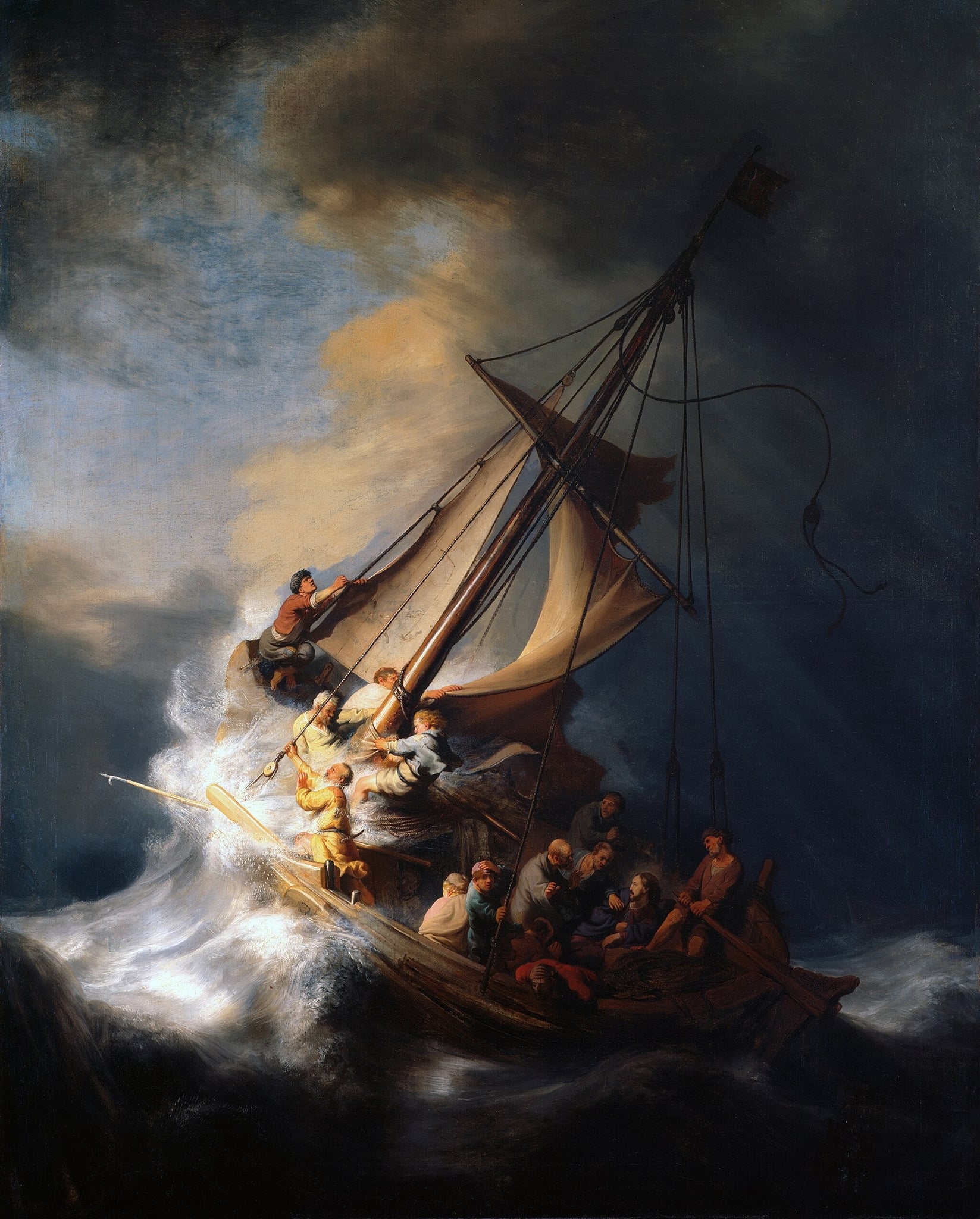
The Storm on the Sea of Galilee
Rembrandt van Rijn (1633)
Rembrandt van Rijn’s The Storm on the Sea of Galilee stages a clash of <strong>human panic</strong> and <strong>divine composure</strong> at the instant before the miracle. A torn mainsail whips across a steeply tilted boat as terrified disciples scramble, while a <strong>serenely lit Christ</strong> anchors a pocket of calm—an image of faith holding within chaos <sup>[1]</sup><sup>[3]</sup>. It is Rembrandt’s only painted seascape, intensifying its dramatic singularity in his oeuvre <sup>[2]</sup>.
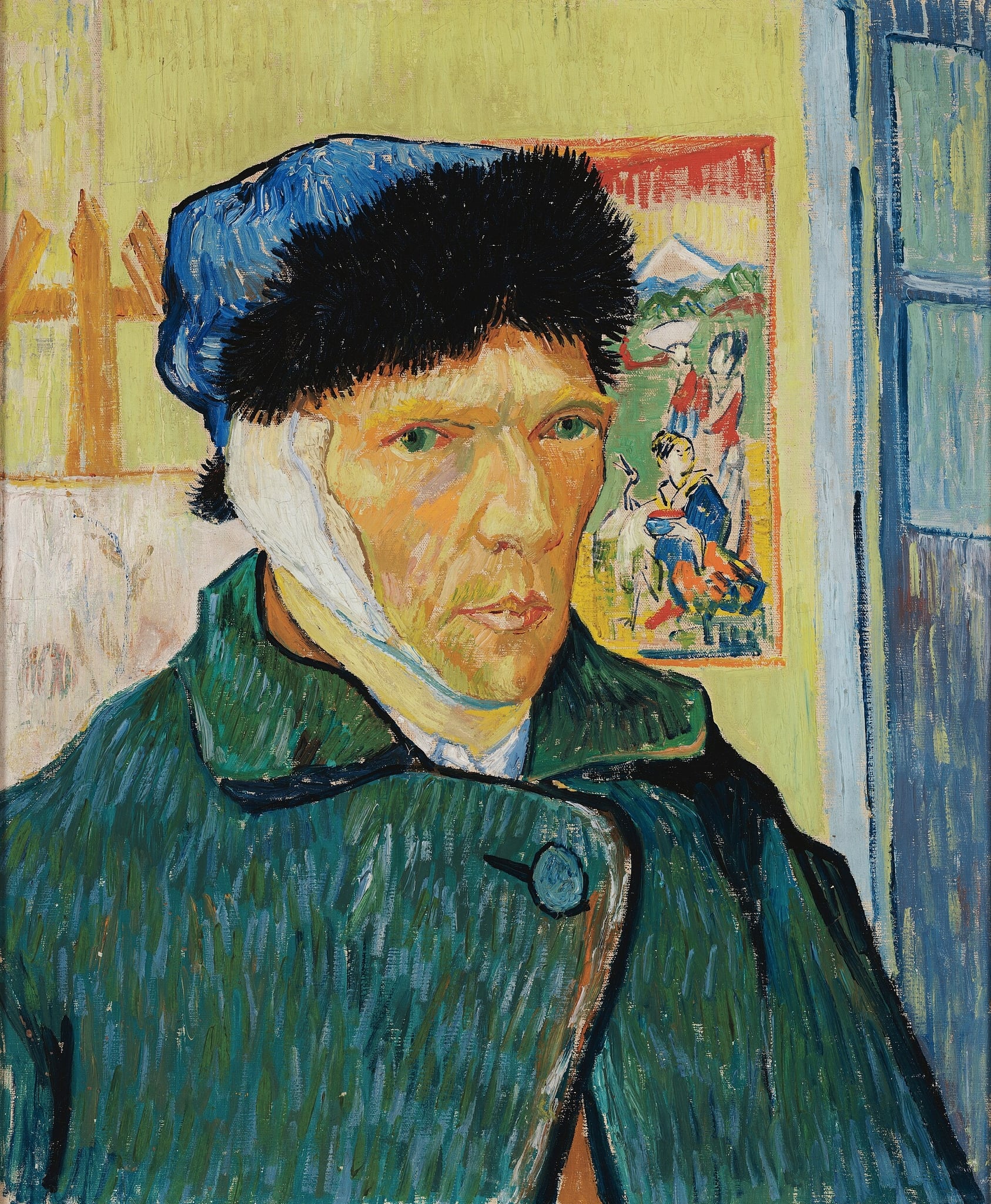
Self-Portrait with Bandaged Ear
Vincent van Gogh (1889)
In Self-Portrait with Bandaged Ear (1889), Vincent van Gogh converts a recent crisis into an image of <strong>resolve</strong>. The frontal, slightly turned pose forces attention to the white bandage at the viewer’s right, while the fur cap, heavy coat, and the nearby <strong>Japanese print</strong> declare persistence and ideals that steady him in the wake of trauma <sup>[1]</sup><sup>[2]</sup>. The painting’s cool, wintry palette and insistent strokes make suffering legible yet disciplined, transforming pain into <strong>artistic purpose</strong> <sup>[2]</sup>.
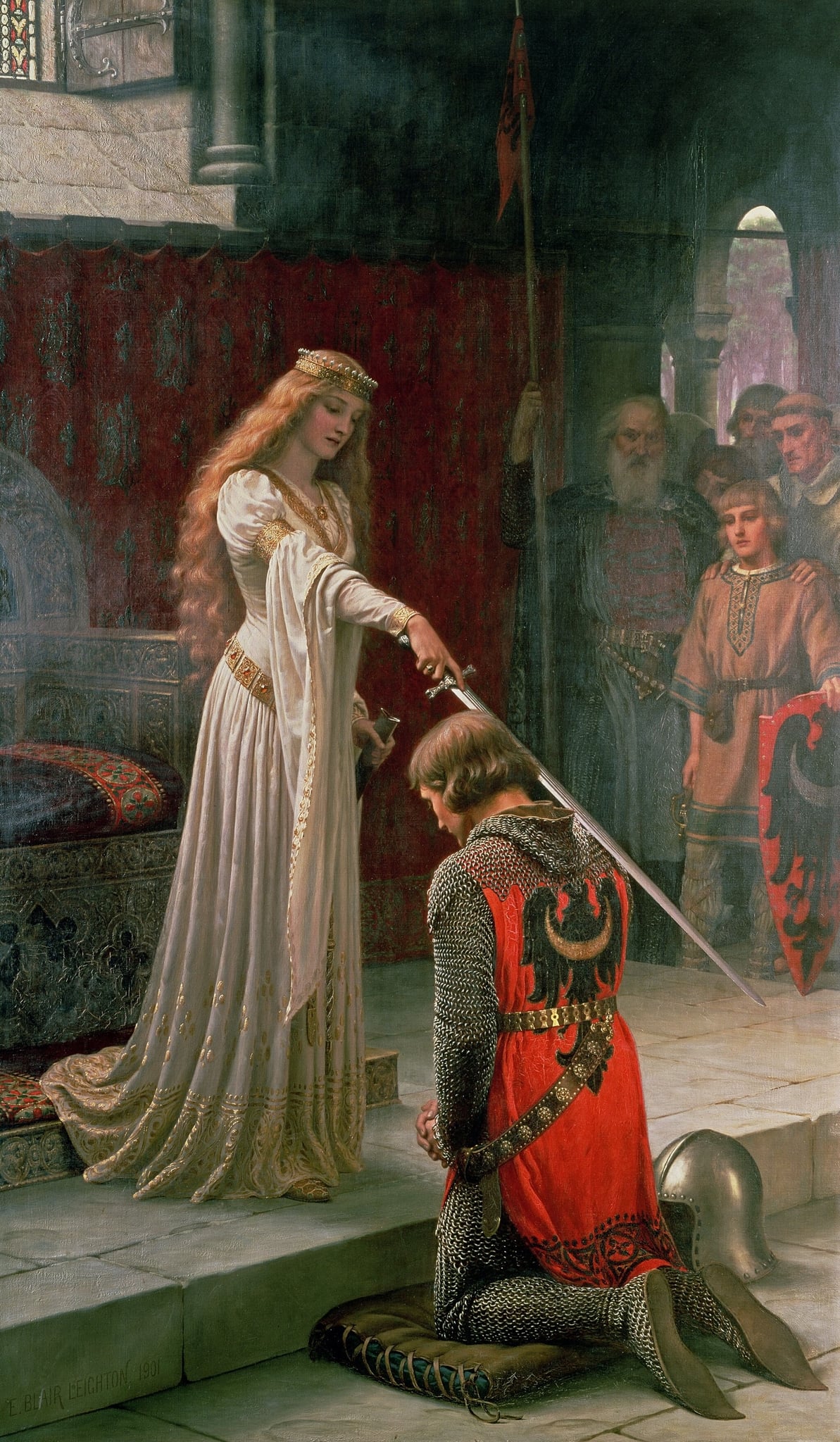
The Accolade
Edmund Leighton (1901)
Edmund Leighton’s The Accolade (1901) crystallizes the rite of knighthood as a moral initiation, staging duty conferred by <strong>grace</strong> rather than force. A lady in radiant white touches her sword to the shoulder of a kneeling knight in chain mail and scarlet surcoat, before a crimson tapestry and carved throne, while shadowed witnesses affirm the solemnity of the moment <sup>[1]</sup><sup>[2]</sup>.
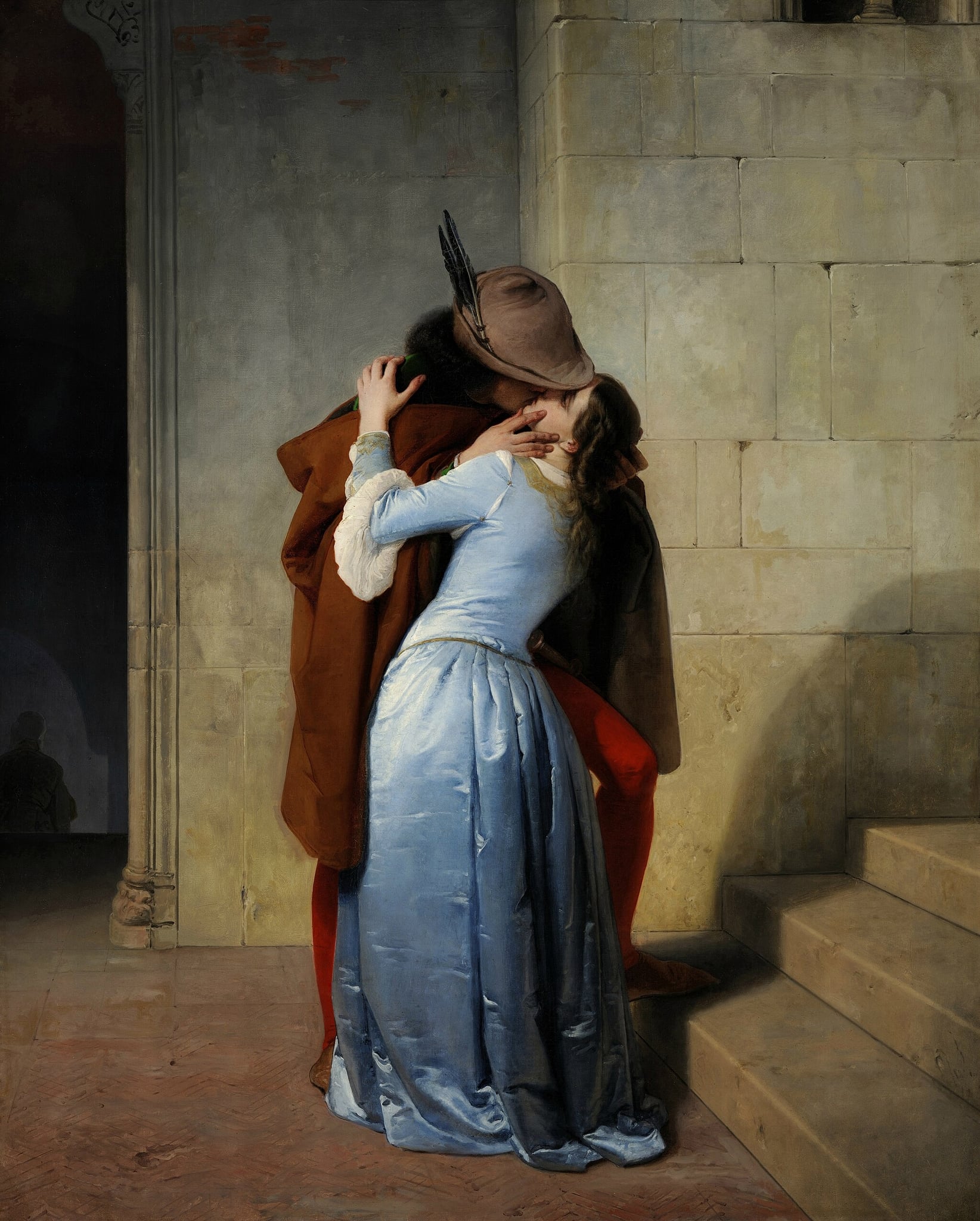
The Kiss (Hayez)
Francesco Hayez (1859)
Francesco Hayez’s The Kiss (Hayez) fuses intimate passion with <strong>political resolve</strong>: a clandestine embrace staged on a cold stone threshold as departure looms. The man’s <strong>outward-angled foot</strong> on the stair and the flash of a <strong>dagger</strong> compress time to a final instant before flight, while tricolour cues fold love into the Risorgimento alliance of 1859 <sup>[1]</sup>. The painting’s cool masonry and <strong>theatrical light</strong> make private tenderness read as public courage.
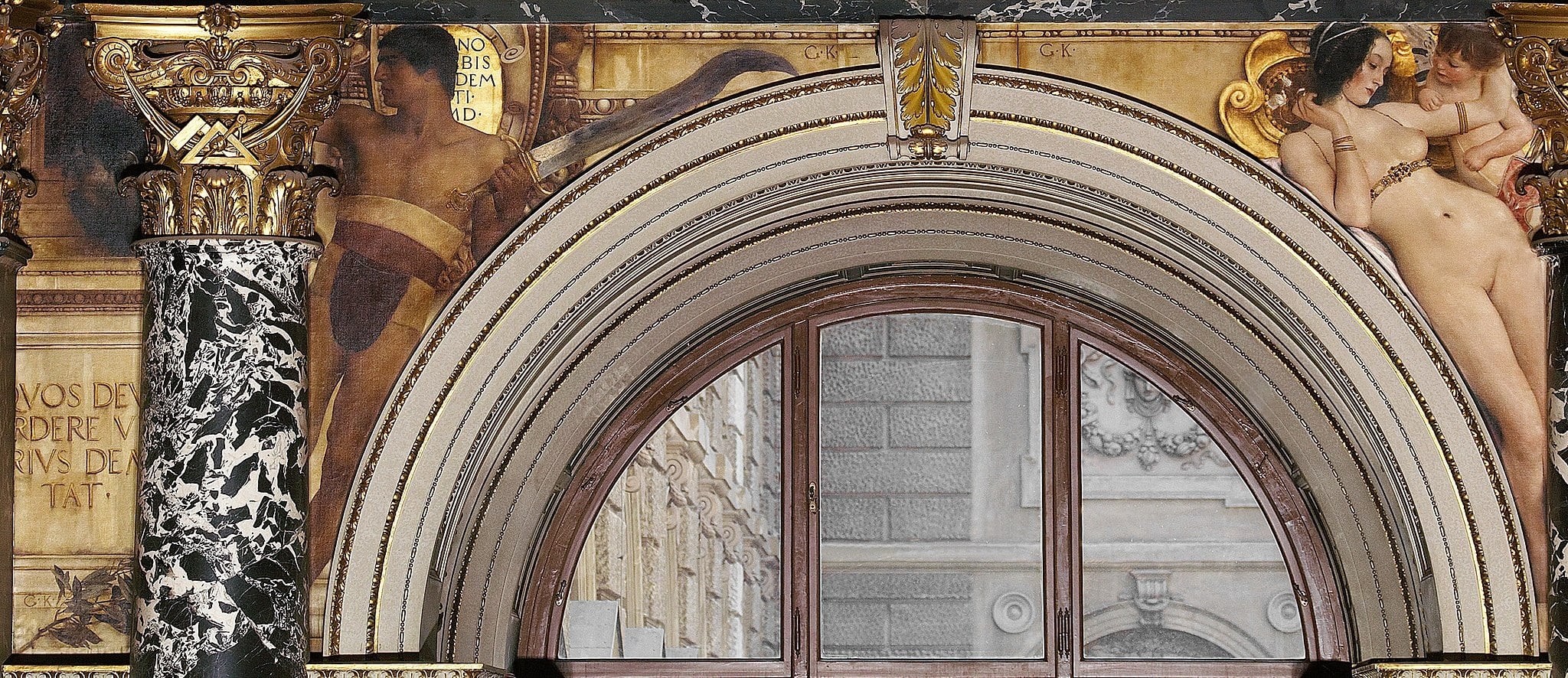
Florentine Cinquecento and Quattrocento
Gustav Klimt (1891)
Gustav Klimt’s Florentine Cinquecento and Quattrocento stages a dialogue between <strong>heroic virtue</strong> and <strong>ideal beauty</strong>. A trophy-like Goliath head (standing for Michelangelo’s David) faces a reclining <strong>Venus with Cupid</strong>, all set within a gilded, marbleized architectural frame that fuses painting and ornament <sup>[1]</sup><sup>[2]</sup>.
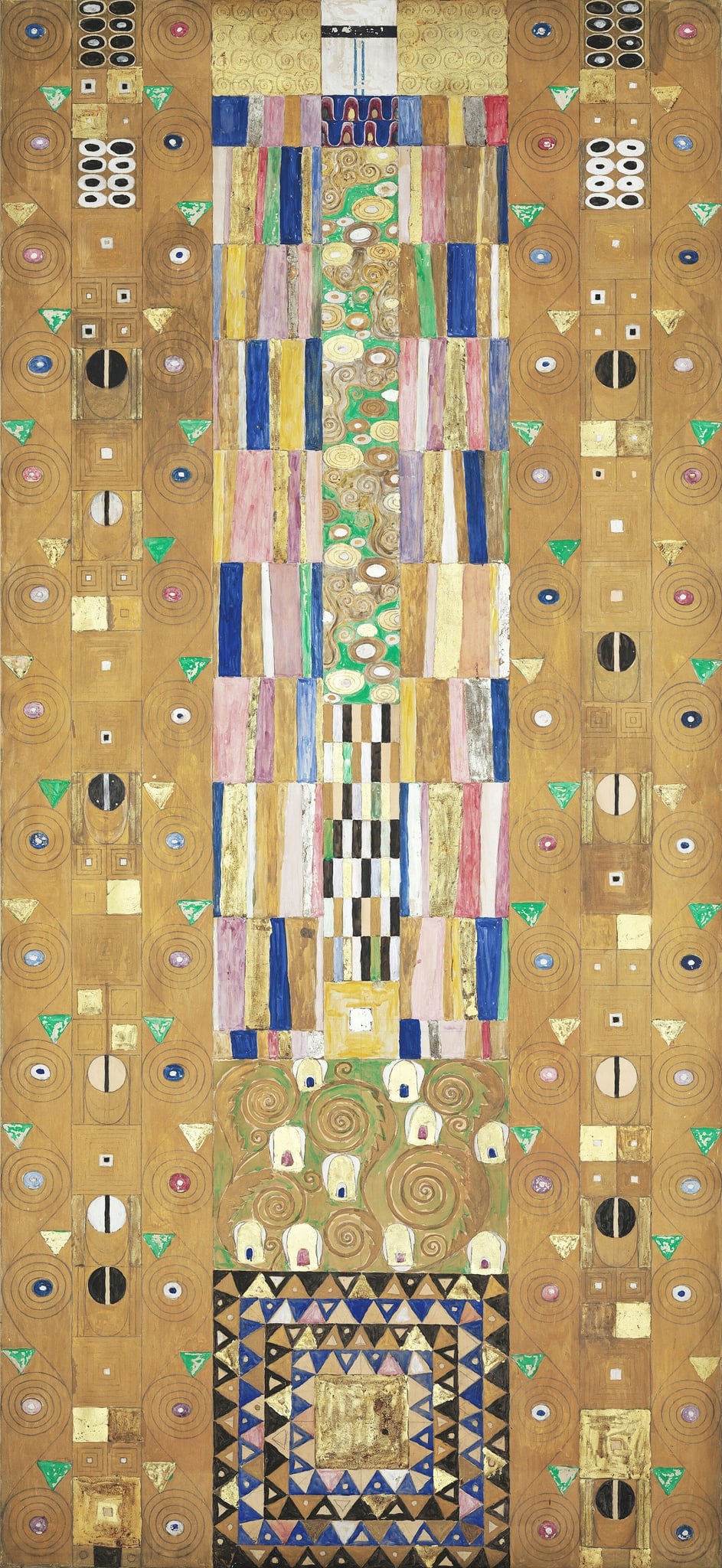
Knight (Part 9)
Gustav Klimt (1910–1911)
Klimt’s Knight (Part 9) turns chivalry into a <strong>geometric icon</strong>: a vertical standard of stacked bars and checks flanked by <strong>ranks of circles and triangles</strong> that read as shields and studs. Set on a <strong>golden ground</strong> and crowned and undergirded by ornamental zones, it proclaims vigilance and ethical guardianship between the frieze’s figural scenes. <sup>[1]</sup>
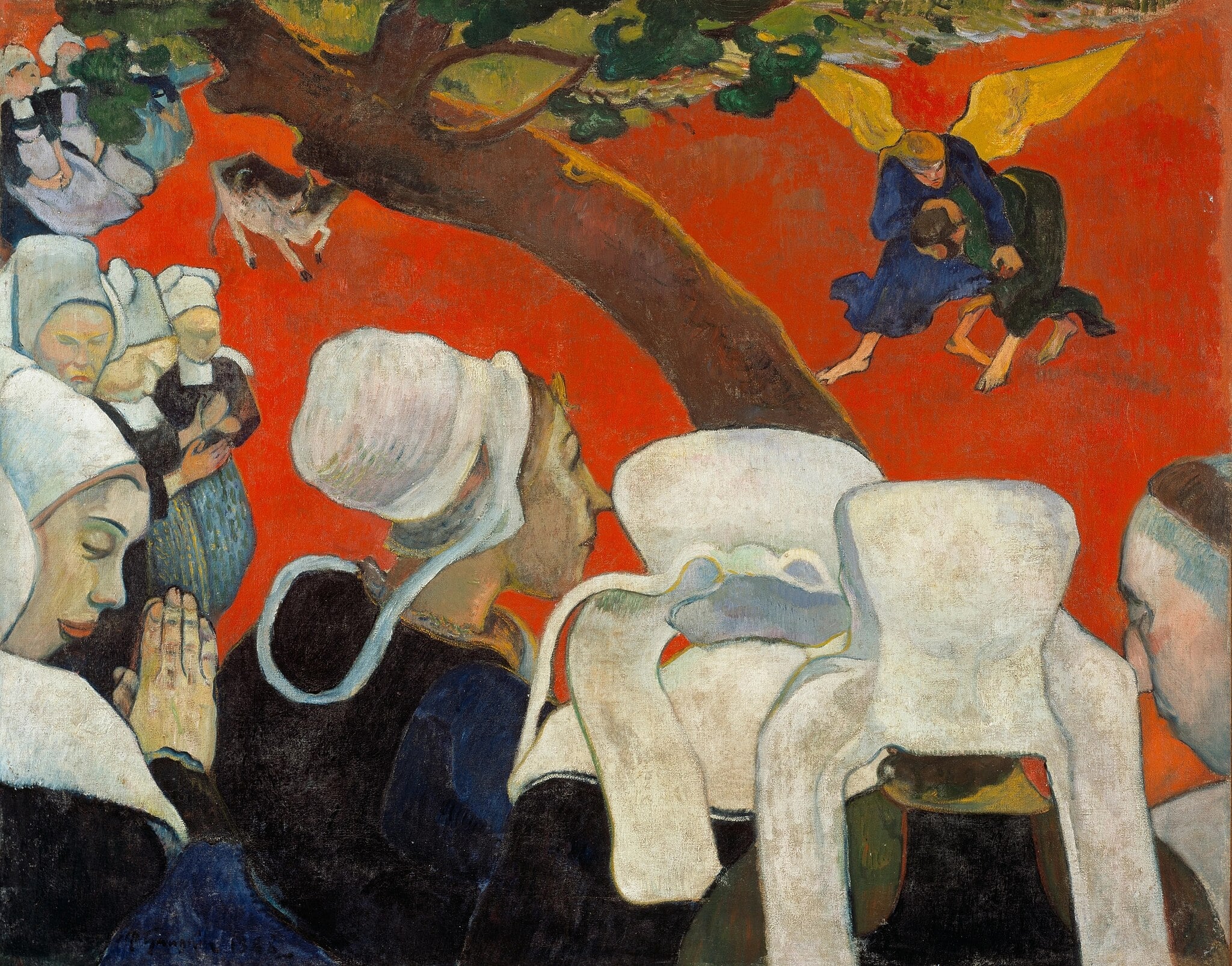
Vision After the Sermon
Paul Gauguin (1888)
Paul Gauguin’s Vision After the Sermon (1888) stages a divide between lived ritual and <strong>collective vision</strong>: Breton women pray in the foreground while, across a diagonal tree, Jacob wrestles an angel on a <strong>flat red field</strong>. With <strong>bold contours</strong> and <strong>non‑naturalistic color</strong>, Gauguin turns faith into pictorial form, making inner experience the painting’s true subject <sup>[1]</sup><sup>[2]</sup>.
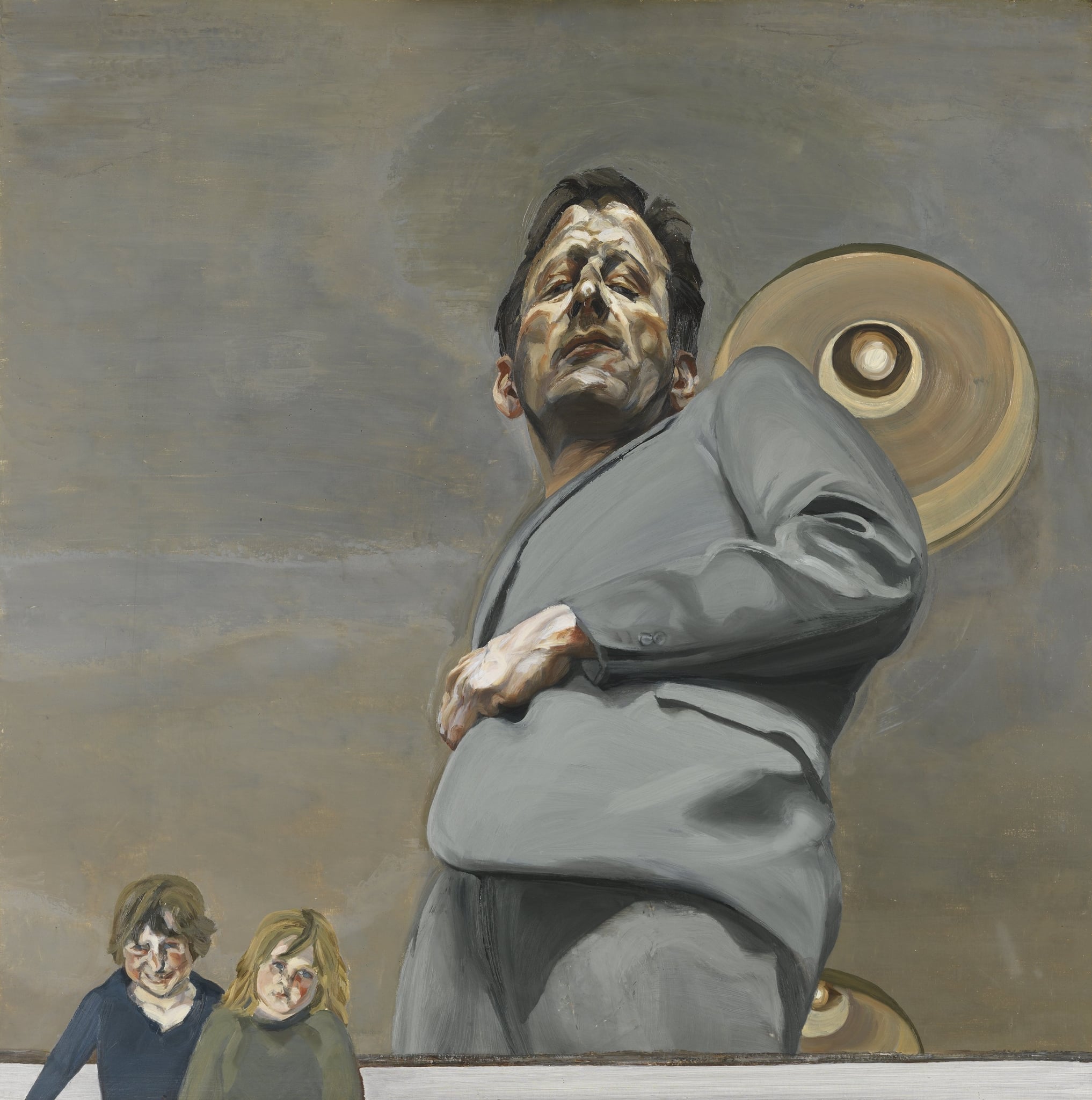
Reflection with Two Children
Lucian Freud (1965)
Lucian Freud’s Reflection with Two Children stages a self‑portrait as a confrontation with a mirror placed on the floor, forcing a vertiginous, low viewpoint. A suited figure looms while a ceiling lamp hovers like a disc behind his head, and two small children puncture the frame at the bottom edge. The painting converts self‑representation into a drama of <strong>authority</strong>, <strong>exposure</strong>, and <strong>accountability</strong> <sup>[1]</sup><sup>[2]</sup>.
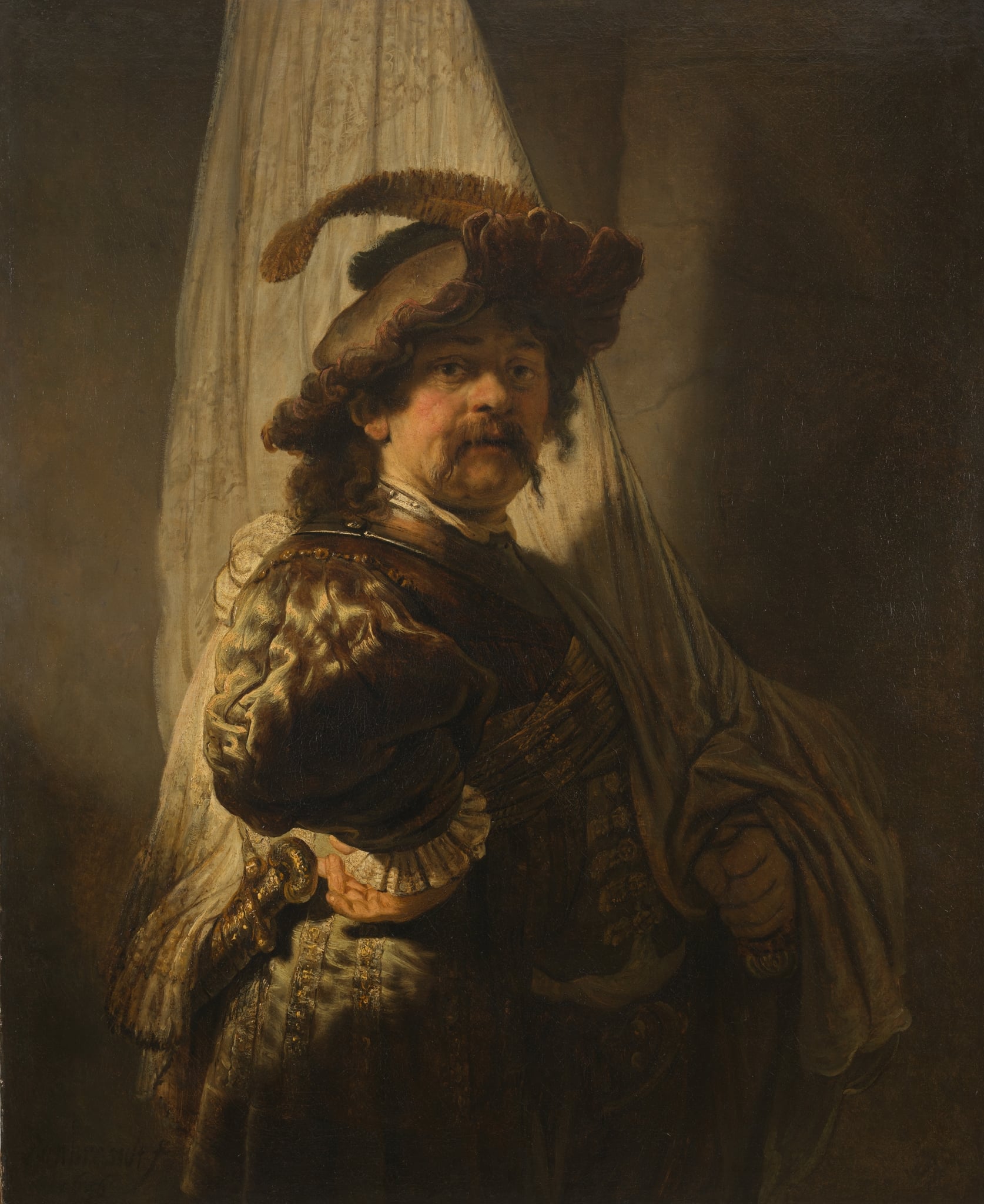
The Standard Bearer
Rembrandt van Rijn (1636)
Rembrandt van Rijn’s The Standard Bearer (1636) thrusts a single figure into a wedge of light, his satin sleeve and metal <strong>gorget</strong> flashing as the pale <strong>standard</strong> billows behind him. The diagonal flag and forward-leaning stance assert <strong>resolve</strong> and <strong>readiness</strong>, while the enveloping shadow and wary gaze convert civic office into a meditation on <strong>honor</strong> and the solitary <strong>weight of leadership</strong> <sup>[1]</sup><sup>[4]</sup>.

The Woman taken in Adultery
Rembrandt van Rijn (1644)
Rembrandt van Rijn’s The Woman taken in Adultery (1644) stages John 8:3–11 as a tense, ethical <strong>pause</strong> inside a cavernous, gilded sanctuary. A narrow beam of <strong>light</strong> singles out the kneeling woman in white while Christ’s composed figure redirects the crowd from <strong>retribution</strong> toward <strong>mercy</strong> <sup>[1]</sup>.