The Sea of Ice
Study Print Studio
Create a personal study print
Build a companion study sheet around the part of this painting that speaks to you most. Choose a detail, shape an interpretation, and walk away with something personal and display-worthy.
Fast Facts
- Year
- 1823–1824
- Medium
- Oil on canvas
- Dimensions
- c. 96.7 × 126.9 cm
- Location
- Hamburger Kunsthalle, Hamburg
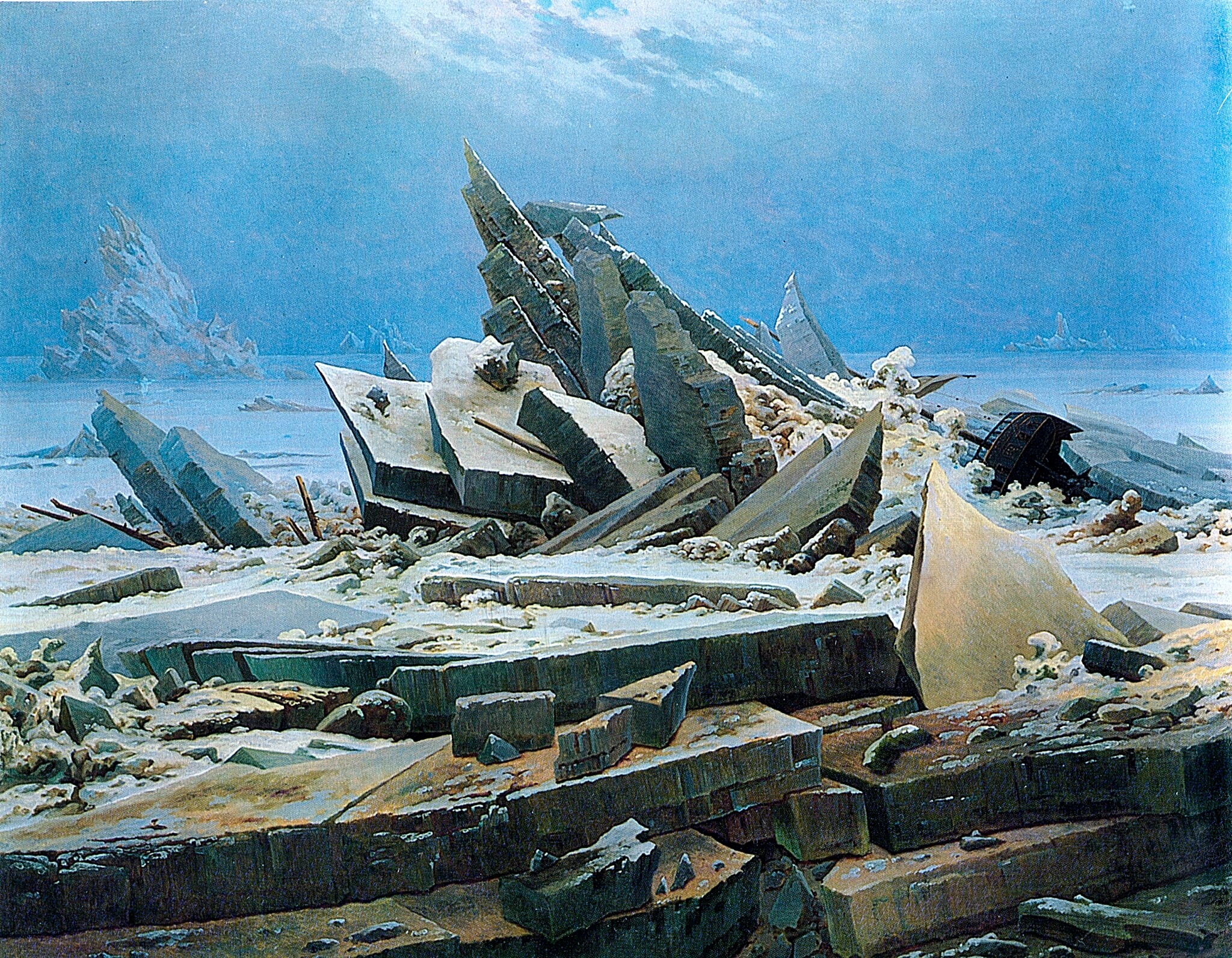
Click on any numbered symbol to learn more about its meaning
Meaning & Symbolism
Explore Deeper with AI
Ask questions about The Sea of Ice
Popular questions:
Powered by AI • Get instant insights about this artwork
Interpretations
Formal/Phenomenological: The Anti‑Sublime Machine
Source: Johannes Grave
Theological/Eschatological: Through Death, Not Around It
Source: Peter Rautmann
Political Allegory: Frozen Ambition in the Restoration
Source: Nina Hinrichs (Nordlit) and reception history syntheses
Mimesis vs. Sacred Geometry: From Elbe Studies to Polar Metaphysics
Source: Hamburger Kunsthalle; Wikipedia synthesis of reception
Reception/Modern Lens: Climate Allegory and the Arctic Imaginary
Source: Russell A. Potter/Arctic sublime discourse (via Wikipedia); WELT commentary
Explore Specific Elements
Dive deeper into individual scenes and details within The Sea of Ice.
The Crushed Ship
Friedrich’s “crushed ship” splinters out of pressure‑ridged pack ice, its stern and broken mast being swallowed by floes—a stark emblem of catastrophe. Rather than record a specific voyage, the wreck crystallizes a Romantic meditation on human ambition overwhelmed by indifferent polar forces, yet a clearing sky hints that despair is not absolute.
The Jagged Ice Sheets
At the painting’s core, a pyramidal cairn of jagged ice sheets rears up and crushes the remains of a ship. Drawn from Friedrich’s close studies of real river ice and enlarged to monumental scale, this up‑thrust mass turns an Arctic scene into a stark drama of nature’s supremacy and human fragility.
Seen in Comparisons
Related Themes
About Caspar David Friedrich
More by Caspar David Friedrich
Wanderer above the Sea of Fog
Caspar David Friedrich (ca. 1817)
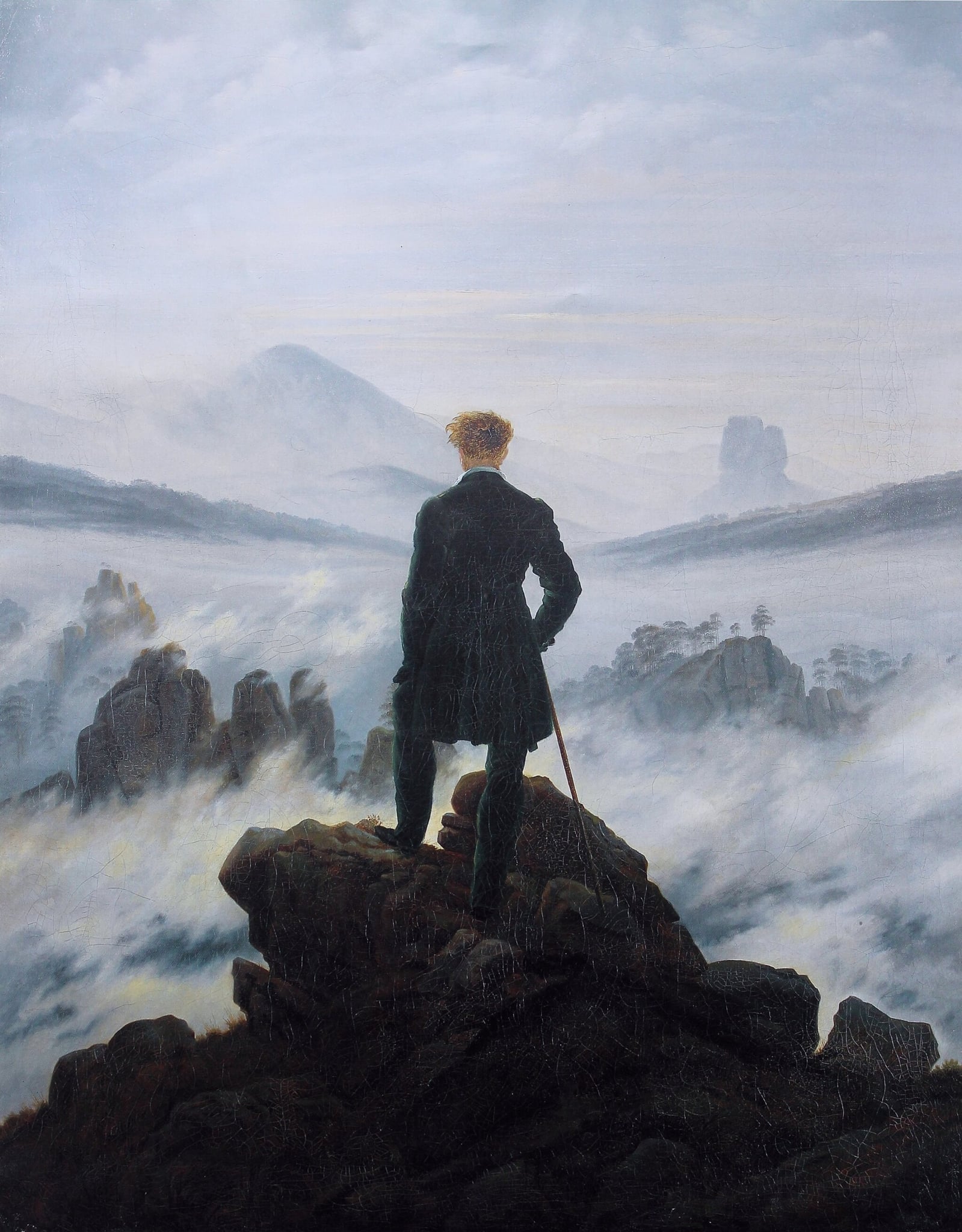
A solitary figure stands on a jagged crag above a churning <strong>sea of fog</strong>, his back turned in the classic <strong>Rückenfigur</strong> pose. Caspar David Friedrich transforms the landscape into an inner stage where <strong>awe, uncertainty, and resolve</strong> meet at the edge of perception <sup>[3]</sup><sup>[5]</sup>.
The Wanderer above the Sea of Fog
Caspar David Friedrich (ca. 1817)
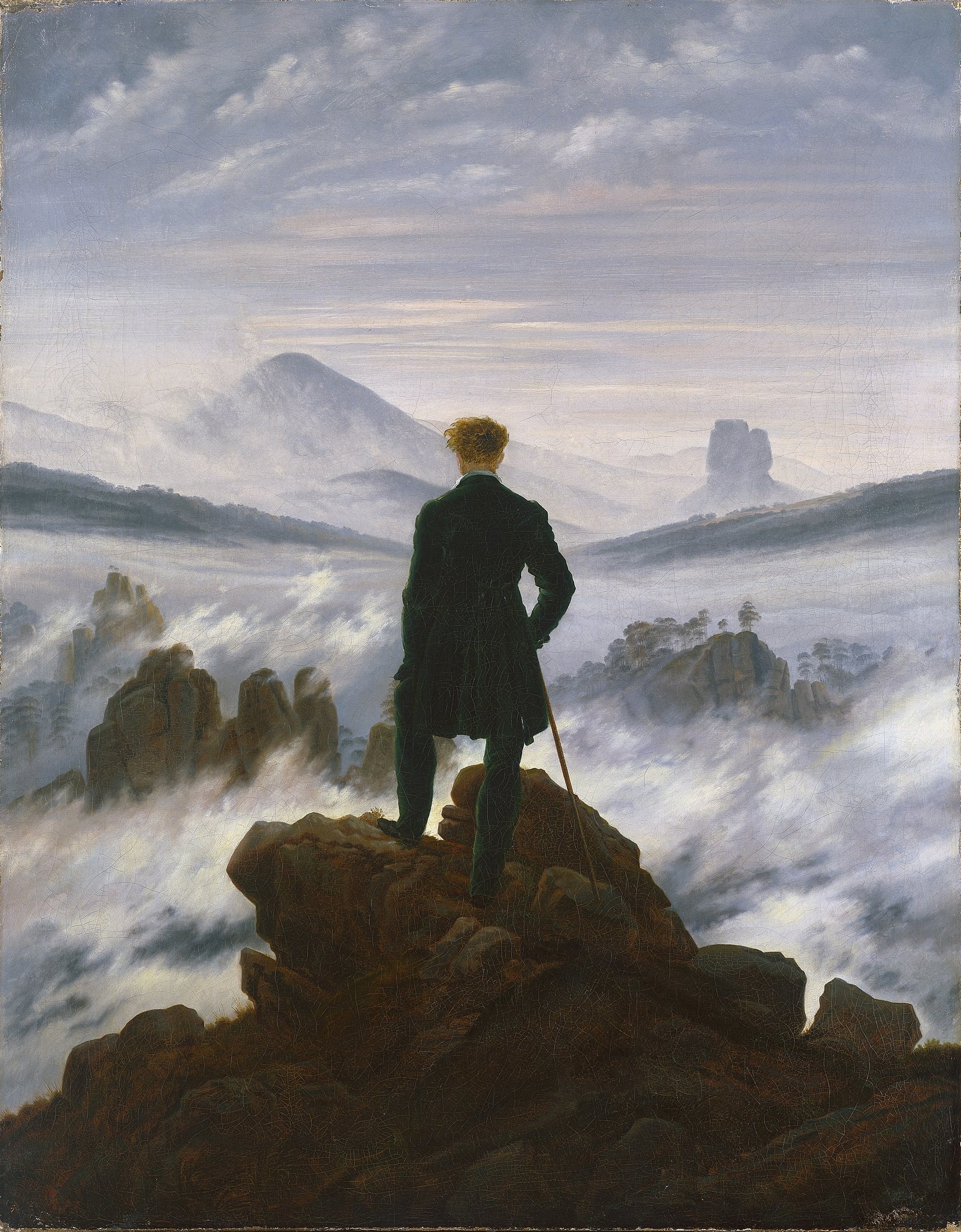
Caspar David Friedrich’s The Wanderer above the Sea of Fog distills the Romantic encounter with nature into a single <strong>Rückenfigur</strong> poised on jagged rock above a rolling <strong>sea of mist</strong>. The cool, receding vista and the figure’s still stance convert landscape into an <strong>inner drama of contemplation</strong> and the <strong>sublime</strong> <sup>[1]</sup><sup>[3]</sup>.