Resurrection & eternal life
Featured Artworks
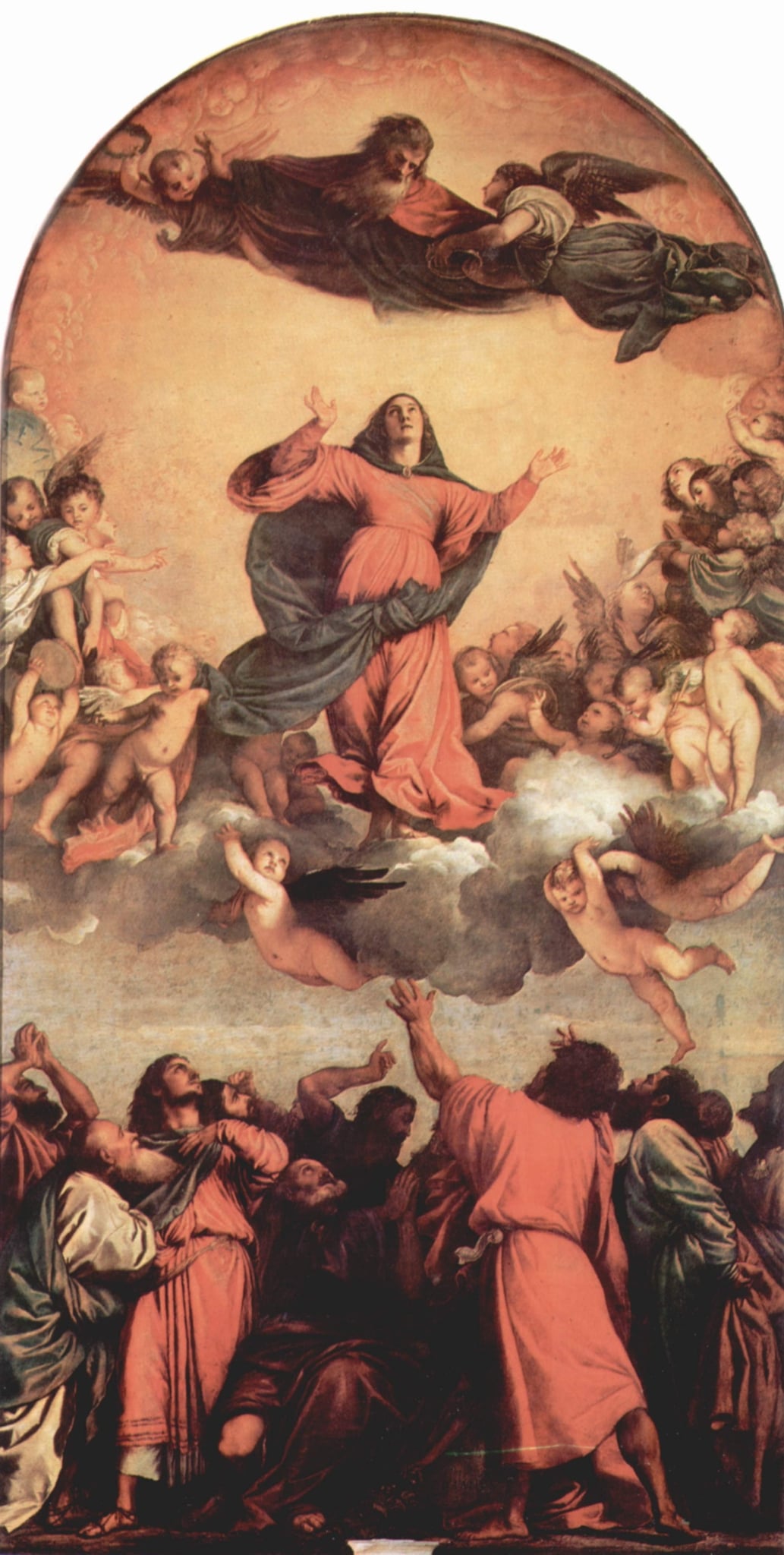
The Assumption of the Virgin
Titian (1516–1518)
Titian’s The Assumption of the Virgin stages a three-tier ascent—apostles below, Mary rising on clouds, and God the Father above—fused by radiant light and Venetian <strong>colorito</strong>. Mary’s red and blue drapery, open <strong>orant</strong> hands, and the vortex of putti visualize grace lifting humanity toward the divine. The painting’s scale and kinetic design turned a doctrinal mystery into a public, liturgical drama for Venice. <sup>[1]</sup><sup>[2]</sup>
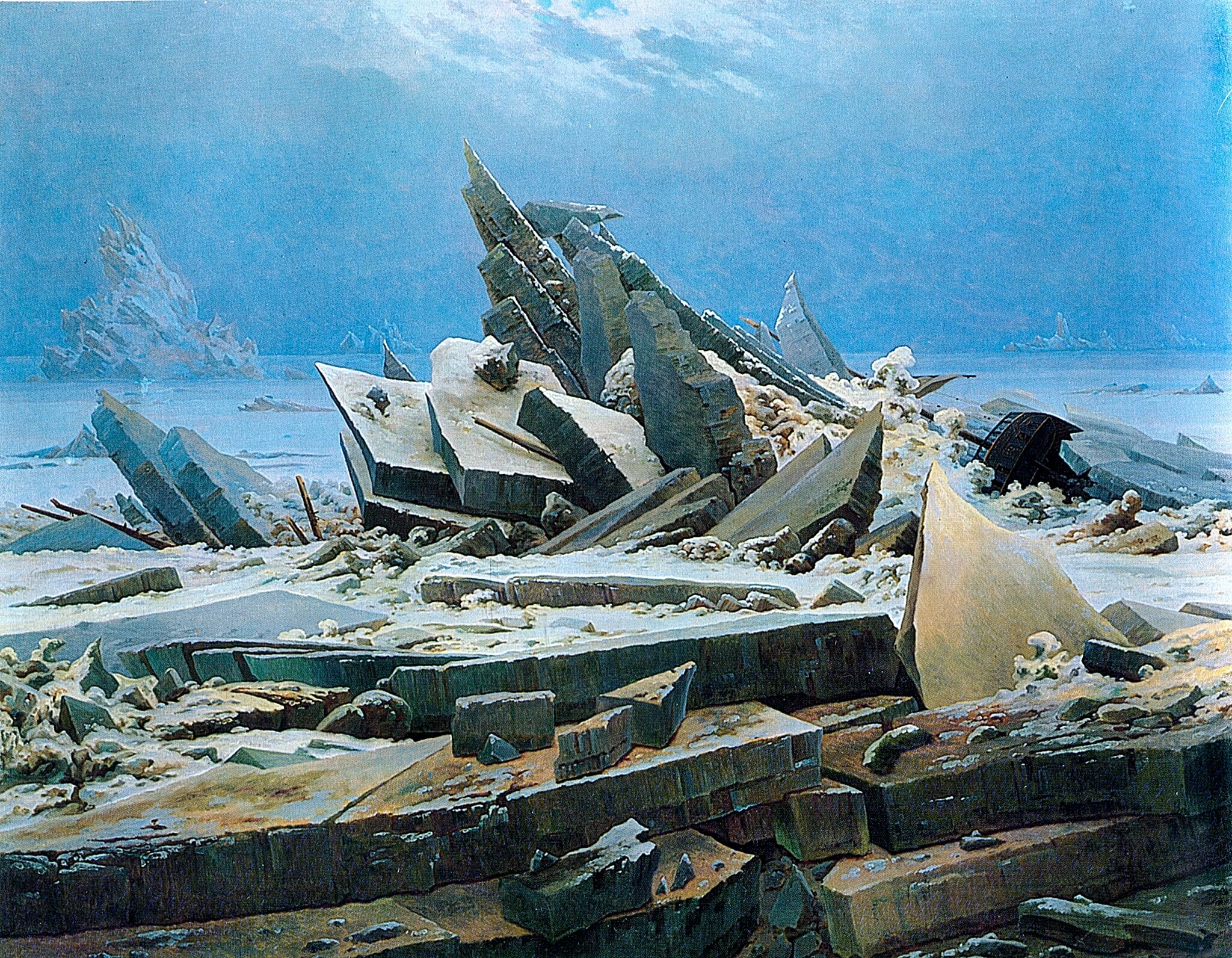
The Sea of Ice
Caspar David Friedrich (1823–1824)
Caspar David Friedrich’s The Sea of Ice turns nature into a <strong>frozen architecture</strong> that crushes a ship and, with it, human pretension. The painting stages the <strong>Romantic sublime</strong> as both awe and negation, replacing heroic conquest with the stark finality of ice and silence <sup>[1]</sup><sup>[3]</sup>.
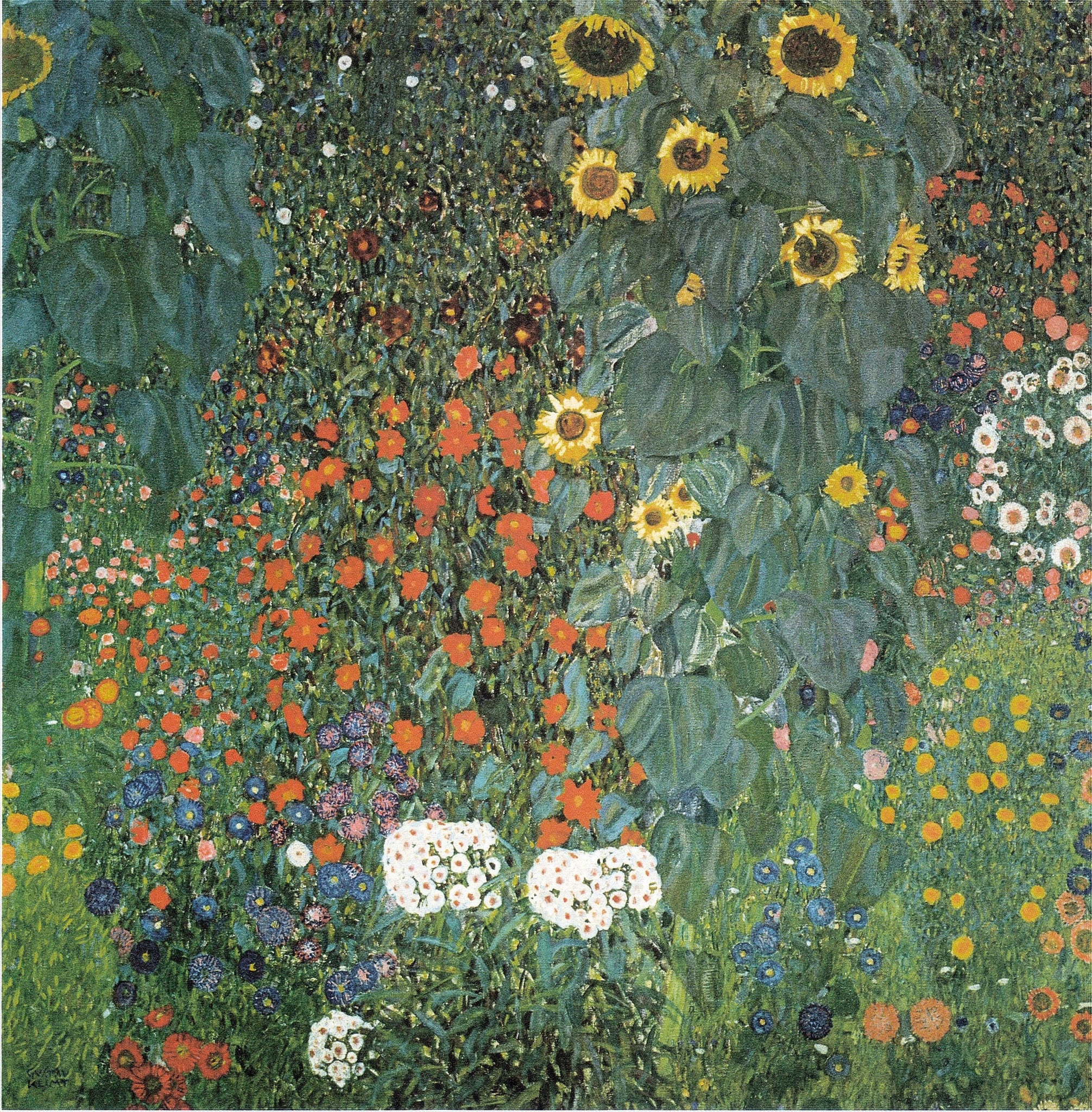
Cottage Garden with Sunflowers
Gustav Klimt (1906–1907 (signed 1907))
Cottage Garden with Sunflowers is a square, horizonless field of blooms where a vertical column of <strong>sunflowers</strong> anchors an all-over weave of color and pattern. Klimt fuses <strong>ornament and nature</strong>, turning a humble Litzlberg cottage plot into a radiant matrix of cyclical life and renewal <sup>[1]</sup><sup>[4]</sup><sup>[5]</sup>.
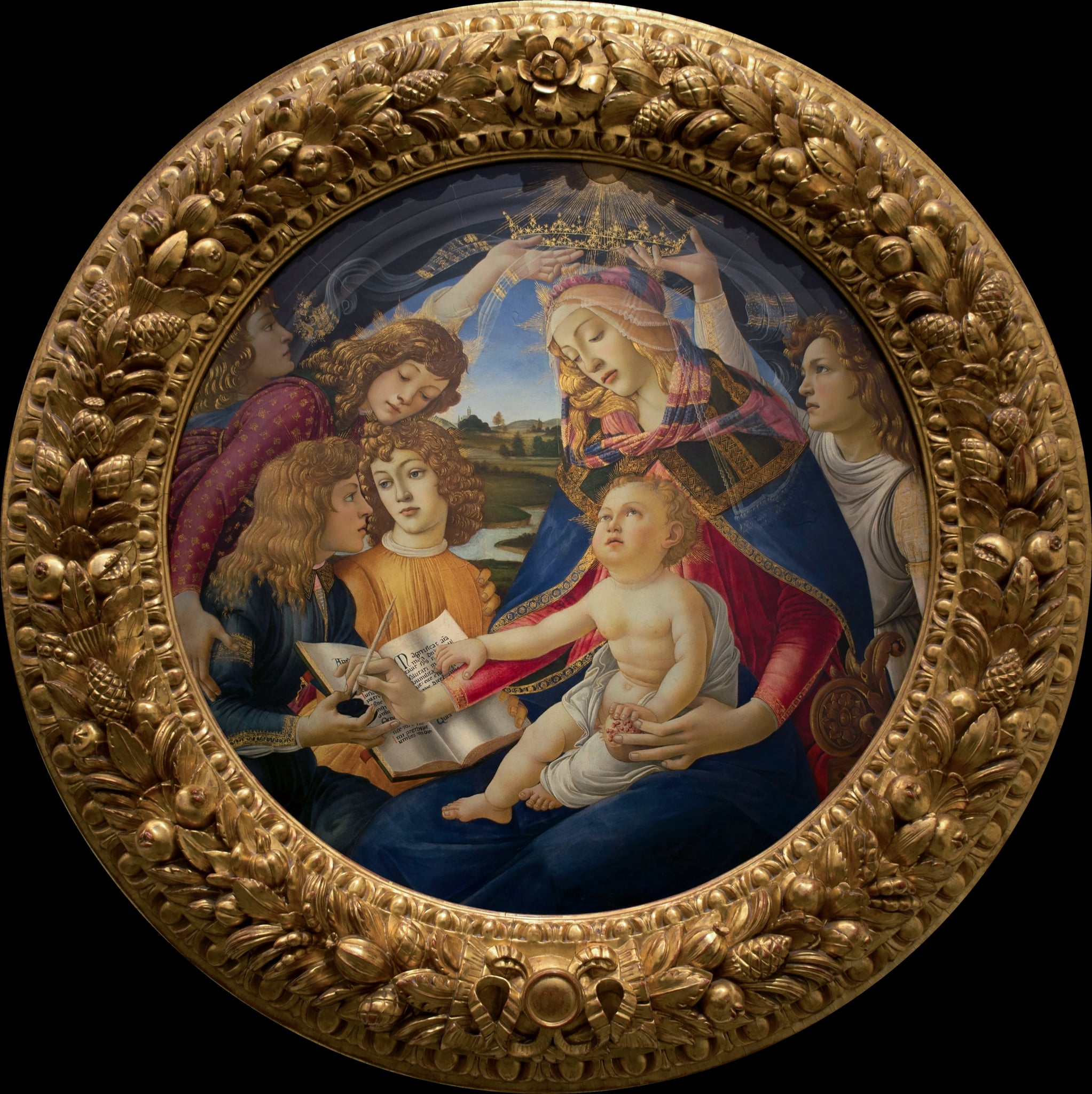
Madonna of the Magnificat
Sandro Botticelli (c. 1483)
Botticelli’s Madonna of the Magnificat is a circular panel where the Virgin, <strong>crowned by angels</strong>, writes the <strong>Magnificat</strong> as the Christ Child guides her hand. A split <strong>pomegranate</strong> in the Child’s grasp prefigures the Passion while the wingless, courtly angels and a Tuscan view bind sacred mystery to Florentine life <sup>[1]</sup><sup>[2]</sup>. The tondo’s swirl of fabrics and gold makes theology visible as a choreography of <strong>praise, prophecy, and sacrifice</strong>.
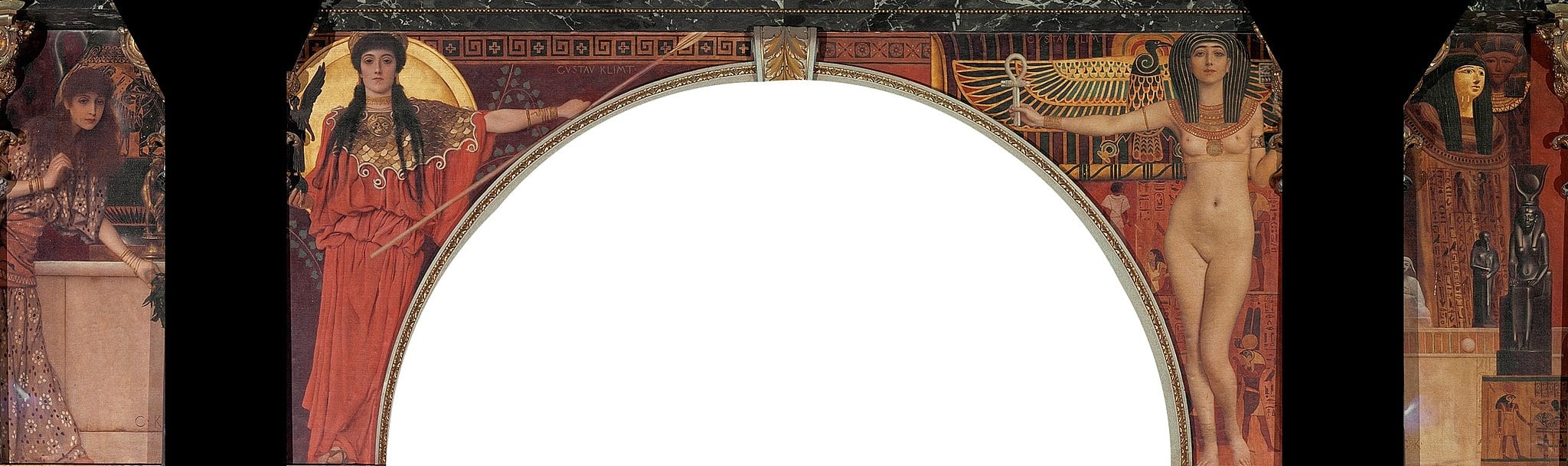
Ancient Greece and Egypt
Gustav Klimt (1891)
Gustav Klimt’s staircase pair Ancient Greece and Egypt stages two <strong>female allegories</strong> flanking an empty arch: a robed, animated <strong>Athena</strong> to the left and a frontal, nude Egyptian goddess aligned with <strong>Nekhbet’s vulture</strong> to the right. Klimt fuses collection-based citations with <strong>ornamental gold, red, and black</strong> to declare a canon in which Western art passes through Greece’s humanist clarity and Egypt’s sacral permanence <sup>[1]</sup><sup>[2]</sup><sup>[3]</sup>.
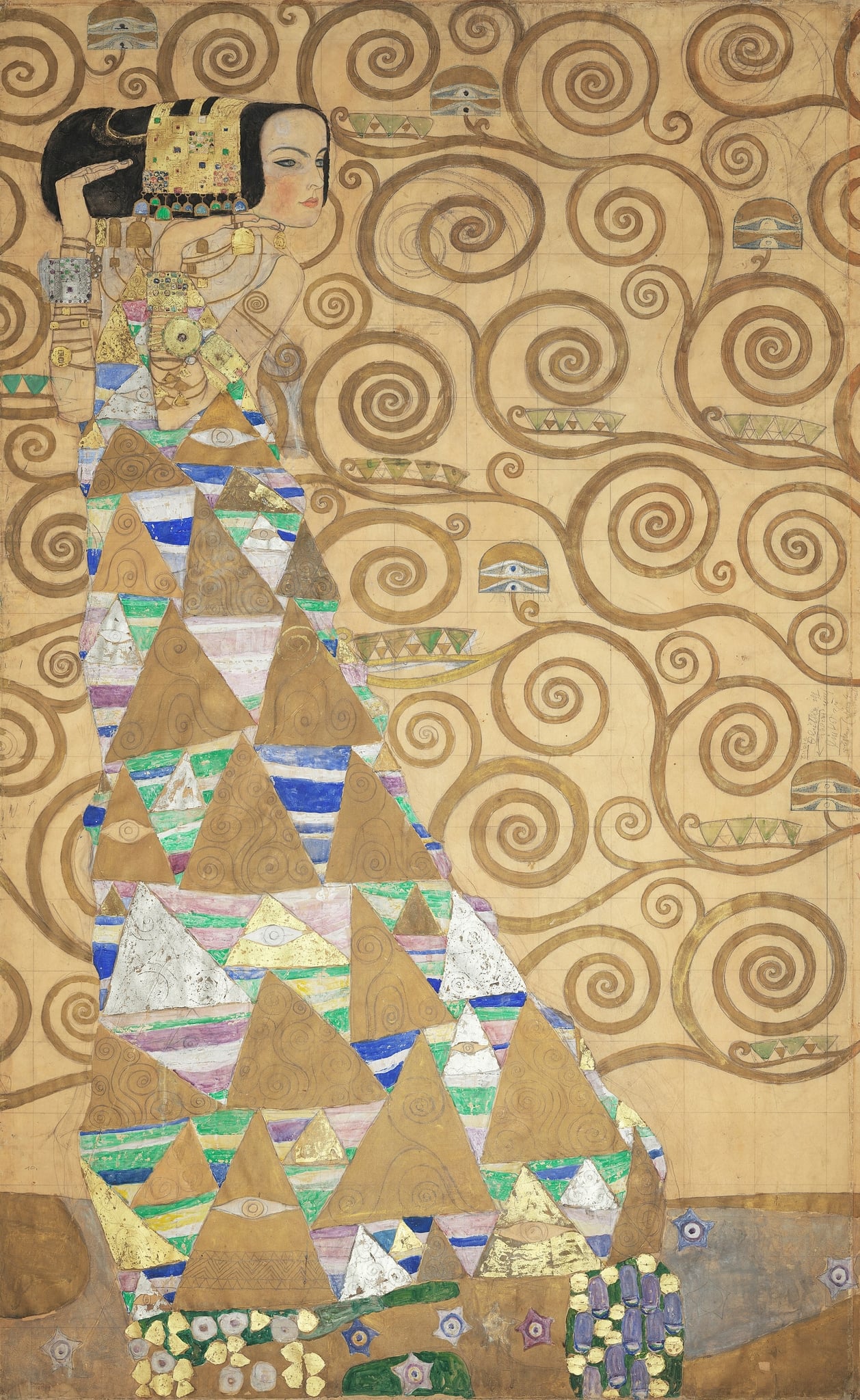
Expectation (Dancer)
Gustav Klimt (1911)
Expectation (Dancer) crystallizes a <strong>charged pause</strong>: a profile figure, rigid as an <strong>Egyptian relief</strong>, advances through a field of spiraling <strong>Tree of Life</strong> coils while a mosaic robe of triangles and watchful <strong>eyes</strong> armors her body. Klimt fuses <strong>ornament and symbol</strong> so that anticipation itself becomes pattern and gold-lit ritual <sup>[1]</sup><sup>[4]</sup>.
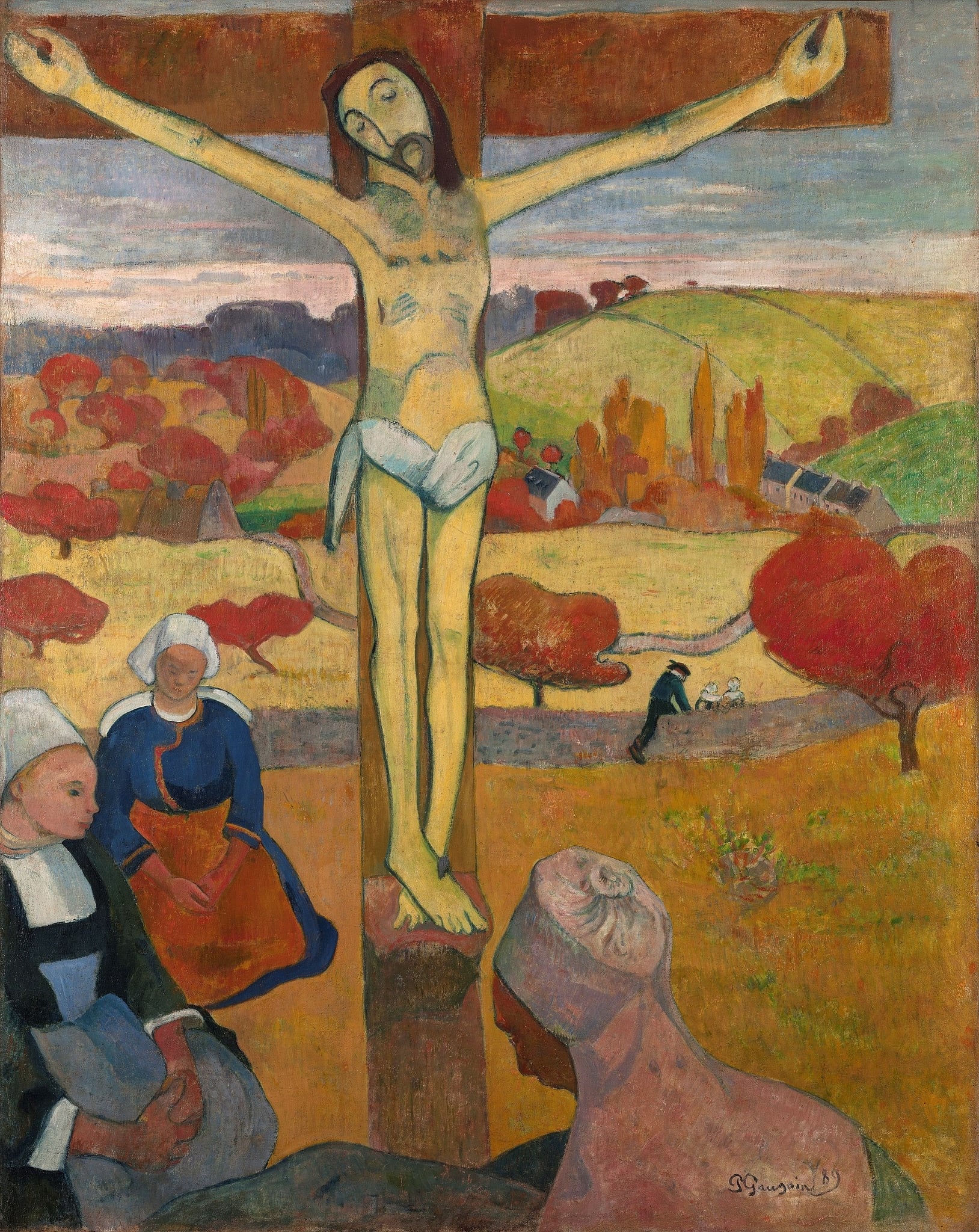
The Yellow Christ
Paul Gauguin (1889)
Paul Gauguin’s The Yellow Christ (1889) fuses sacred narrative with everyday Brittany, rendering a lemon‑<strong>yellow</strong> Christ in a rural autumn landscape. Through <strong>Synthetist</strong> color and <strong>Cloisonnist</strong> contours, the work declares spiritual meaning over naturalism, placing devotion among kneeling Breton women beneath a banded, hope‑tinged sky <sup>[1]</sup><sup>[3]</sup>.
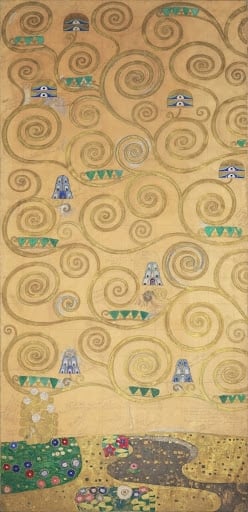
Part of the Tree of Life (Part 1)
Gustav Klimt (1910–1911)
Gustav Klimt’s Part of the Tree of Life (Part 1) is a full‑scale design cartoon for the Stoclet dining‑room frieze, where a gold ground hosts branching spirals, <strong>Eye‑of‑Horus</strong> rosettes, falcon emblems, and crisp triangular leaves. The panel fuses <strong>symbolism</strong> and <strong>ornament</strong> to stage life’s cyclical renewal within a luxurious, sacred‑like register <sup>[1]</sup><sup>[3]</sup>.
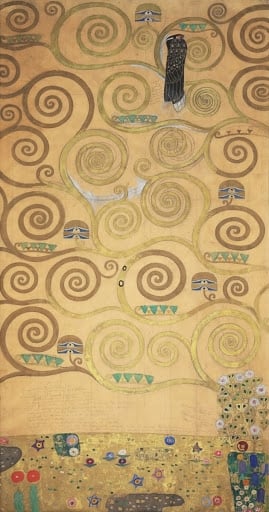
Part of the Tree of Life (Part 3)
Gustav Klimt (1910–1911)
Gustav Klimt’s Part of the Tree of Life (Part 3) is a full‑scale cartoon for the Stoclet Frieze, where a gold ground hosts spiraling branches studded with <strong>Eyes of Horus</strong> and jewel‑like emblems. A perched <strong>Horus falcon</strong> and a carpet of stylized flowers fuse myth, ornament, and cyclical vitality into a single, curling design <sup>[1]</sup><sup>[2]</sup>.