Madonna of the Magnificat

by Sandro Botticelli

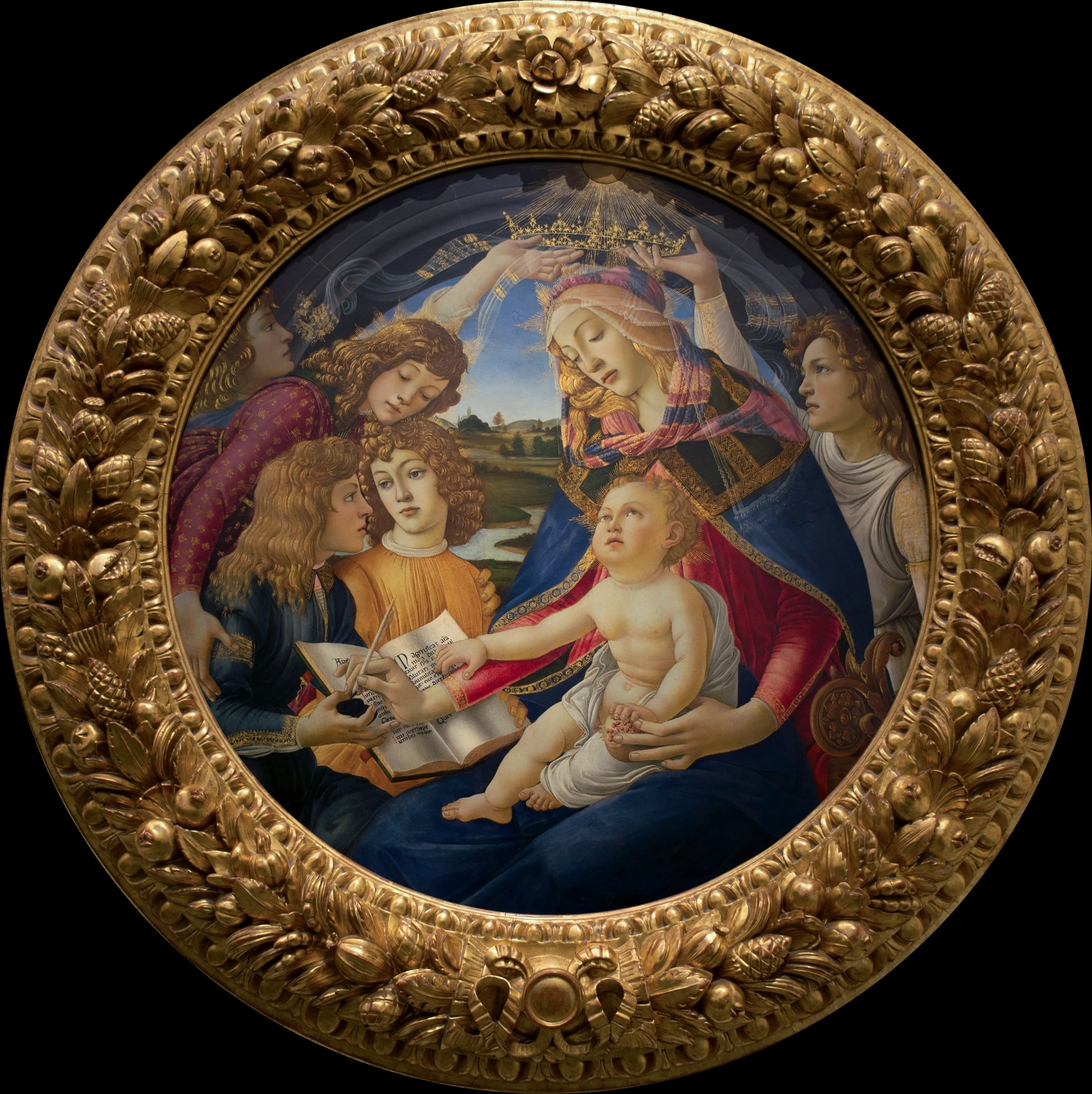
Botticelli’s Madonna of the Magnificat is a circular panel where the Virgin, crowned by angels, writes the Magnificat as the Christ Child guides her hand. A split pomegranate in the Child’s grasp prefigures the Passion while the wingless, courtly angels and a Tuscan view bind sacred mystery to Florentine life [1][2]. The tondo’s swirl of fabrics and gold makes theology visible as a choreography of praise, prophecy, and sacrifice.

Study Print Studio

Create a personal study print

Build a companion study sheet around the part of this painting that speaks to you most. Choose a detail, shape an interpretation, and walk away with something personal and display-worthy.

Fast Facts

Year
c. 1483
Medium
Tempera on panel (tondo)
Dimensions
Diameter 118 cm
Location
Gallerie degli Uffizi, Florence
Madonna of the Magnificat by Sandro Botticelli (c. 1483) featuring Crown of Mary, Descending Rays of Light, Pomegranate, Book, Quill, and Inkwell (the Magnificat)

Click on any numbered symbol to learn more about its meaning

Meaning & Symbolism

Botticelli makes the circle do theological work. The tondo gathers a vortex of faces, fabrics, and gestures around the exact hinge where Mary’s quill meets the page and the Child’s fingers guide her wrist. This is not an illustration of reading; it is the dramatization of inspired writing, the Magnificat moving from heaven into ink. One angel steadies the book while another offers the inkwell, ritualizing the act as a liturgy of text. Above, two attendants lift a delicate crown while rays descend, synchronizing authorship and coronation in one moment. Botticelli strips the angels of wings and dresses them like Florentine youths—curled hair, brocaded sleeves—so that grace arrives in the idiom of the city’s own courtliness 1. The effect is to claim that wisdom and beauty native to Florence can serve revelation. The architectural arch backs this claim: pietra serena frames the sacred niche while a clear Tuscan landscape opens beyond, so that Mary’s praise quite literally spills into the world 12. At the lower right, the Child’s small hand clasps a broken pomegranate, its seeds glistening like a constellation of wounds. He turns his face upward toward the source of light even as his other hand directs Mary’s pen; the sign of Passion and Resurrection is thus tethered to the creation of her hymn and to his future sacrifice 12. The fruit brushes Mary’s fingers, binding her authorship to his destiny and to the Church’s unity symbolized by clustered seeds. Botticelli heightens this doctrinal weave with color: royal crimson and deep ultramarine edged in gold claim Mary’s dual identity—maternal tenderness and sovereign dignity—while her downcast eyes secure humility within majesty. The circle becomes a program of harmonized opposites: heaven and earth (crown and countryside), text and flesh (book and fruit), contemplation and action (bowed head and moving hand). In this balance, Botticelli answers a humanist question alive in Quattrocento Florence: how can eloquence, learning, and civic beauty serve sacred truth? By turning Mary into a writer in the midst of fashionably dressed attendants, he stages an ideal of sanctified intellect inside the domestic scale of a tondo that once likely hung in an elite home 12. Scholars have pressed further, reading the scene as a meditation on female authorship: Mary is an active scribe yet her inscription is authorized—guided by the Child, provisioned by male angels—so her voice is both elevated and framed 3. Whatever one makes of that tension, the painting claims that wisdom is not passive reception but articulate praise. The smooth spiral of heads creates a communal chorus converging on the page; the viewer’s own gaze is inducted into that circle. Thus the image does not only depict the Magnificat—it performs it. Beauty is the vehicle of doctrine; the round panel makes praise continuous; and the Florentine present is enlisted to visualize eternal truths. In uniting coronation with composition, Botticelli proposes that the rule of Mary is a rule of the Word, and that the destiny announced by the pomegranate is already being written in the very letters of her song 123.

Explore Deeper with AI

Ask questions about Madonna of the Magnificat

Popular questions:

Powered by AI • Get instant insights about this artwork

💬 Ask questions about this artwork!

Interpretations

Gendered Authorship: Agency and Containment

Mary’s poised hand, stabilized by an angel and steered by the Child, constructs a scene of authorized authorship: a woman writes, yet her inscription is ritually mediated. Susan Schibanoff reads this as a program that both elevates and frames a female voice within early humanist Italy’s gendered textual economy. The courtly attendants function like a scriptorium’s male apparatus—holder of the codex, bearer of the inkwell—creating a choreography of assistance that formalizes dependence. Crucially, Botticelli aligns the moment of composition with coronation, so sovereignty is tethered to a sanctioned text. The result is a paradox: Mary’s authorship is vivid and central, but its legitimacy is anchored in Christic guidance and angelic provisioning. This doubles the Magnificat’s theological claim (“he has exalted the lowly”) as a visual politics of voice—exaltation that remains institutionally bounded 13.

Source: Susan Schibanoff, PMLA (Cambridge Core)

Urbanizing the Sacred: Fashion as Theology

Botticelli’s wingless angels—curled coiffures, brocaded sleeves—translate angelic presence into the idiom of Florentine court fashion. This is not mere genre detail; it embeds sanctity within the city’s visual codes of elegance, proposing that urban style can be a vessel for grace. The pietra serena arch, a material signature of Florentine architecture, frames a ritual of text as if staged in a domestic palazzo. In this reading, costume and stone become theological media: couture and classicizing masonry naturalize the sacred in civic space. The strategy clarifies why the tondo format, typical of elite homes, suits the subject: domestic art becomes the front line where humanist decorum meets Marian doctrine. Botticelli thereby models a civic-sacred continuum, in which refined taste is not vanity but an instrument of revelation 12.

Source: Gallerie degli Uffizi (object record) and Encyclopaedia Britannica

Domestic Tondo and Civic-Humanist Devotion

As a large tondo likely destined for an elite interior, the work fuses private piety with civic-humanist ideals. The circular panel domesticates high theology—Mary’s inspired inscription—into a format associated with marriage and lineage, implying that household virtue and learned eloquence belong together. The Tuscan landscape beyond the niche localizes the universal canticle, while the book and quill make intellect a devotional habit. In Quattrocento Florence, such images taught spectators to reconcile scholarly pursuits with orthodoxy: the home becomes a cell for study and praise, the circle a device for continuous contemplation. The Uffizi’s emphasis on the secular use of tondi and Britannica’s placement of the painting among Botticelli’s quintessential religious works support this bridge between domestic display and public virtue—art as moral pedagogy in miniature 12.

Source: Gallerie degli Uffizi; Encyclopaedia Britannica

Performative Text: Image as Liturgy of Writing

The composition centers the hinge where quill meets page and the Child’s fingers guide the wrist, turning depiction into enactment: the painting does not just show the Magnificat; it performs its descent into ink. Angels serving as acolytes—one steadies the book, another offers the inkwell—convert studio props into liturgical vessels, so authorship reads as a sacrament of the Word. Botticelli’s circular vortex of heads functions like a choir, the viewer’s gaze inducted into a revolving chant. The Uffizi’s curatorial materials stress Mary’s active writing, while institutional videos underline the courtly ensemble that ritualizes it. In this light, the tondo is “medium-reflexive”: a picture about how images and texts make devotion, not merely represent it, aligning Quattrocento humanist craft with sacred efficacy 15.

Source: Gallerie degli Uffizi (object record and video feature)

Typology and Replication: From Magnificat to Melagrana

This tondo’s iconographic engine—book, guiding Child, and pomegranate—propagates across Botticelli’s workshop and later variants, crystallizing a Marian-Christic typology. The Uffizi’s Madonna of the Pomegranate reprises the fruit as a Passion emblem, while workshop copies (Louvre) and period replicas (Morgan) recalibrate details—wings added or suppressed, attendants rearranged—revealing how core symbols remained stable even as motifs adapted to patrons and formats. Such replication underscores the compositional schema’s didactic clarity: clustered seeds for ecclesial unity, crimson and ultramarine for sovereignty and humility, circularity for unbroken praise. Far from mere repetition, these iterations show a living visual liturgy tuned to different contexts, proving the Magnificat model’s portability within late Quattrocento devotional culture 478.

Source: Morgan Library; Uffizi (Madonna of the Pomegranate); Louvre (atelier copy)

Reception History: Melancholy Grace and Modern Taste

Nineteenth‑century writers during Botticelli’s revival—Pater, Symonds, and others—seized on the Madonna’s inwardness and melancholic grace, turning the tondo into a touchstone for modern sensibility. Their prose singled out the downcast eyes, the silvery light, and the hush around the page, reframing Quattrocento theology as a mood of refined introspection. This reception helped canonize Botticelli as a painter of psychological nuance, even when the original program was doctrinal and civic‑humanist. The afterlife of the painting thus illustrates how devotional poise could be reinterpreted as aesthetic subjectivity, shaping museum display and popular imagination. While not a primary source for the work’s intent, these readings reveal the picture’s elasticity across centuries—its capacity to register both as liturgical act and modern interiority 6.

Source: John Cabot University, reception-history project

Related Themes

About Sandro Botticelli

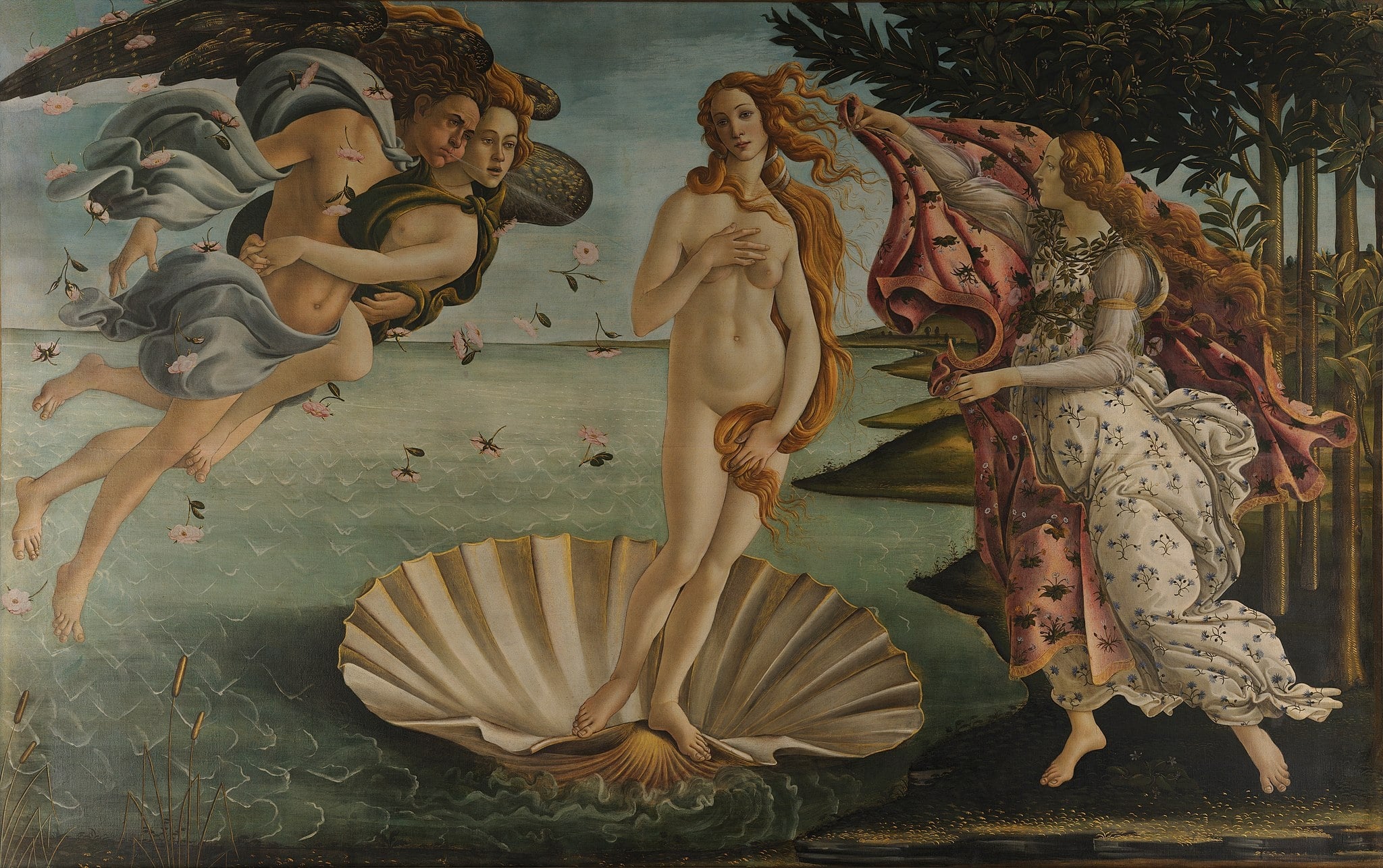
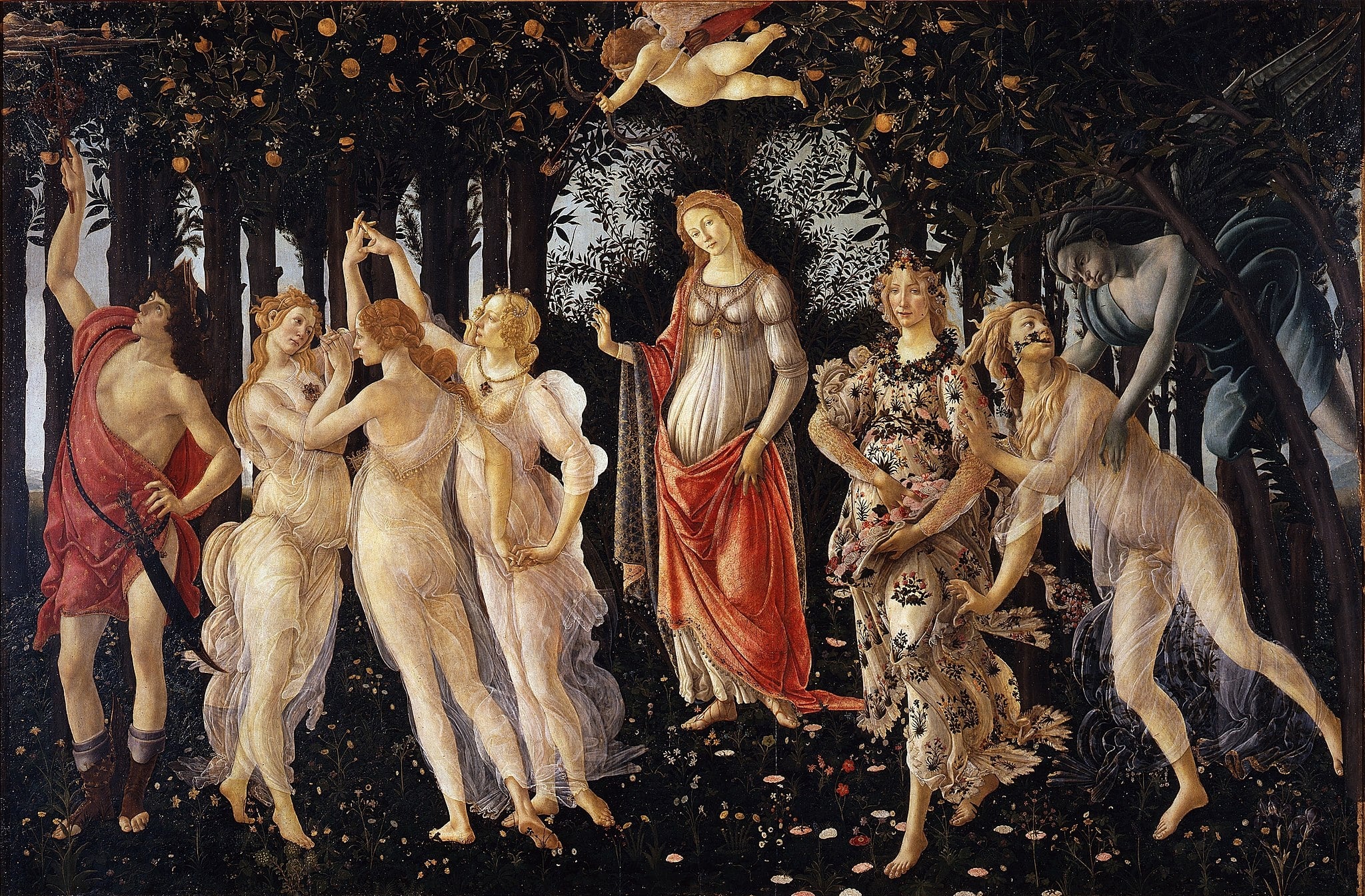
Sandro Botticelli (1445–1510) trained in Florence, likely first as a goldsmith and then with Fra Filippo Lippi, developing a lyrical, linear style. He worked for Medici patrons, painted mythologies like Primavera and The Birth of Venus, and contributed frescoes to the Sistine Chapel in Rome (1481–82). His late works turn more visionary, but his idealized line and poetic allegory remain emblematic of Florentine humanism.
View all works by Sandro Botticelli

More by Sandro Botticelli