Primavera
Study print
Prefer the curated version?
View the study print we made for this artwork, pairing the full painting with a close reading of one meaningful detail.

Study Print Studio
Create a personal study print
Build a companion study sheet around the part of this painting that speaks to you most. Choose a detail, shape an interpretation, and walk away with something personal and display-worthy.
Fast Facts
- Year
- c. 1480 (1477–1482)
- Medium
- Tempera grassa on poplar panel
- Dimensions
- 207 × 319 cm
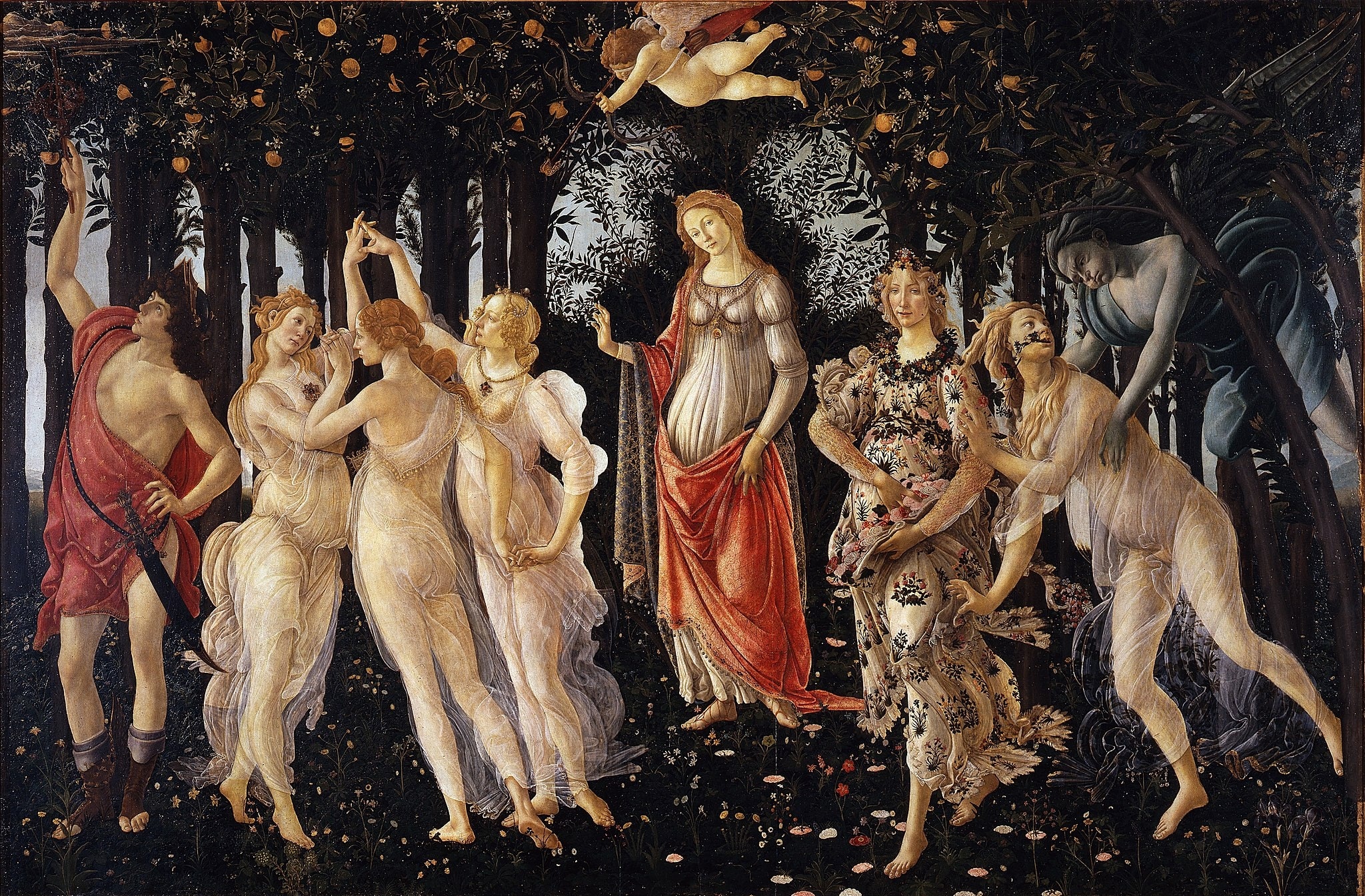
Click on any numbered symbol to learn more about its meaning
Meaning & Symbolism
Explore Deeper with AI
Ask questions about Primavera
Popular questions:
Powered by AI • Get instant insights about this artwork
Interpretations
Formal-Poetic Analysis
Source: Paul Barolsky (Arion)
Warburg-Wind Hermetic Lens
Source: Edgar Wind; E. H. Gombrich
Botanical-Astrological Program
Source: Mirella Levi D’Ancona (Renaissance botanical-astrological reading)
Site, Furniture, and Calendar Pageantry
Source: Uffizi; Charles Dempsey/Webster Smith (calendar and placement readings)
Medicean Soft Power
Source: Gallerie degli Uffizi; Edgar Wind; calendar-context scholarship
Material Intelligence and Empirical Mimesis
Source: Gallerie degli Uffizi; E. H. Gombrich (Neoplatonic Humanitas context)
Related Themes
About Sandro Botticelli
More by Sandro Botticelli
The Birth of Venus
Sandro Botticelli (c. 1484–1486)
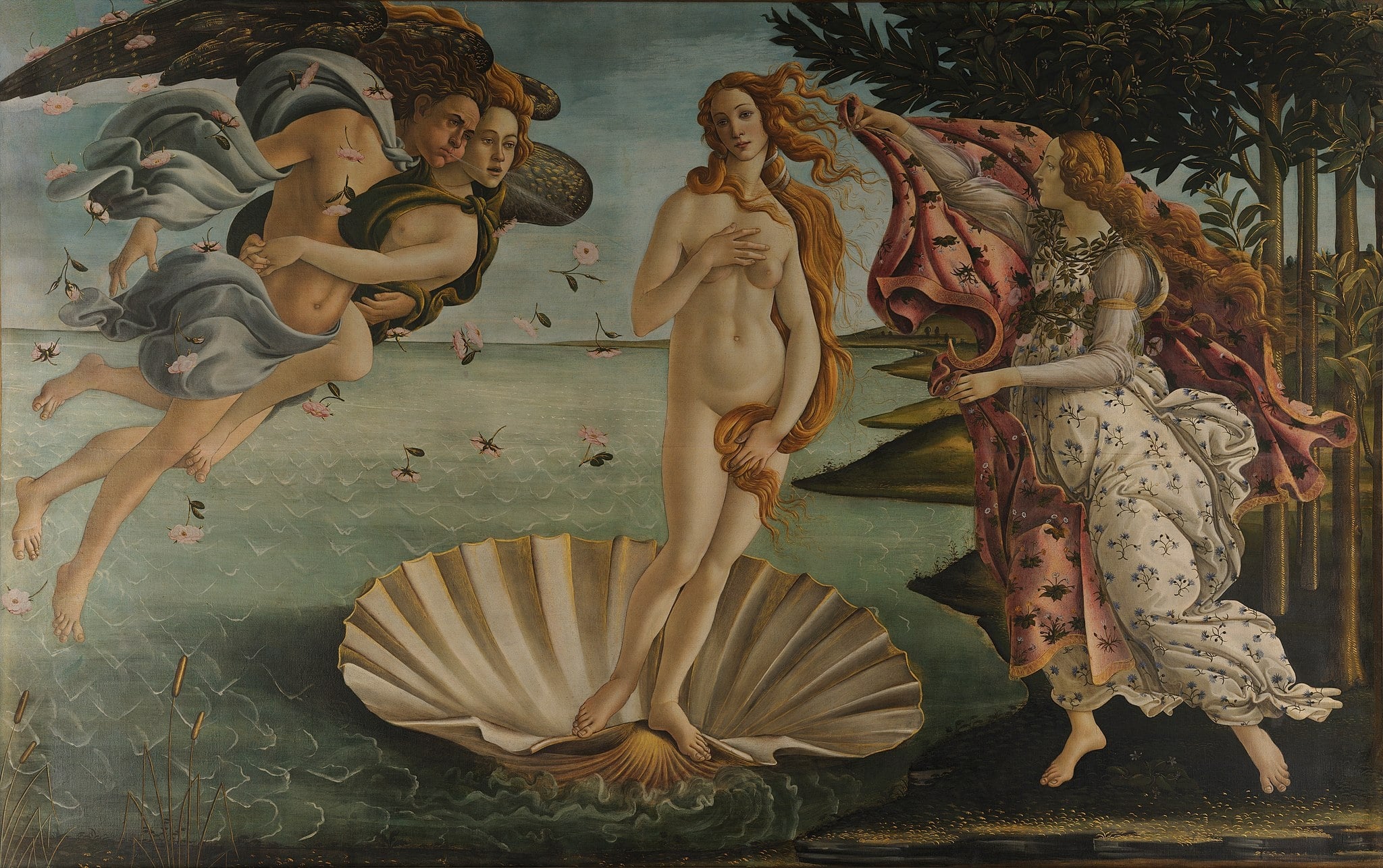
In The Birth of Venus, <strong>Sandro Botticelli</strong> stages the sea-born goddess arriving on a <strong>scallop shell</strong>, blown ashore by intertwined <strong>winds</strong> and greeted by a flower-garlanded attendant who lifts a <strong>rose-patterned mantle</strong>. The painting’s crisp contours, elongated figures, and gilded highlights transform myth into an <strong>ideal of beauty</strong> that signals love, spring, and renewal <sup>[1]</sup><sup>[2]</sup>.
Madonna of the Magnificat
Sandro Botticelli (c. 1483)
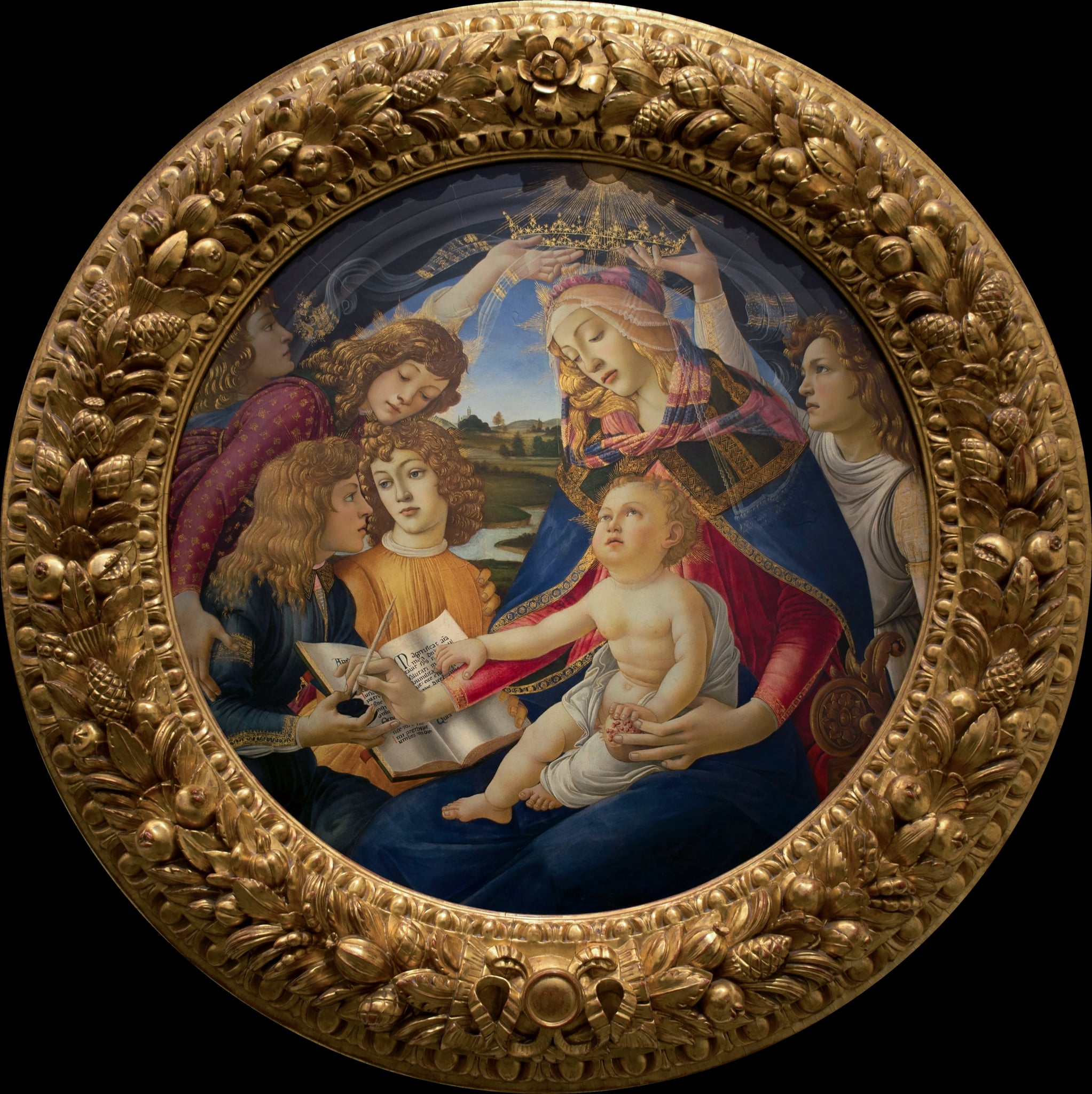
Botticelli’s Madonna of the Magnificat is a circular panel where the Virgin, <strong>crowned by angels</strong>, writes the <strong>Magnificat</strong> as the Christ Child guides her hand. A split <strong>pomegranate</strong> in the Child’s grasp prefigures the Passion while the wingless, courtly angels and a Tuscan view bind sacred mystery to Florentine life <sup>[1]</sup><sup>[2]</sup>. The tondo’s swirl of fabrics and gold makes theology visible as a choreography of <strong>praise, prophecy, and sacrifice</strong>.