Sandro Botticelli Paintings in Florence — Where to See Them
Florence displays approximately 16 Sandro Botticelli paintings on permanent view across six museums: Uffizi Gallery (11), Galleria dell'Accademia (2), Galleria Palatina at Palazzo Pitti (3), Museo dell'Opera del Duomo (0), Museo Nazionale di San Marco (0), and Museo Bardini (Villa Bardini) (0). Because most of his works here are concentrated in the Uffizi but complemented by pieces in the Accademia and the Palatina, Florence lets you trace Botticelli’s stylistic range and the civic, devotional and courtly contexts for which he painted—offering a focused, comparative way to understand his art in the city that commissioned and preserved it.
At a Glance
- Museums
- Uffizi Gallery, Galleria dell'Accademia, Galleria Palatina (Palazzo Pitti), Museo dell'Opera del Duomo, Museo Nazionale di San Marco, Museo Bardini (Villa Bardini)
- Highlight
- See Botticelli's masterpieces at the Uffizi Gallery — Birth of Venus and Primavera
- Best For
- Renaissance art lovers and anyone fascinated by Botticelli's Florentine masterpieces
Uffizi Gallery
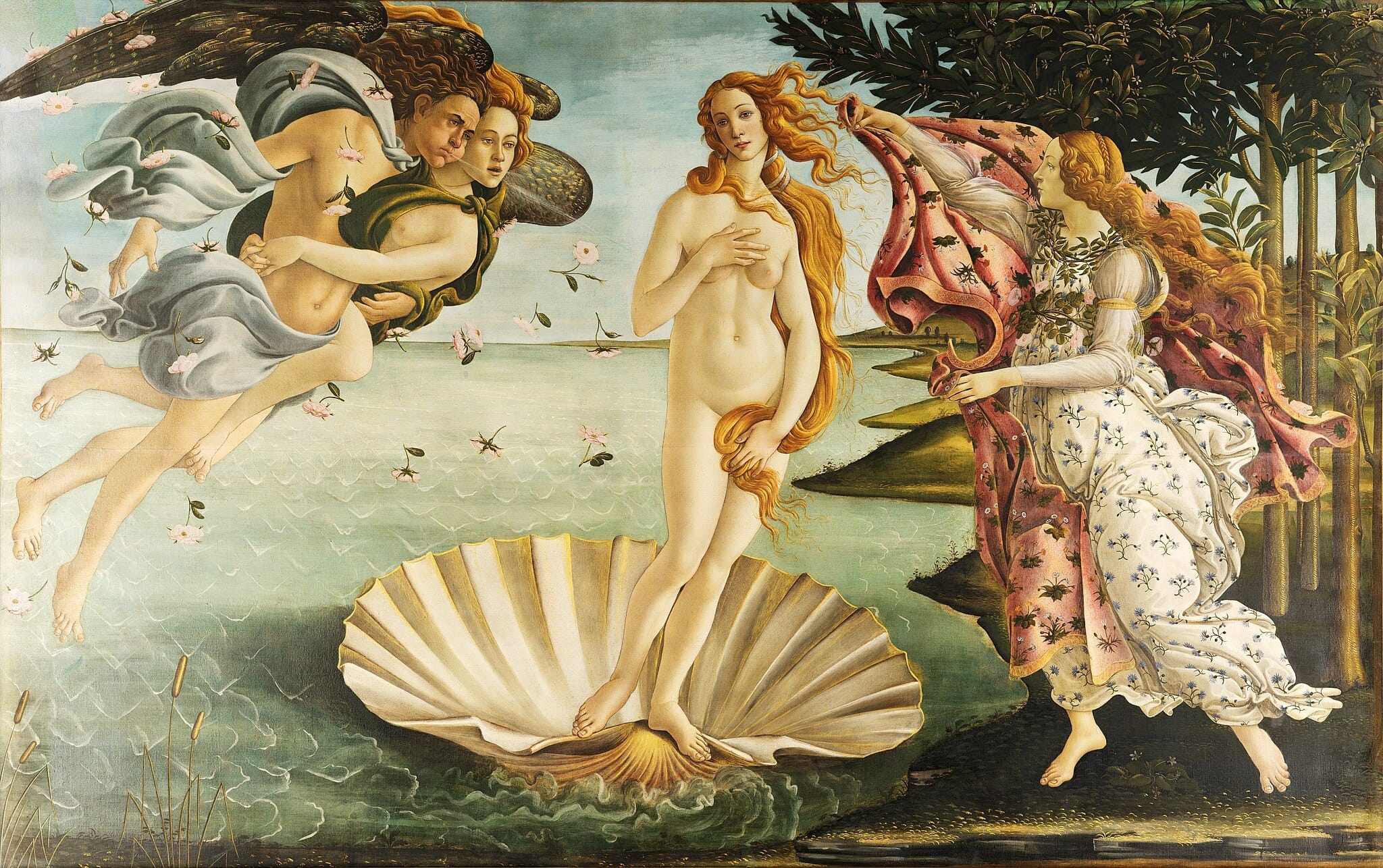
The Birth of Venus
1485
Depicts the goddess Venus standing on a giant scallop shell as she is blown to shore by Zephyrus and accompanied by a nymph ready to clothe her. Its significance lies in its revival of classical mythology and idealized beauty during the Early Renaissance, becoming an icon of humanist interest in antiquity. Viewers should look for Botticelli’s elegant linear contours, the graceful S‑curve of Venus’s pose, and the subtle use of tempera to render decorative detail in the hair, shell and floral motifs.
Must-see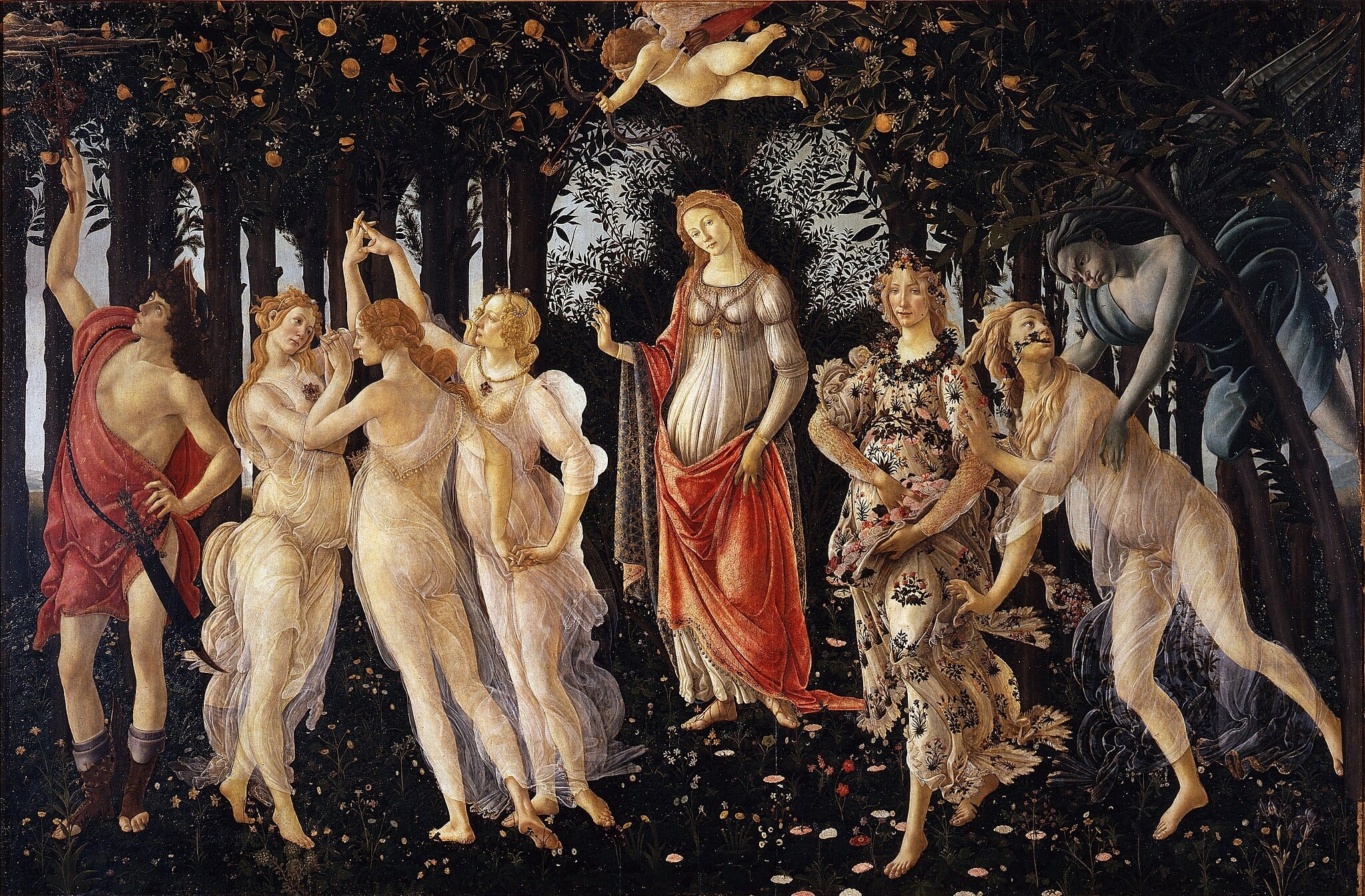
Primavera
1480
A densely populated allegory set in an orange grove showing figures from classical mythology—Venus at the center, Mercury at the left, and the Three Graces and Flora at the right—engaged in a mythic, courtly tableau. It’s significant as a complex humanist celebration of love, fertility and Neoplatonic ideals, often read as a wedding or Medici dynastic image. Look for layered symbolism (flowers, oranges, myrtle), Botticelli’s rhythmic repetition of figures, and the delicate interplay between decorative pattern and narrative ambiguity.
Must-see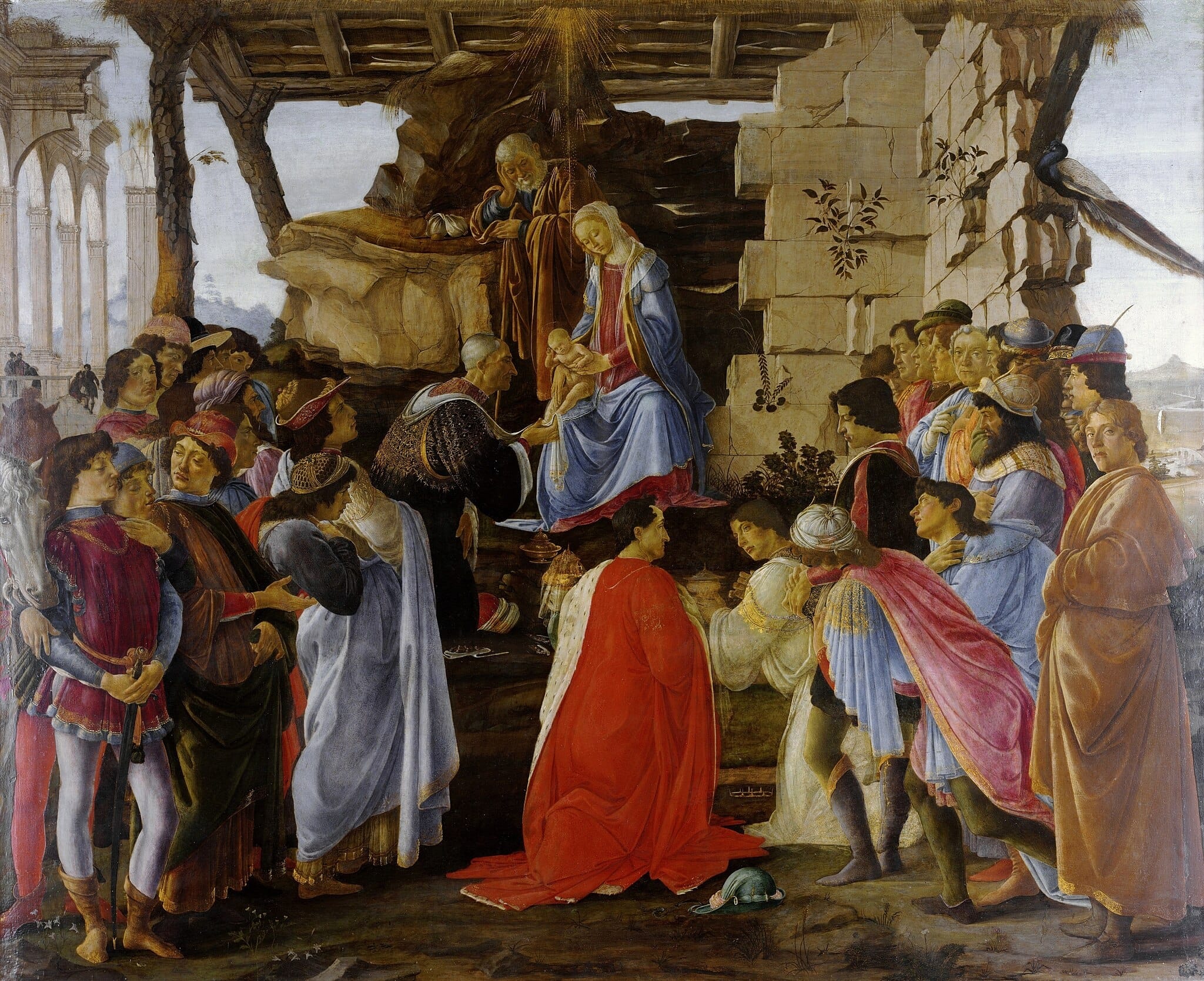
Adoration of the Magi
1475
Shows the Virgin and Child receiving the Magi, set within a partially ruined classical structure, with several contemporary portraits—members of the Medici family—integrated among the figures. Its importance comes from Botticelli’s combination of devotional subject matter with portraiture and political patronage, making it both a sacred scene and a Medici statement. Notice the individualized faces (look for recognizable Medici profiles), the composition’s use of architectural framing, and the tender gestures between Mary and the Christ child.
Must-see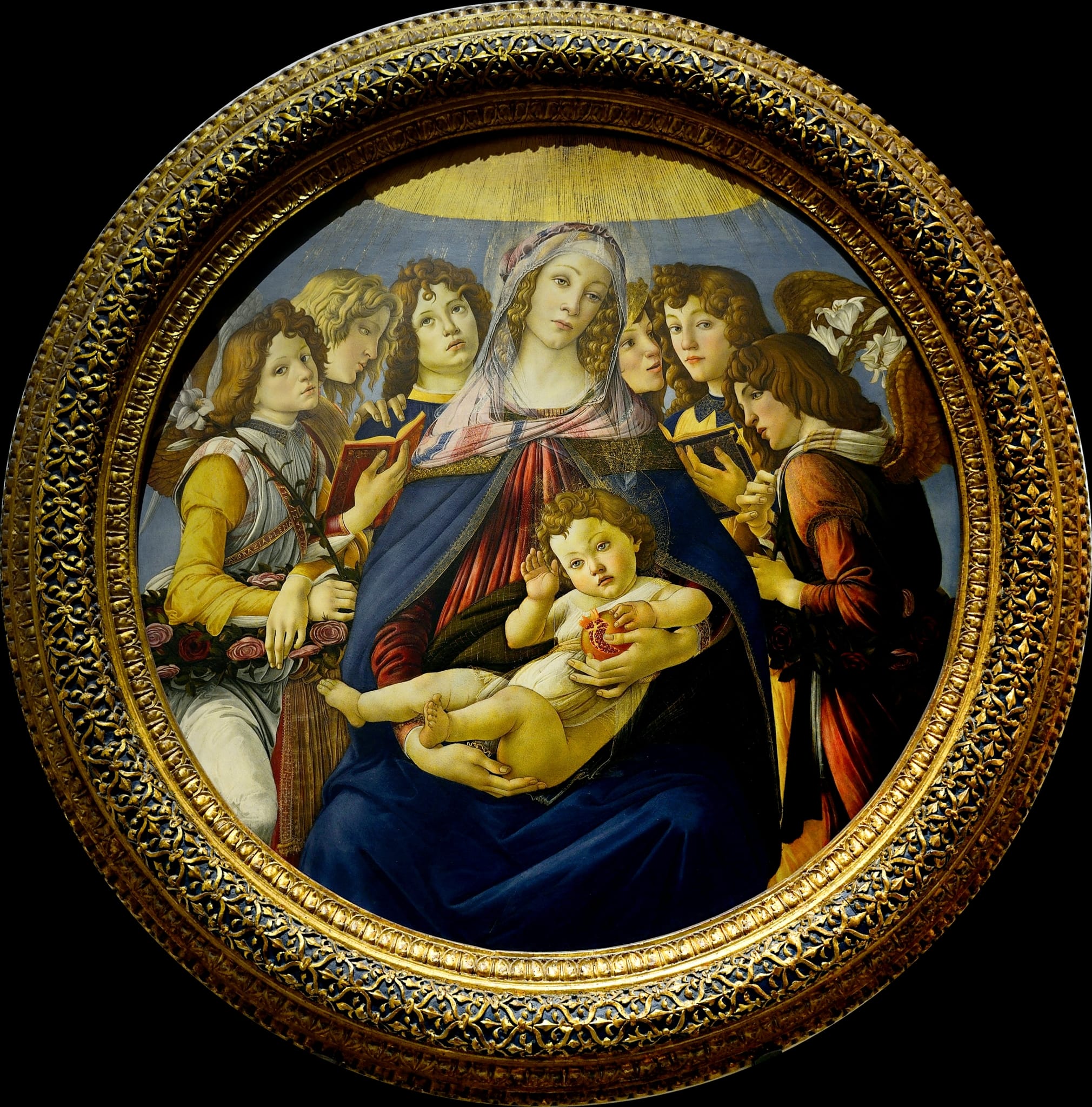
Madonna of the Pomegranate
1487
Features the enthroned Virgin holding the Christ Child who holds a split pomegranate, surrounded by angels in an intimate devotional grouping. The pomegranate symbolizes resurrection and the church, making the painting a compact theological meditation on death and rebirth. Viewers should look at the jewel‑like coloring, the detailed patterning of fabrics and halos, and the way the pomegranate’s seeds allude to both flesh and sacrament.
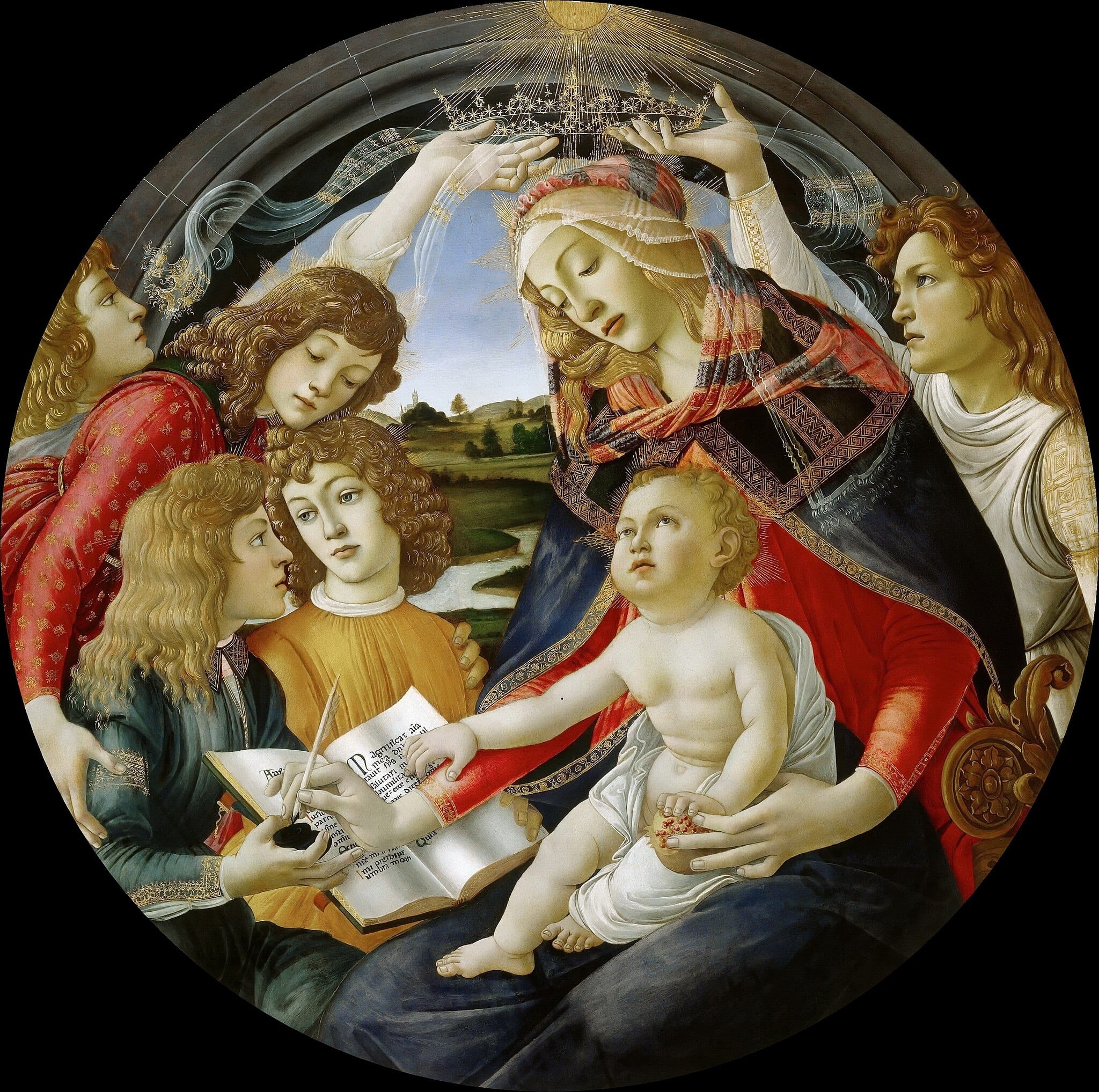
Madonna of the Magnificat
1483
Portrays the Virgin writing the Magnificat with the Christ Child reading on her lap, flanked by angels—an image that emphasizes Mary’s intellect and devotional authority. It’s significant for blending human tenderness with learned piety, and for Botticelli’s lyrical lines that elevate a domestic, bookish moment into sacred meaning. Look closely at the expressive, slightly elongated hands, the flowing hair and drapery that create musical rhythm, and the open book as a sign of scriptural meditation.
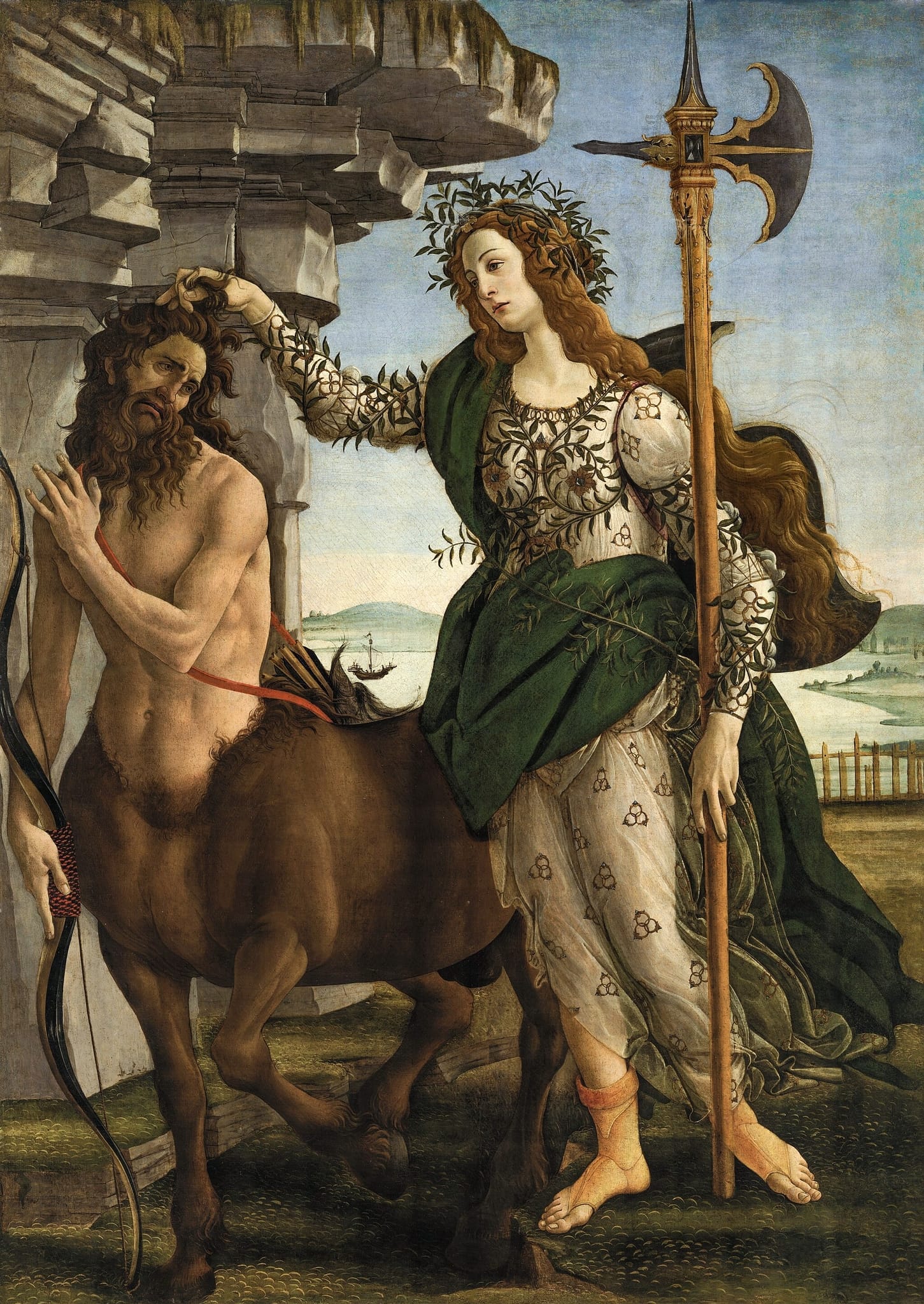
Pallas and the Centaur
1482
Depicts the goddess Pallas Athena grasping the hair of a subdued centaur, symbolically restraining bestial passions with reason and virtue. Commissioned in a politically charged Medici context, it’s read as an allegory of civic order and moral control, possibly referencing a real person or event. Observe the contrast between Pallas’s calm, idealized figure and the centaur’s more animalic posture, plus symbolic details like the elegant sash and helmet that mark her authority.
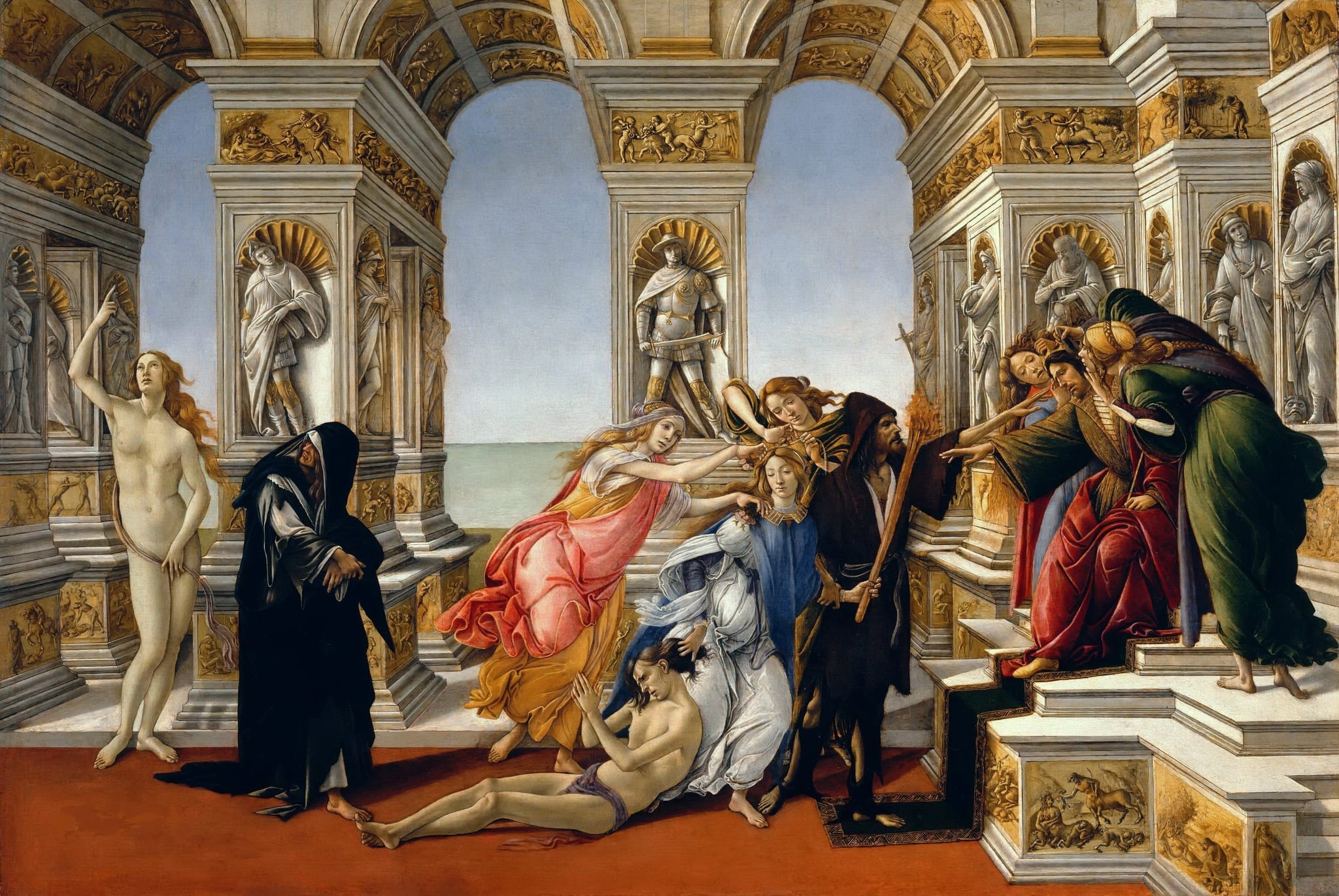
Calumny of Apelles
1495
A complex, morally charged allegory showing a wronged man being dragged before a king by the personification of Calumny while other figures—Repentance, Truth, Envy—populate the scene, based on the lost classical description by Lucian. Its significance is Botticelli’s engagement with moral and political critique late in his career, using classical sources to comment on slander and injustice. Look for the theatrical staging, elongated figures that emphasize emotion, and symbolic gestures (Truth pointing to heaven, Calumny’s false smile) that encode the narrative’s moral lesson.
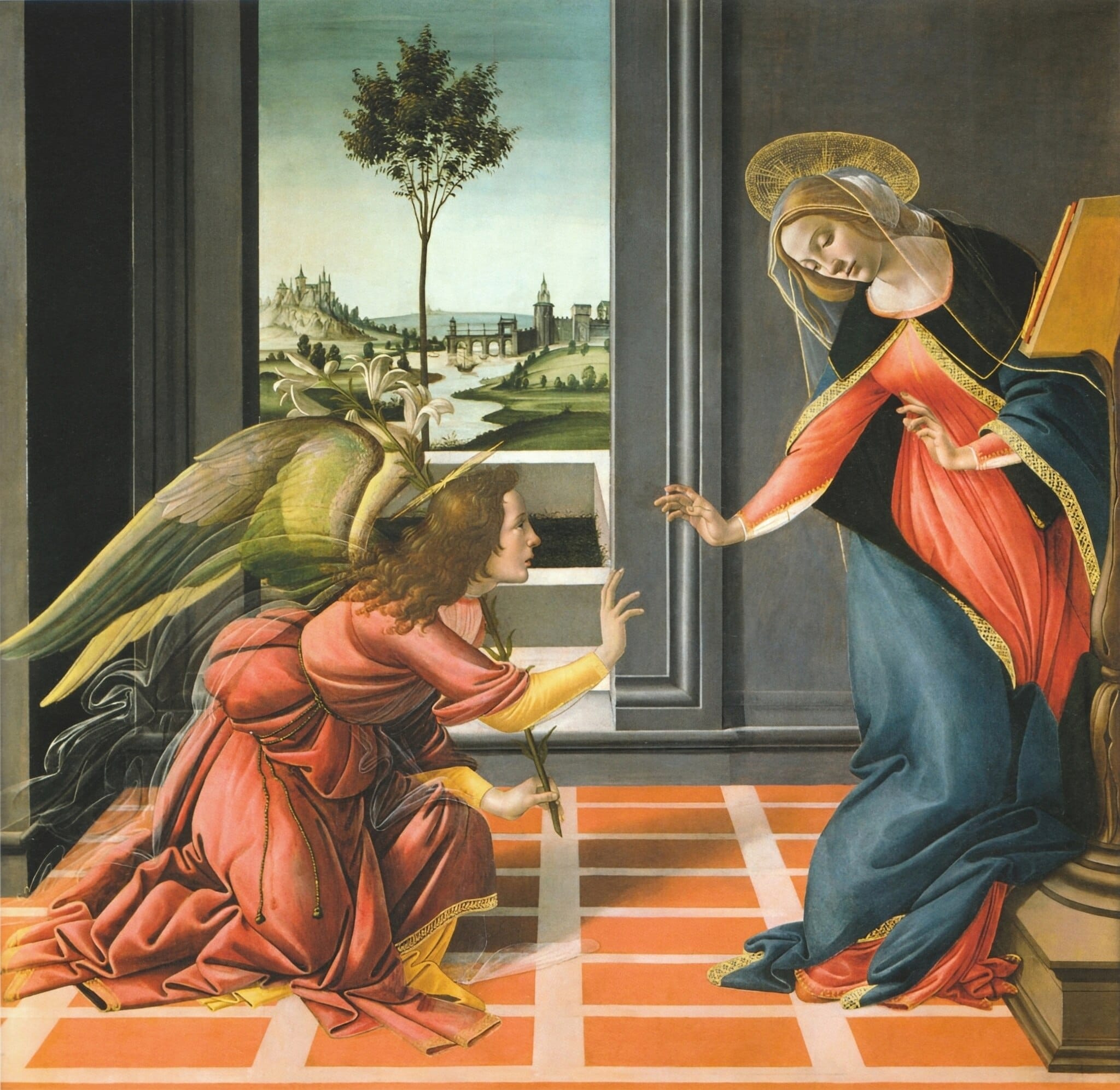
Annunciation
1481
Shows the archangel Gabriel announcing to the Virgin Mary that she will bear Christ, typically set in a quiet architectural or garden space that frames the sacred encounter. The painting is significant for Botticelli’s tender, lyrical treatment of a canonical subject and for his precise linear grace in figures and drapery. Viewers should notice the humility of Mary’s pose, the angel’s delicate movement, and the careful use of perspective and botanical detail that heighten the scene’s contemplative mood.
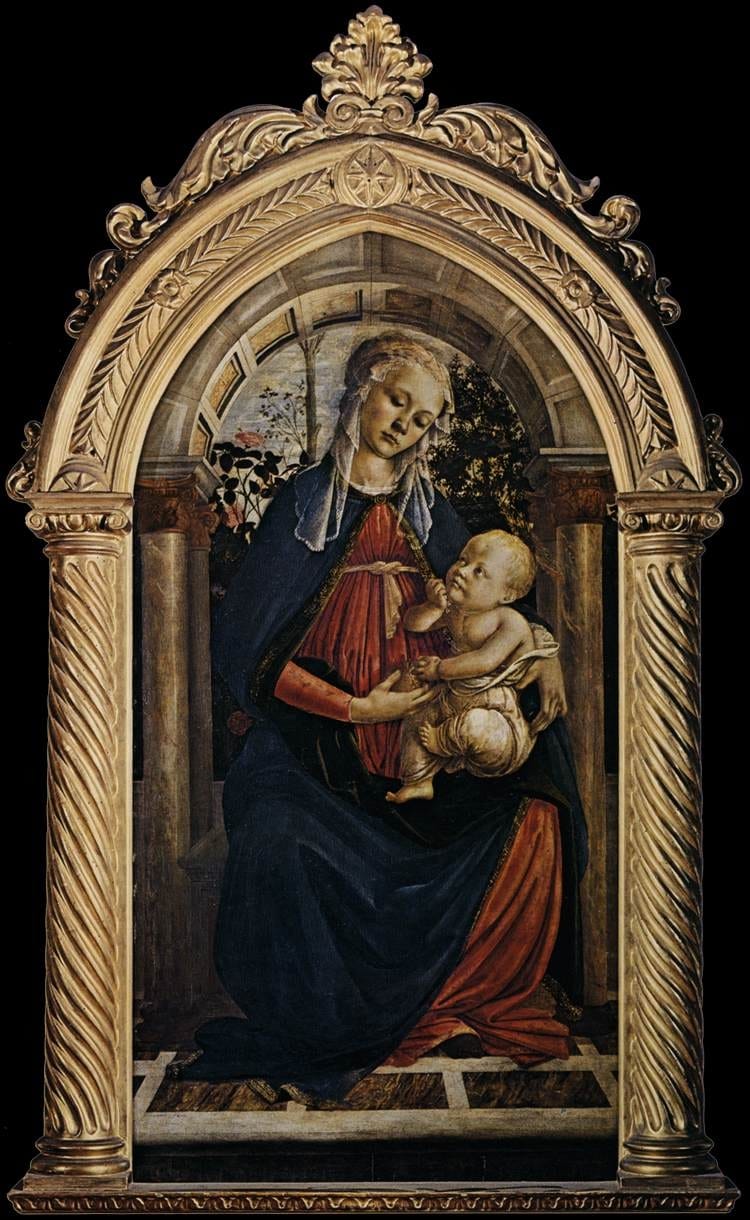
Madonna of the Rose Garden
1470
Depicts the Virgin and Child seated within or before a lush walled rose garden (hortus conclusus), a symbol of Mary’s purity, often accompanied by angels or saints in an intimate devotional setting. As an early Botticelli work, it shows his developing softness of line and devotional intimacy, bridging Gothic tenderness and Renaissance naturalism. Look for the enclosed garden symbolism, the fine patterning of textiles, and the tender interaction between mother and child rendered with careful, quiet modeling.
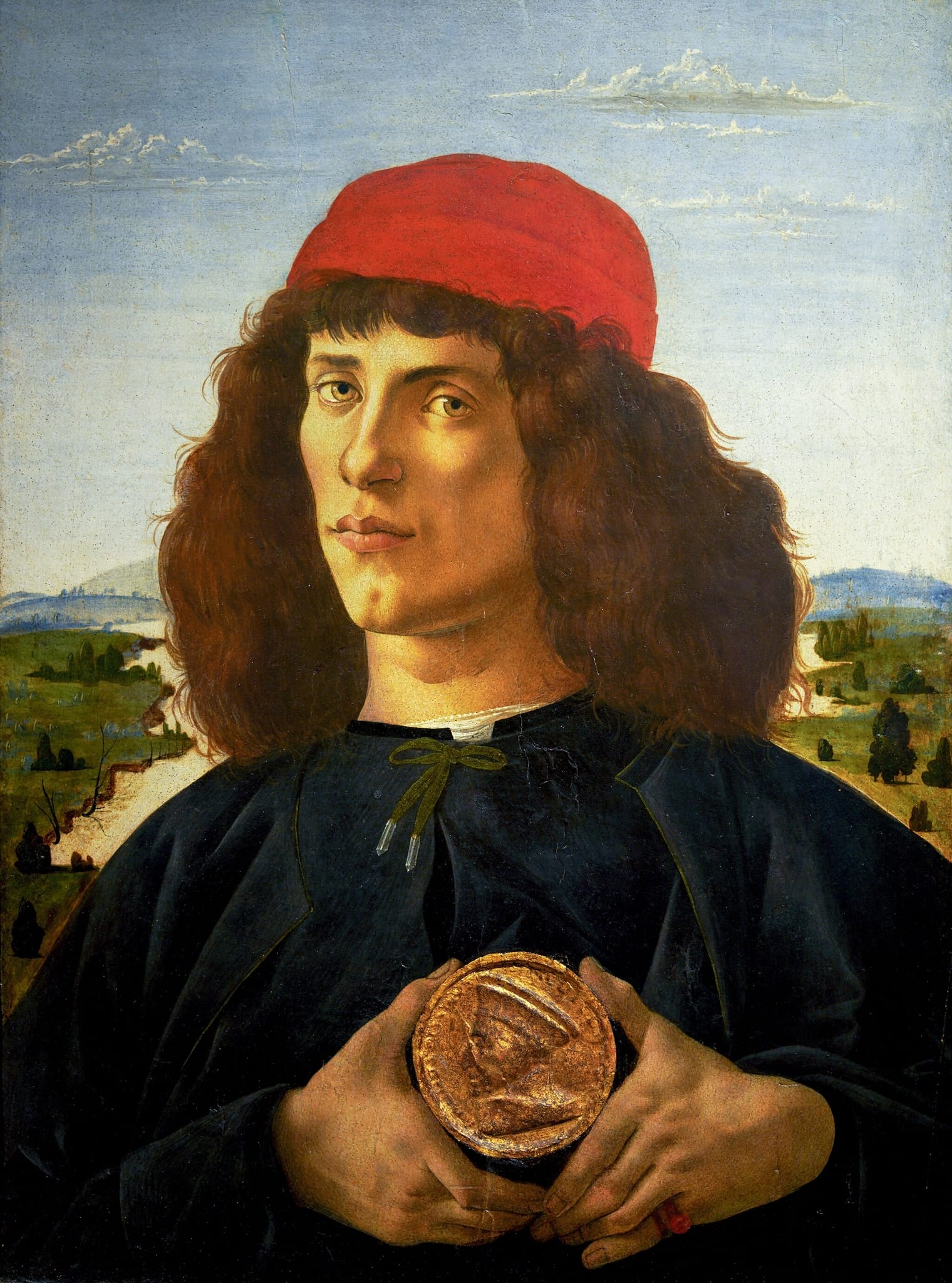
Portrait of a Man with a Medal of Cosimo the Elder
1475
A profile portrait of an unknown man shown wearing or holding a medallion bearing Cosimo de’ Medici’s likeness, a format that links individual identity to Medici power and classical Roman precedent. Its significance lies in Botticelli’s elegant revival of the Roman profile portrait and the political overtones of displaying the Cosimo medal as a sign of allegiance or cultural prestige. Look for the restrained, sculptural profile, the crisp delineation of facial features, and the carefully painted medal as a focal emblem of patronage.
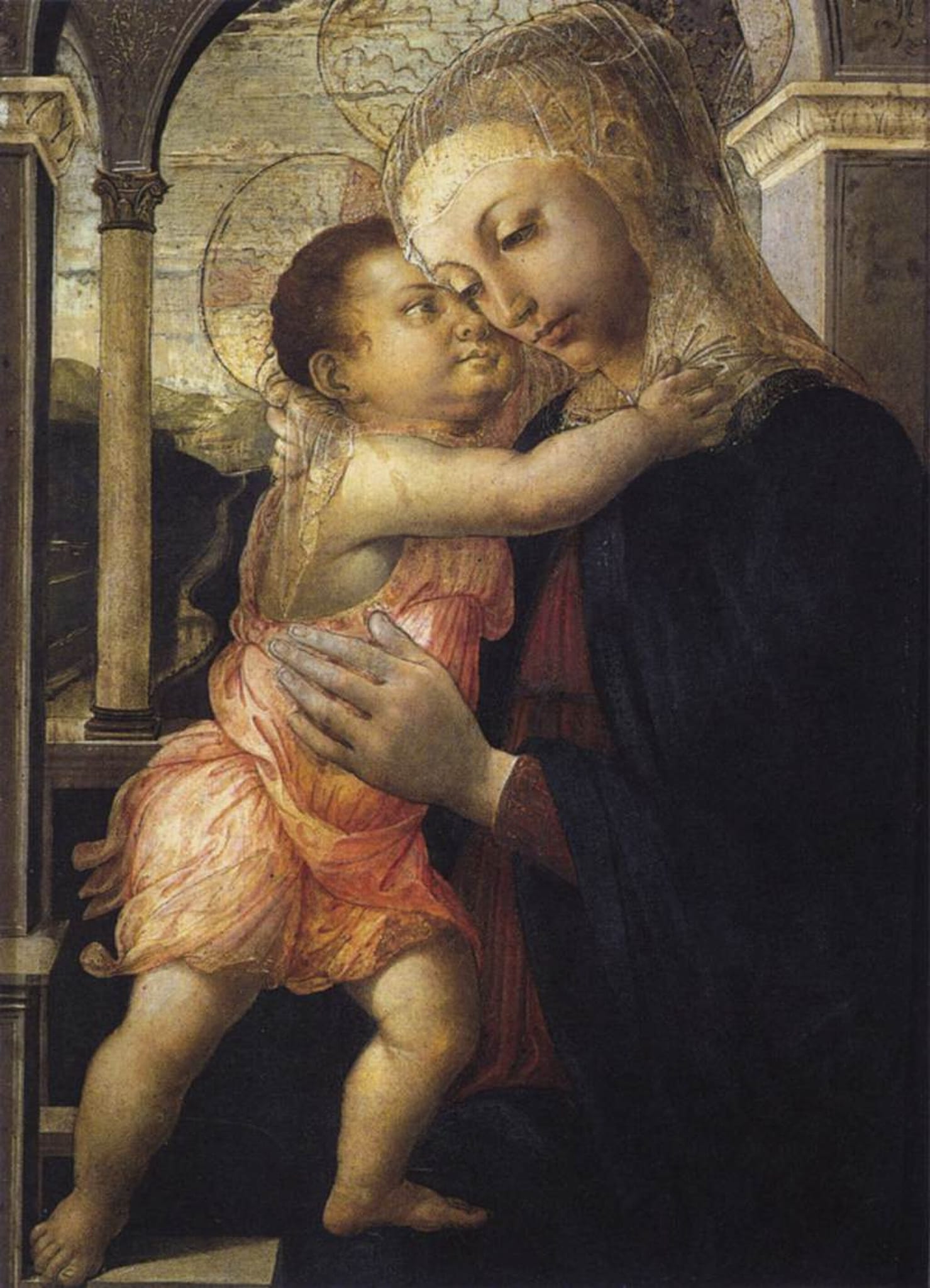
Madonna of the Loggia
Shows the Virgin and Child set within a loggia—a sheltered arcade opening onto a landscape—framing the holy figures in an architectural, intimate setting that invites devotional contemplation. The work is valued for Botticelli’s harmonic composition and serene portrayal of maternal tenderness, blending interior devotion with an expansive vista beyond. Viewers should attend to the calm gestures and faces, the interplay of interior and exterior space, and the delicate attention to pattern and light on the fabrics and stone.
Galleria dell'Accademia
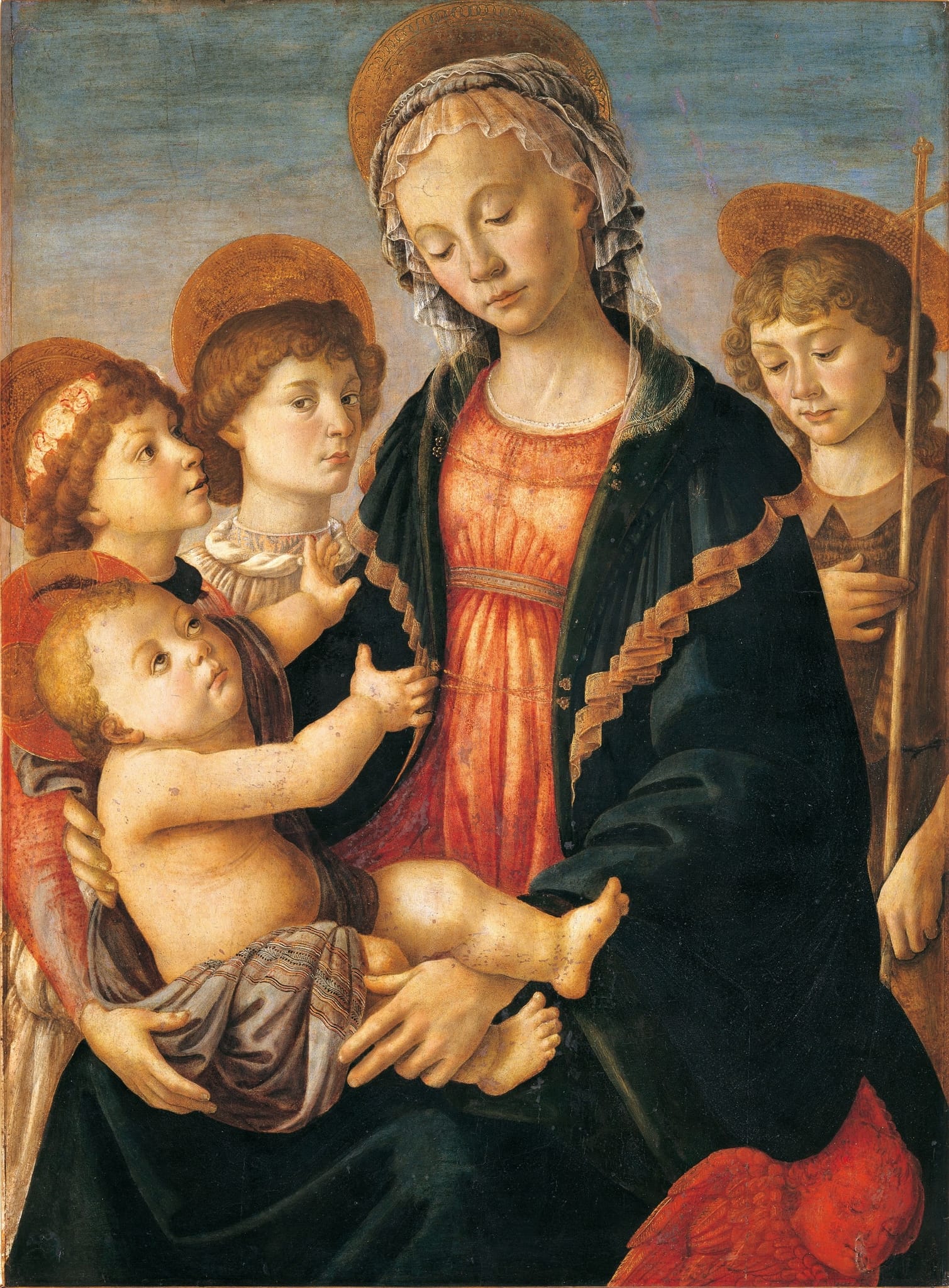
Virgin and Child with the Young St John the Baptist and Two Angels
A tender devotional scene showing the Virgin Mary seated with the Christ Child and a youthful St. John the Baptist, accompanied by two angels who frame the group. Significant as an intimate example of Botticelli’s devotional Madonnas, it demonstrates his delicate line, graceful figures, and lyrical emotional tone that bridge early Renaissance spirituality with human warmth. Look for the elegant linear contours, the subtle interplay of glances between the figures, and the careful detailing of hands and drapery that convey both affection and spiritual connection.
Must-see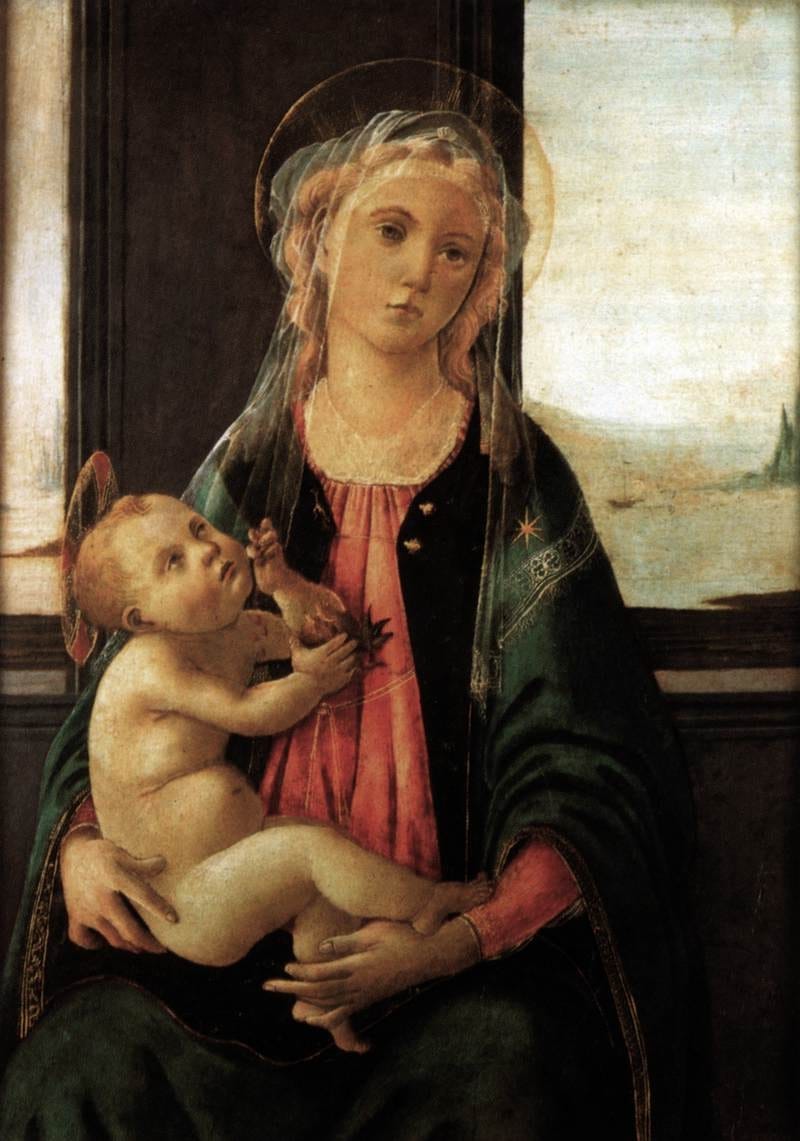
Madonna del Mare
The Madonna del Mare depicts the Virgin and Child in a serene, maritime-associated setting, often interpreted through the motif of the sea as a symbol of purity or protection. Important for its poetic blending of devotional imagery with Botticelli’s refined use of profile and landscape elements, it highlights his ability to infuse a traditional subject with lyrical atmosphere. Notice the calm expressions, the soft modeling of faces, and any seascape or coastal details that reinforce the painting’s title and symbolic resonance.
Must-seeGalleria Palatina (Palazzo Pitti)
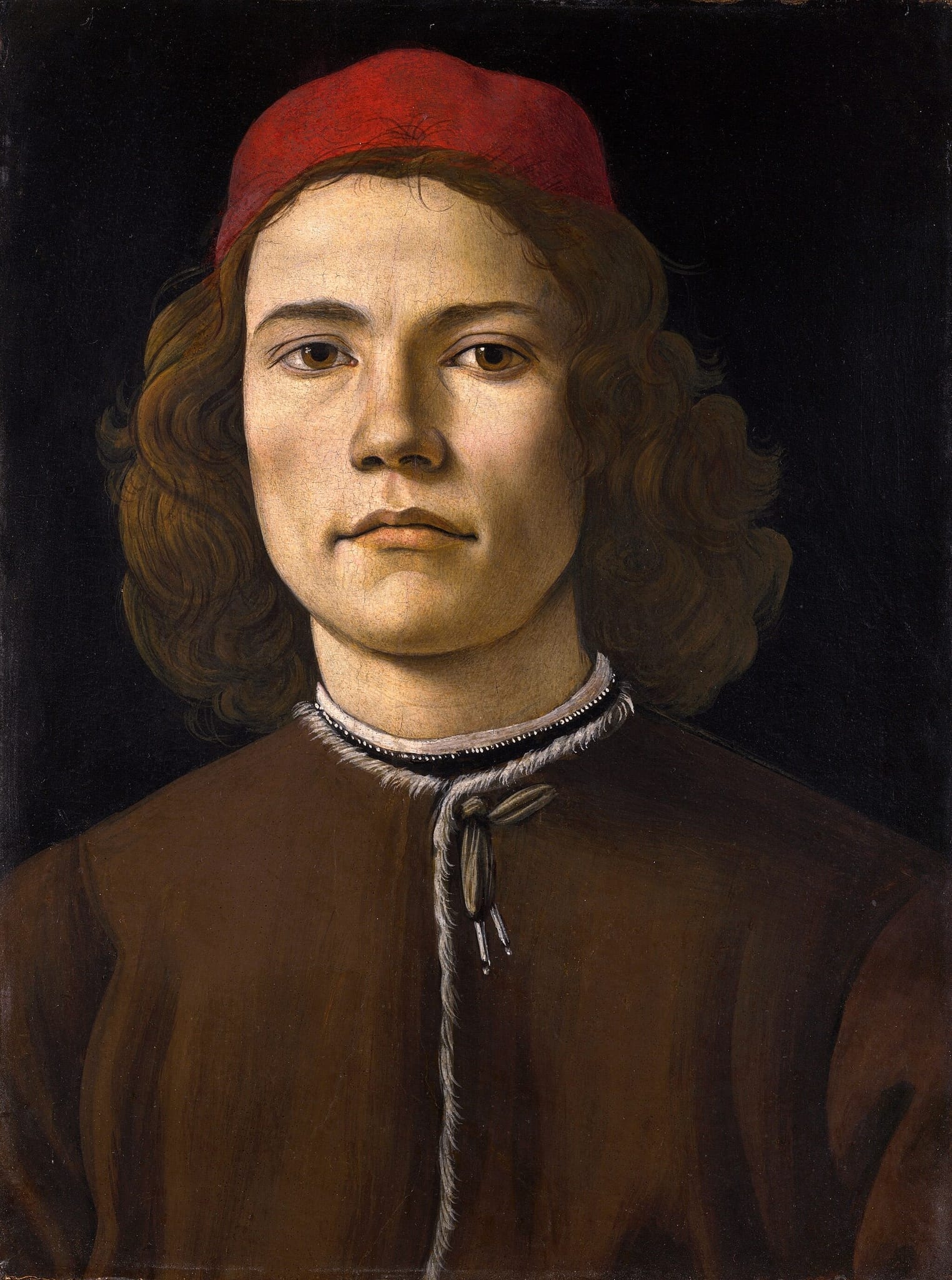
Portrait of a Young Man
c.1470s
A restrained bust portrait showing a poised young man in three-quarter view, rendered with Botticelli’s delicate line and a calm, idealized visage. Significant as an early example of Botticelli’s interest in individual character and elegant linearity, it marks his shift from workshop conventions toward a more refined poetic realism. Look for the precise contour of the profile, the subtle modeling of the cheek and eye, and the graceful, almost calligraphic treatment of hair and drapery.
Must-see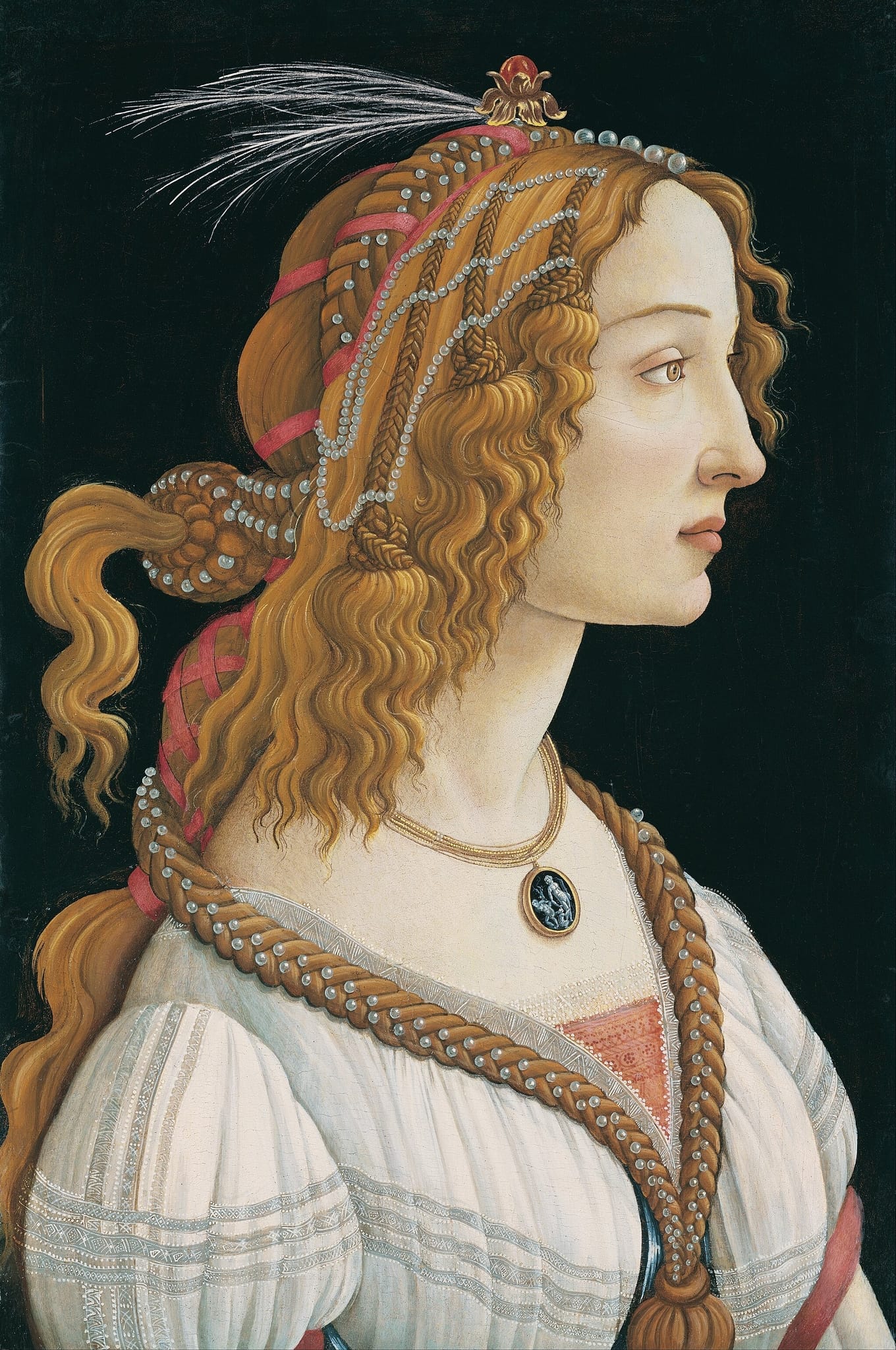
Portrait of a Young Woman
c.1475–1485
This intimate portrait captures a young woman in profile with a serene, introspective expression and carefully arranged hair and clothing typical of Florentine elite portraiture. It is significant for illustrating Botticelli’s blend of idealized beauty and individualized detail, reflecting contemporary tastes in femininity and status. Attend to the elegant line of her silhouette, the refined modeling of her face, and the decorative patterning of her garments and headdress that reveal social identity.
Must-see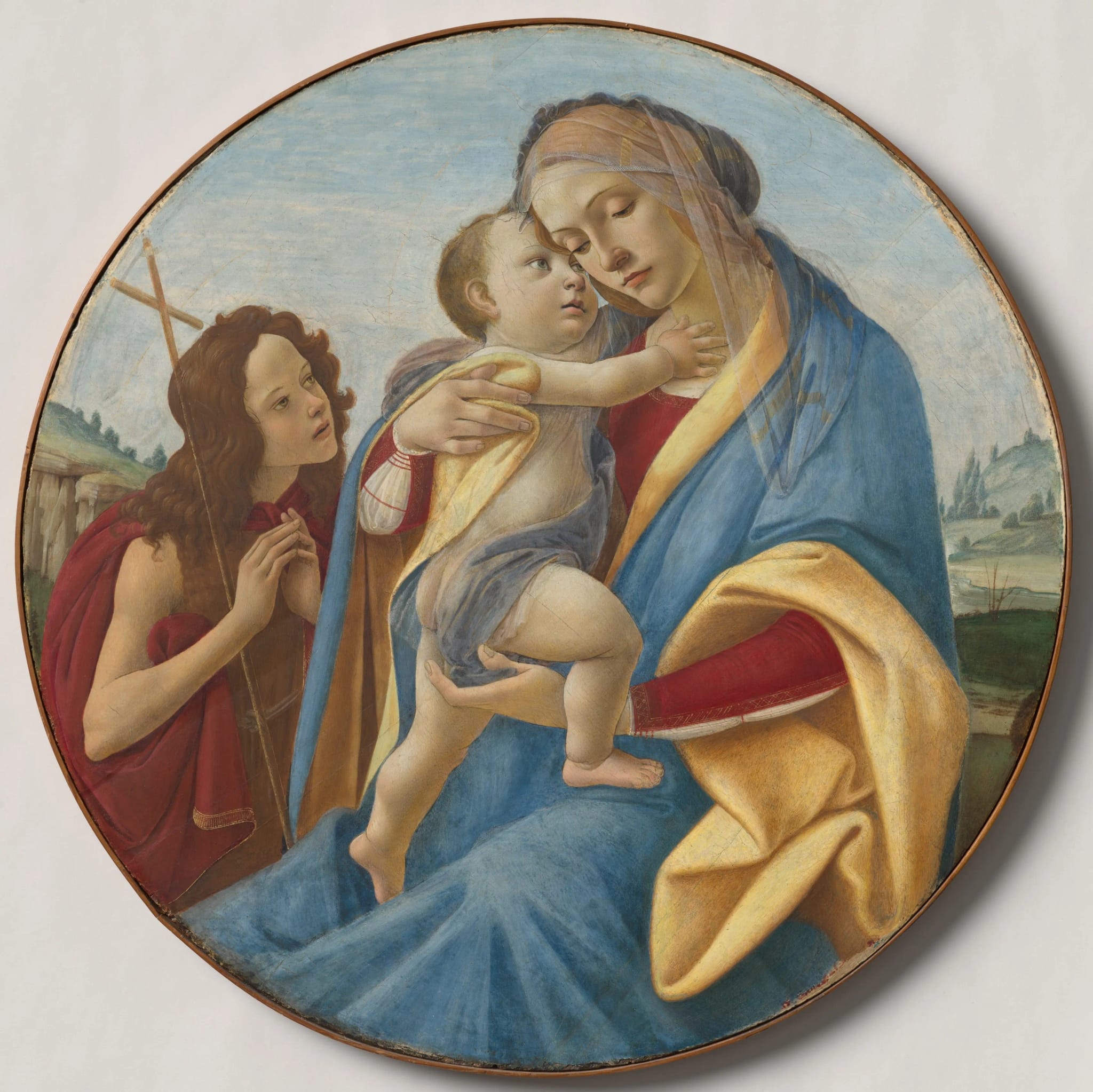
Madonna and Child with the Young St John the Baptist
c.1490–1495
A tender devotional scene of the Virgin Mary holding the Christ Child while the young St. John the Baptist looks on, composed with Botticelli’s lyrical grace and soft, elongated figures. Important as a late-Quattrocento devotional work, it synthesizes Botticelli’s spiritual intensity with refined draftsmanship and a poetic use of space. Notice the gentle interaction between the figures, the flowing contours that link them, and the subtle facial expressions and hand gestures that convey intimacy and sacred tenderness.