Sandro Botticelli Paintings in London — Where to See Them
London matters for experiencing Sandro Botticelli because it houses approximately nine of his paintings on permanent display across three institutions, including seven at the National Gallery, one at The Courtauld Gallery (Somerset House) and one at the Victoria and Albert Museum. That concentration — one of the largest single-city groupings of Botticelli outside Italy — makes it unusually easy to compare his range and technique in a single visit, with complementary curatorial contexts at each museum.
At a Glance
- Museums
- National Gallery, The Courtauld Gallery (Somerset House), Victoria and Albert Museum
- Highlight
- See Botticelli's major works at the National Gallery
- Best For
- Renaissance art lovers and museum-goers seeking Botticelli masterpieces
National Gallery
The National Gallery matters for experiencing Botticelli because it brings together a concentrated group of his works that let you compare his range — from devotional Madonnas to mythic and secular subjects — within a single, easy-to-navigate space. Seeing several paintings side-by-side highlights changes in his technique, use of line, and approach to narrative and portraiture, and the Gallery’s long tradition of scholarship means labels and room texts often point out workshop activity and restorations that clarify attribution. The placement of Botticelli’s pictures among other Renaissance masters also helps you understand his influences and his distinct contribution to Florentine painting.
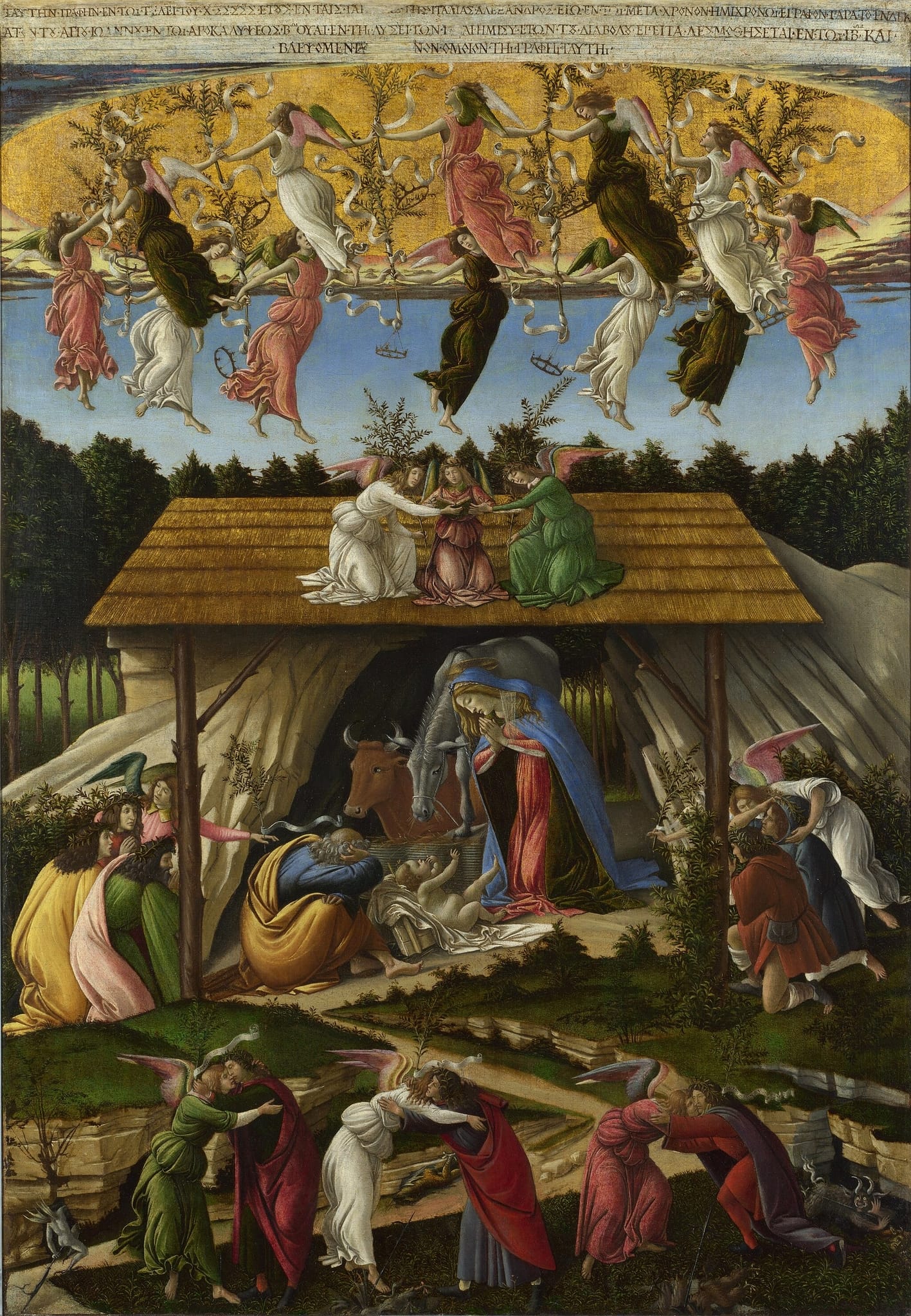
Mystic Nativity
1500
Depicts the nativity of Christ set within an apocalyptic, crowded composition where joyful angels, adoring shepherds and the infant Jesus dominate the foreground while chaotic demonic figures are driven away into the background. Significant as one of Botticelli’s late, highly personal religious works that mixes devotional imagery with millenarian symbolism—reflecting the artist’s spiritual concerns near the end of his life. Look for the unusually flattened, patterned gold background, the dense assembly of singing angels above the Christ child, and the tiny defeated devils being cast out, which give the painting its intense, visionary character.
Must-see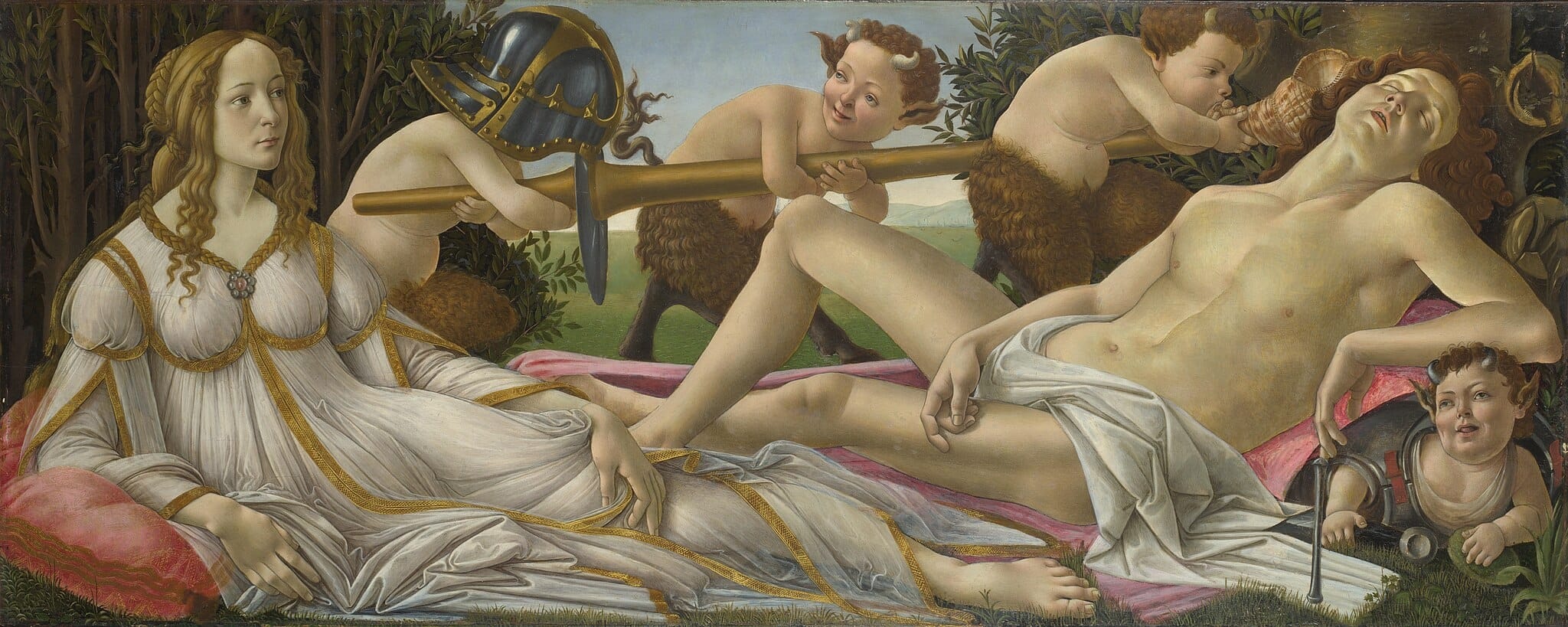
Venus and Mars
1485
Shows the goddess Venus awake and alert beside a sleeping, armoured Mars, surrounded by mischievous satyrs who play with the god’s weapons. Famous for its sensual yet restrained portrayal of classical love and its subtle allegory about the harmony between love and war, the painting exemplifies Botticelli’s mastery of line and elegant figure types. Viewers should notice the delicate contraposto of Venus, the playful gestures of the satyrs that suggest erotic undercurrents, and the finely patterned landscape that frames the intimate scene.
Must-see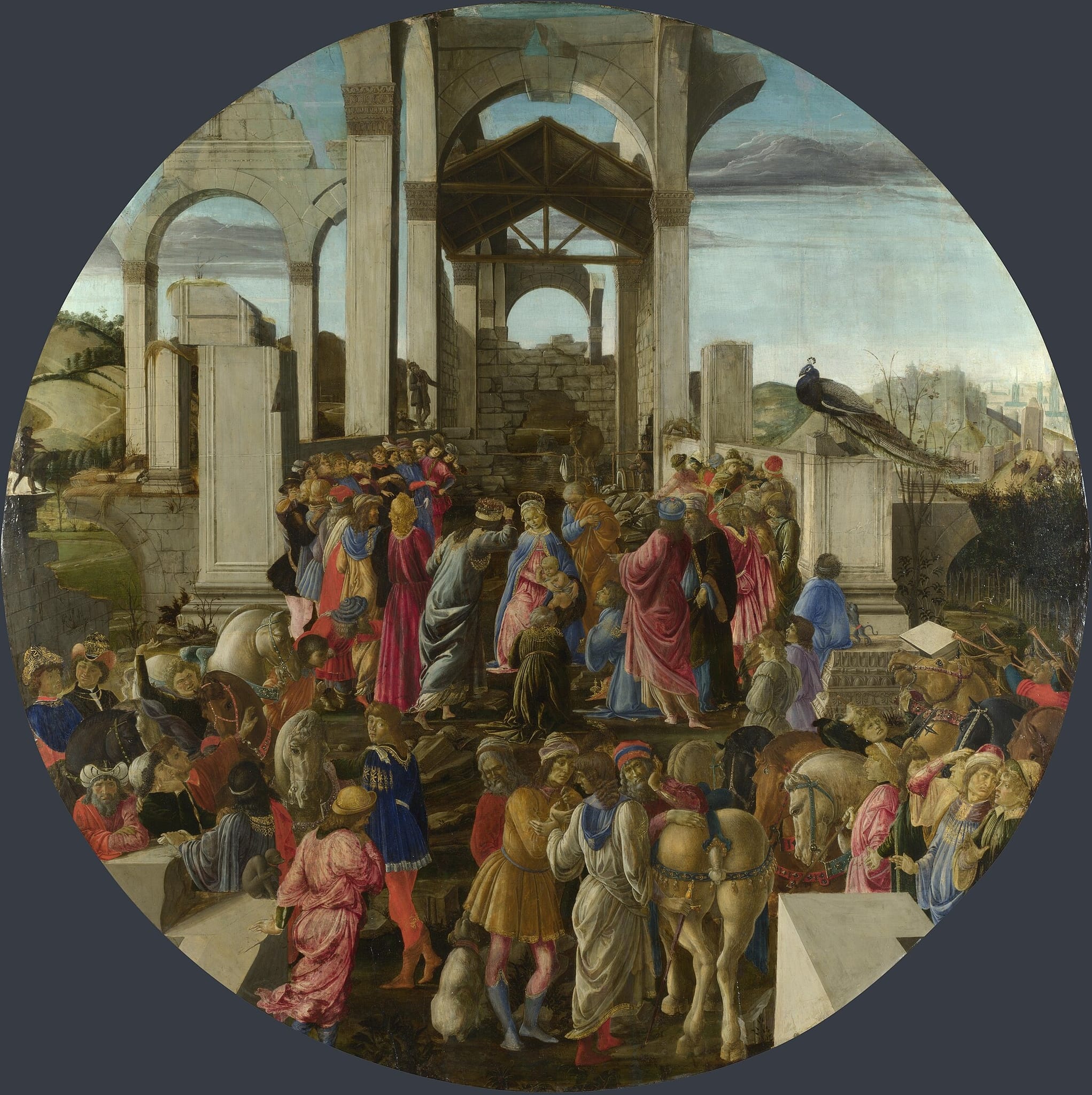
The Adoration of the Kings
1470
A devotional scene of the Magi kneeling before the infant Christ, set amid a complex architectural ruin and populated by detailed portraits, including Botticelli’s patrons and possibly members of the Medici family. Early in his career, the work is significant for introducing portraiture into sacred narrative and for Botticelli’s use of expressive faces and rich costume to convey both civic pride and religious reverence. Look for the individualized faces clustered around the Christ child, the broken classical architecture symbolizing the old order’s end, and the use of vibrant color and patterned robes that draw the eye to key figures.
Must-see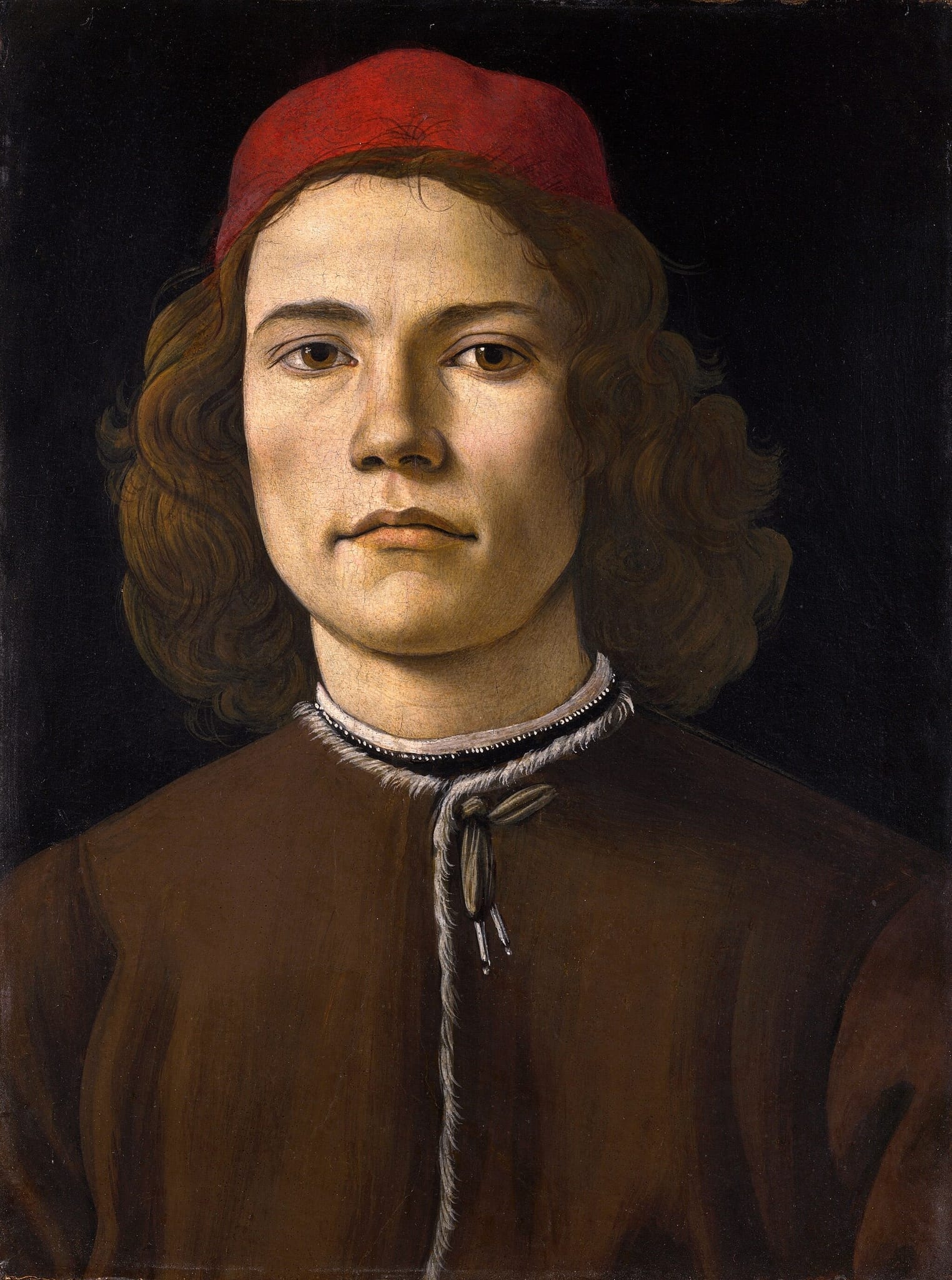
Portrait of a Young Man
1483
A refined, half-length portrait of an unidentified young man rendered with calm dignity, meticulous detail in costume, and a poised, introspective expression. Important as an example of Botticelli’s portraiture, it reveals his ability to convey character through subtle modelling and the elegant linear quality that defines his style. Pay attention to the sitter’s steady gaze, the textured rendering of hair and fabric, and the clear, yet soft modelling that balances naturalism with idealization.
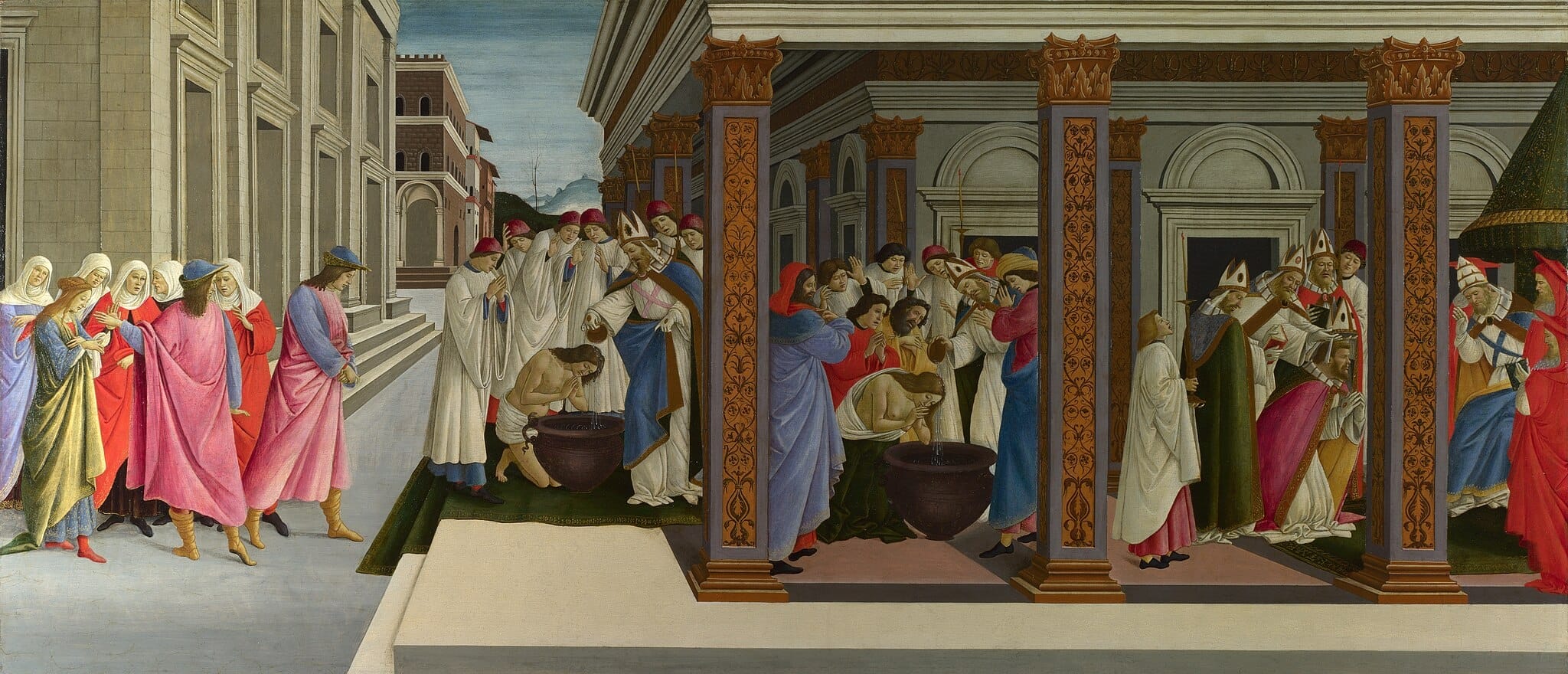
Four Scenes from the Early Life of Saint Zenobius
1500
A panel combining four episodes from the youth and early ministry of Saint Zenobius, presented in a narrative sequence that condenses time and action into a single pictorial space. The set is significant for its storytelling economy and for showing Botticelli’s late-period taste for devotional cycles that teach by visual example. Look for the clear separation of episodes within one composition, the expressive gestures that define each miracle or event, and the careful attention to architectural and landscape details that anchor the scenes.
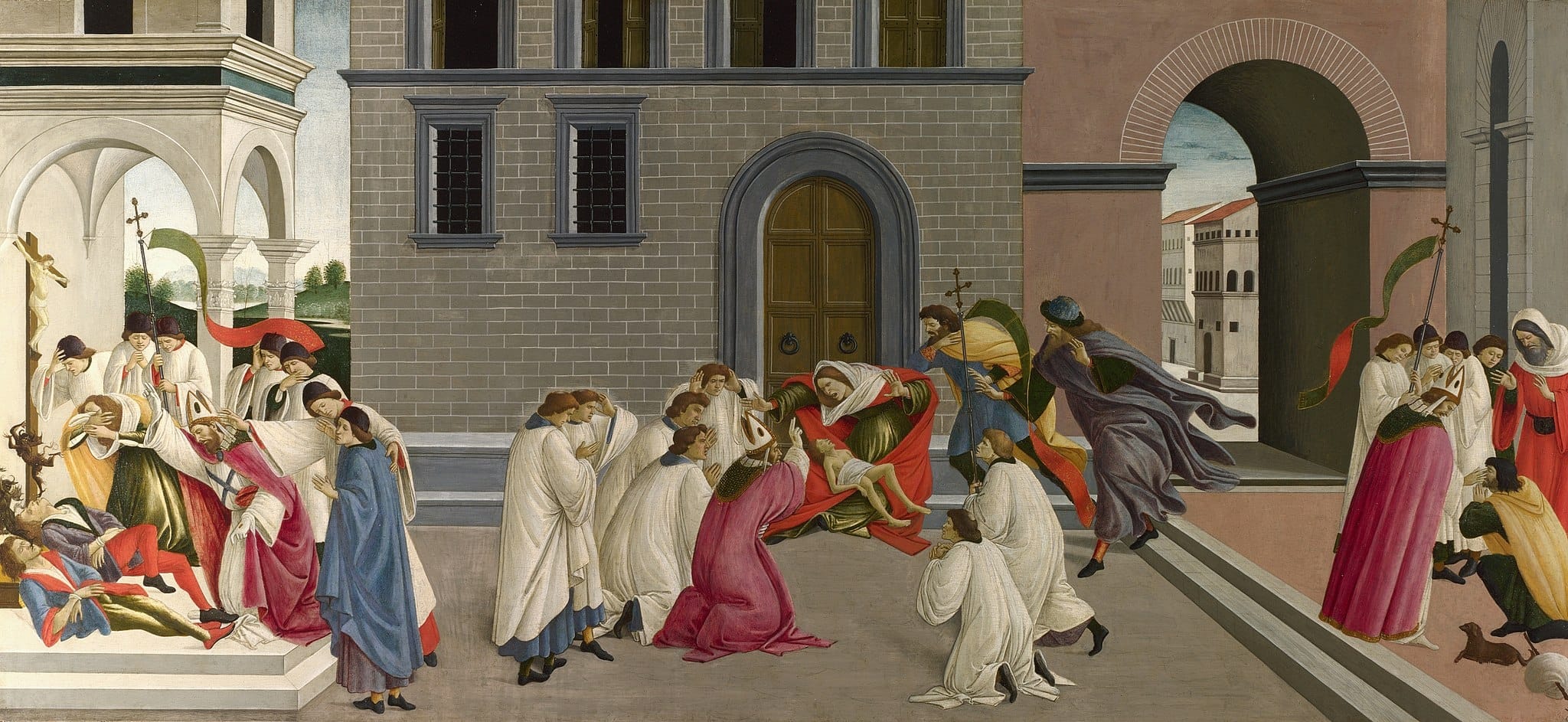
Three Miracles of Saint Zenobius
1500
Depicts three distinct miracles attributed to Saint Zenobius arranged together so viewers can read them consecutively: acts of healing and spiritual power performed by the saint. The work is noteworthy for its didactic purpose and for Botticelli’s ability to unify multiple narratives through consistent figures and compositional rhythm. Observe how the saint is repeatedly identified across scenes, the clear narrative transitions between episodes, and the facial expressions and body language that convey compassion and miraculous authority.
The Courtauld Gallery (Somerset House)
The Courtauld matters because, as a smaller, more focused collection, it offers an intimate encounter with Botticelli’s work where scale and detail are easier to appreciate. In a quieter room the painting can be examined closely for his delicate draftsmanship, subtle tempera glazing and the idiosyncratic facial types that distinguish his workshop practice. The Courtauld’s curatorial emphasis on connoisseurship and technical study also means the label and catalogue information are often geared toward close visual analysis.
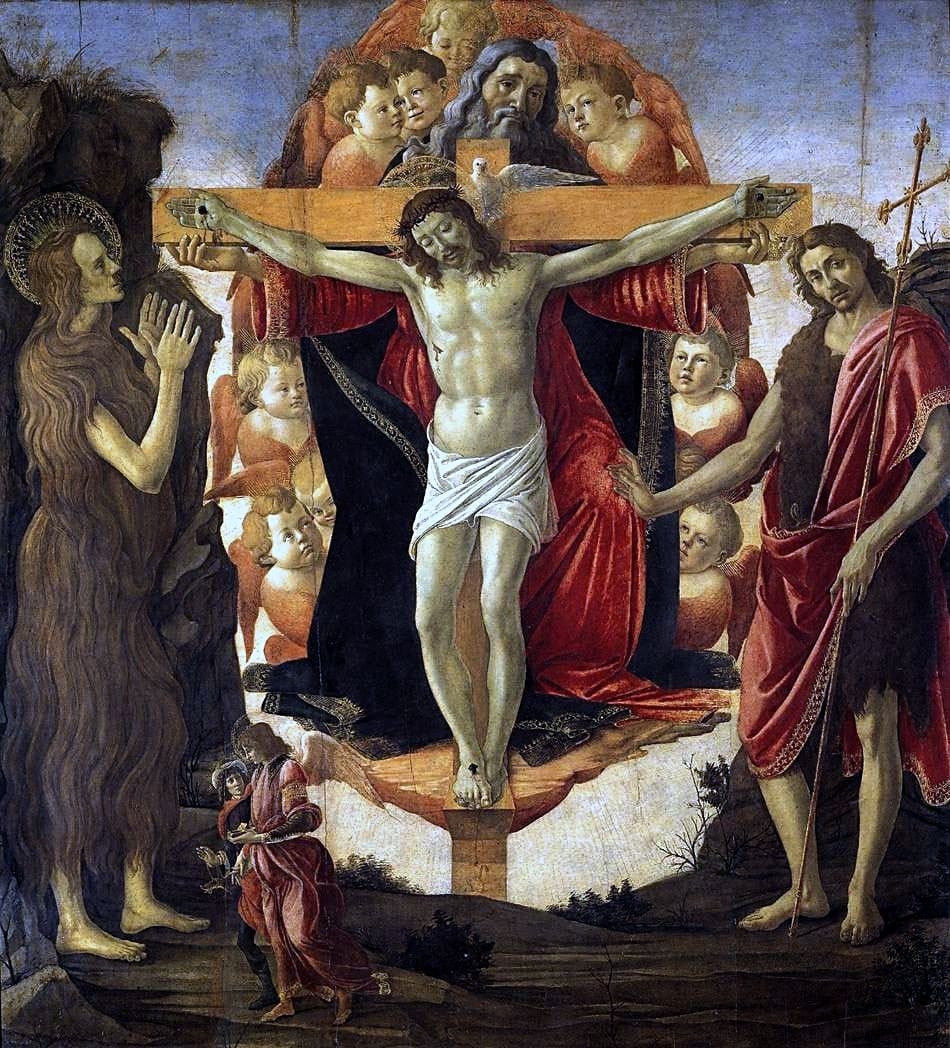
The Trinity with Saints Mary Magdalen and John the Baptist
c. 1491-1494
A compact devotional altarpiece in which the crucified Christ, held by God the Father with the dove of the Holy Spirit above, is flanked below by the Virgin’s mourning presence and by Saints Mary Magdalen and John the Baptist kneeling in prayer. The work is significant as a late-15th-century Botticelli religious commission that combines his elegant, linear drawing with a concentrated, devotional mood intended for close viewing. Look for the delicate, flowing contours of the drapery and faces, the identifying attributes (Magdalen’s ointment jar and John’s reed cross), and the subtle interplay of gestures that link the divine Trinity with the intercessory saints.
Must-seeVictoria and Albert Museum
The V&A matters for experiencing Botticelli because it frames his work within the decorative arts and material culture of the Renaissance, so you can see how his pictorial motifs and patterns relate to textiles, prints and book illumination. Even a single Botticelli painting at the V&A is displayed with attention to surface, technique and design vocabulary, highlighting ornamental details — hair, costume, borders — that often read differently than when his paintings are shown only among other easel pictures. The museum’s strengths in conservation and applied arts give extra context about how Botticelli’s visual language circulated in objects and reproductions.
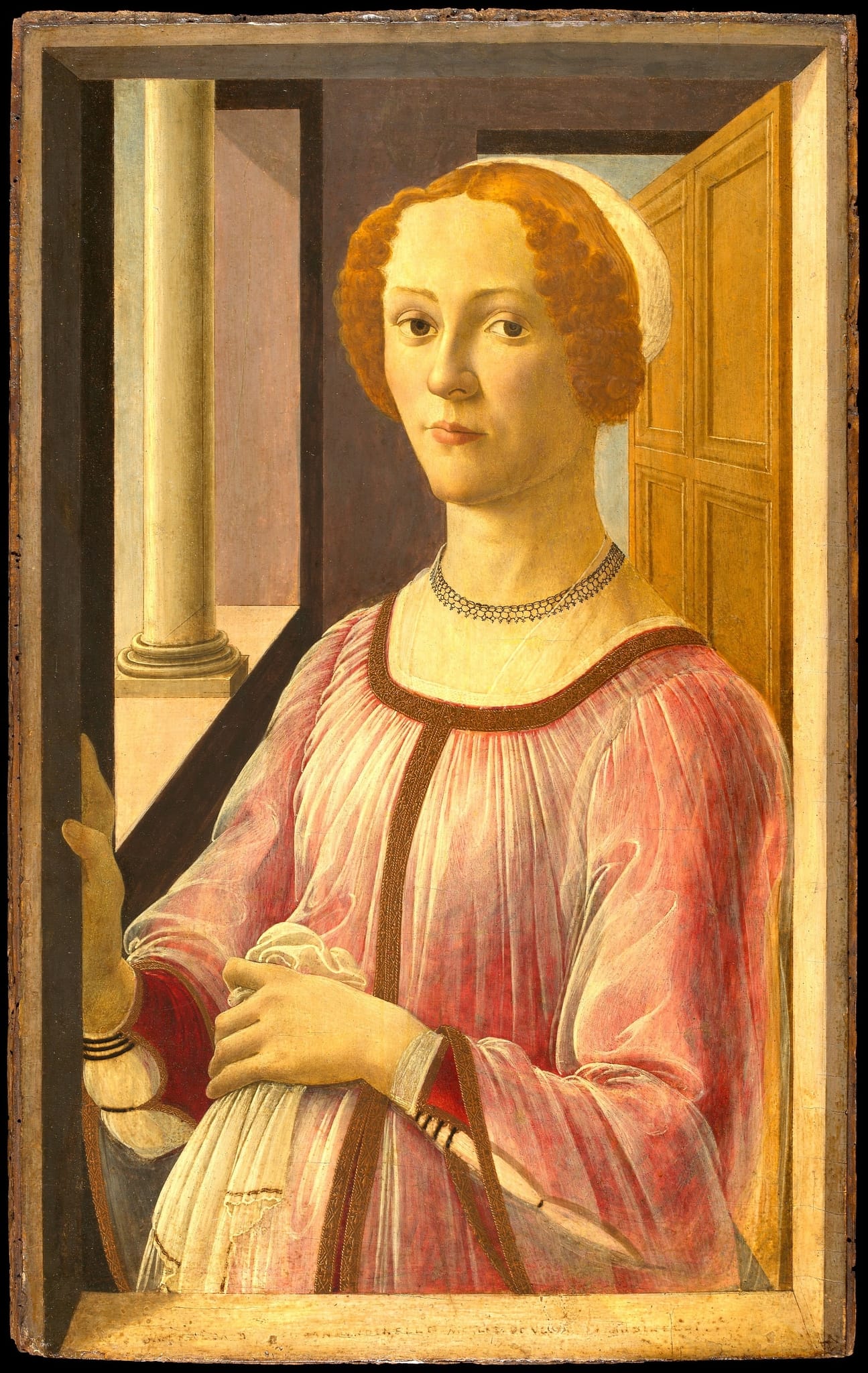
Portrait of a Lady known as Smeralda Bandinelli
1475
This tempera-on-panel portrait shows a young woman in three-quarter view seated by a window, her delicate features and long, reddish hair framed by a high forehead and simple dress—a restrained, idealized Renaissance profile rather than an ornate, status-filled likeness. It is significant as an early example of Botticelli’s innovation in portrait composition and female type, and the work has attracted attention for its authorship, conservation history, and the striking colour of the sitter’s hair. Viewers should look closely at the linear elegance of the contours (especially the hair and face), the subtle modelling of the skin, and the plain setting that focuses attention on the sitter’s expression and Botticelli’s delicate draftsmanship. ([vam.ac.uk](https://www.vam.ac.uk/articles/portrait-of-a-lady-known-as-smeralda-bandinelli?utm_source=openai))
Must-see