Eros vs. agape (lust vs. charity)
Featured Artworks
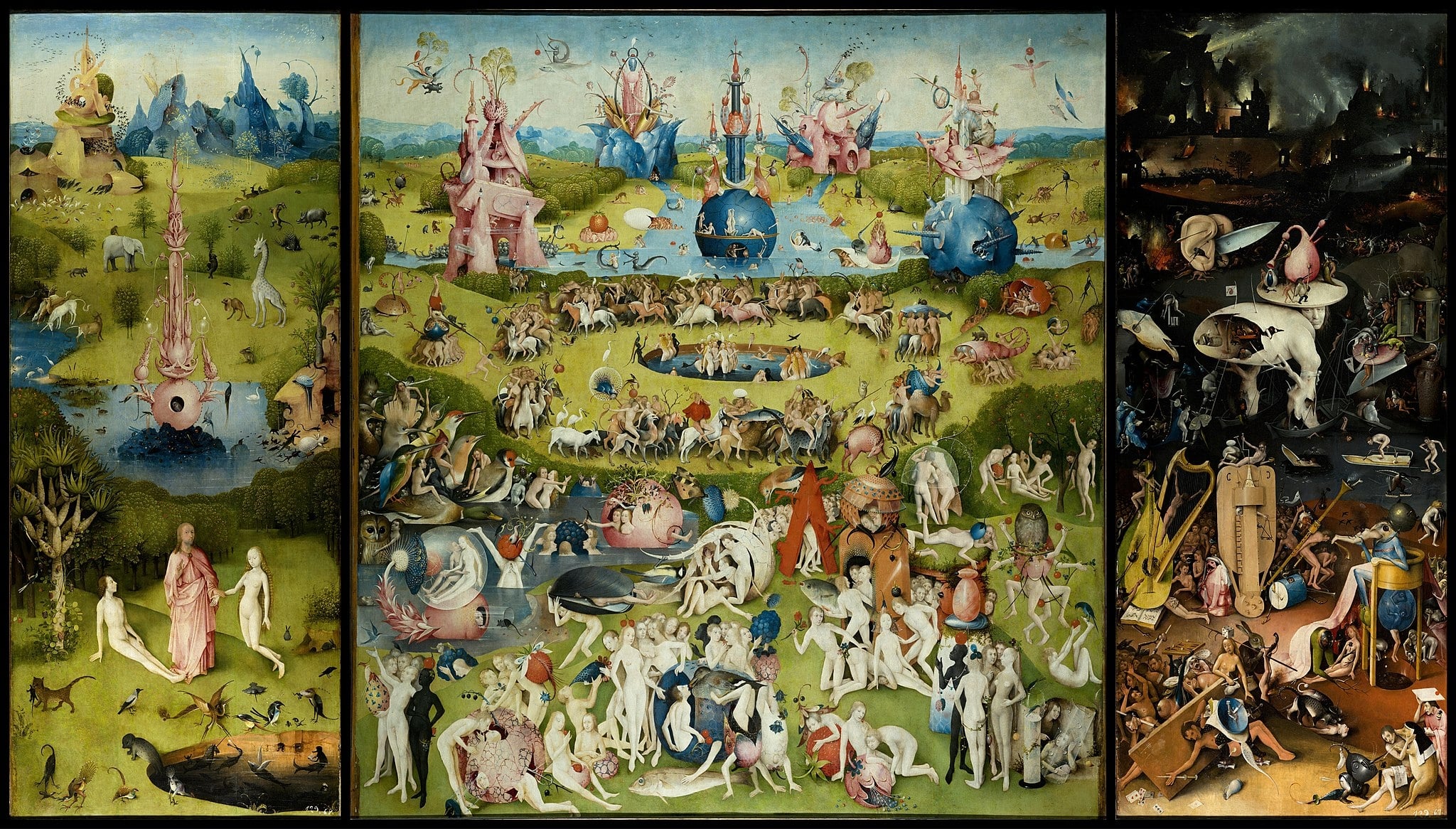
The Garden of Earthly Delights
Hieronymus Bosch (c.1490–1500)
The Garden of Earthly Delights unfolds a three‑act moral narrative—<strong>innocence</strong>, <strong>seduction</strong>, and <strong>retribution</strong>—from Eden to a punitive <strong>Musical Hell</strong>. Bosch binds the scenes through recurring emblems (notably the <strong>owl</strong>) and by echoing Eden’s crystalline fountain in the center’s fragile, candy‑colored architectures, then in Hell’s broken bodies and instruments. The work dazzles with invention while insisting that <strong>sweet, ephemeral pleasures</strong> end in ruin <sup>[1]</sup>.
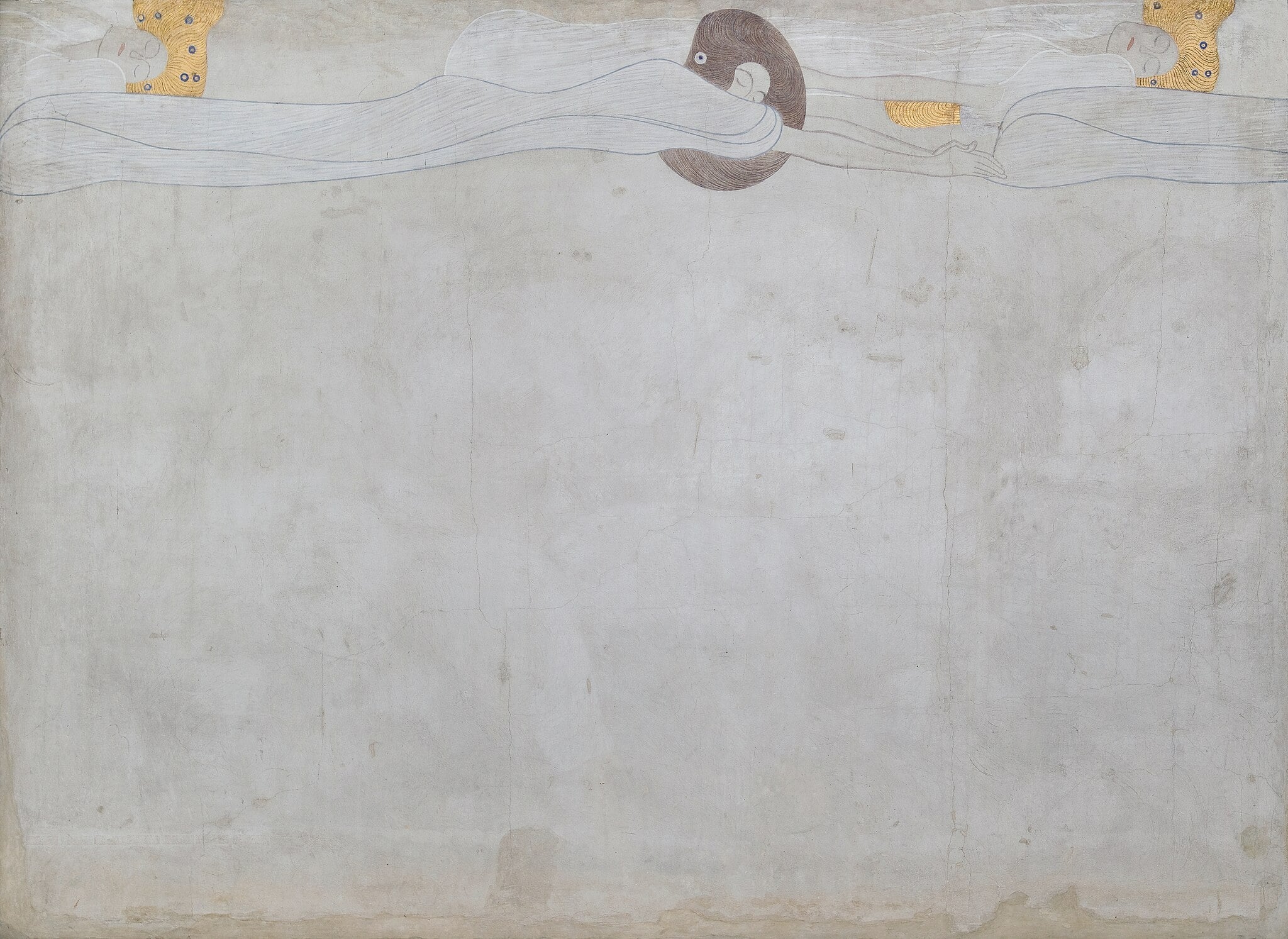
Beethoven Frieze
Gustav Klimt (1901–1902)
Gustav Klimt’s Beethoven Frieze visualizes Beethoven’s Ninth as a <strong>quest from suffering to joy</strong>, using weightless, ribbon-like bodies and <strong>gold-gleaming ornament</strong> to translate sound into sight. In the panel shown, floating genii drift horizontally while <strong>islands of gold studded with eye-like jewels</strong> punctuate a vast, chalky void, suspending time like a long musical rest. The work fuses <strong>line, flatness, and precious materials</strong> to promise transcendence through art <sup>[1]</sup><sup>[3]</sup>.
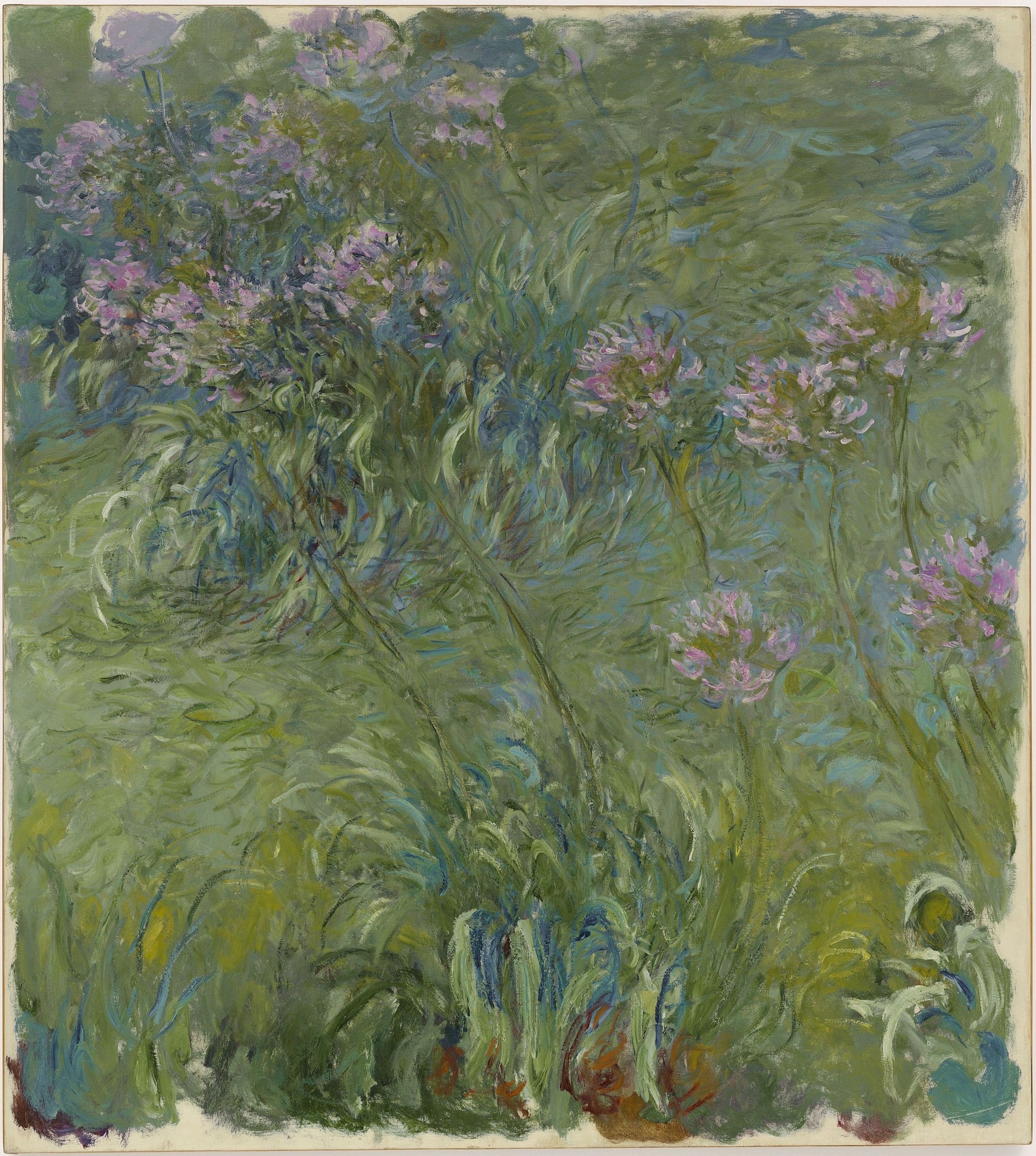
Agapanthus
Claude Monet (c. 1915–1926)
In Agapanthus, Claude Monet turns a close-cropped bed of lilies into a field of <strong>pure movement and light</strong>. Lilac blooms flicker against layered greens, their long, arcing stems written in <strong>calligraphic strokes</strong> that dissolve the line between plant and air.
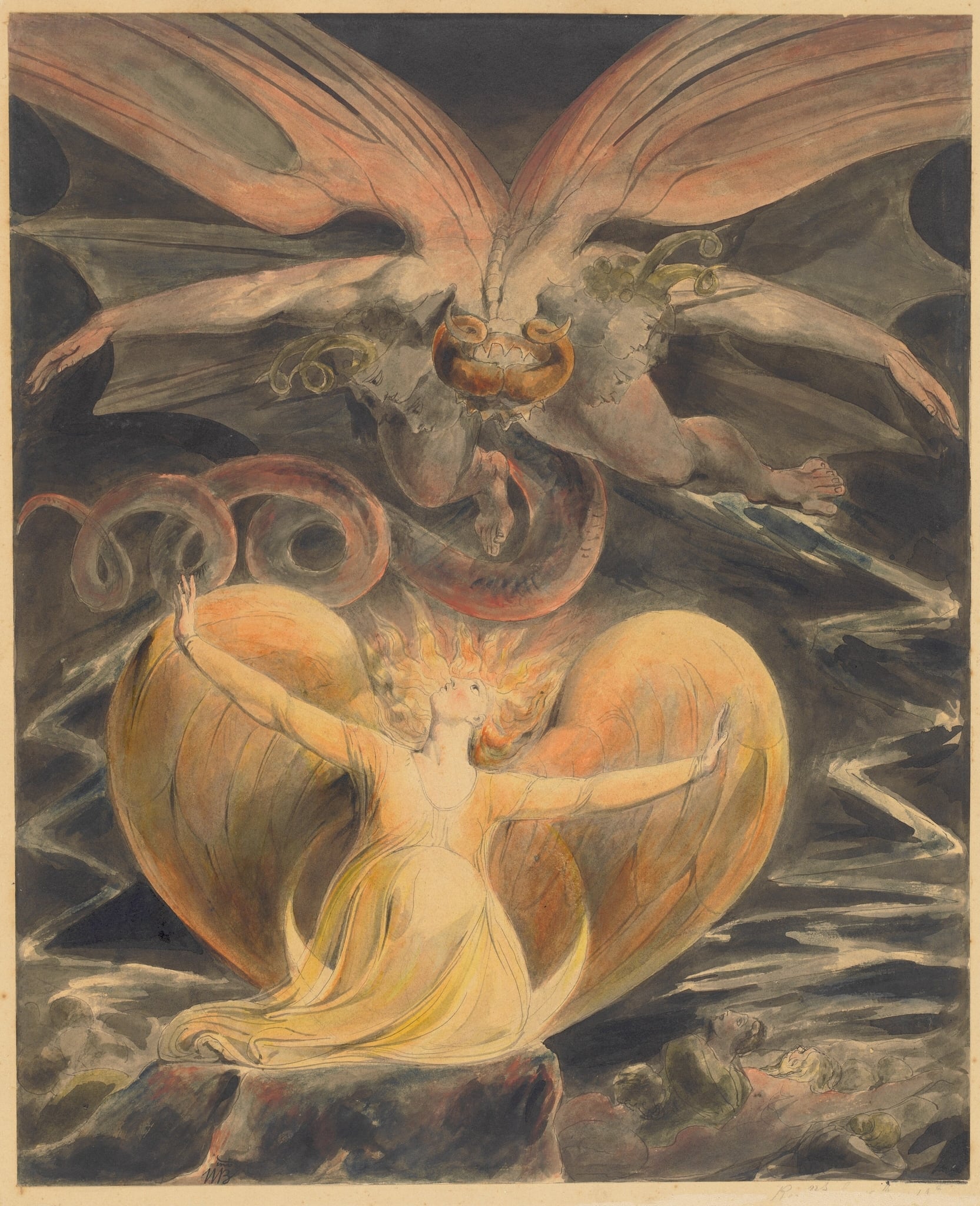
The Great Red Dragon and the Woman Clothed with the Sun
William Blake (c. 1805)
In The Great Red Dragon and the Woman Clothed with the Sun, William Blake pits <strong>radiant innocence</strong> against <strong>predatory tyranny</strong>. A bat‑winged dragon with ramlike horns plunges from a stormed sky as the woman, haloed in light with great golden, heart‑shaped wings, lifts open palms to meet the assault. Blake’s high‑contrast watercolor turns the tableau into a visionary contest of <strong>light versus darkness</strong> <sup>[1]</sup>.
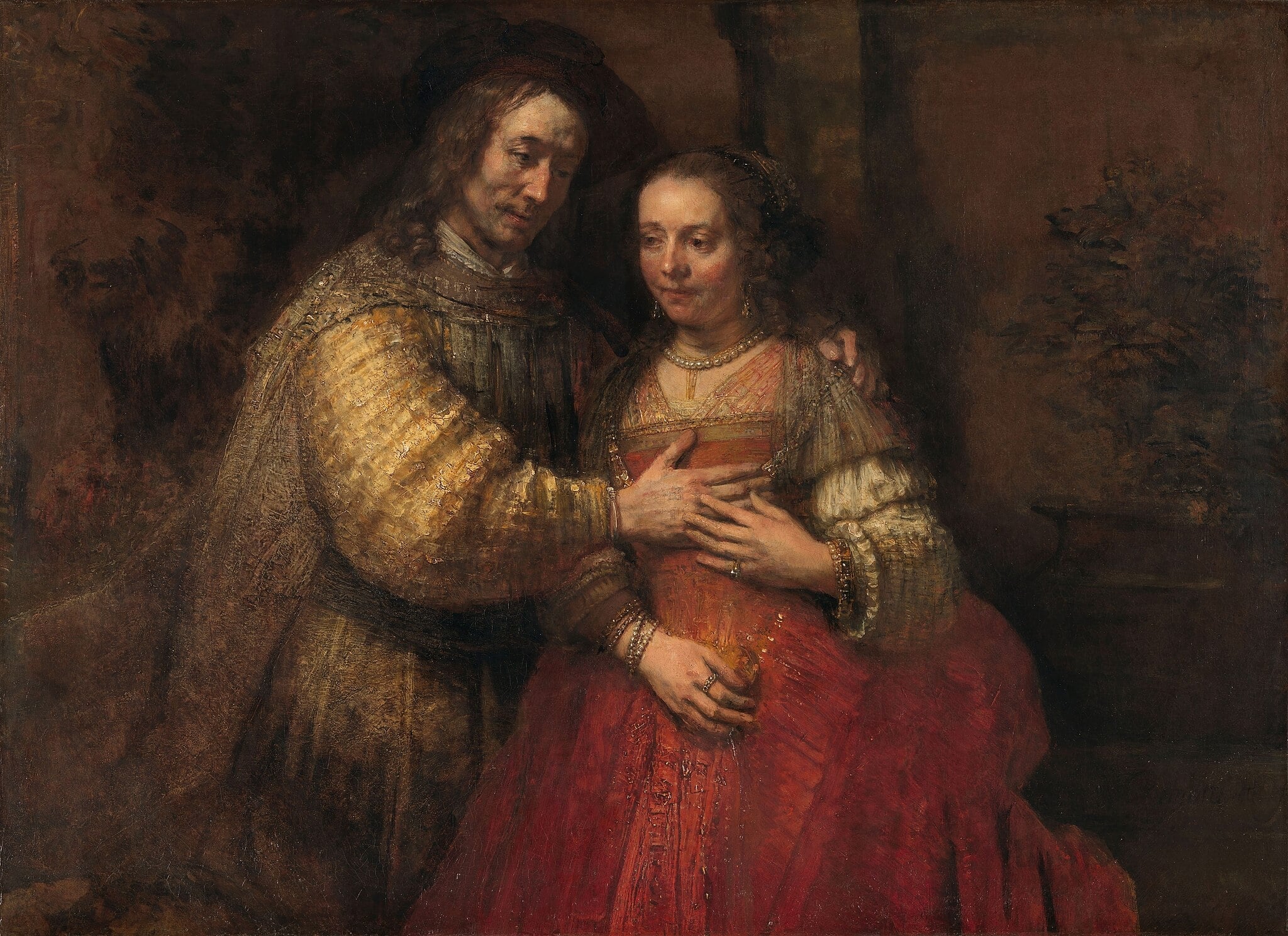
The Jewish Bride
Rembrandt van Rijn (c. 1665–1669)
The Jewish Bride by Rembrandt van Rijn stages an intimate covenant: two figures, read today as <strong>Isaac and Rebecca</strong>, seal their union through touch rather than spectacle. Light concentrates on faces and hands, while the man’s glittering <strong>gold sleeve</strong> and the woman’s <strong>coral-red gown</strong> turn paint itself into a metaphor for fidelity and tenderness <sup>[1]</sup><sup>[3]</sup>. This late masterpiece embodies Rembrandt’s <strong>material eloquence</strong>—impasto as feeling—within a hushed, dark setting <sup>[1]</sup><sup>[2]</sup>.
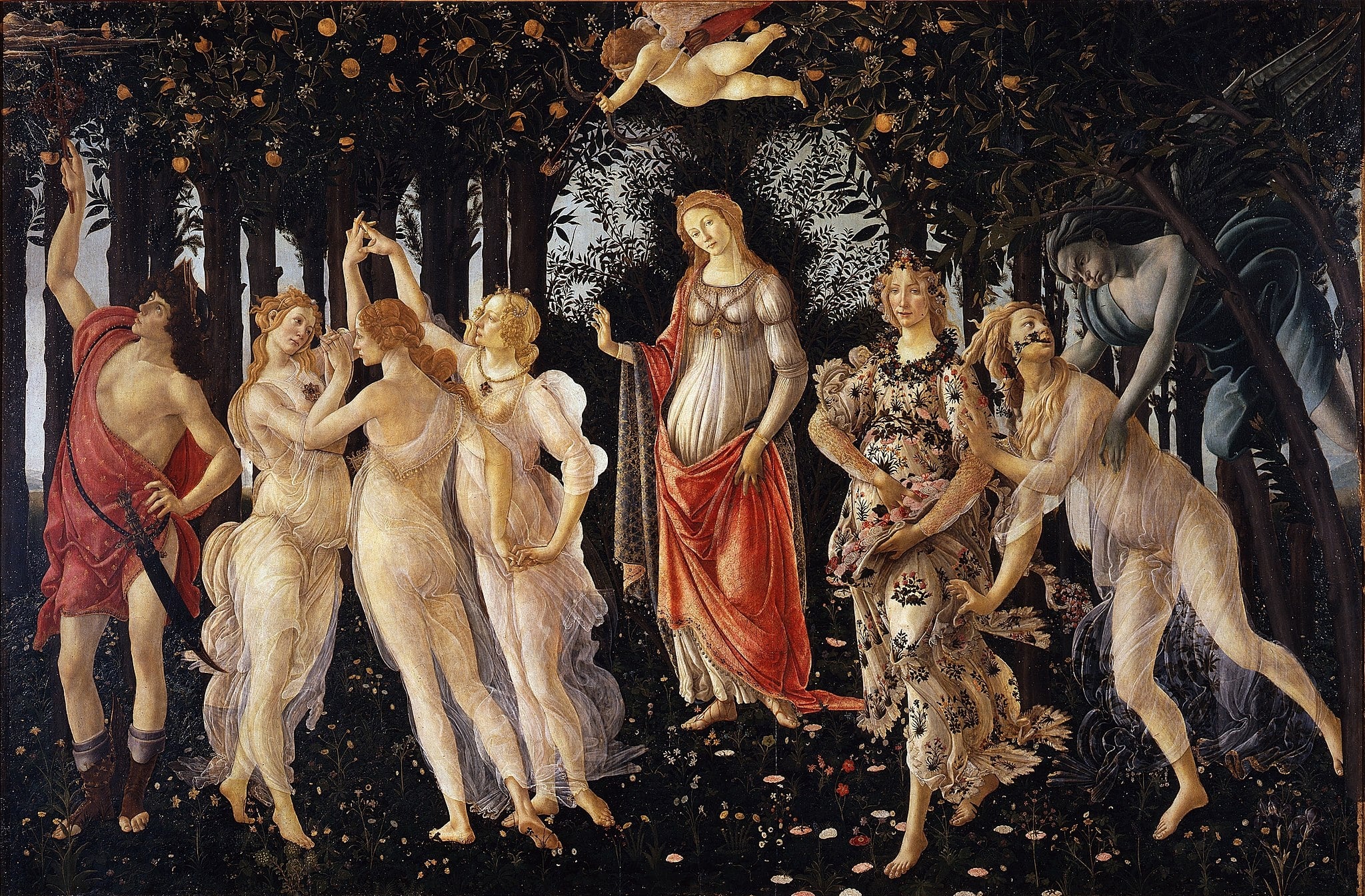
Primavera
Sandro Botticelli (c. 1480 (1477–1482))
Primavera stages a mythic procession of <strong>Spring</strong> in an orange and laurel grove: <strong>Venus</strong> presides beneath a myrtle canopy as <strong>Cupid</strong> looses an arrow, <strong>Mercury</strong> clears the last clouds, the <strong>Three Graces</strong> dance, and <strong>Zephyrus</strong> pursues <strong>Chloris</strong>, who blossoms into <strong>Flora</strong>. The carpet of more than a hundred identifiable flowers and the Medici-laden orchard declare <strong>fertility, peace, and ordered prosperity</strong> under Venus’s benign rule <sup>[1]</sup><sup>[2]</sup>.
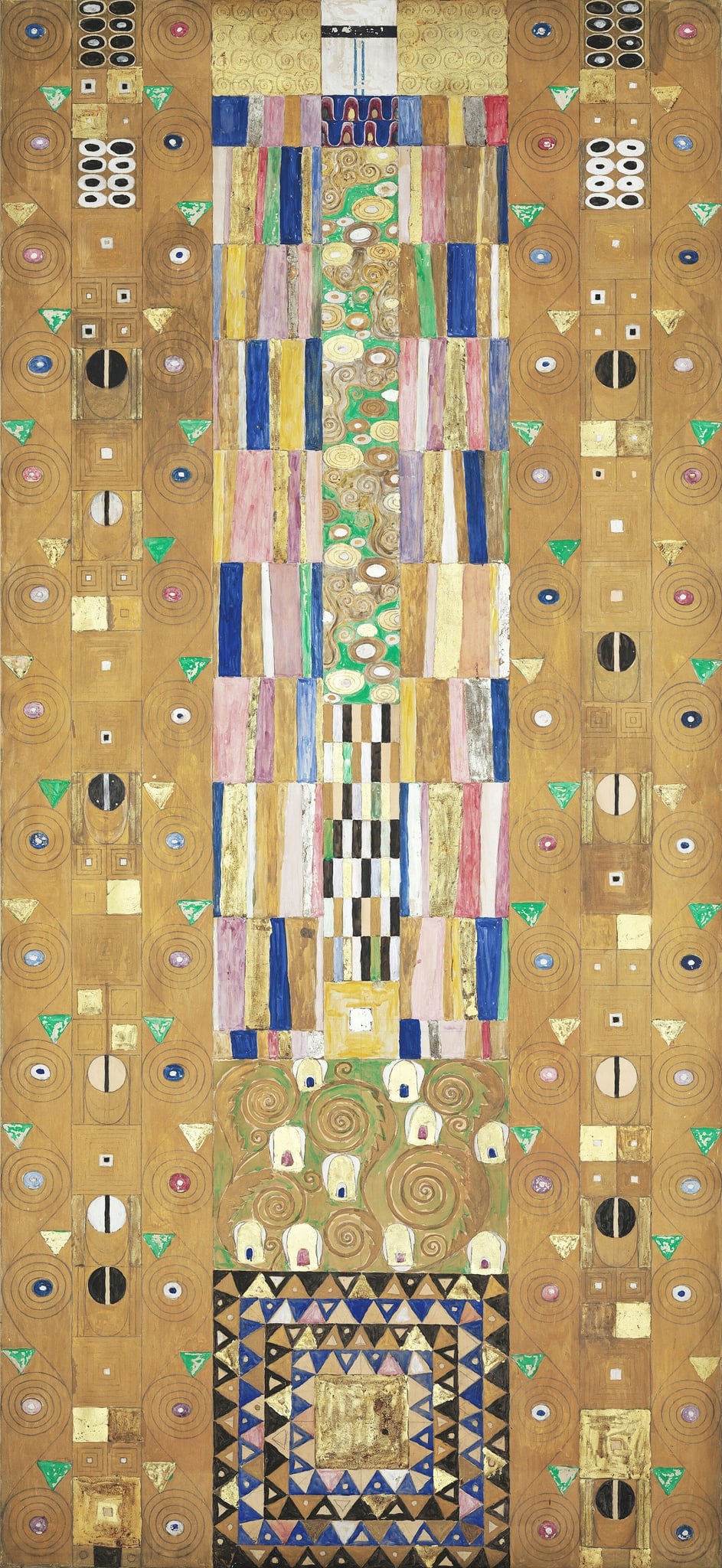
Knight (Part 9)
Gustav Klimt (1910–1911)
Klimt’s Knight (Part 9) turns chivalry into a <strong>geometric icon</strong>: a vertical standard of stacked bars and checks flanked by <strong>ranks of circles and triangles</strong> that read as shields and studs. Set on a <strong>golden ground</strong> and crowned and undergirded by ornamental zones, it proclaims vigilance and ethical guardianship between the frieze’s figural scenes. <sup>[1]</sup>