Metamorphosis & transformation
Featured Artworks
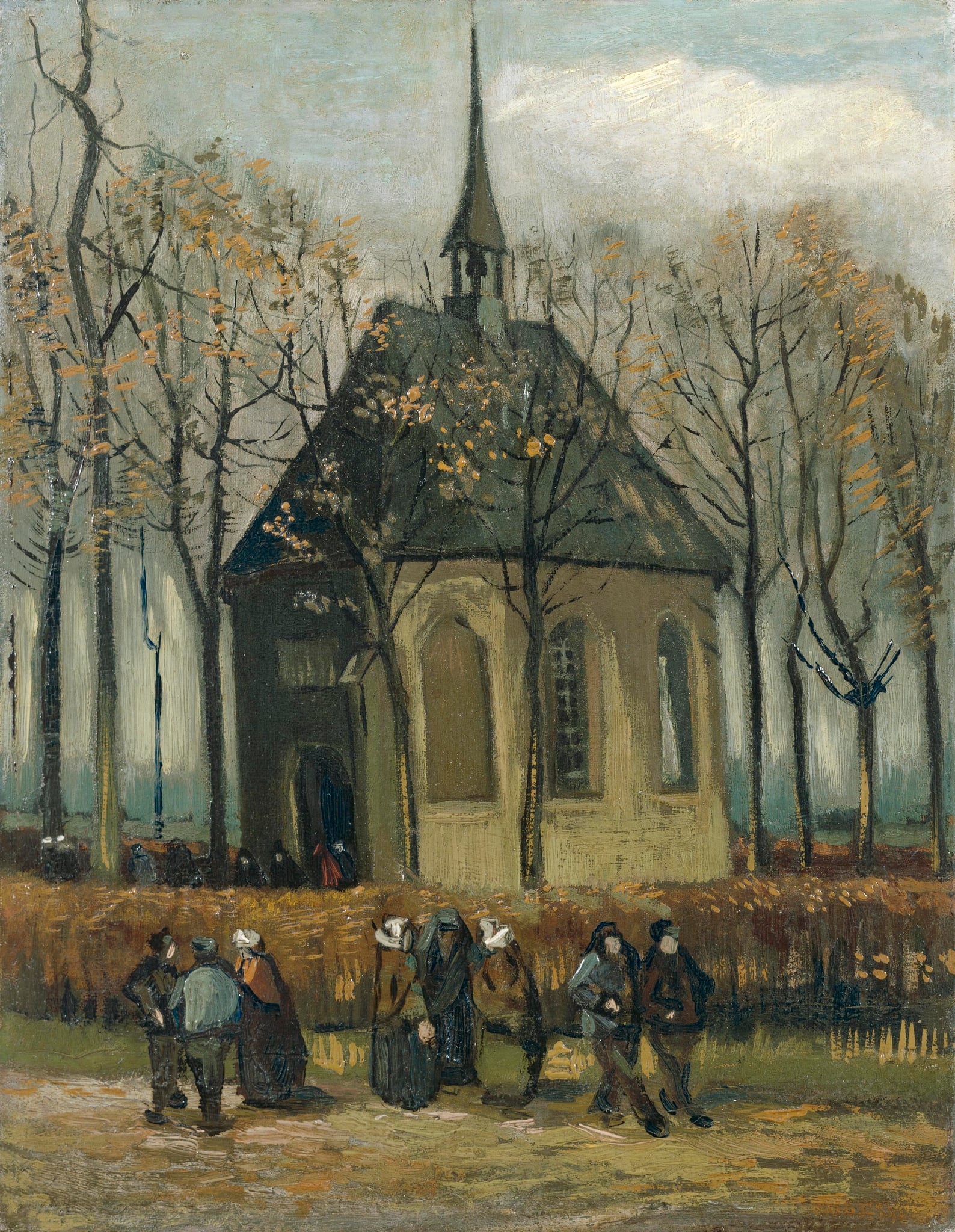
Congregation Leaving the Reformed Church in Nuenen
Vincent van Gogh (1884; reworked 1885)
Vincent van Gogh’s Congregation Leaving the Reformed Church in Nuenen turns a modest village service into a meditation on <strong>mourning</strong>, <strong>community</strong>, and <strong>thresholds</strong>. The low steeple, clipped hedge, and bundled figures in black shawls and white caps file past autumn-tinted, near-bare trees, shifting the scene from ordinary Sunday ritual to public grief. Painted in 1884 and <strong>reworked in 1885</strong> with the congregation and ocher leaves, the canvas folds private loss into rural Protestant life <sup>[1]</sup><sup>[2]</sup><sup>[3]</sup>.
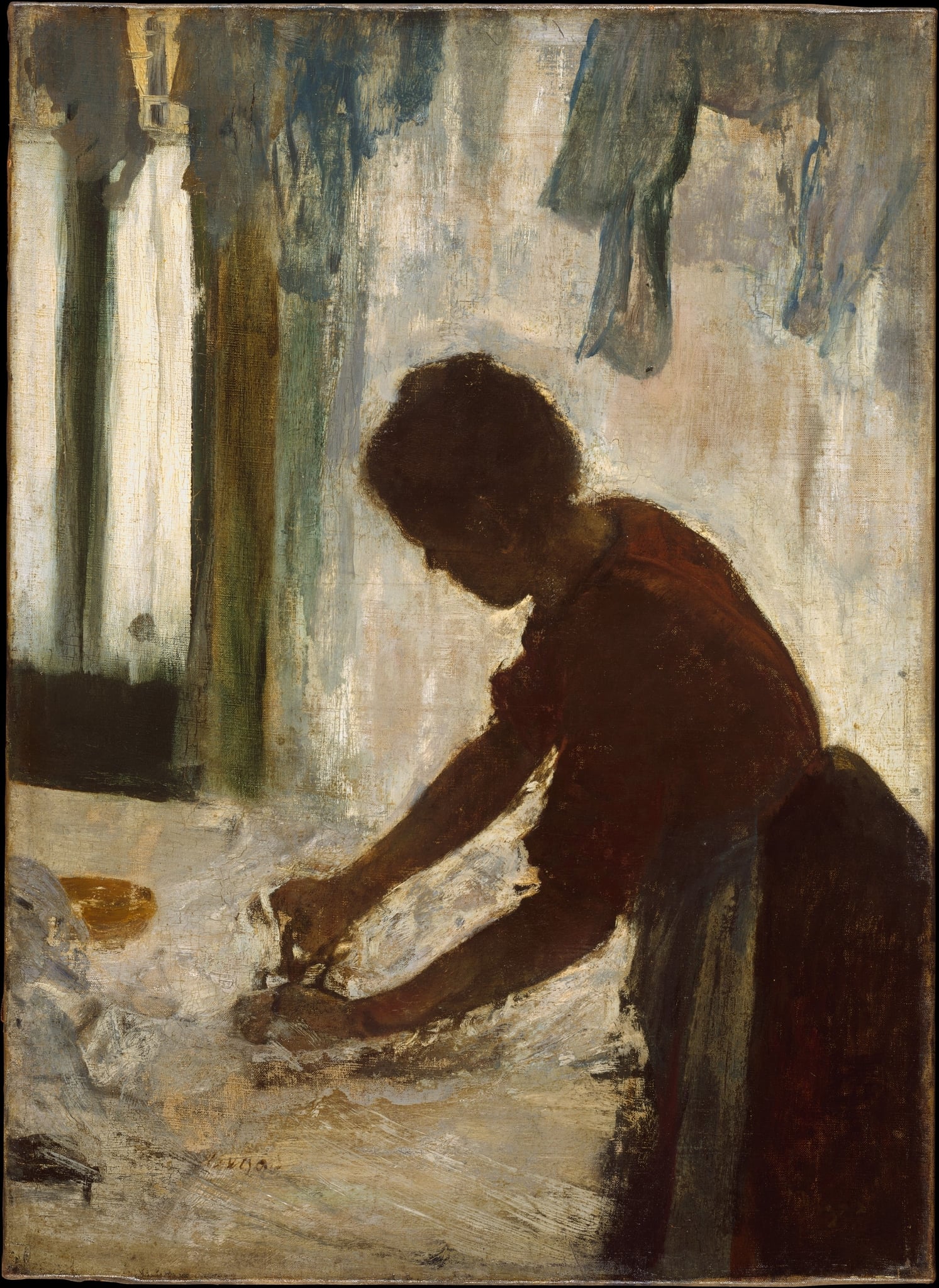
Woman Ironing
Edgar Degas (c. 1876–1887)
In Woman Ironing, Degas builds a modern icon of labor through <strong>contre‑jour</strong> light and a forceful diagonal from shoulder to iron. The worker’s silhouette, red-brown dress, and the cool, steamy whites around her turn repetition into <strong>ritualized transformation</strong>—wrinkled cloth to crisp order <sup>[1]</sup><sup>[2]</sup>.
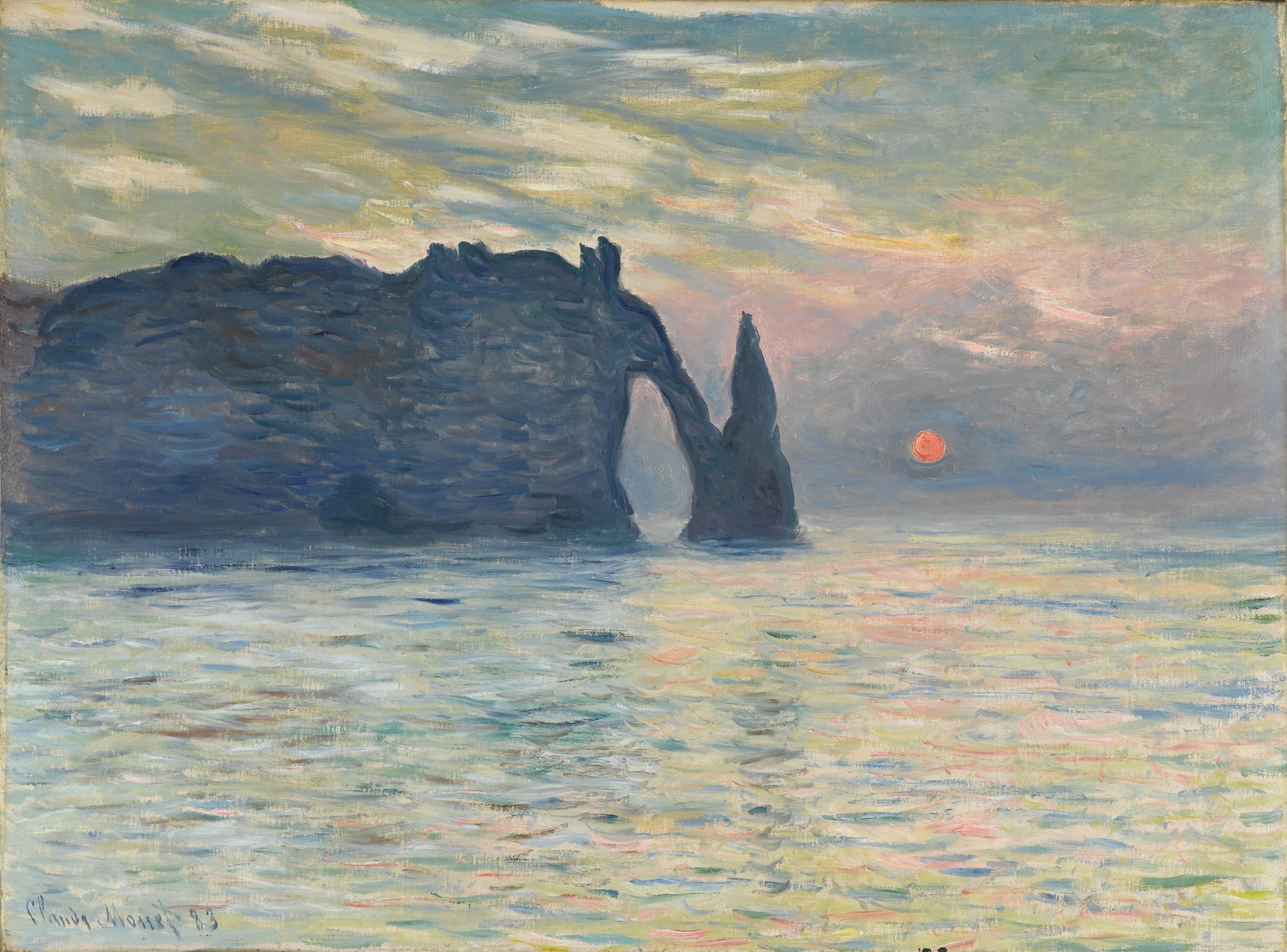
The Cliff, Etretat
Claude Monet (1882–1883)
<strong>The Cliff, Etretat</strong> stages a confrontation between <strong>permanence and flux</strong>: the dark mass of the arch and needle holds like a monument while ripples of coral, green, and blue light skate across the water. The low <strong>solar disk</strong> fixes the instant, and Monet’s fractured strokes make the sea and sky feel like time itself turning toward dusk. The arch reads as a <strong>threshold</strong>—an opening to the unknown that organizes vision and meaning <sup>[1]</sup><sup>[2]</sup>.
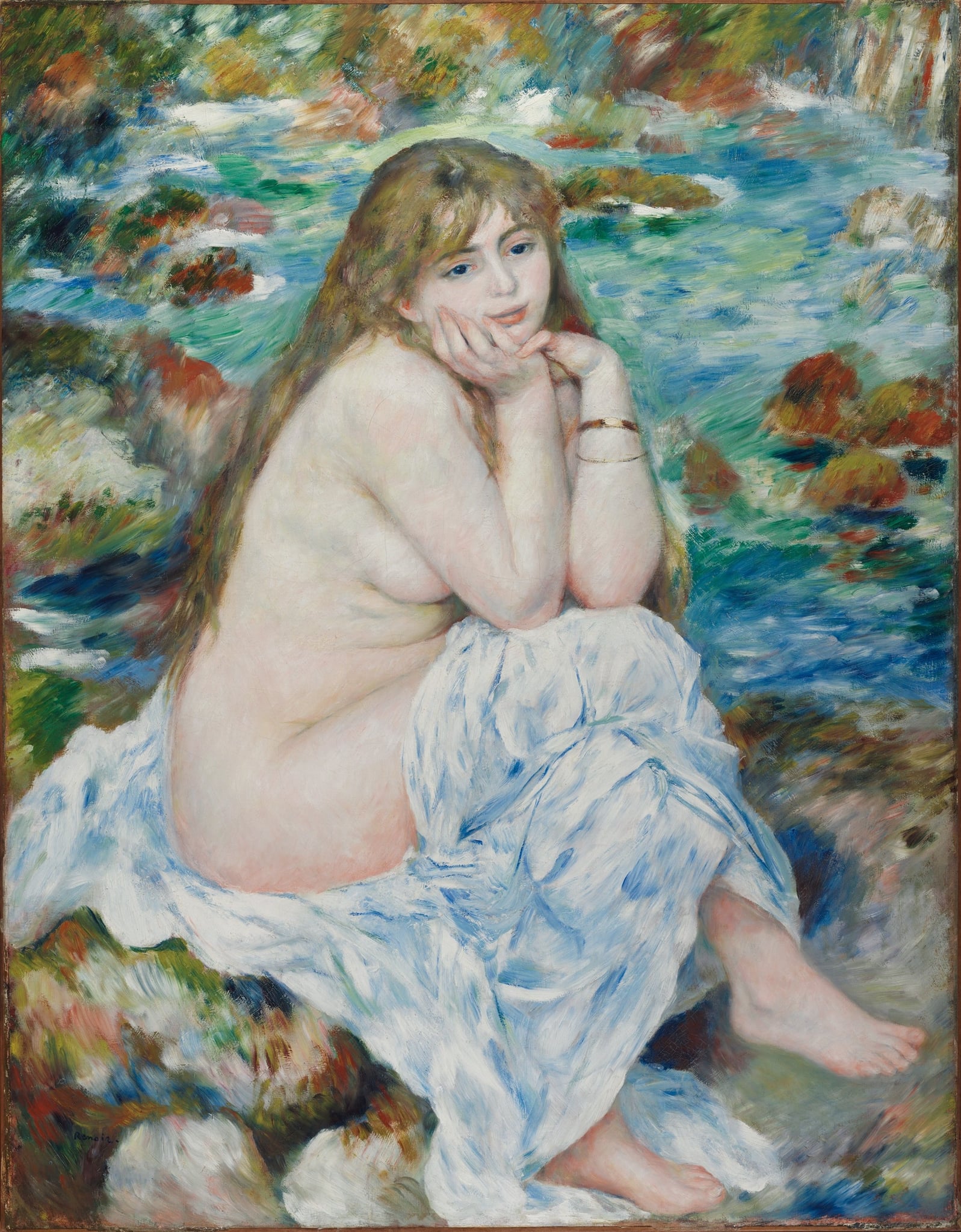
Seated Bather
Pierre-Auguste Renoir
Renoir’s Seated Bather stages a quiet pause between bathing and reverie, fusing the model’s pearly flesh with the flicker of stream and stone. The white drapery pooled around her hips and the soft, frontal gaze convert a simple toilette into a <strong>modern Arcadia</strong> where body and landscape dissolve into light. In this late-Impressionist idiom, Renoir refines the nude as a <strong>timeless ideal</strong> felt through color and touch <sup>[1]</sup><sup>[2]</sup>.
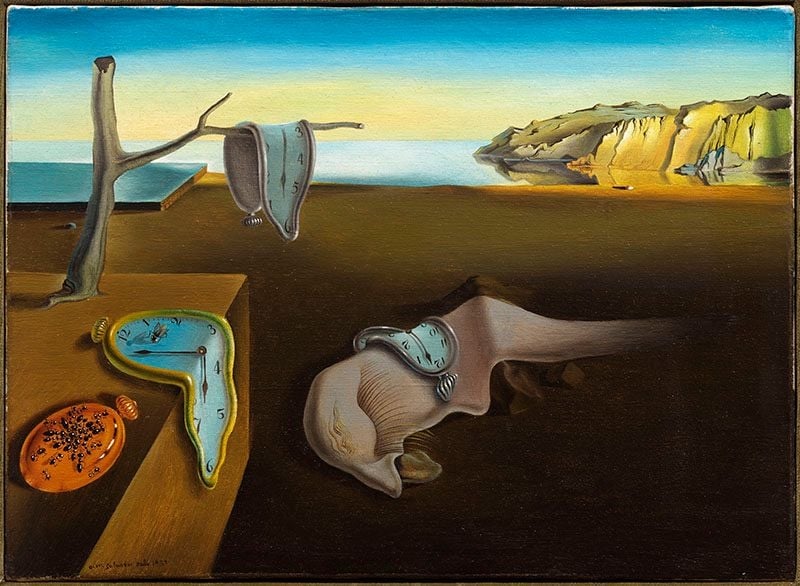
The Persistence of Memory
Salvador Dali (1931)
Salvador Dali’s The Persistence of Memory turns clock time into <strong>soft, malleable matter</strong>, staging a dream in which chronology buckles and the self dissolves. Four pocket watches droop across a barren platform, a dead branch, and a lash‑eyed biomorph, while ants overrun a hard, closed watch—a sign of <strong>decay</strong> and the futility of mechanical order <sup>[1]</sup><sup>[2]</sup>.
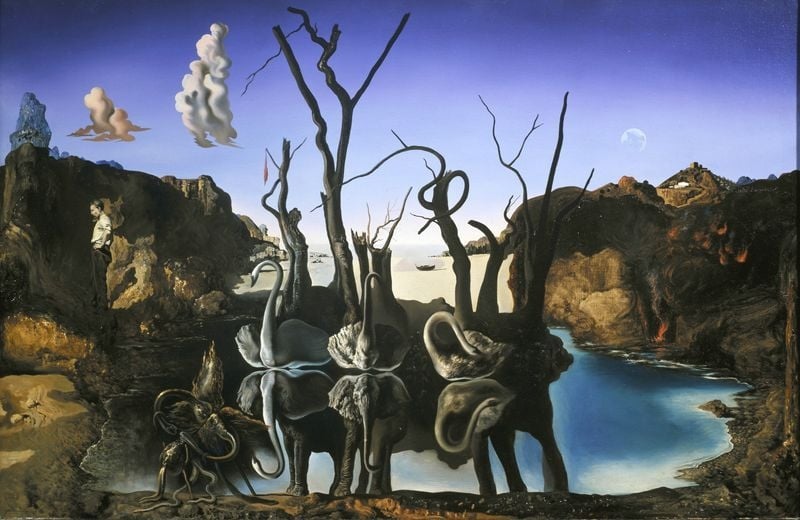
Swans Reflecting Elephants
Salvador Dali (1937)
Swans Reflecting Elephants stages a calm Catalan lagoon where three swans and a thicket of bare trees flip into monumental <strong>elephants</strong> in the mirror of water. Salvador Dali crystallizes his <strong>paranoiac-critical</strong> method: a meticulously painted illusion that makes perception generate its own doubles <sup>[1]</sup><sup>[2]</sup>. The work locks grace to gravity, surface to depth, turning the lake into a theater of <strong>metamorphosis</strong>.
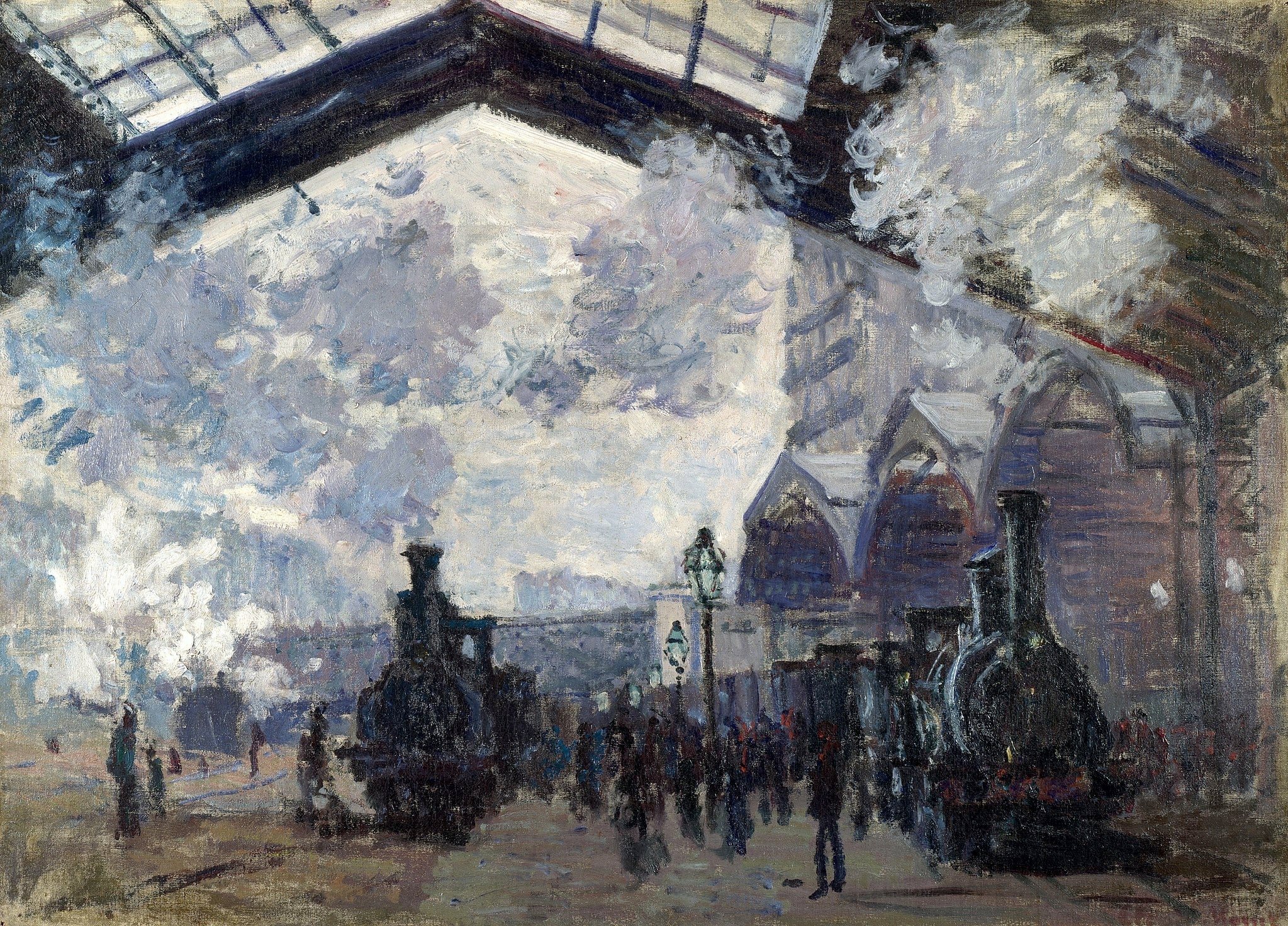
The Gare St-Lazare
Claude Monet (1877)
The Gare St-Lazare turns a bustling rail hub into a theater of <strong>light, steam, and speed</strong>. Under a nave-like iron-and-glass canopy, two dark locomotives loom as crowds and gas lamps dissolve into <strong>atmosphere</strong>, translating industry into sensation <sup>[1]</sup>.
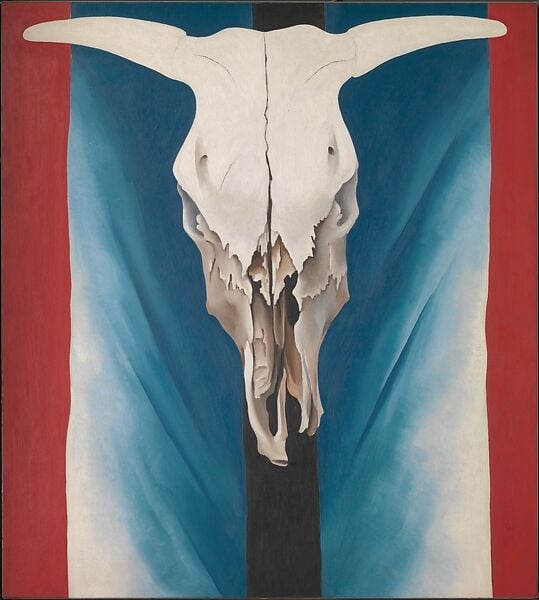
Cow’s Skull: Red, White, and Blue
Georgia O’Keeffe (1931)
Georgia O’Keeffe’s Cow’s Skull: Red, White, and Blue (1931) turns a sun‑bleached bovine skull into a <strong>modern American emblem</strong>, set against a tricolor field that quietly evokes the flag. The skull’s chalky surface becomes the composition’s <strong>white</strong>, framed by red side bands and a folded blue ground cleaved by a dark vertical bar, asserting <strong>resilience</strong> rather than morbidity <sup>[1]</sup><sup>[2]</sup>.
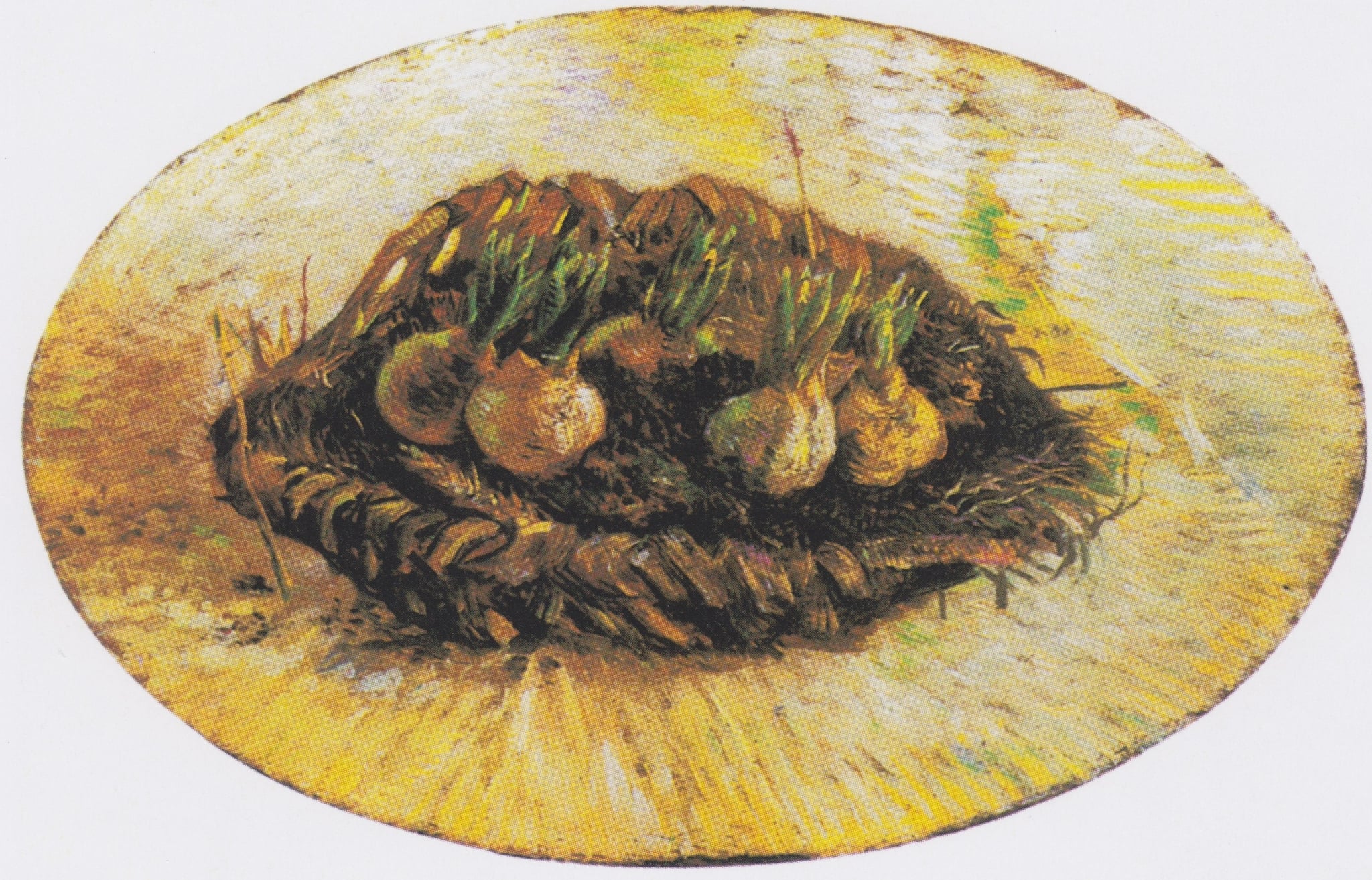
Basket of Hyacinth Bulbs
Vincent van Gogh (1887 (January–February))
<strong>Basket of Hyacinth Bulbs</strong> turns a modest basket of soil‑caked bulbs into a scene of <strong>latent vitality</strong>, painted in warm ochres and radiant yellows that encircle the motif like light. On an <strong>oval wooden panel</strong>, short, tactile strokes press the weave of the basket and the papery skins while green shoots puncture the dark soil, declaring life on the verge of emergence <sup>[1]</sup><sup>[2]</sup>.
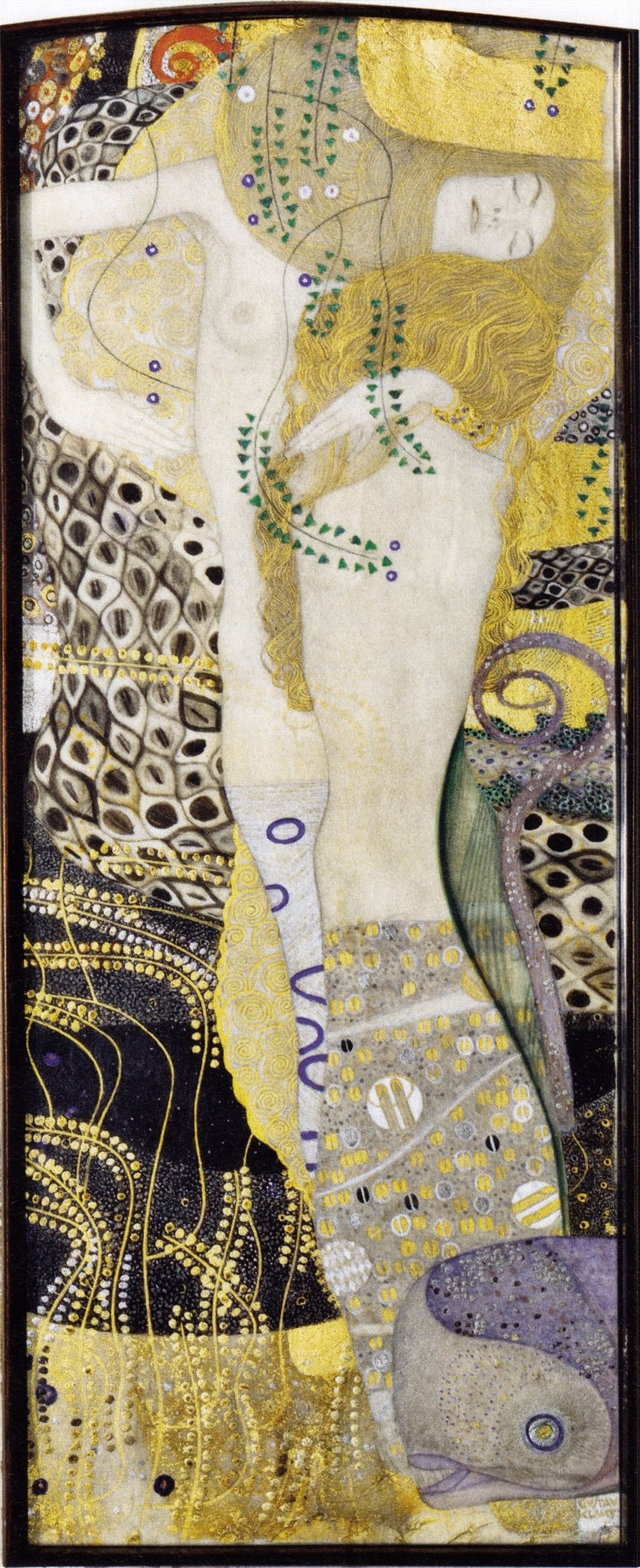
Girlfriends (Water Serpents I)
Gustav Klimt (1904; last revisions by 1907)
Gustav Klimt’s Girlfriends (Water Serpents I) stages two elongated nudes drifting in a jeweled, underwater field where bodies and ornament fuse into a single, <strong>luminous</strong> surface. Closed eyes, interlaced arms, and hair that streams like <strong>currents</strong> seal the scene in intimate secrecy, while metallic scales, eye-shaped ovals, and a watchful fish charge the water with <strong>erotic</strong> and <strong>mythic</strong> tension <sup>[1]</sup><sup>[2]</sup><sup>[3]</sup>.
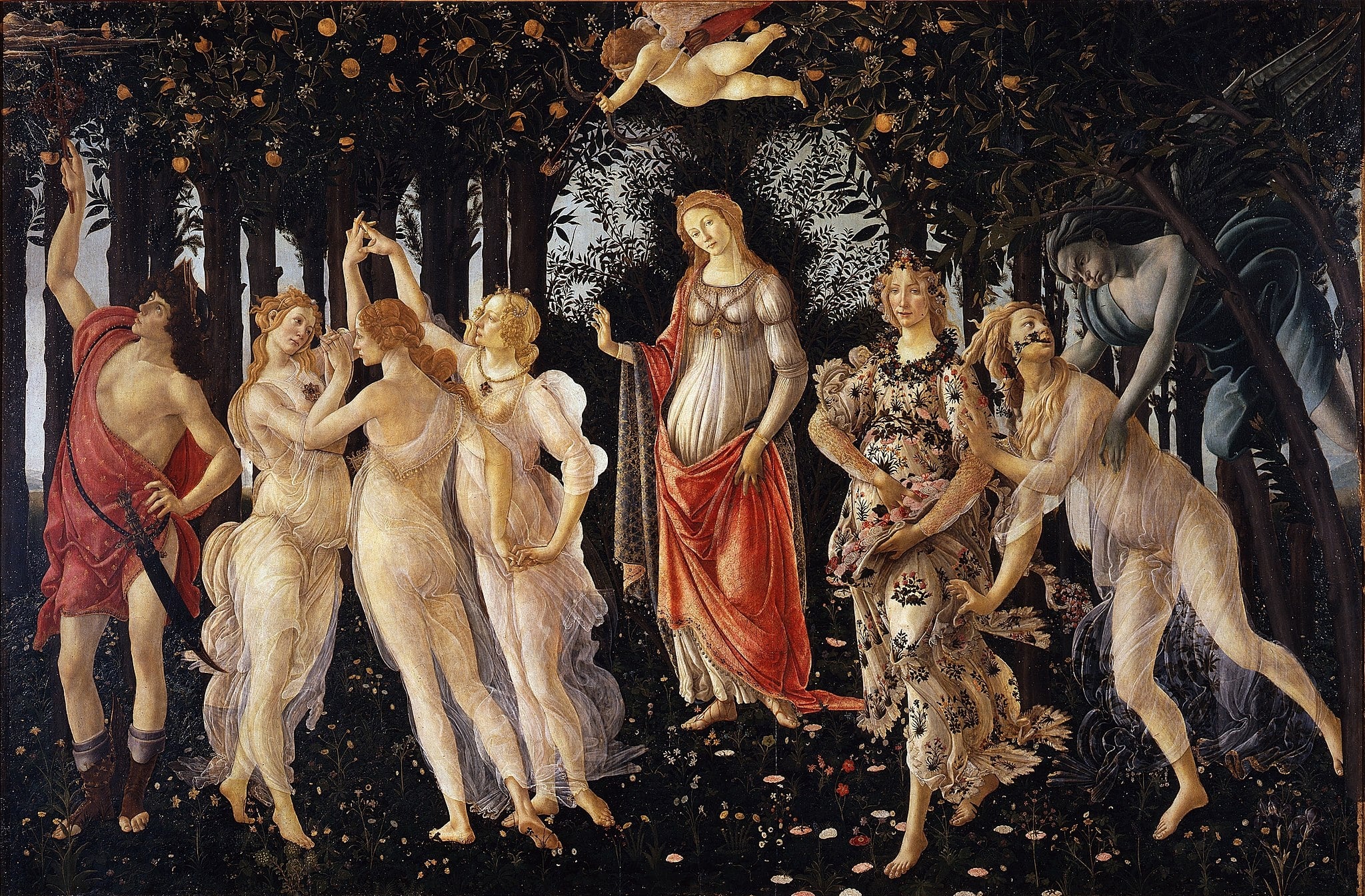
Primavera
Sandro Botticelli (c. 1480 (1477–1482))
Primavera stages a mythic procession of <strong>Spring</strong> in an orange and laurel grove: <strong>Venus</strong> presides beneath a myrtle canopy as <strong>Cupid</strong> looses an arrow, <strong>Mercury</strong> clears the last clouds, the <strong>Three Graces</strong> dance, and <strong>Zephyrus</strong> pursues <strong>Chloris</strong>, who blossoms into <strong>Flora</strong>. The carpet of more than a hundred identifiable flowers and the Medici-laden orchard declare <strong>fertility, peace, and ordered prosperity</strong> under Venus’s benign rule <sup>[1]</sup><sup>[2]</sup>.
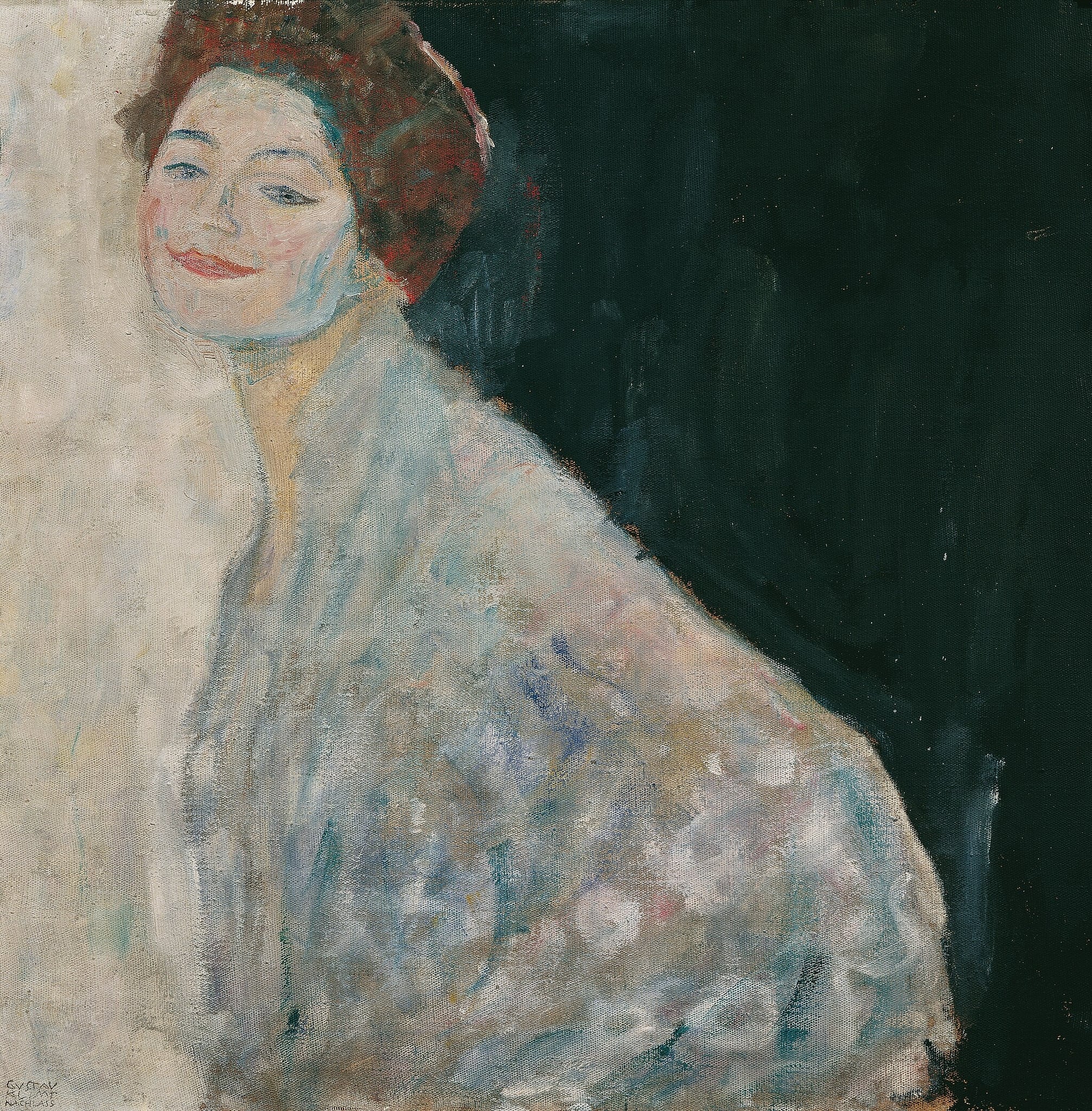
Lady in White
Gustav Klimt (1917–1918)
Lady in White crystallizes Klimt’s late style as a <strong>liminal apparition</strong>: a woman who seems to form out of paint where a pale field meets a dark one. Her kimono‑like robe dissolves into <strong>iridescent whites</strong> touched by blues and violets, while a tilted, <strong>mask‑like smile</strong> hovers between intimacy and anonymity <sup>[1]</sup><sup>[2]</sup><sup>[3]</sup>. The result is less a likeness than a <strong>luminous state of being</strong> suspended on a threshold.
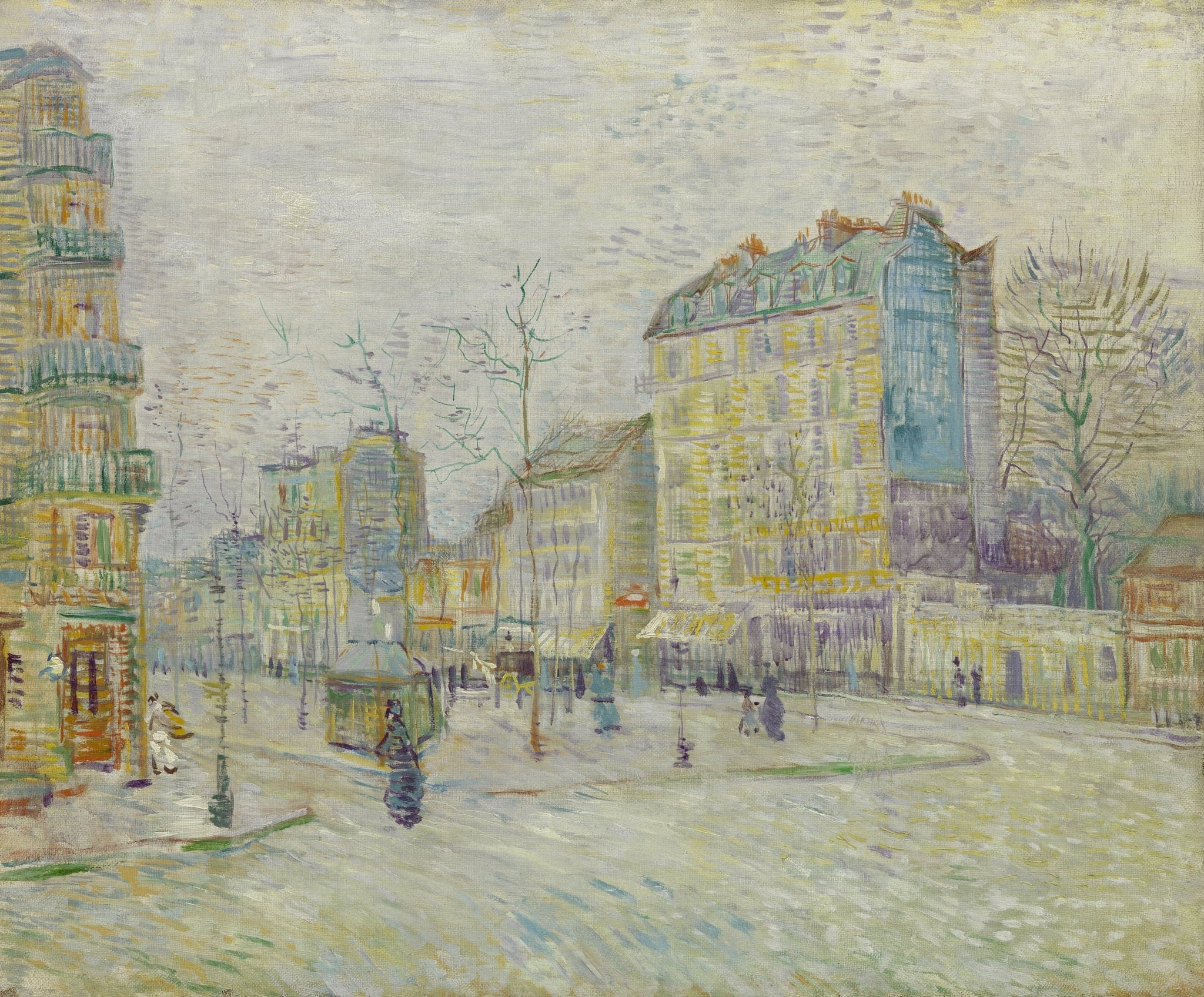
Boulevard de Clichy
Vincent van Gogh (1887)
Vincent van Gogh’s Boulevard de Clichy crystallizes a cool, wintry Paris into a <strong>vibrating field of light</strong> and motion. With leafless trees echoing lamp posts and façades stitched from lilac, blue, and sulfurous yellow strokes, the boulevard bends like a <strong>slow river of modernity</strong>. Tiny bundled figures drift across the cobbles, signaling the city’s <strong>anonymous flow</strong>.
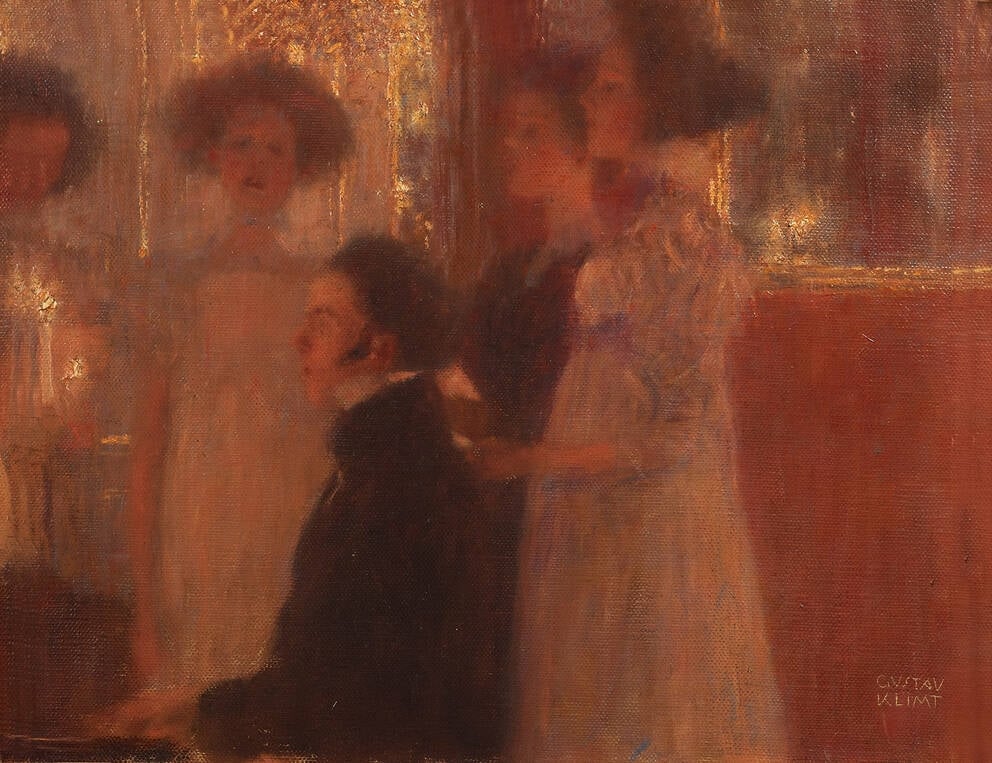
Schubert at the Piano. Design for the music room by Nikolaus Dumba
Gustav Klimt (1896)
Klimt’s 1896 oil study <strong>Schubert at the Piano. Design for the music room by Nikolaus Dumba</strong> turns a domestic recital into a glowing myth of listening. In dim, rosy-gold light, a dark-clad pianist is encircled by a soft choir of women whose blurred faces dissolve into the shimmer of the room. Klimt fuses contour and light so that sound seems to become <strong>radiance</strong>, anticipating his decorative modernism <sup>[1]</sup><sup>[2]</sup>.
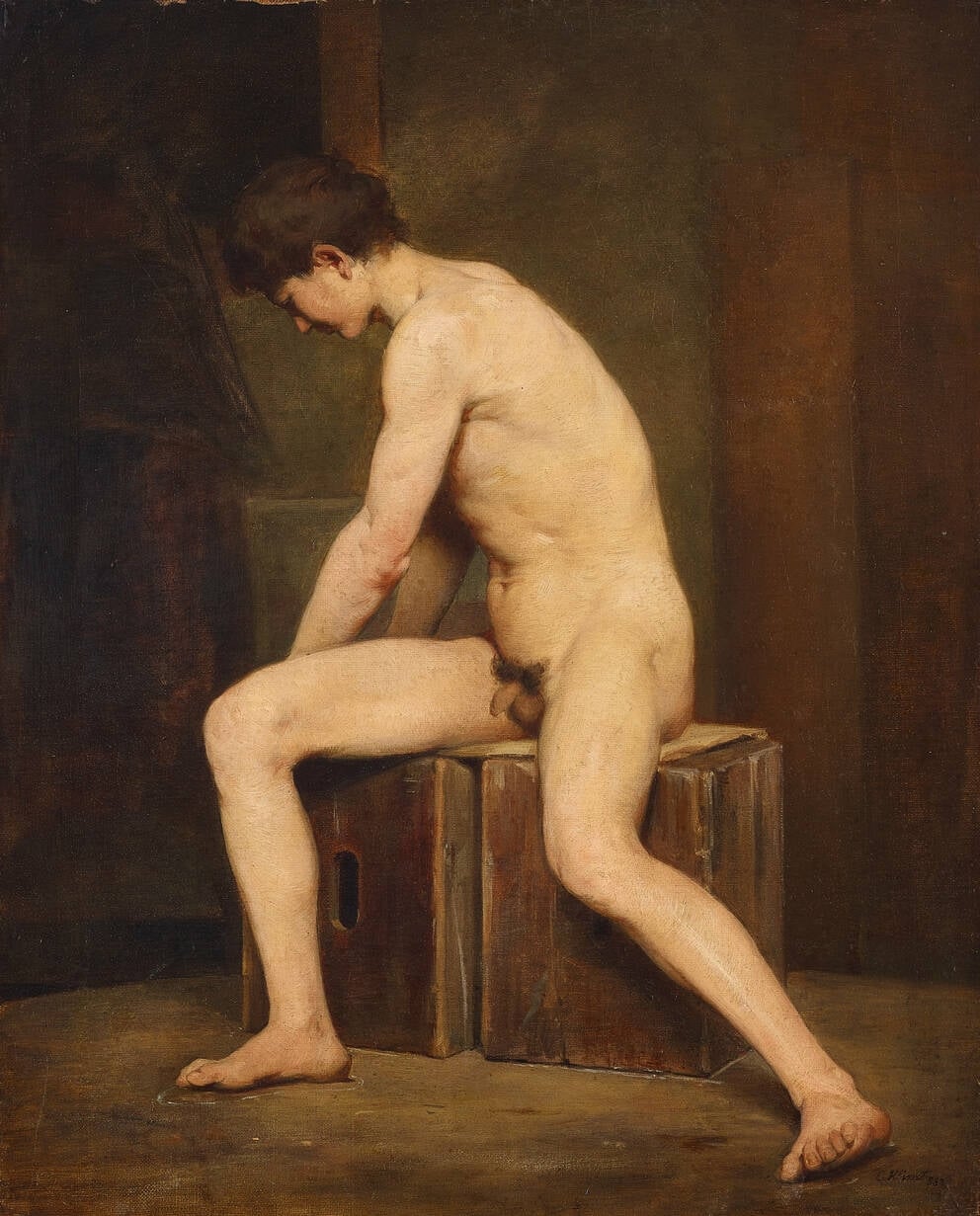
Sitting Nude Man Turned to the Left
Gustav Klimt (1883)
Painted in 1883, Sitting Nude Man Turned to the Left shows Klimt’s academic command of the male figure through a <strong>Naturalist/Realist</strong> approach. The model’s bowed head, splayed legs, and braced forearms form a taut <strong>triangular structure</strong> against rough wooden crates, where <strong>soft flesh meets hard geometry</strong> <sup>[1]</sup>. The restrained, earthy chiaroscuro isolates the body, turning a studio exercise into a quiet study of <strong>concentrated presence</strong>.
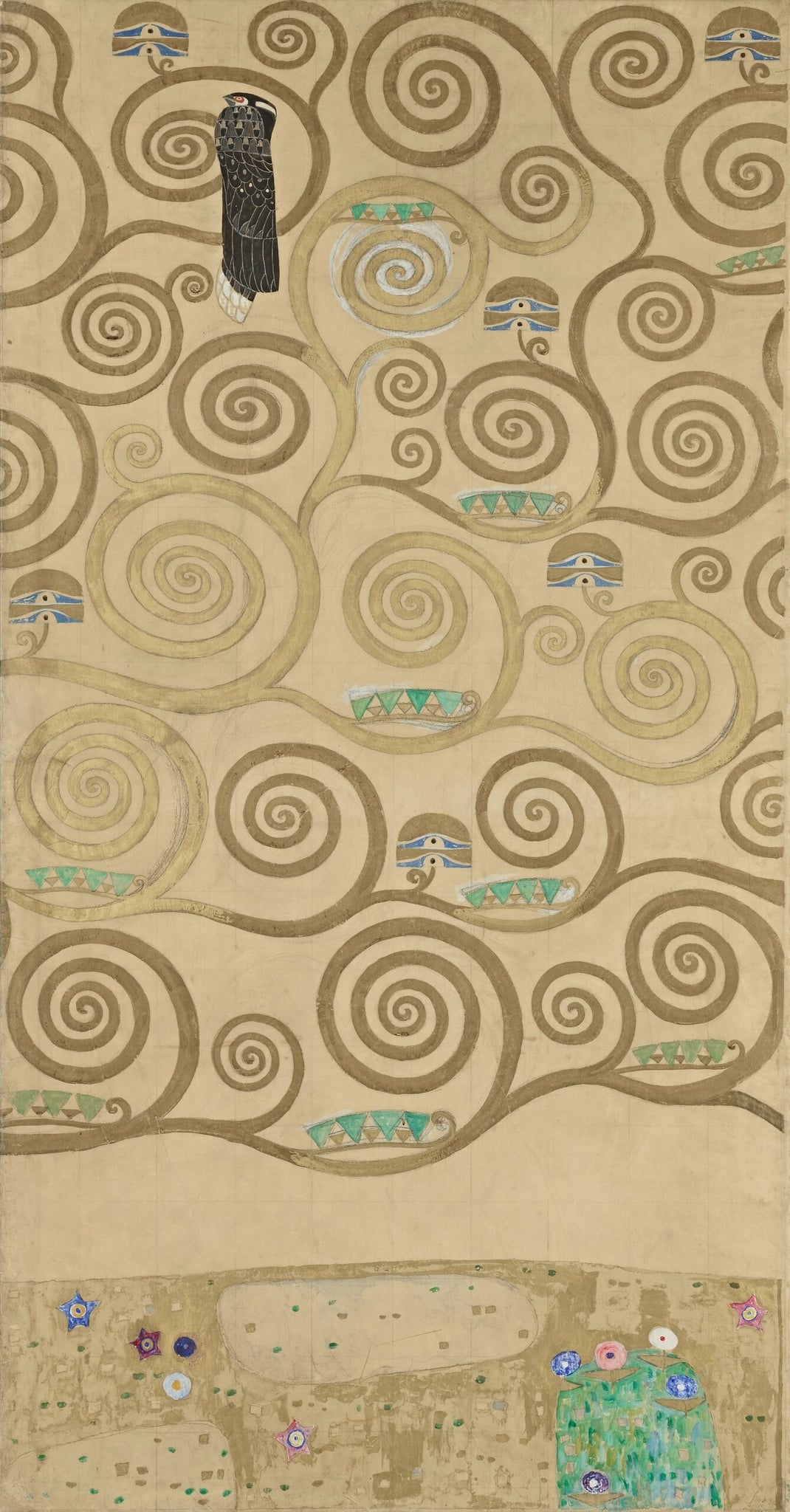
Part of the Tree of Life (Part 5)
Gustav Klimt (1910–1911)
In Part of the Tree of Life (Part 5), Gustav Klimt renders a cosmos of spiraling branches studded with <strong>Eyes of Horus</strong>, turquoise tesserae, and a solitary dark <strong>bird</strong>. The panel condenses themes of vigilance, renewal, and mortality into a decorative grammar that served as a full-scale working <strong>cartoon</strong> for the Stoclet dining-room mosaics—a key Secessionist <strong>Gesamtkunstwerk</strong> <sup>[1]</sup><sup>[2]</sup>.
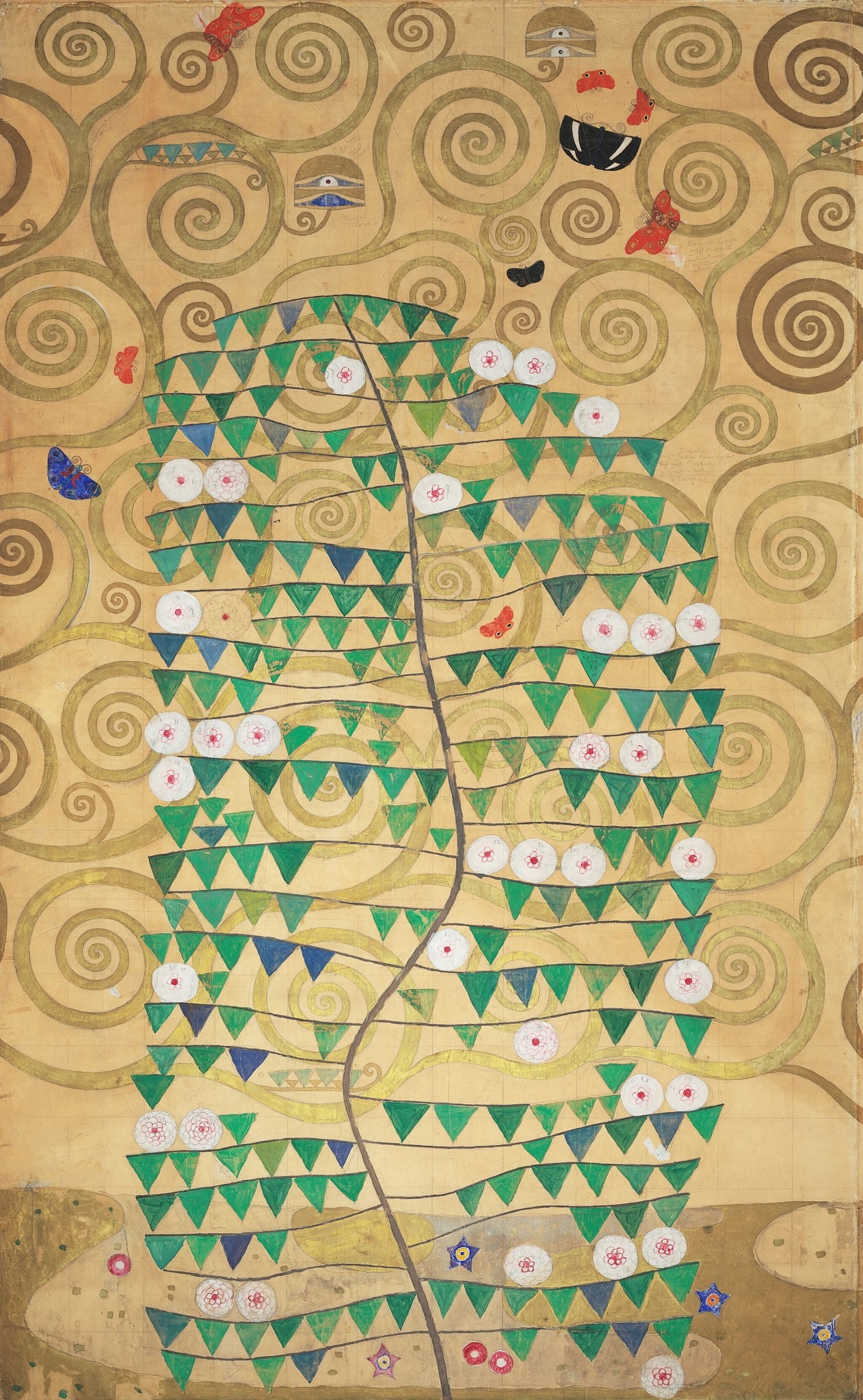
Rosebush (Part 6)
Gustav Klimt (1910/11)
In Rosebush (Part 6), a single, wavering stem climbs through a field of gold spirals while regimented green-and-blue triangular leaves and pale, jewel-like blossoms punctuate its path. Around it, vivid butterflies and star-flowers animate the surface. Klimt fuses nature and ornament into a <strong>precious</strong>, <strong>cyclical</strong> emblem of growth, metamorphosis, and renewal.
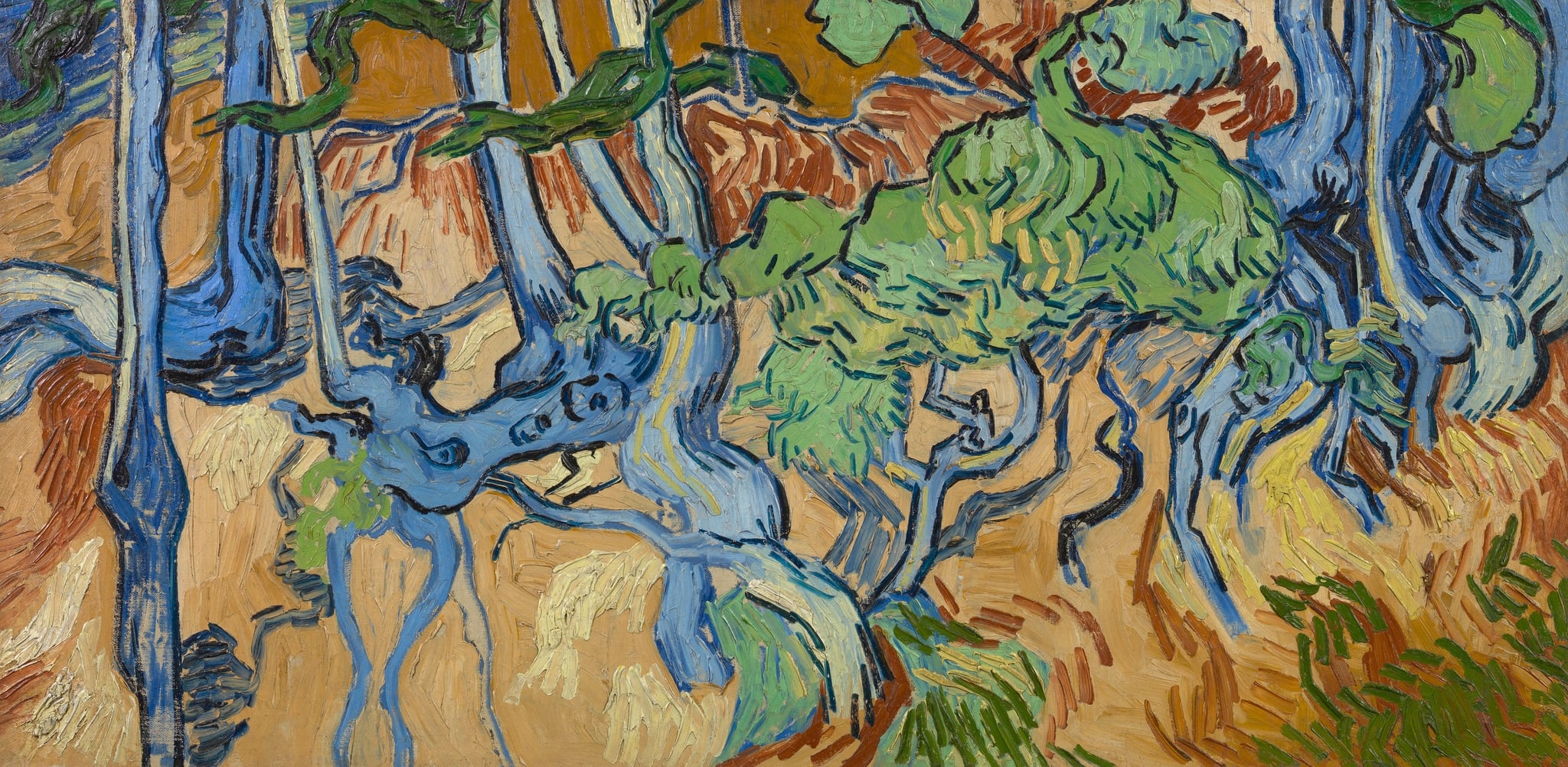
Tree Roots
Vincent van Gogh (1890)
Tree Roots is a late Auvers canvas in a rare, elongated "double‑square" format that compresses the view to nothing but interlaced trunks and roots. Thick, cobalt‑blue contours and vibrating oranges/ochres forge a field of near‑abstraction, turning a roadside bank into a <strong>charged meditation on resilience and exposure</strong> <sup>[1]</sup><sup>[6]</sup><sup>[2]</sup>.
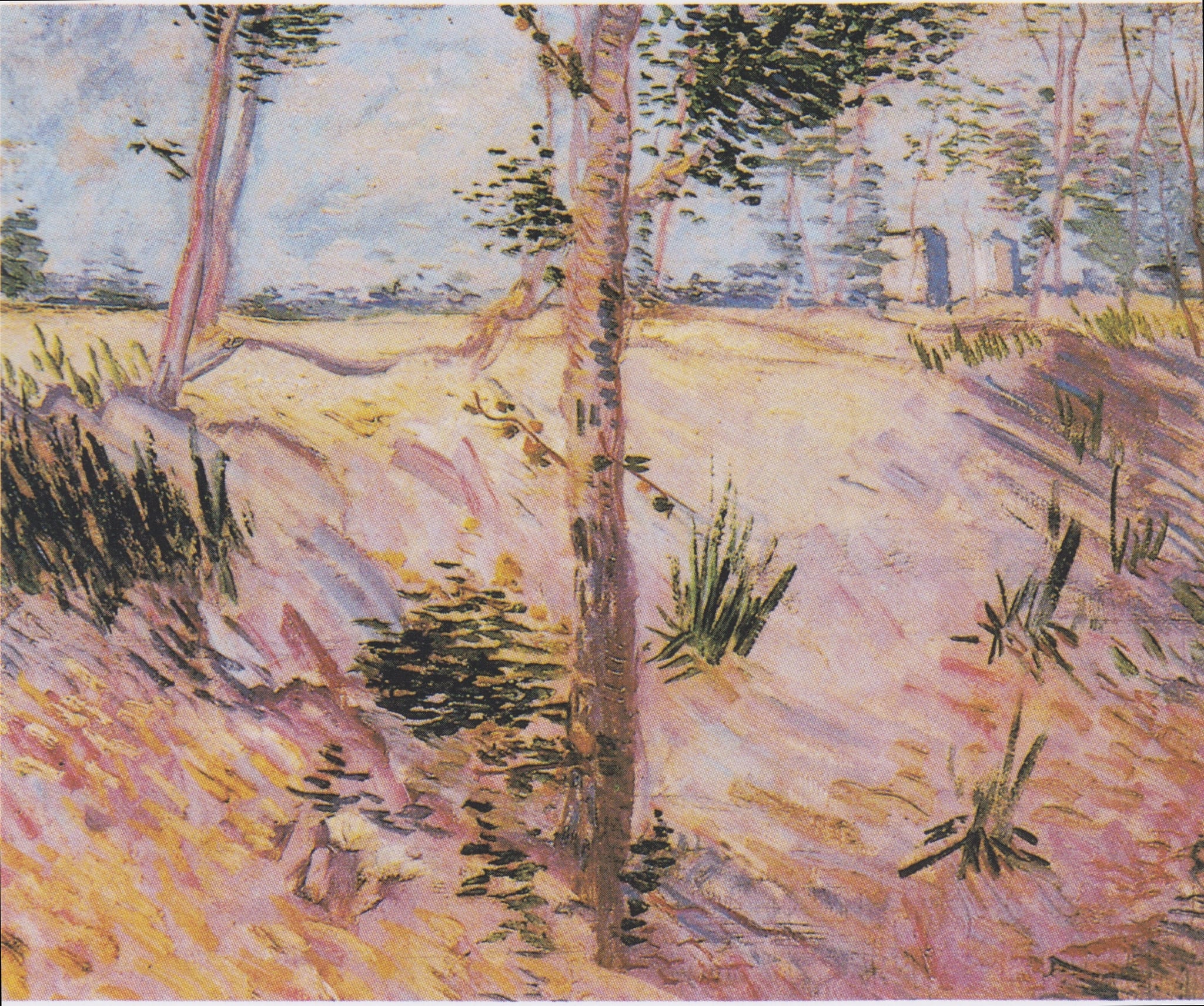
Riverbank with Trees
Vincent van Gogh (1887)
Riverbank with Trees is a compact 1887 study in which Vincent van Gogh turns a modest Seine embankment into a field of <strong>vibration and light</strong>. Diagonal sweeps of lilac and ochre sand collide with <strong>staccato foliage</strong> and a single upright trunk, fusing observation with sensation <sup>[1]</sup><sup>[2]</sup>.
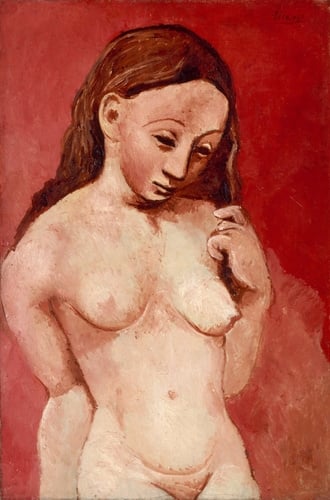
Nu sur fond rouge
Pablo Picasso (1906)
A solitary nude stands against a pulsating, uniform red field, her body reduced to <strong>rounded, sculptural planes</strong> and her face set with <strong>masklike eyes</strong>. The lowered gaze and self-touching gesture fold desire and inwardness into a single emblem, turning the figure into a <strong>proto‑Cubist icon</strong> rather than a person in space <sup>[1]</sup><sup>[2]</sup>.
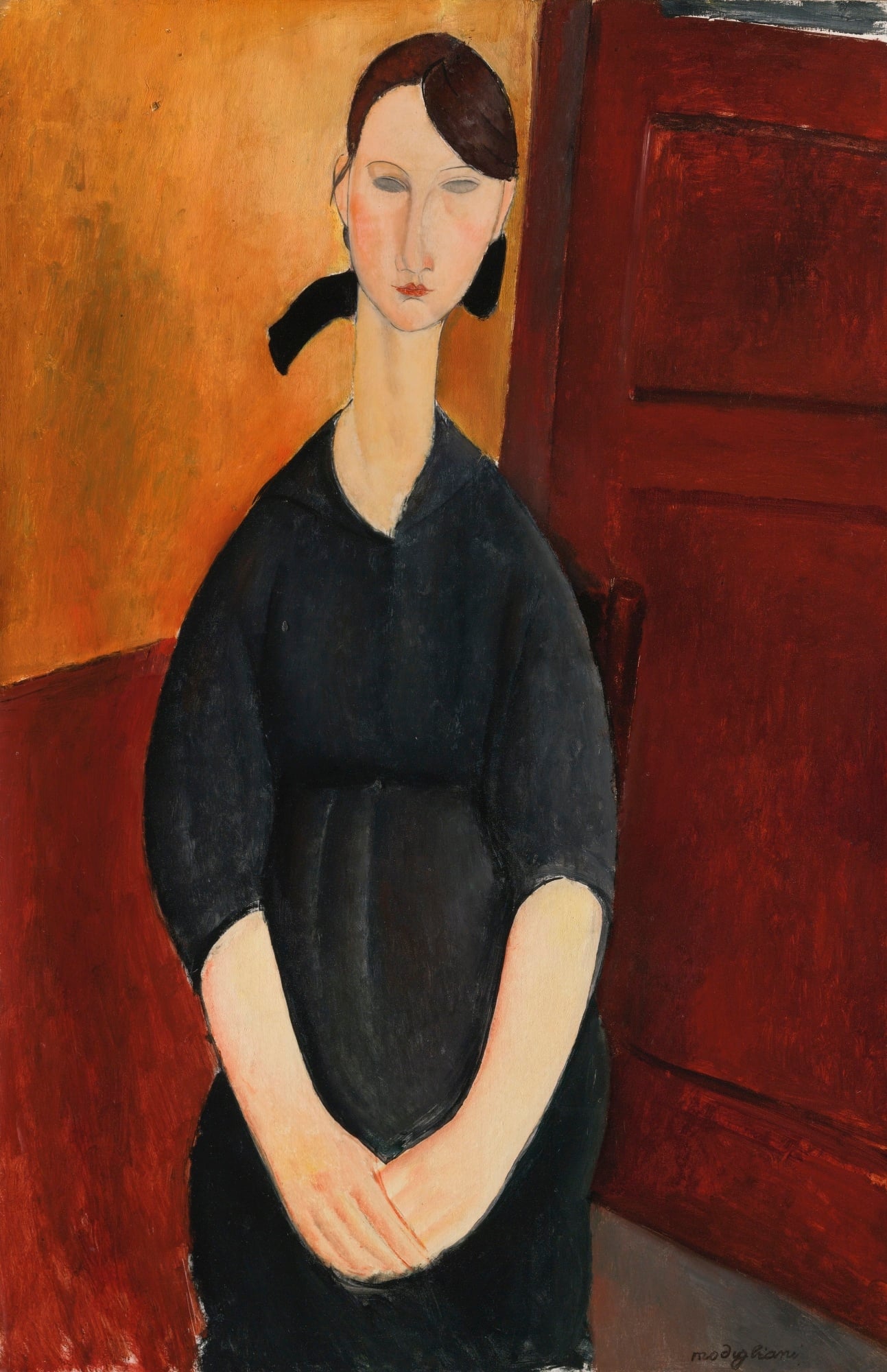
Portrait of Paulette Jourdain
Amedeo Modigliani (1919)
Portrait of Paulette Jourdain crystallizes a young sitter into a <strong>poised, timeless icon</strong>: an attenuated neck, mask-like almond eyes, and gently folded hands set before ochre walls and a <strong>slightly ajar red door</strong>. Modigliani’s sculptural contour and restrained palette turn likeness into an <strong>archetype of grace and inwardness</strong> <sup>[1]</sup><sup>[2]</sup><sup>[3]</sup>.
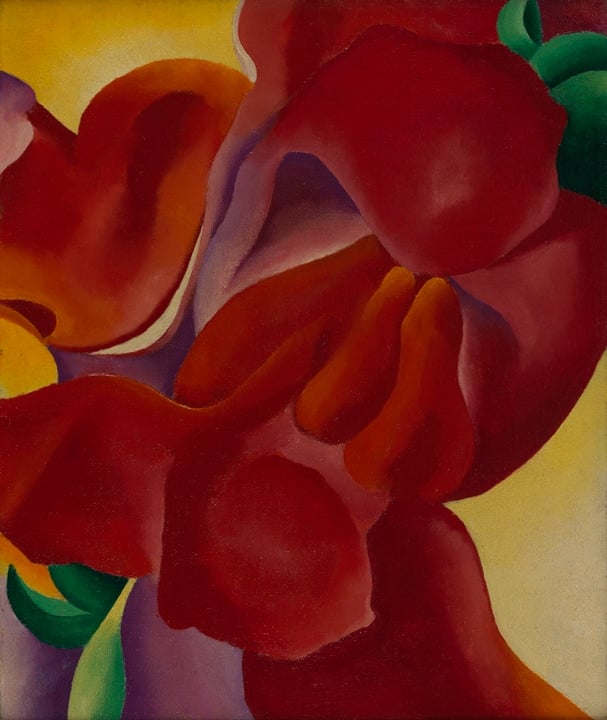
Red Canna
Georgia O’Keeffe (1925–1928)
Georgia O’Keeffe’s Red Canna turns a single bloom into an immersive field of <strong>magnified color and form</strong>. Swelling crimson petals edged with violet ride against a <strong>sunlit yellow</strong> ground, while small <strong>green flickers</strong> punctuate the heat, converting a garden flower into a modern emblem of <strong>vitality and perception</strong> <sup>[1]</sup><sup>[2]</sup>.
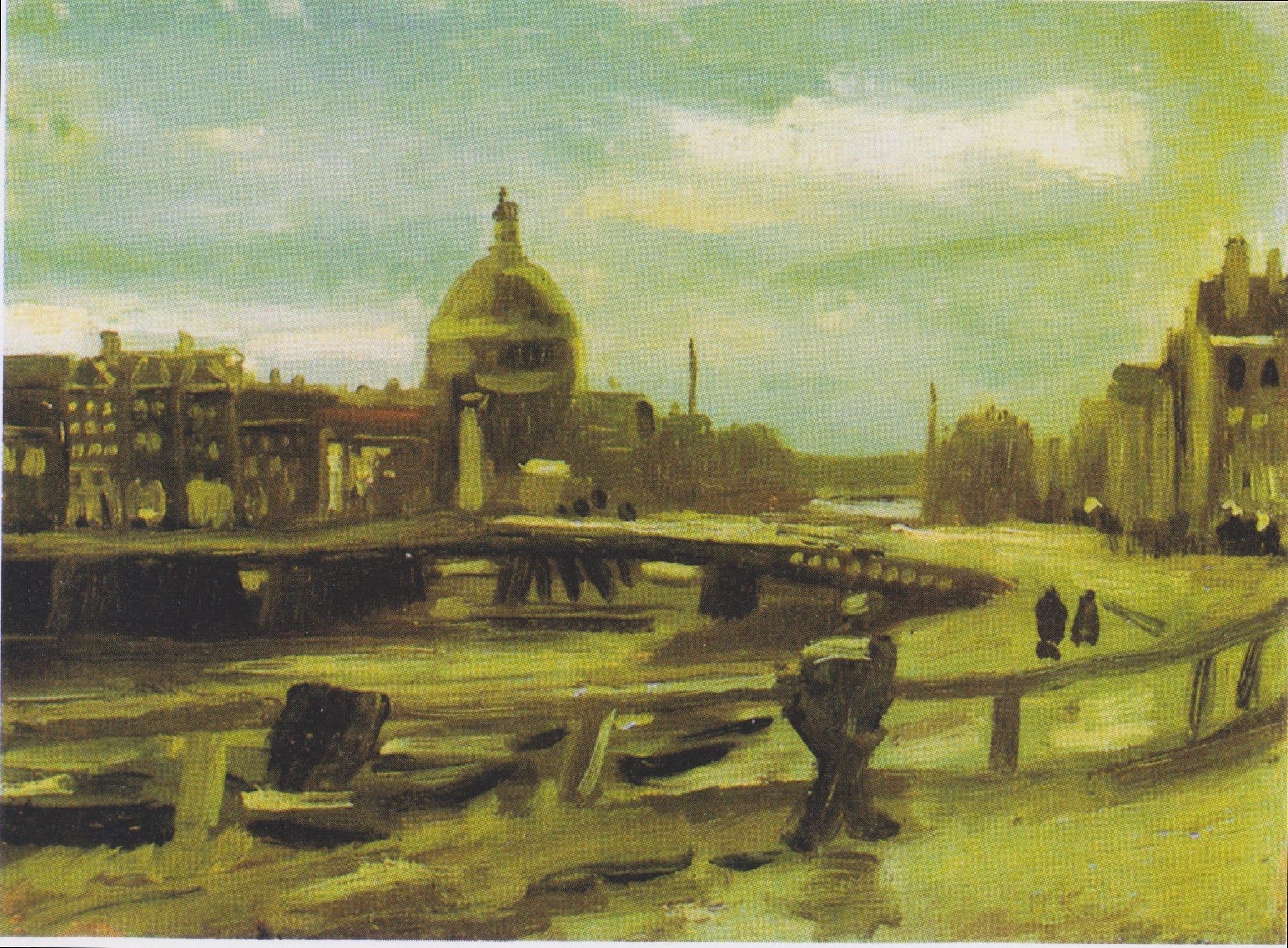
The Singel near the Lutheran Church in Amsterdam
Vincent van Gogh (1885)
In The Singel near the Lutheran Church in Amsterdam, Vincent van Gogh renders the canal belt in <strong>earthy greens and umbers</strong> under a <strong>cool, washed sky</strong>. A <strong>diagonal bridge</strong> and bundled figures press forward while the <strong>domed Lutheran church</strong> holds steady in the middle distance, turning a city view into a meditation on passage and refuge <sup>[1]</sup>.
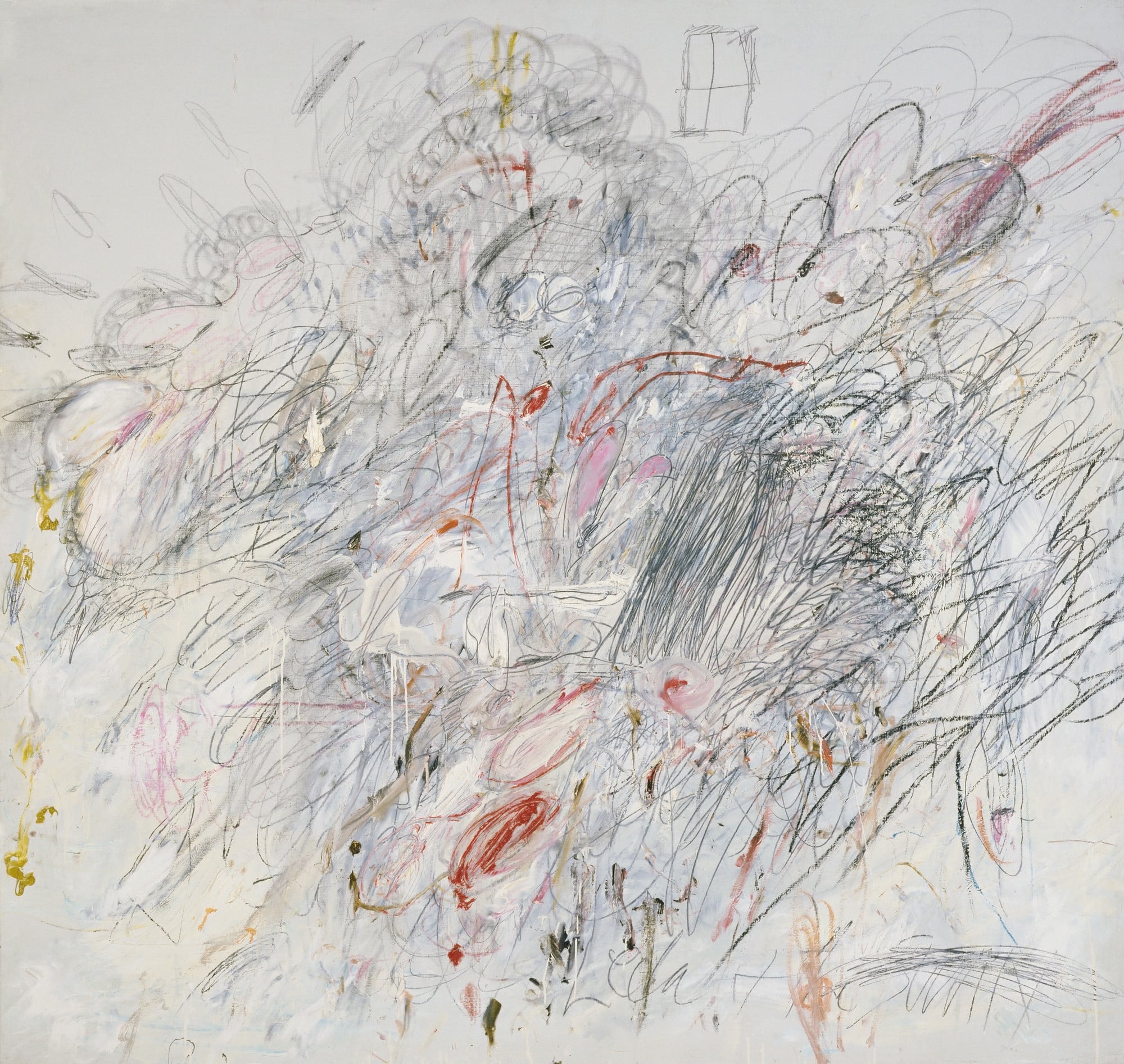
Leda and the Swan
Cy Twombly (1962)
Cy Twombly’s Leda and the Swan condenses the Greek myth into an <strong>orgiastic collision</strong> of marks: graphite scrawls, smeared whites, blush pinks, and eruptive reds radiate from a dark, compressed vortex. A sketched <strong>window-like rectangle</strong>, heart and phallic glyphs puncture the storm, making desire and violence legible as emblems rather than images <sup>[1]</sup>.
Hero and Leandro
Cy Twombly (1985)
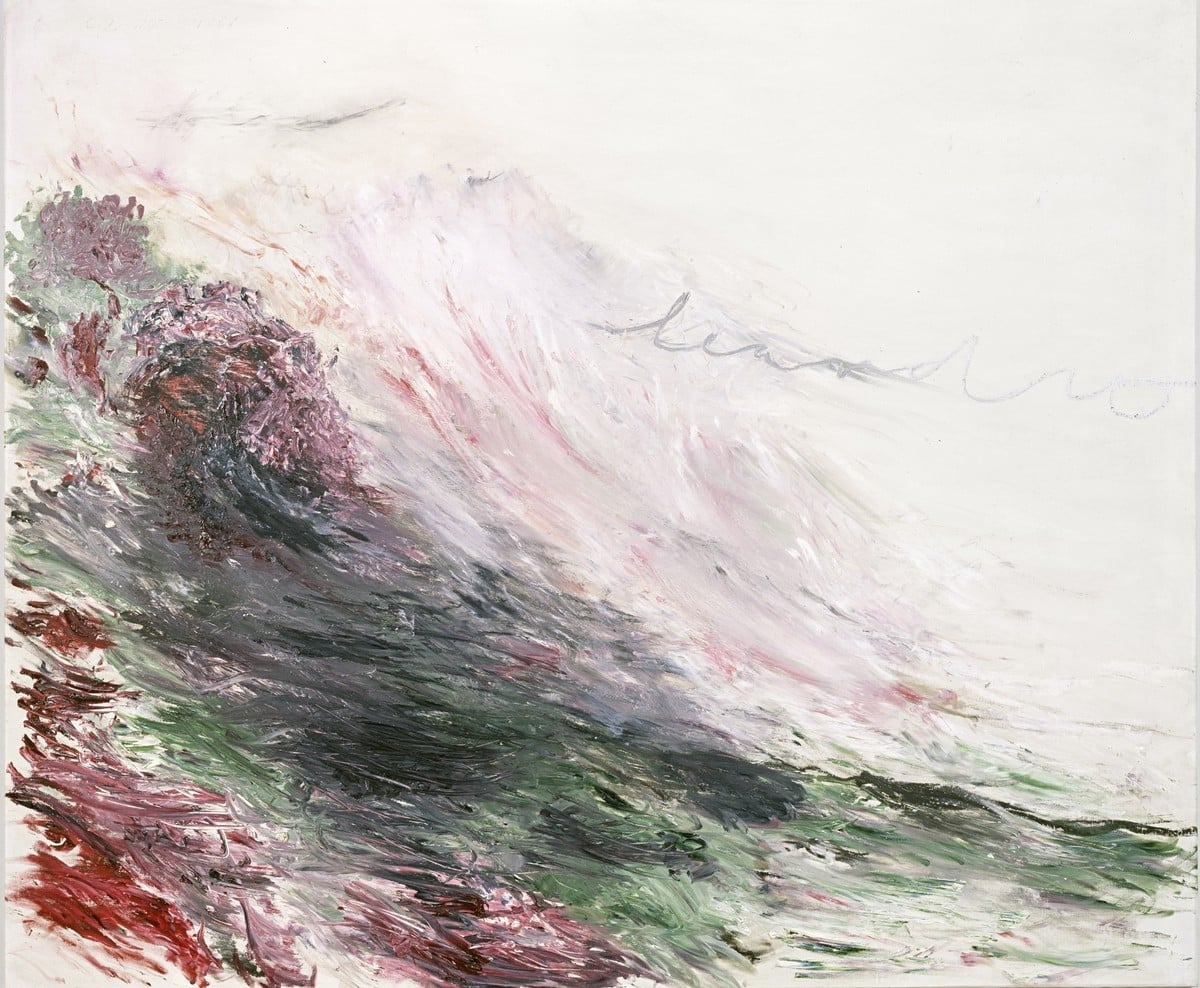
<strong>Hero and Leandro</strong> compresses myth into a single, diagonal surge of paint that fuses sea, storm, and desire. The impasto wave drives from lower left to upper right, while the faint graphite name “leandro” thins into the white ground, turning language into a last breath. Twombly converts Marlowe’s poem and the Greek legend into a <strong>painterly elegy</strong> where gesture stands in for fate <sup>[1]</sup><sup>[2]</sup><sup>[3]</sup>.
La Grande Vallée VII
Joan Mitchell (1983)
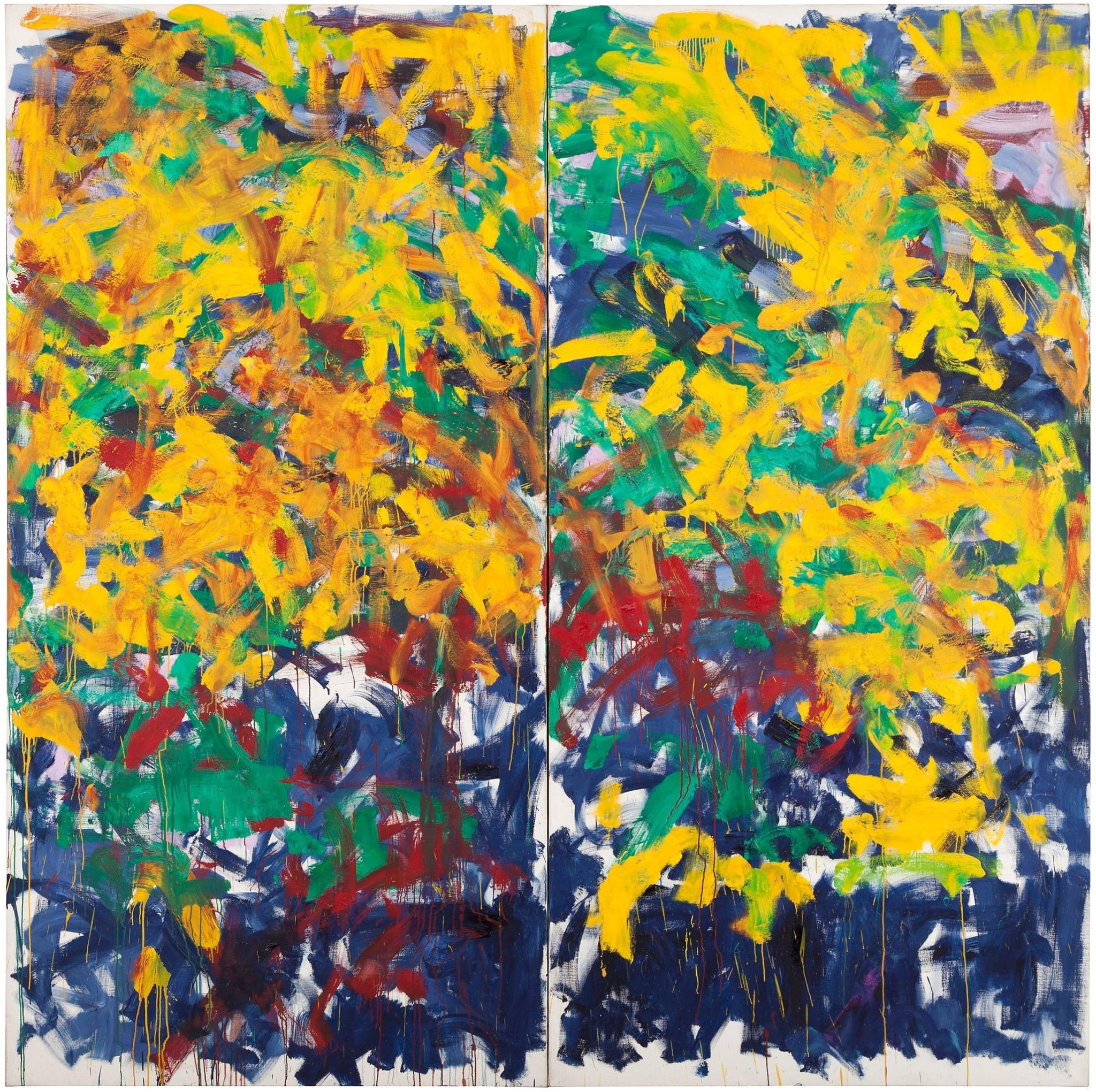
La Grande Vallée VII is a monumental <strong>diptych</strong> in which Joan Mitchell converts a remembered landscape into a charged field of color and motion. Cascades of <strong>blazing yellow</strong>, <strong>leafy green</strong>, and <strong>inky blue</strong> collide across the seam, where drips and slashing strokes keep the surface alive—an arena where <strong>exuberance and elegy</strong> co-exist <sup>[1]</sup><sup>[2]</sup>.