Swans Reflecting Elephants
Study Print Studio
Create a personal study print
Build a companion study sheet around the part of this painting that speaks to you most. Choose a detail, shape an interpretation, and walk away with something personal and display-worthy.
Fast Facts
- Year
- 1937
- Medium
- Oil on canvas
- Dimensions
- 51 × 77 cm
- Location
- Private collection
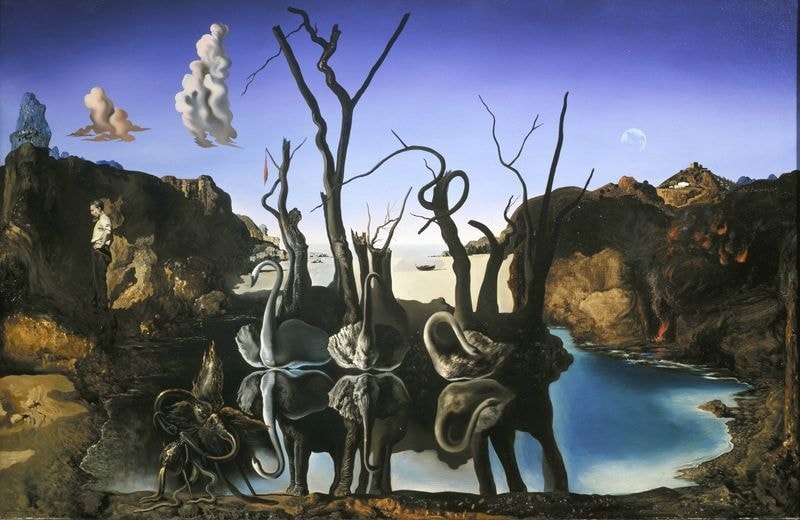
Click on any numbered symbol to learn more about its meaning
Meaning & Symbolism
Explore Deeper with AI
Ask questions about Swans Reflecting Elephants
Popular questions:
Powered by AI • Get instant insights about this artwork
Interpretations
Formal-Optical Engineering
Source: CUNY Graduate Center (Dalí method); Encyclopaedia Britannica; Fundació Gala–Salvador Dalí
Place as Proof: Catalan Geology
Source: Encyclopaedia Britannica; Fundació Gala–Salvador Dalí
Provenance, Politics, and the Double Image
Source: French Ministry of Culture (MNR/Jeu de Paume); Apollo Magazine (Edward James)
Iconography Under Tension: Swans/Elephants
Source: Art in Context (symbolism synthesis); Encyclopaedia Britannica
Ethics of Looking: The Viewer as Co-Author
Source: CUNY Graduate Center (Dalí quote/method); Apollo Magazine (Edward James)
Seen in Comparisons
Related Themes
About Salvador Dali
More by Salvador Dali
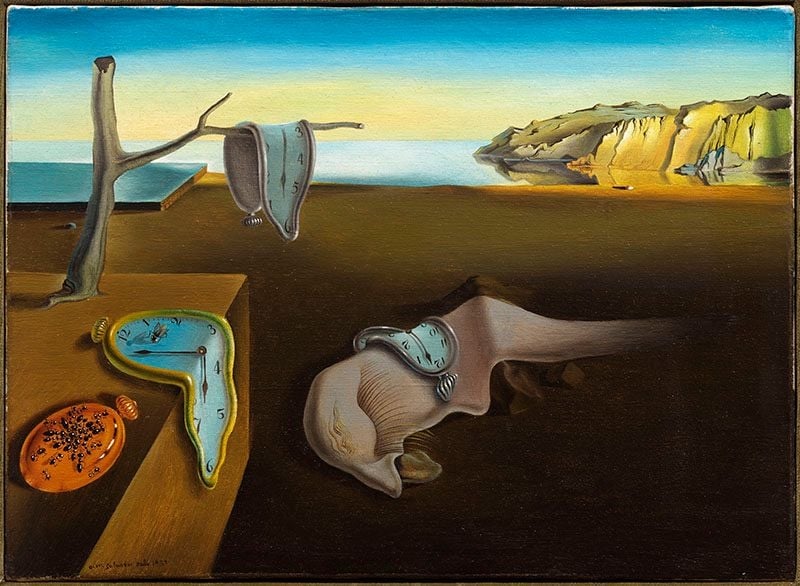
The Persistence of Memory
Salvador Dali (1931)
Salvador Dali’s The Persistence of Memory turns clock time into <strong>soft, malleable matter</strong>, staging a dream in which chronology buckles and the self dissolves. Four pocket watches droop across a barren platform, a dead branch, and a lash‑eyed biomorph, while ants overrun a hard, closed watch—a sign of <strong>decay</strong> and the futility of mechanical order <sup>[1]</sup><sup>[2]</sup>.
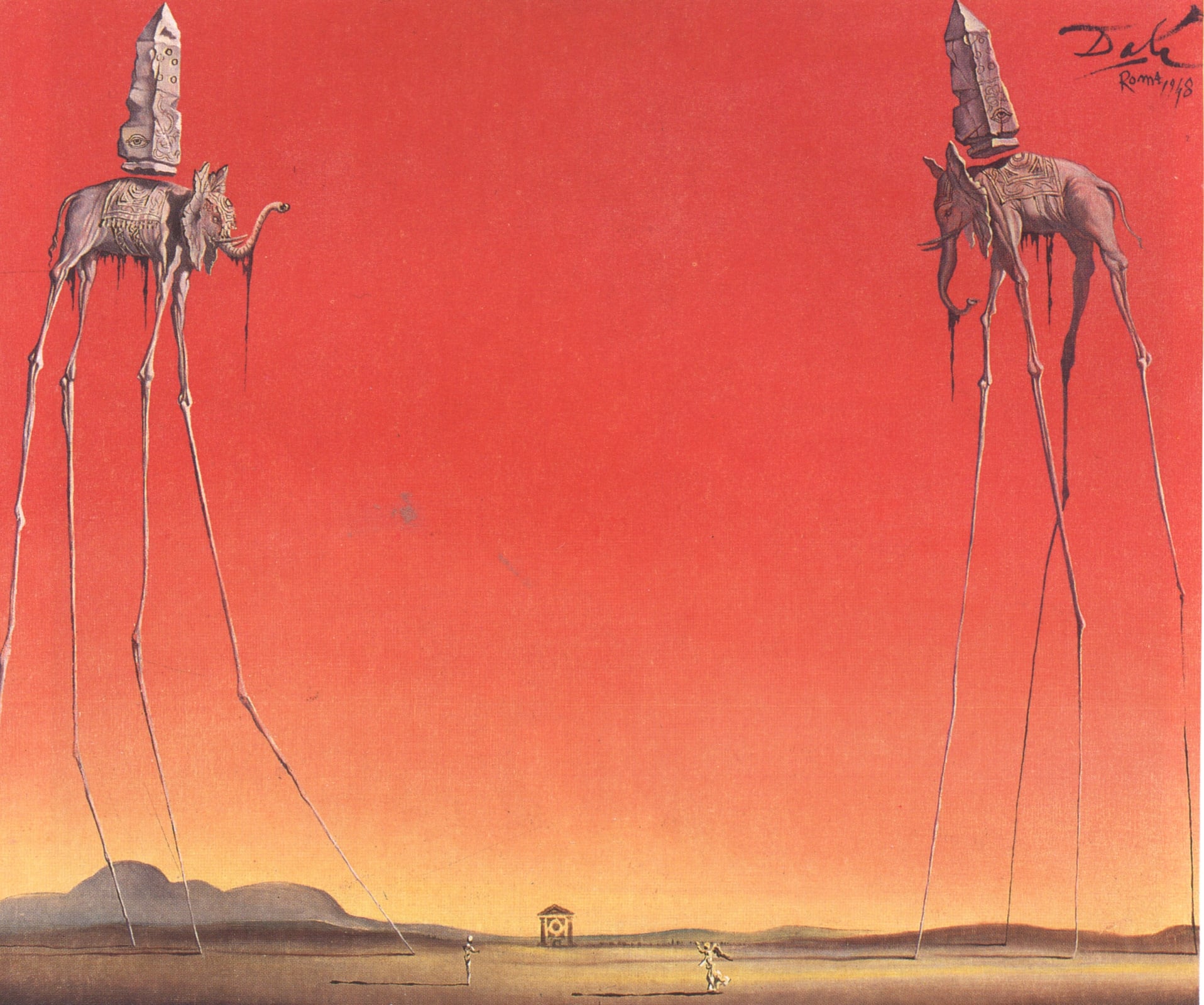
The Elephants
Salvador Dali (1948)
In The Elephants, Salvador Dali distills a stark paradox of <strong>weight and weightlessness</strong>: gaunt elephants tiptoe on <strong>stilt-thin legs</strong> while bearing stone <strong>obelisks</strong>. The blazing red-orange sky and tiny human figures compress ambition into a vision of <strong>precarious power</strong> and time stretched thin <sup>[1]</sup><sup>[2]</sup>.
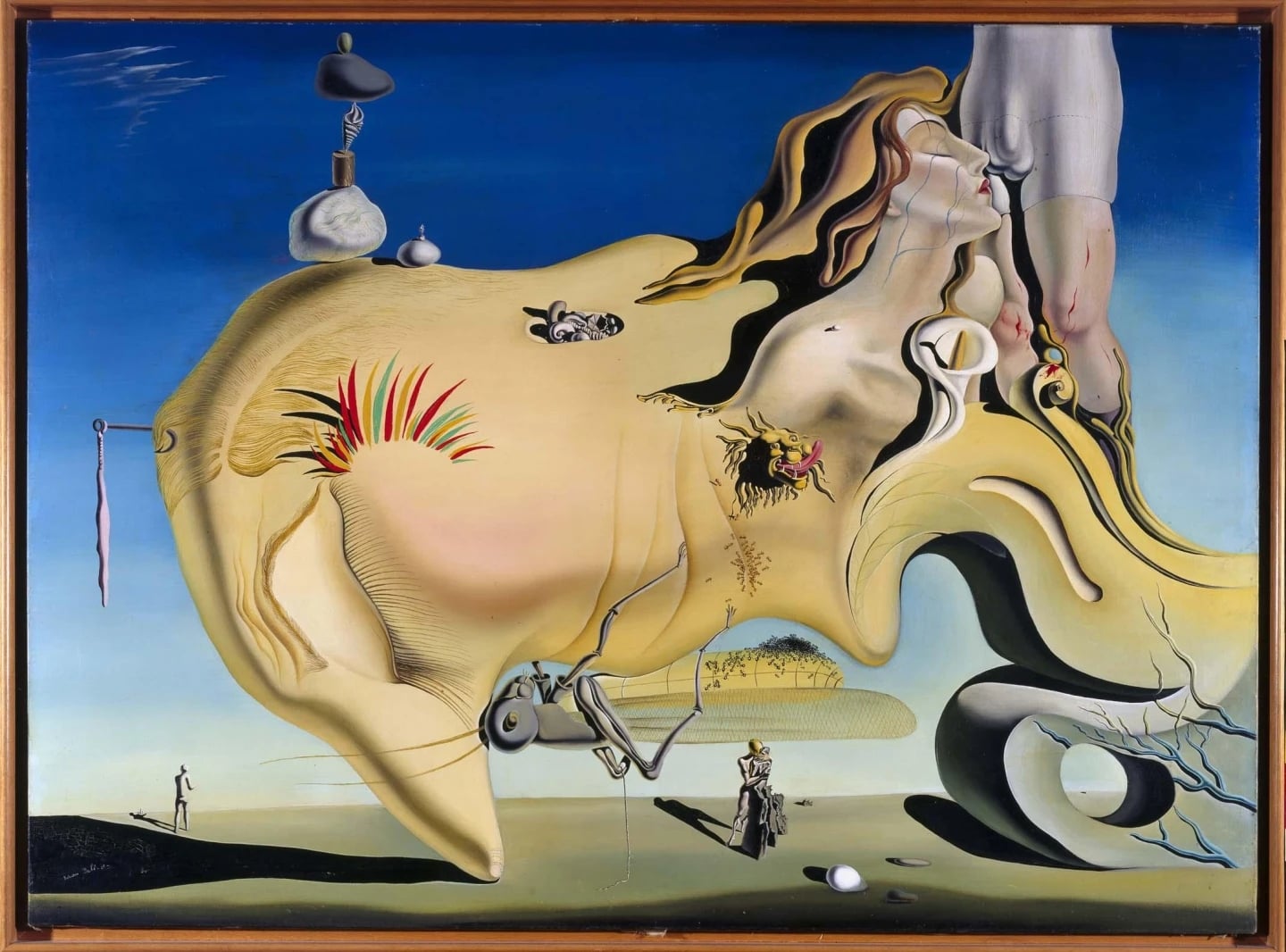
The Great Masturbator
Salvador Dali (1929)
The Great Masturbator condenses Dalí’s newly ignited desire and crippling dread into a single, biomorphic head set against a crystalline Catalan sky. Ants, a gaping grasshopper, a lion’s tongue, a bleeding knee, crutches, stones, and an egg collide to script a confession where <strong>eros</strong> and <strong>decay</strong> are inseparable <sup>[1]</sup><sup>[3]</sup><sup>[4]</sup>. Its precision staging turns autobiography into a <strong>surreal map of compulsion</strong> at the moment Gala enters his life <sup>[1]</sup>.