War & conflict
Featured Artworks
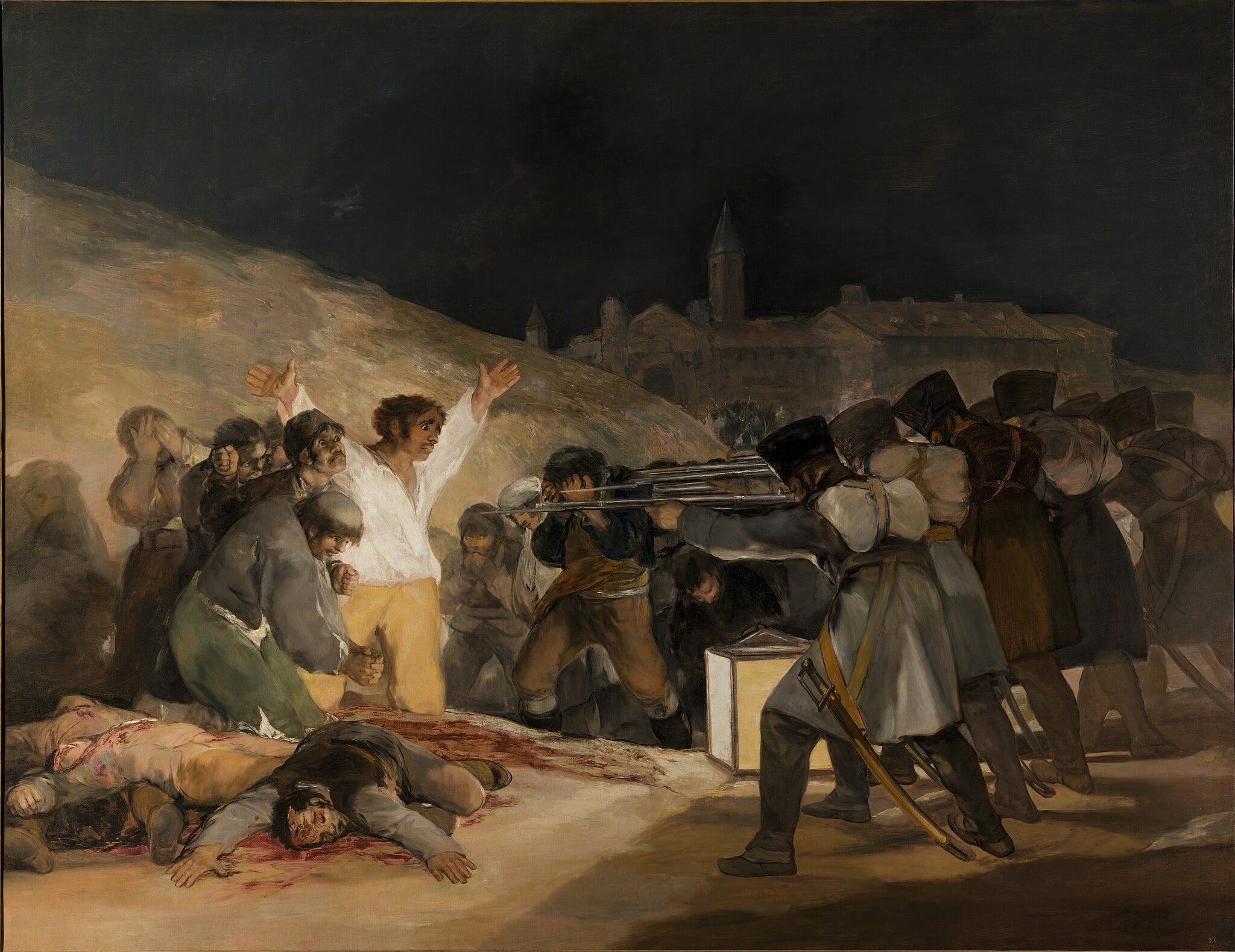
The Third of May 1808
Francisco Goya (1814)
Francisco Goya’s The Third of May 1808 turns a specific reprisal after Madrid’s uprising into a universal indictment of <strong>state violence</strong>. A lantern’s harsh glare isolates a civilian who raises his arms in a <strong>cruciform</strong> gesture as a faceless firing squad executes prisoners, transforming reportage into <strong>modern anti-war testimony</strong> <sup>[1]</sup><sup>[2]</sup>.
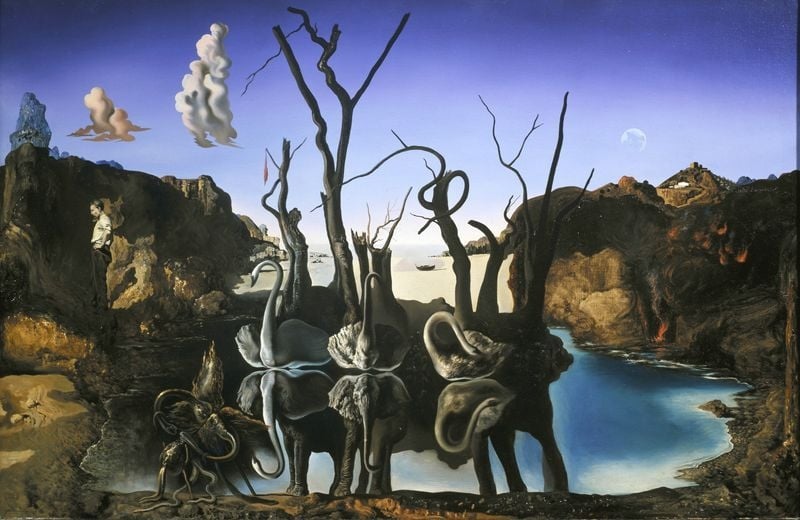
Swans Reflecting Elephants
Salvador Dali (1937)
Swans Reflecting Elephants stages a calm Catalan lagoon where three swans and a thicket of bare trees flip into monumental <strong>elephants</strong> in the mirror of water. Salvador Dali crystallizes his <strong>paranoiac-critical</strong> method: a meticulously painted illusion that makes perception generate its own doubles <sup>[1]</sup><sup>[2]</sup>. The work locks grace to gravity, surface to depth, turning the lake into a theater of <strong>metamorphosis</strong>.
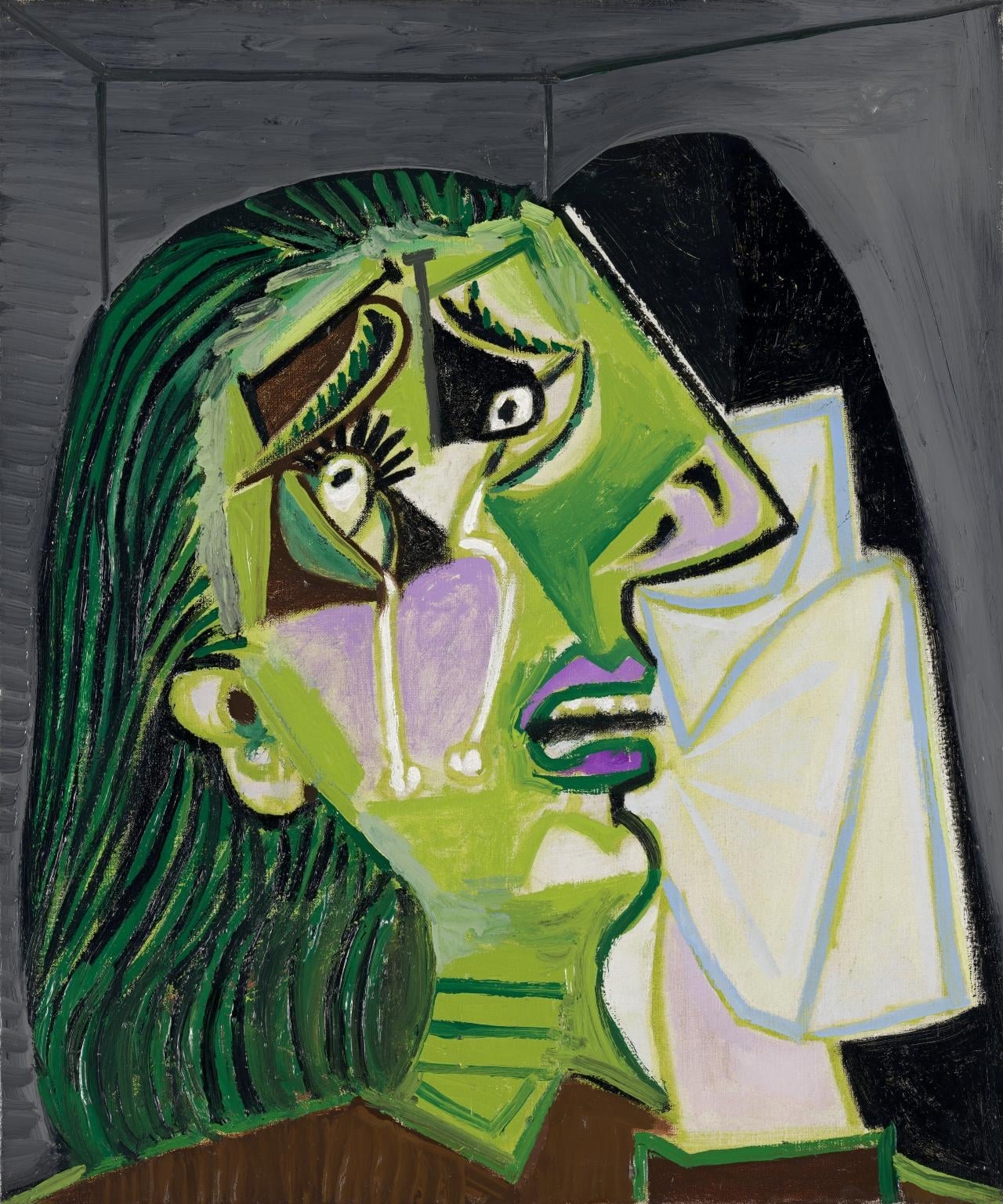
The Weeping Woman
Pablo Picasso (1937)
Picasso’s The Weeping Woman turns private mourning into a public, <strong>iconic emblem of civilian grief</strong>. Shattered planes, <strong>acidic greens and purples</strong>, and jewel-like tears force the viewer to feel the fracture of perception that follows trauma <sup>[1]</sup><sup>[2]</sup>.
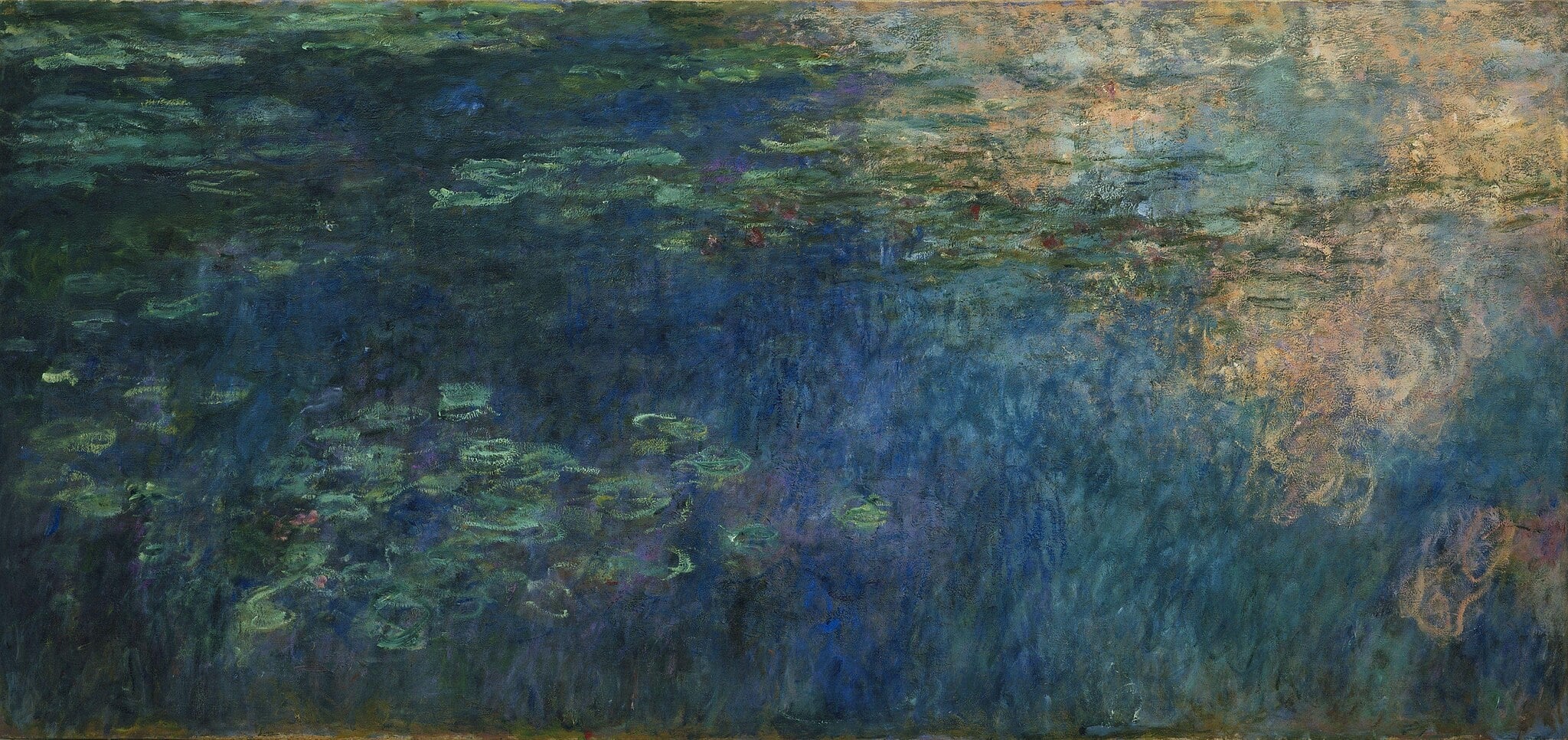
Water Lilies (triptych)
Claude Monet (1914–1926)
Water Lilies (triptych) dissolves banks and horizon into an <strong>immersive field</strong> of reflected sky and water. Across three mural‑scale panels, <strong>layered blues and greens</strong> are punctuated by floating pads while <strong>peach‑lavender light</strong> gathers at the right, turning the pond into a living mirror <sup>[1]</sup><sup>[3]</sup>.
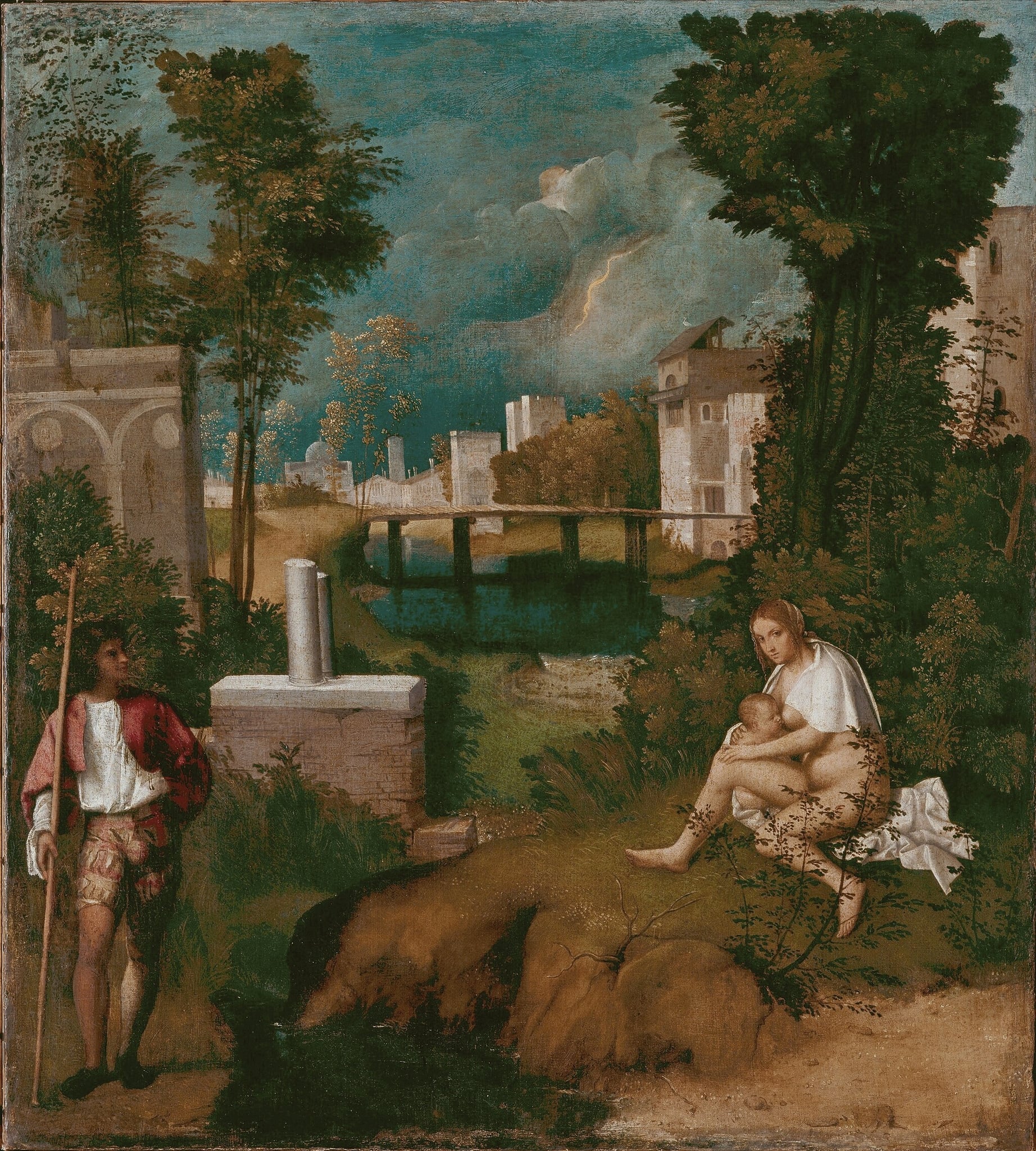
The Storm
Giorgione (c. 1505–1508)
Giorgione’s The Storm stages human life on the brink of change, fusing <strong>pastoral calm</strong> with <strong>sudden rupture</strong>. A watchful youth and a nursing mother face each other across a stream as lightning splits the blue‑green sky, while ruins and a narrow bridge signal fragile passage. The landscape itself becomes the protagonist, turning everyday figures into a <strong>poetic allegory</strong> of vulnerability and fate <sup>[1]</sup><sup>[2]</sup>.
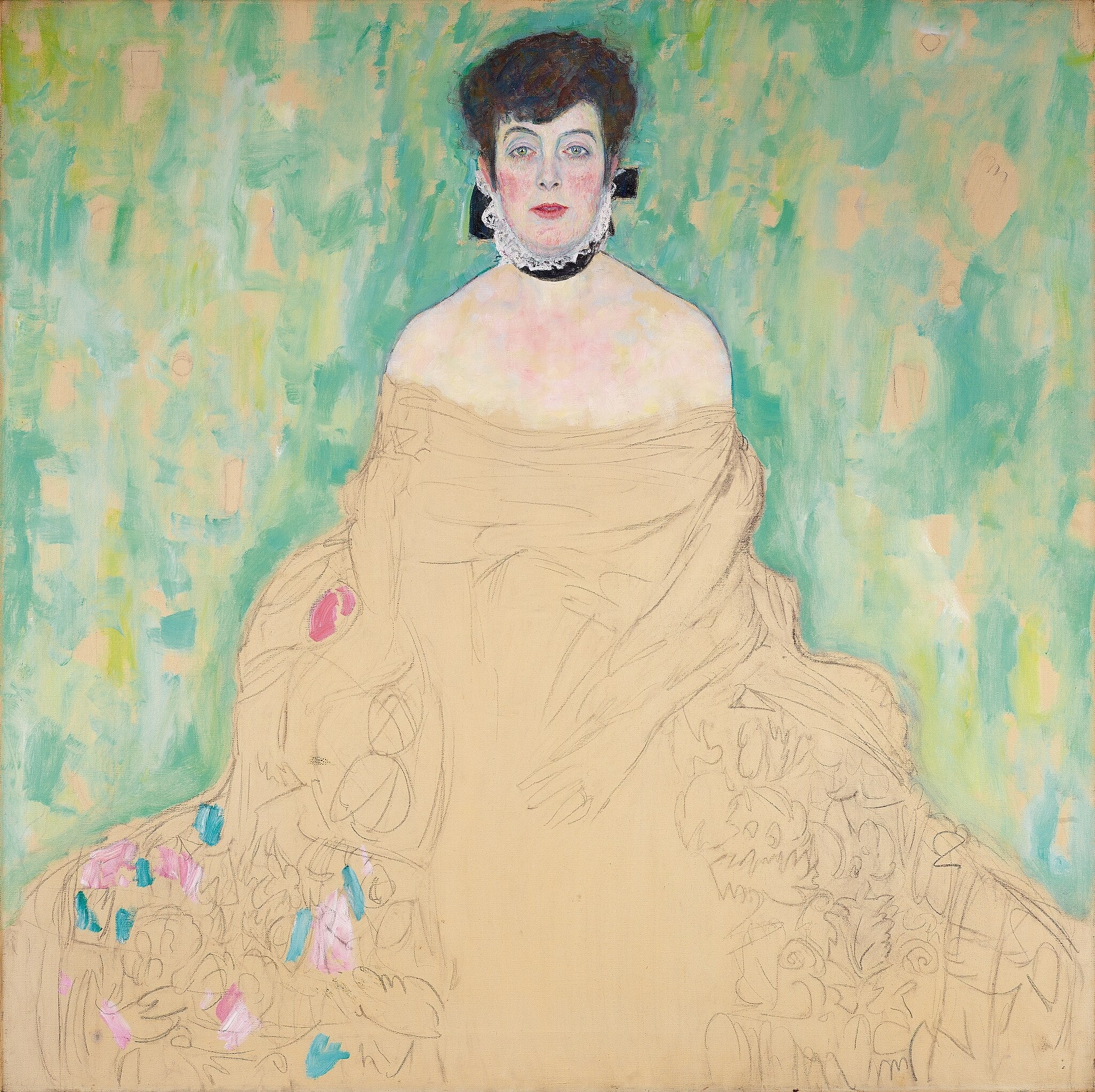
Amalie Zuckerkandl
Gustav Klimt (1917–1918)
Gustav Klimt’s Amalie Zuckerkandl is an <strong>unfinished</strong> late portrait in which a fully realized head and shoulders float above a gown left as <strong>skeletal graphite and washes</strong>. Set against a mottled, cool <strong>green ground</strong>, her flushed face, direct gaze, black <strong>choker</strong> and crisp lace collar stage a drama of poise, sensuality, and restraint <sup>[1]</sup><sup>[6]</sup>. The painting’s incompletion becomes the work’s meaning: a vivid selfhood <strong>emerging</strong> while ornament remains <strong>in potential</strong>.
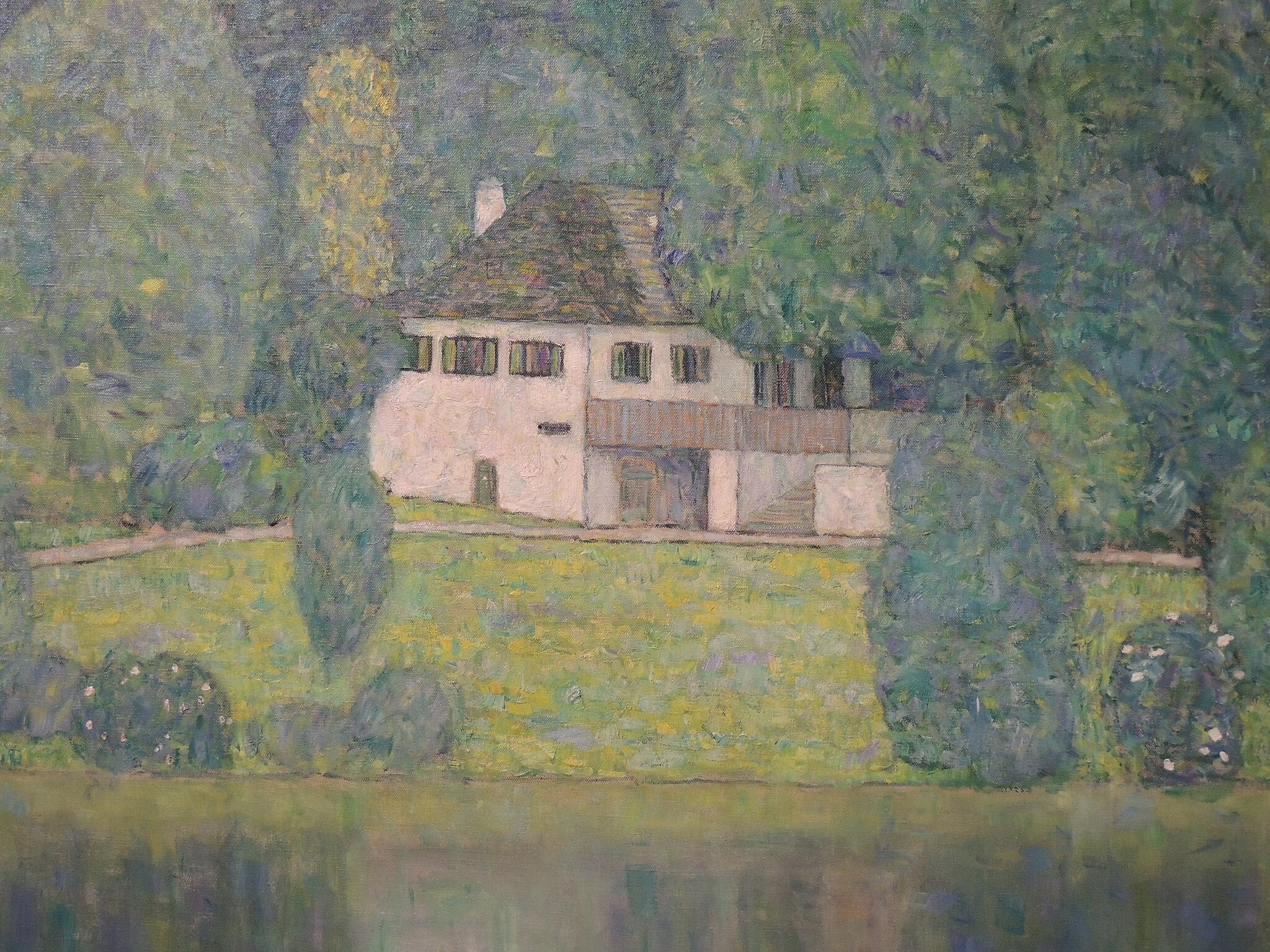
Litzlbergkeller
Gustav Klimt (1915–1916)
Litzlbergkeller distills a lakeside inn into a square, shimmering field where the house’s pale rectangle and window rhythm quietly answer the vertical screen of trees and the calm band of water below. Klimt fuses geometry and foliage into a <strong>decorative, contemplative refuge</strong>, converting observation into patterned memory <sup>[1]</sup><sup>[2]</sup>.
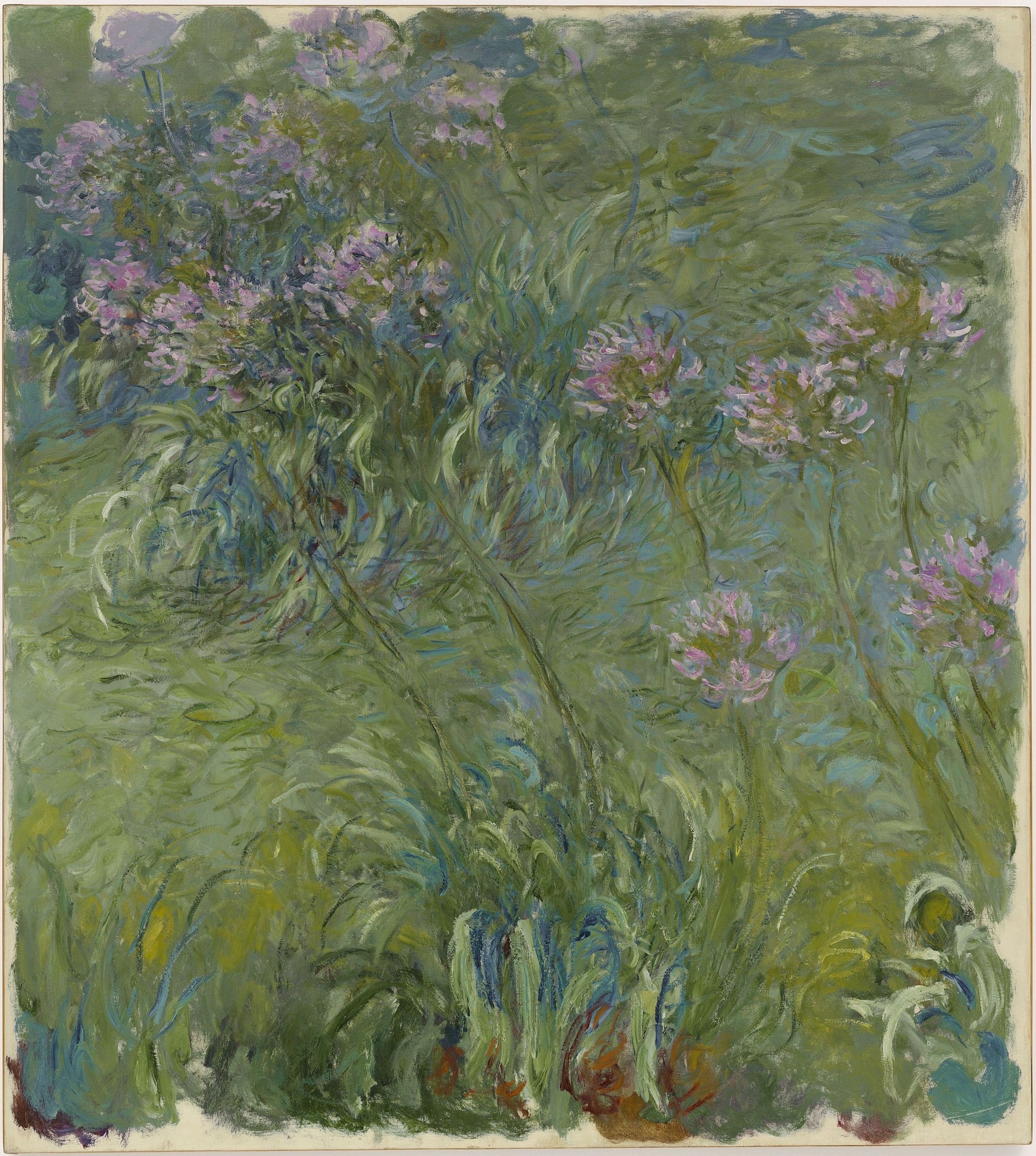
Agapanthus
Claude Monet (c. 1915–1926)
In Agapanthus, Claude Monet turns a close-cropped bed of lilies into a field of <strong>pure movement and light</strong>. Lilac blooms flicker against layered greens, their long, arcing stems written in <strong>calligraphic strokes</strong> that dissolve the line between plant and air.
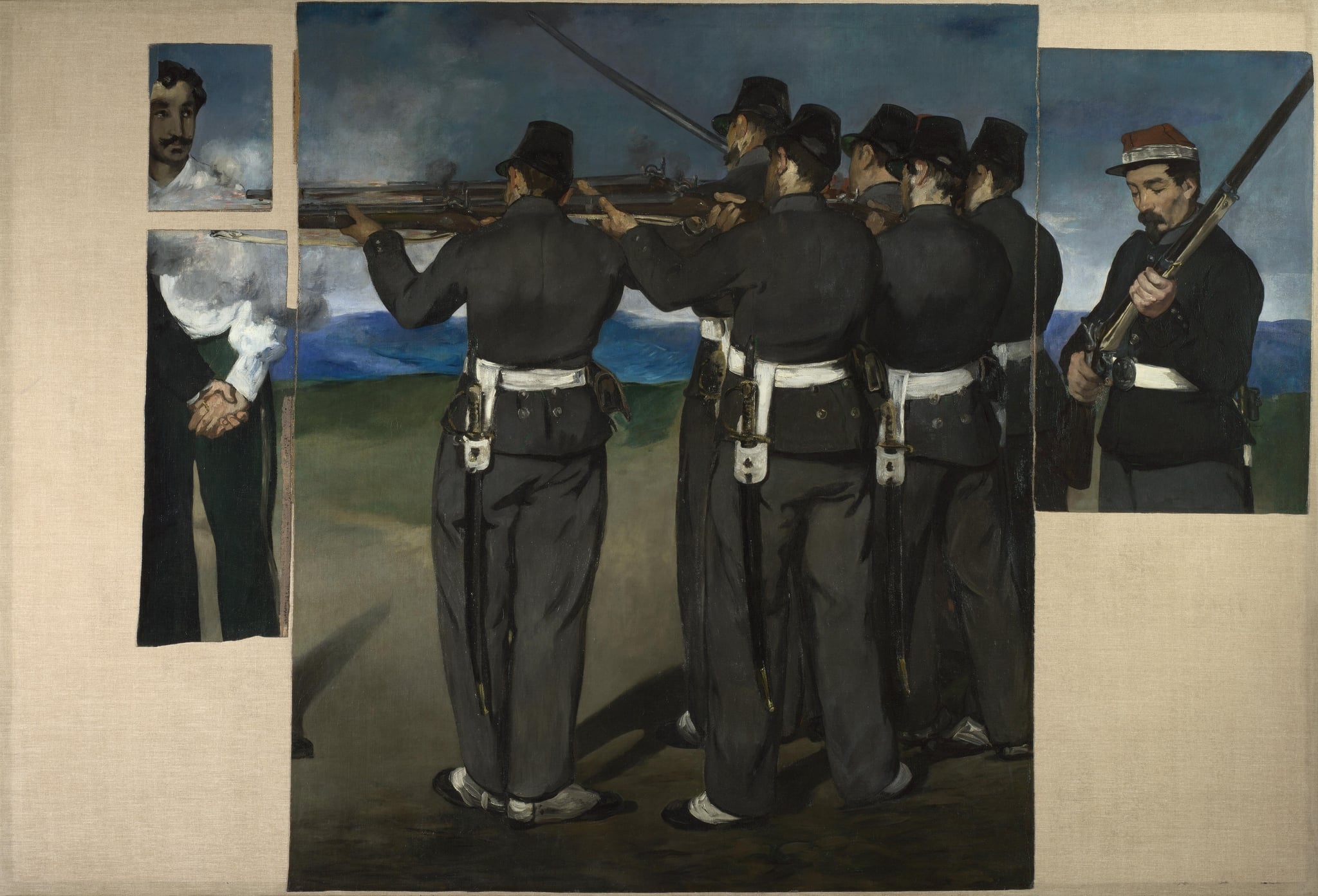
The Execution of Emperor Maximilian
Édouard Manet (1867–1868)
Manet’s The Execution of Emperor Maximilian confronts state violence with a <strong>cool, reportorial</strong> style. The wall of gray-uniformed riflemen, the <strong>fragmented canvas</strong>, and the dispassionate loader at right turn the killing into <strong>impersonal machinery</strong> that implicates the viewer <sup>[1]</sup><sup>[2]</sup>.
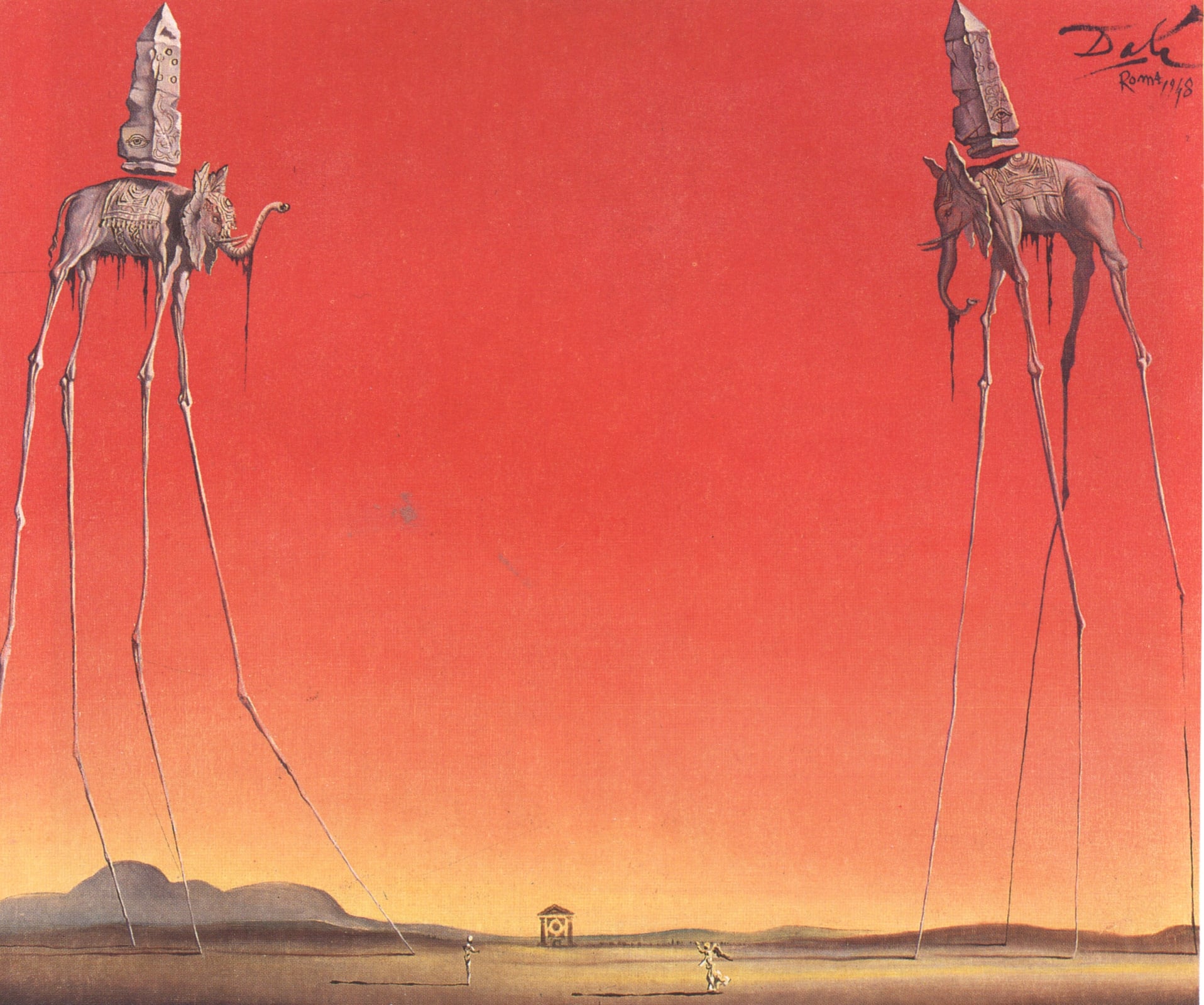
The Elephants
Salvador Dali (1948)
In The Elephants, Salvador Dali distills a stark paradox of <strong>weight and weightlessness</strong>: gaunt elephants tiptoe on <strong>stilt-thin legs</strong> while bearing stone <strong>obelisks</strong>. The blazing red-orange sky and tiny human figures compress ambition into a vision of <strong>precarious power</strong> and time stretched thin <sup>[1]</sup><sup>[2]</sup>.
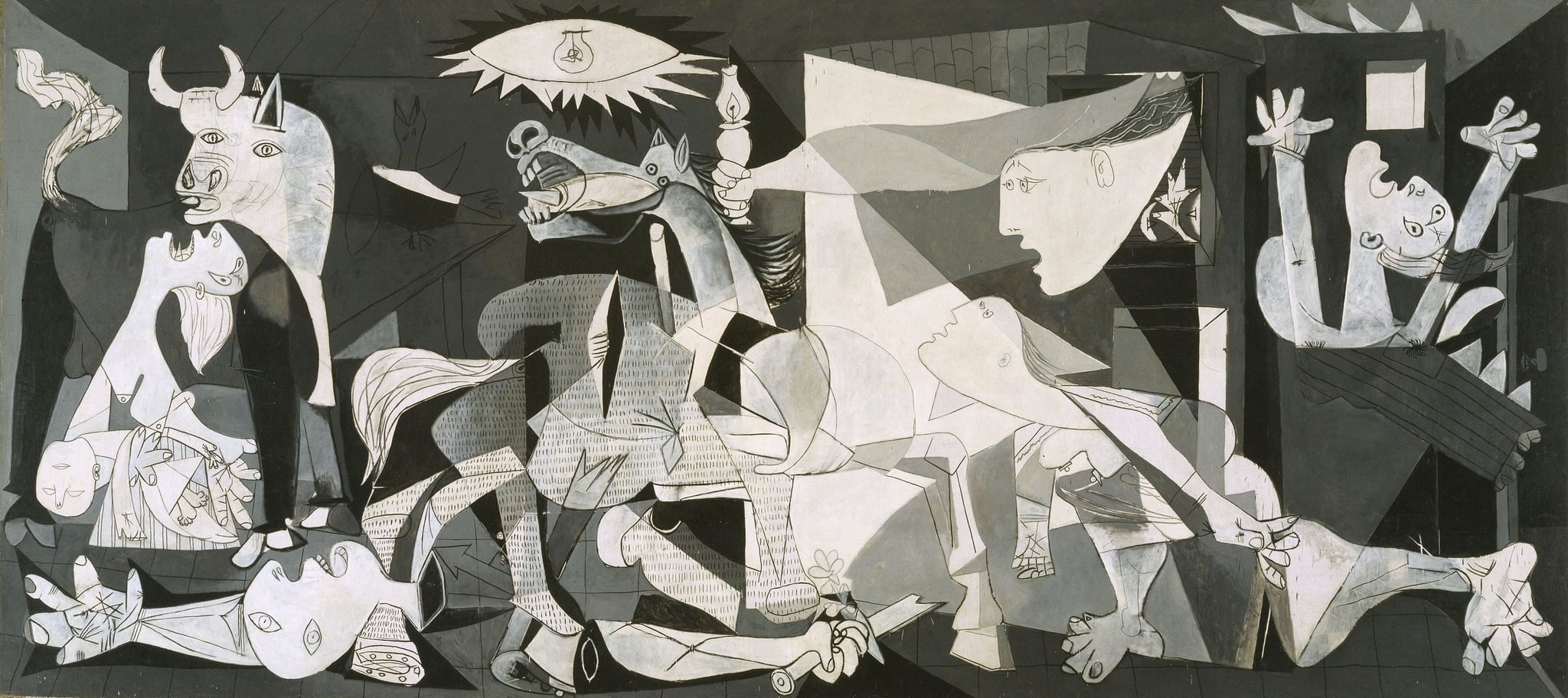
Guernica
Pablo Picasso (1937)
Guernica is a monumental, monochrome indictment of modern war, compressing a town’s annihilation into a frantic tangle of bodies, beasts, and light. Across the canvas, a <strong>shrieking horse</strong>, a <strong>stoic bull</strong>, a <strong>weeping mother with her dead child</strong>, and a <strong>fallen soldier</strong> stage a civic tragedy rather than a heroic battle. The harsh <strong>electric bulb</strong> clashes with a fragile <strong>oil lamp</strong>, turning the scene into a stark drama of terror and witness.
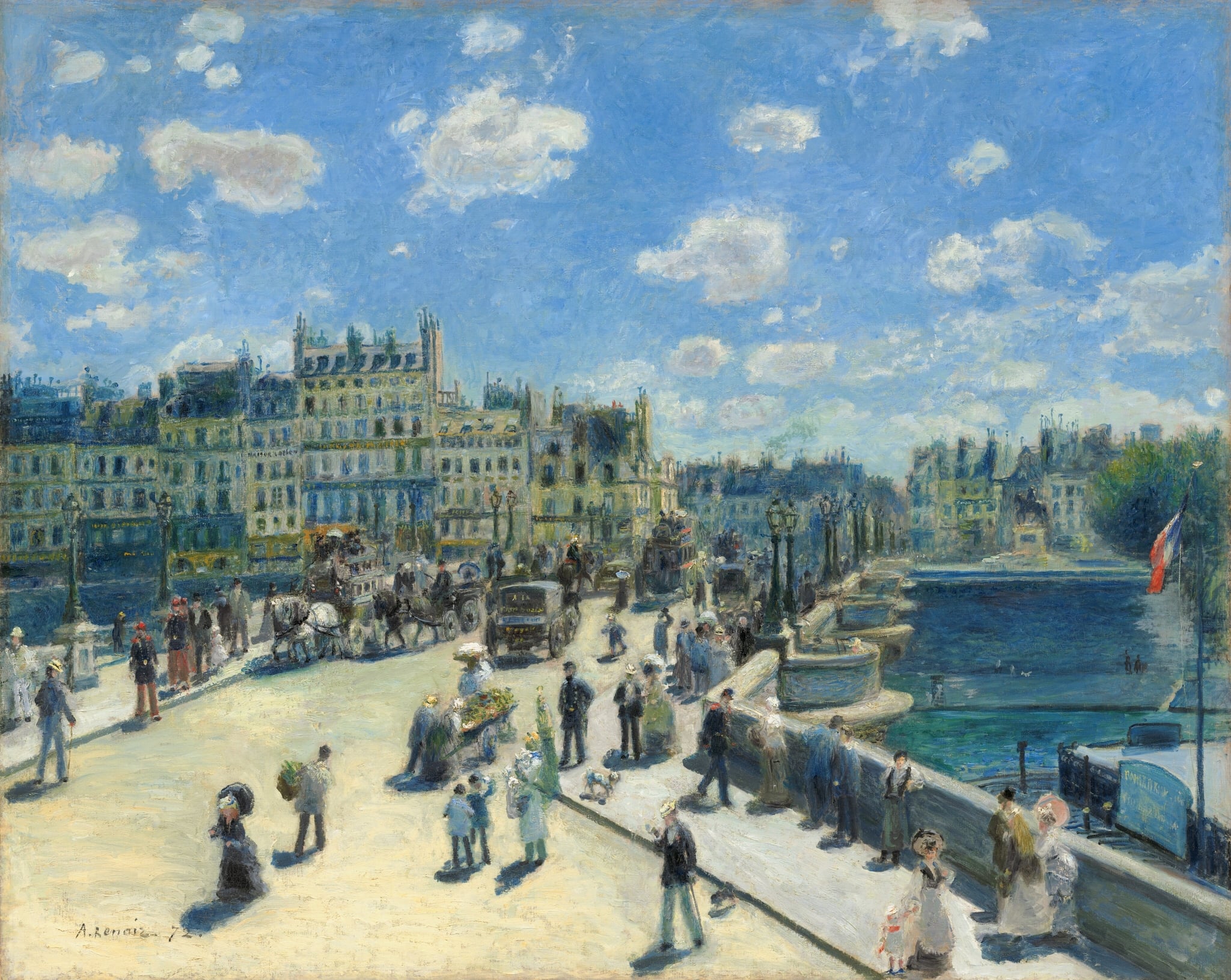
Pont Neuf Paris
Pierre-Auguste Renoir (1872)
In Pont Neuf Paris, Pierre-Auguste Renoir turns the oldest bridge in Paris into a stage where <strong>light</strong> and <strong>movement</strong> bind a city back together. From a high perch, he orchestrates crowds, carriages, gas lamps, the rippling Seine, and a fluttering <strong>tricolor</strong> so that everyday bustle reads as civic grace <sup>[1]</sup>.
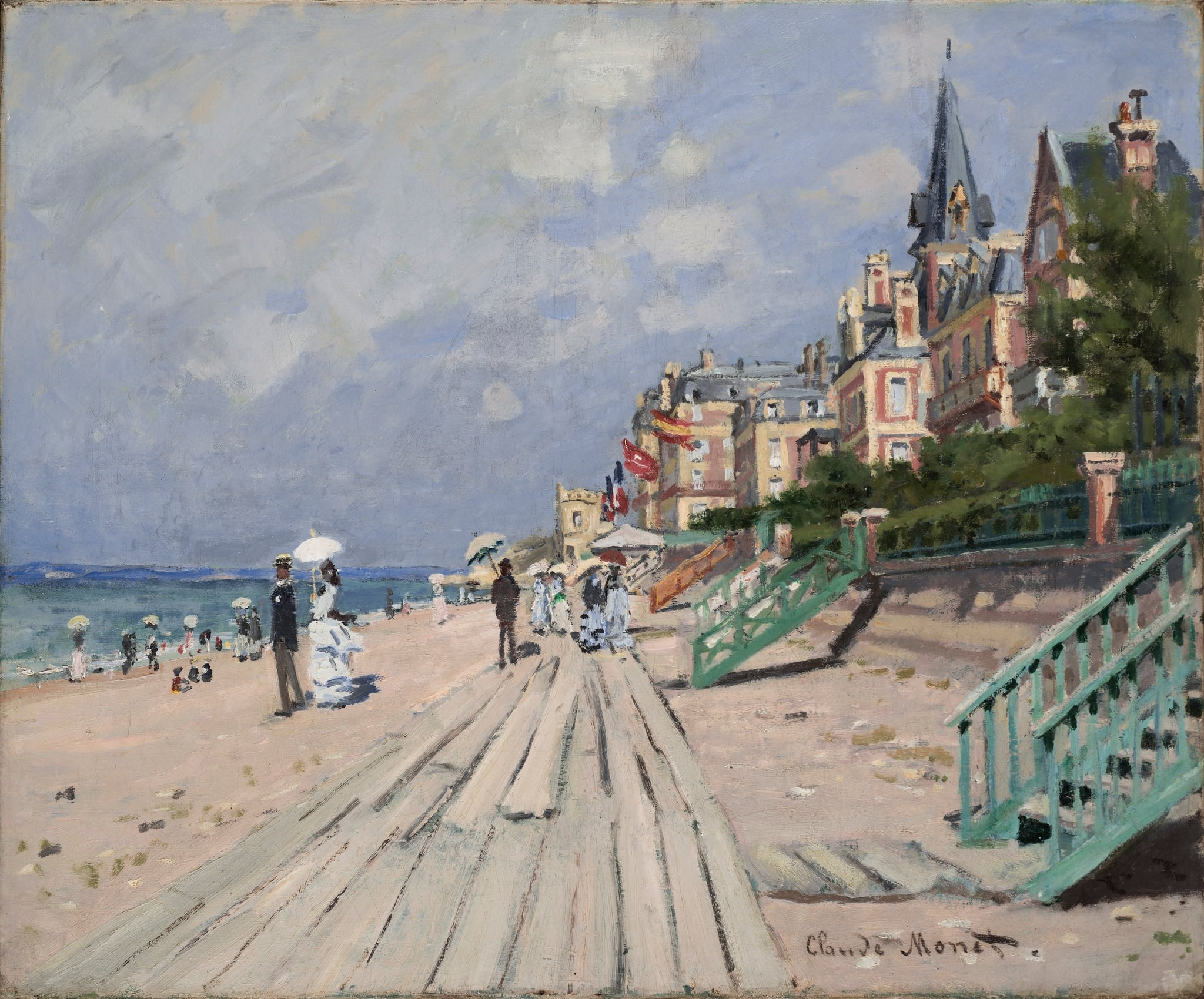
Beach at Trouville
Claude Monet (1870)
Beach at Trouville turns the Normandy resort into a stage where <strong>modern leisure</strong> meets <strong>restless weather</strong>. Monet’s diagonal boardwalk, wind-whipped <strong>red flags</strong>, and white <strong>parasols</strong> marshal the eye through a day animated by light and air rather than by individual stories <sup>[1]</sup><sup>[2]</sup>. The work asserts Impressionism’s claim to immediacy—there is even <strong>sand embedded in the paint</strong> from working on site <sup>[1]</sup>.
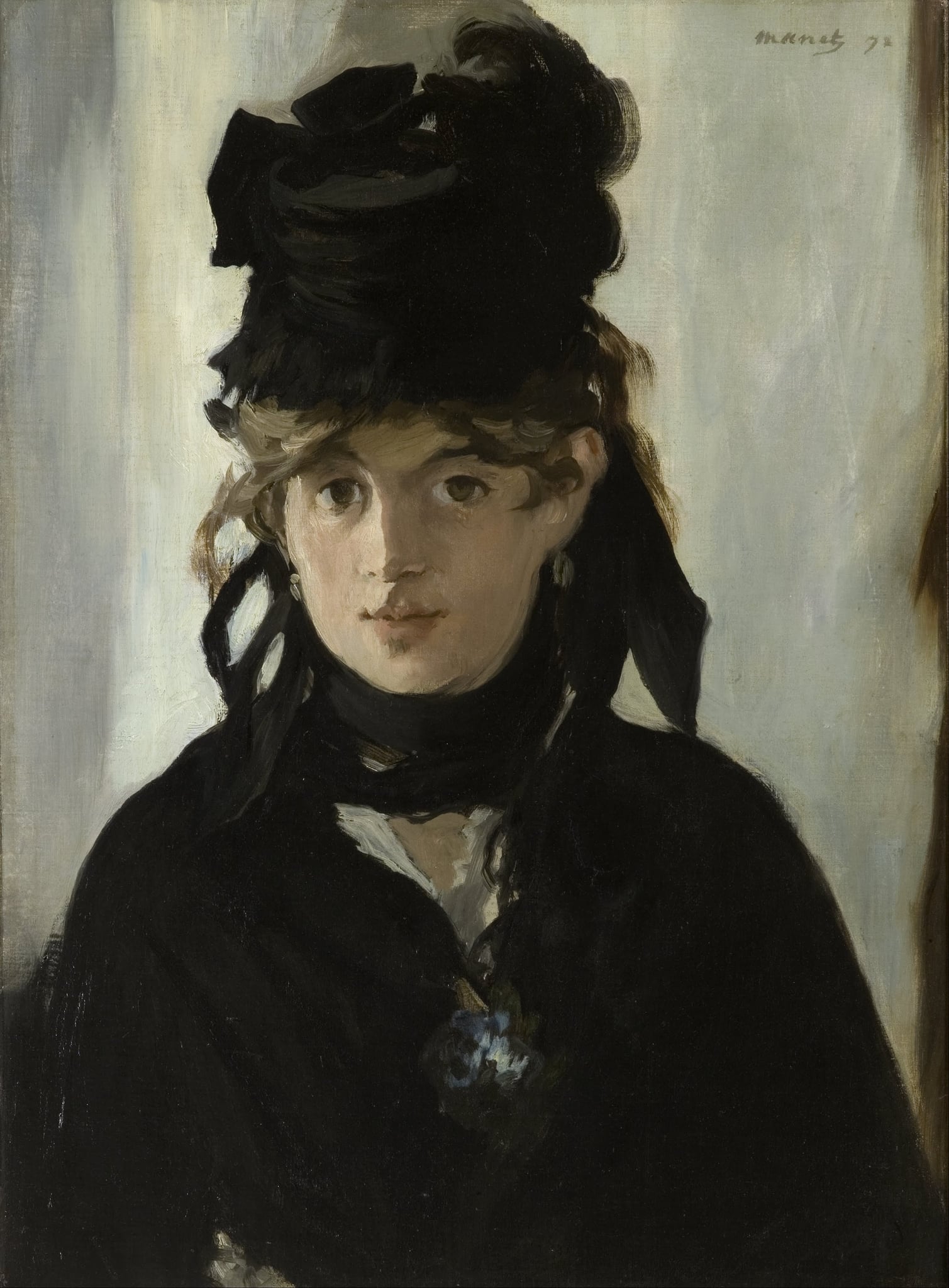
Berthe Morisot with a Bouquet of Violets
Édouard Manet (1872)
Édouard Manet’s Berthe Morisot with a Bouquet of Violets is a close, modern portrait built as a <strong>symphony in black</strong> punctuated by a tiny violet knot. Side‑light chisels the face from a cool, silvery ground while hat, scarf, and coat merge into one dark silhouette, and the eyes are painted strikingly <strong>black</strong> for effect <sup>[1]</sup>. The single touch of violets introduces a discreet, coded <strong>tenderness</strong> within the portrait’s refined restraint <sup>[1]</sup><sup>[3]</sup><sup>[4]</sup>.
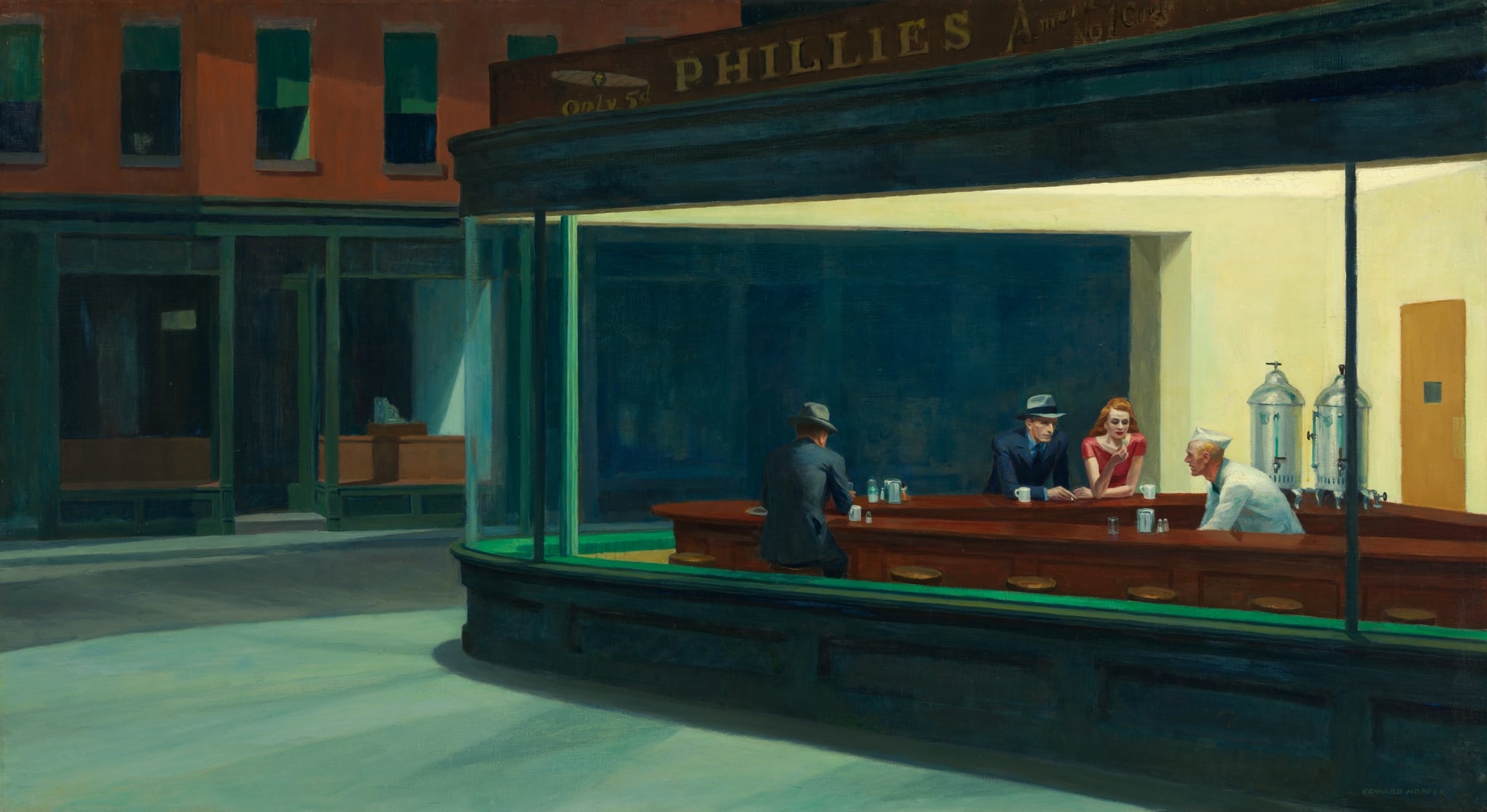
Nighthawks
Edward Hopper (1942)
Edward Hopper’s Nighthawks turns a corner diner into a sealed stage where <strong>fluorescent light</strong> and <strong>curved glass</strong> hold four figures in suspended time. The empty streets and the “PHILLIES” cigar sign sharpen the sense of <strong>urban solitude</strong> while hinting at wartime vigilance. The result is a cool, lucid image of modern life: illuminated, open to view, and emotionally out of reach.
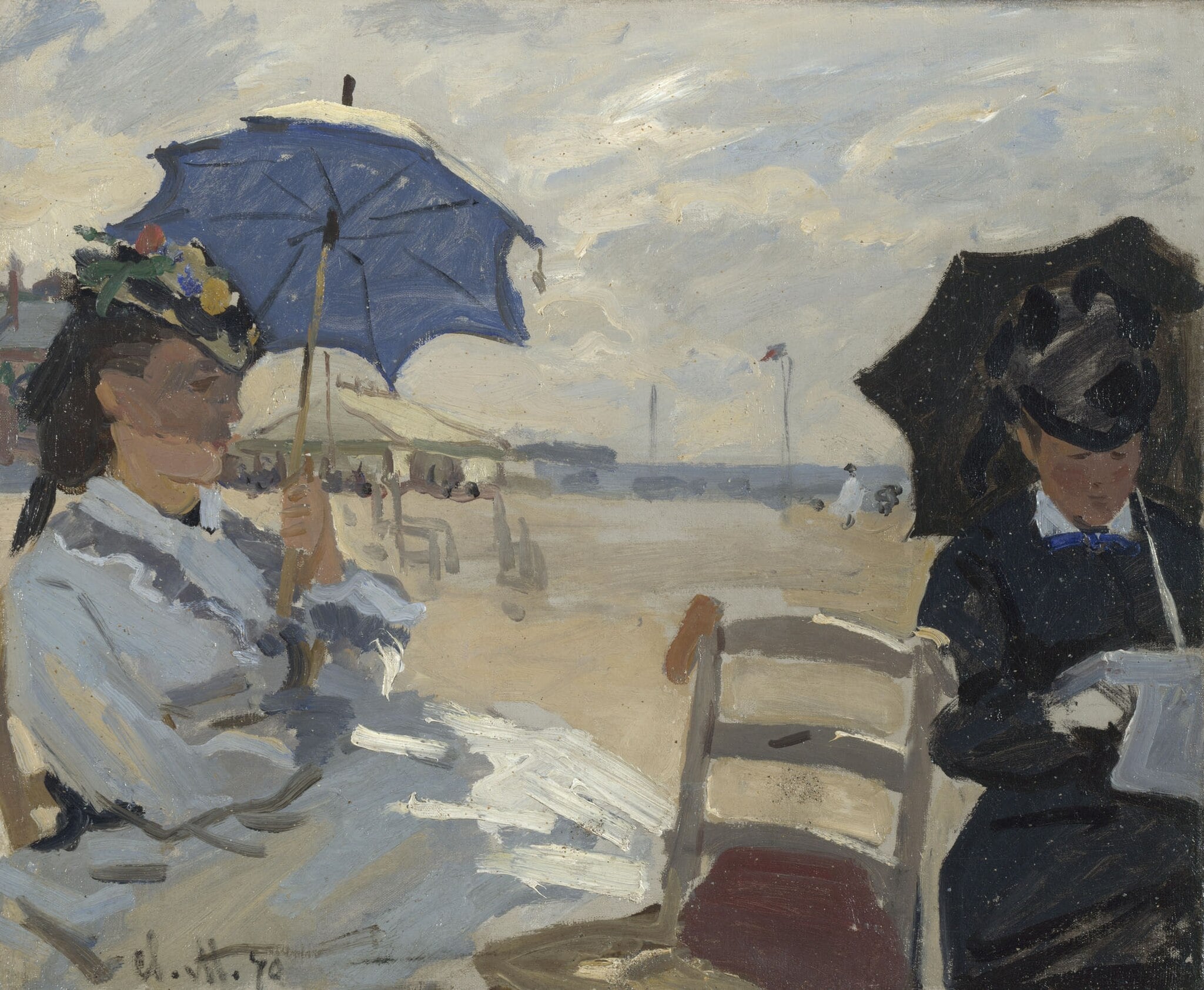
The Beach at Trouville
Claude Monet (1870)
Claude Monet’s The Beach at Trouville captures a wind-bright instant of <strong>modern leisure</strong> on the Normandy coast. Two women sit close to the viewer beneath a <strong>blue</strong> and a <strong>black parasol</strong>, their poses anchored against a hazy horizon where sea and sky fuse. Brisk strokes, embedded <strong>grains of sand</strong>, and snapshot-like <strong>cropping</strong> turn weather and time itself into the subject <sup>[1]</sup>.
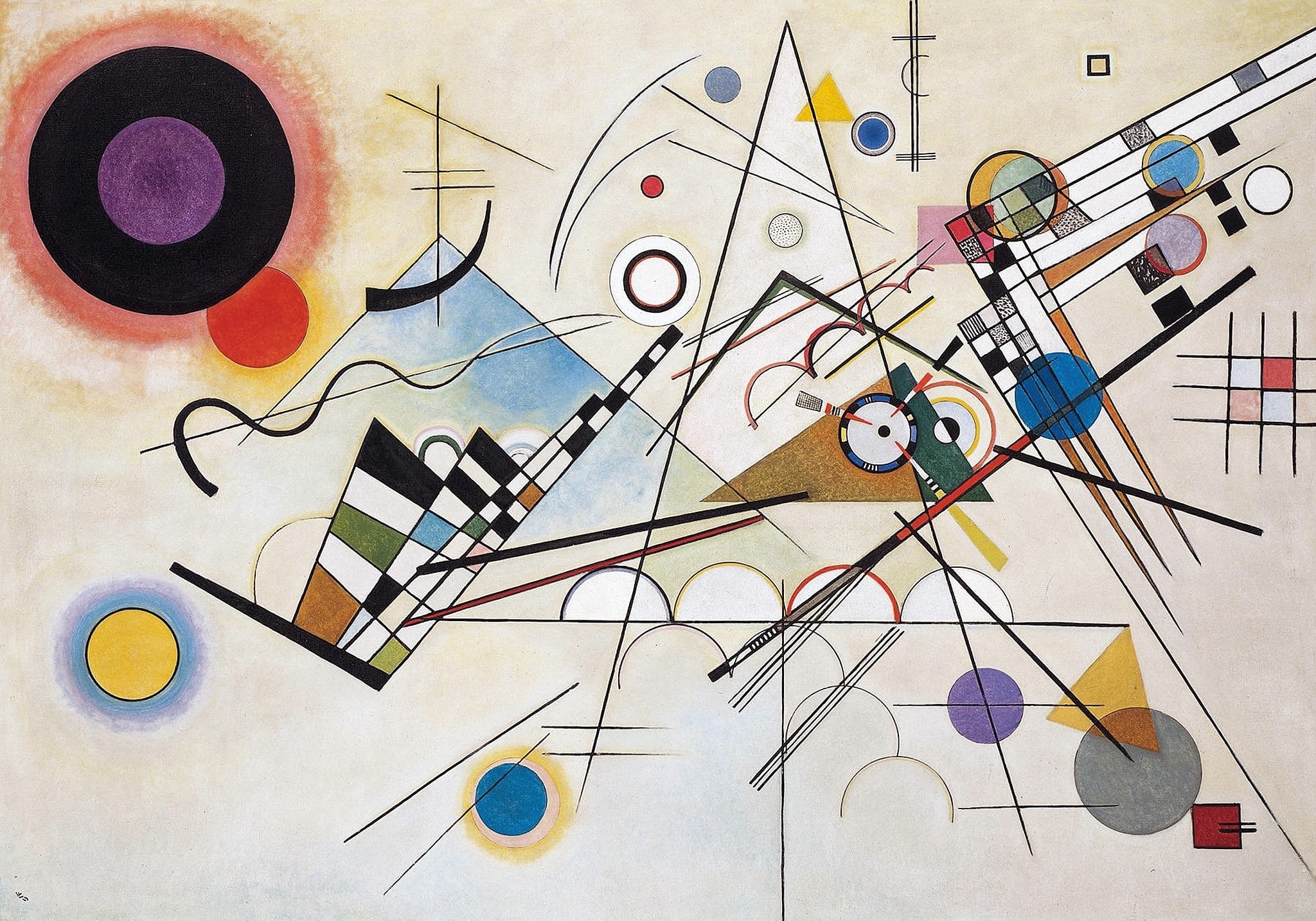
Composition VIII
Wassily Kandinsky (1923)
Composition VIII stages a <strong>musical drama in geometry</strong>: circles, vectors, and triangles surge across a cream field in calibrated counterpoint. A <strong>brooding black circle</strong> at left sets the tonal center while grids, checkerboards, and compass-like dials organize bursts of color and rhythm. The canvas becomes a <strong>score of invisible harmonies</strong>, where pure form conveys feeling.
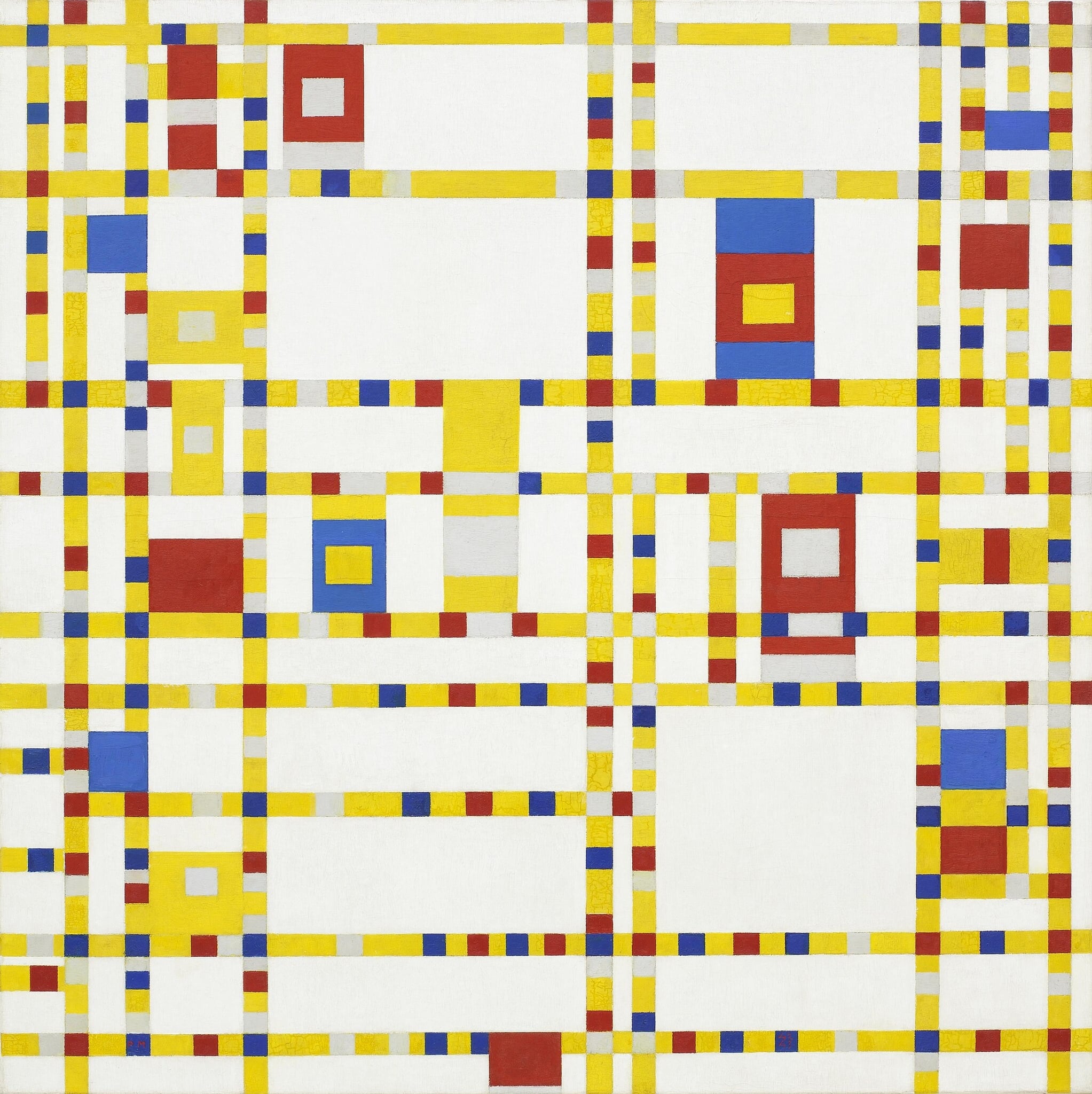
Broadway Boogie Woogie
Piet Mondrian (1942–1943)
Mondrian converts New York’s pulse into a <strong>vibrating grid</strong> of color. In place of black bars, intersecting <strong>yellow bands</strong> studded with red, blue, white, and light gray units generate a <strong>syncopated rhythm</strong> across wide white blocks that read as pauses and city blocks <sup>[1]</sup><sup>[2]</sup>.
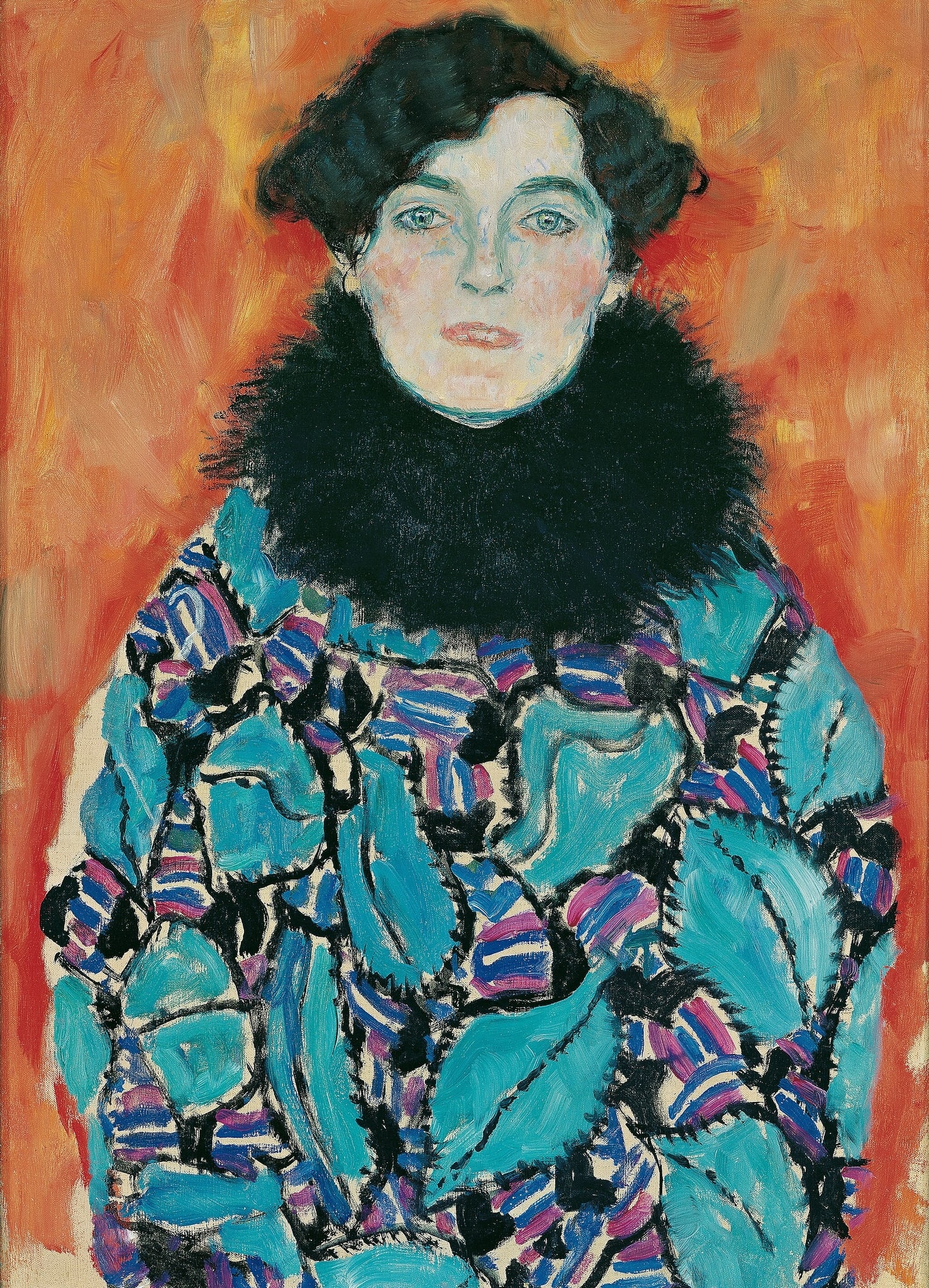
Johanna Staude
Gustav Klimt (1917/1918)
<strong>Johanna Staude</strong> distills Klimt’s late style into a charged encounter between a cool, impassive face and a blazing orange field. The sitter’s head is isolated by a <strong>black feather collar</strong>, while a <strong>Wiener Werkstätte</strong> blouse in turquoise leaves and violet stripes surges forward as a near-abstract surface <sup>[1]</sup><sup>[2]</sup>. Painted in 1917/1918 and left <strong>unfinished</strong> at the mouth, it becomes a poised emblem of modern identity in Vienna on the eve of Klimt’s death <sup>[1]</sup><sup>[2]</sup><sup>[5]</sup>.
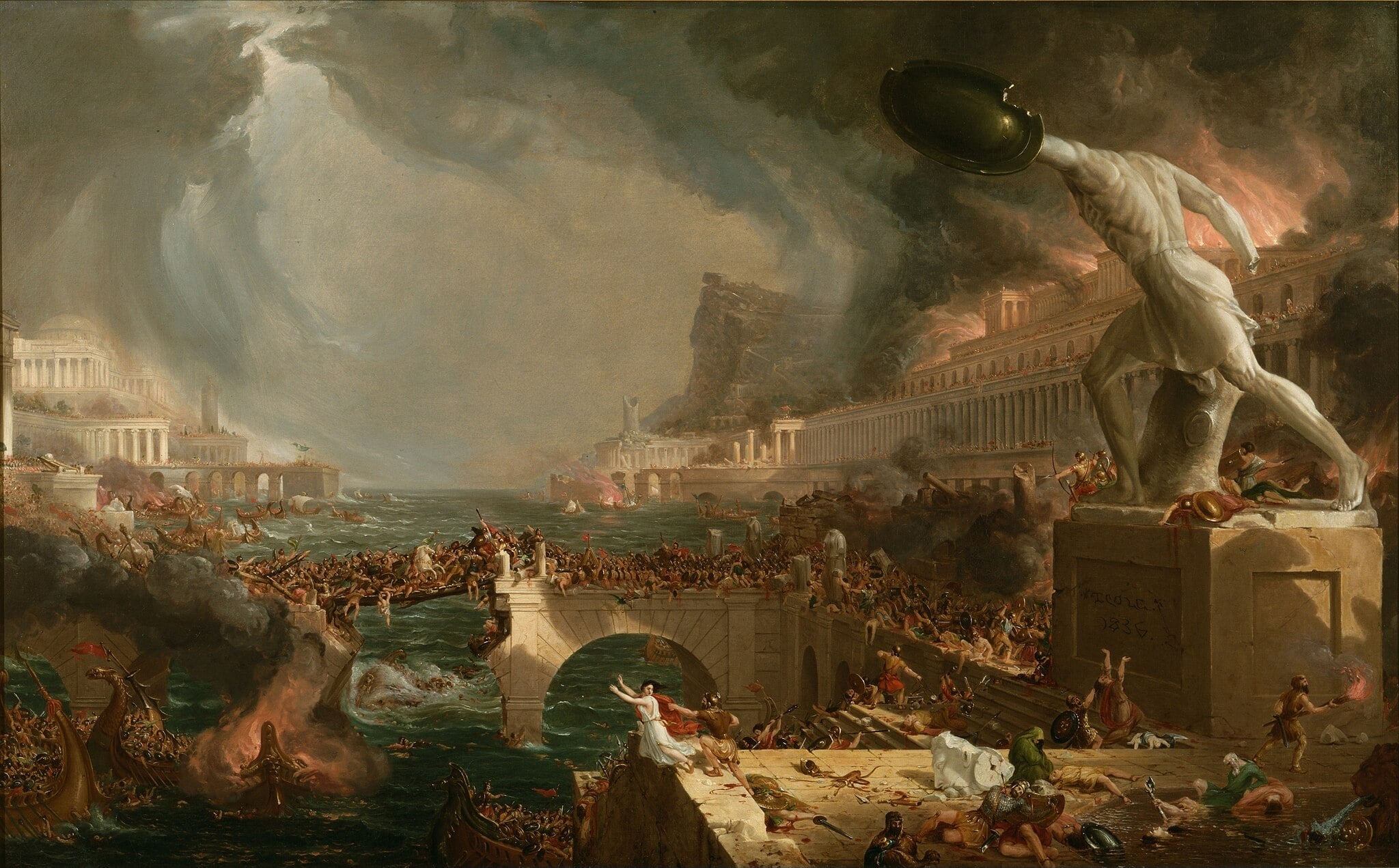
The Course of Empire: Destruction
Thomas Cole (1836)
Thomas Cole’s The Course of Empire: Destruction plunges a once‑ordered classical city into <strong>apocalyptic collapse</strong>. A <strong>collapsing bridge</strong>, <strong>burning colonnades</strong>, and a <strong>headless gladiator statue</strong> preside over panicked crowds and flaming warships, while a fixed mountain crag endures beyond the chaos. The canvas stages <strong>moral retribution</strong>: empire’s luxury curdles into vice and is swept away by combined human and elemental fury <sup>[1]</sup><sup>[2]</sup>.
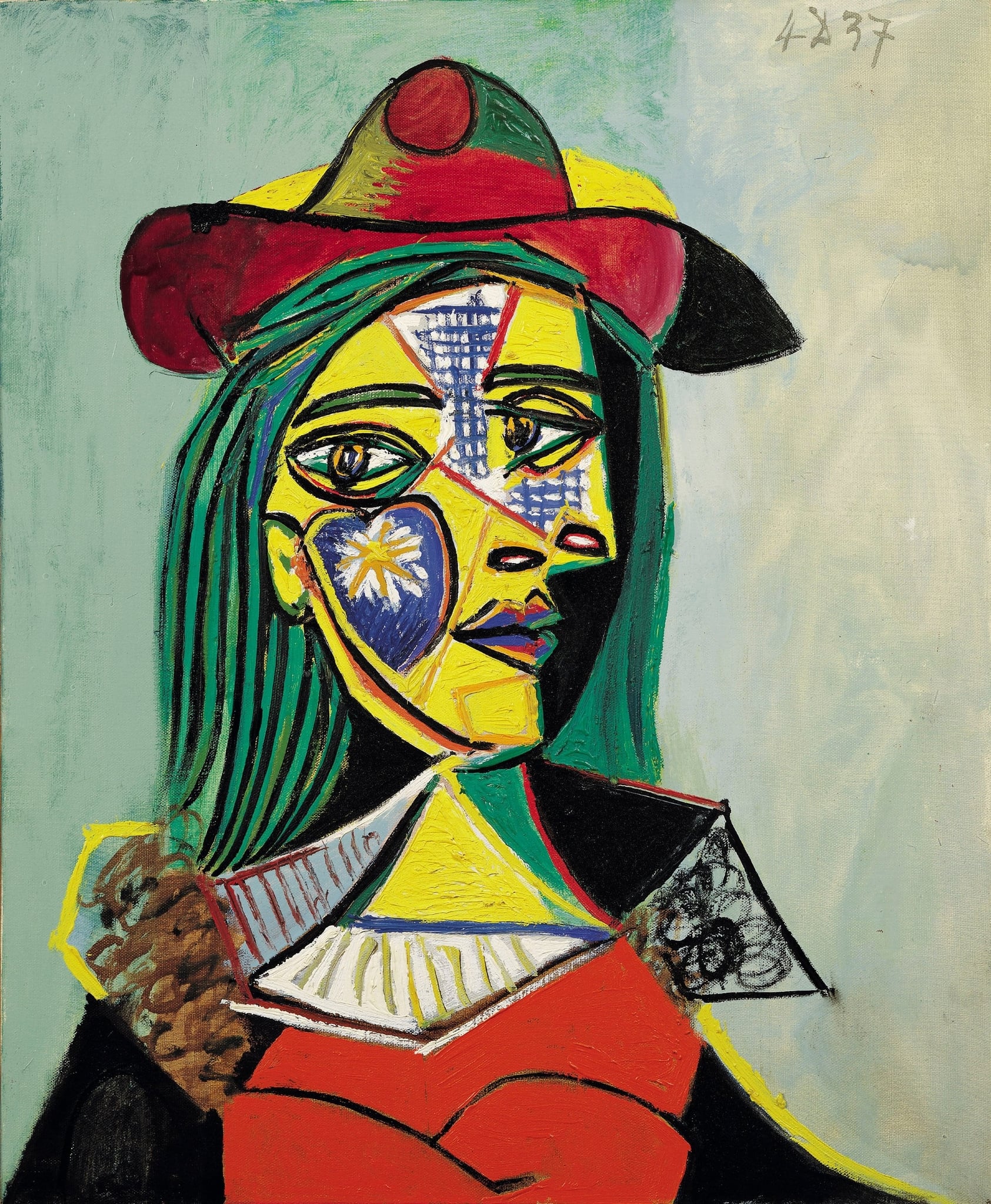
Woman in Hat and Fur Collar (Marie-Thérèse Walter)
Pablo Picasso (1937)
Picasso’s Woman in Hat and Fur Collar (Marie-Thérèse Walter) crystallizes a lover’s image into a <strong>split, mask-like icon</strong>: profile and frontal views fuse under a red hat while emerald hair cascades over a russet fur collar. Electric yellows, greens, and reds, bound by <strong>black contours</strong>, turn intimacy into a modern emblem of desire and poise <sup>[1]</sup>.
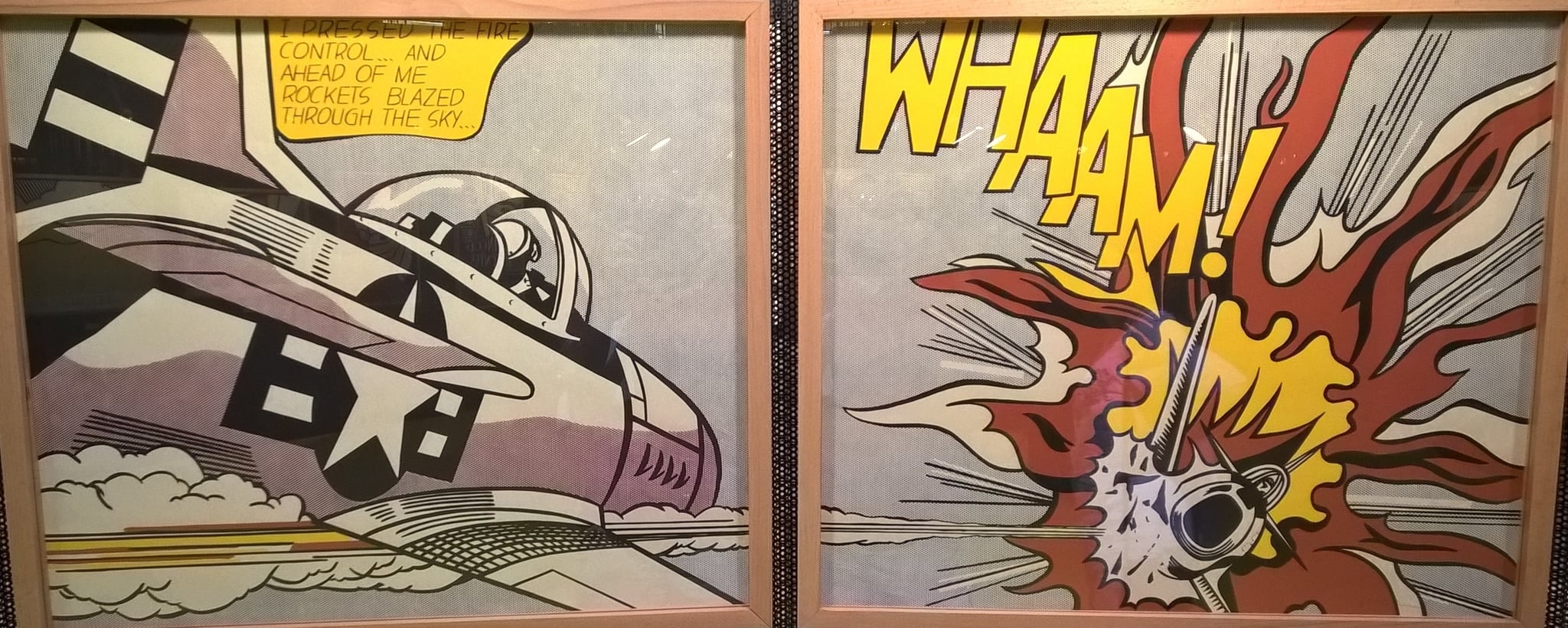
Whaam!
Roy Lichtenstein (1963)
Whaam! stages a split-second airstrike as a two-panel, comic-derived spectacle where <strong>cool control</strong> meets <strong>hot impact</strong>. Lichtenstein converts lethal action into <strong>graphic codes</strong>—Ben-Day dots, speech balloon, and the yellow onomatopoeia “WHAAM!”—to expose how mass media packages warfare as crisp design <sup>[1]</sup><sup>[3]</sup><sup>[5]</sup>.
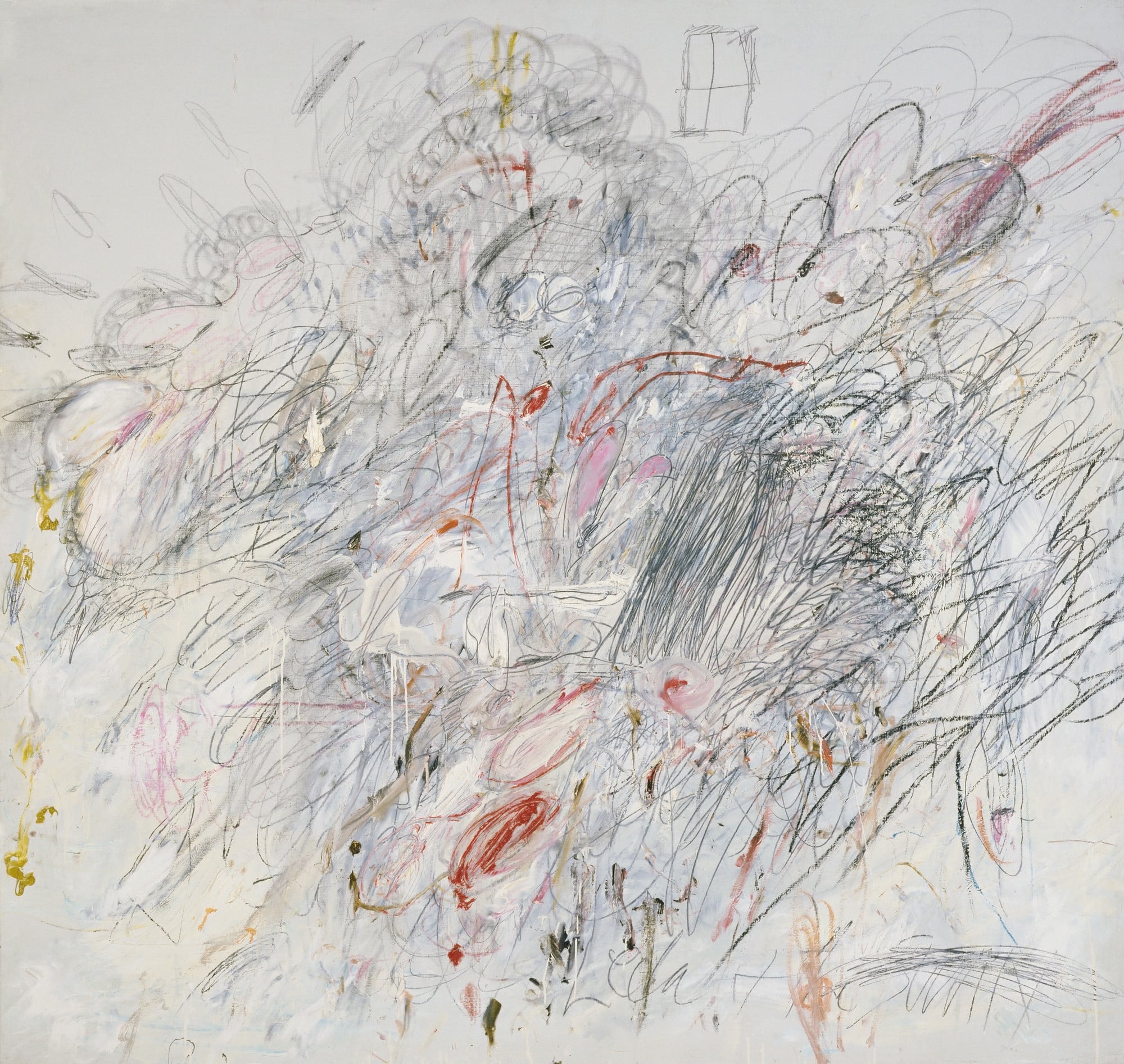
Leda and the Swan
Cy Twombly (1962)
Cy Twombly’s Leda and the Swan condenses the Greek myth into an <strong>orgiastic collision</strong> of marks: graphite scrawls, smeared whites, blush pinks, and eruptive reds radiate from a dark, compressed vortex. A sketched <strong>window-like rectangle</strong>, heart and phallic glyphs puncture the storm, making desire and violence legible as emblems rather than images <sup>[1]</sup>.
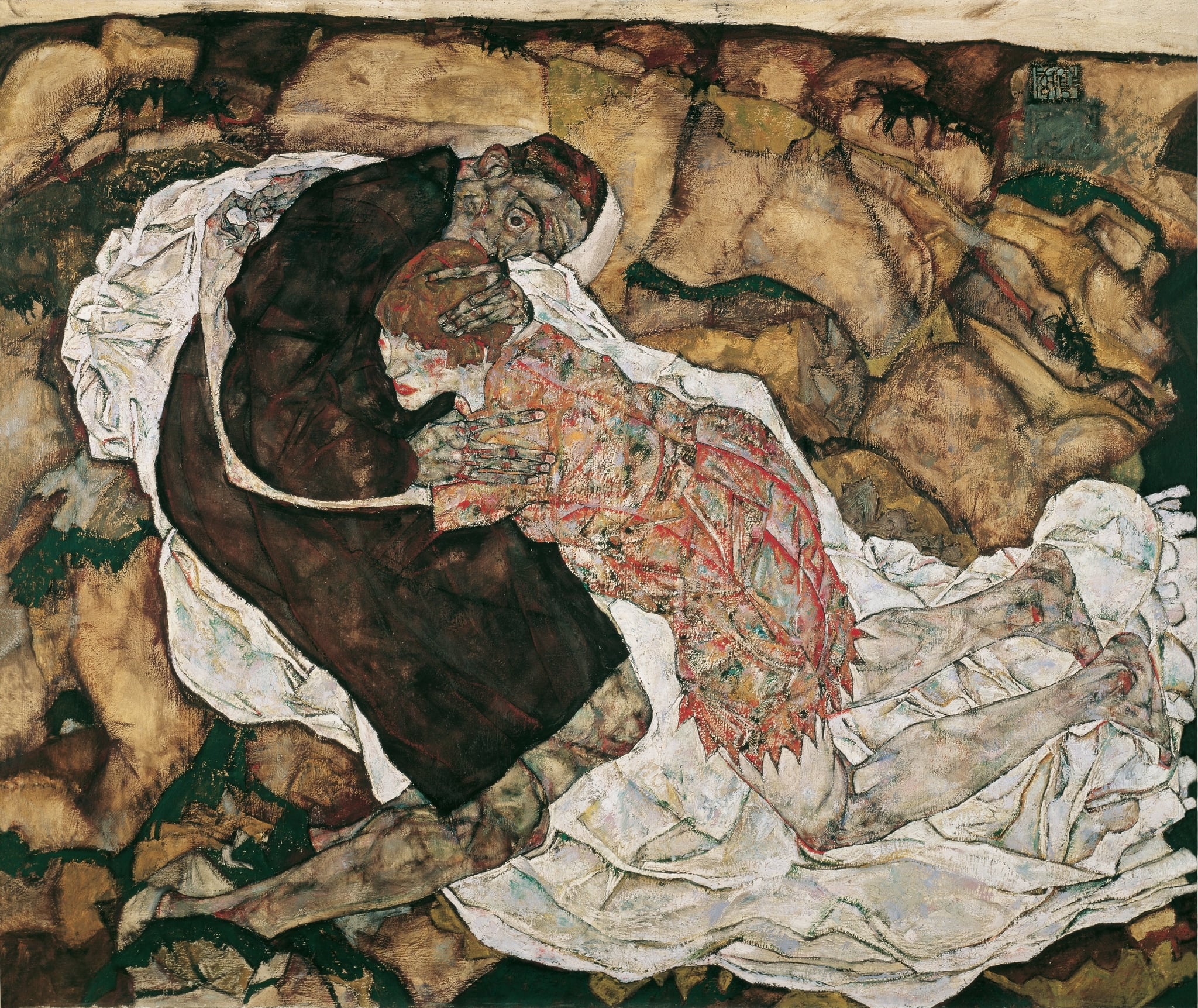
Death and the Maiden
Egon Schiele (1915)
In Death and the Maiden, Egon Schiele fuses <strong>eros and thanatos</strong> into a single, uneasy embrace: a gaunt, hooded figure in dark robes wraps himself around a young woman whose patterned dress and red mouth still signal life. On a crumpled <strong>white cloth</strong>—at once bed and shroud—their angular, ashen bodies kneel against <strong>barren ocher earth</strong>, turning intimacy into a memento of parting. The scene asserts that tenderness and terror are inseparable, especially under the shadow of war.
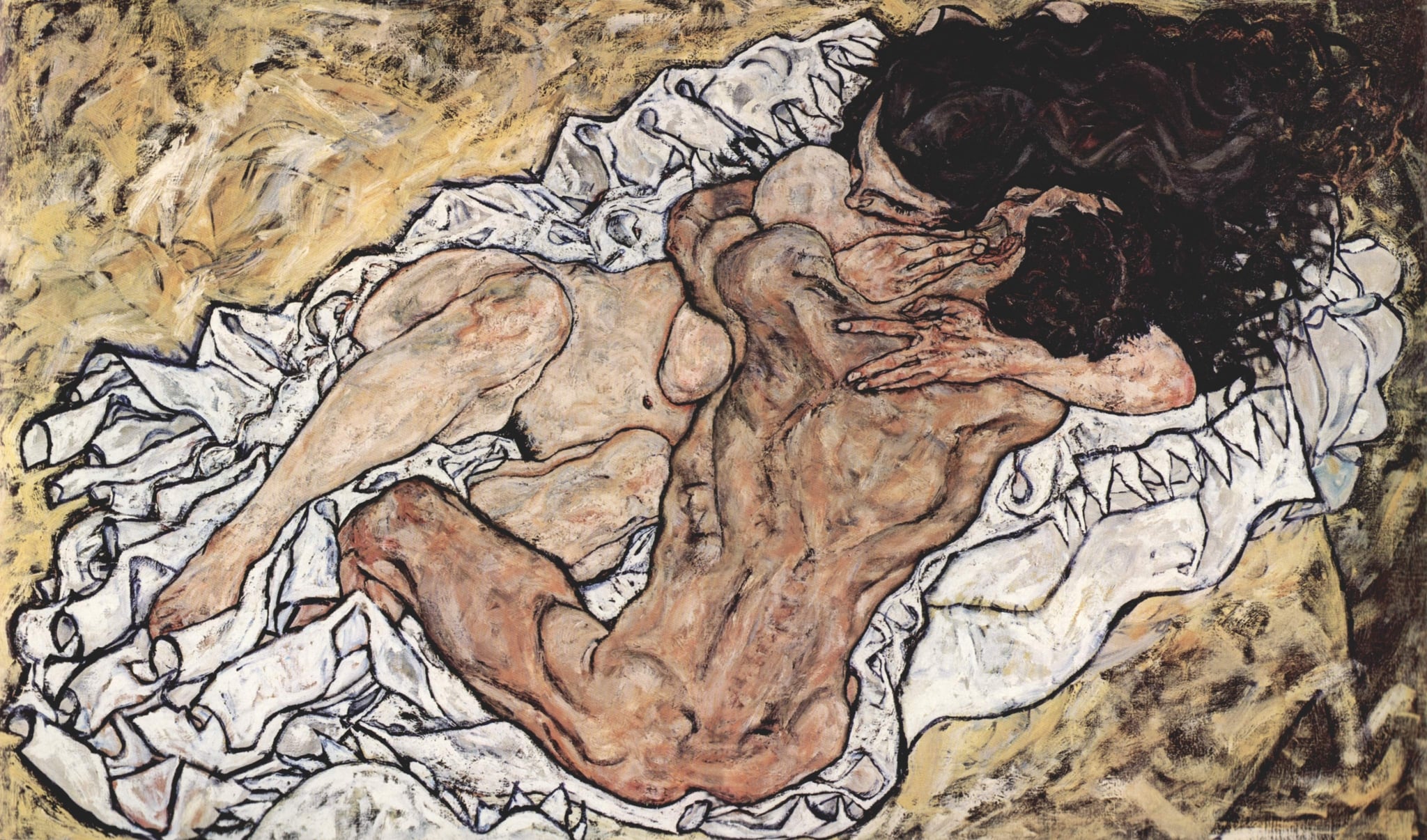
The Embrace
Egon Schiele (1917)
The Embrace fuses two nude bodies into a single, trembling organism, where <strong>tenderness</strong> and <strong>separation anxiety</strong> coexist. Schiele’s taut contours, proliferating <strong>hands</strong>, and storm‑like <strong>sheet</strong> make desire feel both sheltering and perilous <sup>[1]</sup>. From the overhead view, intimacy reads as a pact against isolation and a recognition of the body’s <strong>fragility</strong>.
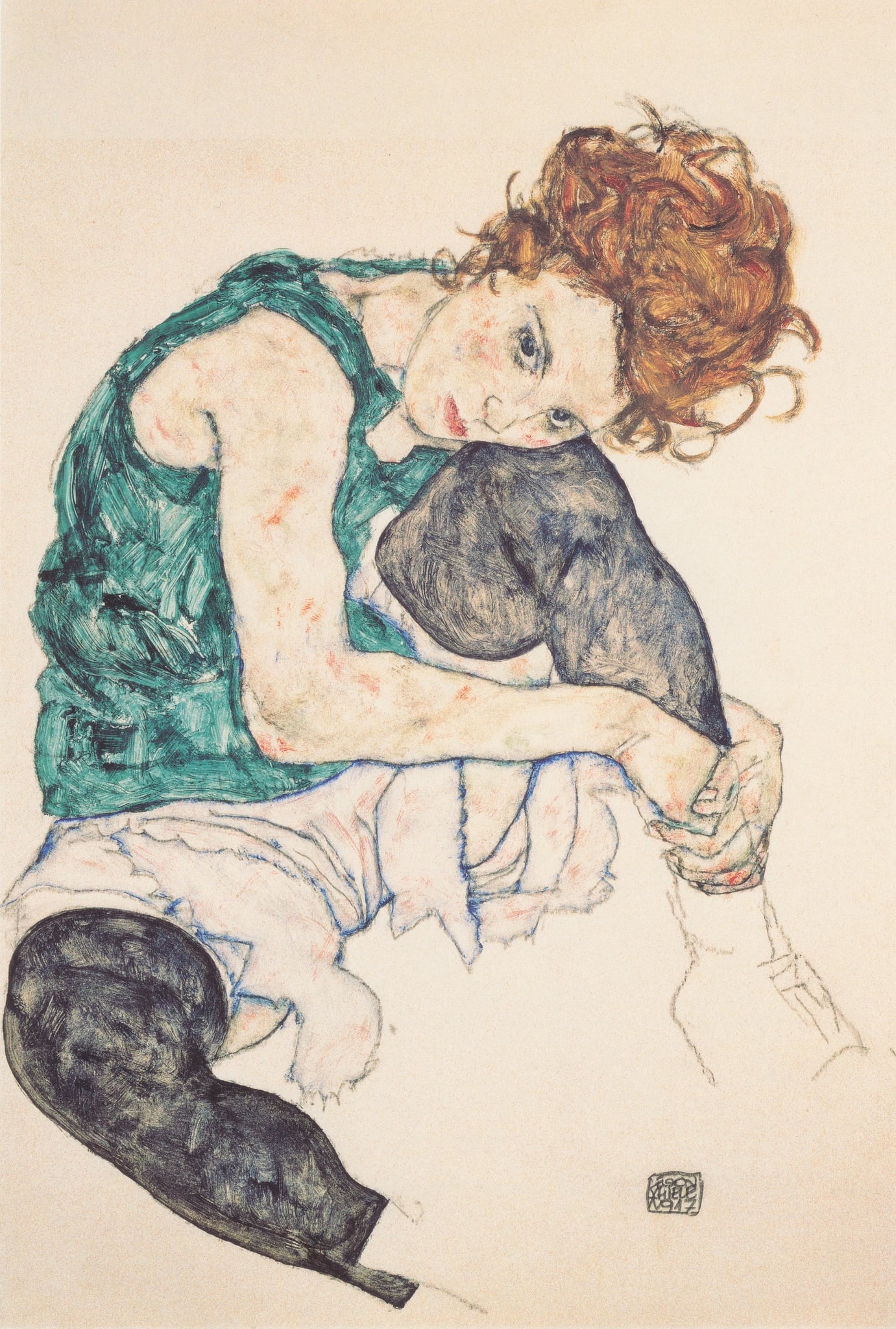
Seated Woman with Bent Knee
Egon Schiele (1917)
Egon Schiele’s Seated Woman with Bent Knee compresses the body into a tense, looping knot, fusing <strong>erotic charge</strong> with <strong>psychological vulnerability</strong>. The emerald bodice, inky stockings, and copper hair vibrate against a blank ground, while the sitter’s hands clamp her ankle, signaling <strong>self‑containment</strong> as much as display <sup>[1]</sup><sup>[3]</sup>.
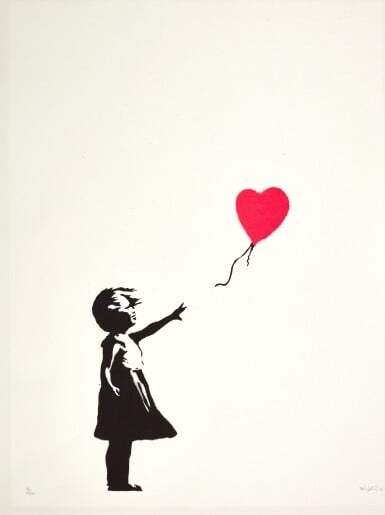
Girl with Balloon
Banksy (2002 (street motif); 2004–2005 (screenprint editions))
A lone, stenciled child reaches toward a bright red, heart-shaped balloon drifting into the blank field—an image that compresses <strong>hope</strong>, <strong>loss</strong>, and <strong>resilience</strong> into a single gesture. The monochrome figure and the one note of red make Girl with Balloon a portable emblem that moves easily from the street to prints and global campaigns <sup>[1]</sup><sup>[2]</sup>.
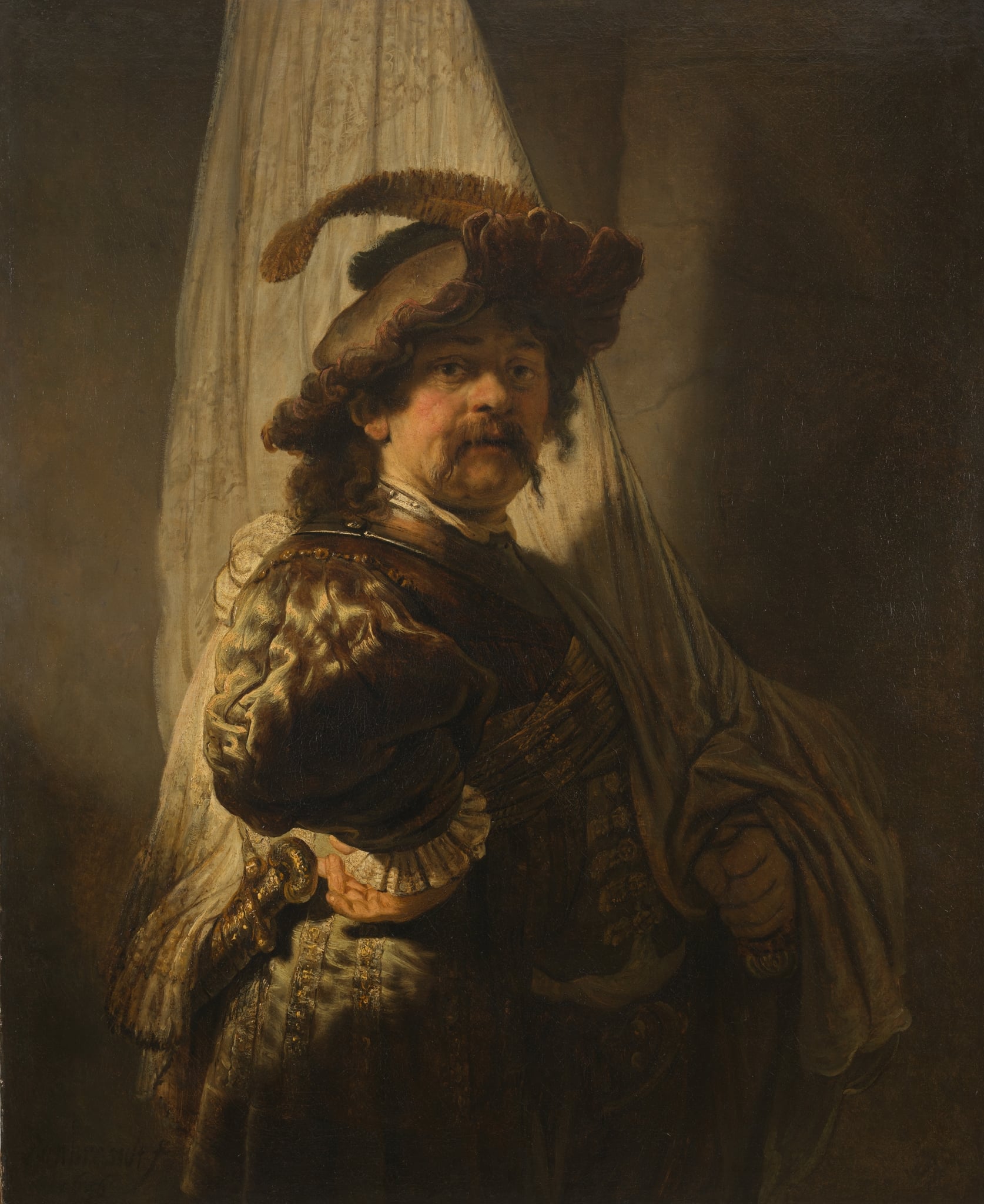
The Standard Bearer
Rembrandt van Rijn (1636)
Rembrandt van Rijn’s The Standard Bearer (1636) thrusts a single figure into a wedge of light, his satin sleeve and metal <strong>gorget</strong> flashing as the pale <strong>standard</strong> billows behind him. The diagonal flag and forward-leaning stance assert <strong>resolve</strong> and <strong>readiness</strong>, while the enveloping shadow and wary gaze convert civic office into a meditation on <strong>honor</strong> and the solitary <strong>weight of leadership</strong> <sup>[1]</sup><sup>[4]</sup>.
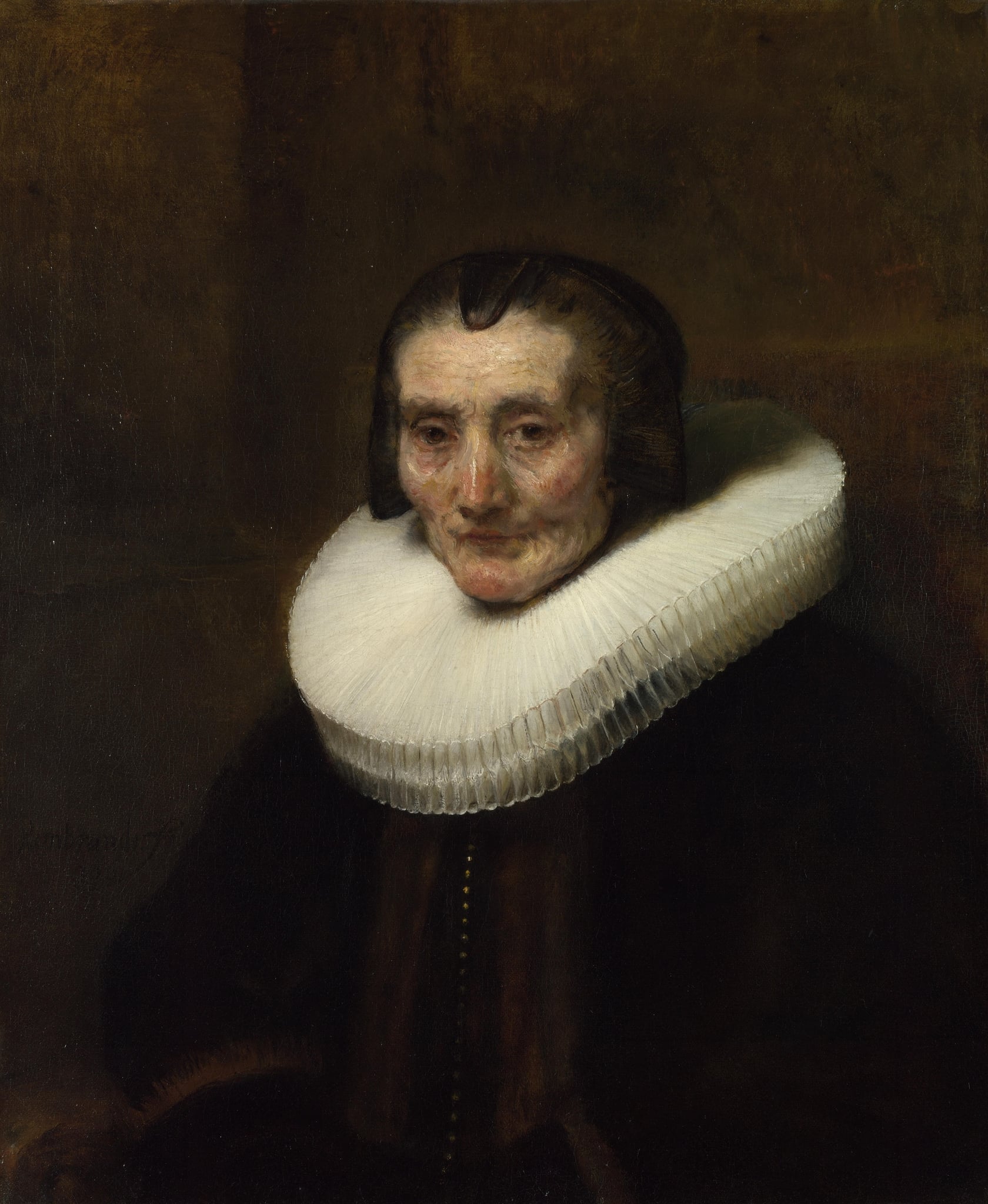
Portrait of Margaretha de Geer, Wife of Jacob Trip
Rembrandt van Rijn (about 1661)
Rembrandt van Rijn’s Portrait of Margaretha de Geer, Wife of Jacob Trip crystallizes late‑style <strong>chiaroscuro</strong> and a fearless study of <strong>age and dignity</strong>. The incandescent <strong>millstone ruff</strong> gathers and emits light against a brown void, while the dark gown and measured posture project wealth disciplined by piety <sup>[1]</sup>.