The Course of Empire: Destruction
by Thomas Cole
Study Print Studio
Create a personal study print
Build a companion study sheet around the part of this painting that speaks to you most. Choose a detail, shape an interpretation, and walk away with something personal and display-worthy.
Fast Facts
- Year
- 1836
- Medium
- Oil on canvas
- Dimensions
- 99.7 × 161.3 cm
- Location
- New-York Historical Society, New York
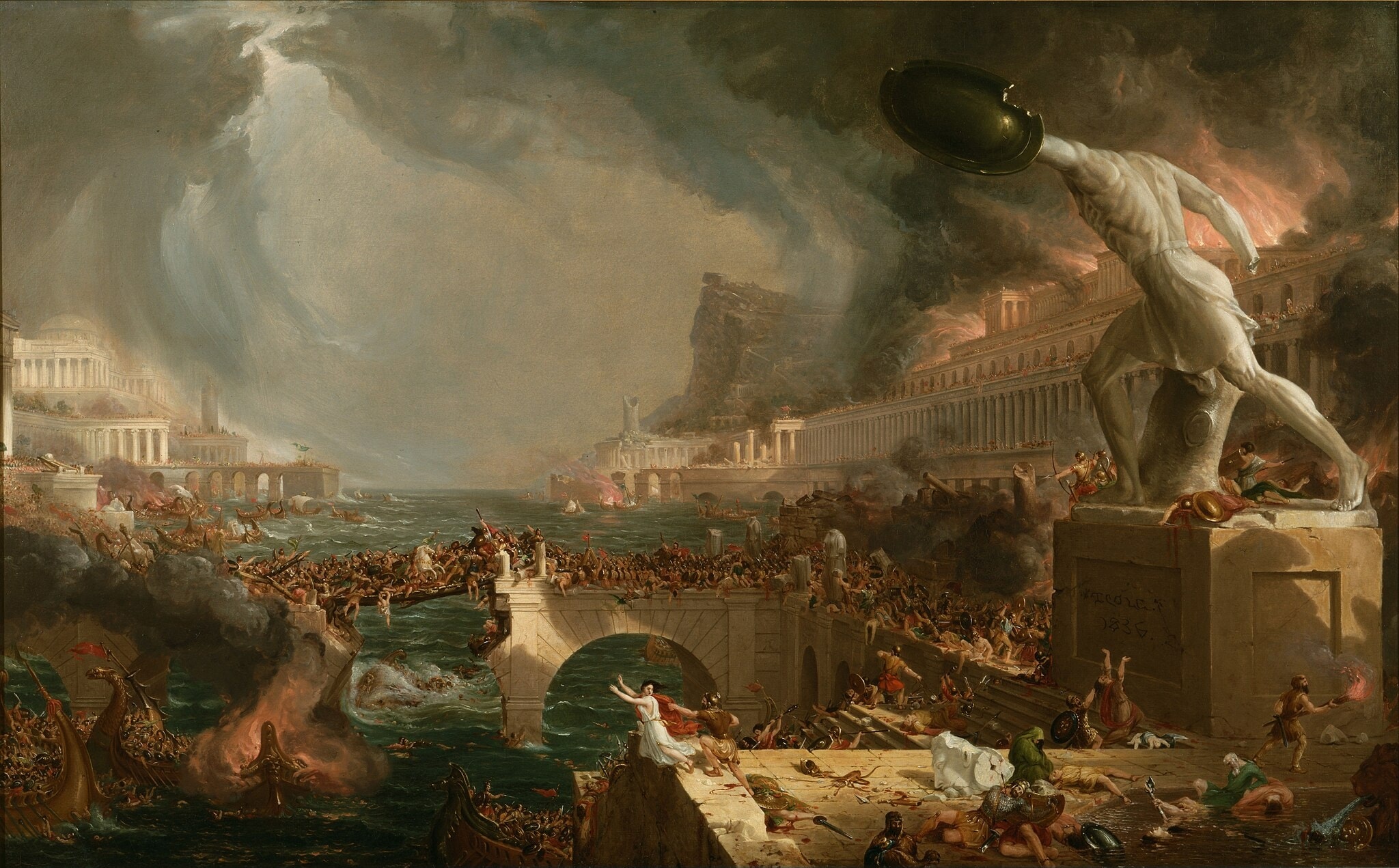
Click on any numbered symbol to learn more about its meaning
Meaning & Symbolism
Explore Deeper with AI
Ask questions about The Course of Empire: Destruction
Popular questions:
Powered by AI • Get instant insights about this artwork
Interpretations
Formal Analysis: Choreography of Collapse
Source: The Metropolitan Museum of Art (catalog: Barringer & Kornhauser); Thomas Cole National Historic Site
Transatlantic Sources: From Martin’s Pandemonium to an American Sermon
Source: Thomas Cole National Historic Site; The Metropolitan Museum of Art (Thomas Cole’s Journey: Atlantic Crossings)
Proto‑Environmental Reading: Desecration as Systemic Feedback
Source: Thomas Cole, Essay on American Scenery (1836); New‑York Historical Society (Nature and the American Vision label via TFAOI)
Gendered Atrocity and the Broken Social Compact
Source: Thomas Cole National Historic Site; The Metropolitan Museum of Art (exhibition materials)
Jacksonian Resonances: Market, Expansion, and Moral Risk
Source: The Metropolitan Museum of Art (Thomas Cole’s Journey: Atlantic Crossings); New‑York Historical Society
Medium Reflexivity: Art Endangered, Art Inscribed
Source: Thomas Cole National Historic Site; The Metropolitan Museum of Art
Related Themes
About Thomas Cole
More by Thomas Cole
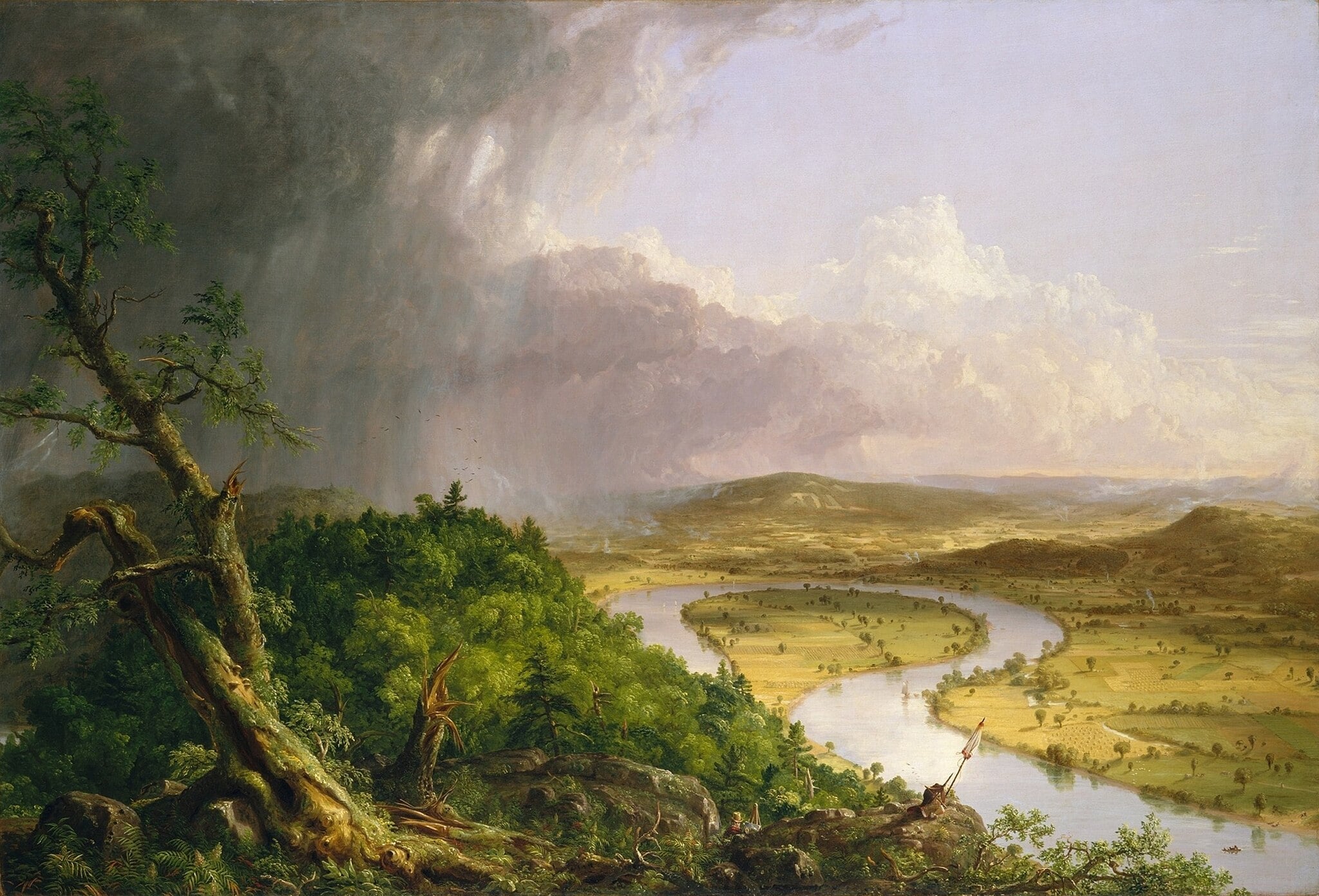
The Oxbow (View from Mount Holyoke)
Thomas Cole (1836)
Thomas Cole’s The Oxbow (View from Mount Holyoke) juxtaposes <strong>storm-lashed wilderness</strong> at left with <strong>sunlit, cultivated farmland</strong> at right, using a panoramic sweep of the Connecticut River’s curve. A tiny figure with an easel—Cole’s self-insertion—stands between realms, turning sight into judgment. The painting frames America’s landscape as both <strong>sublime</strong> and <strong>pastoral</strong>, a place of awe, promise, and warning.
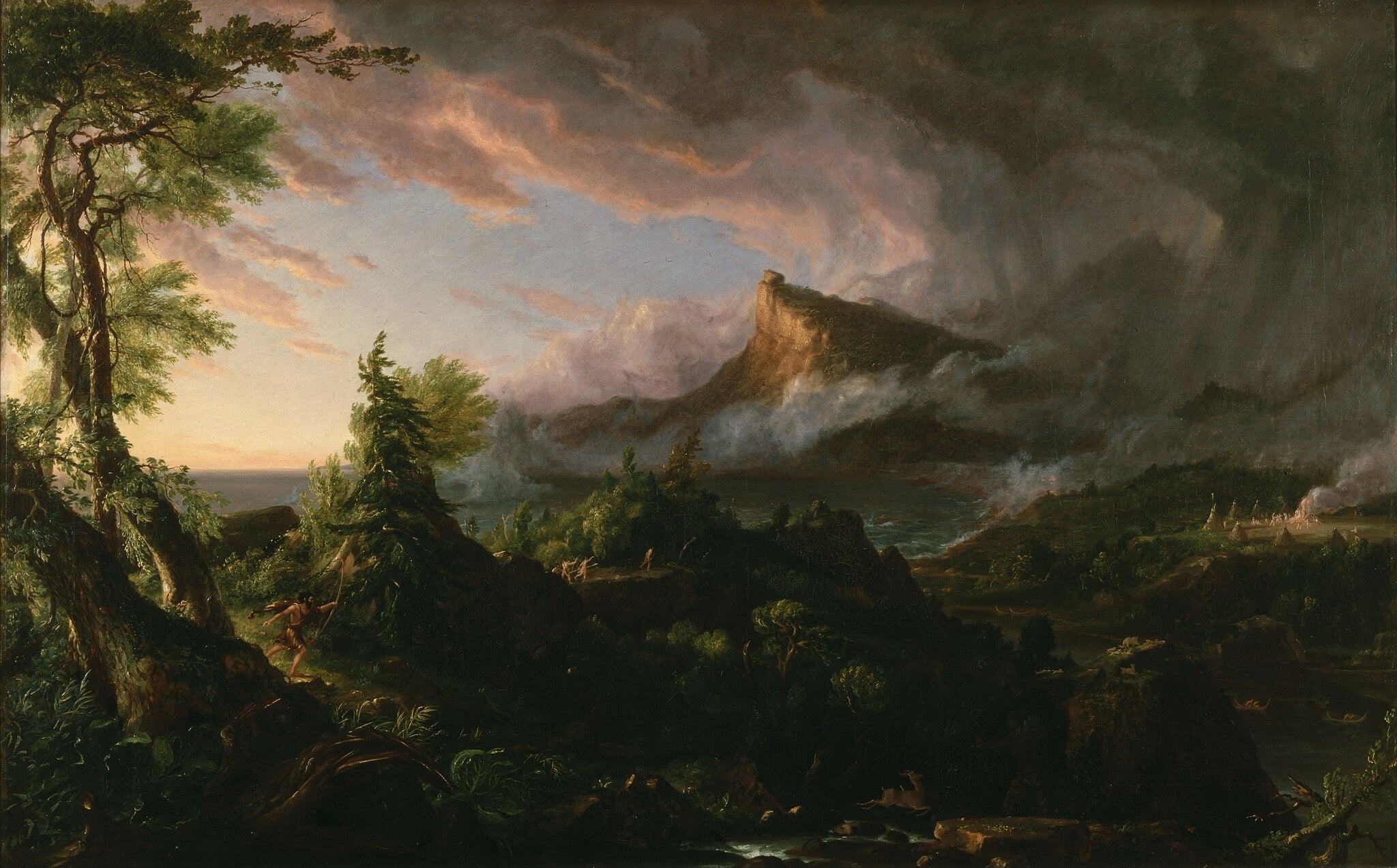
The Course of Empire: The Savage State
Thomas Cole (c. 1834 (series 1834–1836))
Thomas Cole’s The Course of Empire: The Savage State inaugurates his five-part cycle with a landscape ruled by <strong>wildness</strong> and <strong>origin</strong>. Dawn breaks at left as storm clouds rake a flat-topped crag, while a hunter looses an arrow, canoes cut the river, and smoke lifts from skin tents—signals of a society at the threshold of history <sup>[1]</sup><sup>[2]</sup><sup>[3]</sup>.