The Course of Empire: The Savage State
by Thomas Cole
Study Print Studio
Create a personal study print
Build a companion study sheet around the part of this painting that speaks to you most. Choose a detail, shape an interpretation, and walk away with something personal and display-worthy.
Fast Facts
- Year
- c. 1834 (series 1834–1836)
- Medium
- Oil on canvas
- Dimensions
- 99.7 × 160.6 cm
- Location
- New-York Historical Society, New York
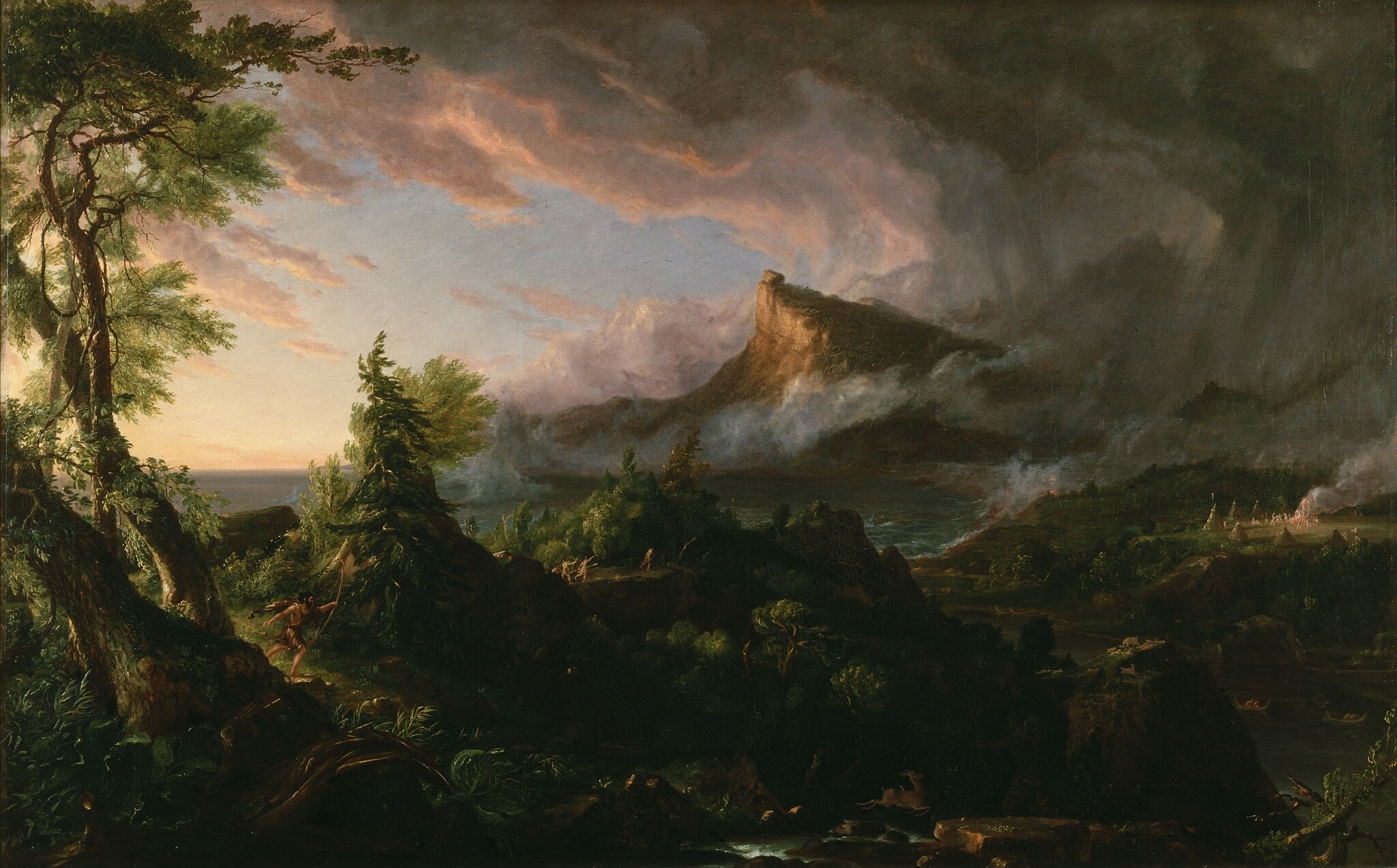
Click on any numbered symbol to learn more about its meaning
Meaning & Symbolism
Explore Deeper with AI
Ask questions about The Course of Empire: The Savage State
Popular questions:
Powered by AI • Get instant insights about this artwork
Interpretations
Environmental Aesthetics and Early Conservation Ethos
Source: Thomas Cole, Essay on American Scenery; The Met (2018); New‑York Historical Society
Transatlantic Style: Importing History Painting into Landscape
Source: Thomas Cole National Historic Site; The Met (Thomas Cole’s Journey: Atlantic Crossings, 2018); Princeton University Art Museum
Republican Virtue vs. Luxury: A Political-Economy Reading
Source: Alan Wallach; The Met (2018); New‑York Historical Society
Indigenous Presence and the Settler-Colonial Optic
Source: Princeton University Art Museum; Thomas Cole National Historic Site; New‑York Historical Society
Site-Constancy as Historical Method
Source: Thomas Cole National Historic Site (series overview); Princeton University Art Museum; The Met (collection label)
Meteorology of Time: Fate, Choice, and Visual Prophecy
Source: Princeton University Art Museum; The Met (2018); Thomas Cole National Historic Site (series overview)
Related Themes
About Thomas Cole
More by Thomas Cole
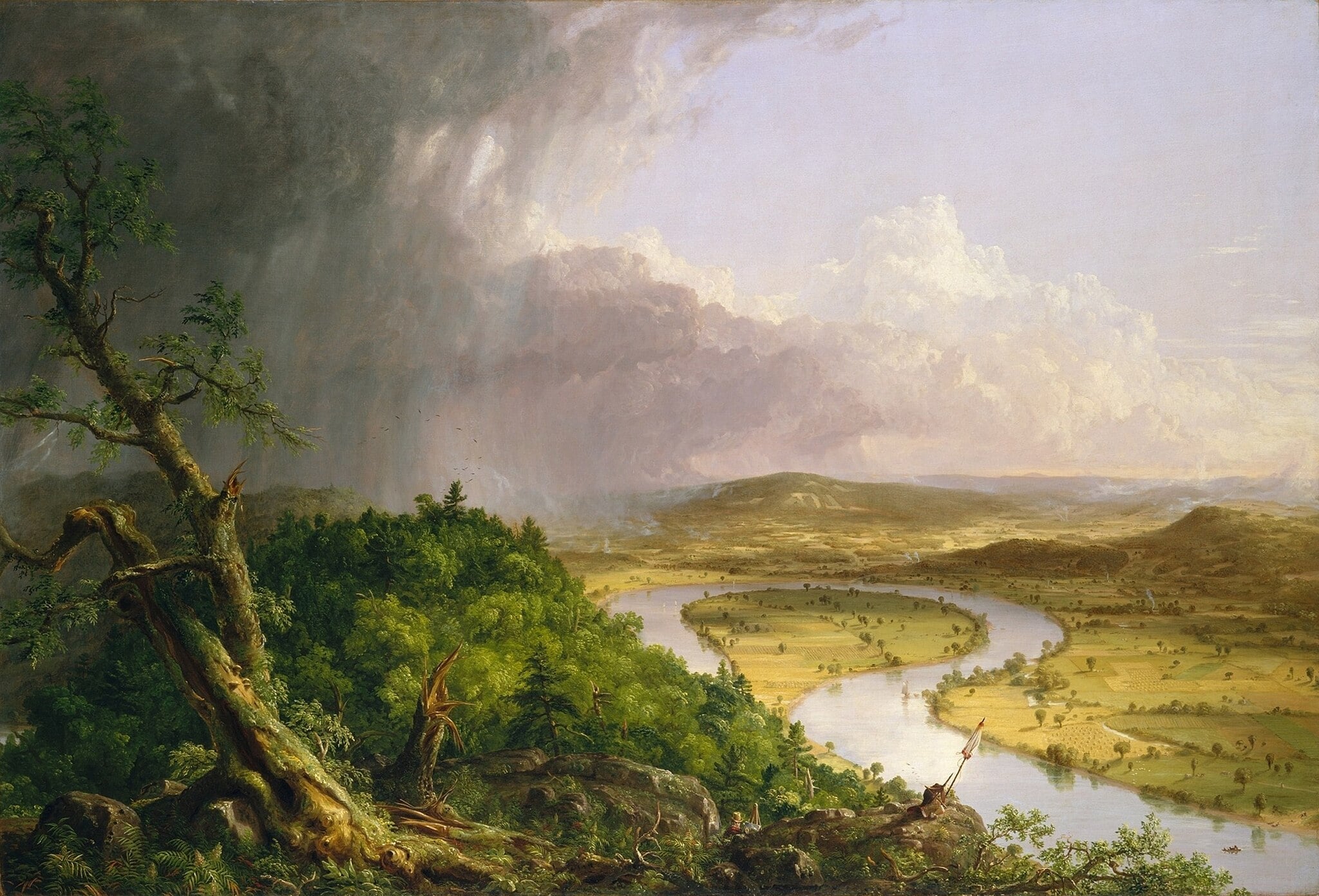
The Oxbow (View from Mount Holyoke)
Thomas Cole (1836)
Thomas Cole’s The Oxbow (View from Mount Holyoke) juxtaposes <strong>storm-lashed wilderness</strong> at left with <strong>sunlit, cultivated farmland</strong> at right, using a panoramic sweep of the Connecticut River’s curve. A tiny figure with an easel—Cole’s self-insertion—stands between realms, turning sight into judgment. The painting frames America’s landscape as both <strong>sublime</strong> and <strong>pastoral</strong>, a place of awe, promise, and warning.
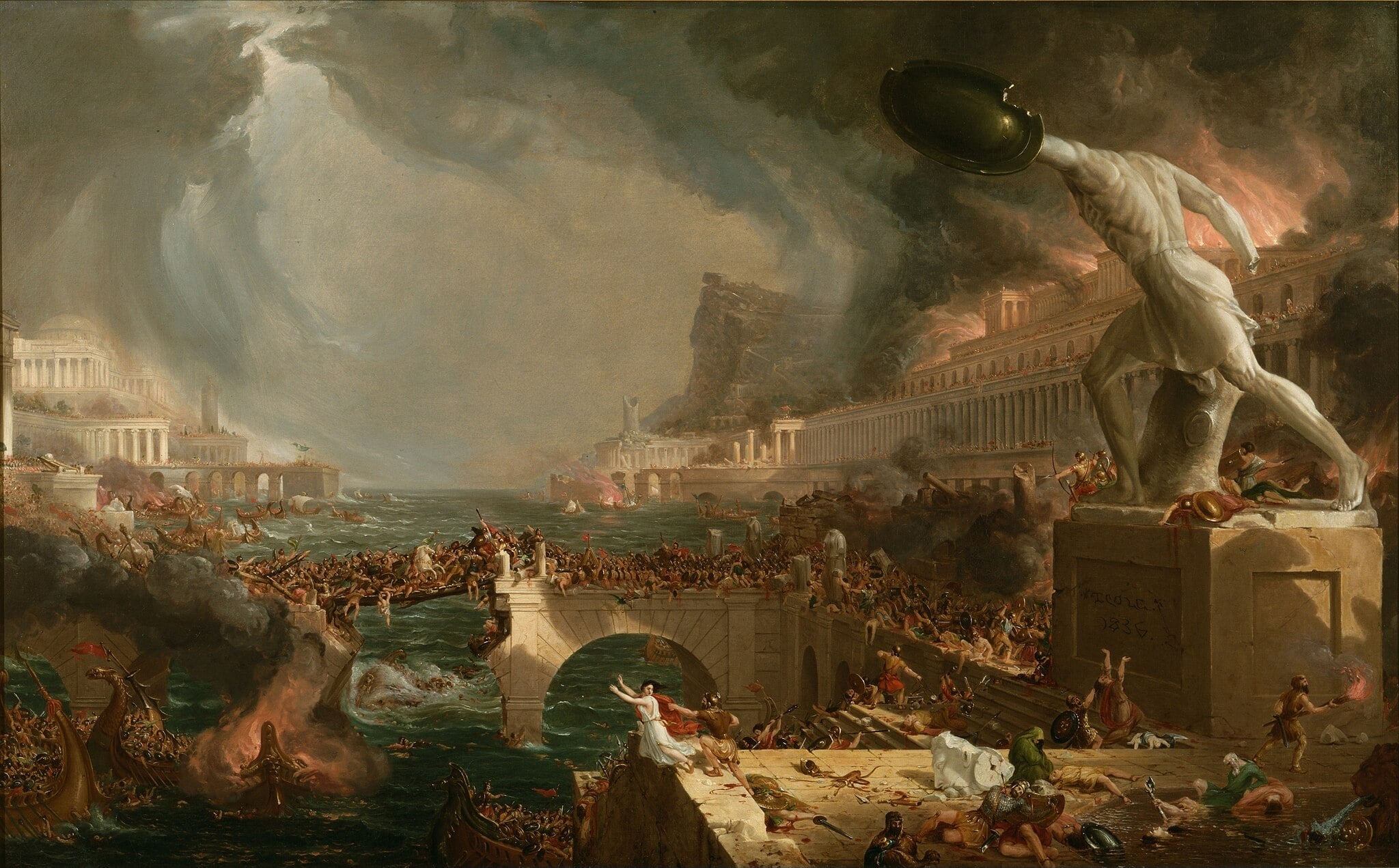
The Course of Empire: Destruction
Thomas Cole (1836)
Thomas Cole’s The Course of Empire: Destruction plunges a once‑ordered classical city into <strong>apocalyptic collapse</strong>. A <strong>collapsing bridge</strong>, <strong>burning colonnades</strong>, and a <strong>headless gladiator statue</strong> preside over panicked crowds and flaming warships, while a fixed mountain crag endures beyond the chaos. The canvas stages <strong>moral retribution</strong>: empire’s luxury curdles into vice and is swept away by combined human and elemental fury <sup>[1]</sup><sup>[2]</sup>.