The Oxbow (View from Mount Holyoke)
by Thomas Cole
Study Print Studio
Create a personal study print
Build a companion study sheet around the part of this painting that speaks to you most. Choose a detail, shape an interpretation, and walk away with something personal and display-worthy.
Fast Facts
- Year
- 1836
- Medium
- Oil on canvas
- Dimensions
- 130.8 x 193 cm
- Location
- The Metropolitan Museum of Art, New York
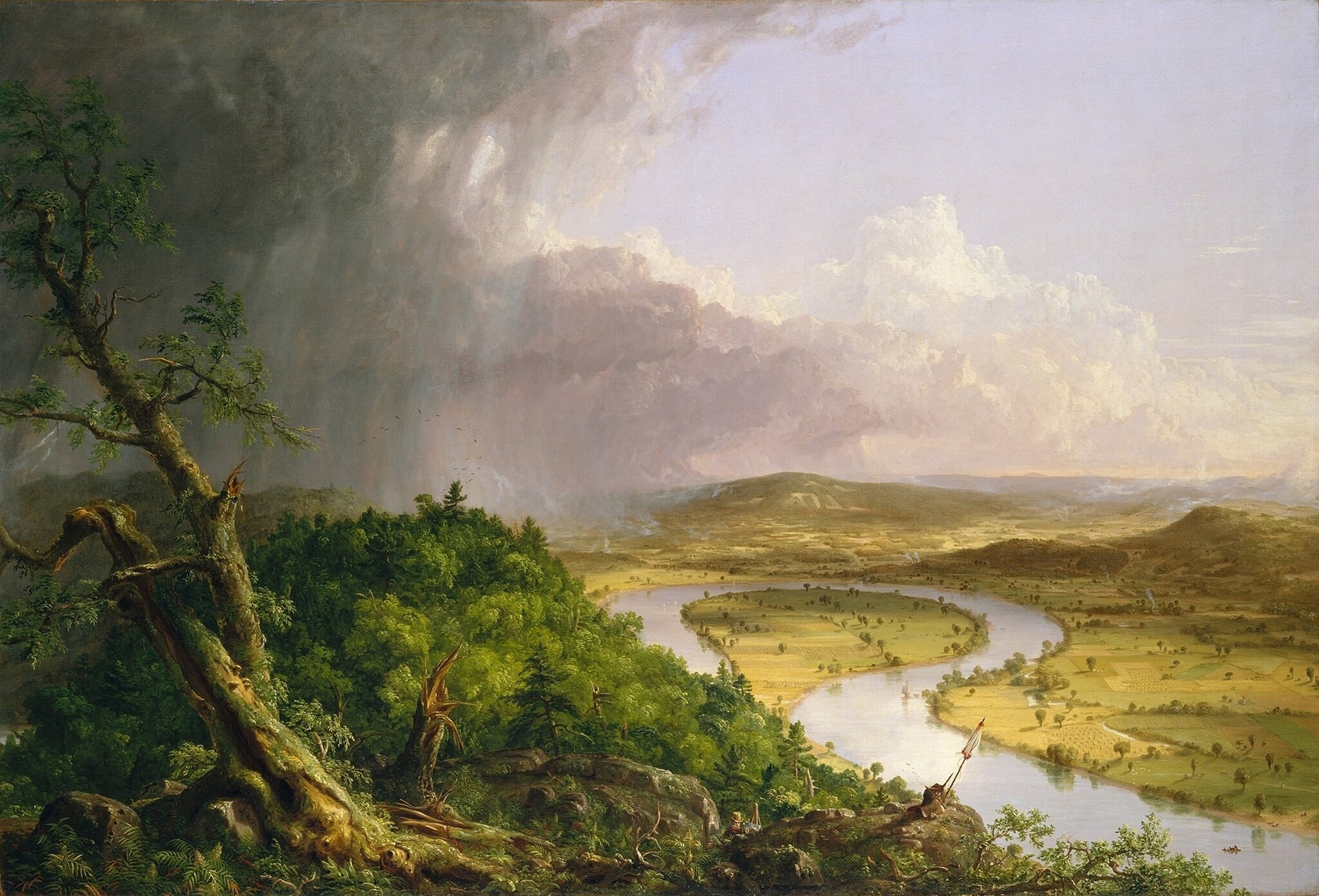
Click on any numbered symbol to learn more about its meaning
Meaning & Symbolism
Explore Deeper with AI
Ask questions about The Oxbow (View from Mount Holyoke)
Popular questions:
Powered by AI • Get instant insights about this artwork
Interpretations
Formal Analysis: Panoramic Spectacle Recast as Moral Argument
Source: The Metropolitan Museum of Art (Perspectives: Panoramania); National Park Service
Technical/Material History: The Course of Empire Beneath
Source: Panorama (Journal of AHAA) interview on Atlantic Crossings; Met Museum Journal (Roque)
Symbolic Reading: Providence, Text, and the Logged Hillside
Source: Smarthistory; David Bjelajac, American Art
Ecocritical Lens: Pastoral Blind Spots and Settler Logics
Source: The Metropolitan Museum of Art (Perspectives: Reexamining the Wilderness Aesthetic); The Met object record
Socioeconomic Reading: Property, Circulation, and Agrarian Capital
Source: Met Museum Journal (Roque); The Metropolitan Museum of Art
Viewer Studies: The Artist as Ethical Mediator
Source: Thomas Cole, Essay on American Scenery; The Metropolitan Museum of Art
Related Themes
About Thomas Cole
More by Thomas Cole
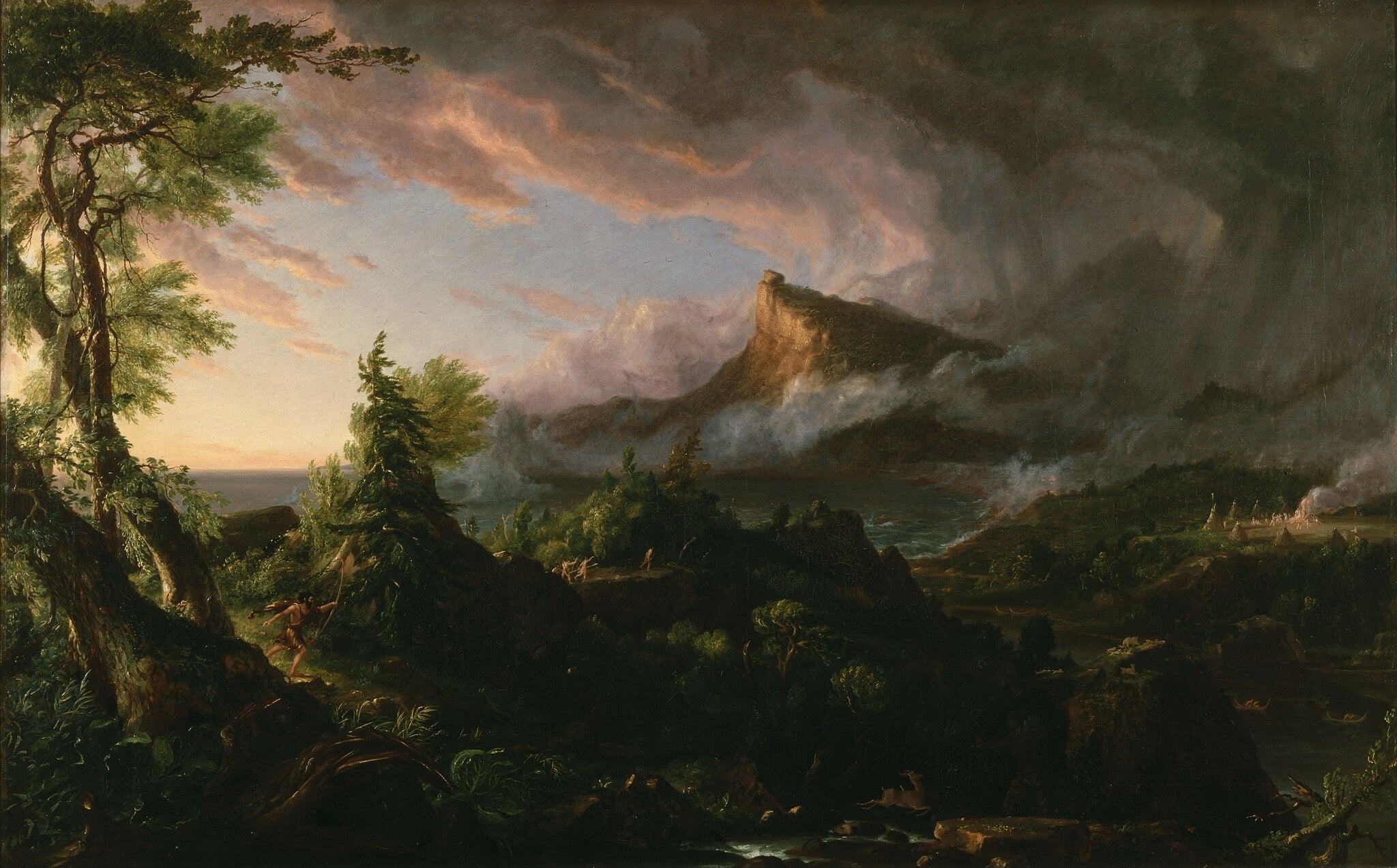
The Course of Empire: The Savage State
Thomas Cole (c. 1834 (series 1834–1836))
Thomas Cole’s The Course of Empire: The Savage State inaugurates his five-part cycle with a landscape ruled by <strong>wildness</strong> and <strong>origin</strong>. Dawn breaks at left as storm clouds rake a flat-topped crag, while a hunter looses an arrow, canoes cut the river, and smoke lifts from skin tents—signals of a society at the threshold of history <sup>[1]</sup><sup>[2]</sup><sup>[3]</sup>.
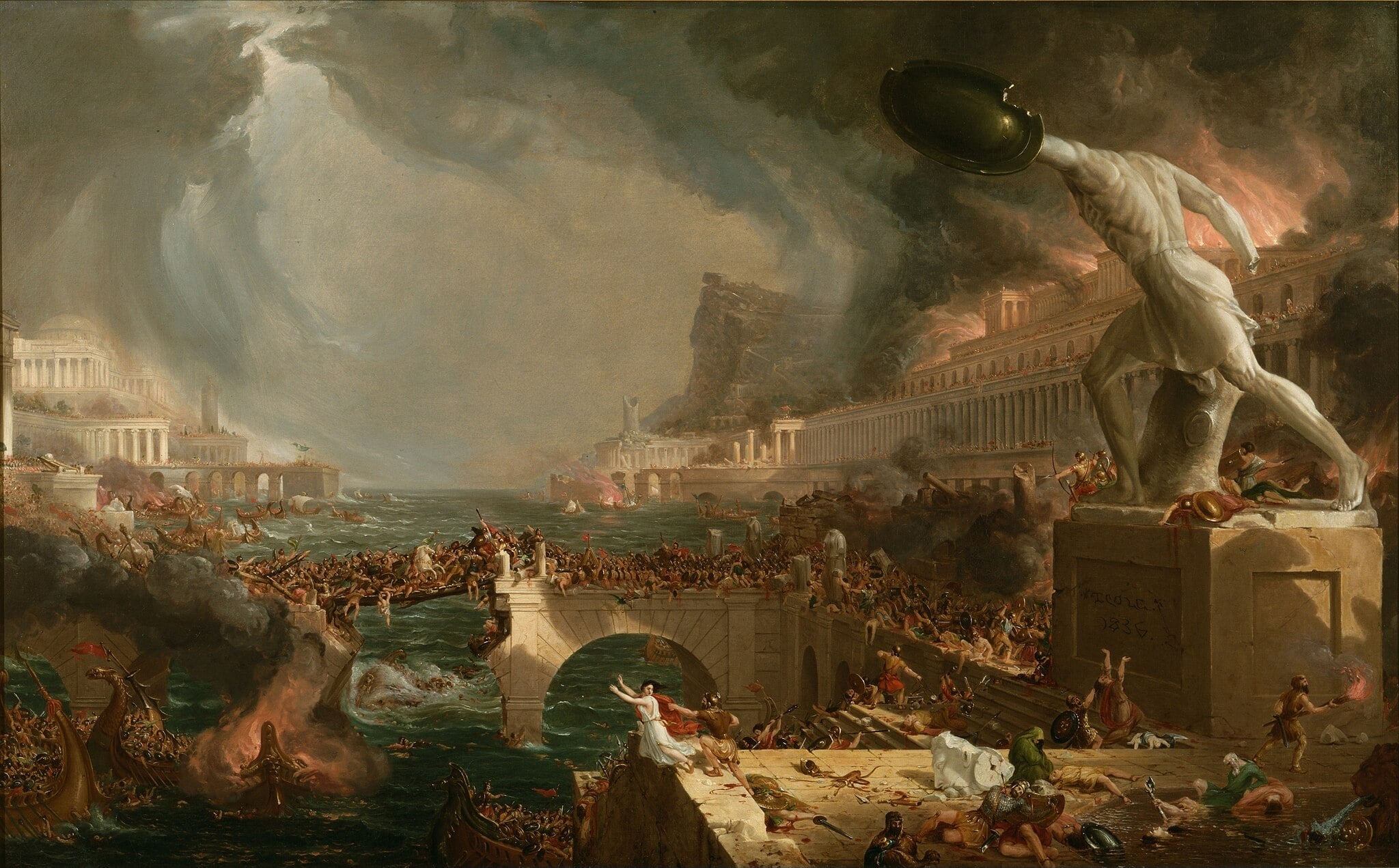
The Course of Empire: Destruction
Thomas Cole (1836)
Thomas Cole’s The Course of Empire: Destruction plunges a once‑ordered classical city into <strong>apocalyptic collapse</strong>. A <strong>collapsing bridge</strong>, <strong>burning colonnades</strong>, and a <strong>headless gladiator statue</strong> preside over panicked crowds and flaming warships, while a fixed mountain crag endures beyond the chaos. The canvas stages <strong>moral retribution</strong>: empire’s luxury curdles into vice and is swept away by combined human and elemental fury <sup>[1]</sup><sup>[2]</sup>.