Thomas Cole
Biography
Themes in Their Work
Most Expensive Thomas Cole Paintings
Explore ranked valuations of Thomas Cole's most valuable works →
Featured Artworks
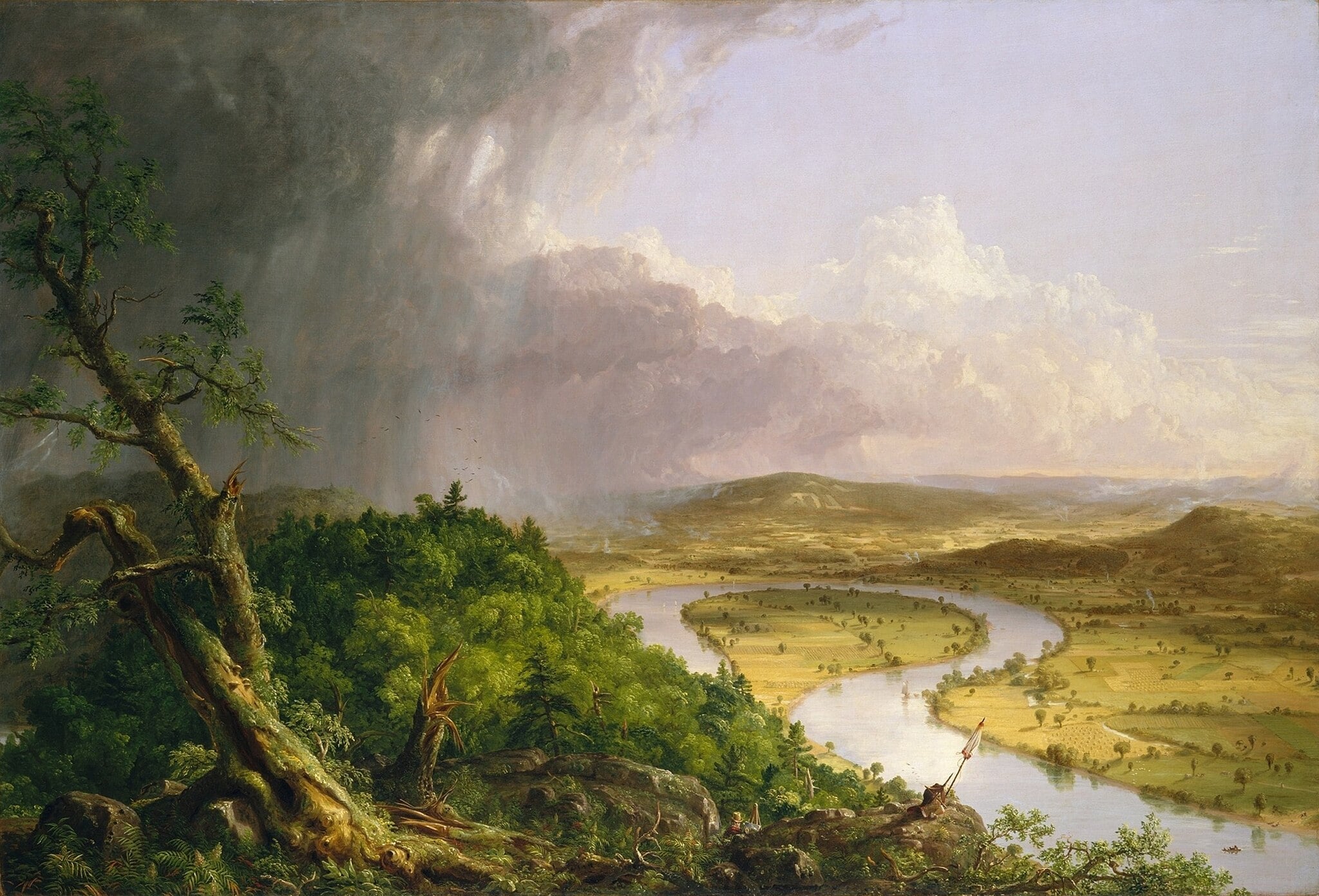
The Oxbow (View from Mount Holyoke)
Thomas Cole (1836)
Thomas Cole’s The Oxbow (View from Mount Holyoke) juxtaposes <strong>storm-lashed wilderness</strong> at left with <strong>sunlit, cultivated farmland</strong> at right, using a panoramic sweep of the Connecticut River’s curve. A tiny figure with an easel—Cole’s self-insertion—stands between realms, turning sight into judgment. The painting frames America’s landscape as both <strong>sublime</strong> and <strong>pastoral</strong>, a place of awe, promise, and warning.
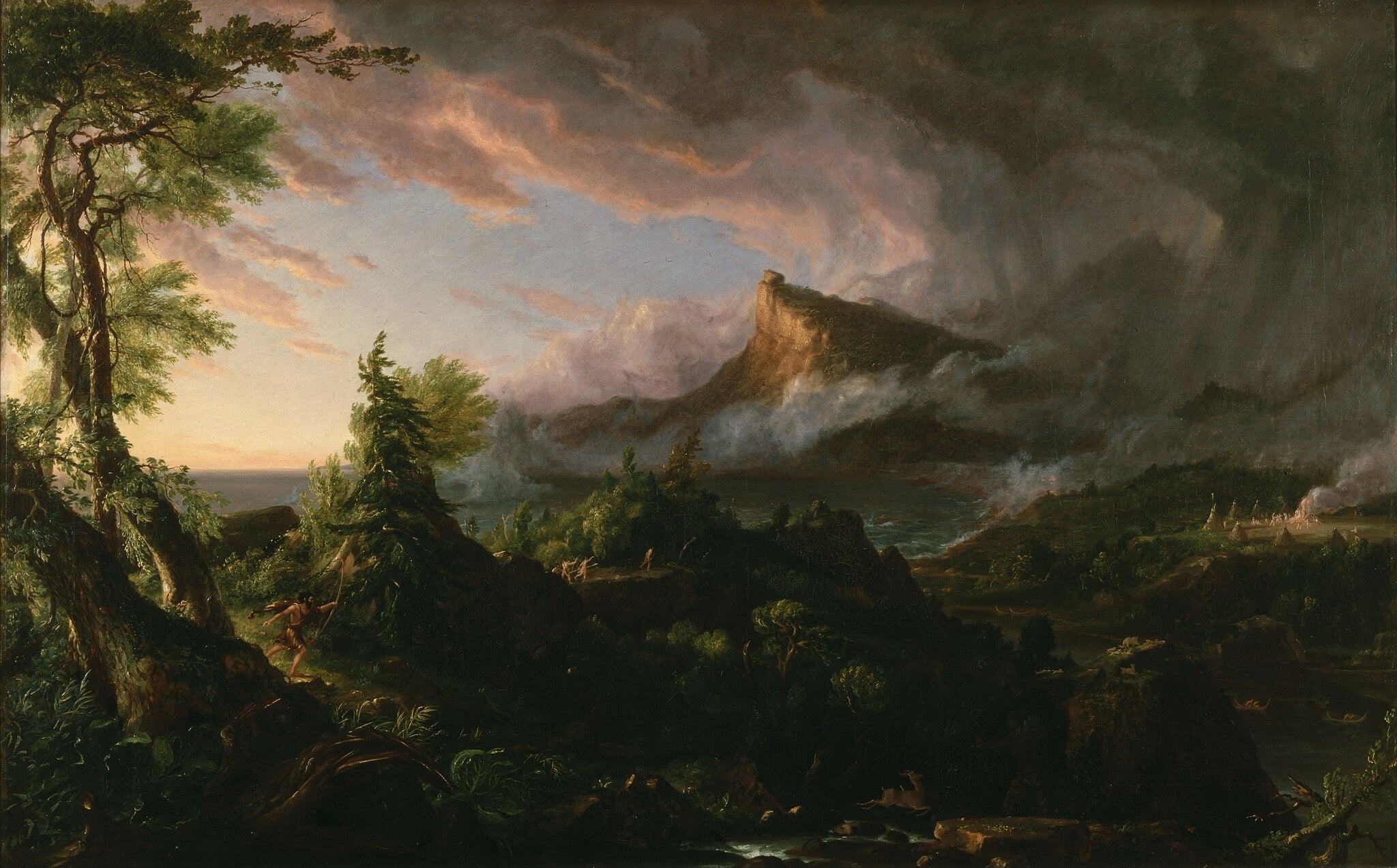
The Course of Empire: The Savage State
Thomas Cole (c. 1834 (series 1834–1836))
Thomas Cole’s The Course of Empire: The Savage State inaugurates his five-part cycle with a landscape ruled by <strong>wildness</strong> and <strong>origin</strong>. Dawn breaks at left as storm clouds rake a flat-topped crag, while a hunter looses an arrow, canoes cut the river, and smoke lifts from skin tents—signals of a society at the threshold of history <sup>[1]</sup><sup>[2]</sup><sup>[3]</sup>.
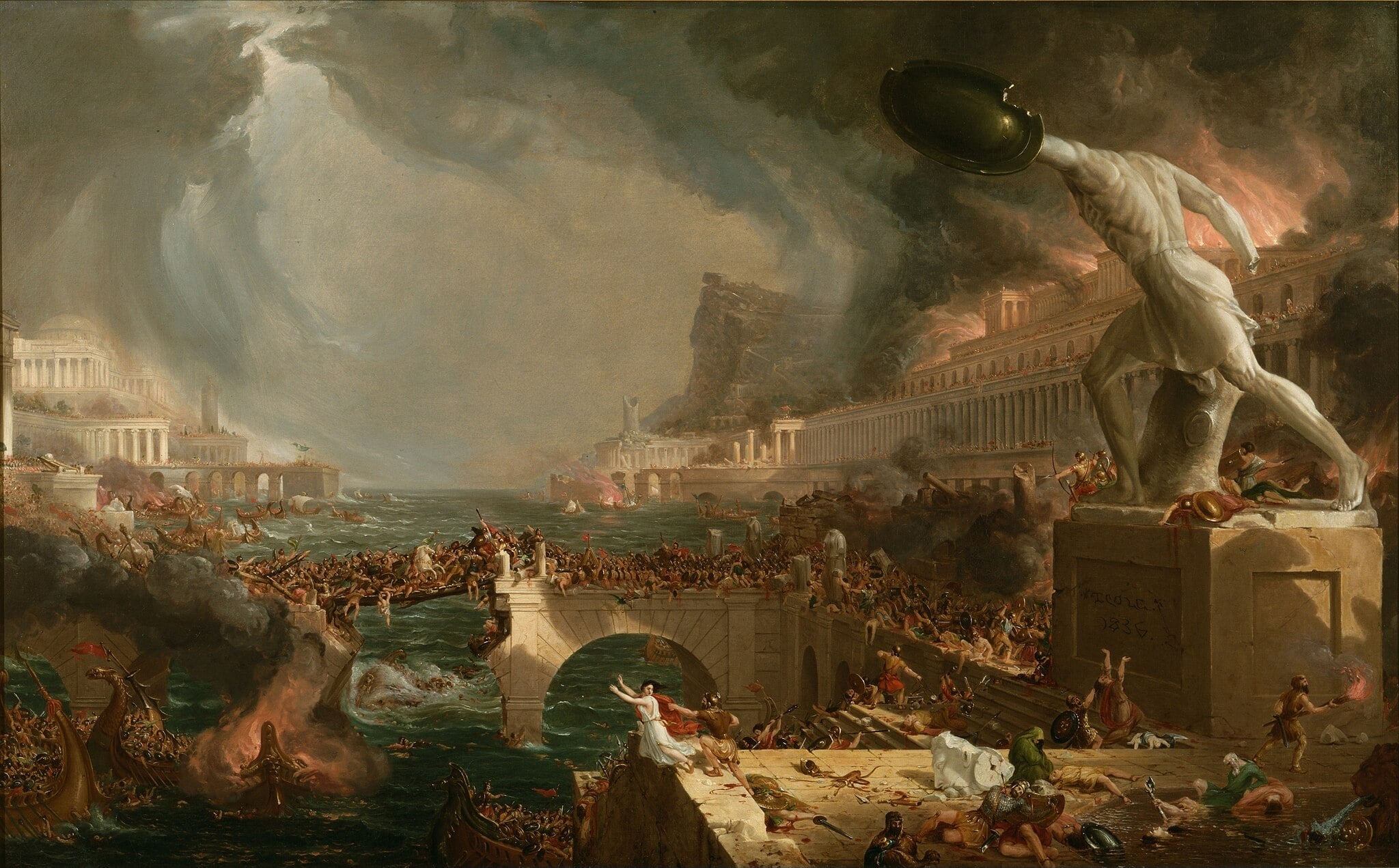
The Course of Empire: Destruction
Thomas Cole (1836)
Thomas Cole’s The Course of Empire: Destruction plunges a once‑ordered classical city into <strong>apocalyptic collapse</strong>. A <strong>collapsing bridge</strong>, <strong>burning colonnades</strong>, and a <strong>headless gladiator statue</strong> preside over panicked crowds and flaming warships, while a fixed mountain crag endures beyond the chaos. The canvas stages <strong>moral retribution</strong>: empire’s luxury curdles into vice and is swept away by combined human and elemental fury <sup>[1]</sup><sup>[2]</sup>.