Judith Beheading Holofernes
by Caravaggio
Study Print Studio
Create a personal study print
Build a companion study sheet around the part of this painting that speaks to you most. Choose a detail, shape an interpretation, and walk away with something personal and display-worthy.
Fast Facts
- Year
- 1599
- Medium
- Oil on canvas
- Dimensions
- 145 × 195 cm
- Location
- Gallerie Nazionali Barberini Corsini, Palazzo Barberini, Rome
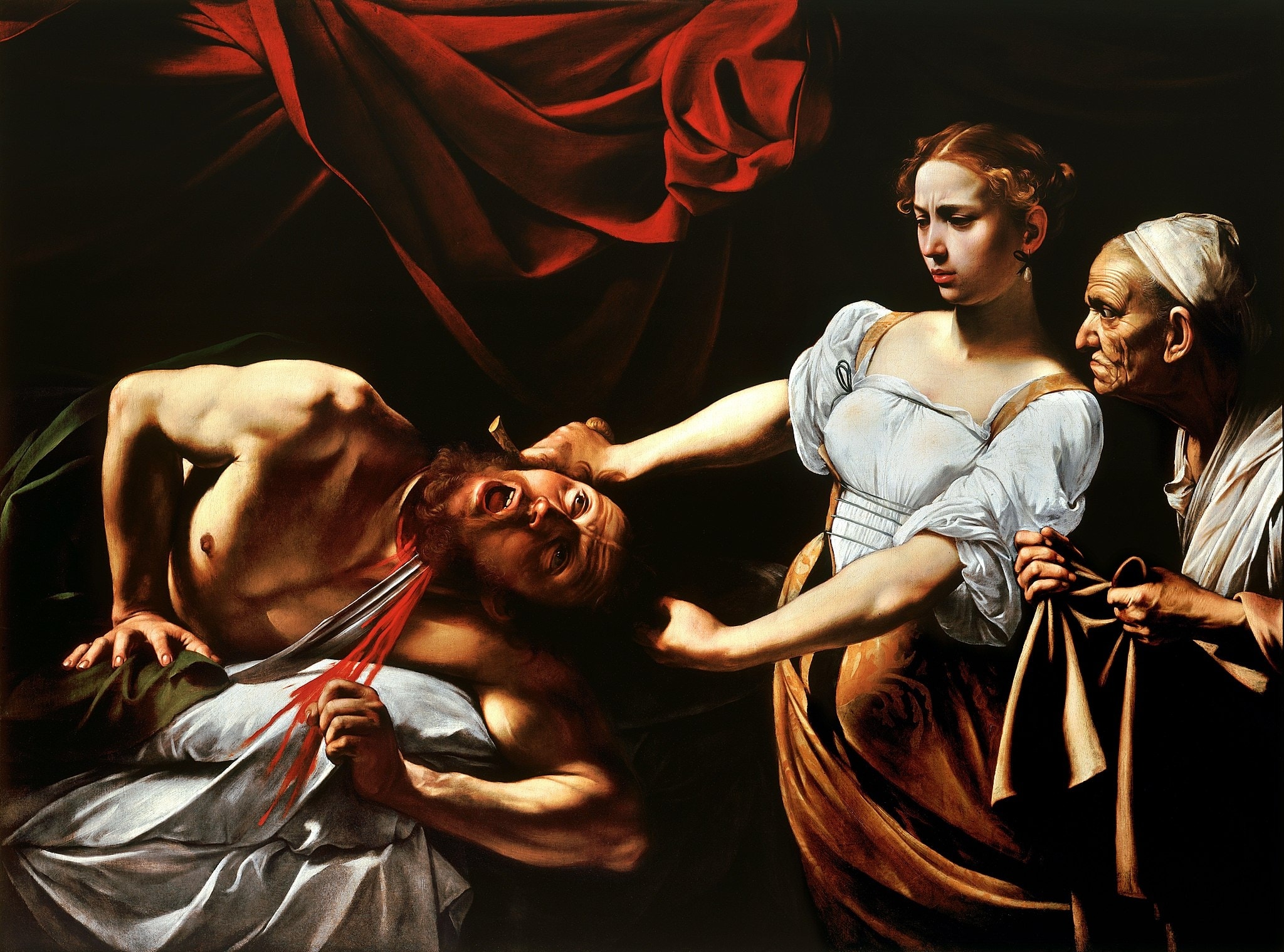
Click on any numbered symbol to learn more about its meaning
Meaning & Symbolism
Explore Deeper with AI
Ask questions about Judith Beheading Holofernes
Popular questions:
Powered by AI • Get instant insights about this artwork
Interpretations
Patronage, Privacy, and the Curtain of Judgment
Source: Gallerie Nazionali Barberini Corsini; Kimbell Art Museum
Chronology as Meaning: The 1599 vs. 1602 Debate
Source: Gallerie Nazionali Barberini Corsini; Finestre sull’Arte (Dentro Caravaggio); Ecce Homo (art-historian’s analysis)
Gendered Agency and the Courtesan Hypothesis
Source: Encyclopaedia Britannica (Caravaggio biography); National Gallery, London
Baroque Theater and the Culture of Spectacle
Source: Gallerie Nazionali Barberini Corsini; Kimbell Art Museum; University of Vienna thesis (context)
Afterlives: From Caravaggio’s Instant to Artemisia’s Force
Source: Kimbell Art Museum; Smarthistory
Explore Specific Elements
Dive deeper into individual scenes and details within Judith Beheading Holofernes.
Judith's Hesitant Expression
Judith’s face in Caravaggio’s Judith Beheading Holofernes holds the scene’s moral voltage: a furrowed brow and averted gaze that register revulsion even as the sword bites. By pinning this hesitation in raking light, Caravaggio fuses Counter‑Reformation urgency with raw psychology, making virtue look difficult—and therefore real.
Holofernes's Scream
Holofernes’s Scream is the painting’s audible center—a gaping, last-breath outcry that Caravaggio freezes at the split second between life and death. By fixing our gaze on the open mouth, the artist fuses sound with sight to deliver Counter‑Reformation immediacy and a moral reckoning in real time.
The Old Maidservant
Caravaggio’s old maidservant—traditionally called Abra—stands at the painting’s right edge, sack open, ready to hide Holofernes’s head. Her lined face and fixed stare turn her into a visceral witness and logistical accomplice, sharpening the scene’s brutal present-tense and heightening Judith’s youth and resolve.
Seen in Comparisons
Related Themes
About Caravaggio
More by Caravaggio
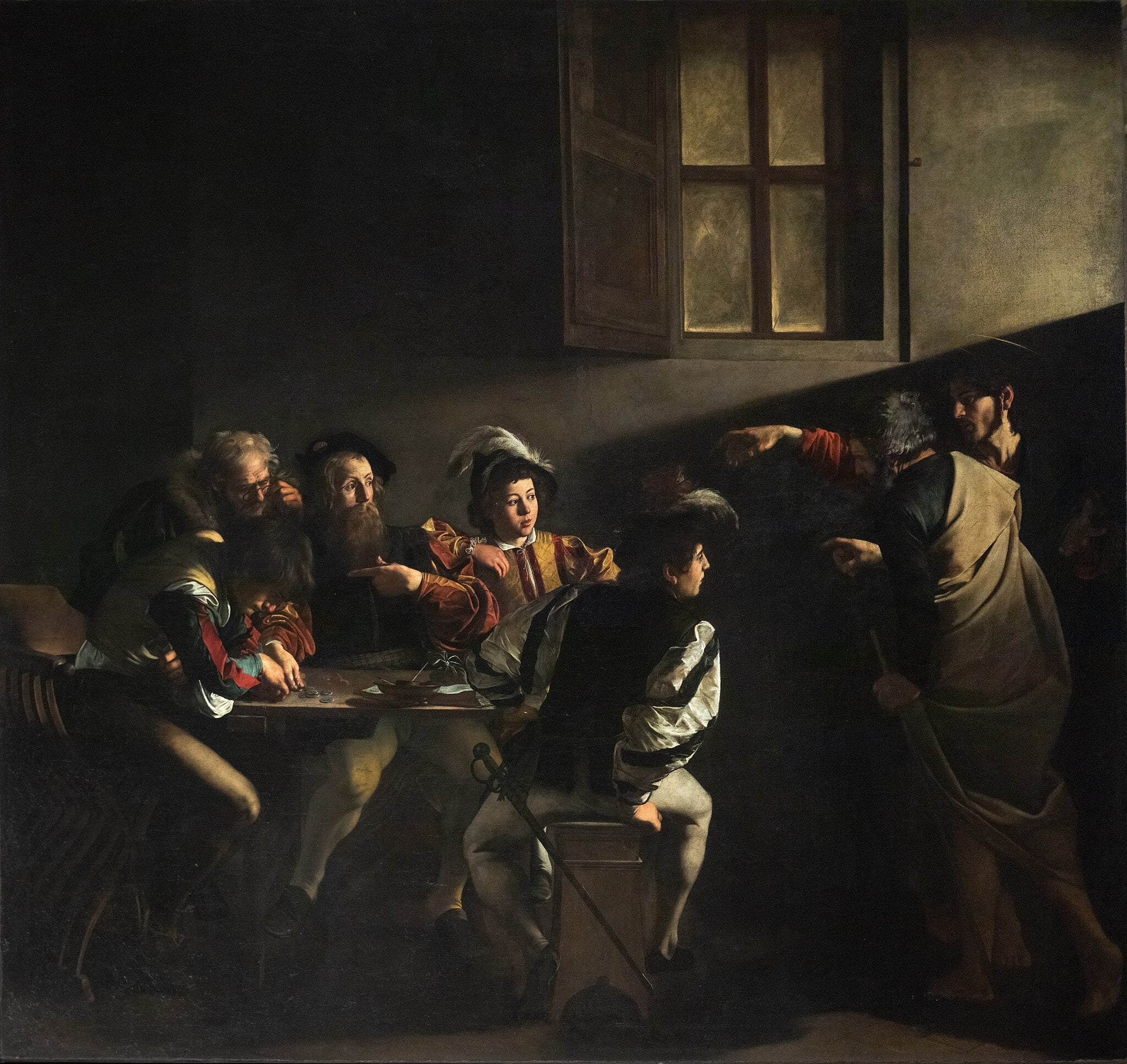
The Calling of Saint Matthew
Caravaggio (1599–1600)
Caravaggio’s The Calling of Saint Matthew stages the instant when <strong>divine grace</strong> pierces ordinary life. A diagonal <strong>beam of light</strong> and Christ’s <strong>Sistine‑echoing hand</strong> single out Matthew at a money table, suspending time between hesitation and assent <sup>[2]</sup><sup>[3]</sup>. The painting fuses Baroque <strong>tenebrism</strong> with contemporary dress to dramatize conversion as a public, present-tense event <sup>[1]</sup><sup>[2]</sup>.
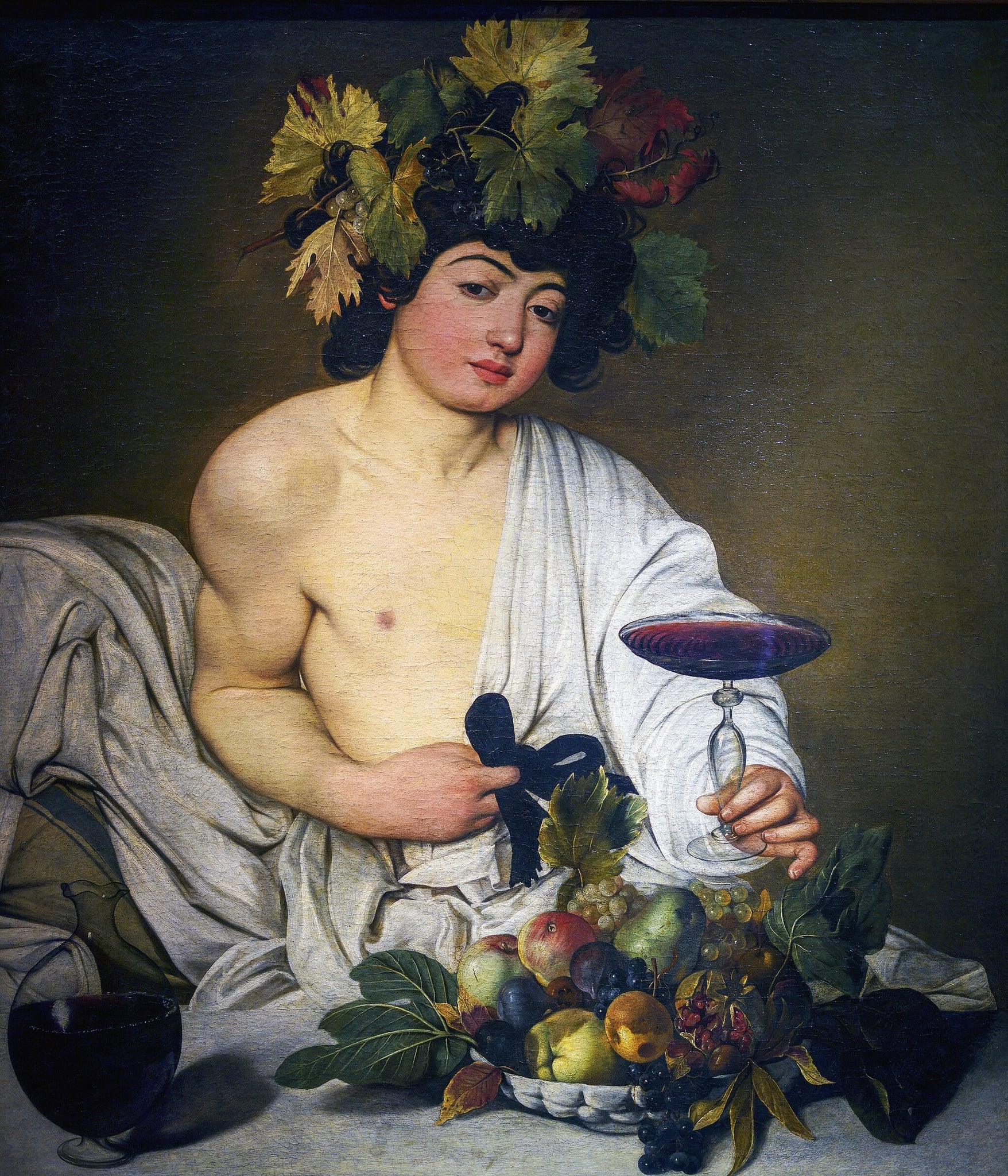
Bacchus
Caravaggio (c. 1598)
Caravaggio’s Bacchus stages a human-scaled god who offers wine with disarming immediacy, yoking <strong>sensual invitation</strong> to <strong>vanitas</strong> warning. The tilted goblet, blemished fruit, and wilting leaves insist that abundance and youth are <strong>precarious</strong>. A private Roman milieu under Cardinal del Monte shaped this refined, provocative image <sup>[1]</sup><sup>[2]</sup>.
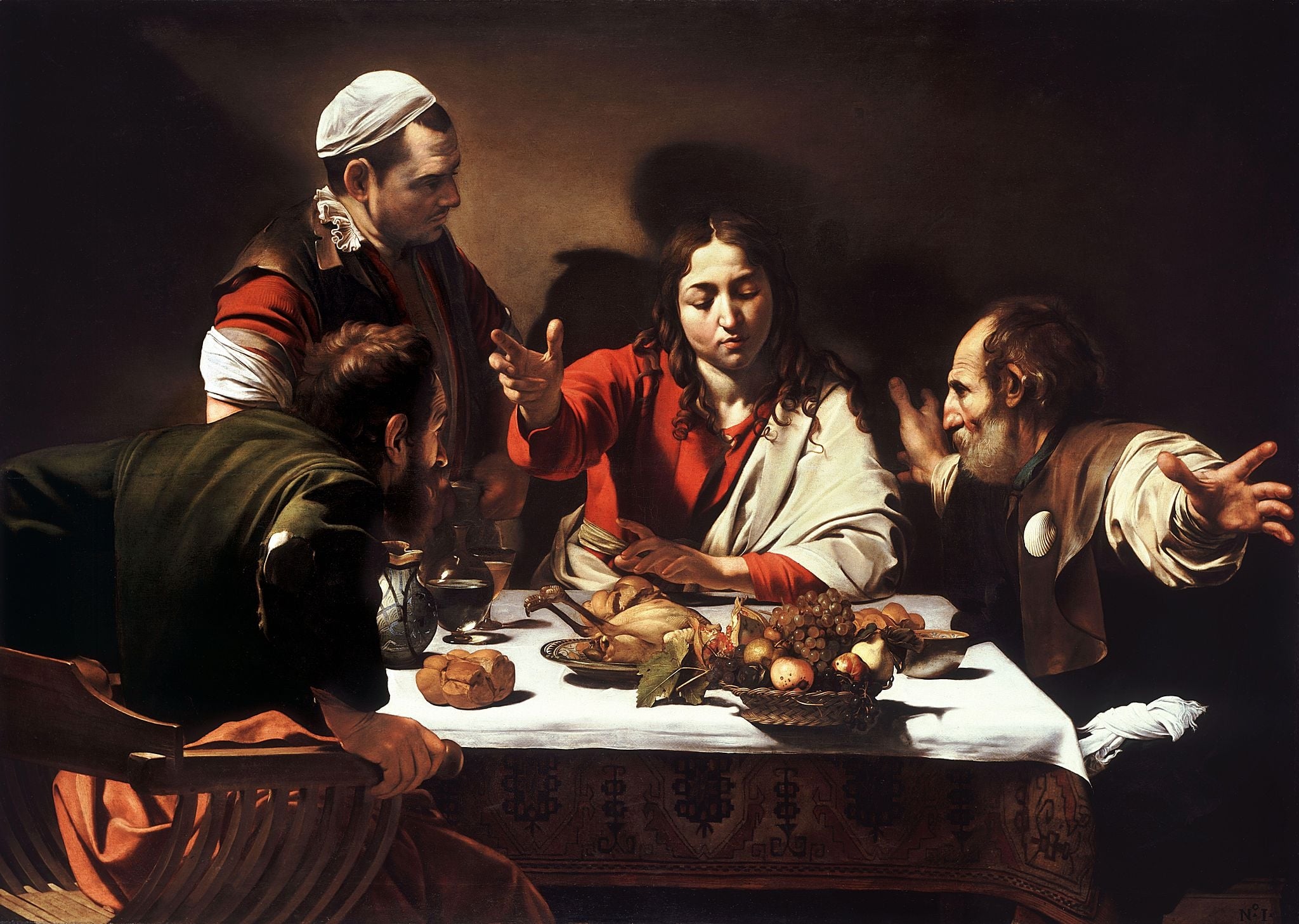
The Supper at Emmaus
Caravaggio (1601)
Caravaggio’s The Supper at Emmaus captures the split-second when two disciples recognize Christ in the <strong>breaking of bread</strong>. A raking light isolates Christ’s calm blessing while the disciples erupt—one surging forward with a torn sleeve, the other flinging his arms wide—so the shock of revelation reads as bodily fact. The teetering <strong>basket of fruit</strong> and Eucharistic table amplify themes of abundance and fragility <sup>[1]</sup><sup>[4]</sup>.