The macabre & grotesque
Featured Artworks
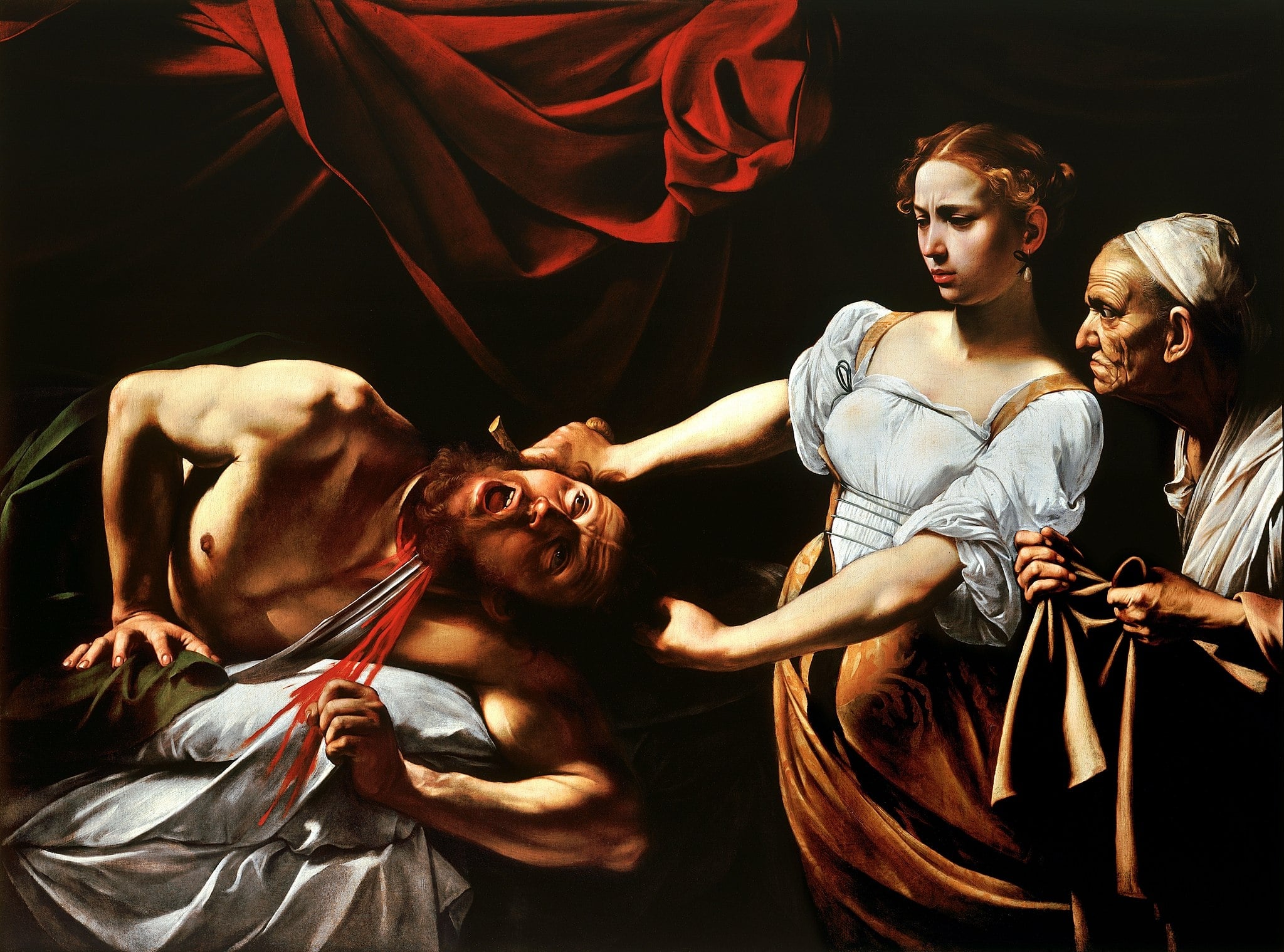
Judith Beheading Holofernes
Caravaggio (1599)
Caravaggio’s Judith Beheading Holofernes stages the biblical execution as a shocking present-tense event, lit by a raking beam that cuts figures from darkness. The <strong>red curtain</strong> frames a moral spectacle in which <strong>virtue overthrows tyranny</strong>, as Judith’s cool determination meets Holofernes’ convulsed resistance. Radical <strong>naturalism</strong>—from tendon strain to ribboning blood—makes deliverance feel material and irreversible.
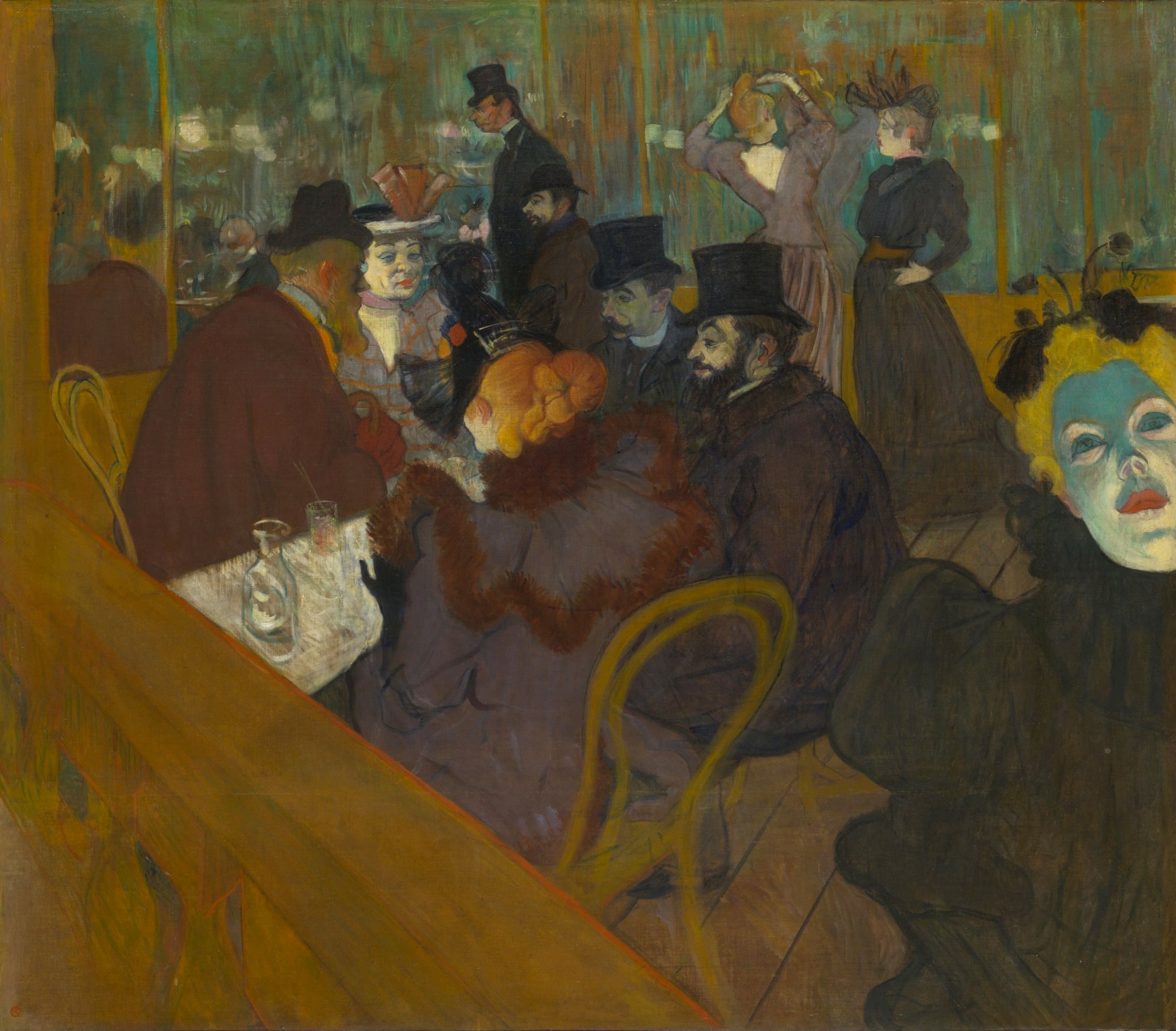
At the Moulin Rouge
Henri de Toulouse-Lautrec (1892–1895)
At the Moulin Rouge plunges us into the churn of Paris nightlife, staging a crowded room where spectacle and fatigue coexist. A diagonal banister and abrupt croppings create <strong>off‑kilter immediacy</strong>, while harsh artificial light turns faces <strong>masklike</strong> and cool. Mirrors multiply the crowd, amplifying a mood of allure tinged with <strong>urban alienation</strong> <sup>[1]</sup><sup>[3]</sup><sup>[4]</sup>.
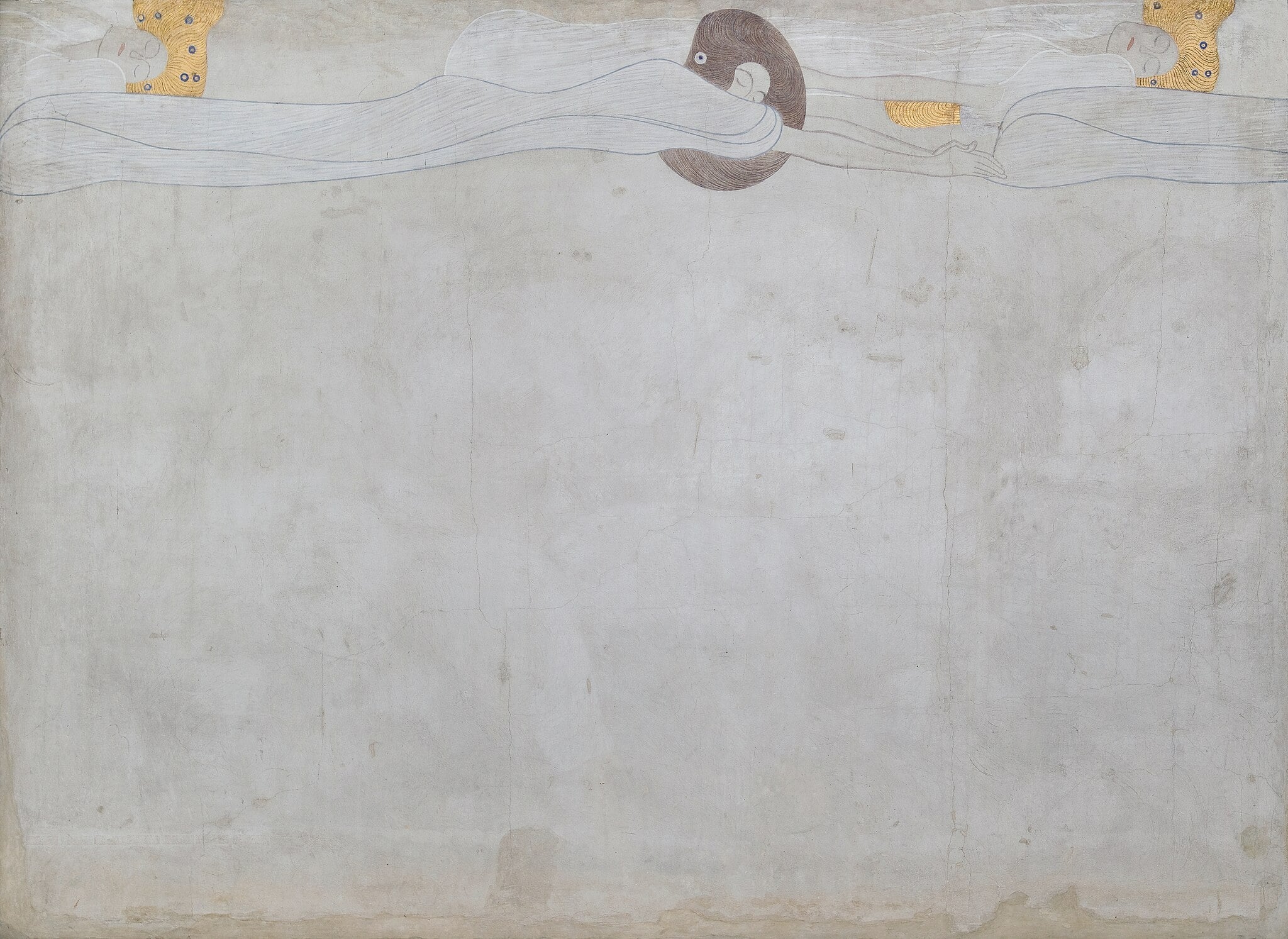
Beethoven Frieze
Gustav Klimt (1901–1902)
Gustav Klimt’s Beethoven Frieze visualizes Beethoven’s Ninth as a <strong>quest from suffering to joy</strong>, using weightless, ribbon-like bodies and <strong>gold-gleaming ornament</strong> to translate sound into sight. In the panel shown, floating genii drift horizontally while <strong>islands of gold studded with eye-like jewels</strong> punctuate a vast, chalky void, suspending time like a long musical rest. The work fuses <strong>line, flatness, and precious materials</strong> to promise transcendence through art <sup>[1]</sup><sup>[3]</sup>.
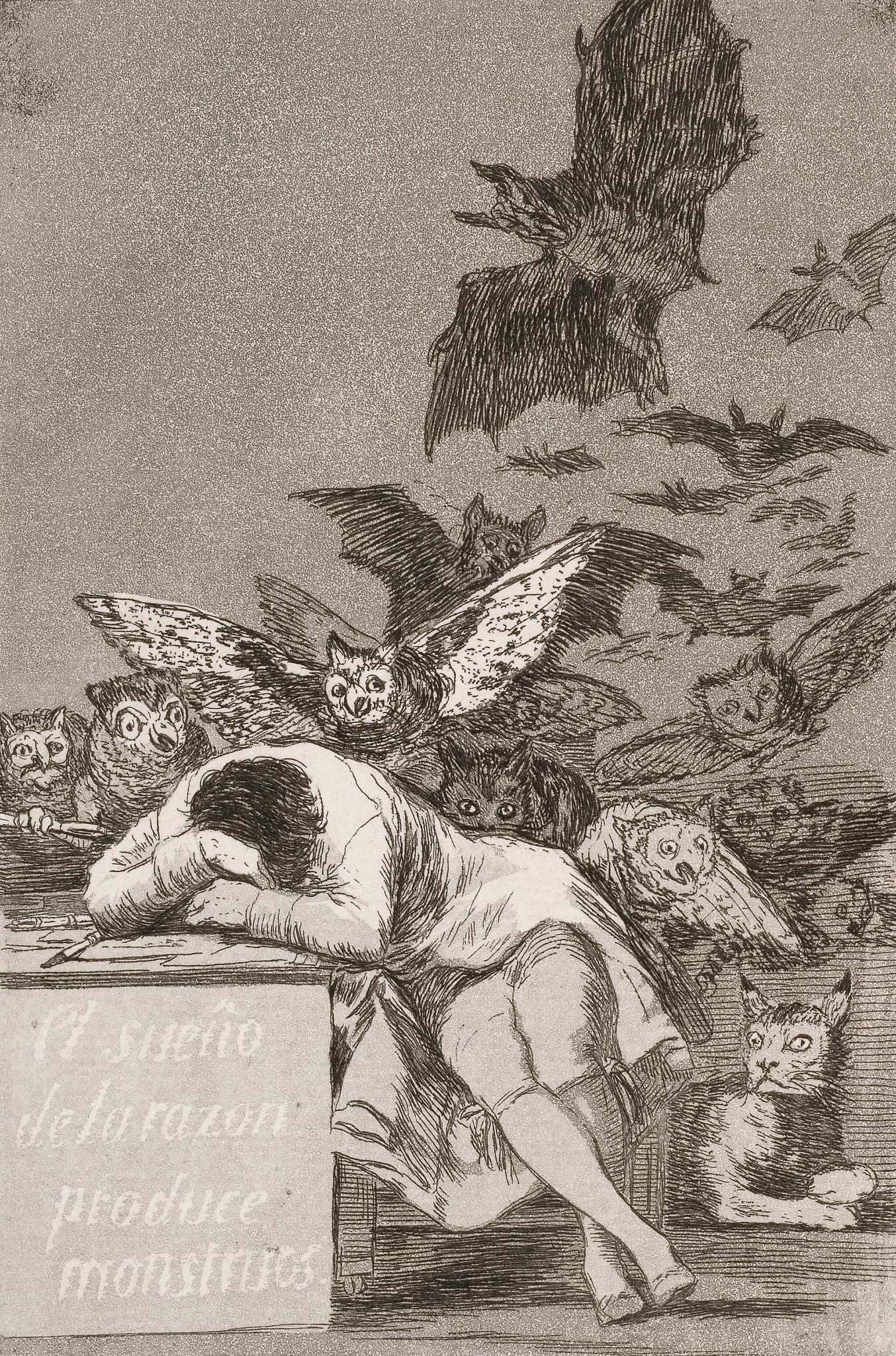
The Sleep of Reason Produces Monsters
Francisco Goya (1799 (published; plates 1797–1798))
In The Sleep of Reason Produces Monsters, a dozing thinker at his desk unleashes a storm of <strong>owls</strong>, <strong>bats</strong>, and a watchful <strong>lynx</strong>, staging Goya’s program for Los Caprichos. The print argues that when <strong>reason</strong> lapses—or when <strong>imagination</strong> is severed from it—social <strong>monsters</strong> of folly and superstition multiply.
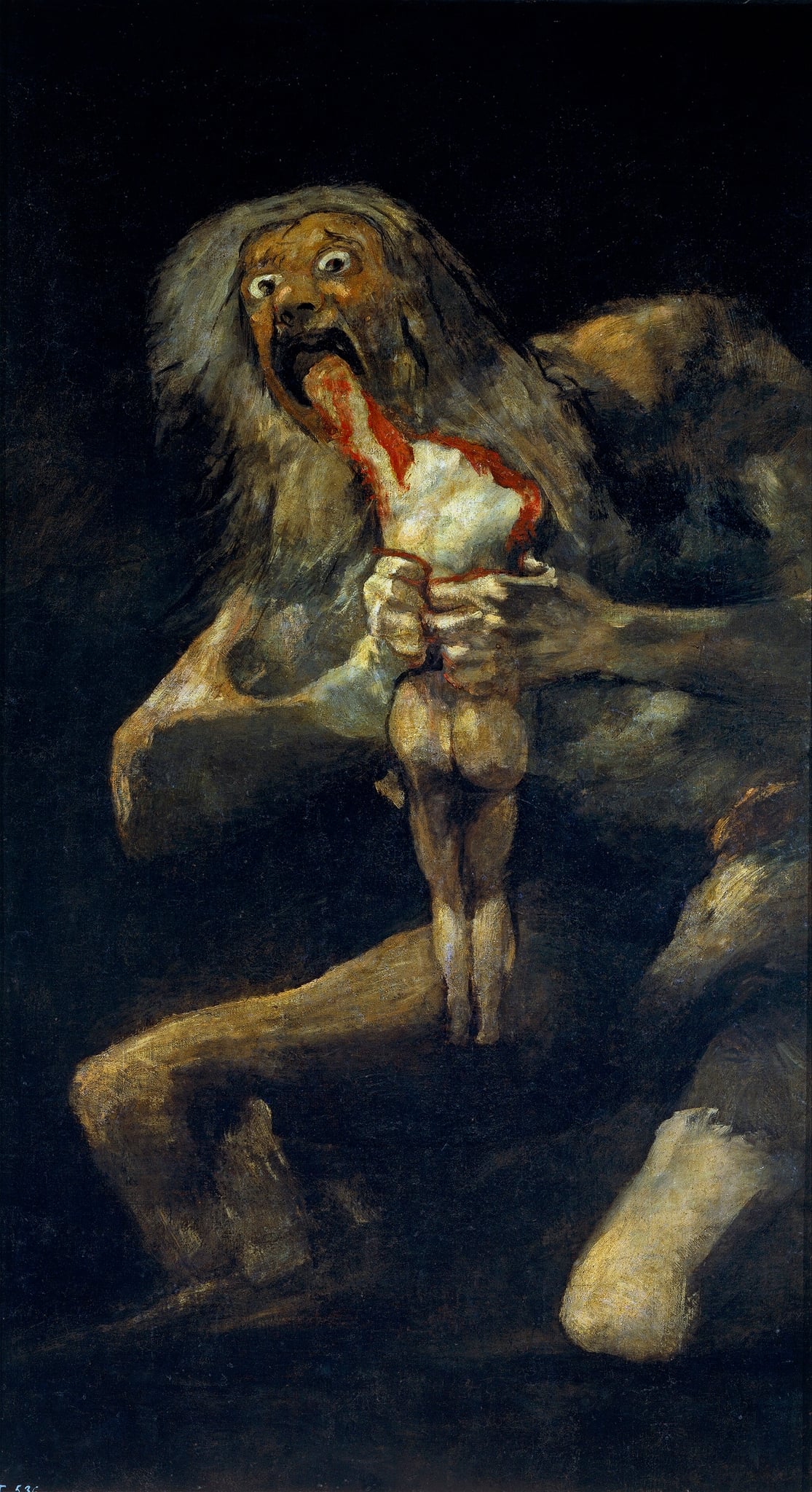
Saturn Devouring His Son
Francisco Goya (1820–1823)
Goya’s Saturn Devouring His Son distills myth into a raw vision of <strong>paranoia, power, and time</strong>: a giant crouches in darkness, eyes blown wide, tearing into a headless body whose blood streaks his hands. Stripped of classical emblems and staged in a near-black void, the scene asserts that fear of dispossession turns paternal authority into <strong>self-consuming violence</strong> <sup>[1]</sup><sup>[4]</sup>.
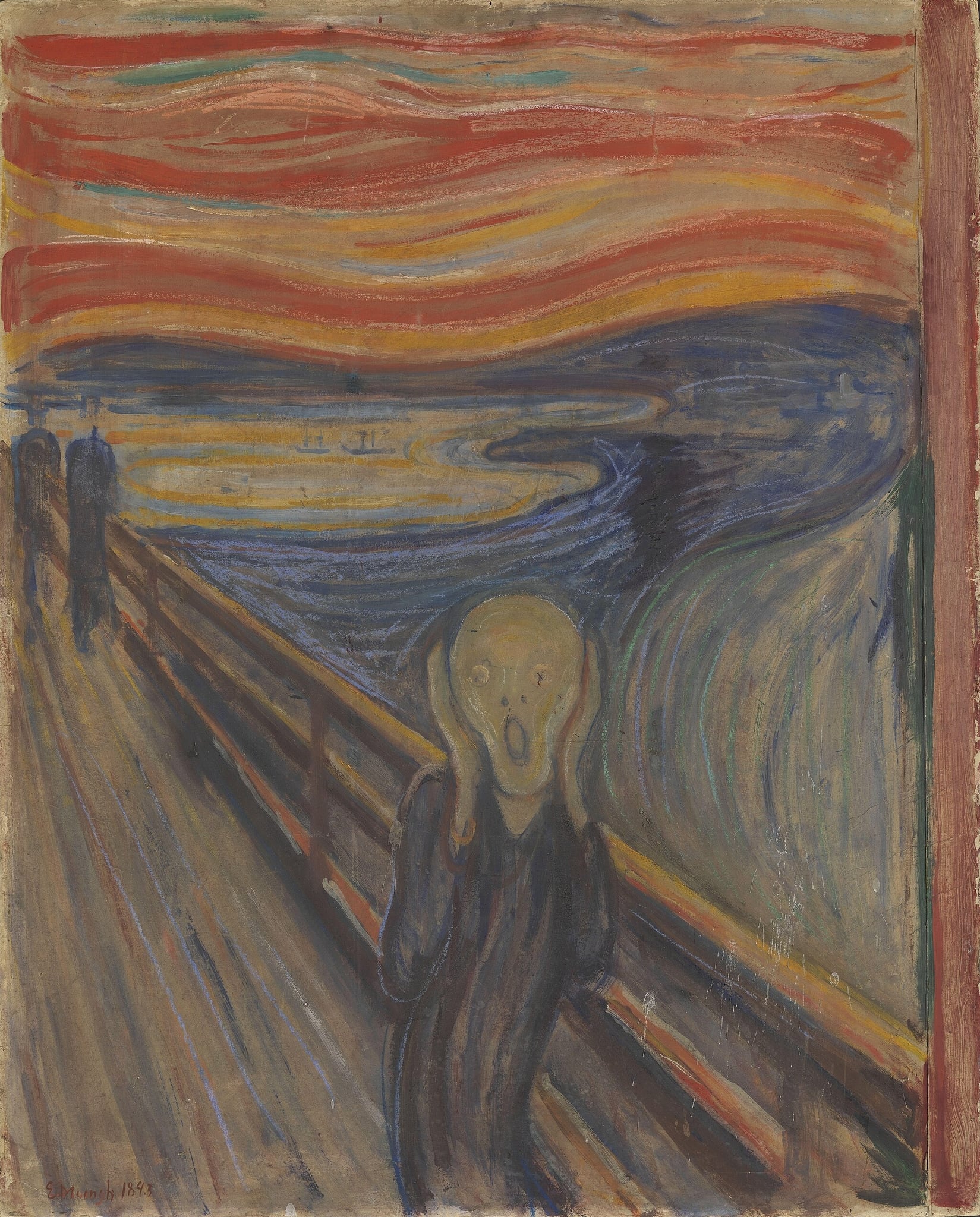
The Scream
Edvard Munch (1893)
Edvard Munch’s The Scream condenses modern dread into an image where the self and the world collapse: an androgynous, skull-like figure grips its head as a <strong>blood-red sky</strong> and <strong>vibrating shoreline</strong> pulse around it. The rigid, receding bridge rails counter the turbulence, staging a clash between <strong>inner panic</strong> and <strong>outer reality</strong> <sup>[1]</sup><sup>[2]</sup>.
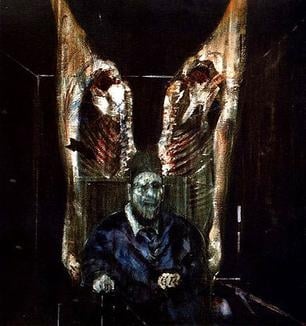
Figure with Meat
Francis Bacon (1954)
Francis Bacon’s Figure with Meat fuses a screaming pontiff with two flayed carcasses that hang like grotesque wings, locking power and flesh into the same dark box. Through <strong>cage-like lines</strong>, <strong>stage-lit isolation</strong>, and paint handled as <strong>raw meat</strong>, Bacon asserts a brutal equivalence: sanctity and sovereignty are only bodies destined to decay <sup>[1]</sup><sup>[2]</sup>.
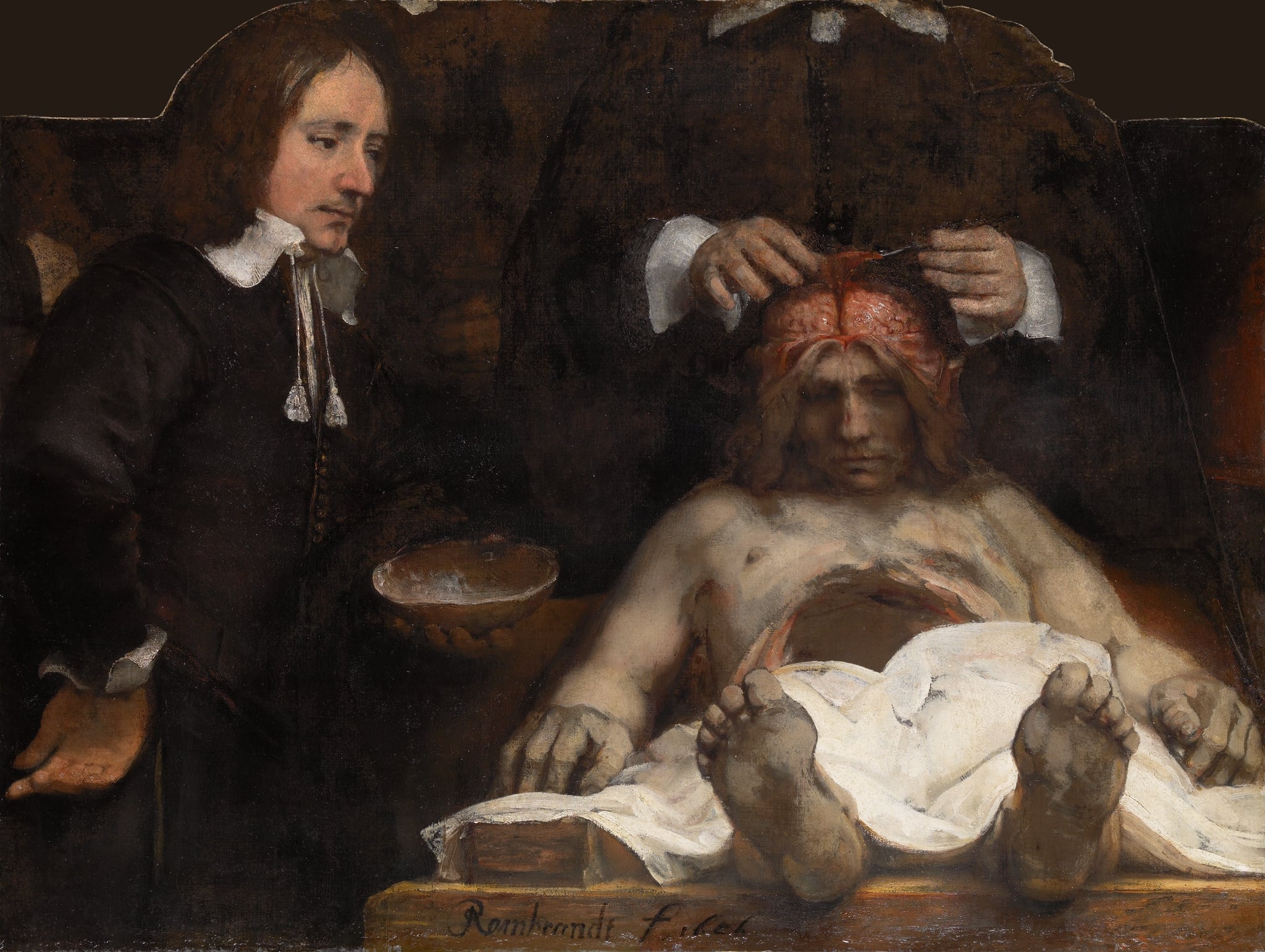
The Anatomy Lesson of Dr. Jan Deijman
Rembrandt van Rijn (1656)
Rembrandt van Rijn’s The Anatomy Lesson of Dr. Jan Deijman (1656) stages a public dissection in which the surgeon exposes the <strong>falx cerebri</strong> while a foreshortened corpse thrusts its feet toward us. The white sheet blazes under Rembrandt’s <strong>chiaroscuro</strong>, making inquiry itself the drama as instruments and cuffs emerge from shadow. What survives—now a fragment—is a riveting meditation on knowledge practiced at the edge of <strong>mortality</strong> <sup>[1]</sup><sup>[3]</sup><sup>[5]</sup>.