Saturn Devouring His Son
Study Print Studio
Create a personal study print
Build a companion study sheet around the part of this painting that speaks to you most. Choose a detail, shape an interpretation, and walk away with something personal and display-worthy.
Fast Facts
- Year
- 1820–1823
- Medium
- Mixed technique on plaster (mural), transferred to canvas; oil and pigments
- Dimensions
- 143.5 × 81.4 cm
- Location
- Museo Nacional del Prado, Madrid
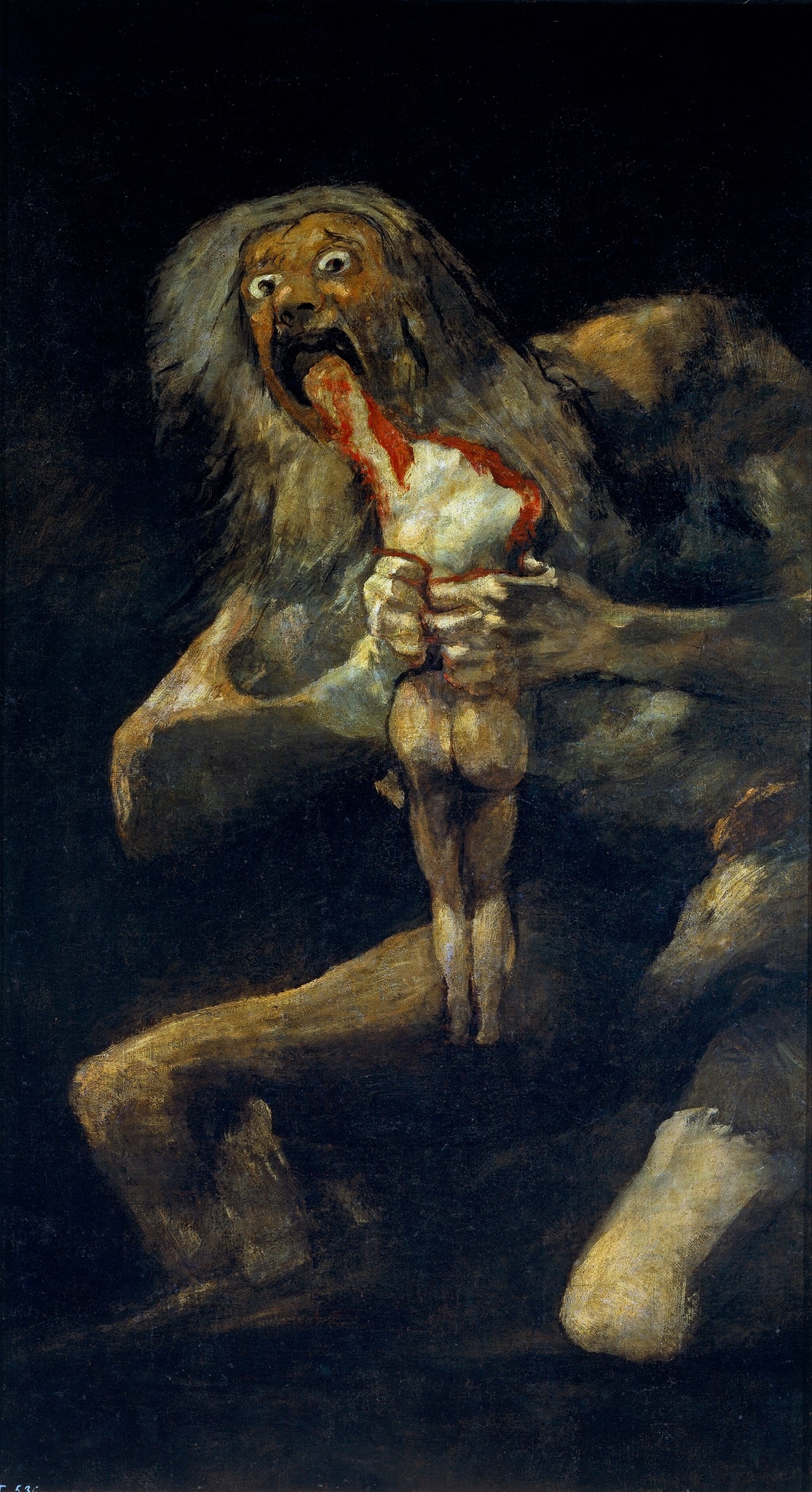
Click on any numbered symbol to learn more about its meaning
Meaning & Symbolism
Explore Deeper with AI
Ask questions about Saturn Devouring His Son
Popular questions:
Powered by AI • Get instant insights about this artwork
Interpretations
Material History & The Scarred Surface
Source: Museo del Prado; Nigel Glendinning (The Burlington Magazine)
De-Classicizing Saturn: A Comparative Iconography
Source: Khan Academy; Comparative reference to Rubens (Prado context via Wikipedia)
Political Allegory Without Program
Source: Valeriano Bozal (via WSU); Museo del Prado; Britannica
Melancholy, Age, and the Saturnine Temperament
Source: Folke Nordström (via Fundación Goya en Aragón); Britannica
Grotesque Appetite: Eating as Un-Nourishment
Source: Bigaku (Aesthetics) journal article; Museo del Prado
Seen in Comparisons
Related Themes
About Francisco Goya
More by Francisco Goya
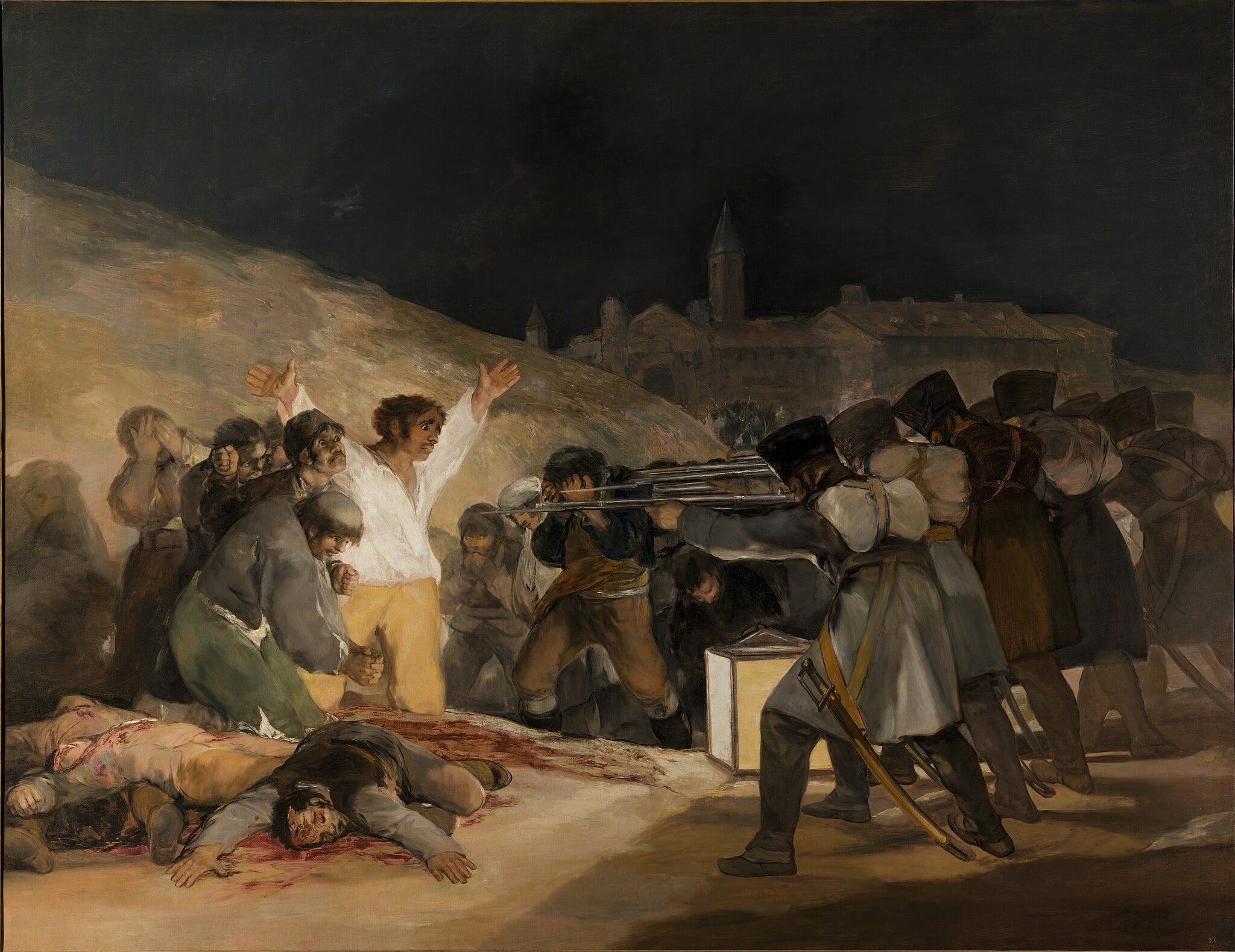
The Third of May 1808
Francisco Goya (1814)
Francisco Goya’s The Third of May 1808 turns a specific reprisal after Madrid’s uprising into a universal indictment of <strong>state violence</strong>. A lantern’s harsh glare isolates a civilian who raises his arms in a <strong>cruciform</strong> gesture as a faceless firing squad executes prisoners, transforming reportage into <strong>modern anti-war testimony</strong> <sup>[1]</sup><sup>[2]</sup>.
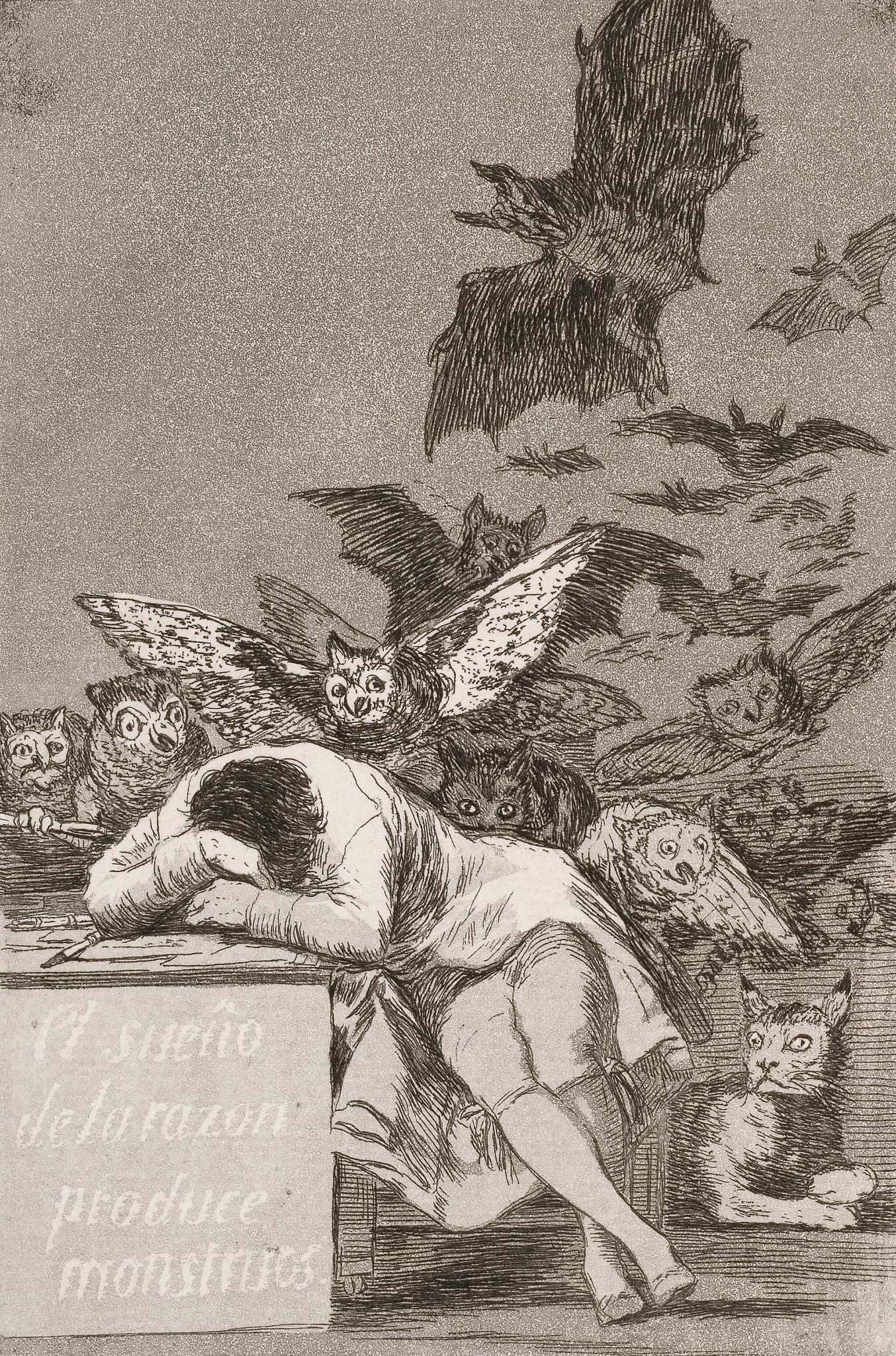
The Sleep of Reason Produces Monsters
Francisco Goya (1799 (published; plates 1797–1798))
In The Sleep of Reason Produces Monsters, a dozing thinker at his desk unleashes a storm of <strong>owls</strong>, <strong>bats</strong>, and a watchful <strong>lynx</strong>, staging Goya’s program for Los Caprichos. The print argues that when <strong>reason</strong> lapses—or when <strong>imagination</strong> is severed from it—social <strong>monsters</strong> of folly and superstition multiply.