Portrait of Dr. Gachet
Study Print Studio
Create a personal study print
Build a companion study sheet around the part of this painting that speaks to you most. Choose a detail, shape an interpretation, and walk away with something personal and display-worthy.
Fast Facts
- Year
- 1890
- Medium
- Oil on canvas
- Dimensions
- 68.2 × 57.0 cm
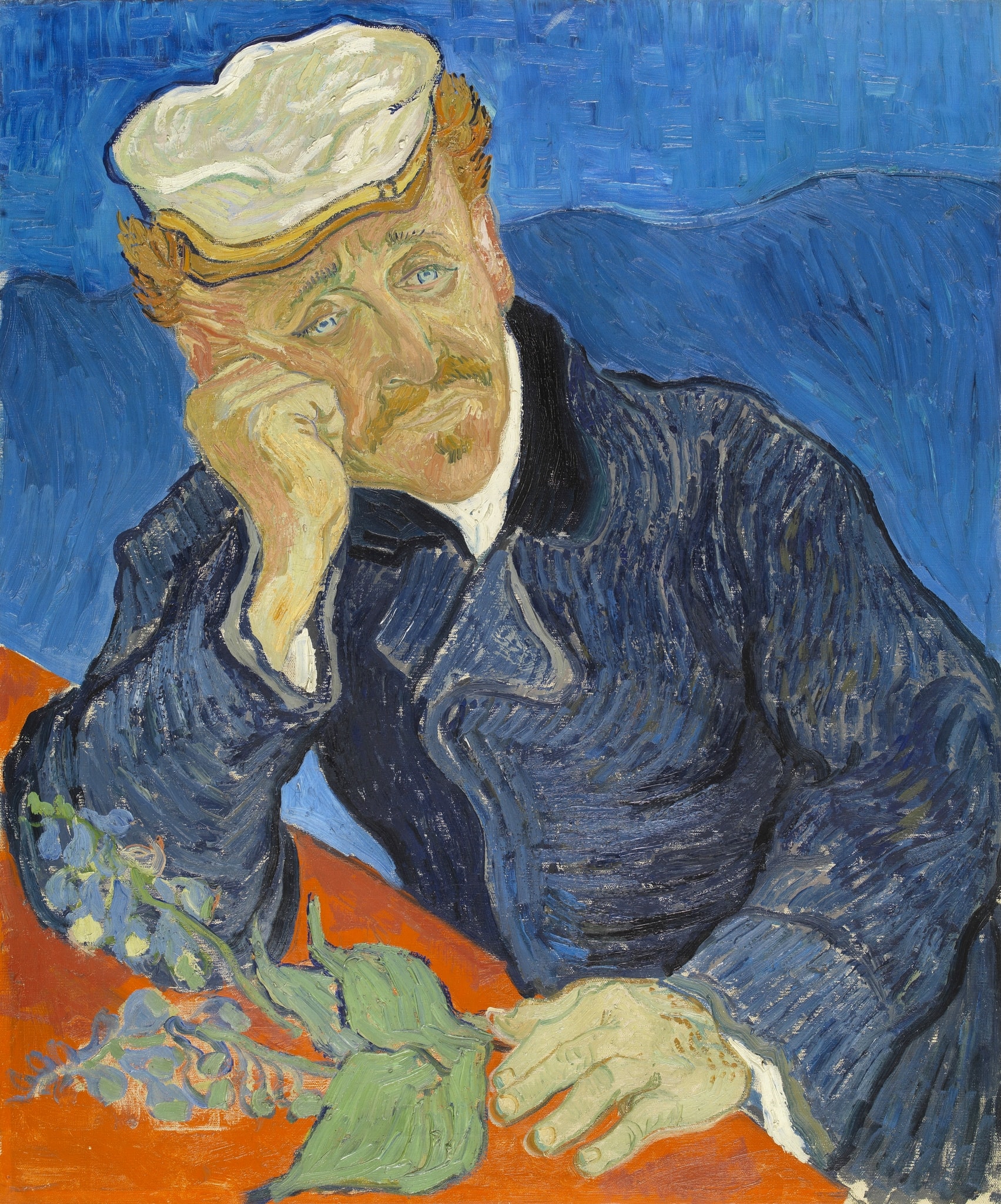
Click on any numbered symbol to learn more about its meaning
Meaning & Symbolism
Explore Deeper with AI
Ask questions about Portrait of Dr. Gachet
Popular questions:
Powered by AI • Get instant insights about this artwork
Interpretations
Medical Humanities: The Pharmakon Portrait
Source: Musée d’Orsay; The Art Newspaper
Medium Reflexivity: Painting, Printing, and the Physician-Printer
Source: Musée d’Orsay (etching plate); Van Gogh Letters Project
Genealogy of Melancholy: From Dürer to Fin‑de‑Siècle
Source: Musée d’Orsay; Apollo Magazine
Provenance, Politics, and Reception: A Portrait’s Afterlives
Source: Städel Museum; Washington Post
Conservation and Color Logic: When Materials Rewrite Mood
Source: Musée d’Orsay; The Art Newspaper; Britannica (Post‑Impressionism context)
Seen in Comparisons
Related Themes
About Vincent van Gogh
More by Vincent van Gogh
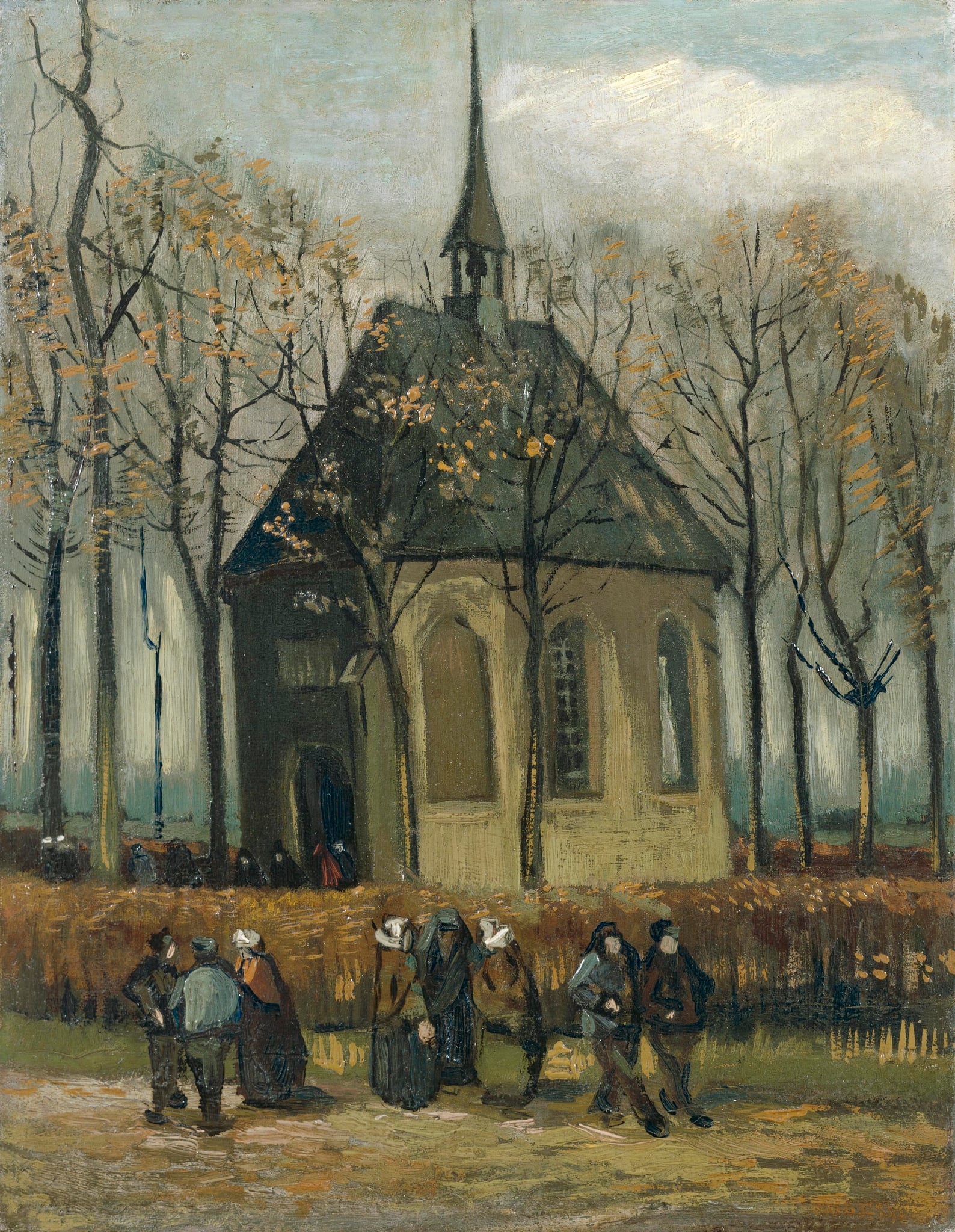
Congregation Leaving the Reformed Church in Nuenen
Vincent van Gogh (1884; reworked 1885)
Vincent van Gogh’s Congregation Leaving the Reformed Church in Nuenen turns a modest village service into a meditation on <strong>mourning</strong>, <strong>community</strong>, and <strong>thresholds</strong>. The low steeple, clipped hedge, and bundled figures in black shawls and white caps file past autumn-tinted, near-bare trees, shifting the scene from ordinary Sunday ritual to public grief. Painted in 1884 and <strong>reworked in 1885</strong> with the congregation and ocher leaves, the canvas folds private loss into rural Protestant life <sup>[1]</sup><sup>[2]</sup><sup>[3]</sup>.
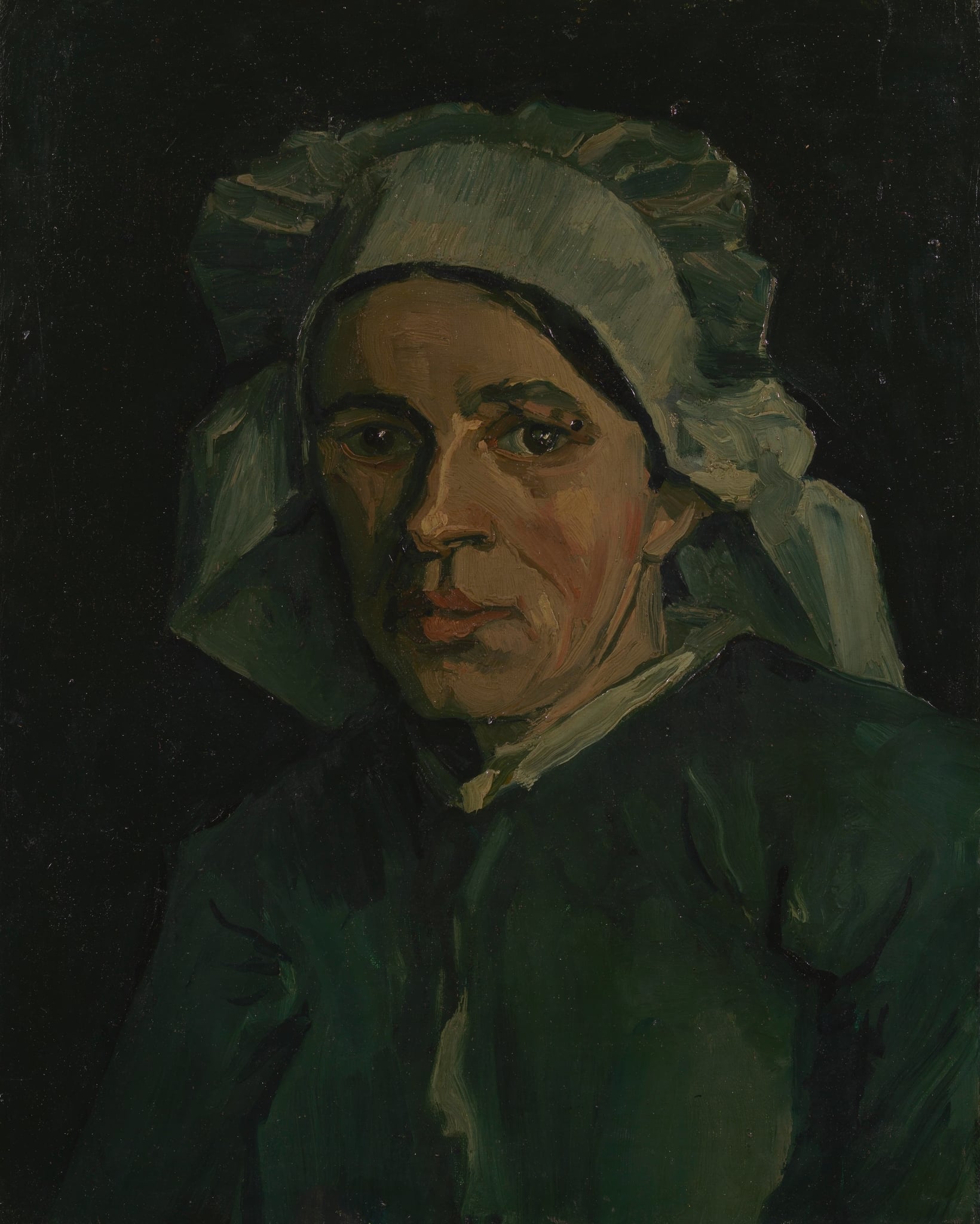
Head of a Woman
Vincent van Gogh (1885)
Van Gogh’s Head of a Woman turns a peasant’s face into a study of <strong>character and moral weight</strong>. With a near‑black ground, raking light from the left, and an earthbound range of greens and ochres, the painting asserts <strong>dignity without prettiness</strong>, anticipating the ethos of The Potato Eaters <sup>[1]</sup><sup>[2]</sup>.
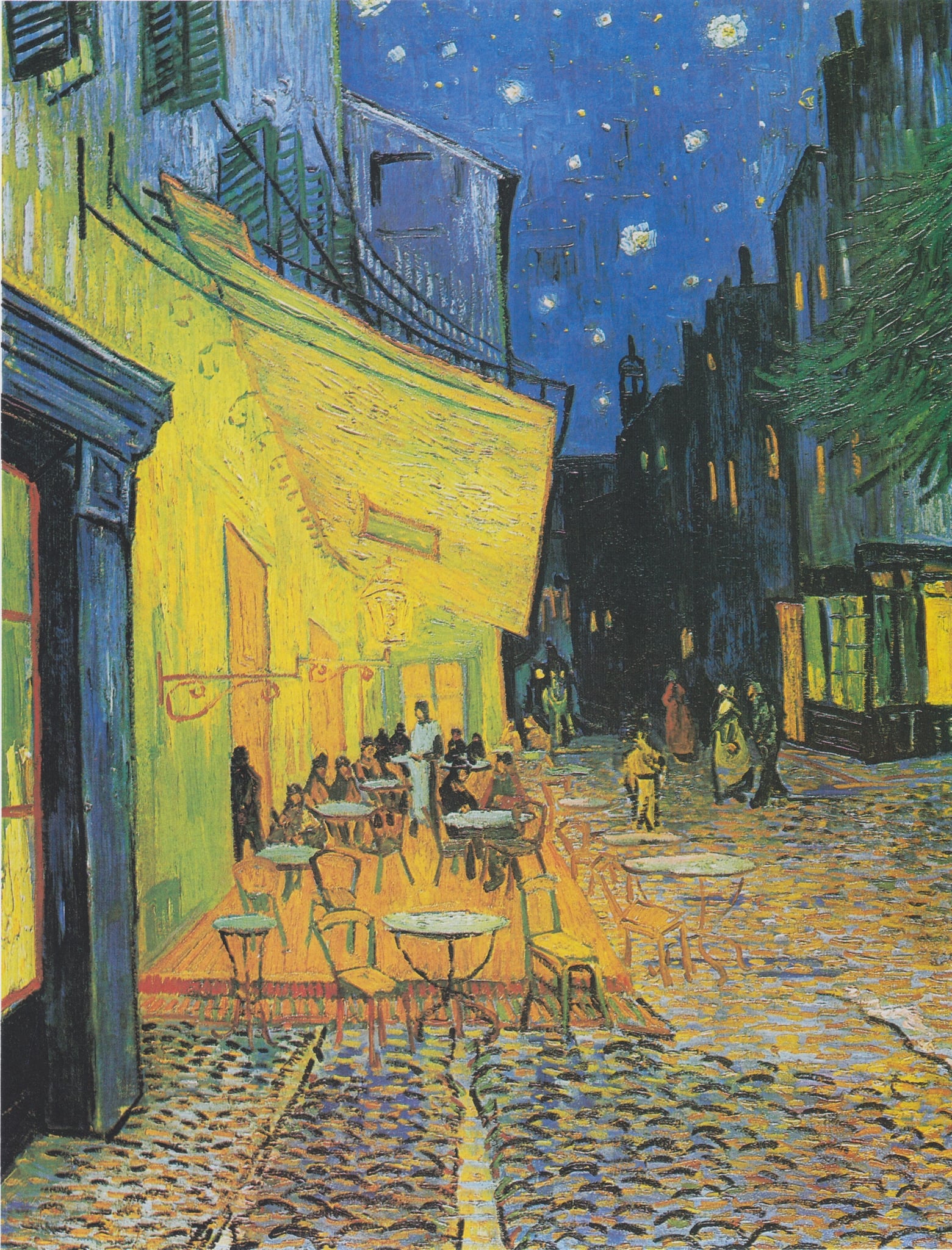
Café Terrace at Night
Vincent van Gogh (1888)
In Café Terrace at Night, Vincent van Gogh turns nocturne into <strong>luminous color</strong>: a gas‑lit terrace glows in yellows and oranges against a deep <strong>ultramarine sky</strong> pricked with stars. By building night “<strong>without black</strong>,” he stages a vivid encounter between human sociability and the vastness overhead <sup>[1]</sup><sup>[2]</sup>.
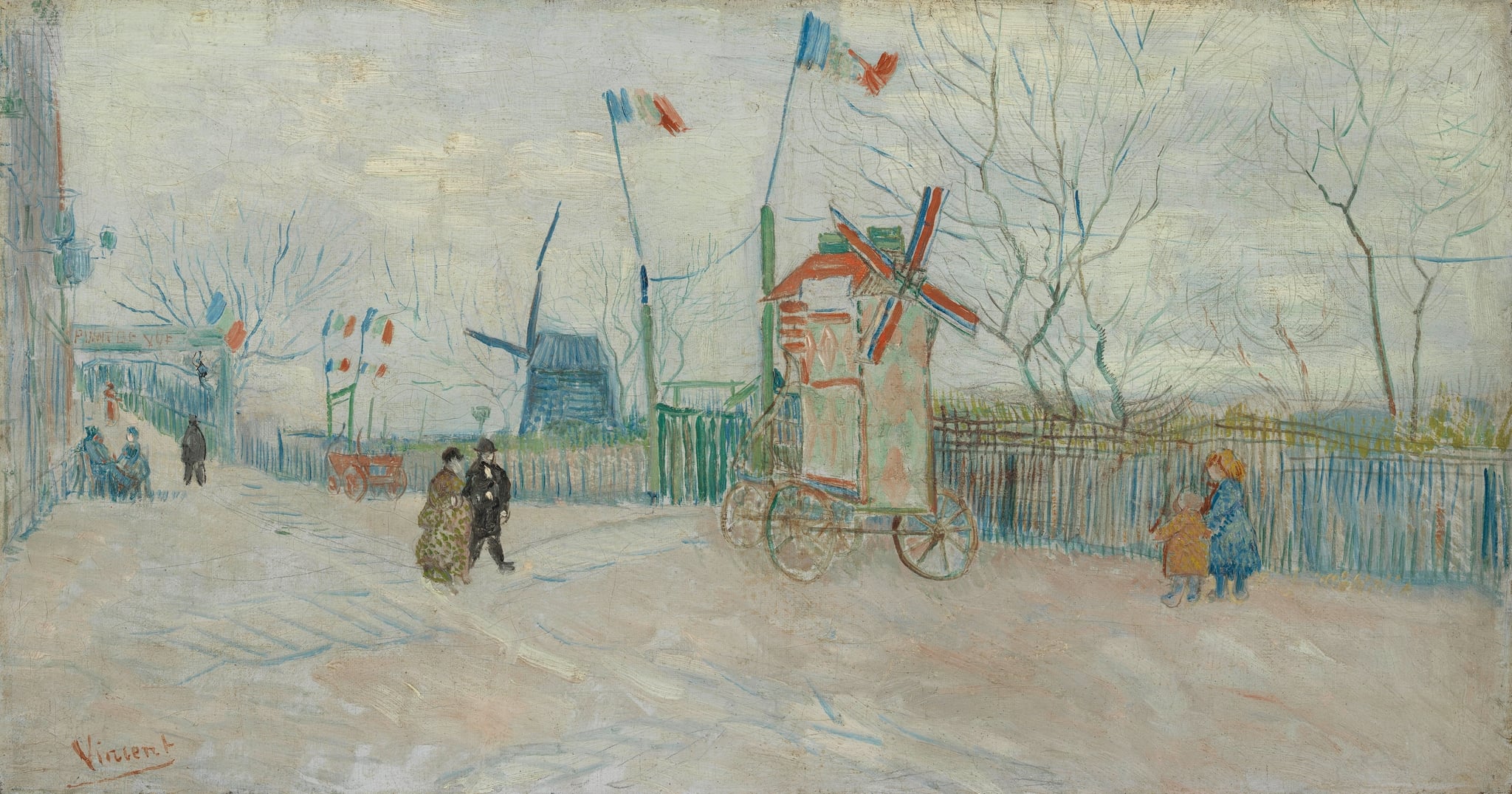
Impasse des Deux Frères in Montmartre
Vincent van Gogh (1887)
Van Gogh’s Impasse des Deux Frères in Montmartre crystallizes a <strong>threshold</strong> between rustic mills and a city turning to <strong>modern leisure</strong>. Tricolor flags, a wheeled “windmill” kiosk, and sketchlike figures animate a broad, chalky lane under pale winter light, declaring a neighborhood—and an artist—mid‑transition <sup>[1]</sup><sup>[3]</sup>.
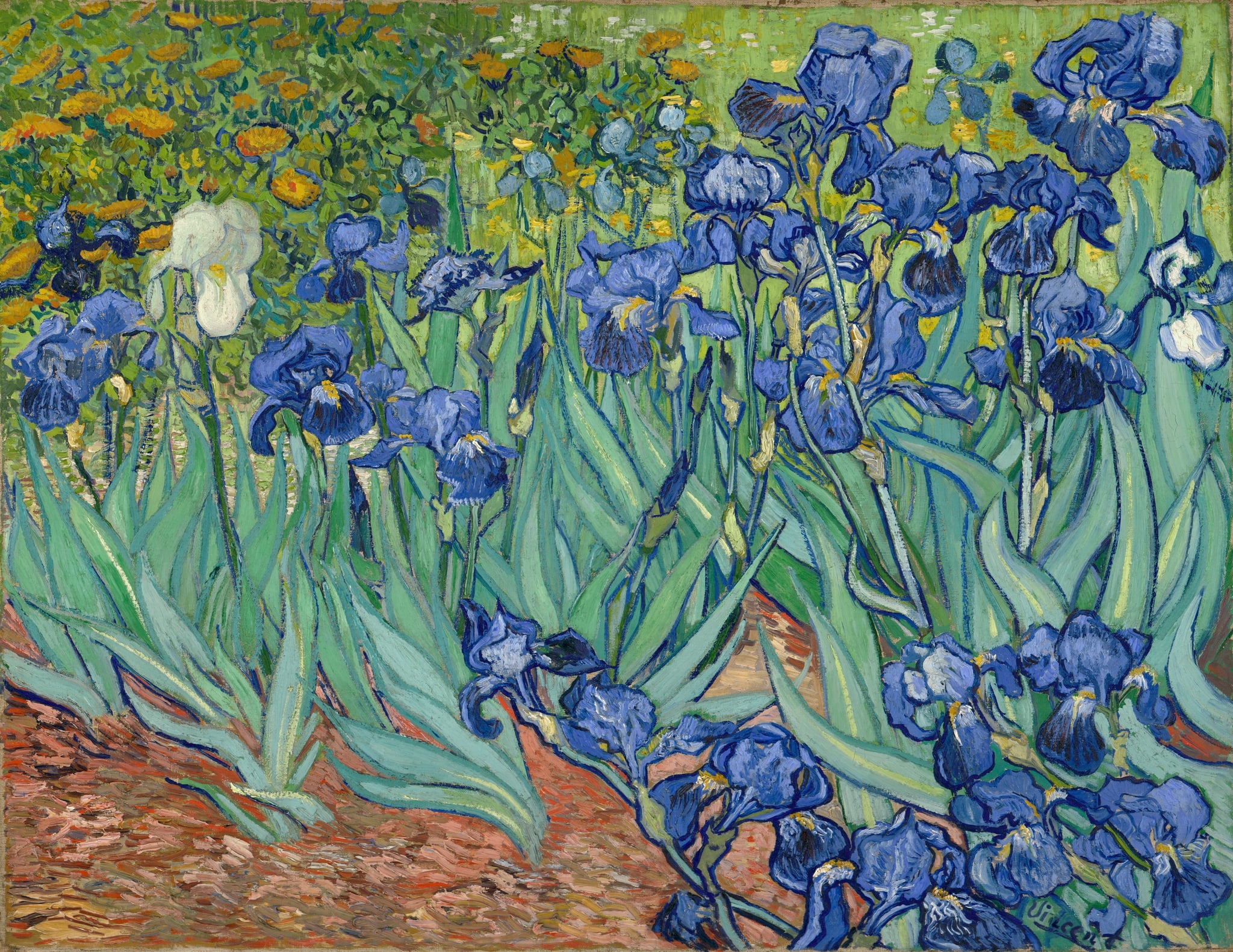
Irises
Vincent van Gogh (1889)
Painted in May 1889 at the Saint-Rémy asylum garden, Vincent van Gogh’s <strong>Irises</strong> turns close observation into an act of repair. Dark contours, a cropped, print-like vantage, and vibrating complements—violet/blue blossoms against <strong>yellow-green</strong> ground—stage a living frieze whose lone <strong>white iris</strong> punctuates the field with arresting clarity <sup>[1]</sup><sup>[2]</sup>.
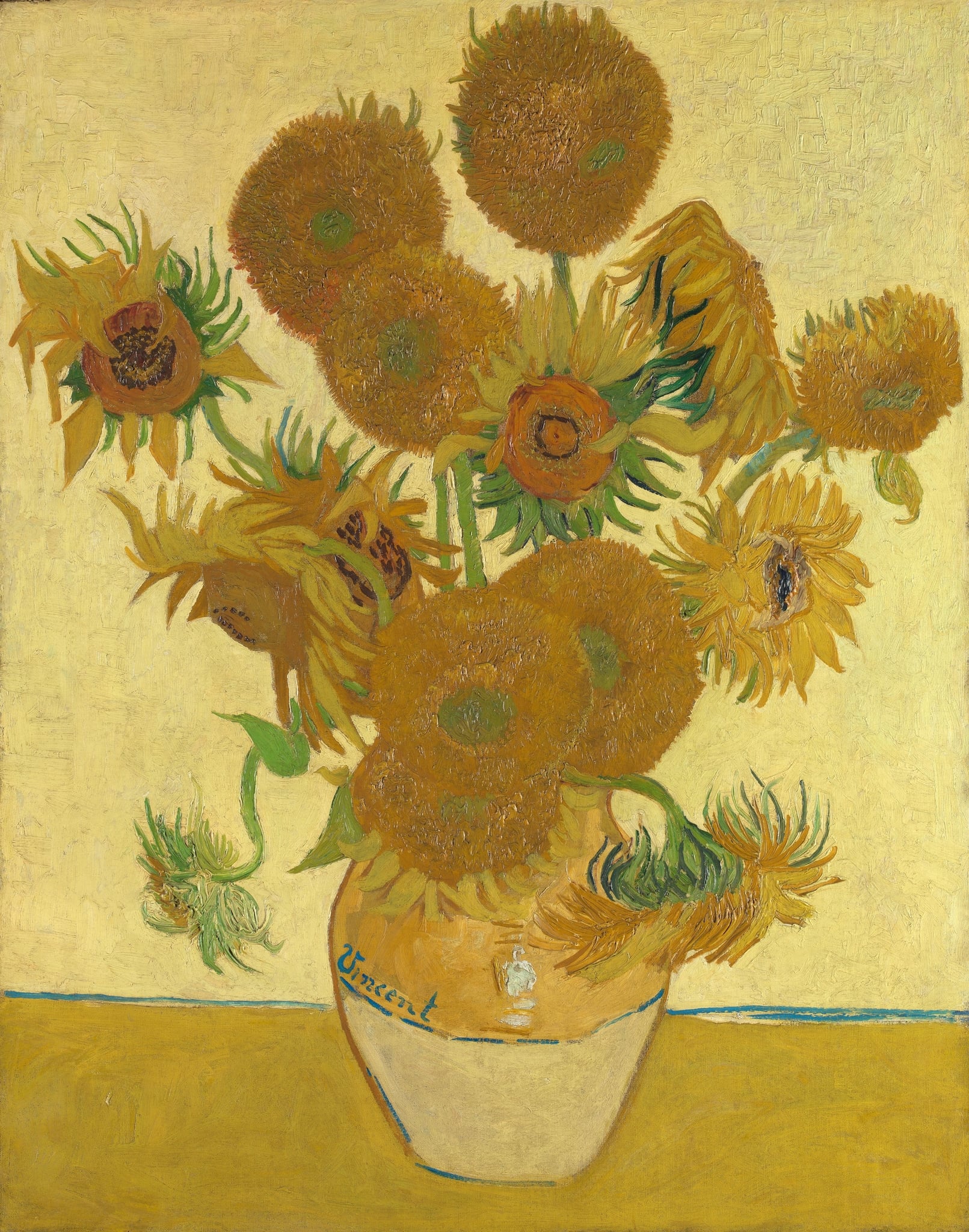
Sunflowers
Vincent van Gogh (1888)
Vincent van Gogh’s Sunflowers (1888) is a <strong>yellow-on-yellow</strong> still life that stages a full <strong>cycle of life</strong> in fifteen blooms, from fresh buds to brittle seed heads. The thick impasto, green shocks of stem and bract, and the vase signed <strong>“Vincent”</strong> turn a humble bouquet into an emblem of endurance and fellowship <sup>[1]</sup><sup>[2]</sup>.