Magritte vs Dalí
Both painters use crisp, matter‑of‑fact technique to make looking unreliable. Dalí makes the eye generate second images from within the scene; Magritte makes the mind separate what is seen from what is known. The result is two rigorous ways to distrust appearances—metamorphosis versus proposition.
Comparison frame: How do Dalí’s hallucinated doubles and Magritte’s lucid denials rewire our trust in what a painting shows?
Quick Comparison
| Topic | Rene Magritte | Salvador Dali |
|---|---|---|
| Core program | Make unrelated forms collapse into each other (paranoiac‑critical doubles). | Put representation on trial; separate image, word, and thing. |
| What the viewer must do | Resolve a second image that, once seen, cannot be unseen. | Accept that a lucid picture can deny what it depicts. |
| Primary device | Metamorphosis, reflection, hard/soft reversals. | Occlusion, substitution, framing, and text. |
| Surface and tone | “Hand‑painted dream photograph” finish; raking light; precise transitions. | Deadpan, ad‑like clarity; even lighting; chart‑like layouts. |
| Staging of space | Long horizons and Catalan coastscapes as a dream stage. | Parapets, shallow rooms, cool skies—neutral sets for a single jolt. |
| Self and symbolism | Autobiographical emblems: ants, grasshopper, eggs, crutches. | Anonymity and type: bowler‑hatted everyman; titles unsettle meaning. |
| Lesson of the image | Vision manufactures more than is there. | Seeing isn’t knowing; pictures are signs, not things. |
Shared Ground
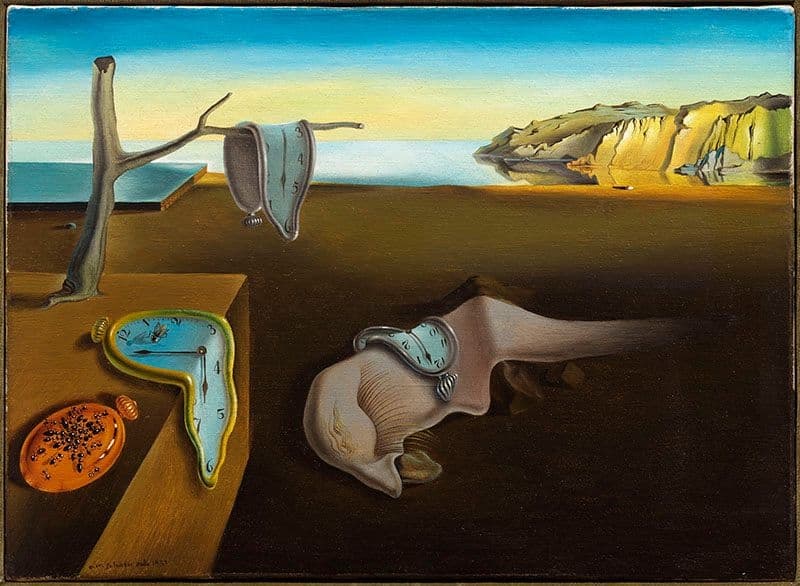
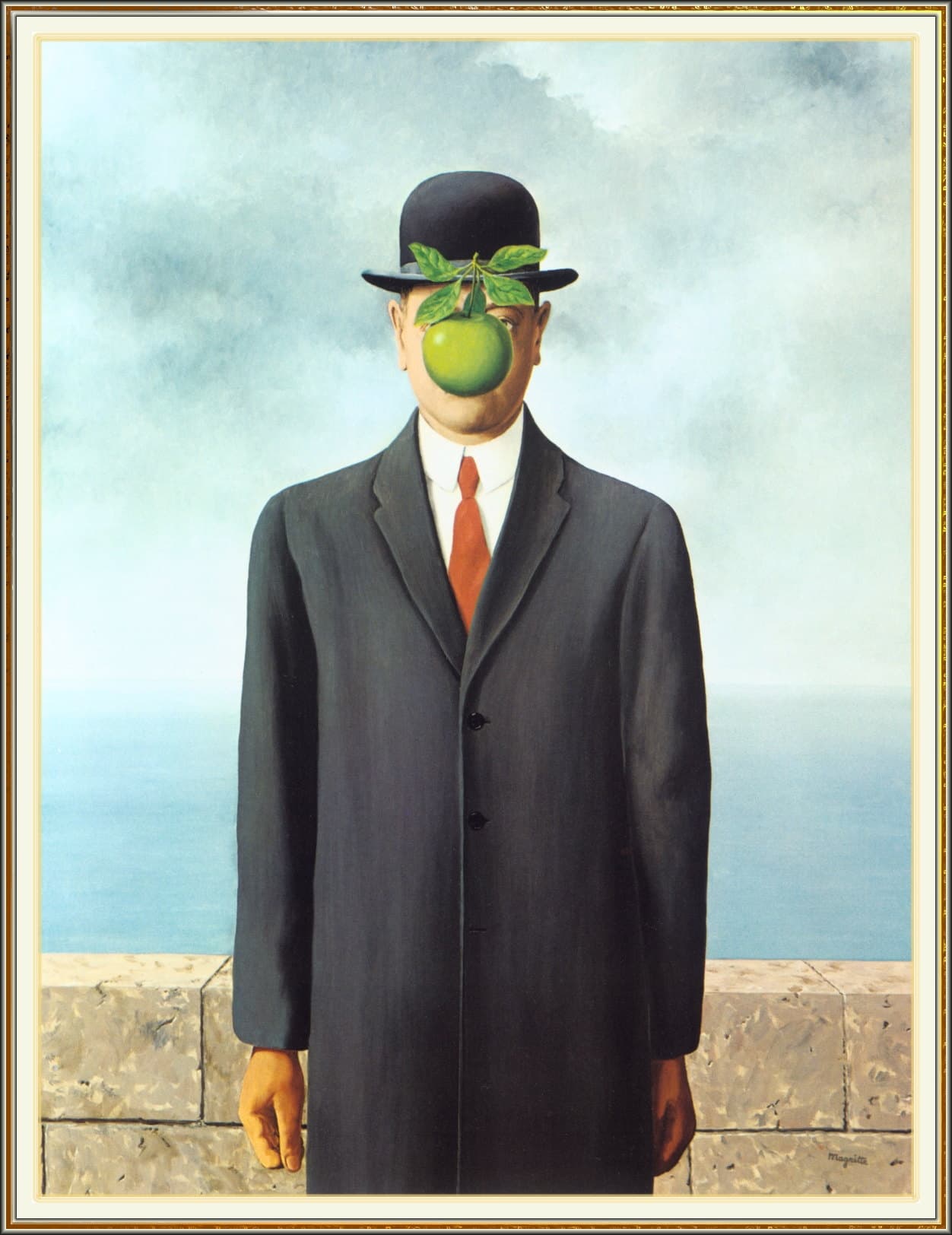
Dalí and Magritte share a tactical clarity: they paint with sober precision so that the disturbance reads as a fact. Their best-known pictures have the finish of advertisements or school charts—legible contours, even lighting, and unobtrusive brushwork. That clarity is not decorative; it is the stage for optical and conceptual misbehavior. When a clock melts over a ledge or an apple blocks a face, the effect lands as a report, not a fantasy.
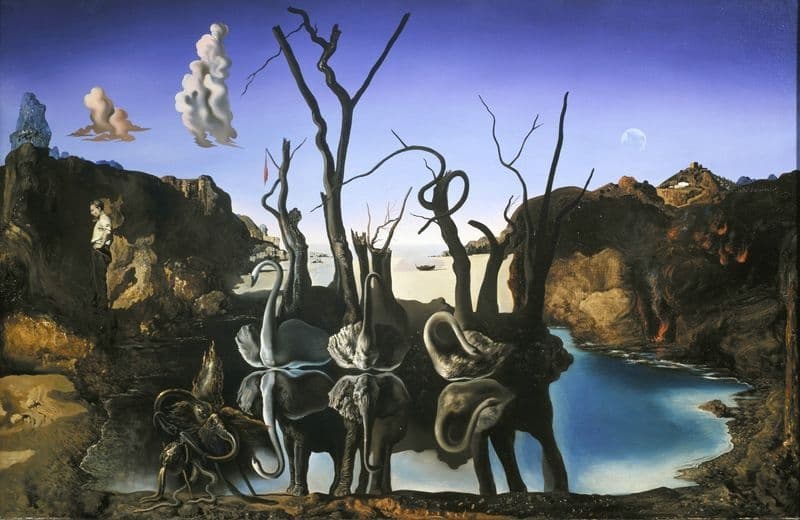
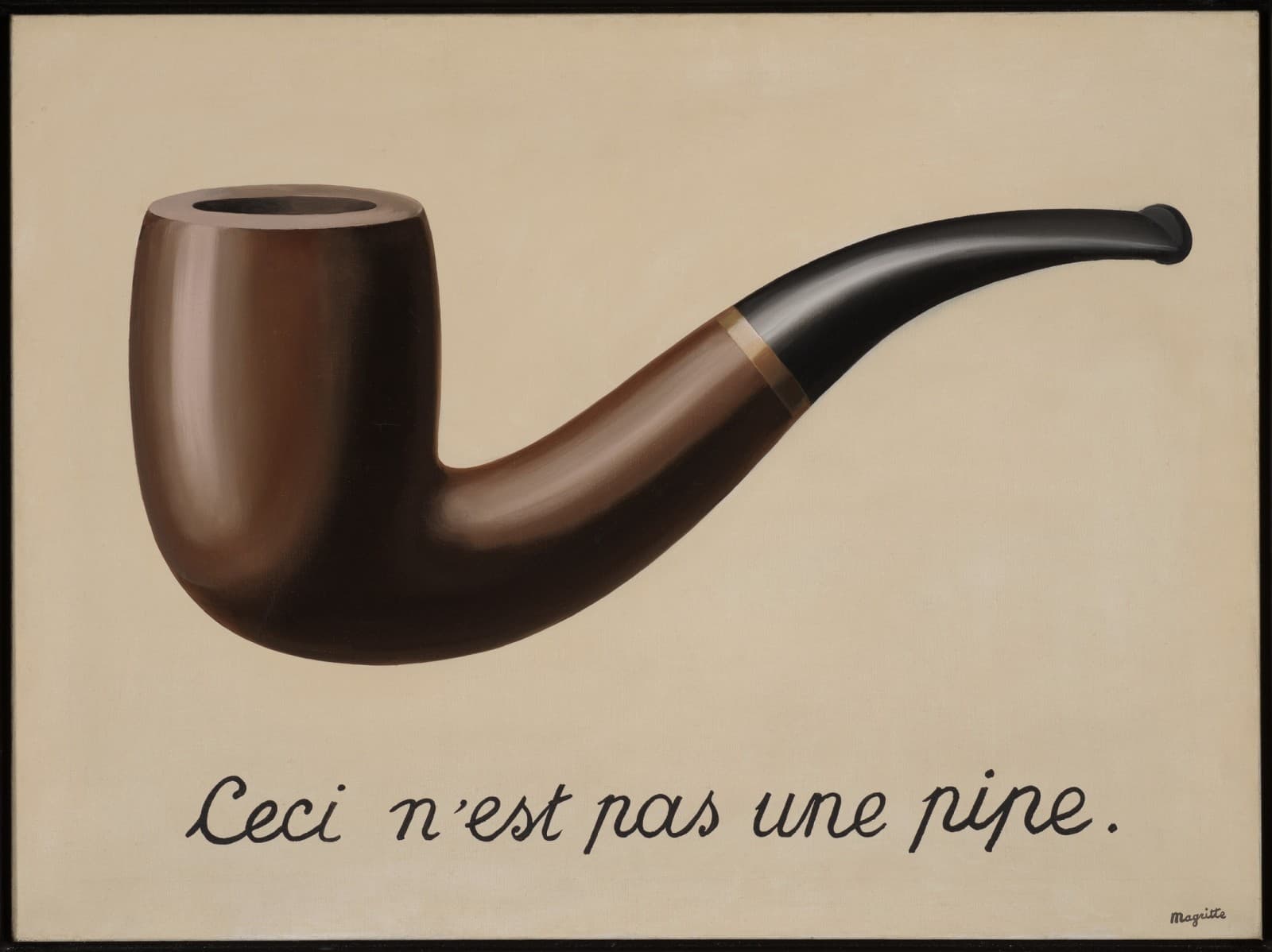
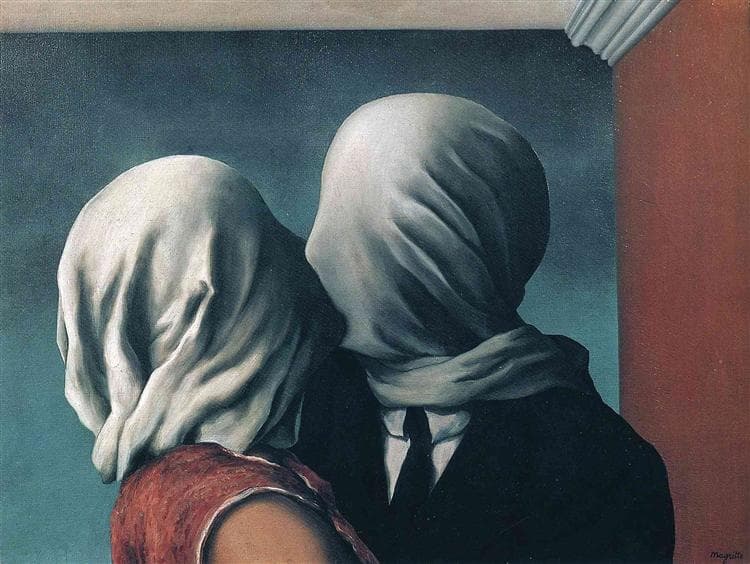
Both build “demonstration” pictures that the viewer must complete. Dalí engineers images in which swans and trees flip into elephants once the eye aligns reflections; a Catalan horizon and glassy water turn the lake into a device for hallucinated doubling. Magritte constructs propositions that force a split between depiction and naming: a carefully painted pipe paired with the sentence This is not a pipe; lovers whose kiss is made opaque by white cloths. In each case, the plainness of the set—parapets against a cool sky, neutral rooms with crown molding, beach-like stages with long shadows—heightens the single dislocation that rewrites the scene.
Crucially, both artists reframe everyday motifs—clocks, apples, pipes, veils—into instruments that expose how vision constructs meaning. They avoid painterly blur in favor of a lucid surface that leaves no place to hide; ambiguity must be engineered, not excused. The shared ground is a modern ethic: precision used to destabilize looking, and pictures designed as experiments in how we see and what we take for granted.
Decisive Difference
Dalí installs hallucination inside the image. His paranoiac‑critical method compels unrelated forms to collapse into one another, rendered with “hand‑painted dream photograph” exactitude. Reflections and contours act like hinges: the neck of a swan becomes an elephant’s trunk; hard devices go soft; crutches steady what should not stand. Place anchors these metamorphoses—the cliffs and light of Portlligat recur as a factual stage on which the psyche performs. The world does not contradict the dream; the world enables it, supplying the raw material from which doubles erupt.
Magritte, by contrast, puts representation itself on trial. He prefers lucidity that denies identity—word against image, object against title, face against occlusion. The pipe that is not a pipe, the shrouded kiss, the apple masking a bowler‑hatted everyman: these are not metamorphoses but refusals. He uses substitution, veiling, framing, and text to strip away the assumption that pictures deliver things. Where Dalí’s drama is perceptual—teaching your eye to see more—Magritte’s is propositional—teaching your mind to separate seeing from knowing. His rooms and parapets are philosophically plain, and his anonymous types avoid confession, emphasizing that the puzzle is not the artist’s psyche but the logic of images. The fork is decisive: Dalí makes vision generate; Magritte makes it doubt.
Paired Works
Perception that multiplies vs representation that denies
Focus question: What happens when a picture makes your eye invent versus your mind retract?
Swans Reflecting Elephants vs This is Not a Pipe
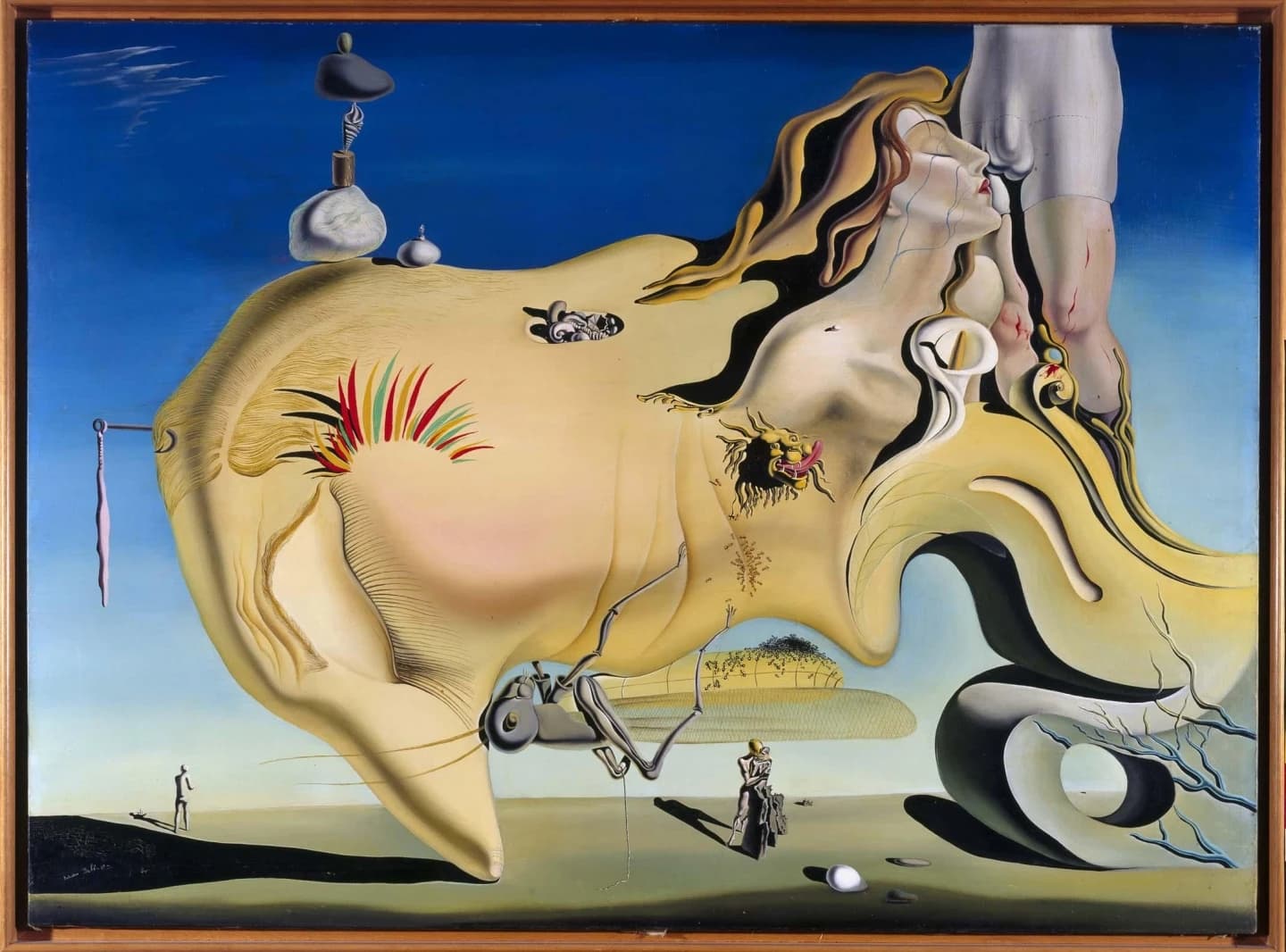
Desire: confession machine vs opacity machine
Focus question: How do these painters picture intimacy—as exposed compulsion or as principled concealment?
The Great Masturbator vs The Lovers
One disruption, whole world changed
Focus question: What does a single impossibility do to an otherwise ordinary world?
The Persistence of Memory vs The Son of Man
Why This Comparison Matters
This comparison is a compact primer in how modern art teaches skepticism. Dalí shows that images can expand perception—our eyes are capable of manufacturing doubles when conditions invite it. Magritte shows that images can be impeccably clear and still withhold truth; signs do not equal the things they depict. Those lessons travel far beyond Surrealism. Advertising depends on persuasive resemblance; Magritte’s pipe is the antidote. Digital feeds depend on seamless composites and context collapse; Dalí’s doubles expose how easily we supply coherence where none exists.
Learning to see with both artists refines two complementary habits: sharpened attention to how forms morph under framing (Dalí), and disciplined separation between depiction, label, and fact (Magritte). Together they model a responsible visual literacy for the present: enjoy the image’s power to make and remake the world, and keep your distance from what a picture or caption claims to be.
Related Links
Sources
- MoMA collection: Salvador Dalí, The Persistence of Memory
- MoMA audio: Dalí’s “Camembert of time” quip
- The Dalí Museum: Hand‑Painted Dream Photographs
- Fundació Gala‑Salvador Dalí: Landscape and Portlligat
- LACMA collection: René Magritte, The Treachery of Images
- Encyclopaedia Britannica: The Treachery of Images and Foucault
- SFMOMA: The bowler‑hatted everyman
- Museo Reina Sofía: Dalí, The Great Masturbator
- MoMA publication: Dalí’s paranoiac‑critical method