Rene Magritte
Biography
Themes in Their Work
Compare Rene Magritte
Most Expensive Rene Magritte Paintings
Explore ranked valuations of Rene Magritte's most valuable works →
Featured Artworks
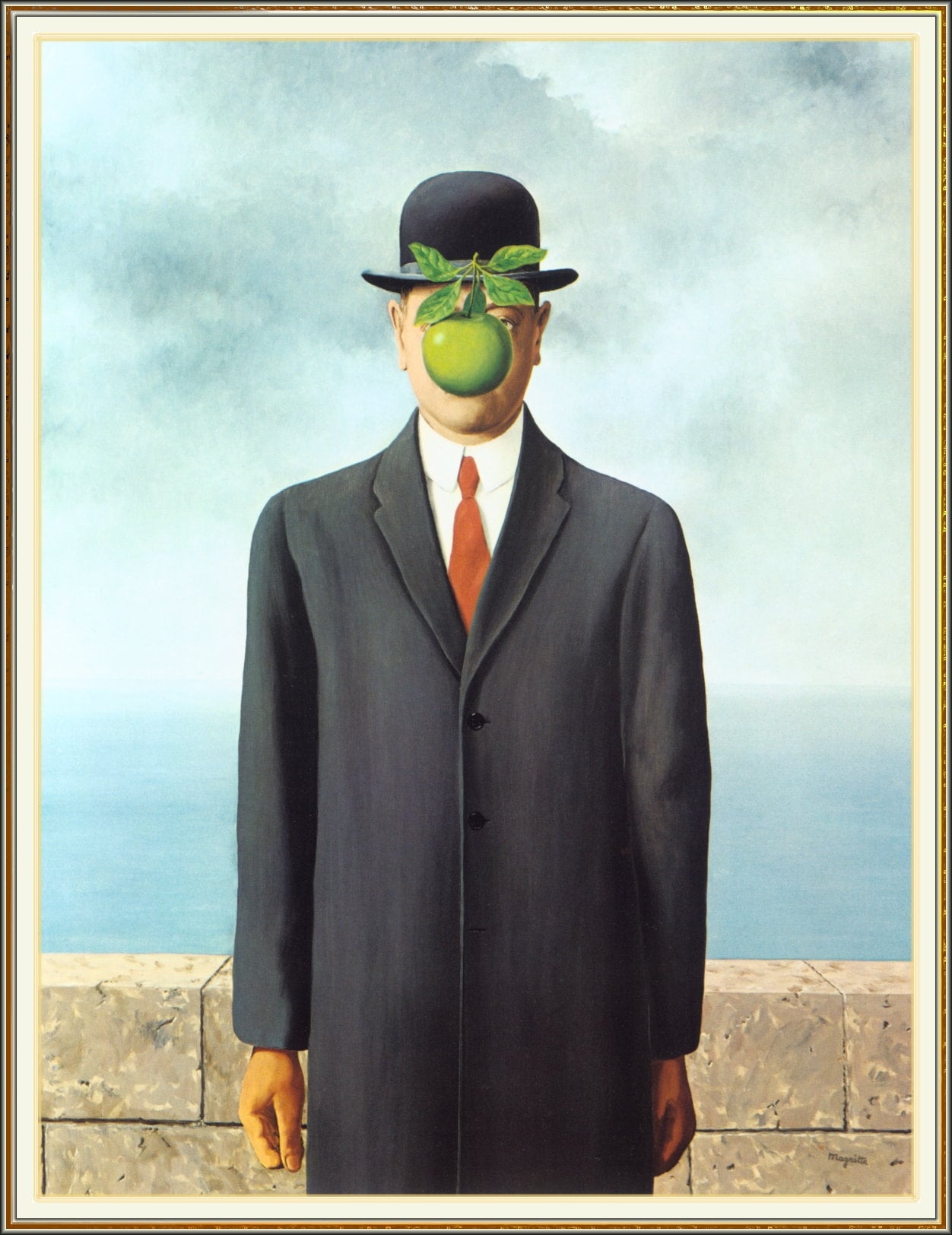
The Son of Man
Rene Magritte (1964)
Rene Magritte’s The Son of Man stages a crisp <strong>everyman</strong> in bowler hat and overcoat before a sea horizon while a <strong>green apple</strong> hovers to block his face. The tiny glimpse of one eye above the fruit turns a straightforward portrait into a <strong>riddle about seeing and knowing</strong> <sup>[1]</sup><sup>[2]</sup>.
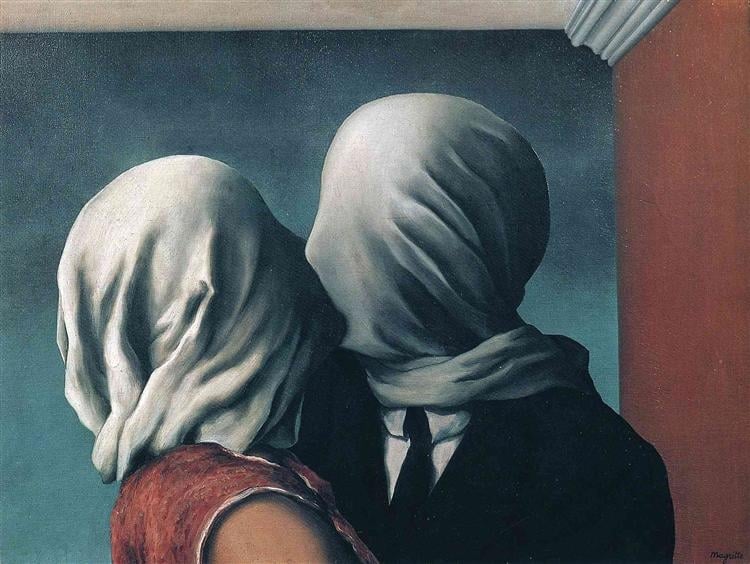
The Lovers
Rene Magritte (1928)
René Magritte’s The Lovers turns a kiss into an emblem of <strong>desire obstructed</strong>: two figures—she in red, he in a dark suit—press together while their heads are swathed in <strong>white cloth</strong>. Within a cool blue‑grey interior bounded by crown molding and a rust-red wall, intimacy becomes an image of <strong>opacity</strong> rather than revelation <sup>[1]</sup>.
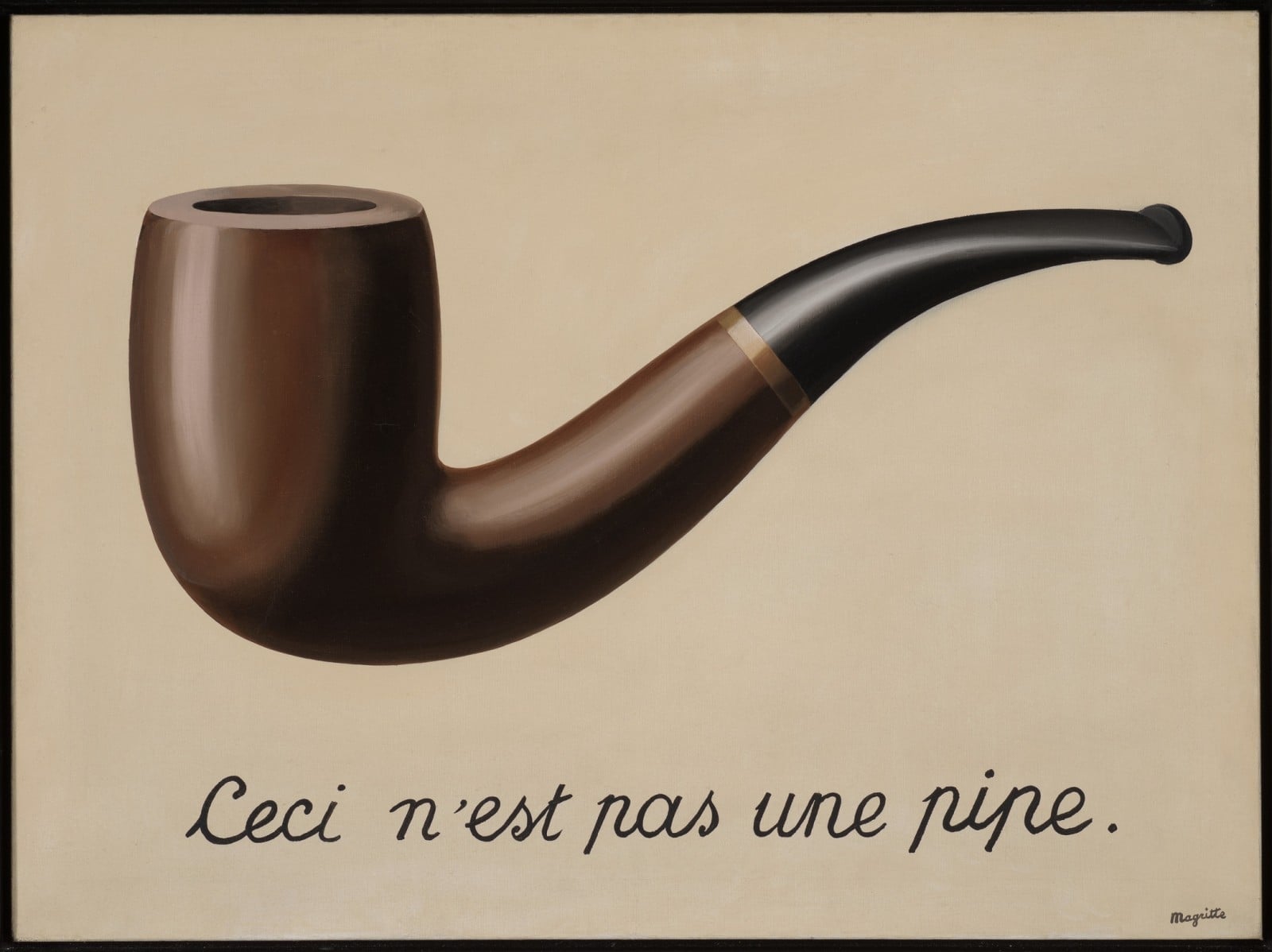
This is Not a Pipe
Rene Magritte (1929)
A crisply modeled tobacco pipe hovers over a blank beige field, while the cursive line "Ceci n’est pas une pipe" coolly denies what the eye assumes. The clash between image and sentence turns a familiar object into a <strong>thought experiment</strong> about signs and things. Magritte’s deadpan exactitude and ad‑like layout stage a <strong>philosophical trap</strong>: you can see a pipe, but you cannot smoke this picture. <sup>[1]</sup><sup>[2]</sup>