Plum Brandy
Study Print Studio
Create a personal study print
Build a companion study sheet around the part of this painting that speaks to you most. Choose a detail, shape an interpretation, and walk away with something personal and display-worthy.
Fast Facts
- Year
- ca. 1877
- Medium
- Oil on canvas
- Dimensions
- 73.6 × 50.2 cm
- Location
- National Gallery of Art, Washington, D.C.
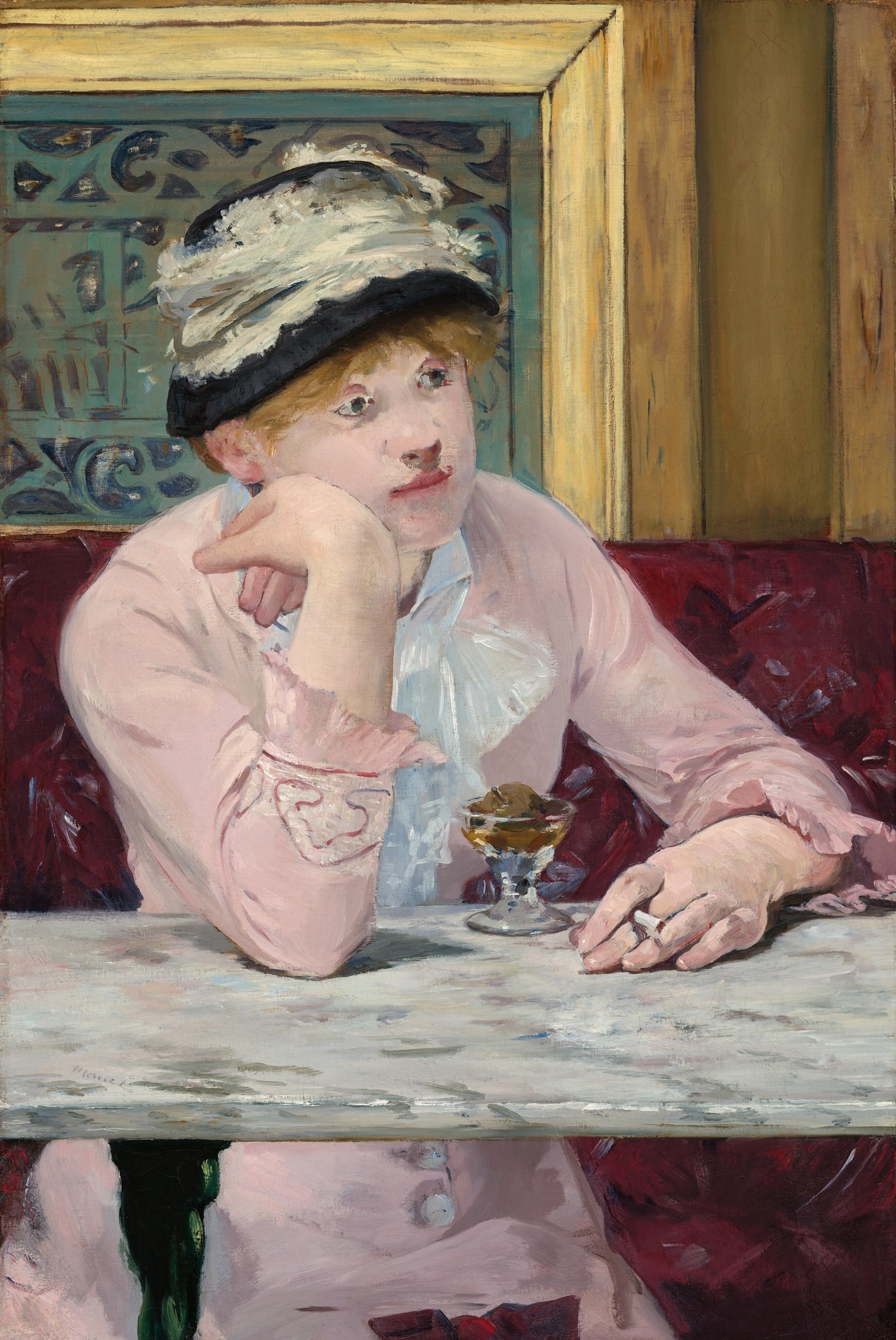
Click on any numbered symbol to learn more about its meaning
Meaning & Symbolism
Explore Deeper with AI
Ask questions about Plum Brandy
Popular questions:
Powered by AI • Get instant insights about this artwork
Interpretations
Gendered Modernity: Smoking, Respectability, Ambiguity
Source: The Metropolitan Museum of Art; National Gallery of Art; Robert L. Herbert
Studio-Built Realism: The Set as Modern Stage
Source: J. Paul Getty Museum (Manet and Modern Beauty); National Gallery of Art
Manet vs. Degas: Ethics of the Café Gaze
Source: The Metropolitan Museum of Art (Manet/Degas)
Tempo as Still-Life: The Plum as Timekeeper
Source: National Gallery of Art; J. Paul Getty Museum
Fashioning the Parisienne: Type Without Class Fix
Source: J. Paul Getty Museum; National Gallery of Art; National Gallery (artist bio)
Seen in Comparisons
Related Themes
About Édouard Manet
More by Édouard Manet
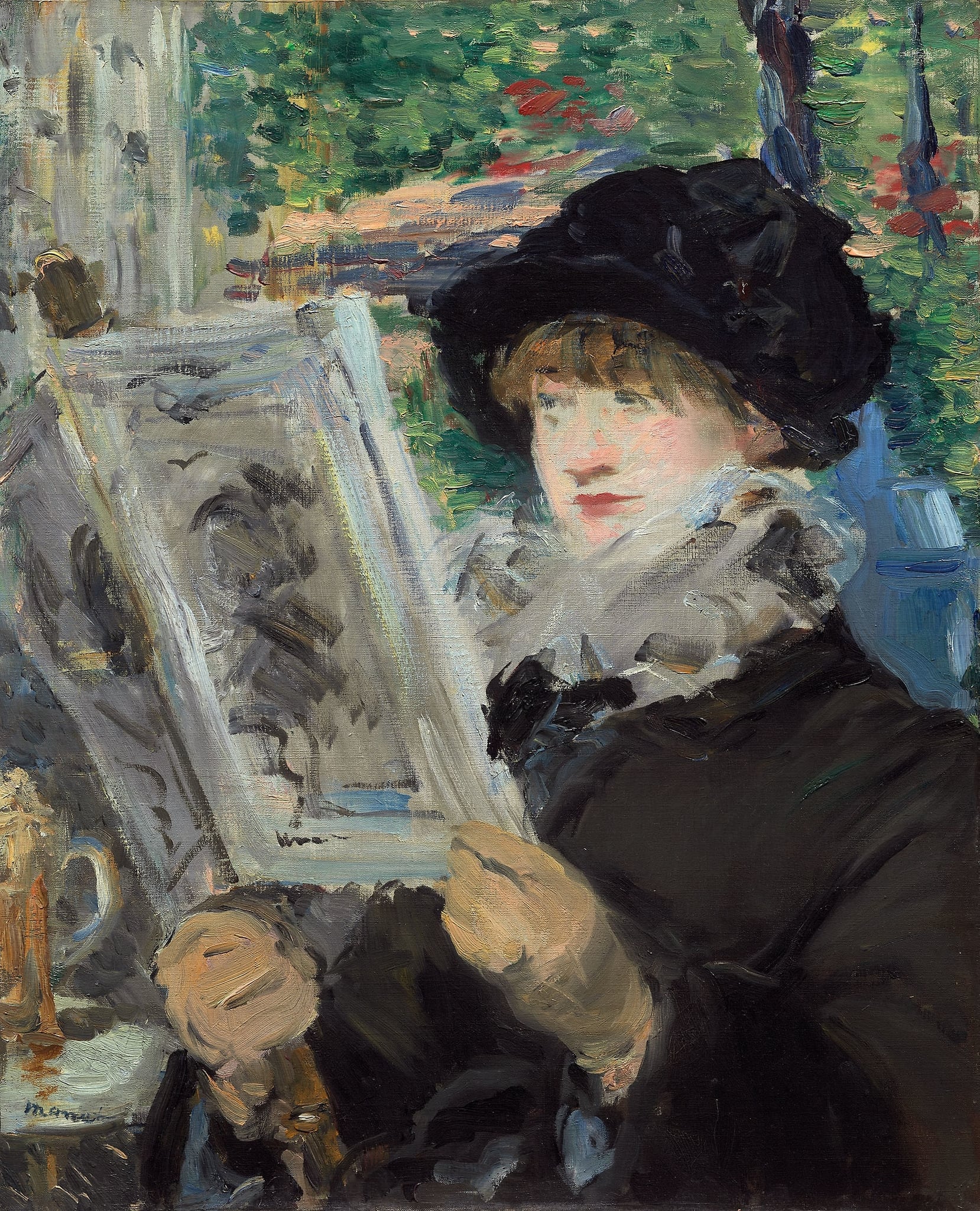
Woman Reading
Édouard Manet (1880–82)
Manet’s Woman Reading distills a fleeting act into an emblem of <strong>modern self-possession</strong>: a bundled figure raises a journal-on-a-stick, her luminous profile set against a brisk mosaic of greens and reds. With quick, loaded strokes and a deliberately cropped <strong>beer glass</strong> and paper, Manet turns perception itself into subject—asserting the drama of a private mind within a public café world <sup>[1]</sup><sup>[2]</sup>.
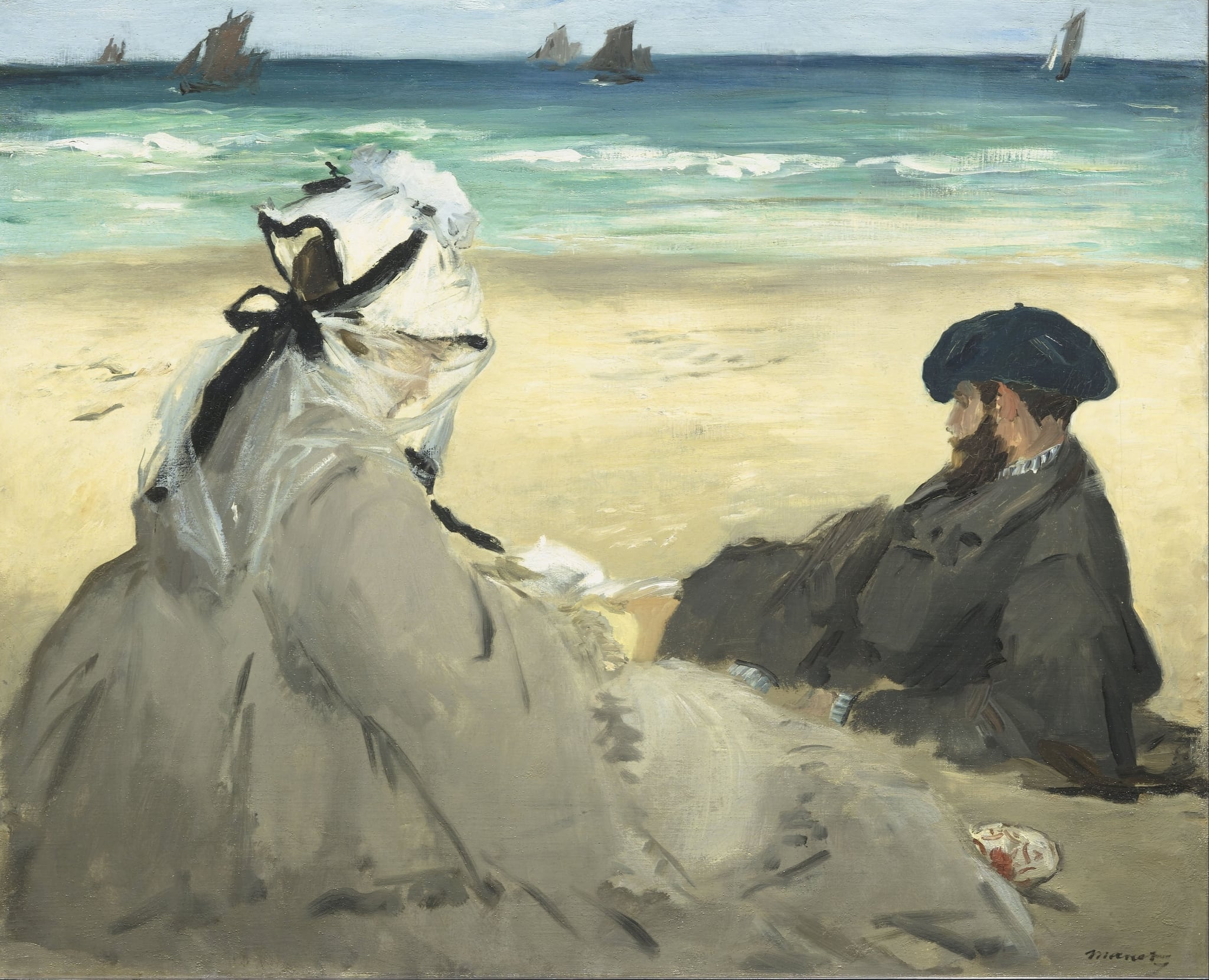
On the Beach
Édouard Manet (1873)
On the Beach captures a paused interval of modern leisure: two fashionably dressed figures sit on pale sand before a <strong>banded, high-horizon sea</strong>. Manet’s <strong>economical brushwork</strong>, restricted greys and blacks, and radical cropping stage a scene of absorption and wind‑tossed motion that feels both intimate and detached <sup>[1]</sup>.
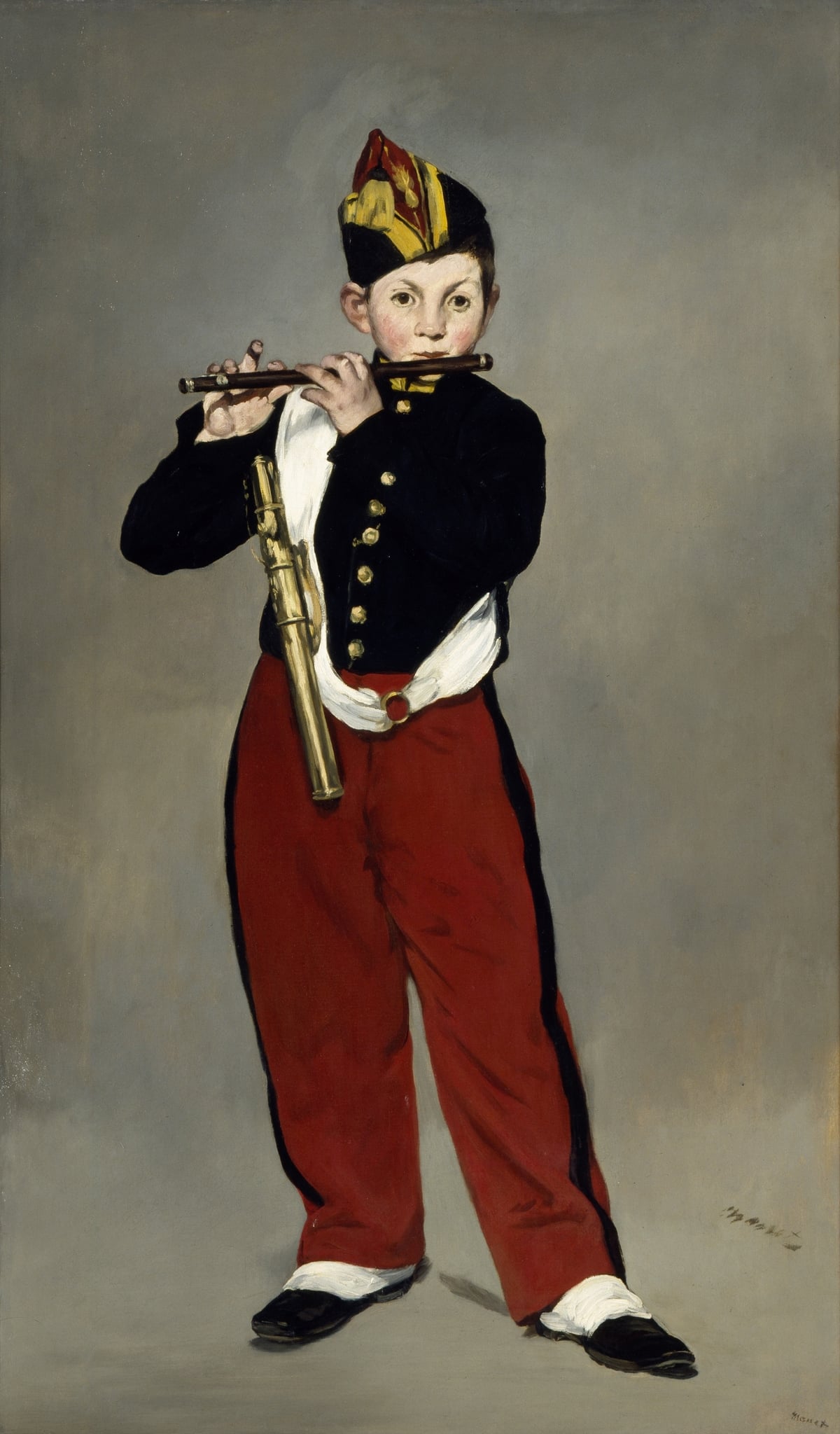
The Fifer
Édouard Manet (1866)
In The Fifer, <strong>Édouard Manet</strong> monumentalizes an anonymous military child by isolating him against a flat, gray field, converting everyday modern life into a subject of high pictorial dignity. The crisp <strong>silhouette</strong>, blocks of <strong>unmodulated color</strong> (black tunic, red trousers, white gaiters), and glints on the brass case make sound and discipline palpable without narrative scaffolding <sup>[1]</sup>. Drawing on <strong>Velázquez’s single-figure-in-air</strong> formula yet inflected by japonisme’s flatness, Manet forges a new modern image that the Salon rejected in 1866 <sup>[1]</sup><sup>[2]</sup><sup>[3]</sup>.
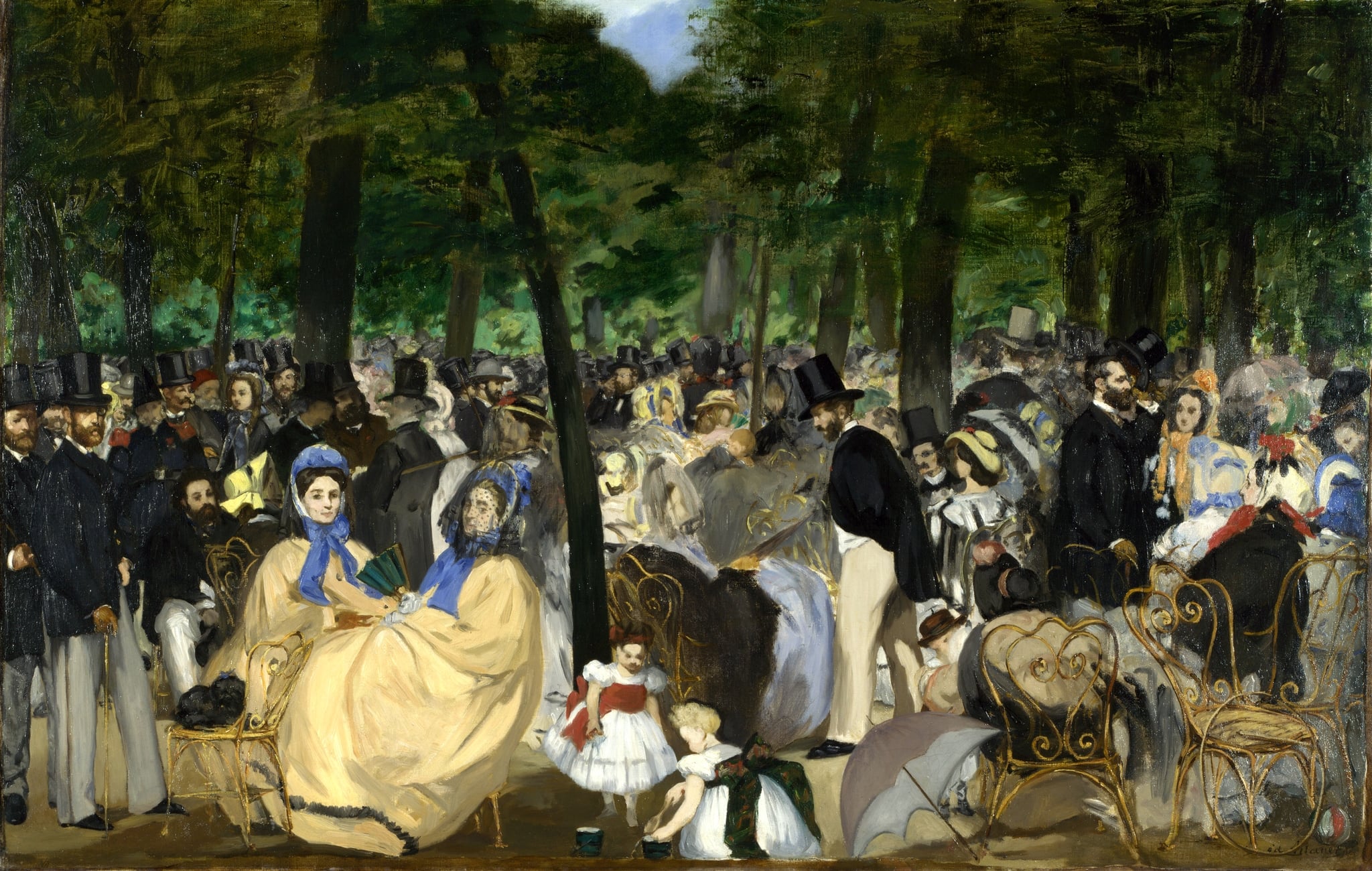
Music in the Tuileries
Édouard Manet (1862)
Édouard Manet’s Music in the Tuileries turns a Sunday concert into a manifesto of <strong>modern life</strong>: a frieze of top hats, crinolines, and iron chairs flickering beneath <strong>toxic green</strong> foliage. Instead of a hero or center, the painting disperses attention across a restless crowd, making <strong>looking itself</strong> the drama of the scene <sup>[1]</sup><sup>[2]</sup>.
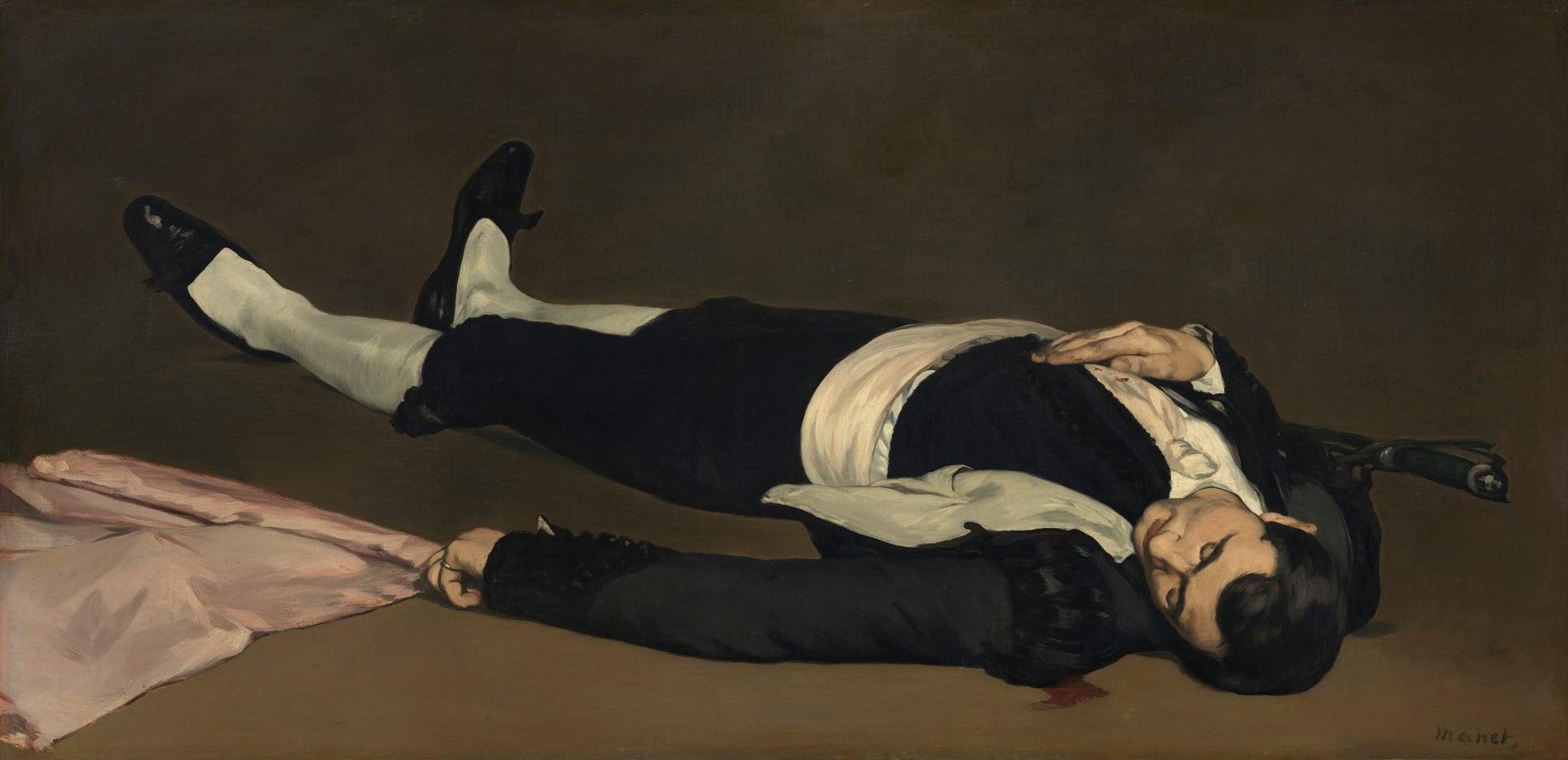
The Dead Toreador
Édouard Manet (probably 1864)
Manet’s The Dead Toreador isolates a matador’s corpse in a stark, horizontal close‑up, replacing the spectacle of the bullring with <strong>silence</strong> and <strong>abrupt finality</strong>. Black costume, white stockings, a pale pink cape, the sword’s hilt, and a small <strong>pool of blood</strong> become the painting’s cool, modern vocabulary of death <sup>[1]</sup>.
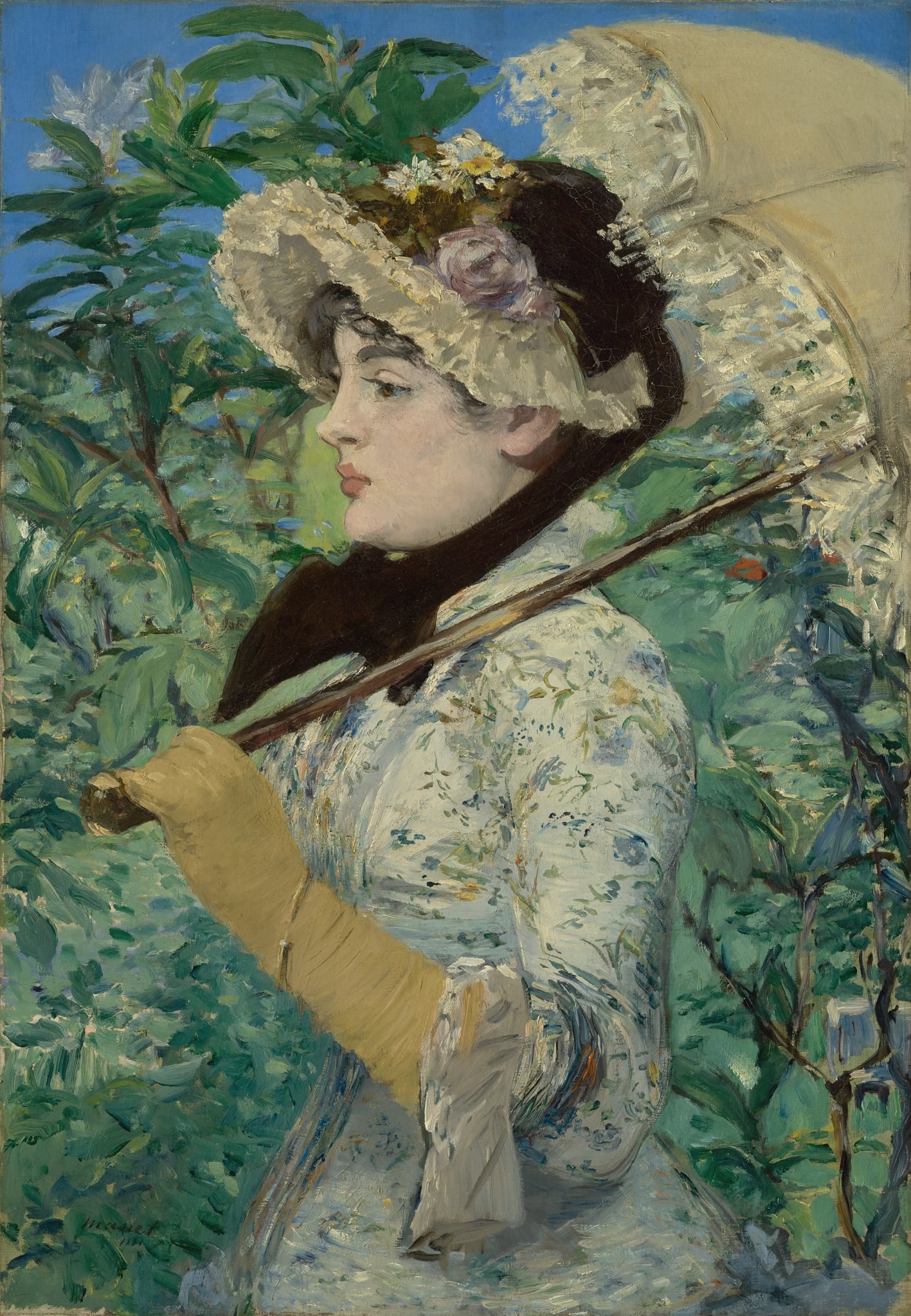
Jeanne (Spring)
Édouard Manet (1881)
Édouard Manet’s Jeanne (Spring) fuses a time-honored allegory with <strong>modern Parisian fashion</strong>: a crisp profile beneath a cream parasol, set against <strong>luminous, leafy greens</strong>. Manet turns couture—hat, glove, parasol—into the language of <strong>renewal and youth</strong>, making spring feel both perennial and up-to-the-minute <sup>[1]</sup><sup>[2]</sup>.