Édouard Manet
Biography
Themes in Their Work
Where to See Édouard Manet's Paintings
Explore Édouard Manet's works on display in museums around the world.
Featured in Essays
Essay
The Day Manet Took a Knife to His Own Painting
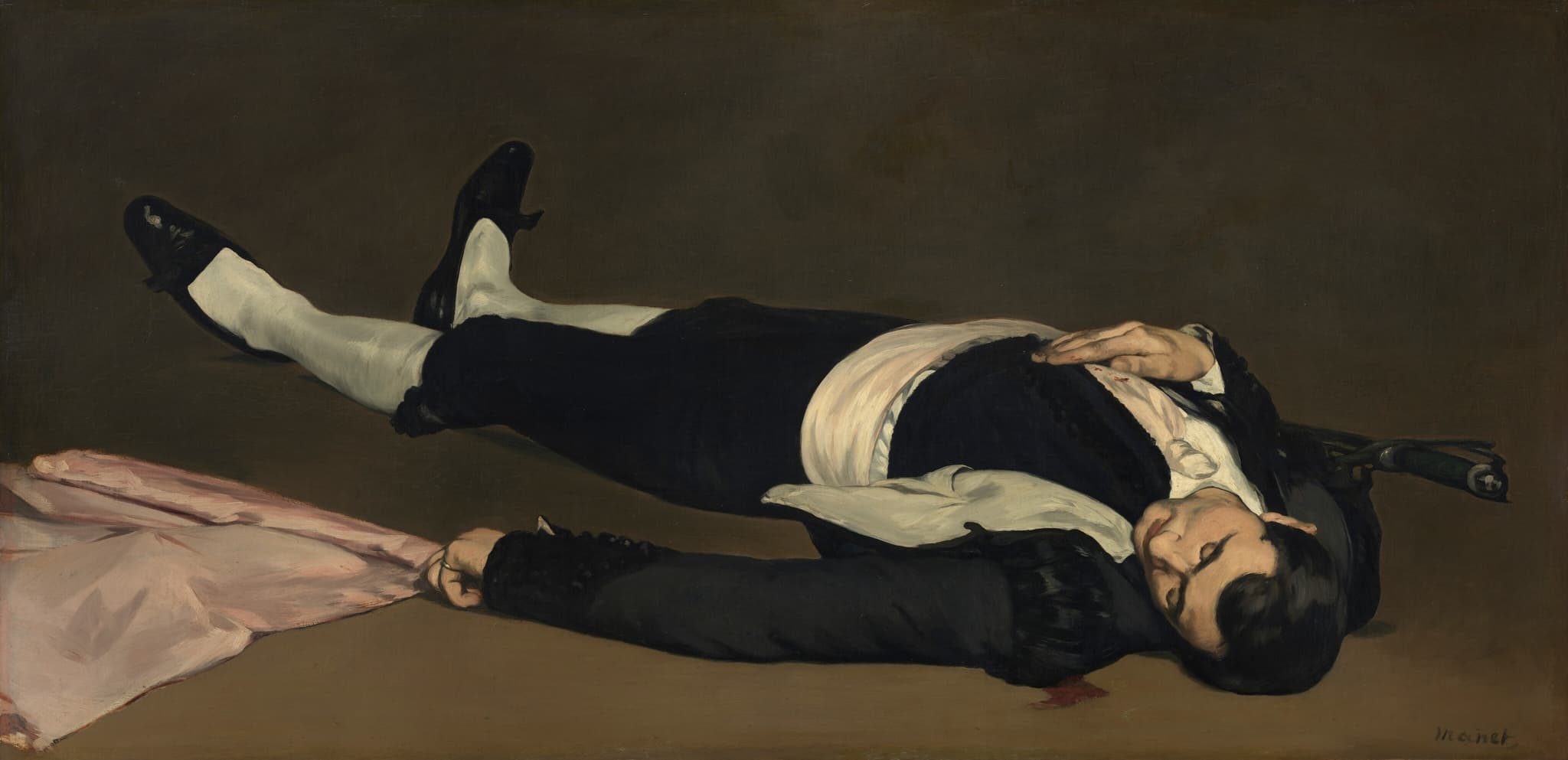
Paris, 1864. The Salon is the arena. A painting can knight you or end you. Manet, already bruised by scandal the year before, bets big on spectacle: a sweeping bullfight scene, Spanish costume, blood and bravado. He hangs it for the crowd. The critics circle. The verdict is icy. He can’t afford another public drubbing; every jeer dents his chances of becoming more than a punchline. The stakes are career, pride, and Paris itself. Here’s the twist sitting in plain sight: the famous close‑up of the fallen matador you know as The Dead Toreador — you can see it here [link](/artworks/edouard-manet/the-dead-toreador)[1] — started life as just one corner of that doomed panorama.
Essay
The $65 Million Spring
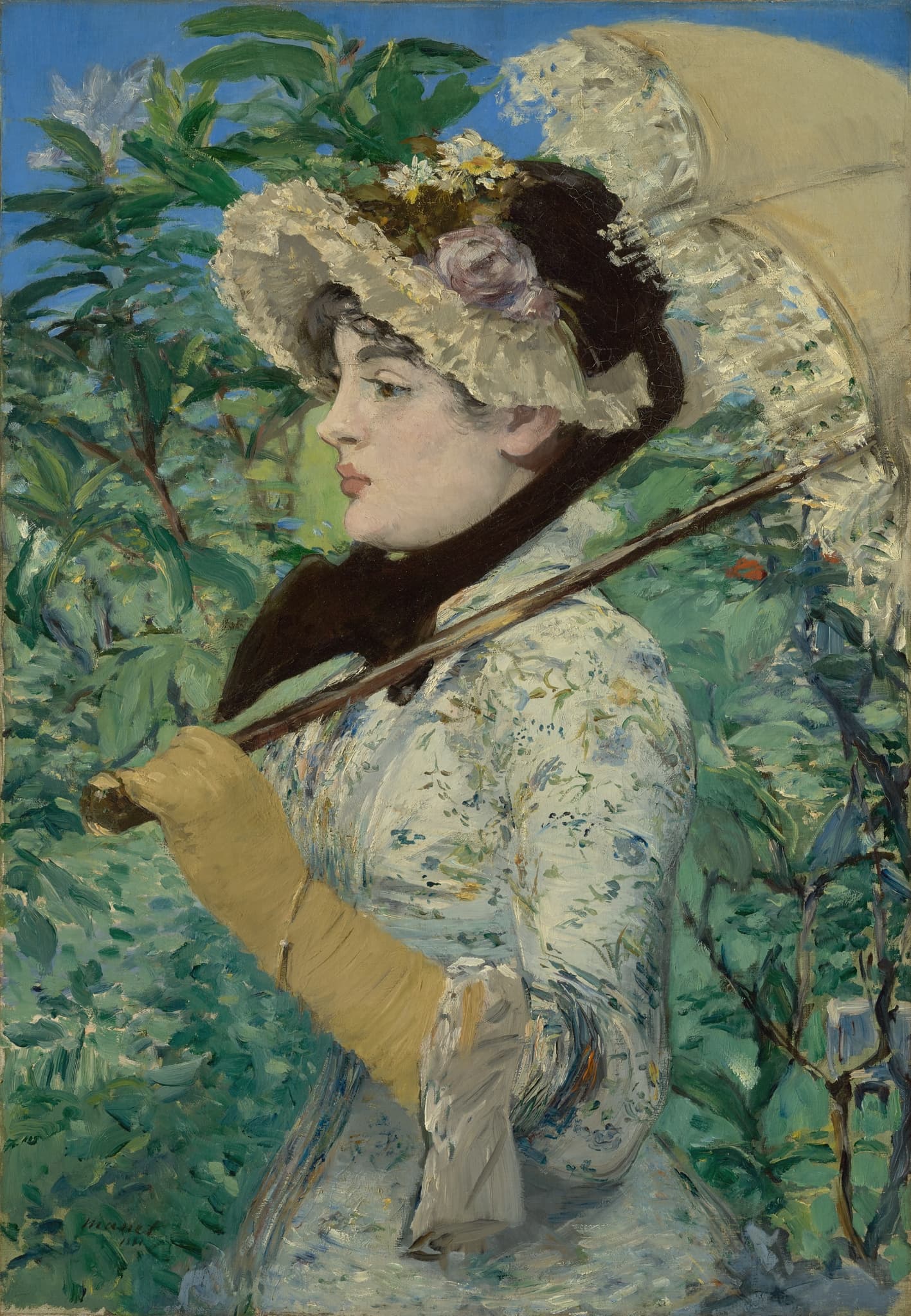
Christie’s, New York, 2014. Phones light up. The bidding climbs past the price of many houses, then many museums’ annual acquisitions budgets. When the hammer falls, Manet’s Jeanne (Spring) shatters a record and the Getty wins the picture for $65.1 million—a new pinnacle for the artist at auction [3][1].
Compare Édouard Manet
Most Expensive Édouard Manet Paintings
Explore ranked valuations of Édouard Manet's most valuable works →
Featured Artworks
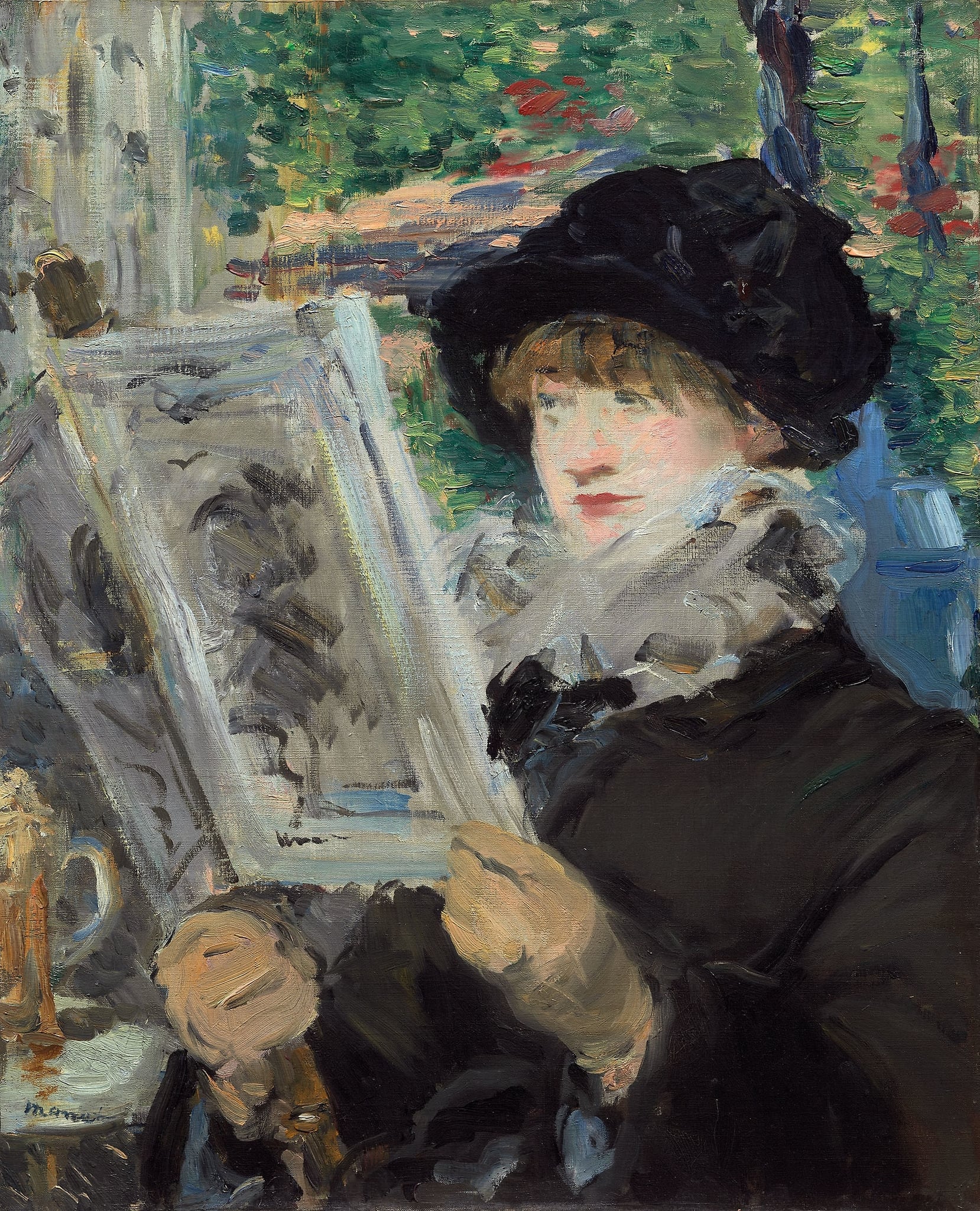
Woman Reading
Édouard Manet (1880–82)
Manet’s Woman Reading distills a fleeting act into an emblem of <strong>modern self-possession</strong>: a bundled figure raises a journal-on-a-stick, her luminous profile set against a brisk mosaic of greens and reds. With quick, loaded strokes and a deliberately cropped <strong>beer glass</strong> and paper, Manet turns perception itself into subject—asserting the drama of a private mind within a public café world <sup>[1]</sup><sup>[2]</sup>.
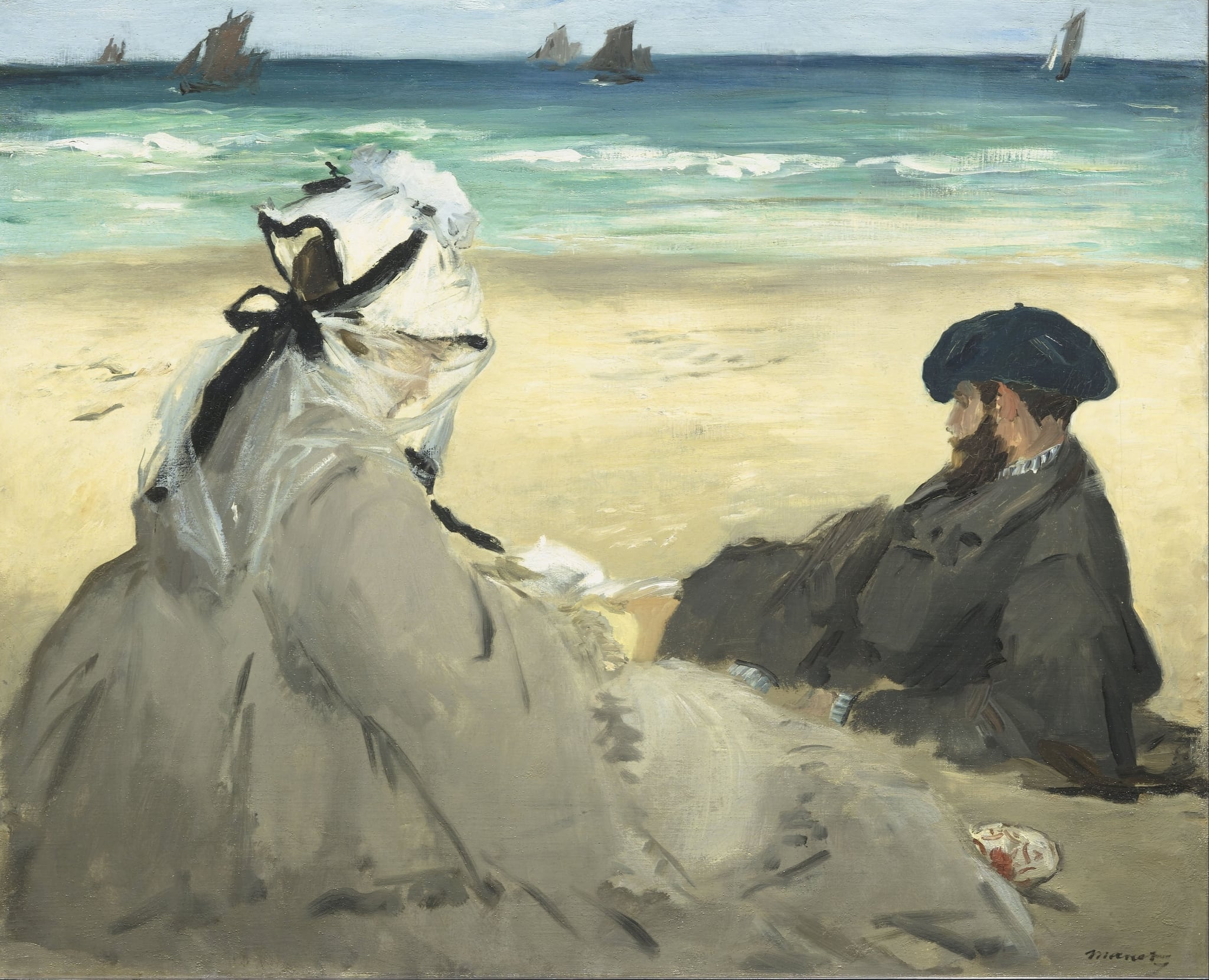
On the Beach
Édouard Manet (1873)
On the Beach captures a paused interval of modern leisure: two fashionably dressed figures sit on pale sand before a <strong>banded, high-horizon sea</strong>. Manet’s <strong>economical brushwork</strong>, restricted greys and blacks, and radical cropping stage a scene of absorption and wind‑tossed motion that feels both intimate and detached <sup>[1]</sup>.
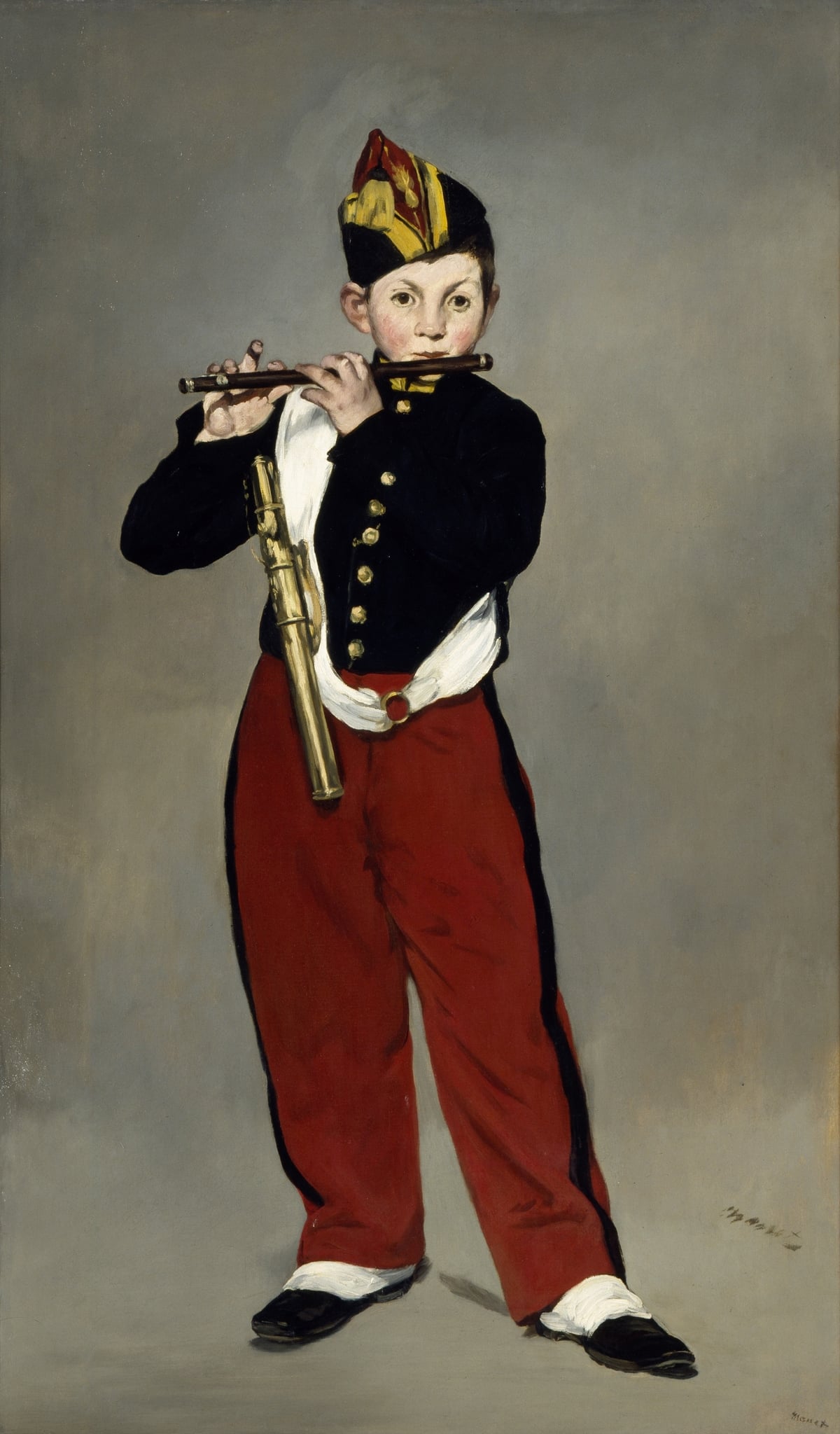
The Fifer
Édouard Manet (1866)
In The Fifer, <strong>Édouard Manet</strong> monumentalizes an anonymous military child by isolating him against a flat, gray field, converting everyday modern life into a subject of high pictorial dignity. The crisp <strong>silhouette</strong>, blocks of <strong>unmodulated color</strong> (black tunic, red trousers, white gaiters), and glints on the brass case make sound and discipline palpable without narrative scaffolding <sup>[1]</sup>. Drawing on <strong>Velázquez’s single-figure-in-air</strong> formula yet inflected by japonisme’s flatness, Manet forges a new modern image that the Salon rejected in 1866 <sup>[1]</sup><sup>[2]</sup><sup>[3]</sup>.
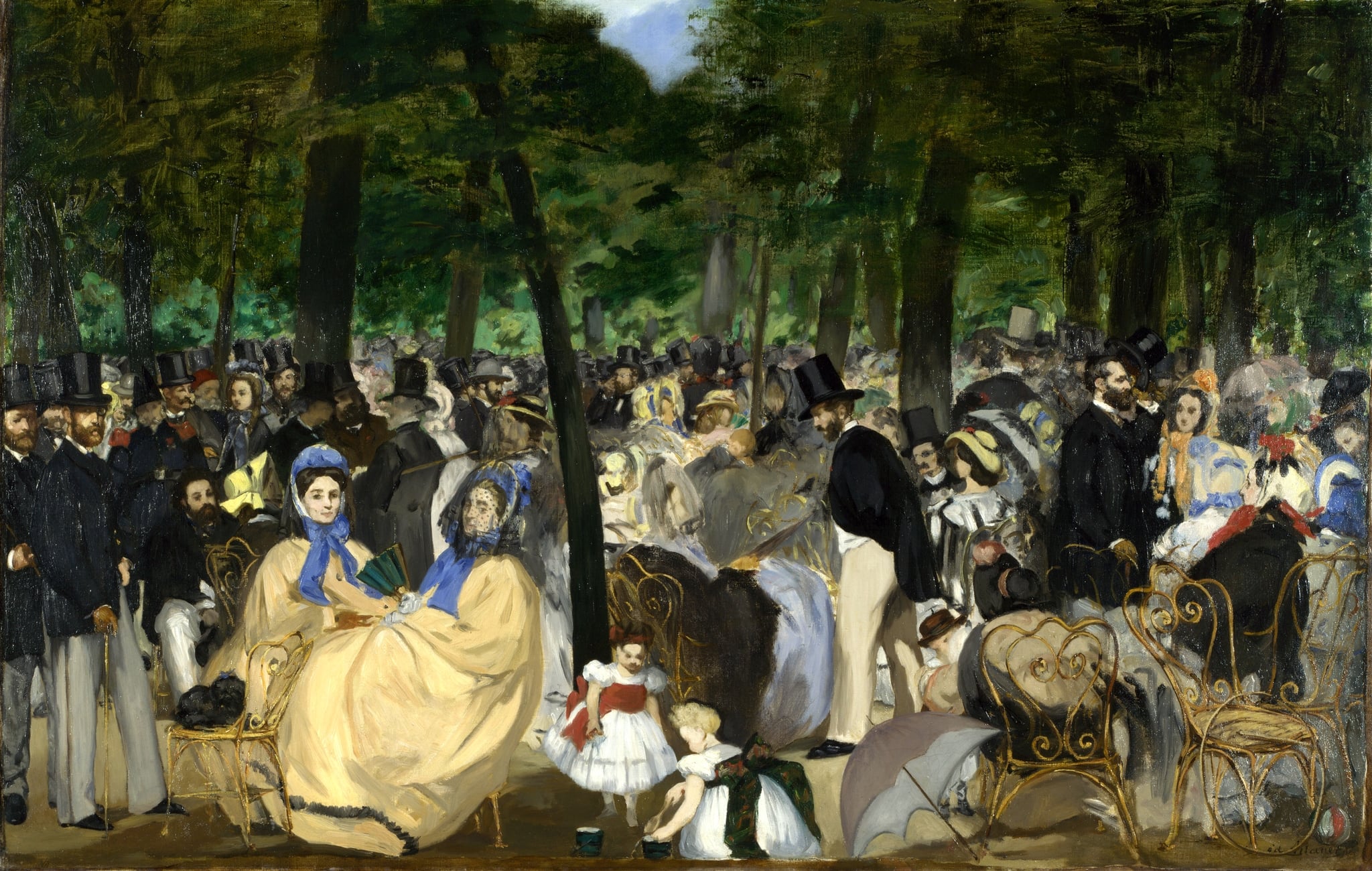
Music in the Tuileries
Édouard Manet (1862)
Édouard Manet’s Music in the Tuileries turns a Sunday concert into a manifesto of <strong>modern life</strong>: a frieze of top hats, crinolines, and iron chairs flickering beneath <strong>toxic green</strong> foliage. Instead of a hero or center, the painting disperses attention across a restless crowd, making <strong>looking itself</strong> the drama of the scene <sup>[1]</sup><sup>[2]</sup>.
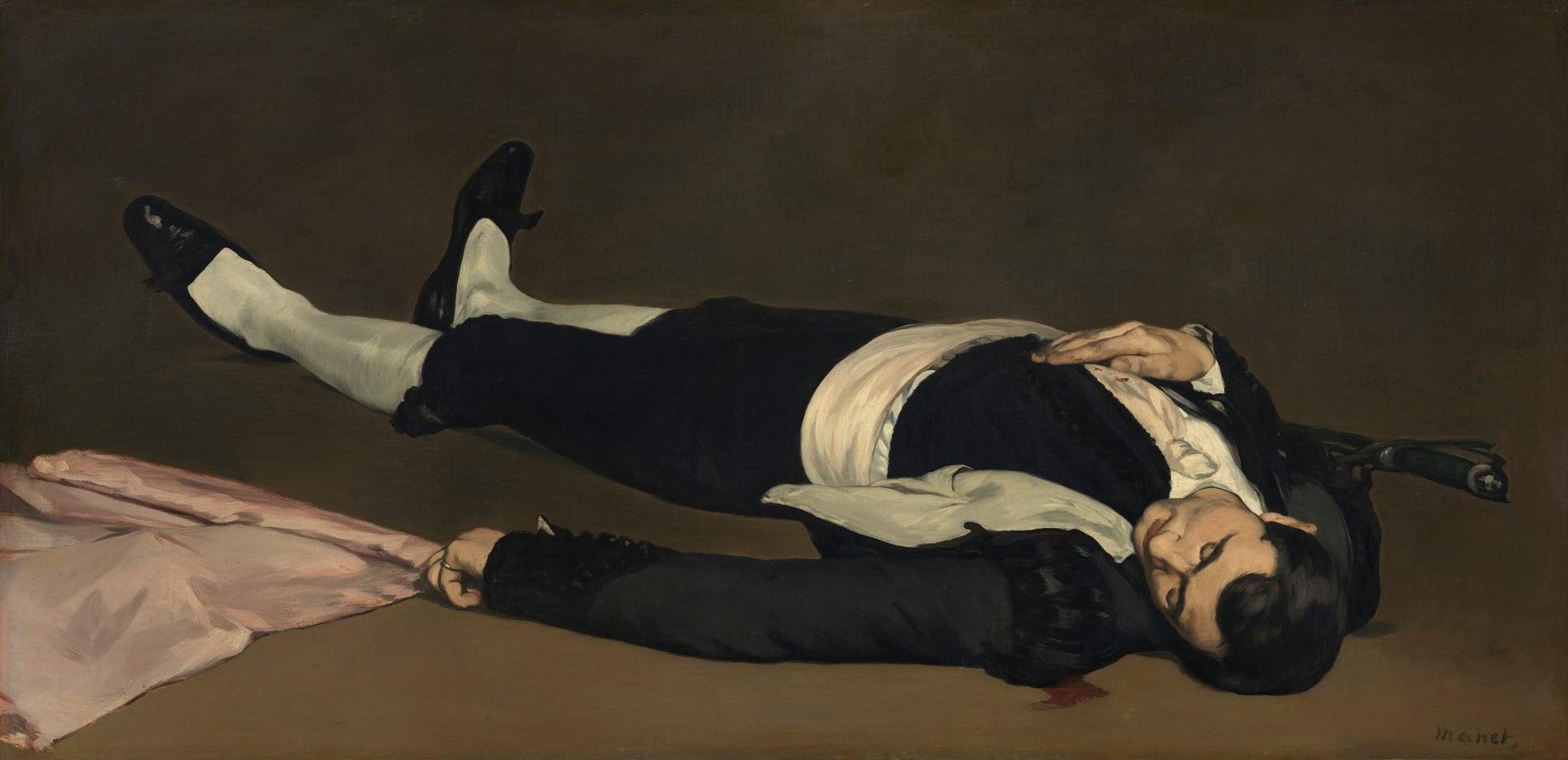
The Dead Toreador
Édouard Manet (probably 1864)
Manet’s The Dead Toreador isolates a matador’s corpse in a stark, horizontal close‑up, replacing the spectacle of the bullring with <strong>silence</strong> and <strong>abrupt finality</strong>. Black costume, white stockings, a pale pink cape, the sword’s hilt, and a small <strong>pool of blood</strong> become the painting’s cool, modern vocabulary of death <sup>[1]</sup>.
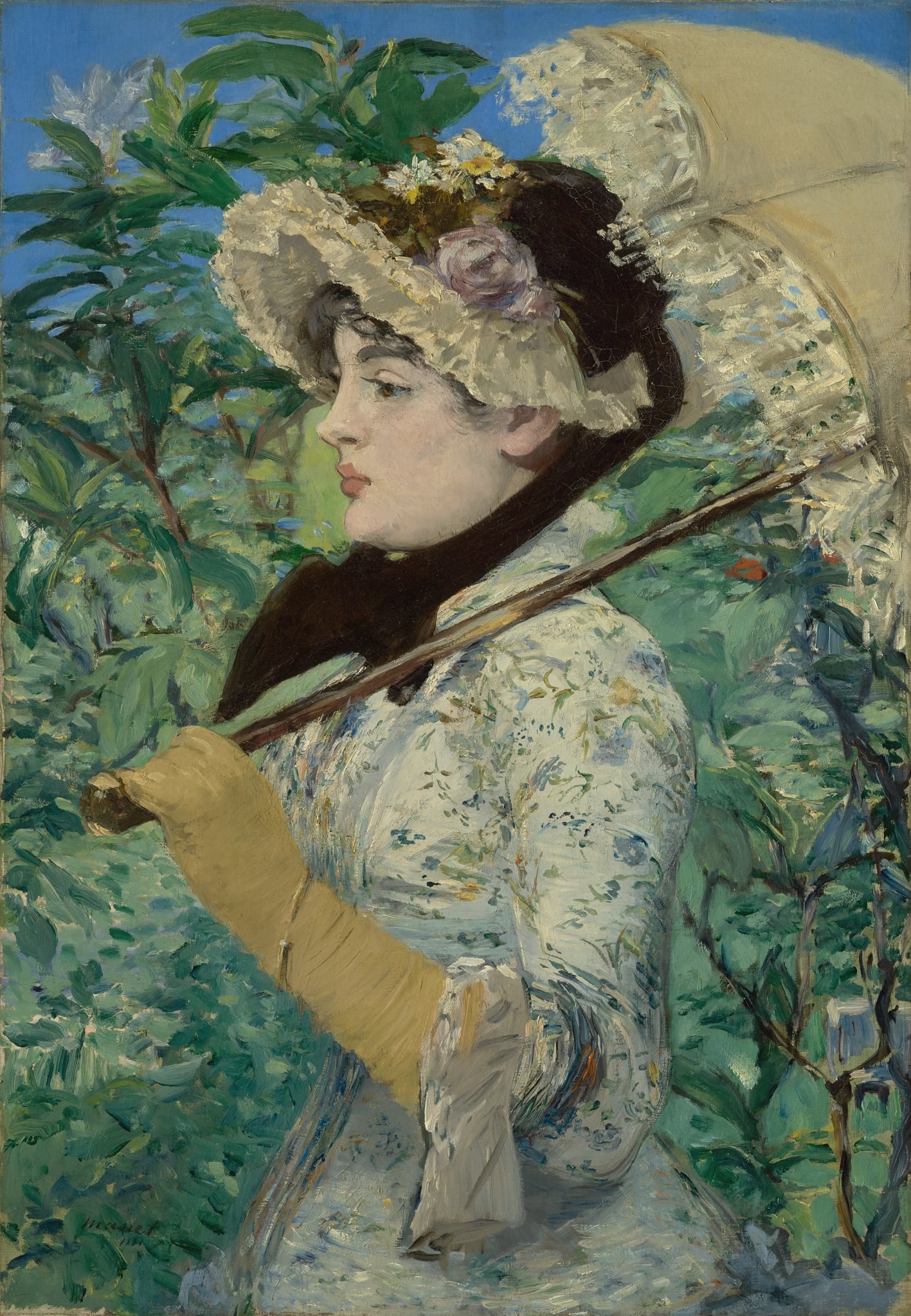
Jeanne (Spring)
Édouard Manet (1881)
Édouard Manet’s Jeanne (Spring) fuses a time-honored allegory with <strong>modern Parisian fashion</strong>: a crisp profile beneath a cream parasol, set against <strong>luminous, leafy greens</strong>. Manet turns couture—hat, glove, parasol—into the language of <strong>renewal and youth</strong>, making spring feel both perennial and up-to-the-minute <sup>[1]</sup><sup>[2]</sup>.
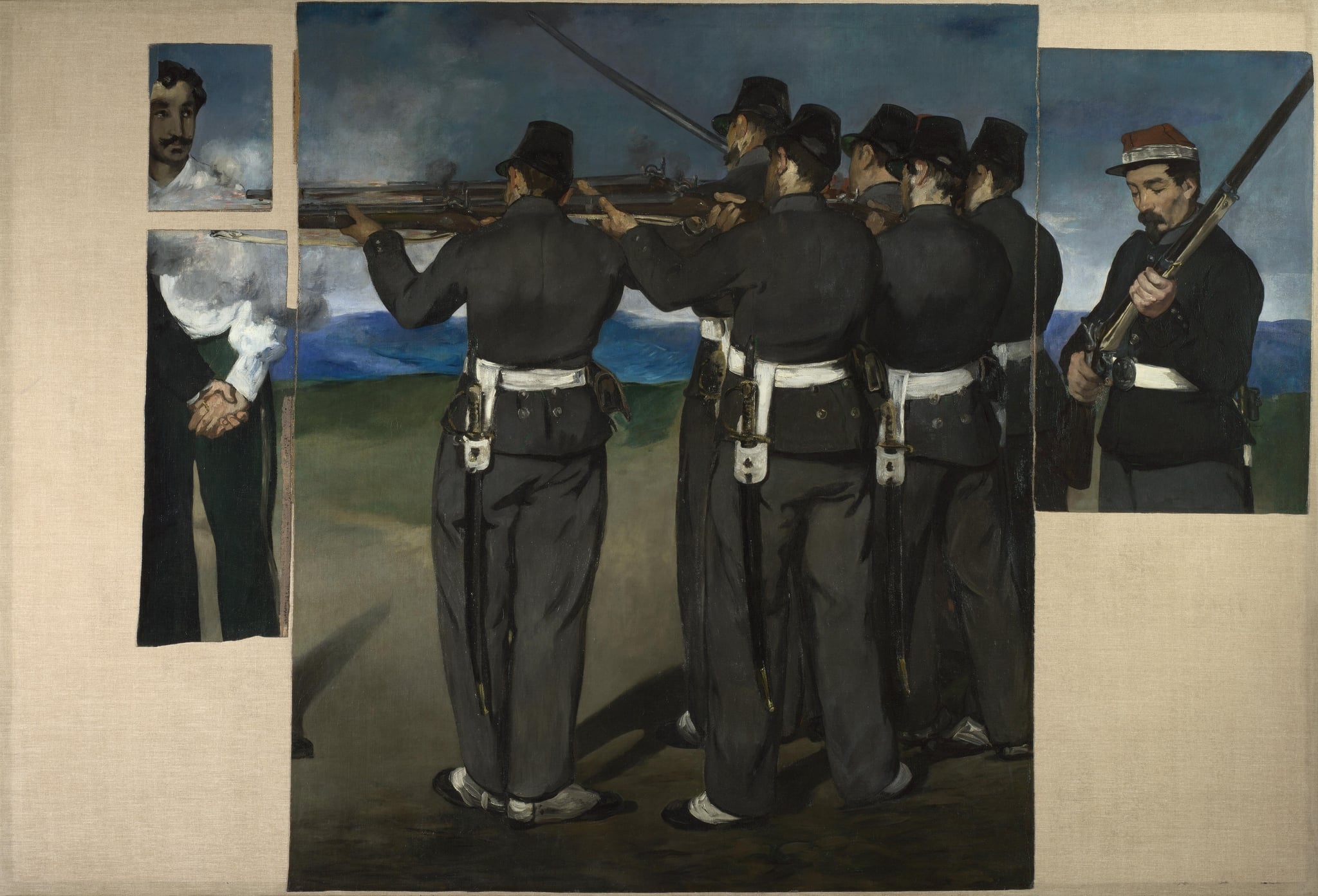
The Execution of Emperor Maximilian
Édouard Manet (1867–1868)
Manet’s The Execution of Emperor Maximilian confronts state violence with a <strong>cool, reportorial</strong> style. The wall of gray-uniformed riflemen, the <strong>fragmented canvas</strong>, and the dispassionate loader at right turn the killing into <strong>impersonal machinery</strong> that implicates the viewer <sup>[1]</sup><sup>[2]</sup>.
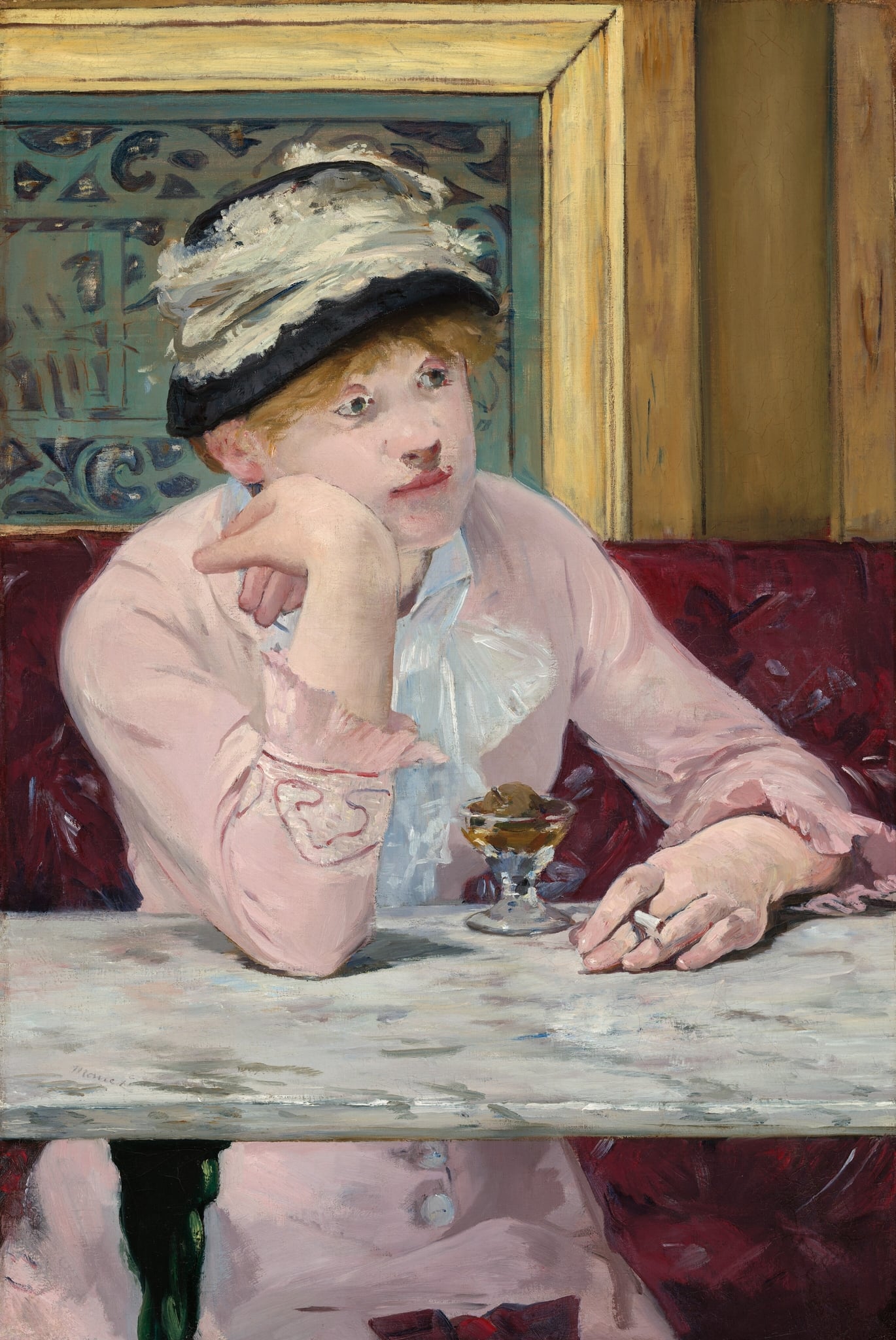
Plum Brandy
Édouard Manet (ca. 1877)
Manet’s Plum Brandy crystallizes a modern pause—an urban <strong>interval of suspended action</strong>—through the idle tilt of a woman’s head, an <strong>unlit cigarette</strong>, and a glass cradling a <strong>plum in amber liquor</strong>. The boxed-in space—marble table, red banquette, and decorative grille—turns a café moment into a stage for <strong>solitude within public life</strong> <sup>[1]</sup><sup>[2]</sup>.
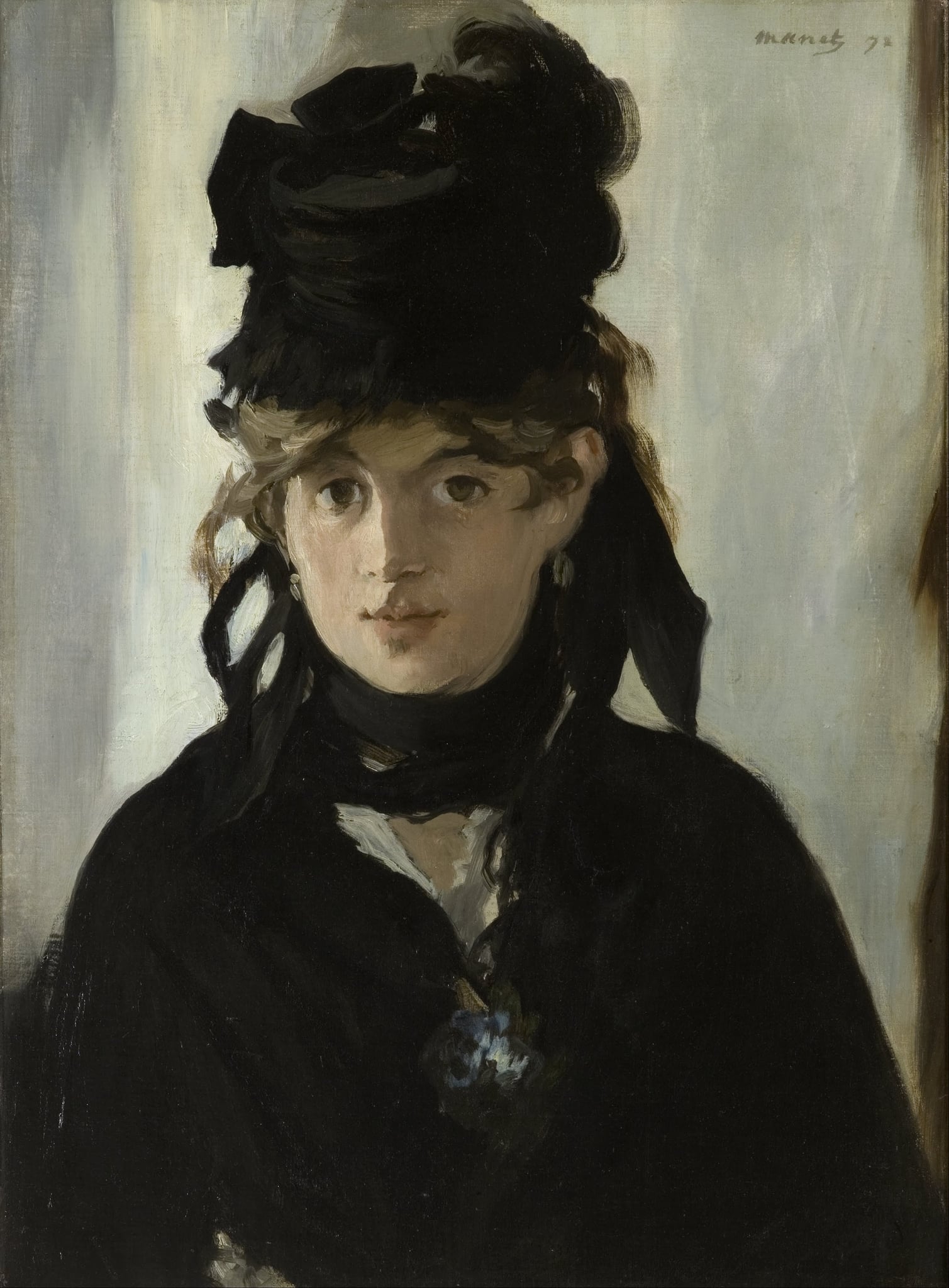
Berthe Morisot with a Bouquet of Violets
Édouard Manet (1872)
Édouard Manet’s Berthe Morisot with a Bouquet of Violets is a close, modern portrait built as a <strong>symphony in black</strong> punctuated by a tiny violet knot. Side‑light chisels the face from a cool, silvery ground while hat, scarf, and coat merge into one dark silhouette, and the eyes are painted strikingly <strong>black</strong> for effect <sup>[1]</sup>. The single touch of violets introduces a discreet, coded <strong>tenderness</strong> within the portrait’s refined restraint <sup>[1]</sup><sup>[3]</sup><sup>[4]</sup>.