Édouard Manet Paintings in Paris — Where to See Them
Paris is the best place to see Édouard Manet in situ: approximately 11 of his paintings are on permanent display across five Paris museums—10 at the Musée d'Orsay and 1 at the Musée Marmottan Monet (with the Centre Pompidou, Musée Carnavalet and Musée Jacquemart-André currently showing none). That concentration at the Orsay, complemented by the Marmottan’s singular holding, lets you follow Manet’s pivotal developments up close and compare those works with Paris’s wider 19th-century collections and sites that shaped his career.
At a Glance
- Museums
- Musée d'Orsay, Musée Marmottan Monet, Centre Pompidou (Musée National d'Art Moderne), Musée Carnavalet - Histoire de Paris, Musée Jacquemart-André
- Highlight
- Visit Musée d'Orsay to see Manet's most significant paintings, including Olympia.
- Best For
- Art lovers, especially fans of Impressionism and 19th-century French painting.
Musée d'Orsay
The Musée d'Orsay’s collection and display context make it indispensable for experiencing Manet: with 10 paintings in the rooms devoted to mid‑19th‑century French art, visitors can see Manet placed chronologically and dialoguing directly with his contemporaries (Realists and early Impressionists) so you perceive how radical his brushwork, subject choices, and modern-life themes were at the time. The museum’s strong presentation of Manet’s canvases alongside works by Monet, Degas and Courbet clarifies the aesthetic and social debates he instigated — the contrasts in scale, technique, and placement reveal why critics and younger painters responded so strongly to him.
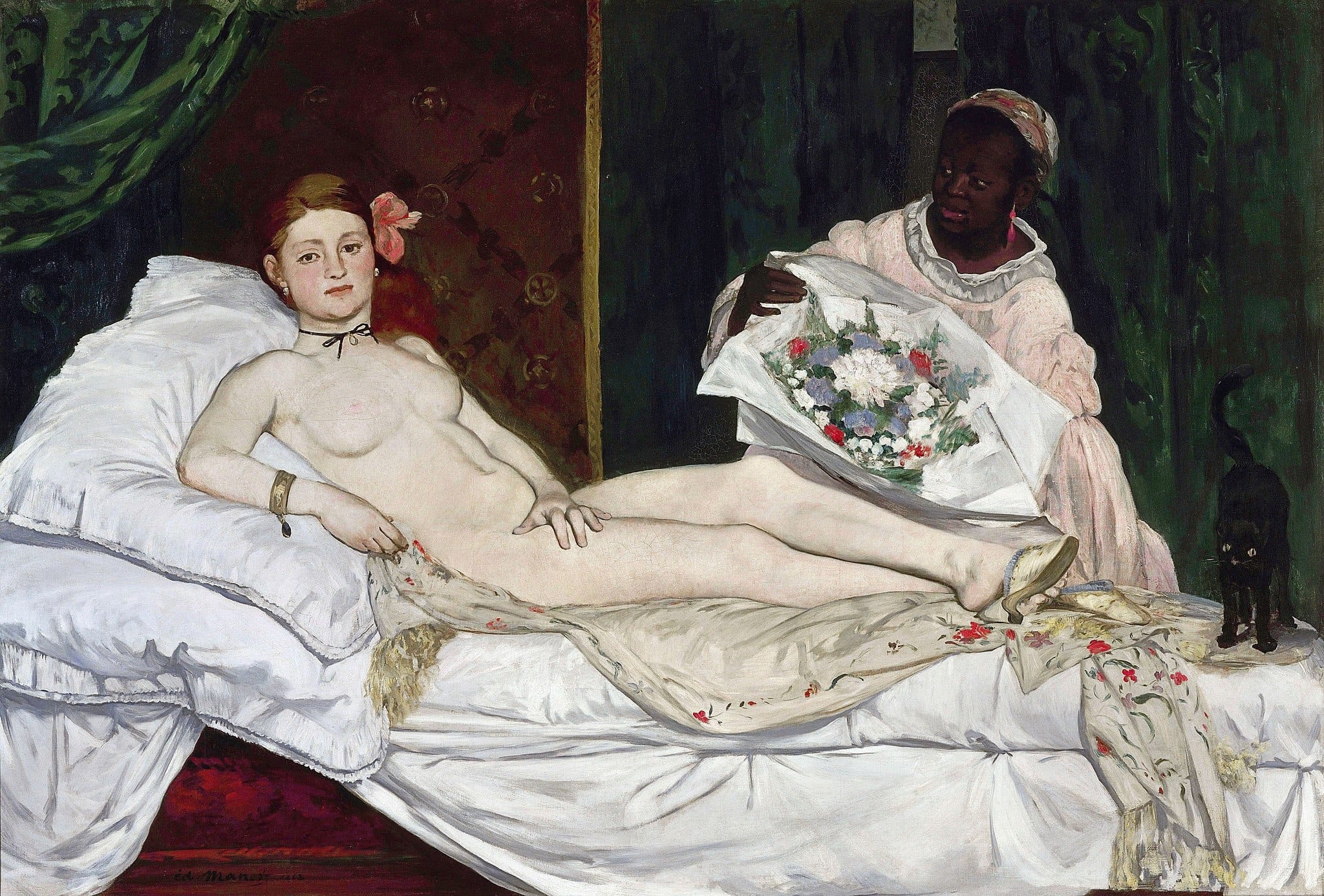
Olympia
1863
Depicts a reclining nude woman, Olympia, gazing directly at the viewer while a maid presents her with flowers; the starkness of her pose and the black cat at her feet break with idealized academic nudes. Significant for shocking the 1865 Salon with its frank modernity and confrontational gaze, it marks a break toward realism and modern subject matter. Look for the flattened modeling, the cool, vivid skin tones against dark accents, and the deliberate, unsentimental frankness of the figure’s eyes and hand.
Must-see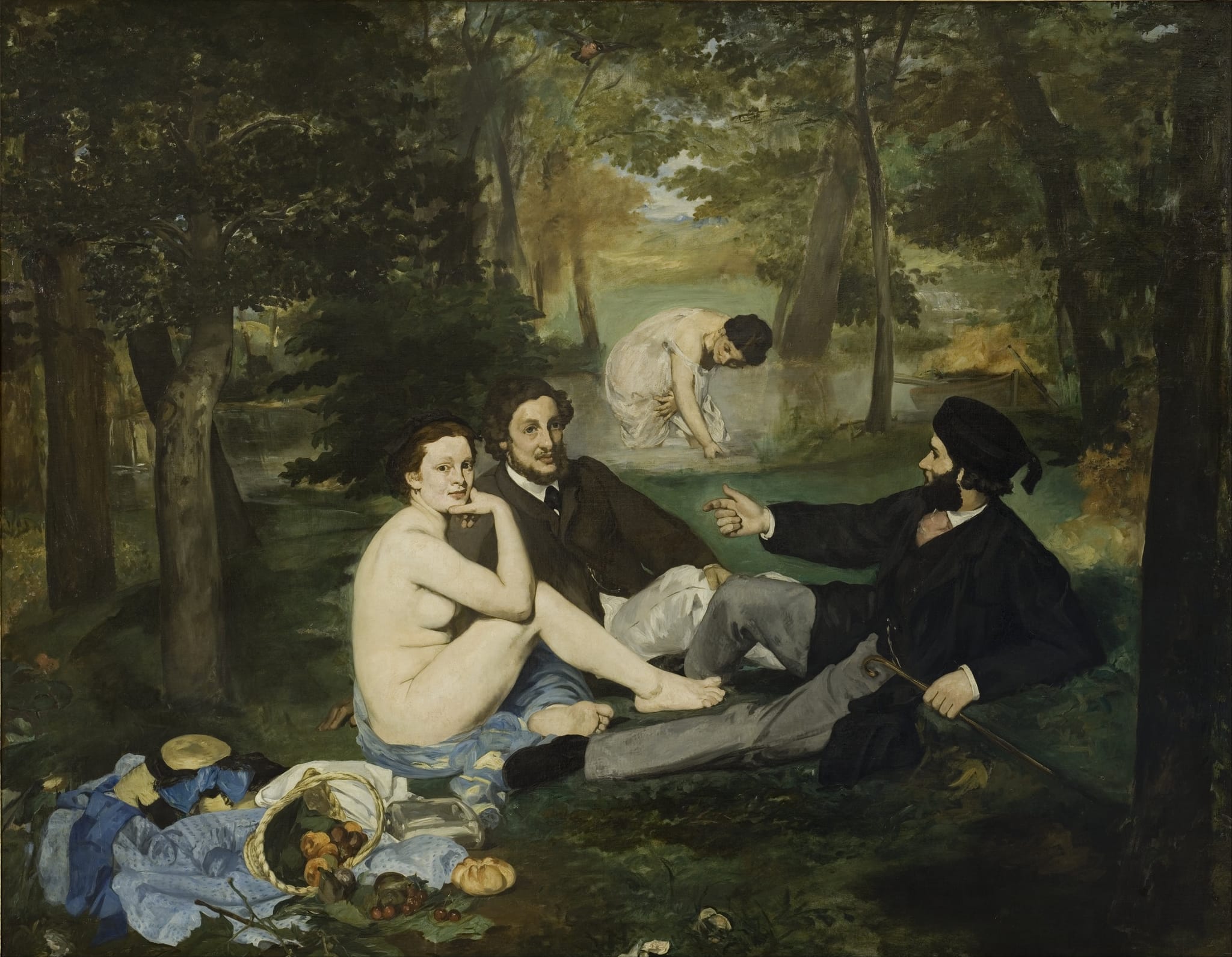
Le Déjeuner sur l'herbe
1863
Shows a picnic scene with two fully dressed men and a nude woman casually seated in broad daylight, with another woman bathing in the background; the ordinary setting and contemporary clothing clash with the classical nude. Its significance lies in the scandal it provoked for rejecting academic conventions and for treating nude subject matter as modern life rather than allegory. Notice the flattened spatial planes, the abrupt lighting contrasts, and the loose brushwork that prioritizes surface and modern subjectivity over polished finish.
Must-see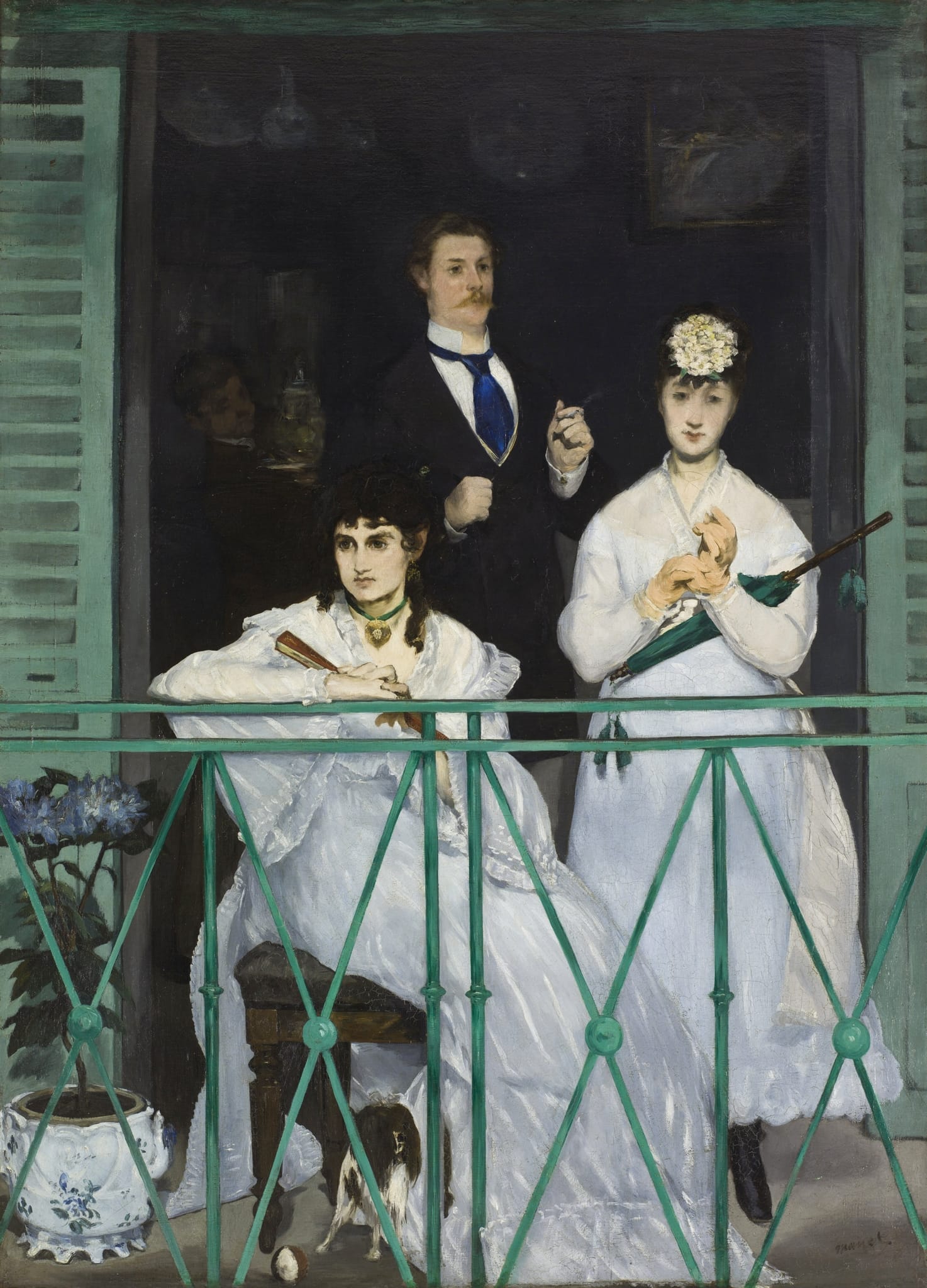
Le Balcon
1868
Portrays a group of figures—men and women—arrayed on a balcony, their expressions detached and theatrical against a dark interior and vivid green railing. The painting is significant for its study of modern urban social types and for its ambiguous emotional tone that defies easy narrative. Focus on the compositional rhythm of profiles and gazes, the contrast between cool, shadowed faces and bright costume accents, and the sense of psychological distance between the sitters.
Must-see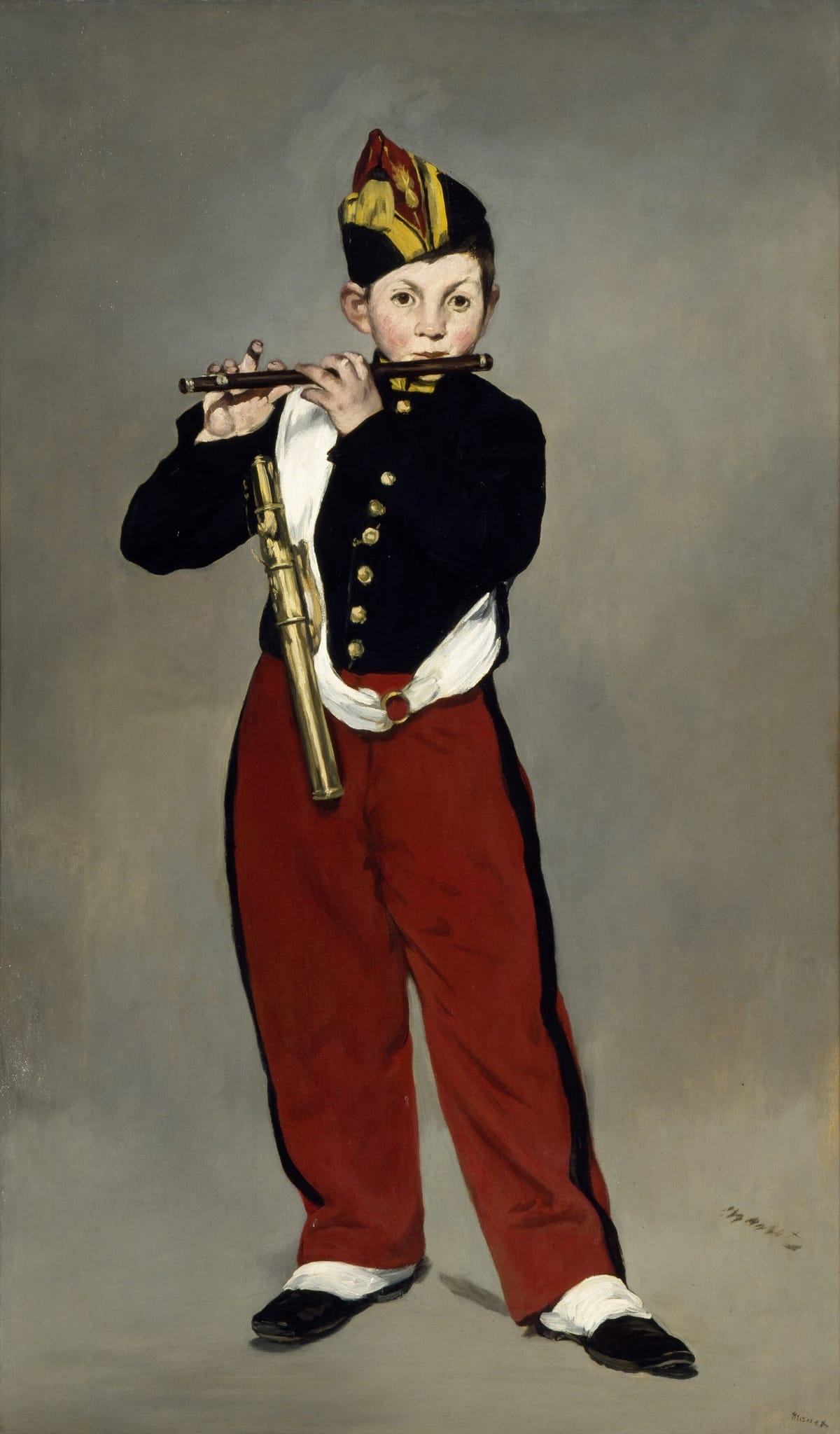
Le Fifre
1866
A full-length portrait of a young military fifer in bright red uniform, shown against a plain, neutral background that emphasizes his figure. This work is significant for its bold simplicity and for anticipating modern portraiture by isolating the subject and using broad, flat color fields. Look for the assertive silhouette, the economy of detail, the luminous red and blues, and the subtle tension between the heroic subject and the almost schematic treatment.
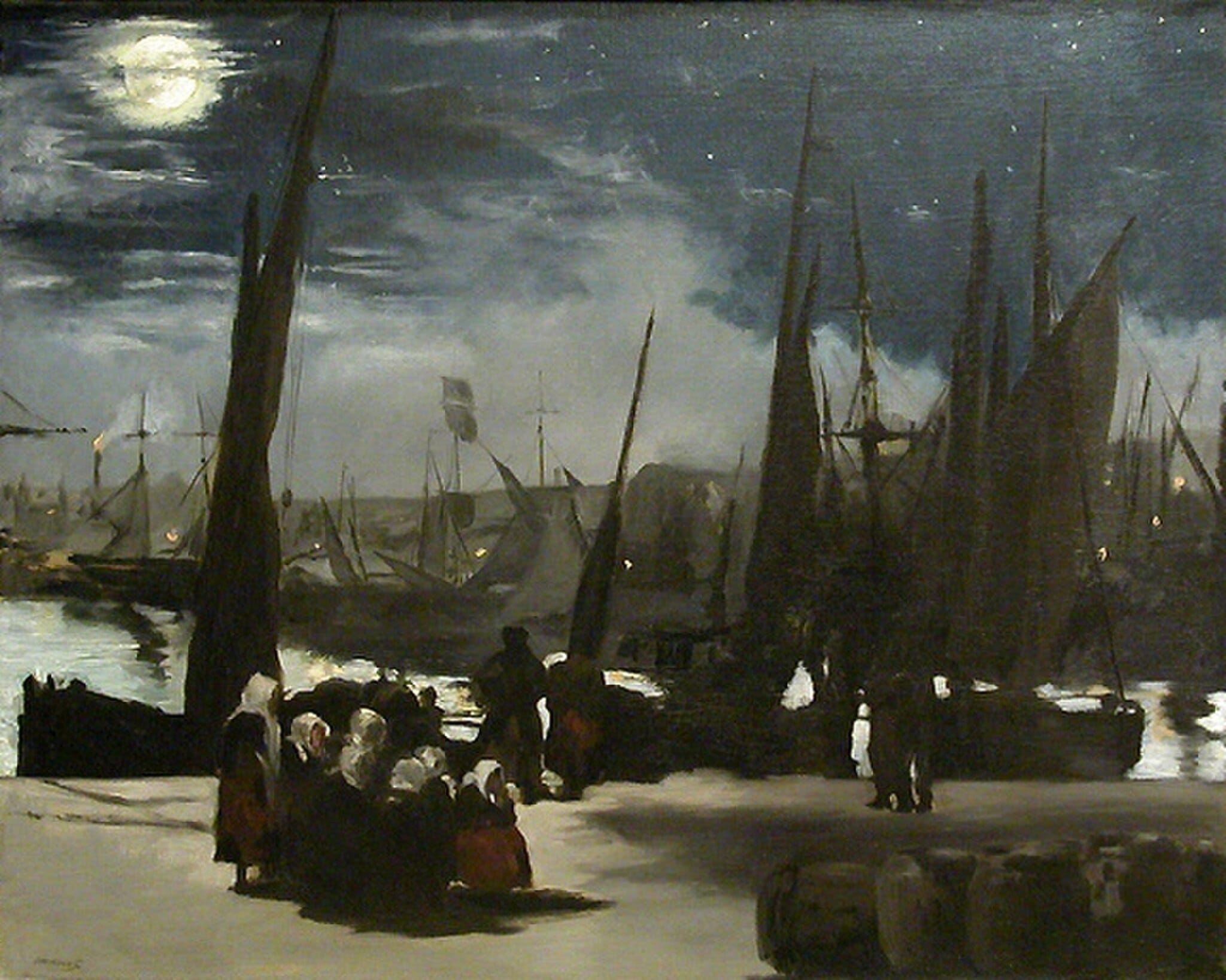
Clair de lune sur le port de Boulogne
1869
Depicts a moonlit view of Boulogne’s harbor with boats and shimmering reflections on the water, rendered in a restrained, silvery palette. The painting is significant for Manet’s interest in nocturnal atmosphere and in capturing transient light effects while retaining his characteristic direct brushwork. Observe the delicate handling of moonlight on the sea, the simplified forms of masts and hulls, and the contrast between soft highlights and darker massing.
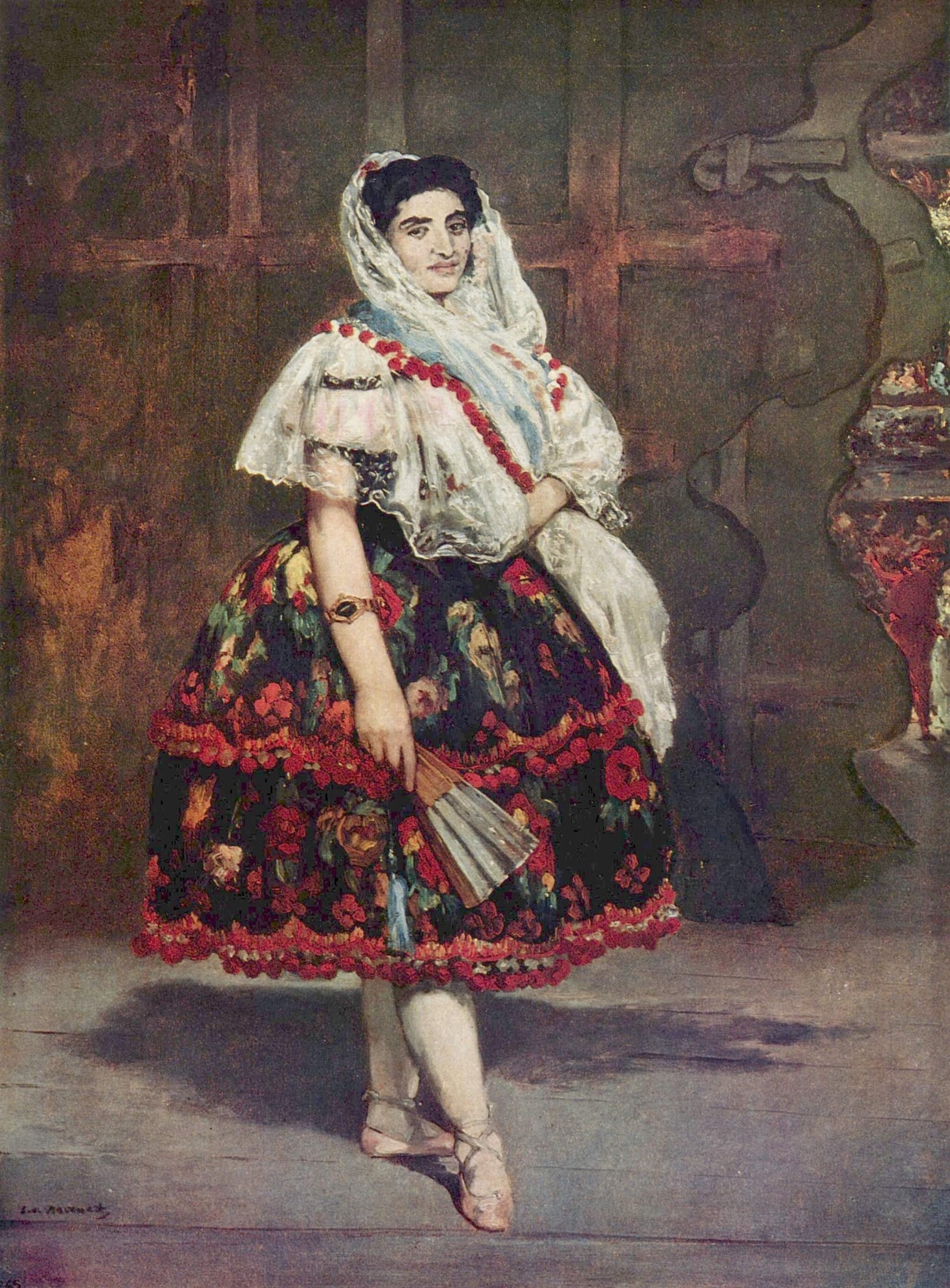
Lola de Valence
1862
A portrait of the Spanish dancer Lola de Valence, dressed colorfully and posed with confident presence, capturing the charisma of a popular performer. Significant for Manet’s fascination with Spanish themes and performers, it combines fashionable portraiture with a lively study of costume and character. Look for the spirited handling of fabrics and pattern, the warm flesh tones set against strong color accents, and the immediacy of the sitter’s expression.
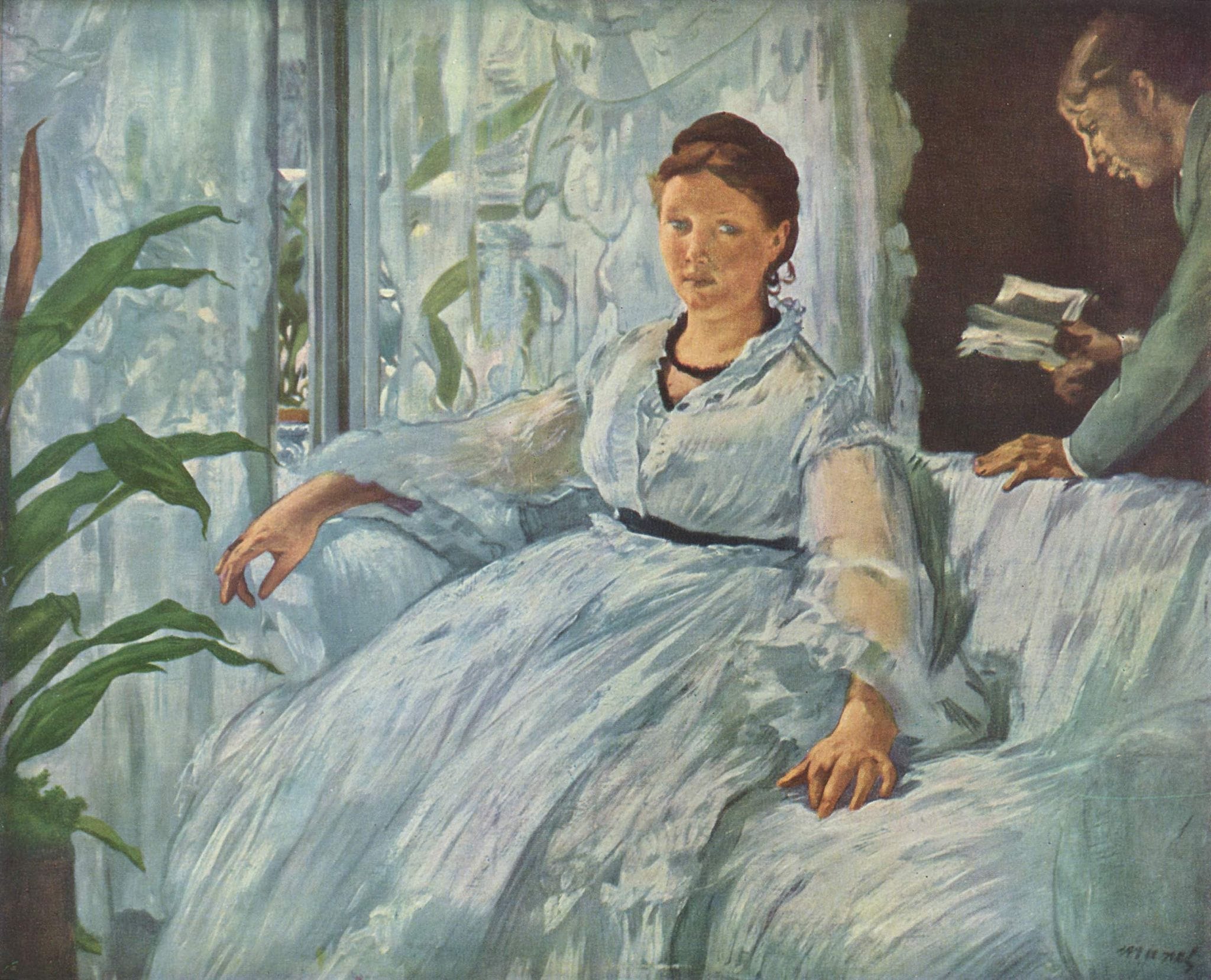
La Lecture
1873
Shows a quiet domestic scene of a woman reading, rendered with intimate lighting and subdued tones that suggest private reflection. Significant as an example of Manet’s later interest in everyday modern life and subtle psychological observation rather than public spectacle. Notice the delicate interplay of shadow and light on the page and face, the restrained palette, and the simplified background that centers attention on the act of reading.
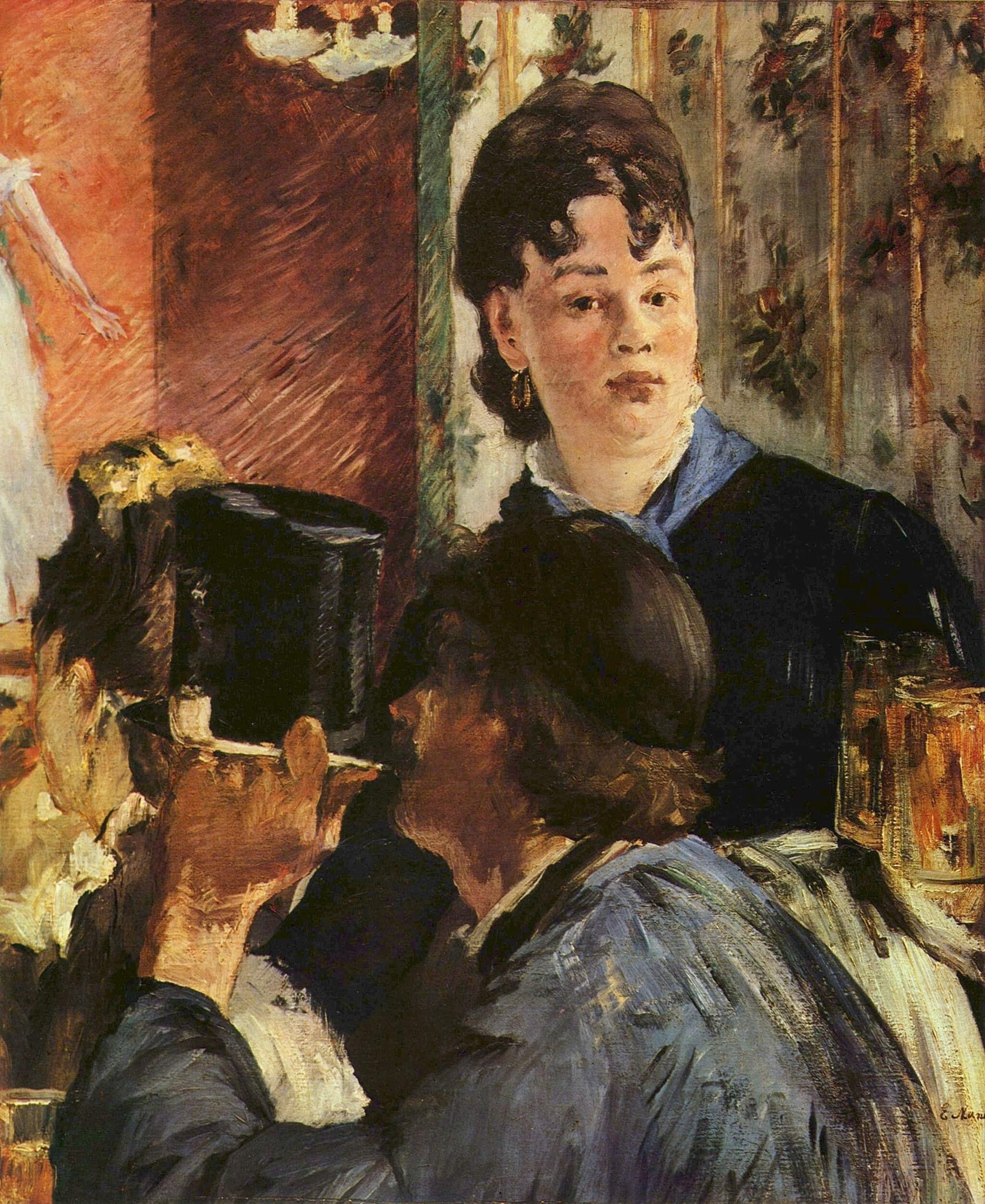
La Serveuse de bocks
1878
Depicts a beer waitress carrying bocks (glasses) through a crowded café, capturing a slice of Parisian urban life with brisk, lively brushwork. Its significance lies in Manet’s focus on contemporary working people and the modern café scene, rendered with immediacy rather than anecdote. Look for the energetic brushstrokes, the contrast between the waitress’s pale face and darker surroundings, and the suggestion of movement and social atmosphere.
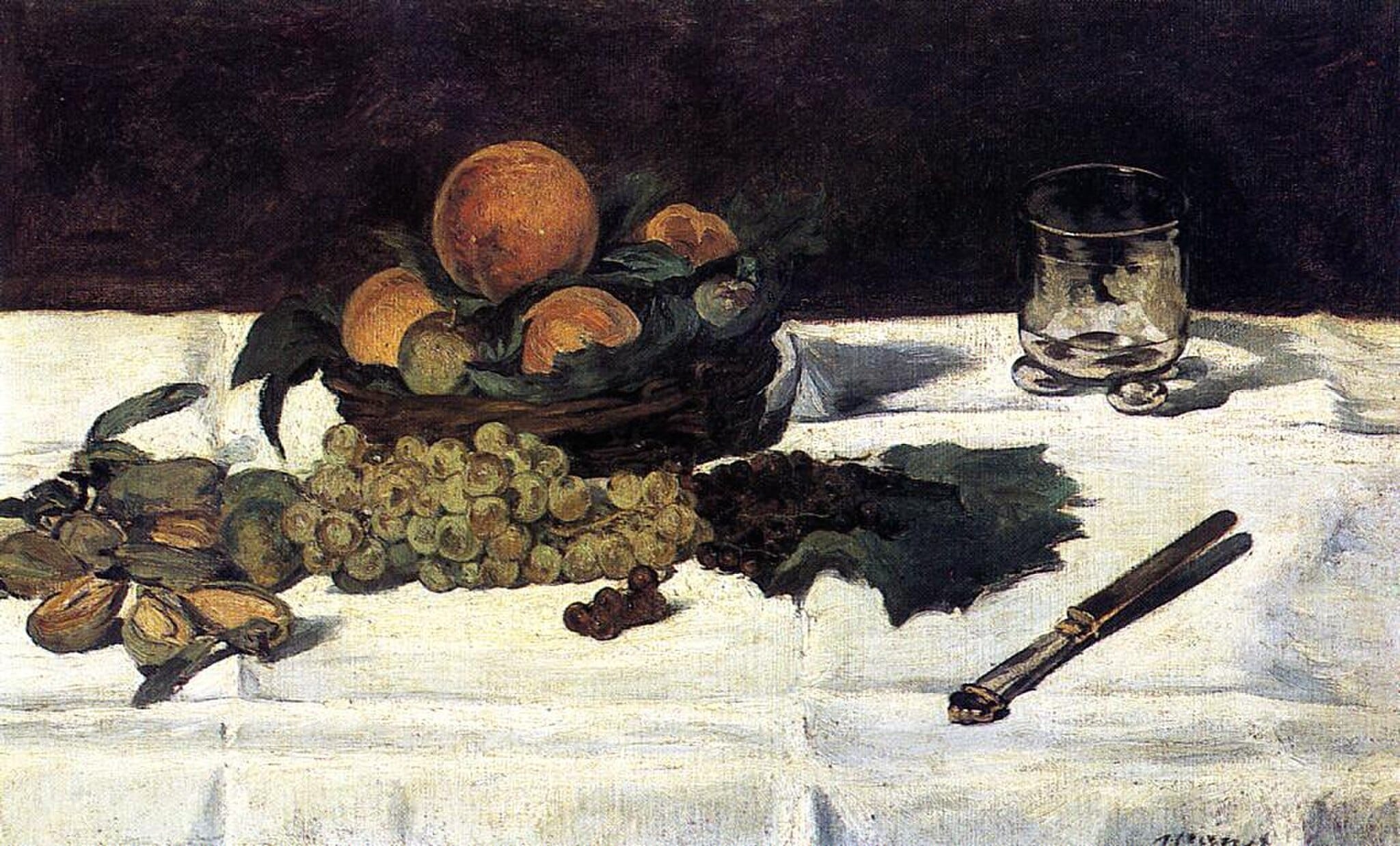
Nature morte : fruits sur une table
1879
A still life presenting fruit arranged on a table, painted with crisp observation and attention to color and texture. This work demonstrates Manet’s late-career refinement in still-life composition, emphasizing surface, light, and the tactile presence of objects. Observe the vivid color contrasts, the confident handling of highlights and shadows, and the way ordinary objects are elevated to pictorial presence through composition and brushwork.
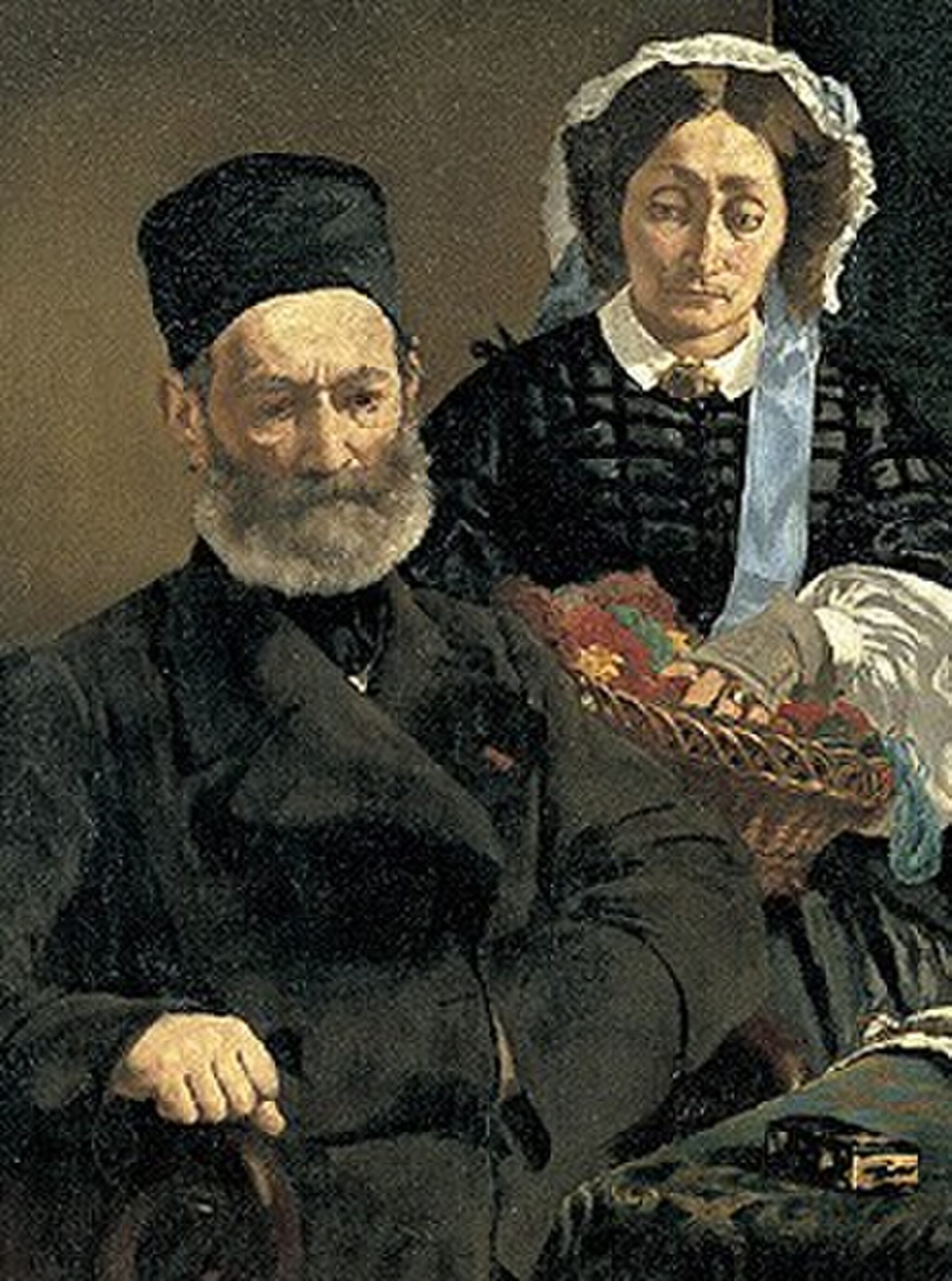
Monsieur et Madame Auguste Manet
1874
A double portrait of Manet’s parents—his father seated and his mother standing—rendered with dignity, restrained palette, and psychological depth. Significant as a personal, familial work that balances formality with intimate characterization, it reveals Manet’s ability to portray relationships and personality. Look for the careful arrangement of poses, the subtle tonal harmonies, and the direct, unembellished realism in facial expression and gesture.
Musée Marmottan Monet
Although best known for its Impressionist holdings, Marmottan Monet’s Manet painting gains significance because it is presented within a collection that emphasizes the transition from Manet’s modernity to Impressionist practice. Seeing a single Manet there — often displayed near early Monet works — highlights how Manet’s approach to color, light, and modern subjects helped create the conditions for Impressionism, making that single painting a key comparative touchpoint in the museum’s narrative.
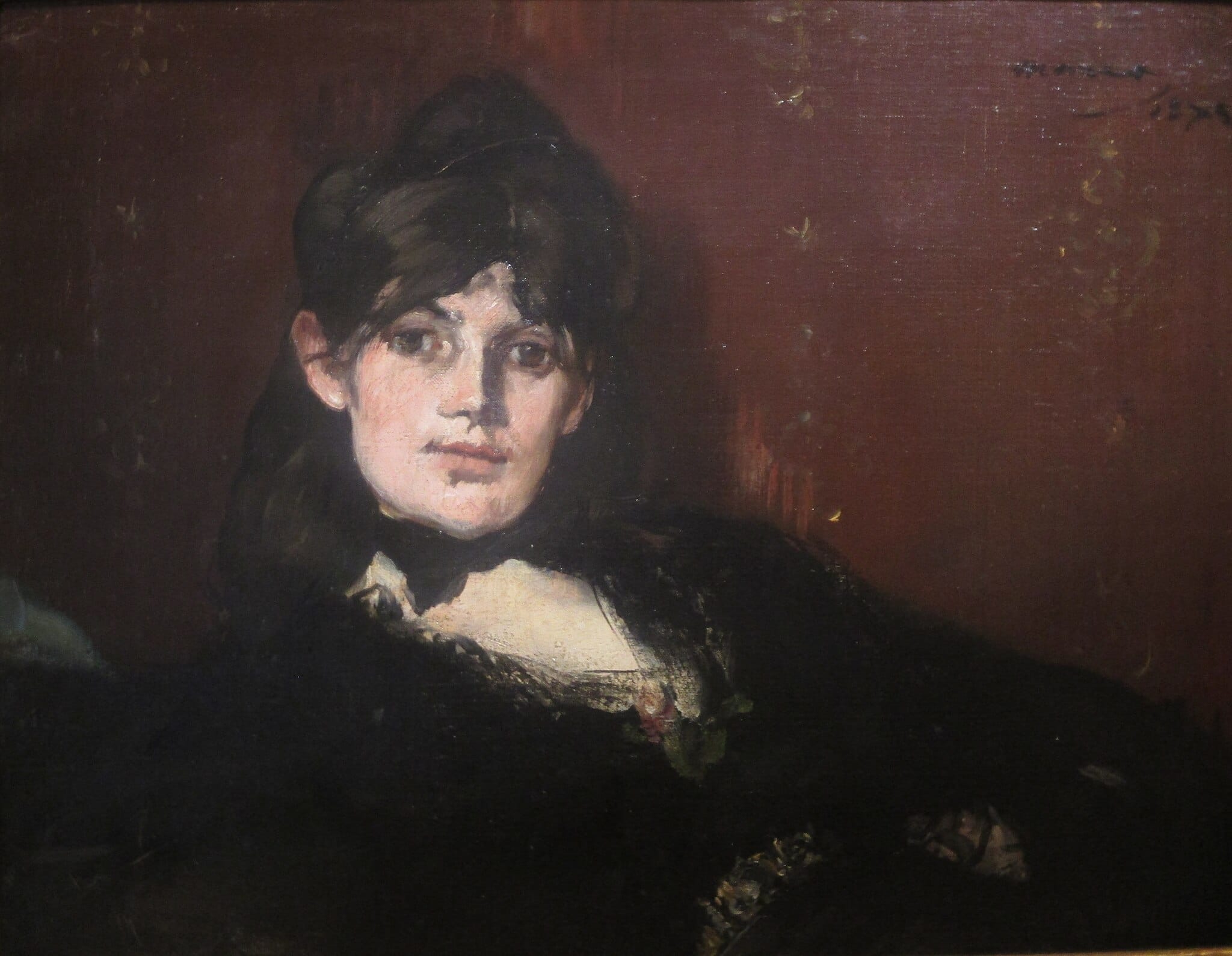
Portrait de Berthe Morisot étendue
1873
Berthe Morisot is shown reclining in a relaxed, intimate pose—dressed in white, her head turned toward the viewer against a dark, simplified interior. The work is significant as a candid, modern portrait by Manet of a fellow Impressionist and close friend, demonstrating his move toward looser brushwork and contemporary subject matter that challenged academic formality. Viewers should look for the contrast between the luminous whites and the deep background, the economy of brushstrokes that suggest texture and fabric rather than detailing every fold, and the direct, slightly enigmatic expression that creates psychological intimacy.
Must-seeCentre Pompidou (Musée National d'Art Moderne)
Even with zero Manet paintings in its holdings, the Centre Pompidou matters for understanding Manet’s long-term impact: its 20th‑ and 21st‑century collections and rotating exhibitions make explicit the lines artists drew back to Manet’s innovations in composition, pictorial flatness, and picturing modern life. The museum’s displays of modern and contemporary artists often reference or rework Manet’s strategies, so visiting shows how his pictorial ruptures resonated through later avant‑garde movements.
Musée Carnavalet - Histoire de Paris
Carnavalet matters for Manet because it situates his work within the social and urban history of Paris that he painted: the museum’s deep archive and period rooms bring to life the streets, cafés, and public ceremonies that are the subjects and settings of many Manet pictures. Even without original Manet paintings, Carnavalet helps you contextualize his portrayals of modern Paris — understanding the city’s neighborhoods, fashions, and public life clarifies why his subjects felt contemporary and sometimes scandalous.
Musée Jacquemart-André
Jacquemart‑André matters to Manet viewers because its intimate, collector‑focused displays and period interiors recreate the salon culture and private collecting environment in which Manet’s work circulated and was debated. While it may not hold Manet paintings presently, the museum’s emphasis on the tastes of wealthy 19th‑century collectors and on artist portraits and salon art helps visitors imagine the domestic contexts that shaped how Manet’s paintings were commissioned, viewed, and received.