Édouard Manet Paintings in New York — Where to See Them
New York matters for experiencing Édouard Manet because the city's museums put roughly 10 of his paintings on permanent display across three institutions, concentrating nine at The Metropolitan Museum of Art and one at The Frick Collection (the Brooklyn Museum holds none). That concentration lets you see both his major salon-scale works and quieter portraits and still lifes within a single itinerary—making it practical to compare Manet’s range without crossing continents.
At a Glance
- Museums
- The Metropolitan Museum of Art, Brooklyn Museum, The Frick Collection
- Highlight
- See Manet's major works in The Met's European paintings galleries
- Best For
- Fans of Impressionism and 19th-century French art
The Metropolitan Museum of Art
The Met’s collection of Manet paintings offers a concentrated opportunity to trace his development from Salon-provocateur to a formative influence on modern painting — seeing multiple canvases there lets viewers compare his shifting brushwork, palette choices, and compositional daring side‑by‑side. Because the Met mounts Manet works in dialogue with related 19th‑century French paintings and prints in its European galleries, visitors can appreciate how his innovations resonated with peers and successors within the museum’s broader historical narratives.
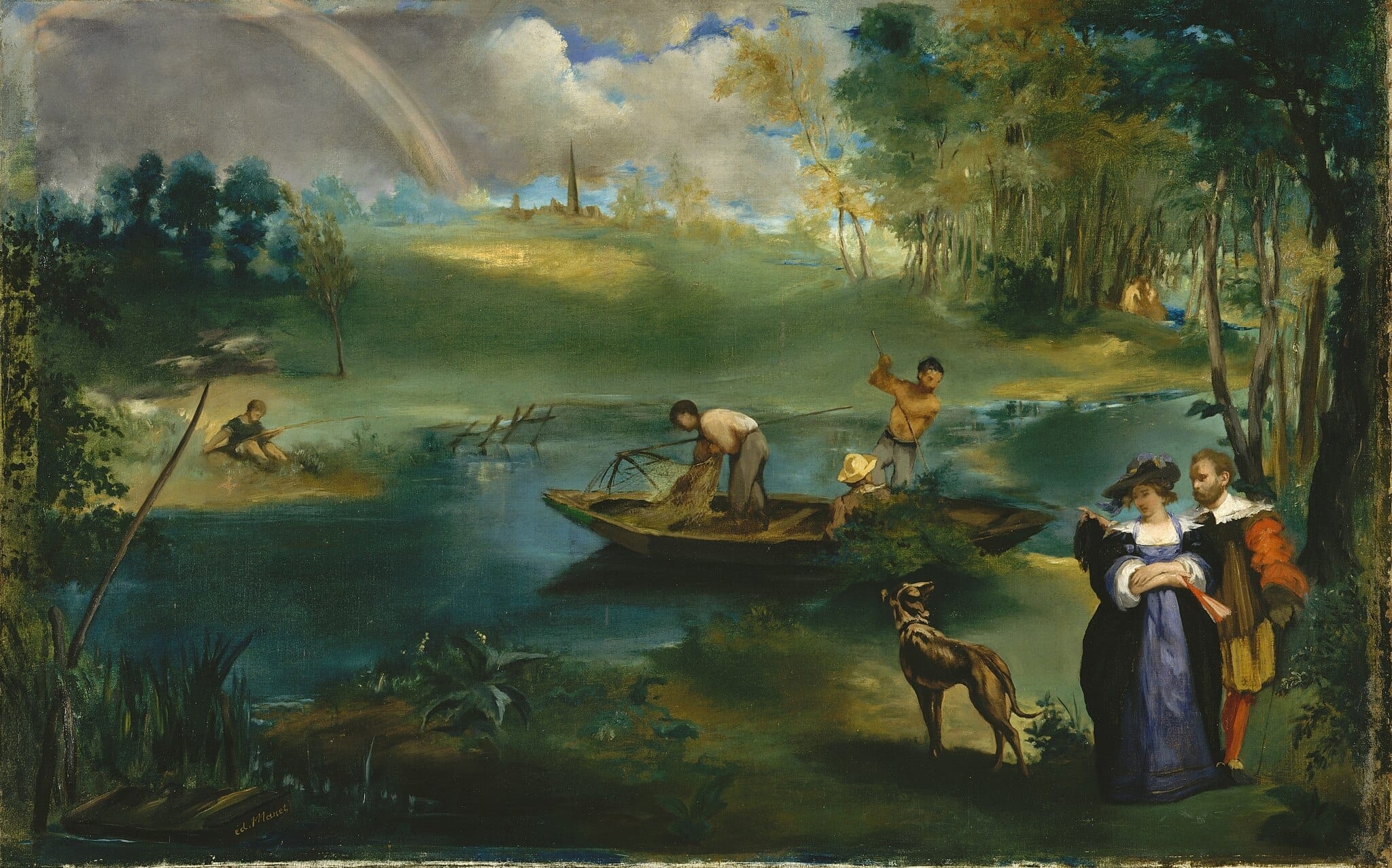
Fishing
ca. 1862–63
A sunlit scene of two men in a small boat, one leaning to cast or haul a line while the other attends to the net; Manet captures a candid, everyday moment rather than an idealized genre subject. Significant for its directness and loose brushwork that anticipate Impressionist interest in modern life and effects of light; viewers should look for the contrast between the dark silhouettes and the luminous water and the economy of paint that suggests form without overworking detail.
Must-see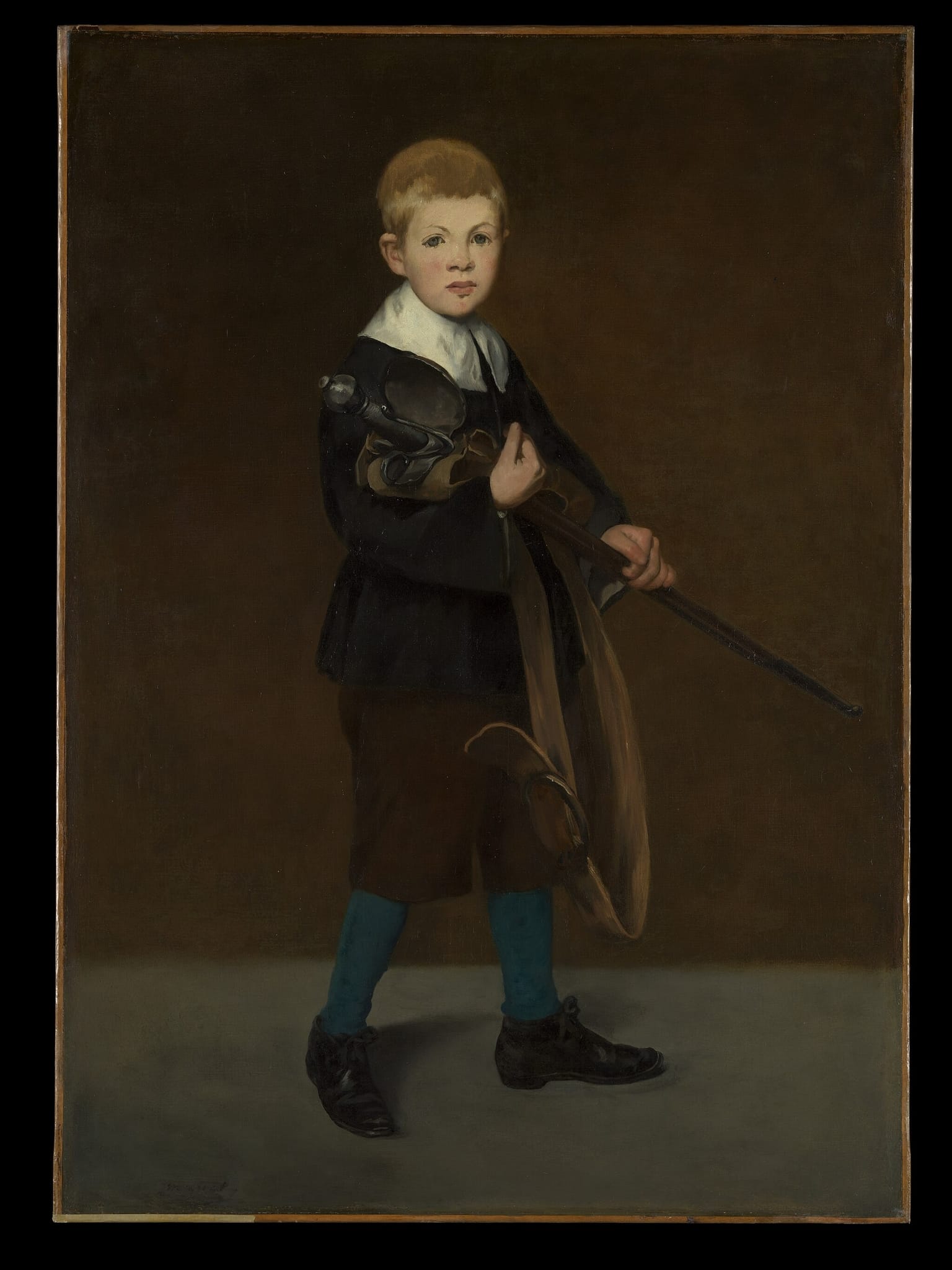
Boy with a Sword
1861
Portrait of a youth posed with a sword, dressed in a somewhat theatrical or costume-like outfit that blends realism with a nod to historical or dramatic role-play. Important as an example of Manet’s exploration of modern portraiture and ambiguous identity; notice the confident, sketchy handling of paint, the stark lighting, and how the sword and costume create tension between youthful immediacy and performative swagger.
Must-see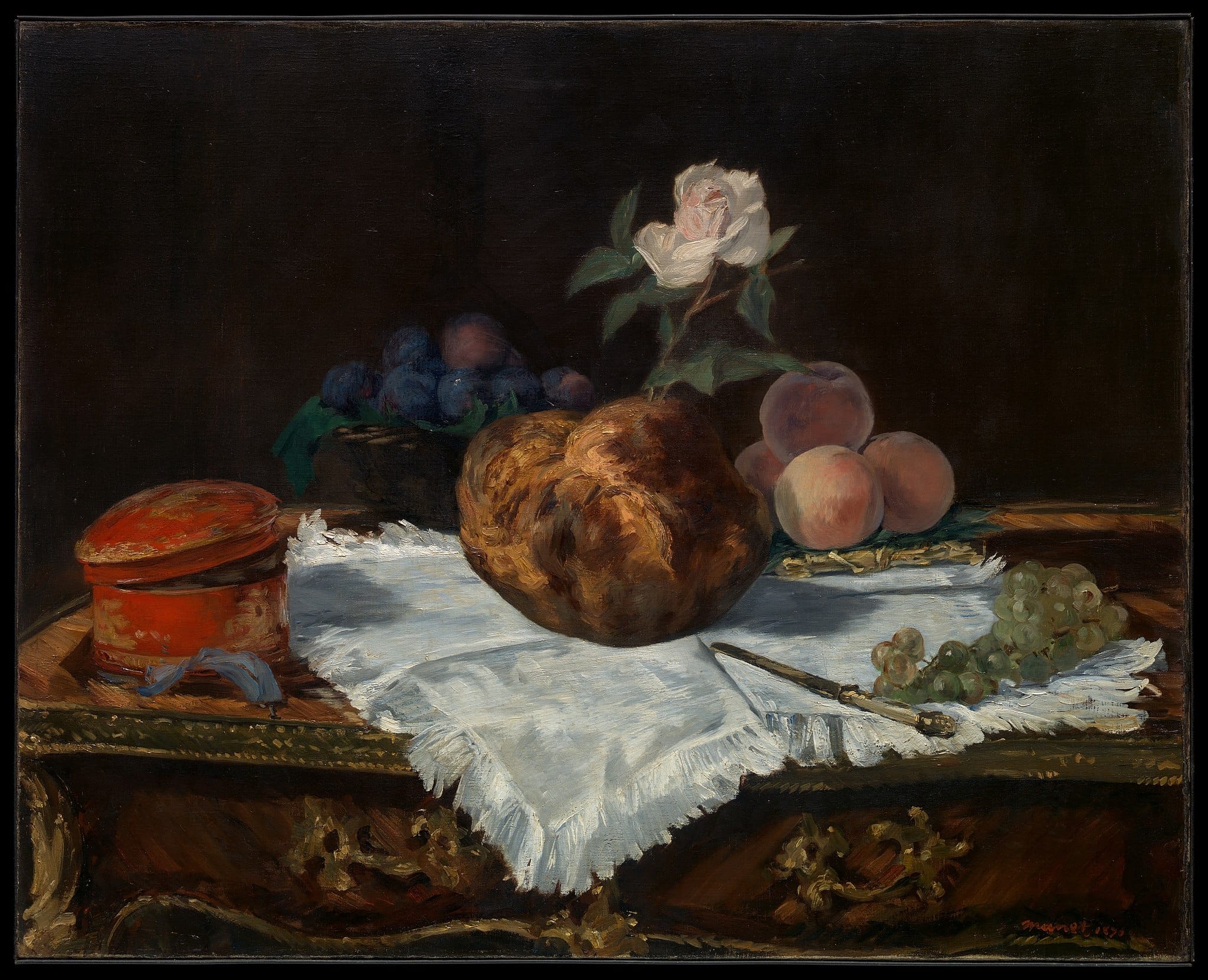
The Brioche
1870
A still life depicting a brioche loaf on a plate, painted with a simple, focused composition that elevates an ordinary baked good to the subject of fine art. The work is significant for Manet’s modernization of still life—its economy of means and bold lighting link to his broader move toward modern subjects; viewers should attend to the warm tonal range, the confident brushstrokes that model the form, and the quiet monumental presence Manet gives to a humble object.
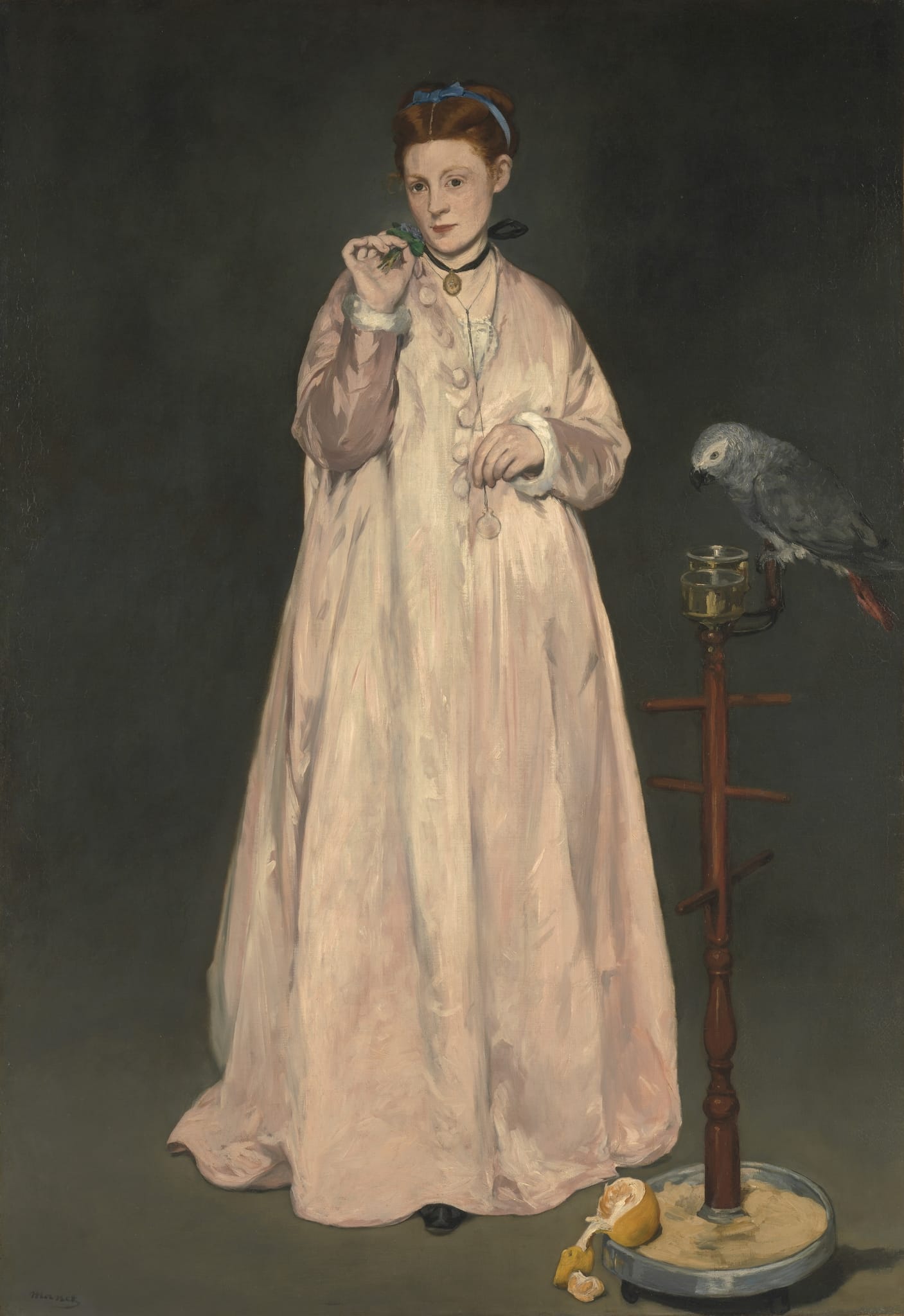
Young Lady in 1866
1866
A refined portrait of a young woman in contemporary dress, rendered with Manet’s characteristic immediacy and subtle psychological observation. The painting matters because it shows Manet’s ability to convey modern elegance without sentimentalizing his sitter; look for the interplay of textured brushwork and crisp outlines, the sitter’s poised yet introspective expression, and the careful attention to fashionable costume details.
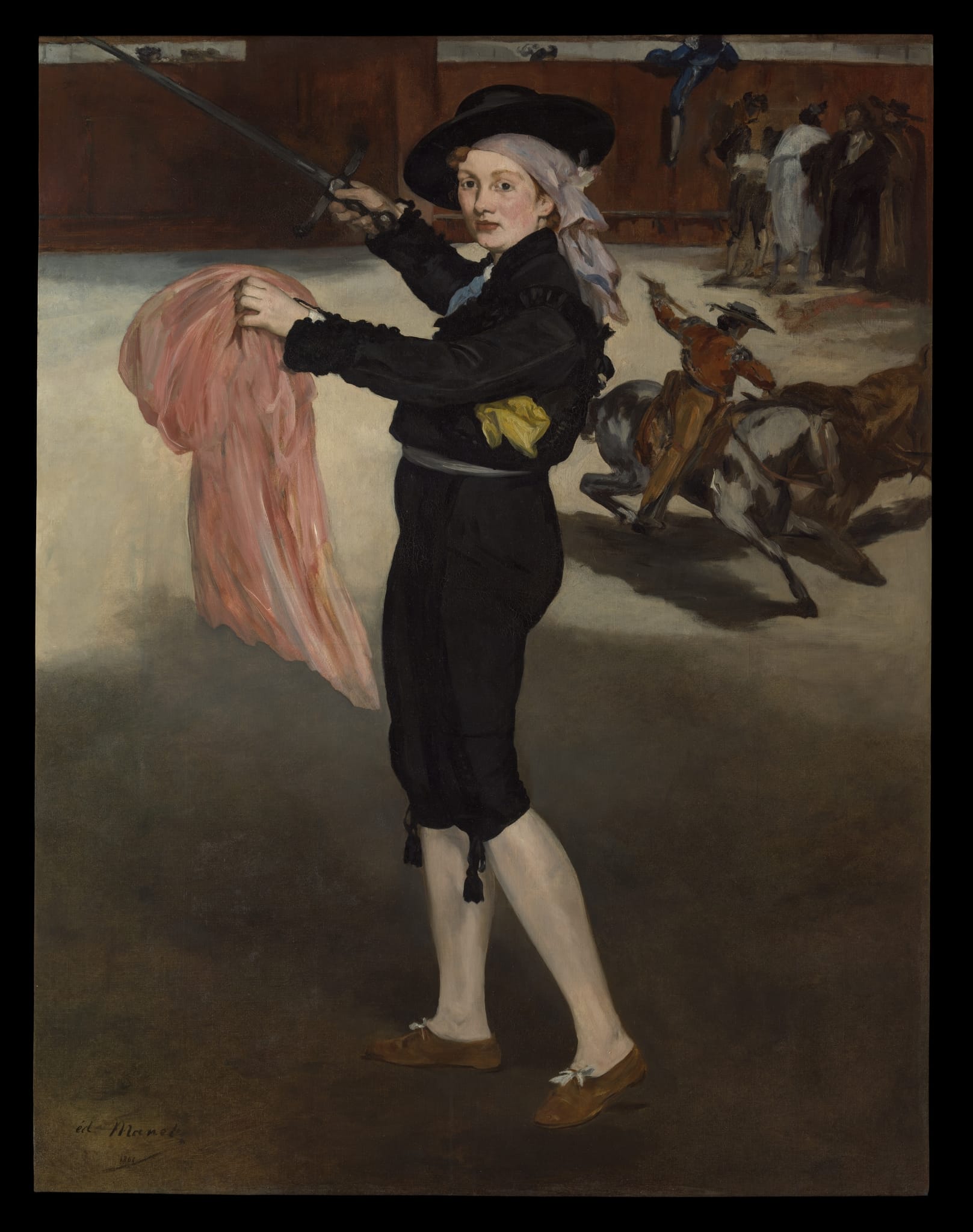
Mademoiselle V. . . in the Costume of an Espada
1862
Portrait of a woman dressed as an espada (a bullfighter), striking an assertive, slightly provocative pose that mixes gendered costume and theatricality. Significant for its challenge to conventional portraiture and gender expectations, as well as Manet’s interest in mixing modern fashion with historical or exotic motifs; observe the confident stance, the crisp black-and-white costume contrasts, and the way paint is used sparingly to emphasize gesture and attitude.
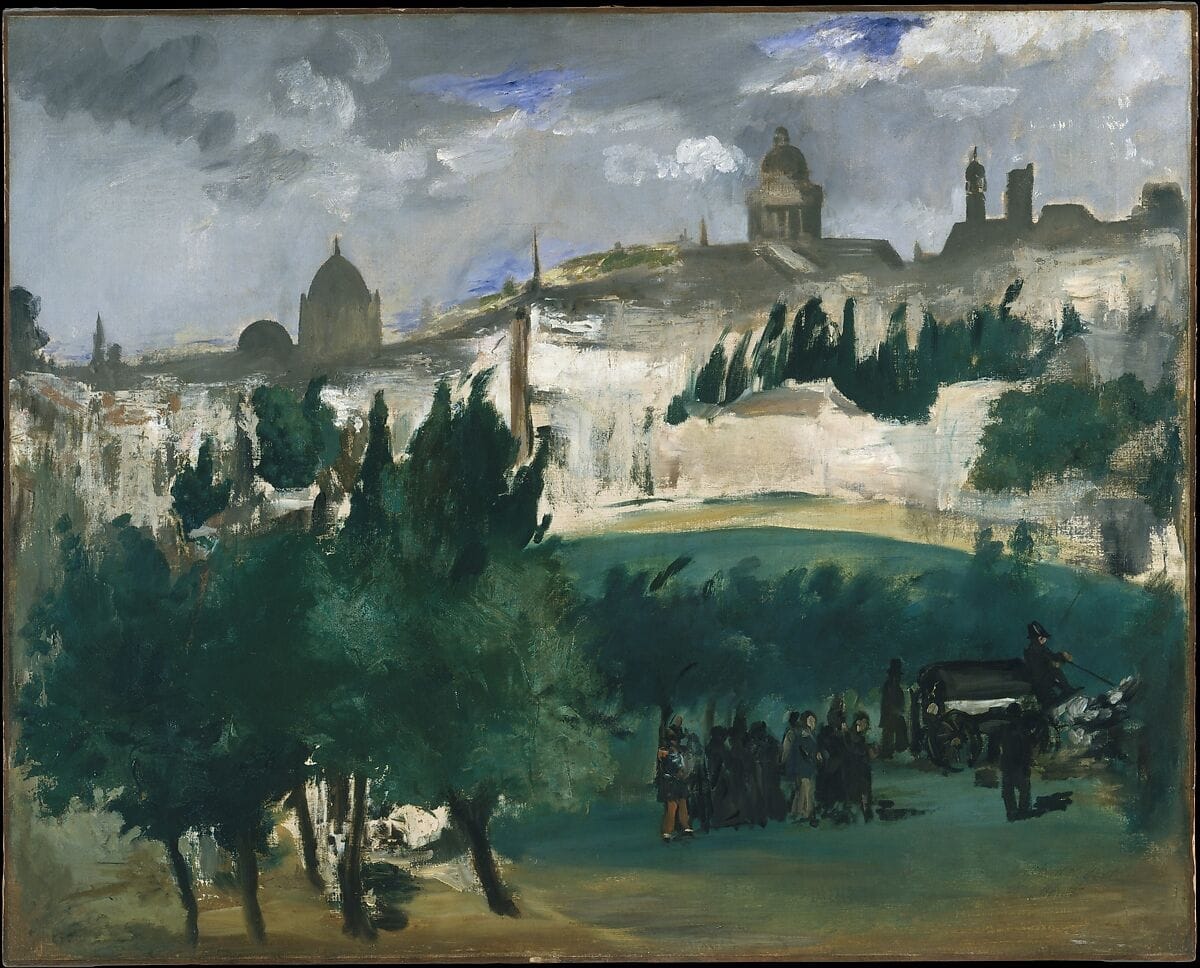
The Funeral
1867
A somber, restrained composition showing a funeral procession or cemetery scene, rendered in muted tones and with an emphasis on atmosphere over narrative detail. The work is notable for Manet’s melancholic modern realism and his ability to evoke collective emotion without melodrama; viewers should note the flattened spatial planes, the subdued palette, and how silhouetted figures and spare brushwork create a sense of mourning and urban anonymity.
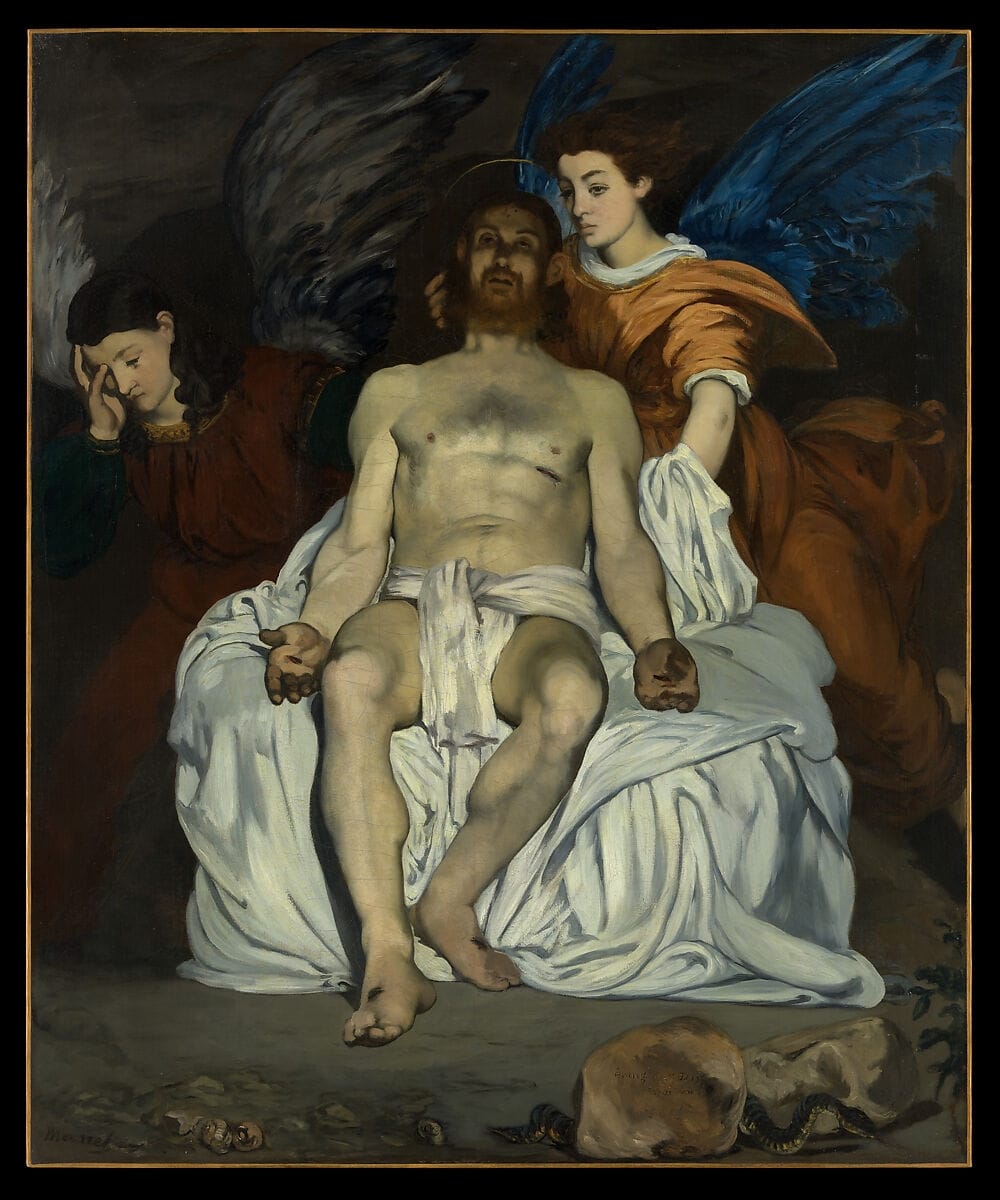
The Dead Christ with Angels
1864–65
A devotional yet unusually frank depiction of the dead Christ attended by angels, combining religious subject matter with Manet’s modern, unsentimental handling. It is significant because Manet reinterprets a traditional theme through his sober realism and painterly economy, prompting debate in his day about propriety and innovation; look for the stark composition, the treatment of flesh tones against muted backgrounds, and the restrained but expressive rendering of the angels’ grief.
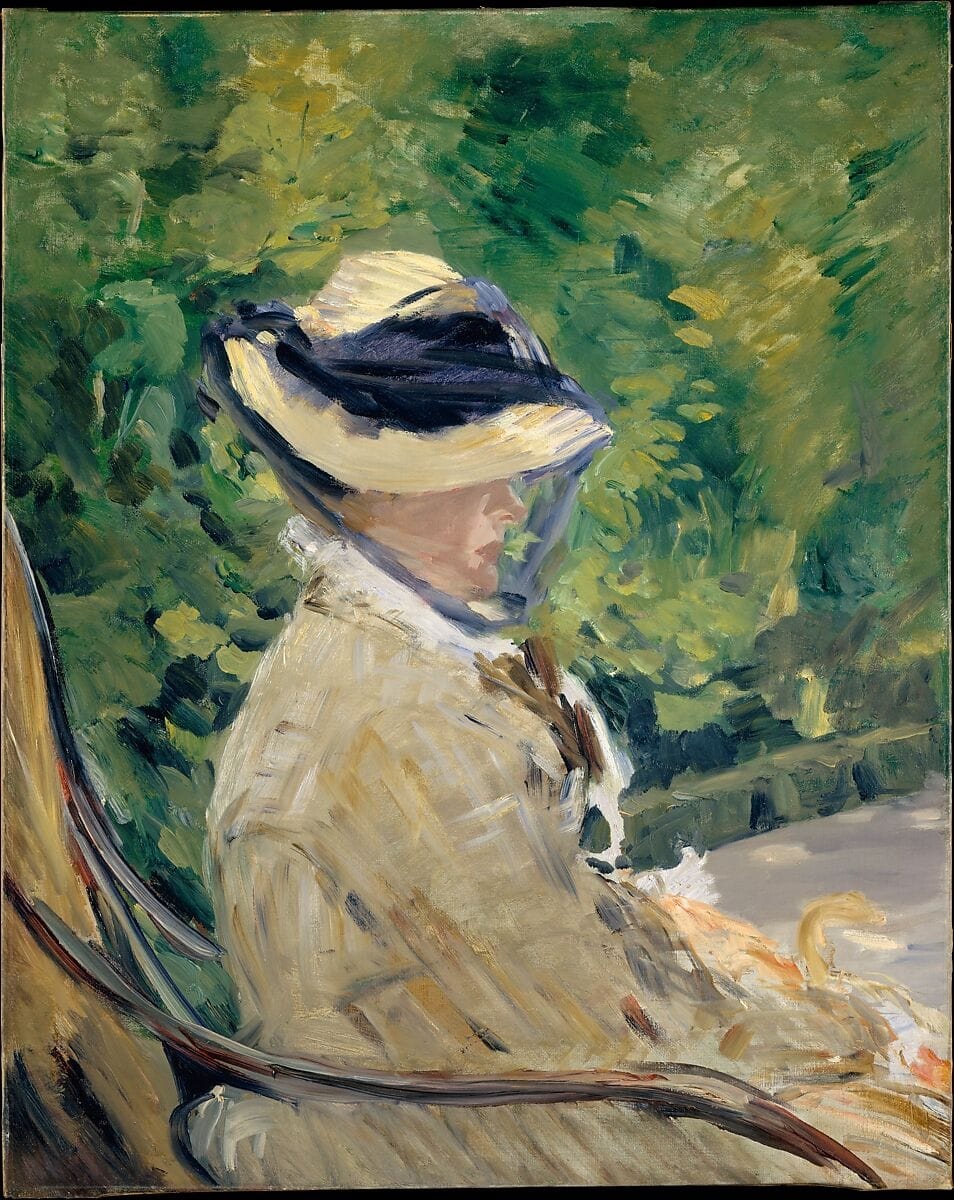
Madame Manet (Suzanne Leenhoff, 1829–1906) at Bellevue
1880
An intimate, late portrait of Manet’s wife, Suzanne, shown seated or posed at Bellevue with a calm, domestic air that conveys affection and familiarity. Significant as a mature, personal portrait that balances realism with tenderness, reflecting the artist’s domestic world late in life; viewers should pay attention to the nuanced facial expression, the relaxed handling of clothing and surroundings, and the way light models her features with quiet dignity.
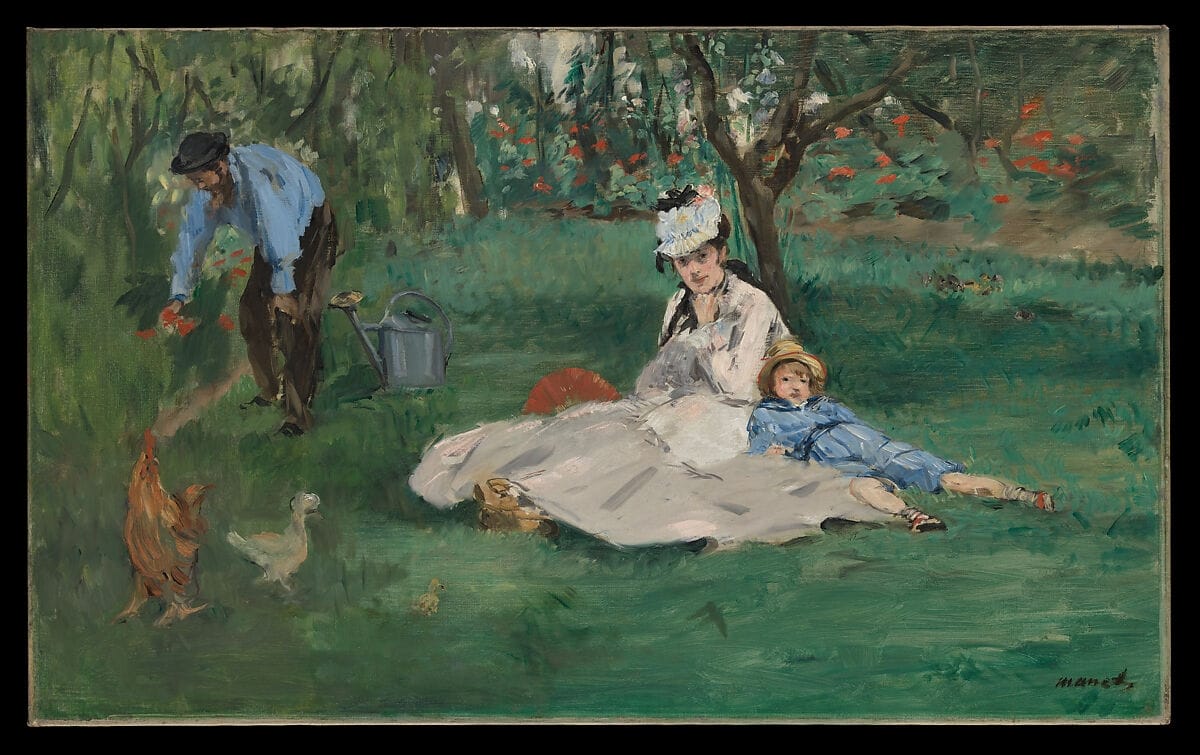
The Monet Family in Their Garden at Argenteuil
1874
A lively group portrait set in Claude Monet’s garden at Argenteuil, showing members of the Monet family amid lush foliage and sun-dappled space. Important because it captures the social and artistic camaraderie of the Impressionist circle while showcasing Manet’s own response to plein-air light effects; notice the interplay of pattern and shadow in the foliage, the casual poses that suggest an everyday scene, and Manet’s brisk brushwork that conveys atmosphere rather than minute detail.
Must-seeBrooklyn Museum
Although the Brooklyn Museum’s permanent collection contains no paintings by Manet, the museum matters to understanding his reception and influence in America because it frequently mounts loans, themed exhibitions, and comparative displays that place his legacy beside American and immigrant artists. Visiting the Brooklyn shows how curators interpret Manet’s impact on later generations and on issues such as modern subjectivity, urban life, and portraiture in ways local audiences experience differently than at larger European collections.
The Frick Collection
The Frick’s single Manet painting is significant because the collection’s intimate, domestic galleries spotlight works of art as objects for sustained, close looking — a setting that reveals Manet’s surface handling, subtle color shifts, and the psychological nuance of his figures in a way large, crowded rooms often do not. The Frick also contextualizes that painting among portraits and decorative arts from the same period, helping viewers see how Manet both engaged with and quietly subverted established traditions of portraiture.
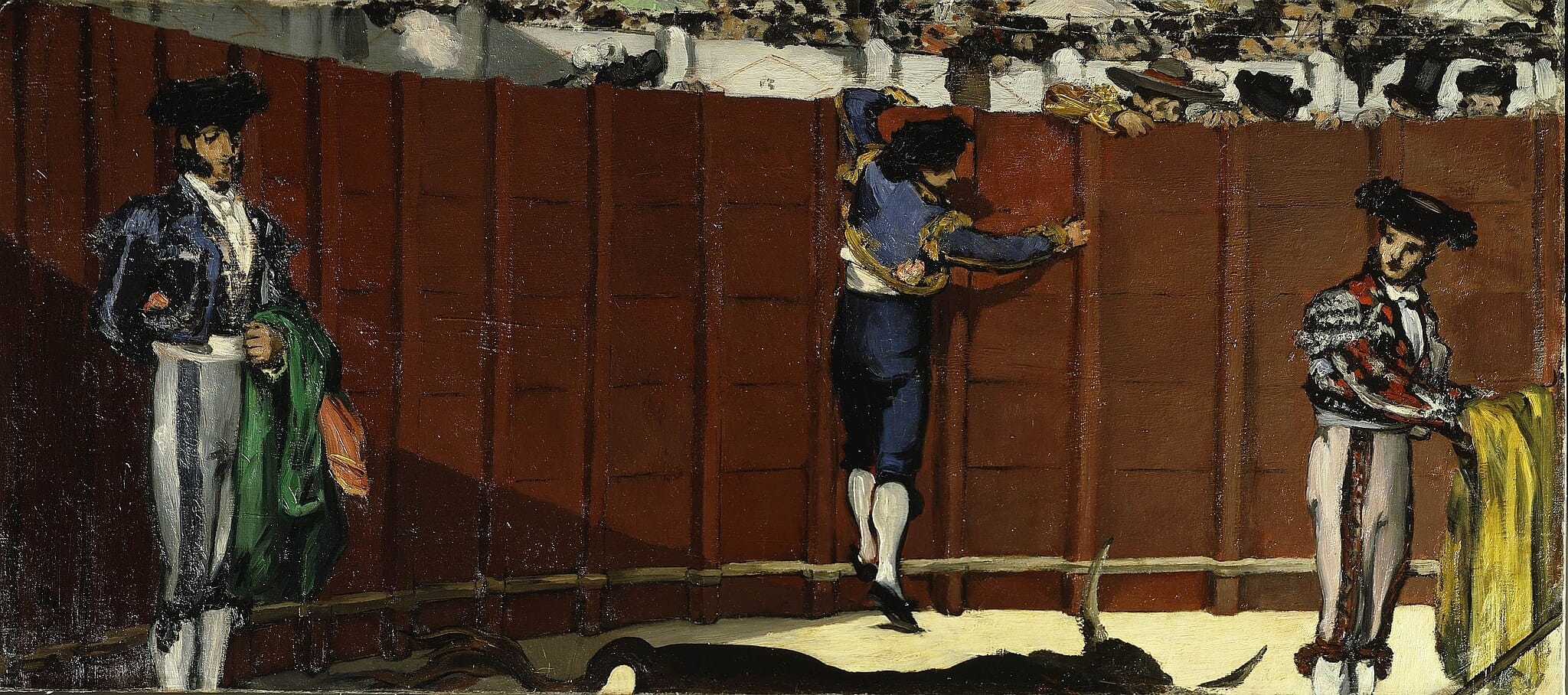
The Bullfight
1864
A fragment of Manet’s large 1864 salon canvas; exemplifies his provocative modern subject and bold brushwork.
Must-see