Édouard Manet Paintings in London — Where to See Them
London is one of the best places to see Édouard Manet in person: approximately nine paintings are on permanent display across two museums — five at the National Gallery and four at The Courtauld Gallery. Together they offer complementary perspectives — the National Gallery presents Manet’s ambitious, publicly oriented canvases while The Courtauld’s intimate hang brings you close to his brushwork and the compositional experiments that influenced Impressionism and British artists.
At a Glance
- Museums
- National Gallery, The Courtauld Gallery
- Highlight
- See Manet highlights at the National Gallery; visit The Courtauld for deeper study.
- Best For
- Art lovers seeking Impressionist-era masterpieces and intimate gallery experiences
National Gallery
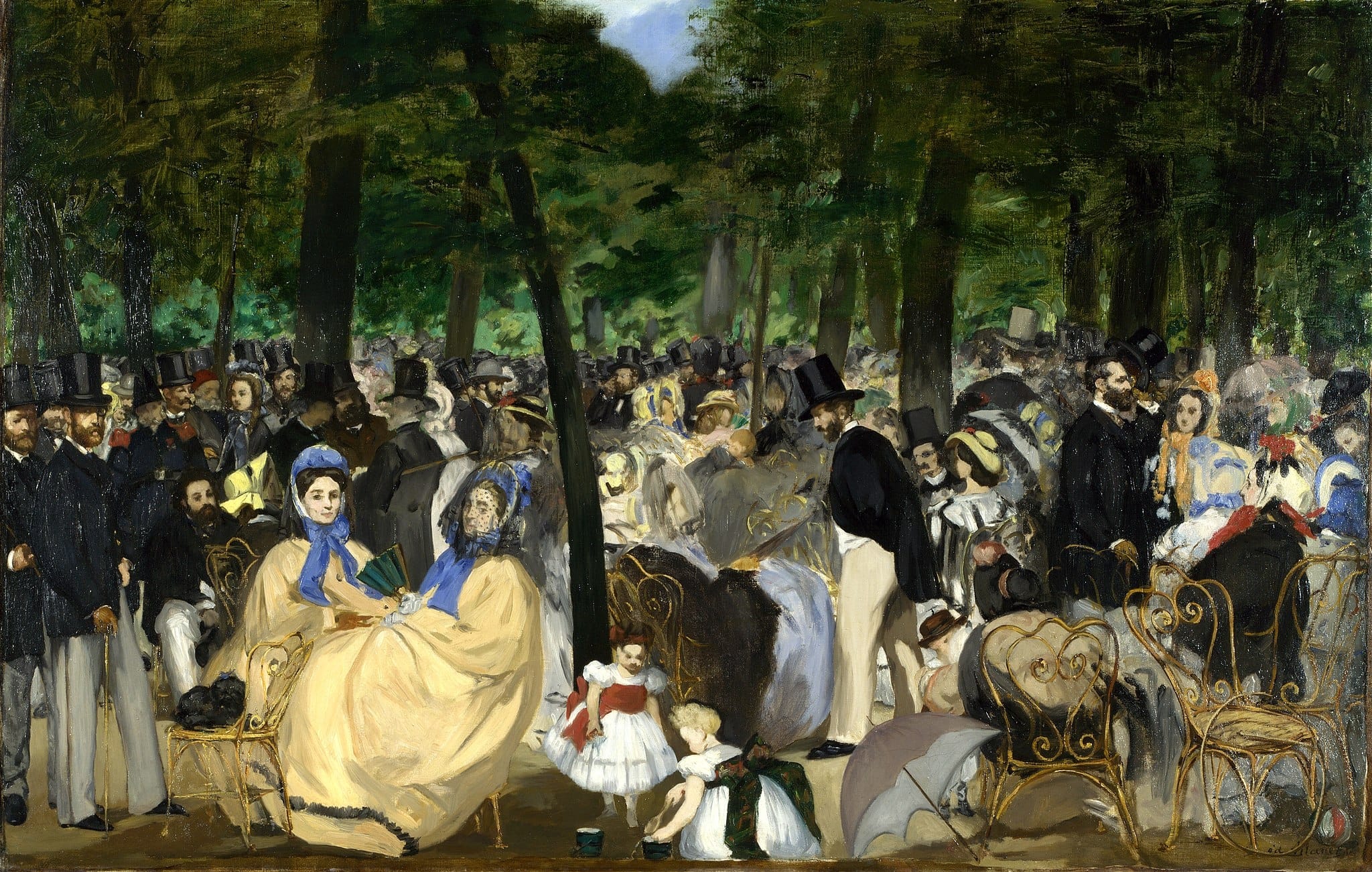
Music in the Tuileries Gardens
1862
Depicts a fashionable crowd gathered under trees in the Tuileries, with musicians and figures seen in a flattened, snapshot-like composition. Significant as one of Manet’s early modern-life scenes that rejects academic narrative in favor of contemporary urban leisure and photographic framing. Viewers should notice the loose brushwork, the interplay of light and shadow through the trees, and how faces and fashions are suggested rather than fully modelled, creating a sense of immediacy.
Must-see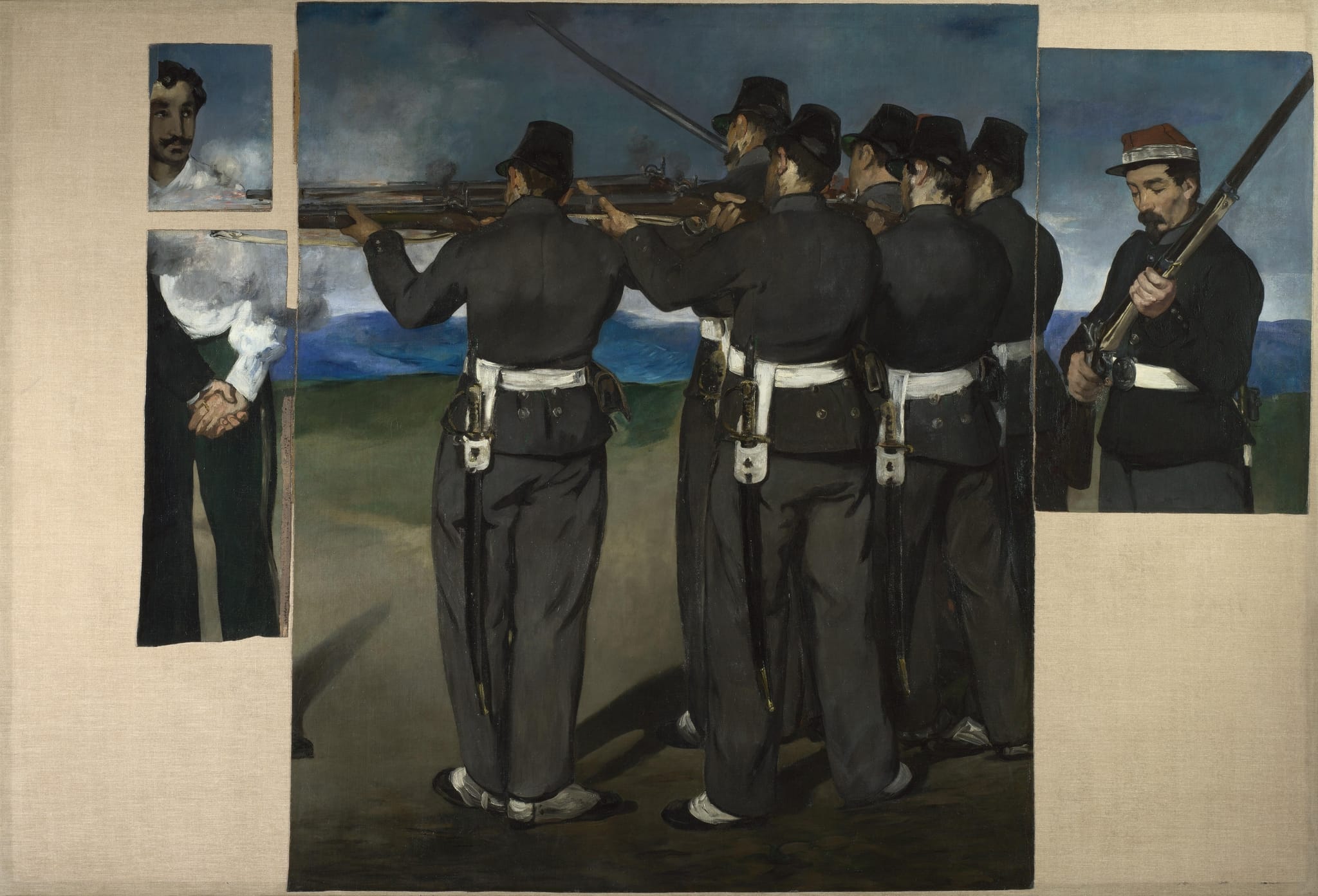
The Execution of Maximilian
About 1867-8
Shows the firing squad execution of Emperor Maximilian of Mexico, rendered with stark simplicity and a restrained palette that emphasizes the tragic event. Important for Manet’s engagement with recent political events and his break from historicizing melodrama toward a more documentary, morally alert approach. Look for the flatness of the pictorial space, the anonymous ranks of soldiers, and the way the composition centers on the executed man while withholding sensational detail to provoke reflection.
Must-see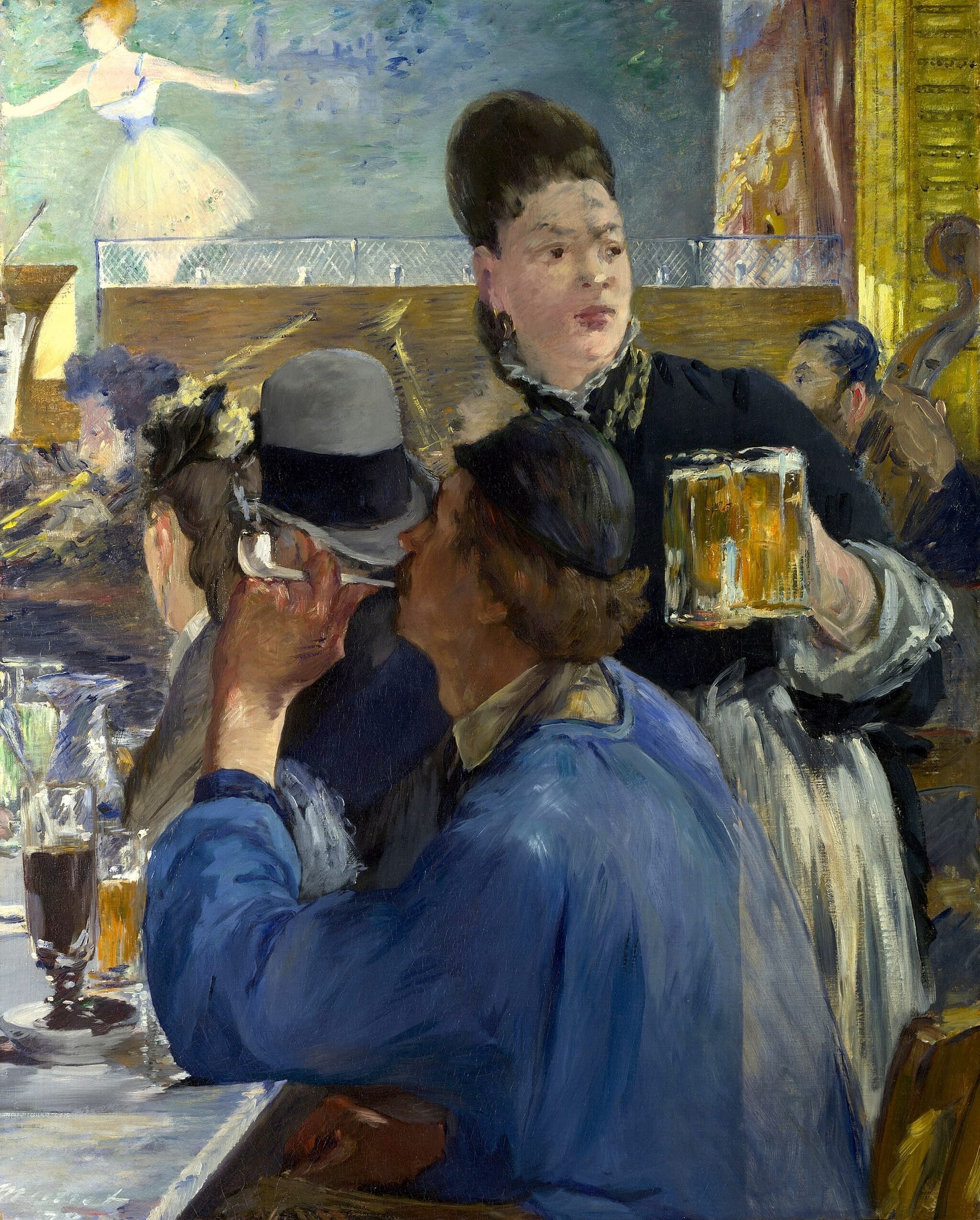
Corner of a Café-Concert
Probably 1878-80
Captures a moment inside a bustling Paris café-concert where performers and patrons sit at different depths, creating a cropped, lively interior scene. Significant for Manet’s late-career interest in modern entertainment and his experiment with cropping and spatial ambiguity influenced by photography and Japanese prints. Notice the abrupt edges, the variety of poses and gazes, and the contrast between bright costume highlights and darker background areas that direct attention across the scene.
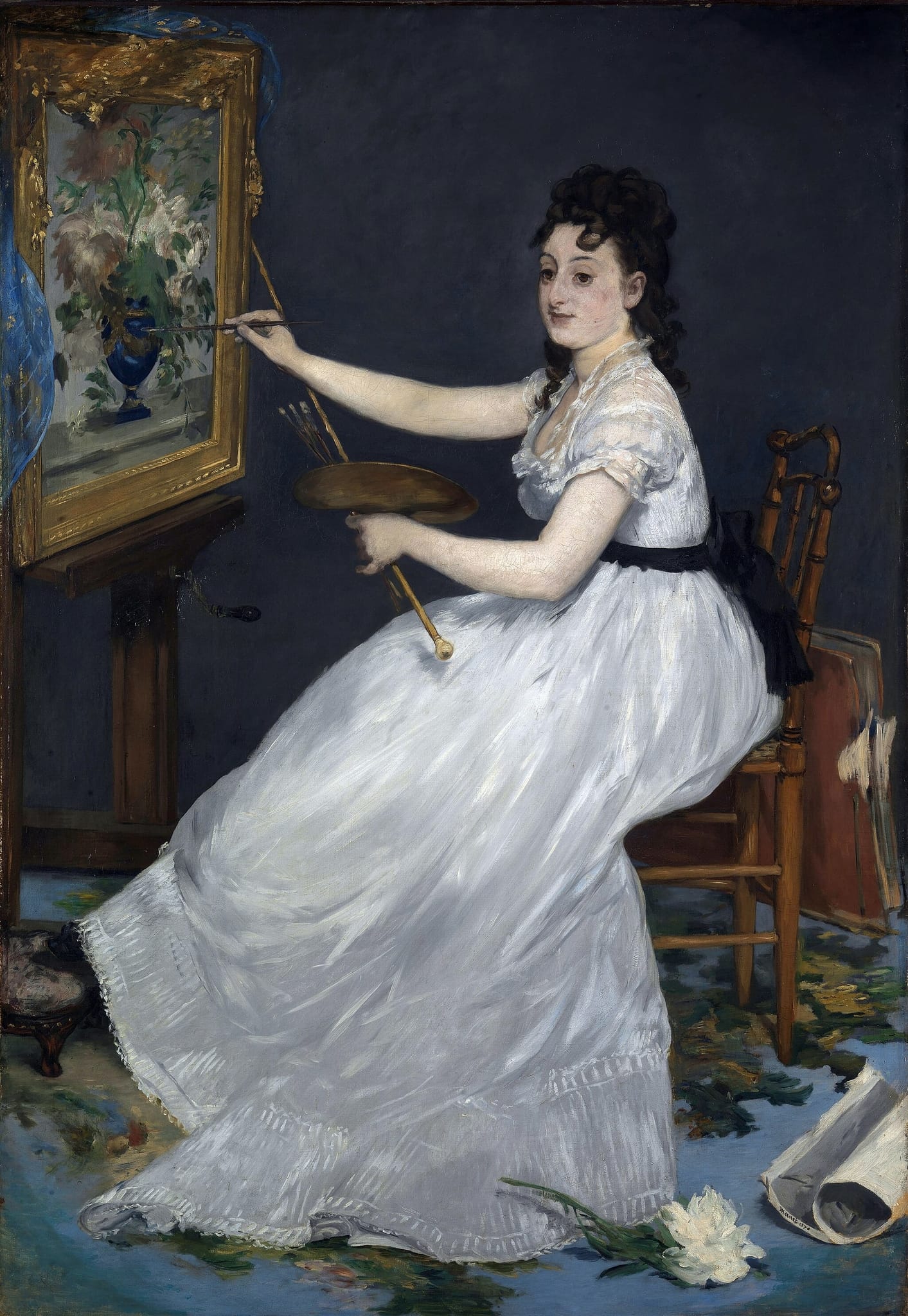
Eva Gonzalès
1870
A refined portrait of Manet’s student and friend Eva Gonzalès, shown seated with a poised, introspective expression and elegant dress. Significant as a sympathetic, psychologically attentive likeness that also demonstrates Manet’s handling of fashionable fabrics and subtle lighting. Viewers should attend to the nuanced modelling of her face, the delicate treatment of hands and costume, and the quiet intimacy between sitter and artist conveyed through pose and gaze.
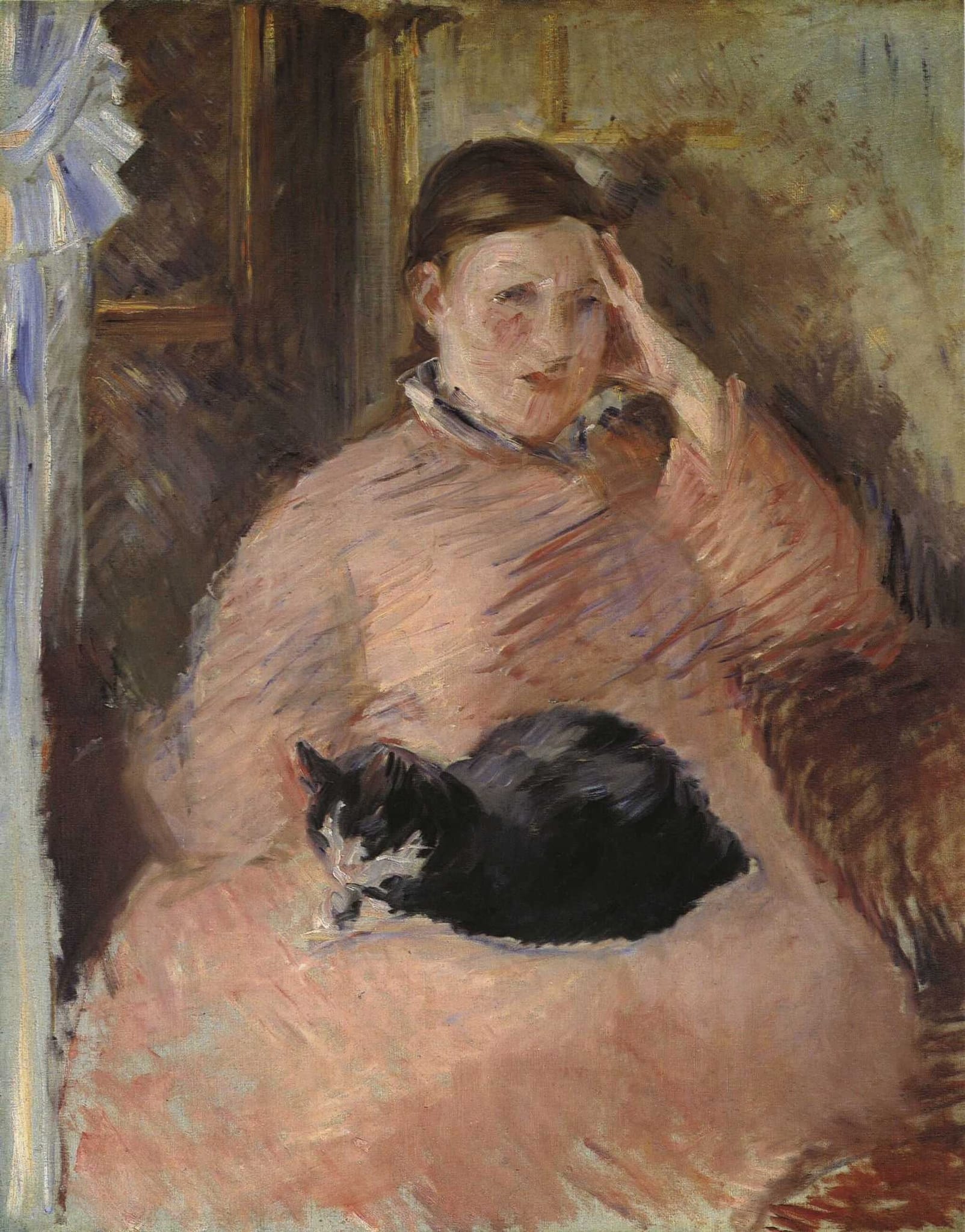
Woman with a Cat
About 1880-2
Portrays a seated woman holding a black cat, presented with broad, confident brushstrokes and a muted but rich palette. Important for Manet’s late exploration of domestic subject matter and his loosening of form toward a more painterly, tactile surface. Look for the contrast between the textured handling of clothing and the simplified background, the assertive silhouette of the cat, and the way paint application creates presence rather than detailed description.
The Courtauld Gallery
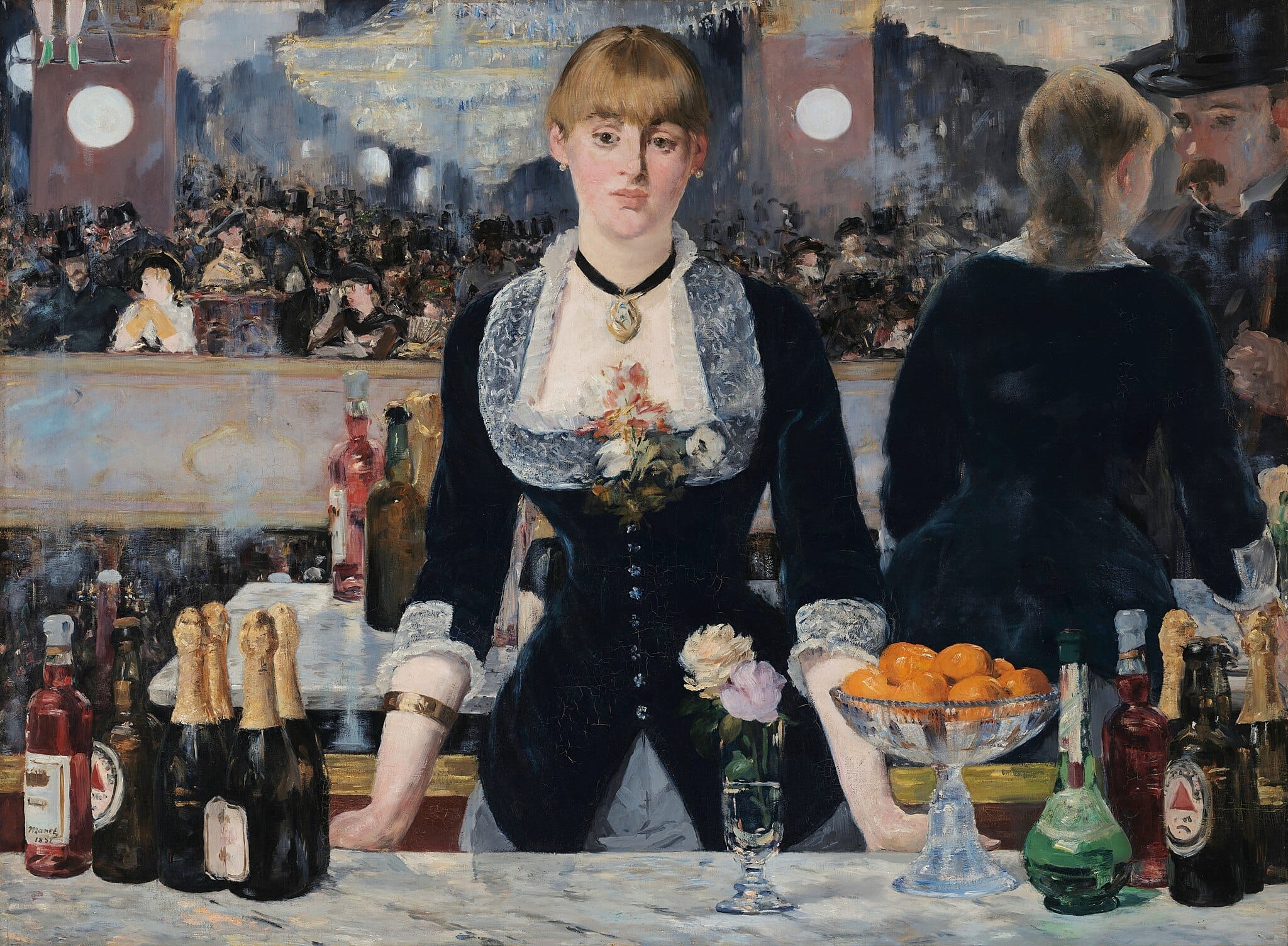
A Bar at the Folies-Bergère
1882
Manet depicts a solitary barmaid standing behind a marble counter strewn with bottles, a bowl of oranges and a conspicuously angled mirror that reflects the crowded Folies‑Bergère music‑hall behind her. This is Manet’s last major work and is celebrated for its modern subject‑matter and its ambiguous spatial relationships — the mirror’s reflection does not line up with the figures in the foreground, prompting questions about perspective, representation and social distance. When you view it, look closely at the mirror, the nearly detached expression of the woman, and small details (the Bass beer label, the oranges, and the brushy handling) that contrast realism with deliberate compositional puzzles. ([courtauld.ac.uk](https://courtauld.ac.uk/highlights/a-bar-at-the-folies-bergere/?utm_source=openai))
Must-see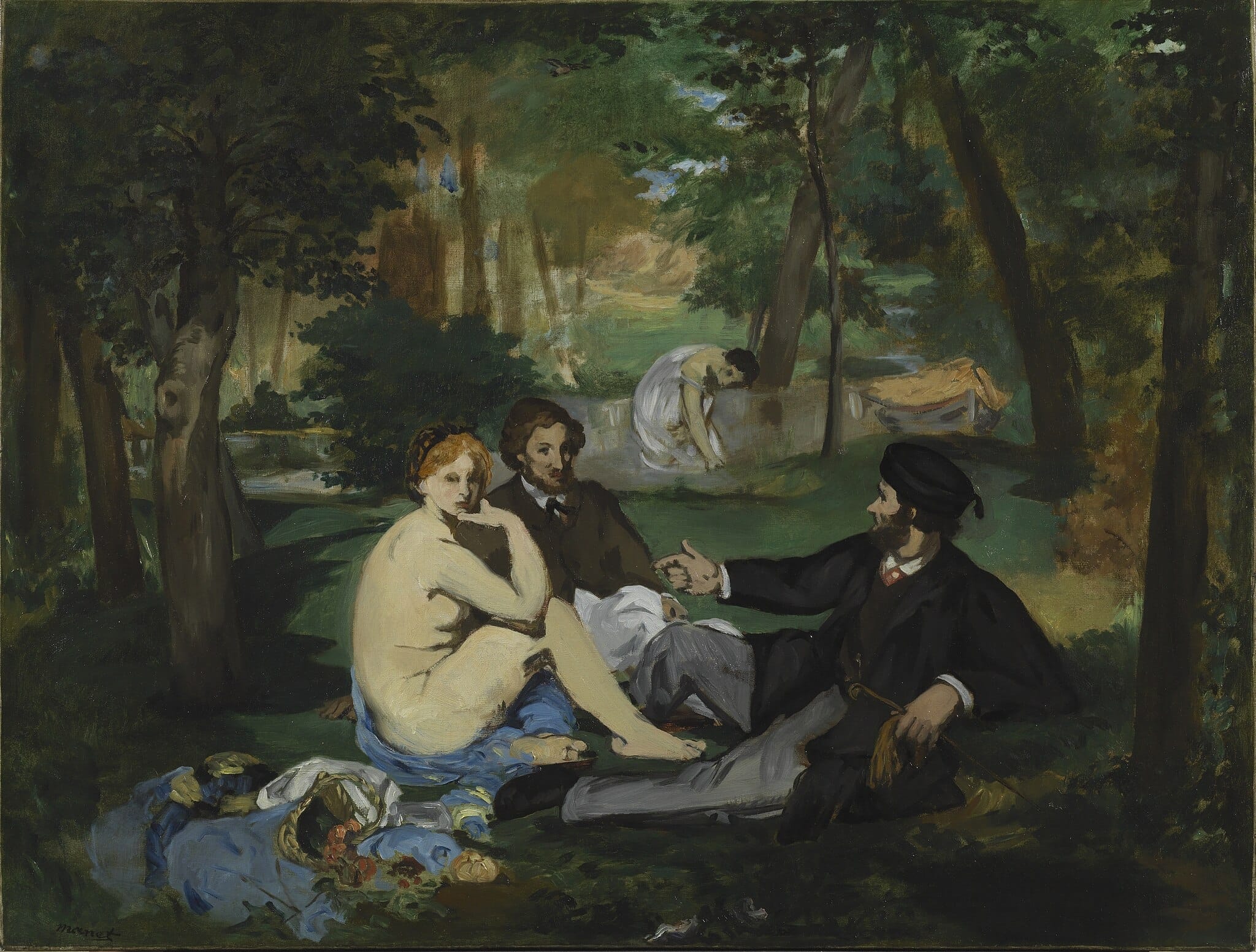
Study for ‘Le Déjeuner sur l’herbe’ (Luncheon on the Grass)
around 1863
This study shows Manet working through the compositional arrangement and figure poses for his controversial Déjeuner sur l’herbe, presenting life‑sized figures in a picnic setting that challenged academic conventions about the nude and modern life. The study is significant because it reveals Manet’s process and his break with traditional academic narratives — the work helped precipitate public debate about realism, modernity and what subjects were acceptable in history painting. When looking, note the directness of the figures’ gazes, the sketch‑like handling and the way Manet balances nude and clothed figures within a flattened pictorial space. ([pure.courtauld.ac.uk](https://pure.courtauld.ac.uk/en/publications/examining-edouard-manets-le-dejeuner-sur-lherbe-from-the-courtaul?utm_source=openai))
Must-see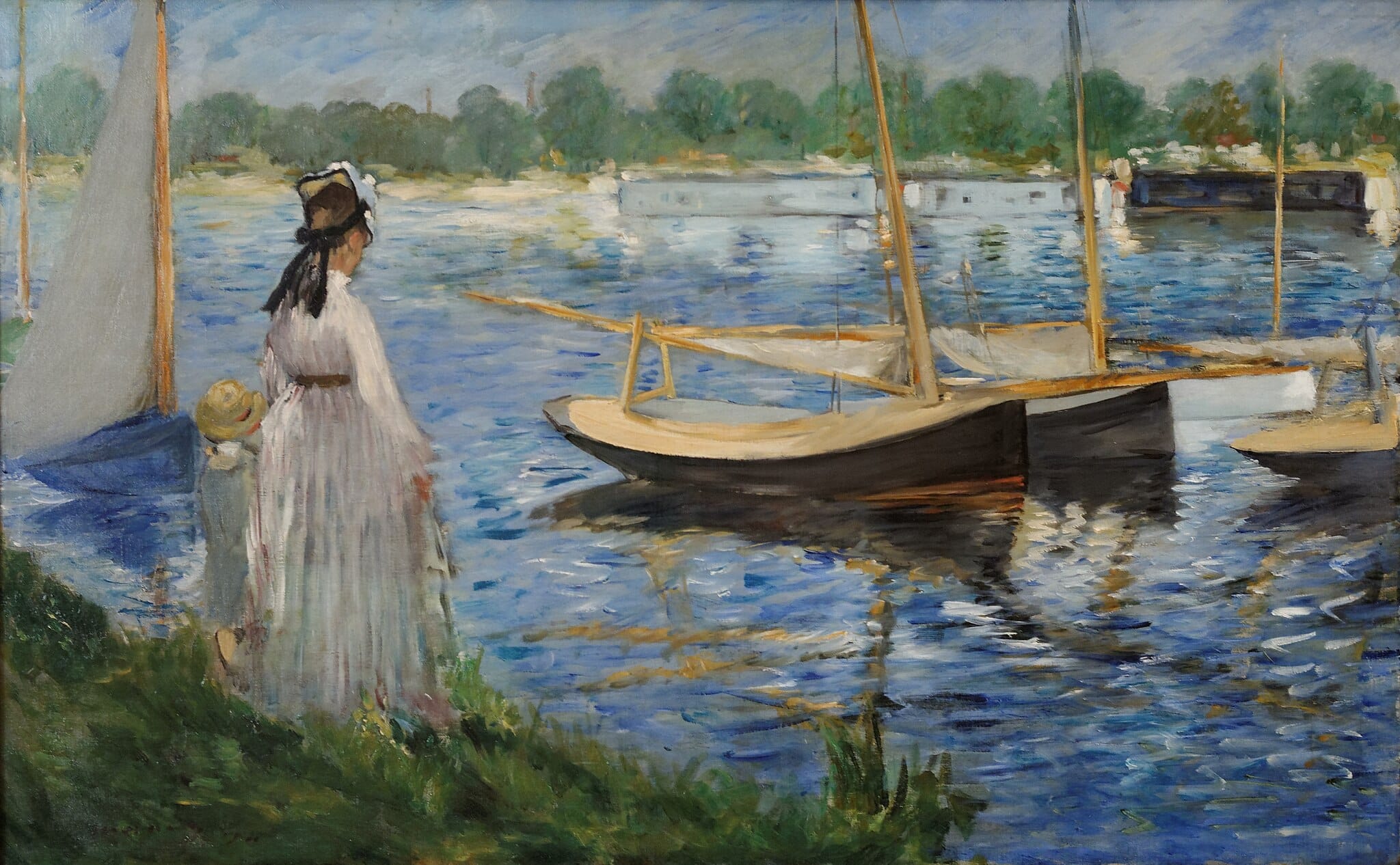
Banks of the Seine at Argenteuil
1874
Manet captures a leisurely riverside scene at Argenteuil with a pair of figures on the near bank and boats and factories across the river, rendered in quick, luminous brushstrokes that register shifting light on water. The painting is important as an example of Manet adopting Impressionist ideas — plein‑air observation, brisk paint handling and a focus on modern leisure — while retaining his compositional control and psychological presence in the figures. When viewing, attend to the contrast between the rapid, shimmering treatment of the water and sky and the more resolved, vertical figures and structural elements (mast, chimney, parasol) that organize the picture. ([artchive.com](https://www.artchive.com/artwork/the-banks-of-the-seine-at-argenteuil-edouard-manet-1874-argenteuil-argenteuil-sur-armancon-france/?utm_source=openai))
Must-see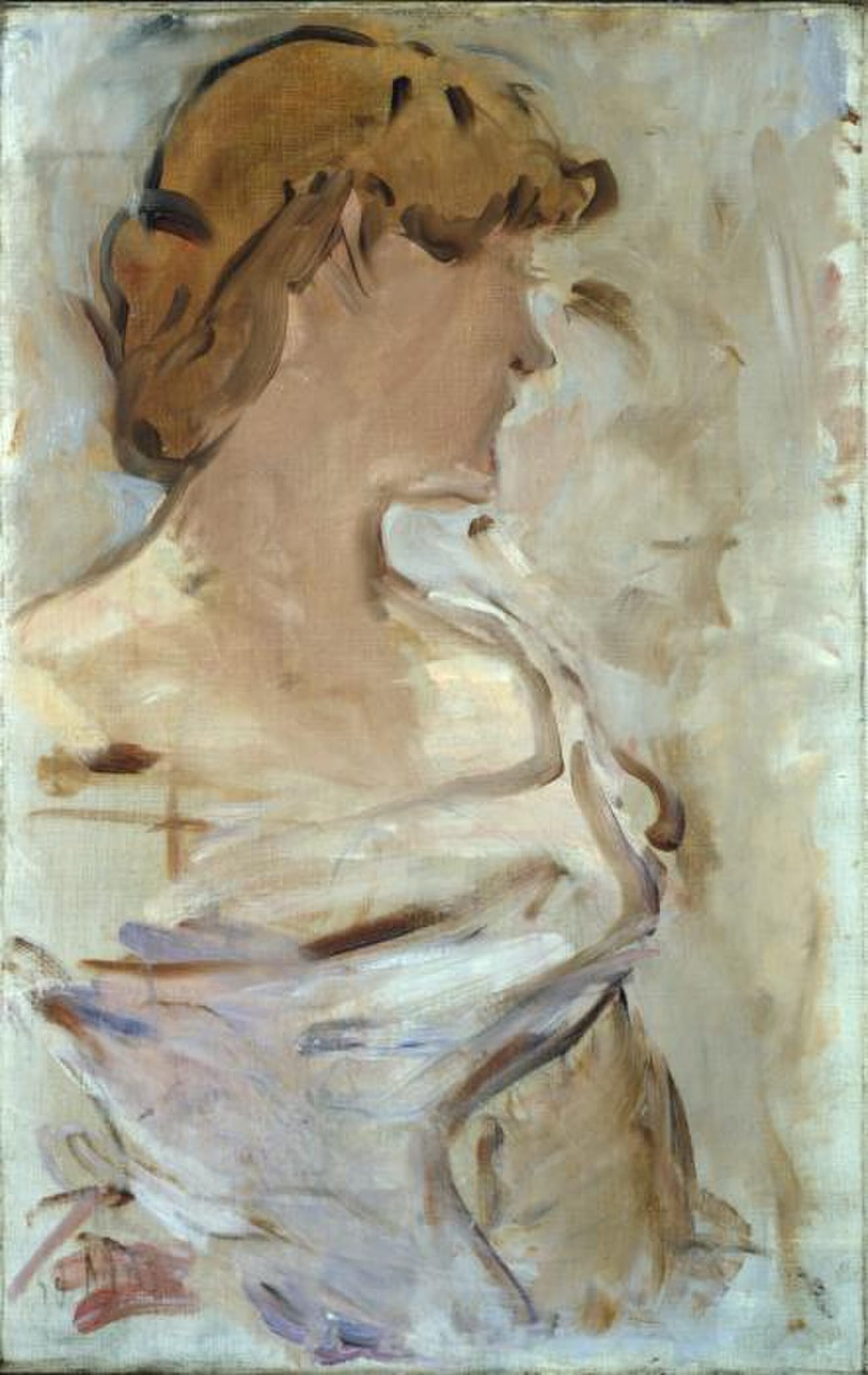
Au Bal — Marguerite de Conflans en toilette de bal
1878-1880
This portrait presents Marguerite de Conflans dressed for a ball, shown in an intimate, half‑length format that emphasizes costume, posture and the sitter’s refined presence. It’s significant as one of Manet’s sensitive portraits of contemporary society figures, combining fashionable detail with subtle psychological observation and showing his interest in modern portraiture beyond grand historical scenes. Focus on the elegant handling of fabric and jewelry, the sitter’s poised gesture and the delicate modulation of light across skin and dress that reveal Manet’s mastery of surface and character. ([research.unipg.it](https://research.unipg.it/handle/11391/1426929?utm_source=openai))