Two routes into the painting of modern life
Both artists turned cafés, theaters, and boulevards into laboratories for how pictures meet the present. Manet edits modern life into frontal, declarative images; Degas engineers oblique vantages that analyze how seeing is organized. Set side by side, they show two durable logics for picturing modernity.
Comparison frame: Do modern pictures speak to us or make us watch ourselves looking?
Quick Comparison
| Topic | Edgar Degas | Édouard Manet |
|---|---|---|
| Modern-life remit | Concert gardens, cafés, spectacle turned into present‑tense propositions. | Theaters, studios, and shops turned into systems of seeing and working. |
| Signature vantage | Frontal address; the picture faces you (The Fifer; A Bar at the Folies‑Bergère). | Oblique/raised viewpoints; raked floors, side‑wings (Rehearsal; Place de la Concorde). |
| Space strategy | Shallow planes, mirror edits, planar stacking; clarity through cuts. | Deep crops, high horizons, diagonals; clarity through constructed obliquity. |
| Subject of attention | Public encounter; commodities as interfaces; the viewer implicated. | Labor, hierarchy, and delay; spectatorship made visible. |
| Old Master engine | Velázquez and Goya modernized into flat, frontal icons. | Ingres’s line and discipline organize bodies and rooms. |
| Use of new vision tech | Japonisme + photography for abrupt frontal crops. | Japonisme + photography for asymmetry and serial variants. |
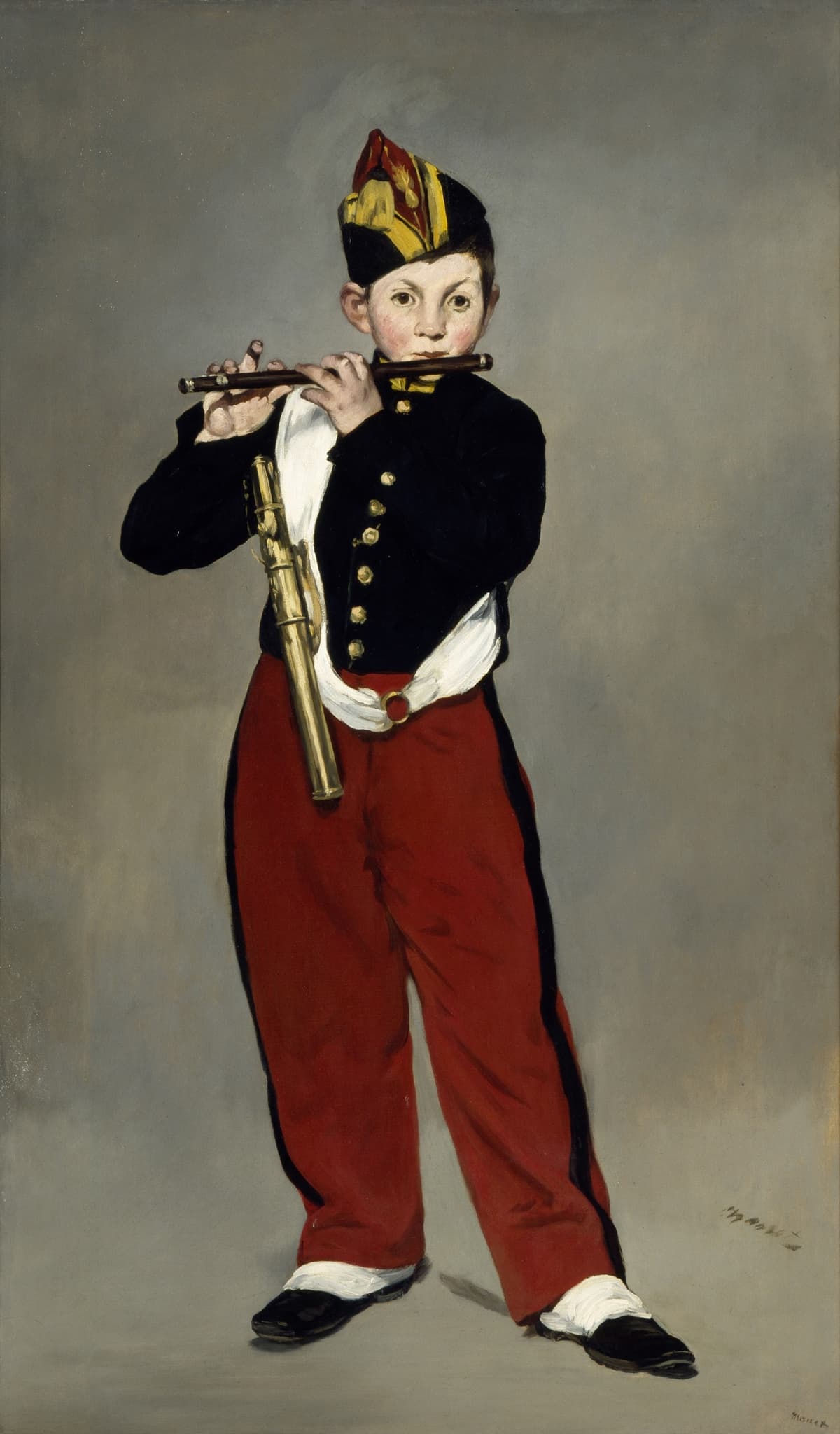
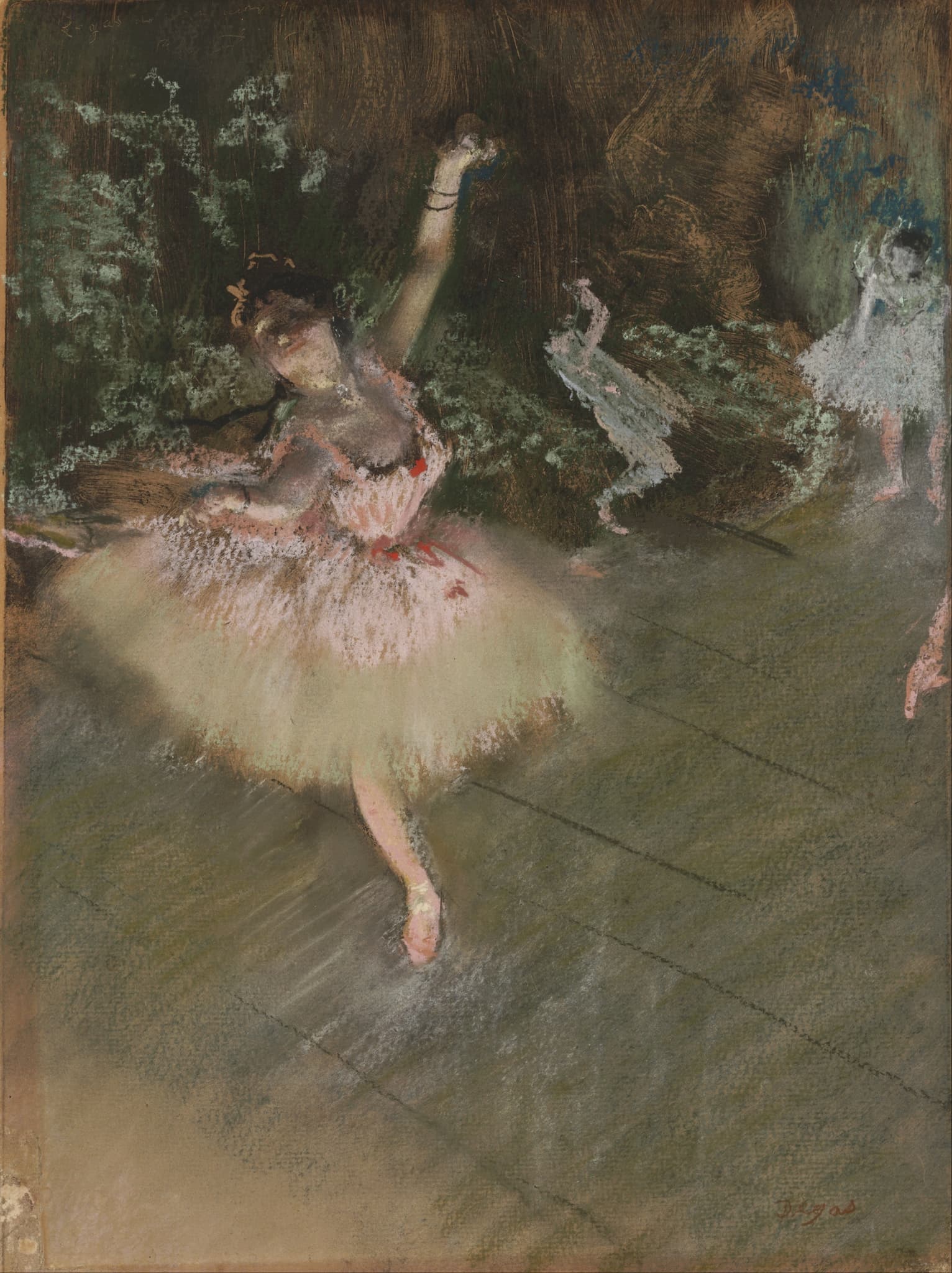
| Iconic single figure | The Fifer—monument by silhouette on an indeterminate ground. | The Star—spotlight isolation at the edge of a tilted stage. |
| Ethic of looking | Painting addresses you; the present is declared. | Painting stages perception; the act of looking is analyzed. |
Shared Ground
Manet and Degas made modern Paris their subject not as topography but as a problem of vision. Gardens, cafés, theaters, and commodity interiors become laboratories for attention: how to register chatter, crowds, and staged entertainment without the old narrative anchors. Both built their "instants" in the studio. Manet’s A Bar at the Folies‑Bergère was assembled under controlled light and a tricky mirror; Degas’s Opéra pictures recombine rehearsals, wings, and pit from drawings and memory. The candid look is engineered. The result is a new pictorial ethics in which everyday intervals—waiting, rehearsing, buying, listening—carry the weight of art.
Old Masters drive this modern turn. Manet translates Velázquez’s single figure “set in air” into The Fifer and recasts Goya’s history gravity for the news age in The Execution of Maximilian. Degas routes classicism through Ingres’s line and relentless drawing: bodies are learned, trimmed, and placed. Both absorb photography’s cropping and Japanese prints’ asymmetry to renegotiate edge and center: Manet stacks planes and uses frontal cuts; Degas rakes floors, opens negative ground, and splices figures at the margin. This is their shared ground: modern life treated with the authority of tradition and the tools of new vision, composed to reveal how looking works in a city of staged entertainments.
Decisive Difference
Manet’s decisive move is to face us. He compresses experience into lucid planes and frontal propositions, resetting the bond between picture and beholder. The Fifer turns an anonymous child into a flat, declarative icon on an indeterminate ground. A Bar at the Folies‑Bergère confronts us across a marble counter and a hazardous mirror, editing spectacle into a present‑tense address that makes the viewer a customer. Even at history scale, as in The Execution of Maximilian, the wall of riflemen reads as a planar statement that fixes our station beside the squad. Light is cool, blacks are unapologetic, and cuts are decisive: modernity appears as edited clarity.
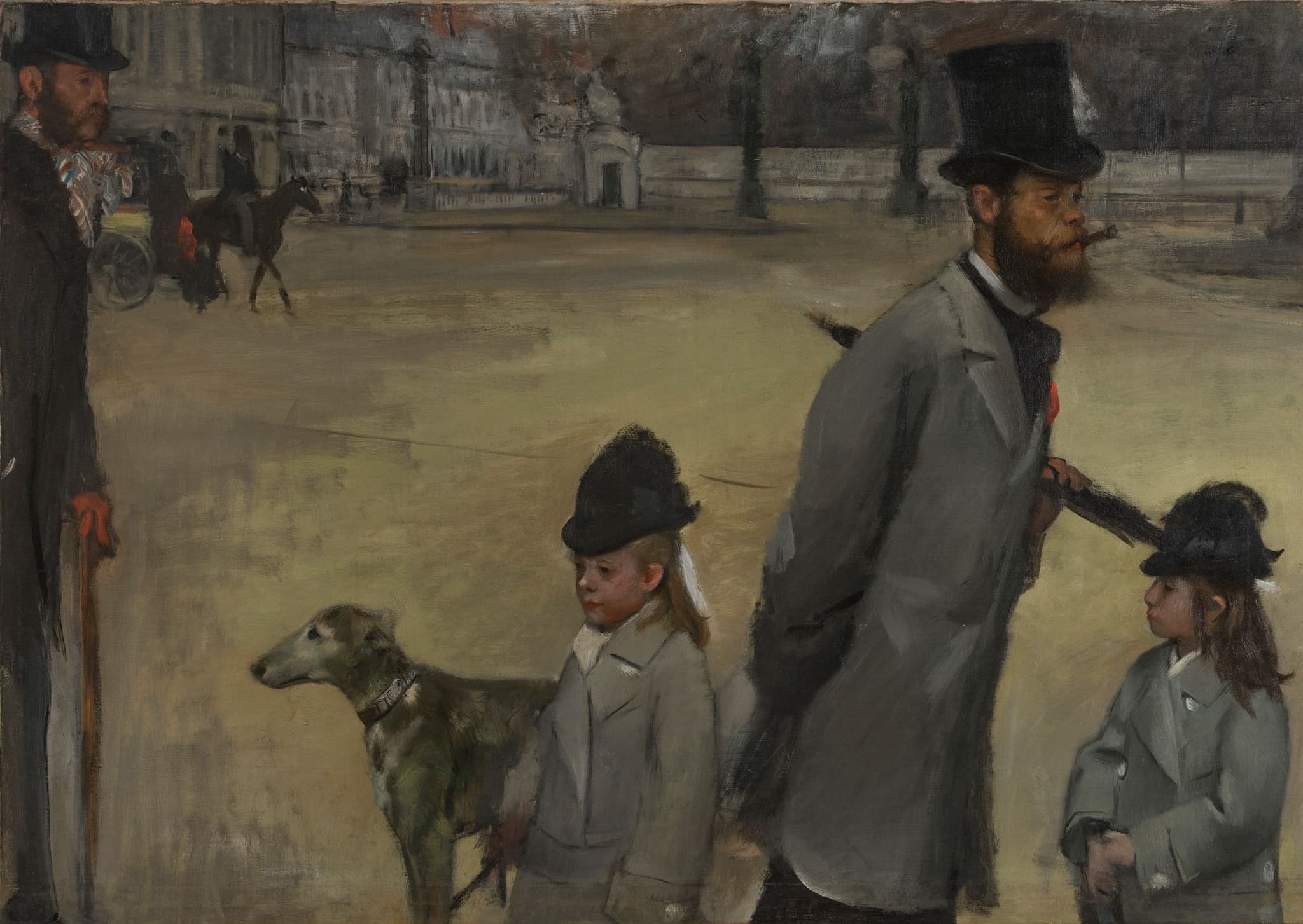
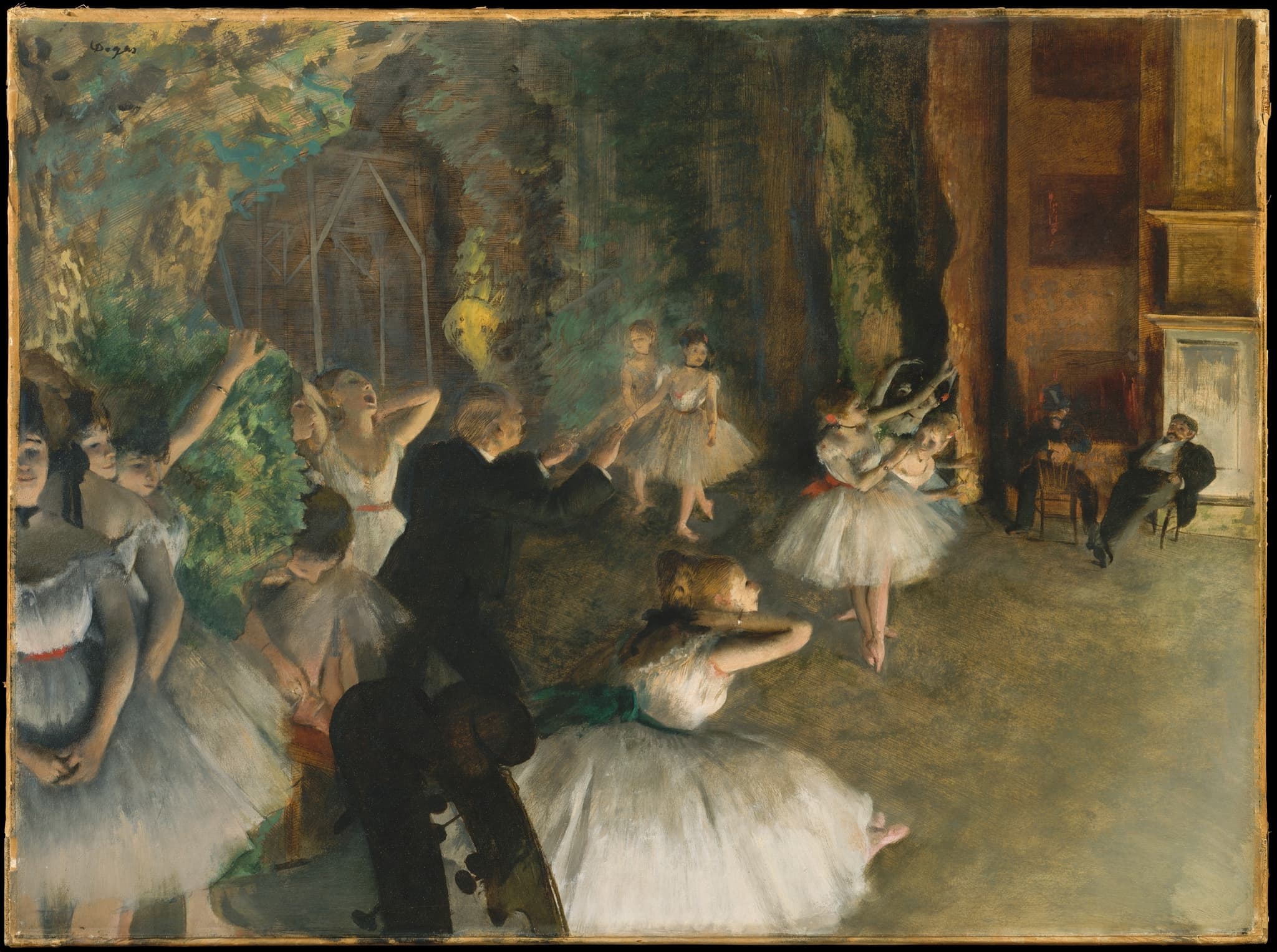
Degas, by contrast, turns us aside. He constructs oblique systems of looking—side‑wings, raised viewpoints, raked floors—through which labor, hierarchy, and delay become legible. Place de la Concorde opens a plaza of negative space and shear‑crops figures into non‑encounter. The Rehearsal of the Ballet Onstage shifts attention to footlights, baton, and double bass, staging the production of performance. His images read as manufactured perceptions rather than frontal statements. Where Manet asks paintings to speak to us, Degas asks them to model how seeing is organized—who looks, from where, and with what power. Put crisply: Manet turns painting to face us; Degas turns us aside to watch looking work.
Paired Works
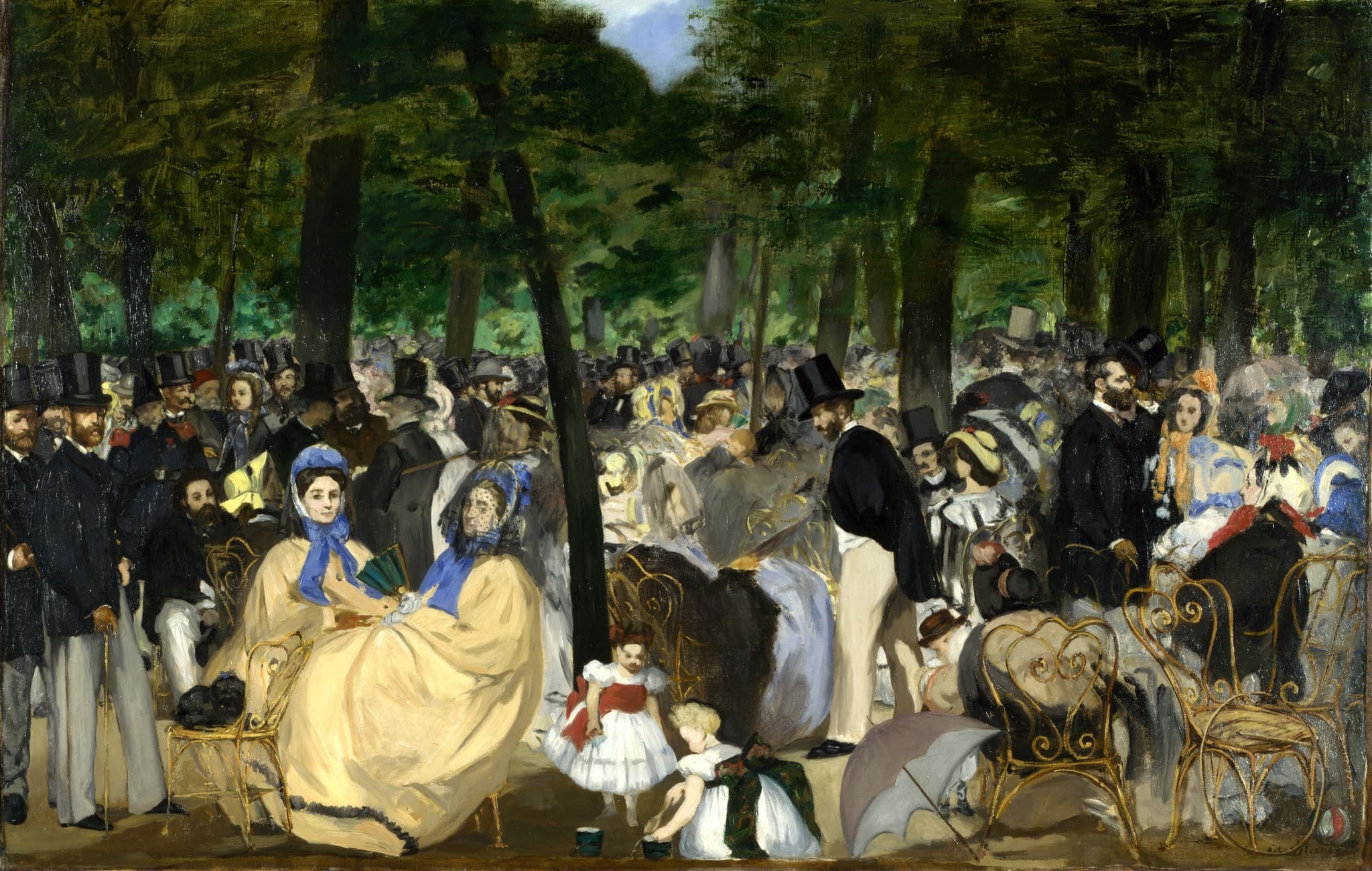
Crowd or no‑encounter?
Focus question: How do both artists make a public square register social relation—and what changes when the center is withheld?
Music in the Tuileries vs Place de la Concorde
Spectacle: address or apparatus?
Focus question: What changes when the theater is staged as frontal address versus as a system of work and watching?
A Bar at the Folies‑Bergère vs The Rehearsal of the Ballet Onstage
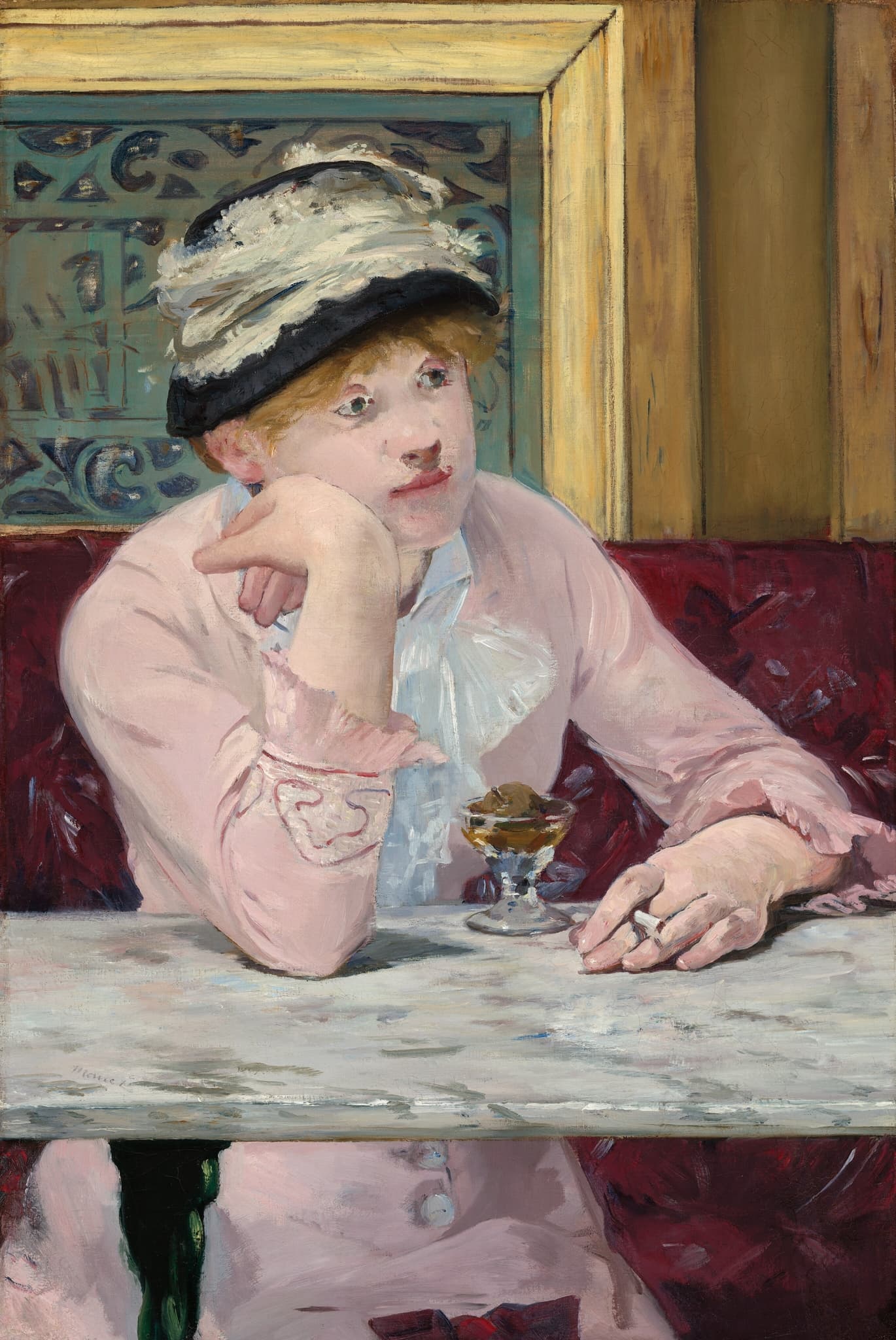
Interior time: pause or process?
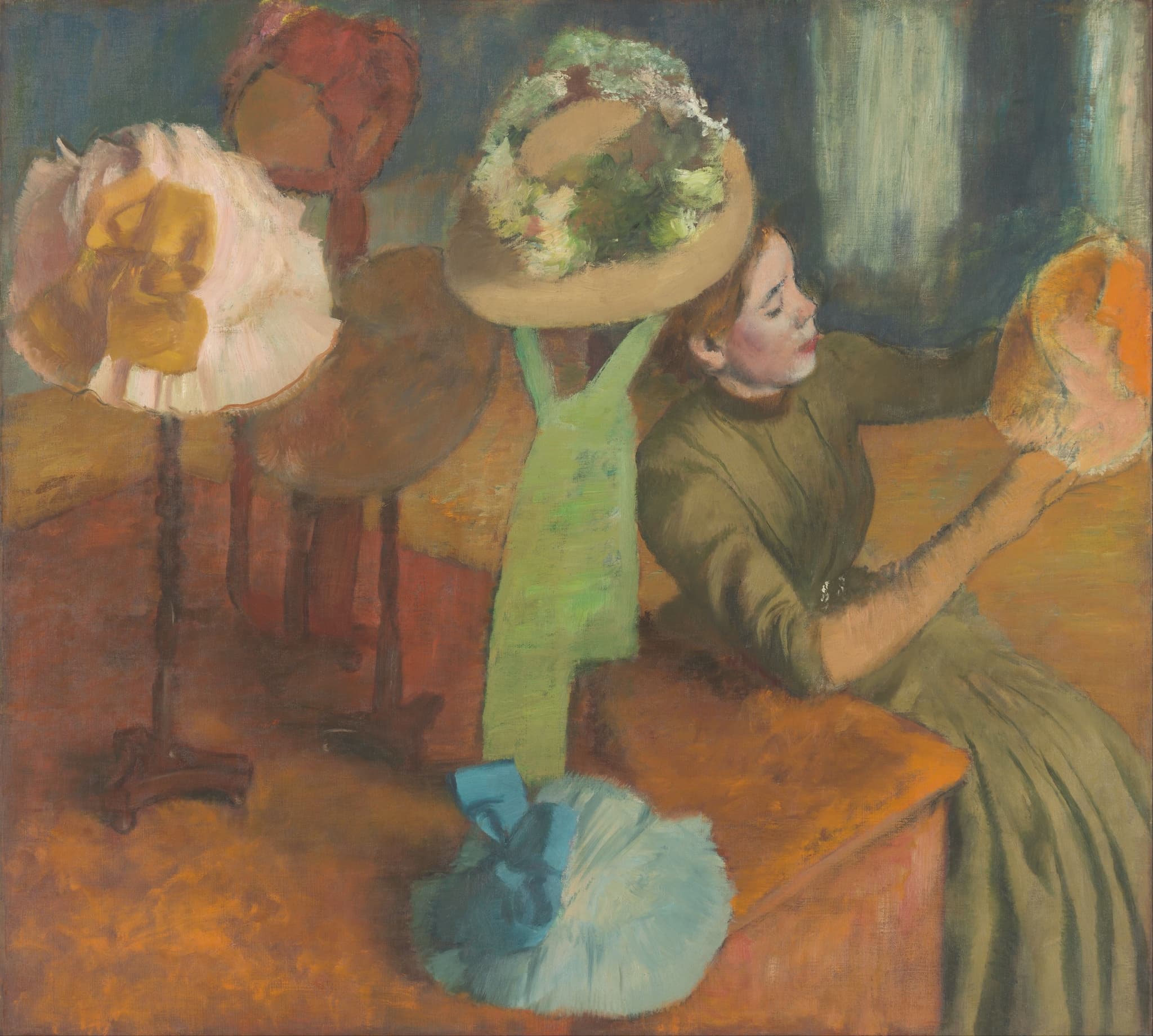
Focus question: How do these interiors script modern attention around objects and work?
Plum Brandy vs The Millinery Shop
Modern singularity
Focus question: Two ways to make an anonymous figure iconic: flat silhouette or edge‑lit isolation?
Why This Comparison Matters
Pairing Manet and Degas clarifies not taste but method. Both reinvent painting around modern life, yet they disagree—fruitfully—on how a picture should meet a viewer. Manet models a public, frontal clarity in which editing is ethics: what you leave out and how you cut determine meaning. Degas models a structural seeing in which angle, interval, and hierarchy are the content: where you stand decides what you can know. Those stances still organize how we picture crowds, work, and spectacle—from press images that face the audience to photographs that expose backstage systems. Understanding the split helps a reader of modern art ask better questions: Am I being addressed, or am I watching a mechanism? Is the instant a proposition or a composite? Manet and Degas make those options legible and durable.
Related Links
Sources
- T.J. Clark — The Painting of Modern Life: Paris in the Art of Manet and his Followers
- Michael Fried — Manet’s Modernism: or, The Face of Painting in the 1860s
- Courtauld — A Bar at the Folies‑Bergère (object essay)
- The Met — The Ballet (Degas and the Opéra overview)
- Musée d’Orsay — The Fifer (Le Fifre)
- Museo del Prado — Manet in the Prado (Old Master sources)
- Art Institute of Chicago — The Millinery Shop
- National Gallery of Art — Plum Brandy
- Hermitage Museum — Degas, Place de la Concorde (conservation/scholarship)
- The Met — The Rehearsal of the Ballet Onstage
- Musée d’Orsay — Degas à l’Opéra (exhibition resources)
- National Gallery, London — The Execution of Emperor Maximilian