The Star
by Edgar Degas
Study Print Studio
Create a personal study print
Build a companion study sheet around the part of this painting that speaks to you most. Choose a detail, shape an interpretation, and walk away with something personal and display-worthy.
Fast Facts
- Year
- c. 1876–1878
- Medium
- Pastel on paper
- Dimensions
- 58 x 42 cm
- Location
- Musée d’Orsay, Paris
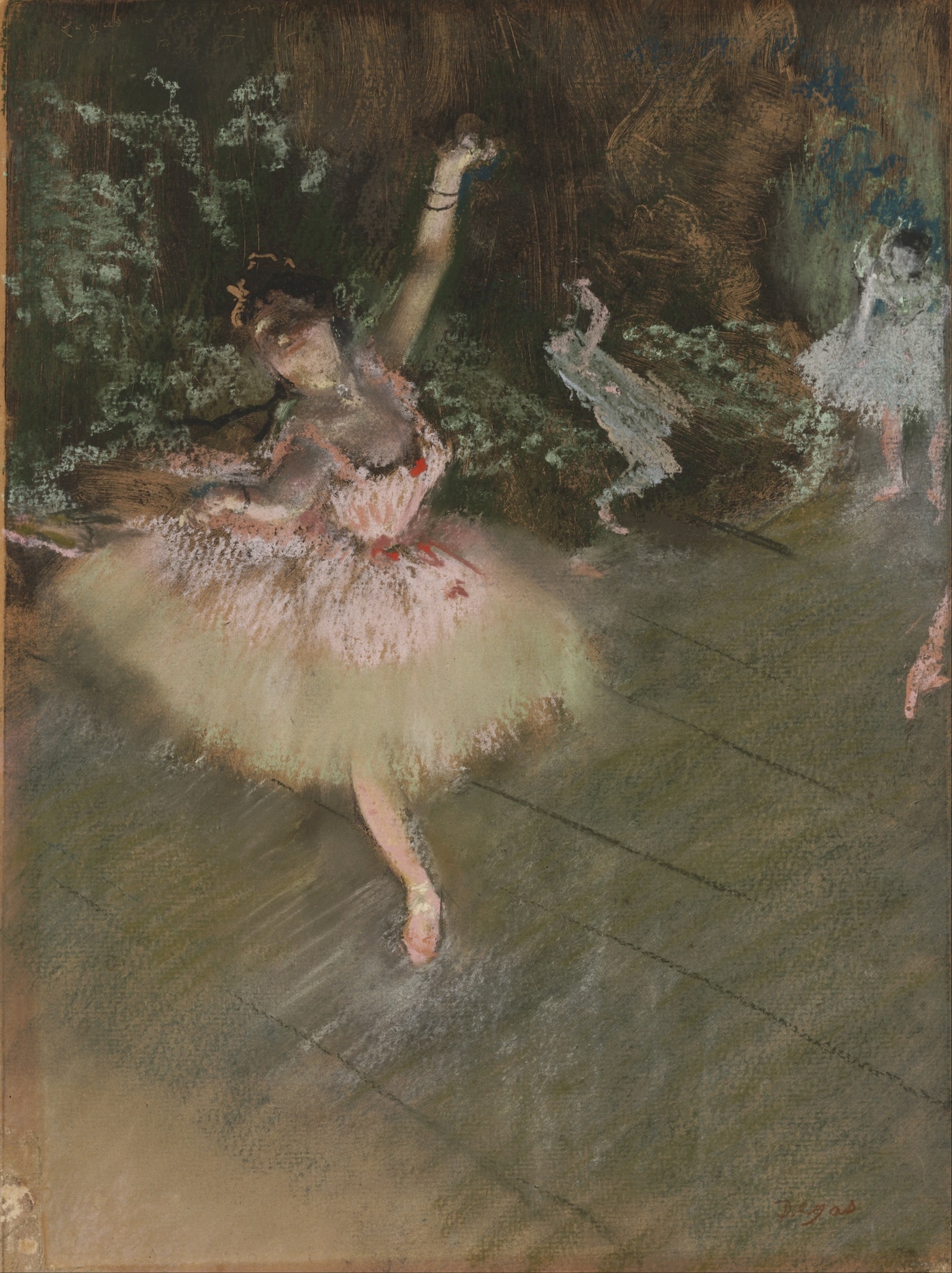
Click on any numbered symbol to learn more about its meaning
Meaning & Symbolism
Explore Deeper with AI
Ask questions about The Star
Popular questions:
Powered by AI • Get instant insights about this artwork
Interpretations
Social History: Abonnés and the Theater’s Power Grid
Source: Musée d’Orsay (Degas at the Opera); Artsy (abonnés context)
Material Poetics: Pastel as Fugitive Light
Source: Musée d’Orsay (Degas and pastel technique); Musée d’Orsay (exhibition framing)
Formal-Optical Analysis: Cropping as Choreography
Source: Musée d’Orsay (Degas at the Opera); National Gallery of Art (artist overview)
Performance Studies: Rank, Repertoire, and Theatercraft
Source: Jill DeVonyar & Richard Kendall (Degas and the Ballet); Musée d’Orsay (exhibition)
Seriality and the Question of the ‘Original’ Star
Source: Degas Digital Catalogue; Art Institute of Chicago
Psychological Interpretation: Anonymity Under the Glare
Source: Musée d’Orsay (Degas at the Opera)
Explore Specific Elements
Dive deeper into individual scenes and details within The Star.
The Prima Ballerina
Degas’s The Star fixes the instant when the Opéra’s leading ballerina—its danseuse étoile—burns under the footlights at the height of acclaim. This prima ballerina is both the climax of performance and the lens through which Degas probes modern spectacle, labor, and the charged dynamics of looking.
The Patron in the Wings
A shadowed man in a top hat waits in the left wing of Degas’s The Star—a concise portrait of privilege watching performance. Read as an abonné, the wealthy Opéra subscriber with backstage access, he stands as the dark foil to the brilliantly lit ballerina, fusing spectacle with its social machinery. This figure makes Degas’s ballet scene as much about power and viewing as about dance.
Seen in Comparisons
Related Themes
About Edgar Degas
More by Edgar Degas
The Opera Orchestra by Edgar Degas | Analysis
Edgar Degas
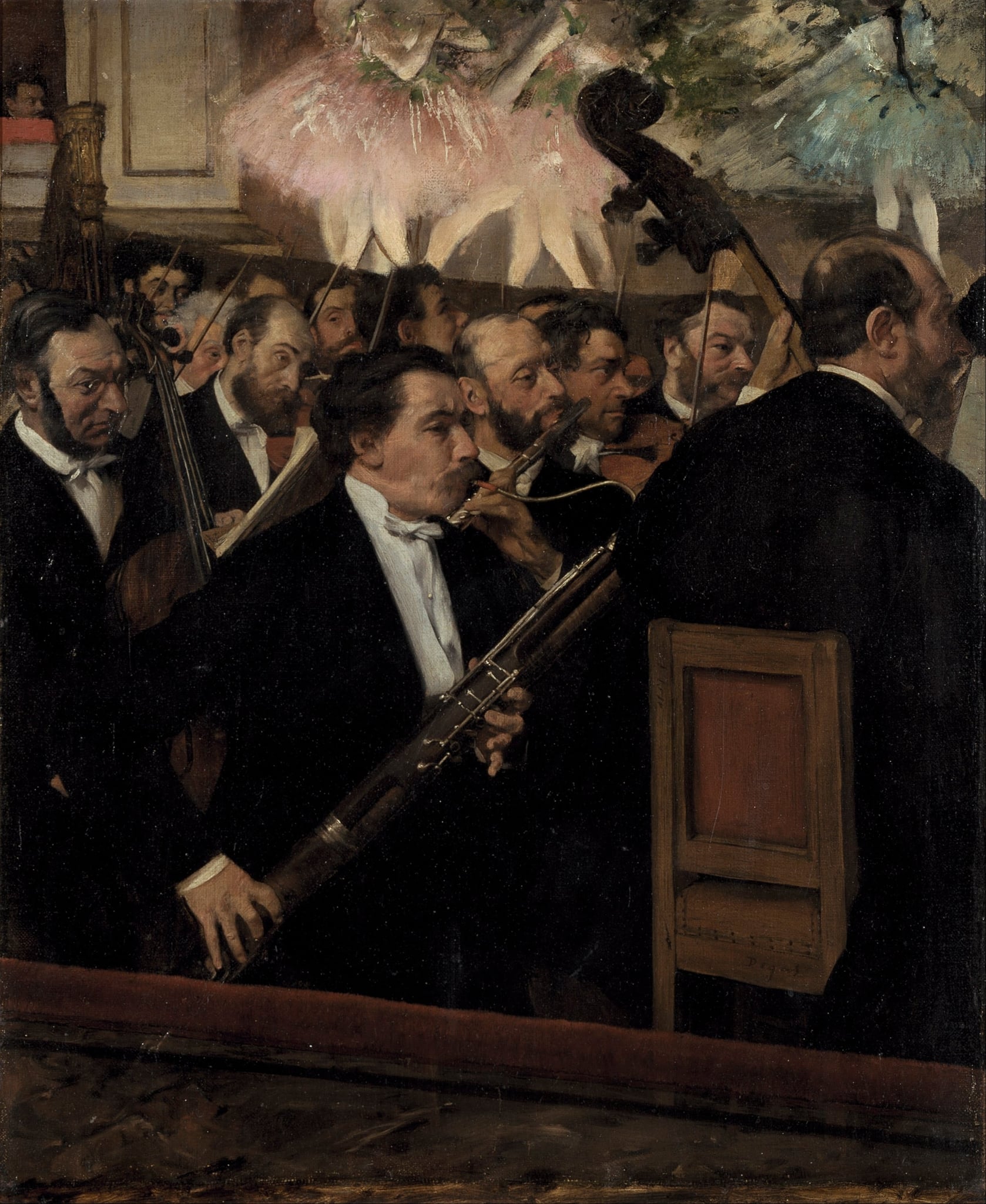
In The Opera Orchestra, Degas flips the theater’s hierarchy: the black-clad pit fills the frame while the ballerinas appear only as cropped tutus and legs, glittering above. The diagonal <strong>bassoon</strong> and looming <strong>double bass</strong> marshal a dense field of faces lit by footlights, turning backstage labor into the subject and spectacle into a fragment <sup>[1]</sup><sup>[2]</sup>.
The Tub
Edgar Degas (1886)
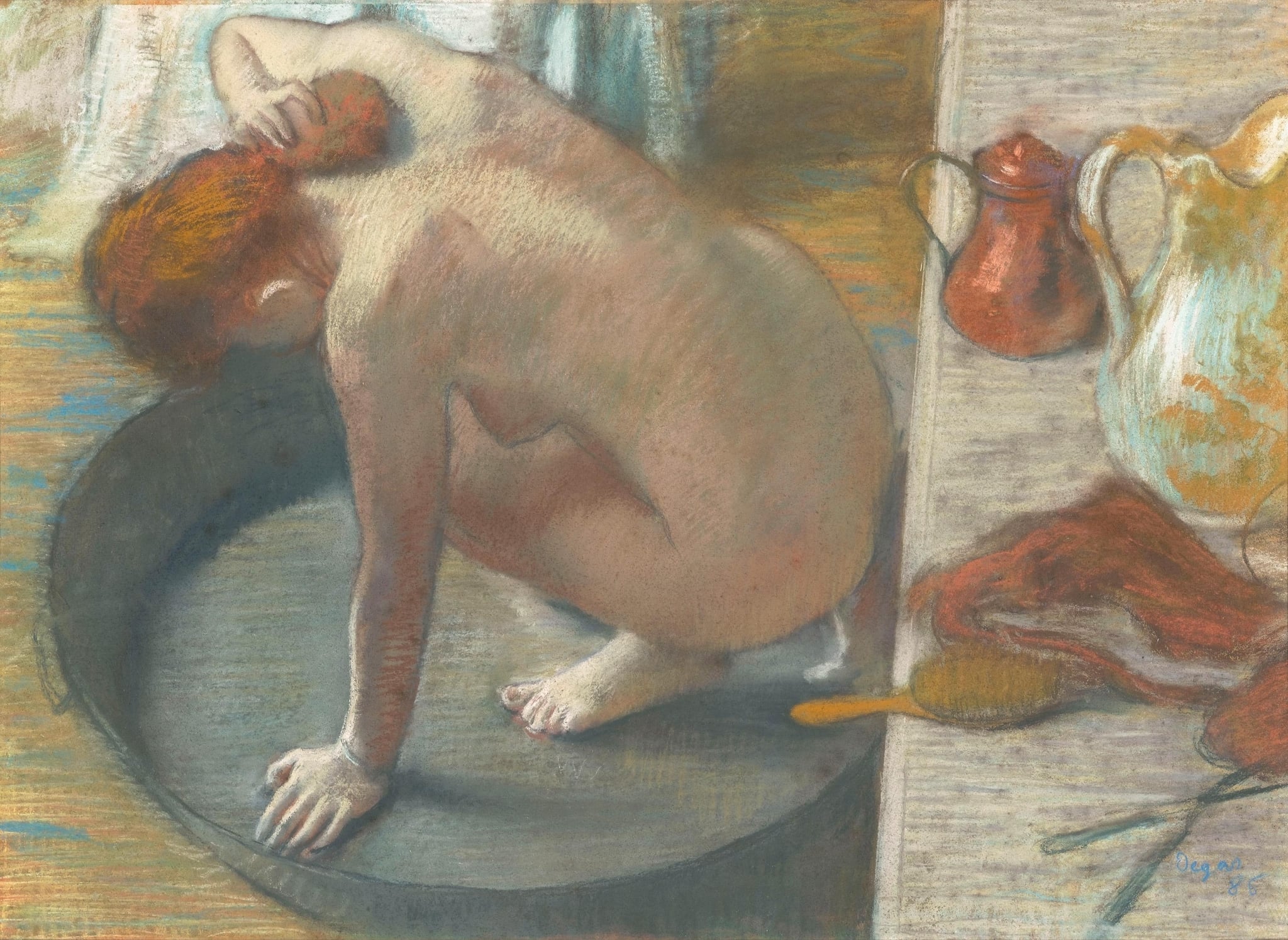
In The Tub (1886), Edgar Degas turns a routine bath into a study of <strong>modern solitude</strong> and <strong>embodied labor</strong>. From a steep, overhead angle, a woman kneels within a circular basin, one hand braced on the rim while the other gathers her hair; to the right, a tabletop packs a ewer, copper pot, comb/brush, and cloth. Degas’s layered pastel binds skin, water, and objects into a single, breathing field of <strong>warm flesh tones</strong> and blue‑greys, collapsing distance between body and still life <sup>[1]</sup>.
Place de la Concorde
Edgar Degas (1875)
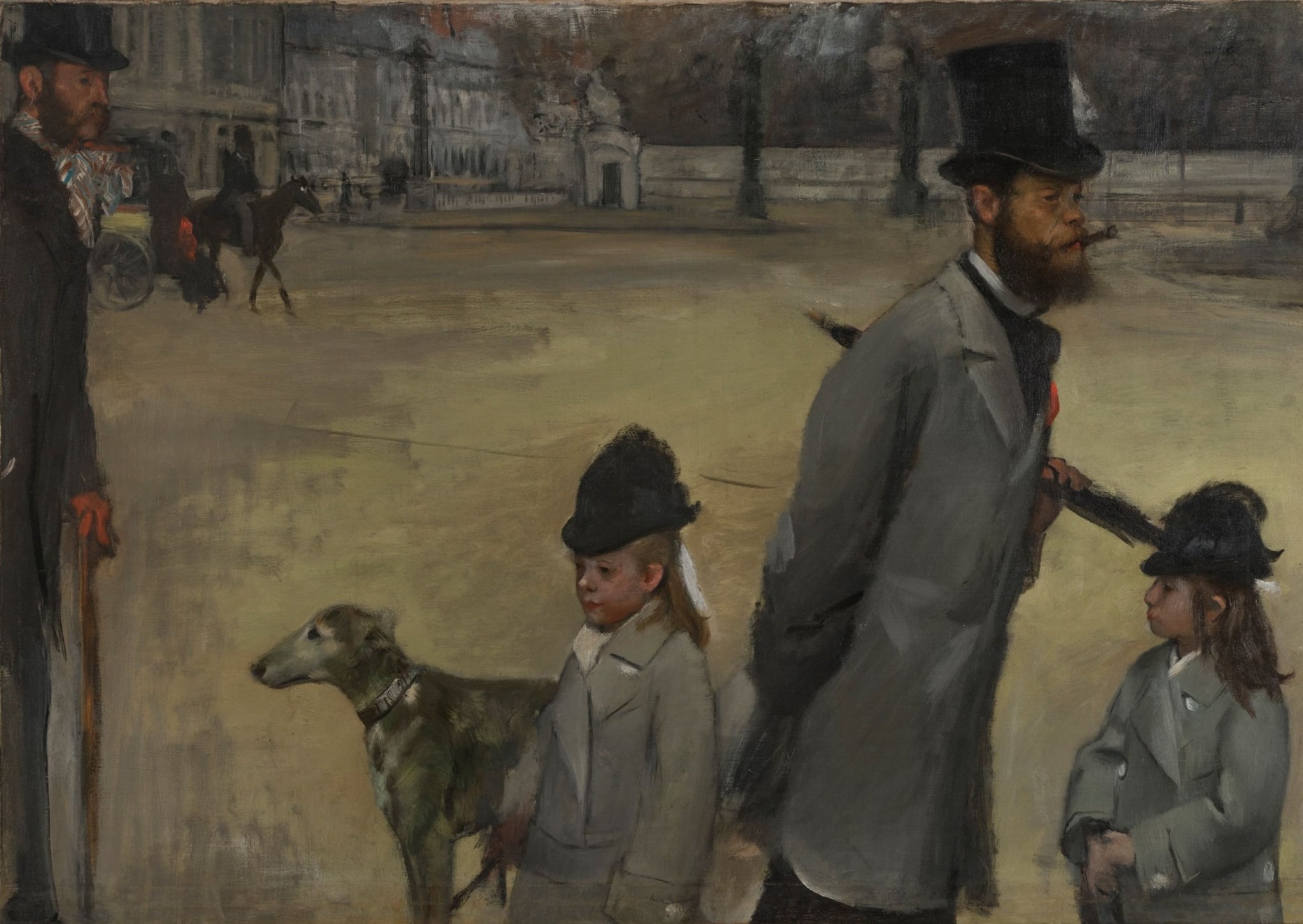
Degas’s Place de la Concorde turns a famous Paris square into a study of <strong>modern isolation</strong> and <strong>instantaneous vision</strong>. Figures stride past one another without contact, their bodies abruptly <strong>cropped</strong> and adrift in a wide, airless plaza—an urban stage where elegance masks estrangement <sup>[1]</sup><sup>[2]</sup>.
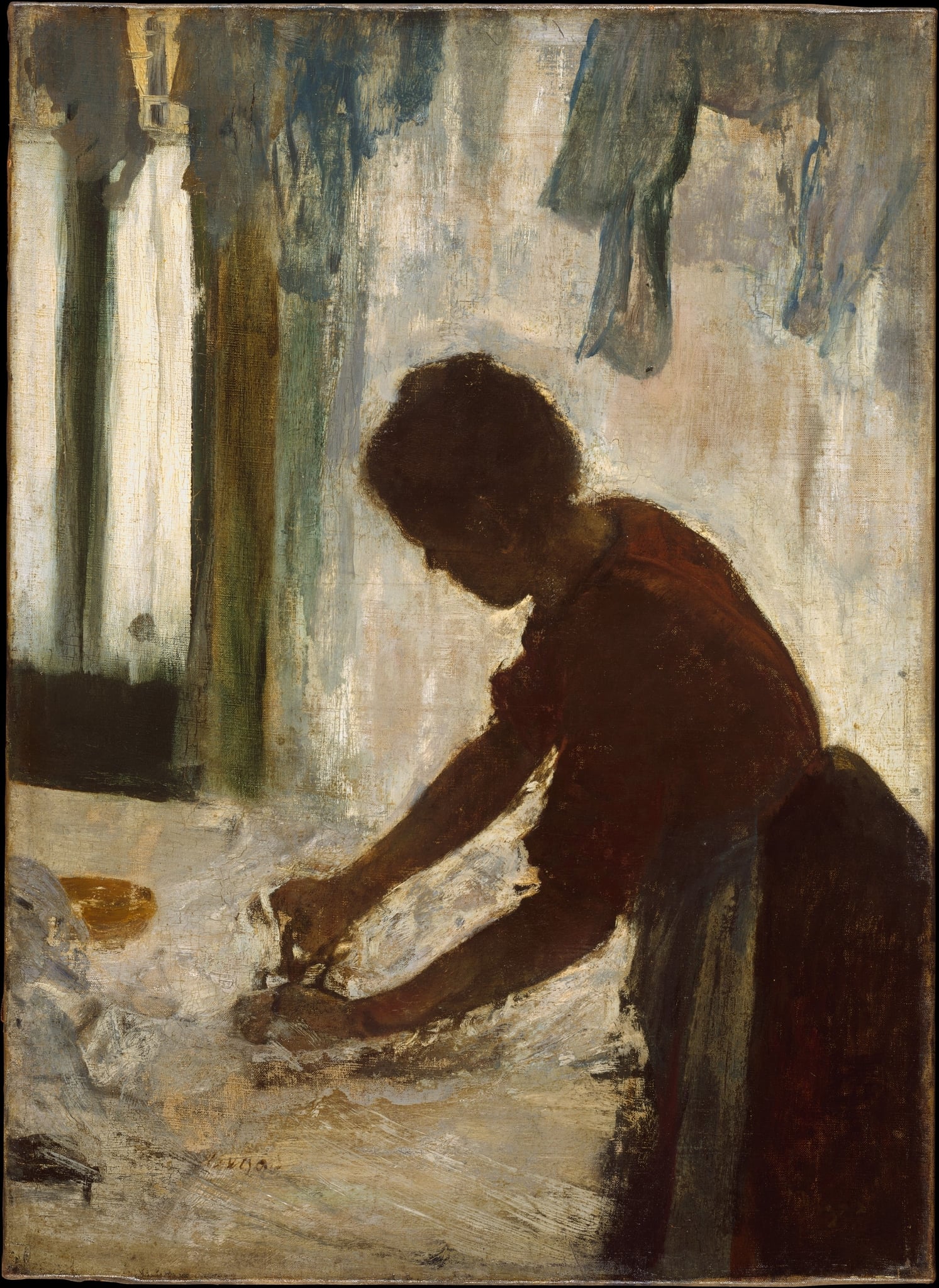
Woman Ironing
Edgar Degas (c. 1876–1887)
In Woman Ironing, Degas builds a modern icon of labor through <strong>contre‑jour</strong> light and a forceful diagonal from shoulder to iron. The worker’s silhouette, red-brown dress, and the cool, steamy whites around her turn repetition into <strong>ritualized transformation</strong>—wrinkled cloth to crisp order <sup>[1]</sup><sup>[2]</sup>.
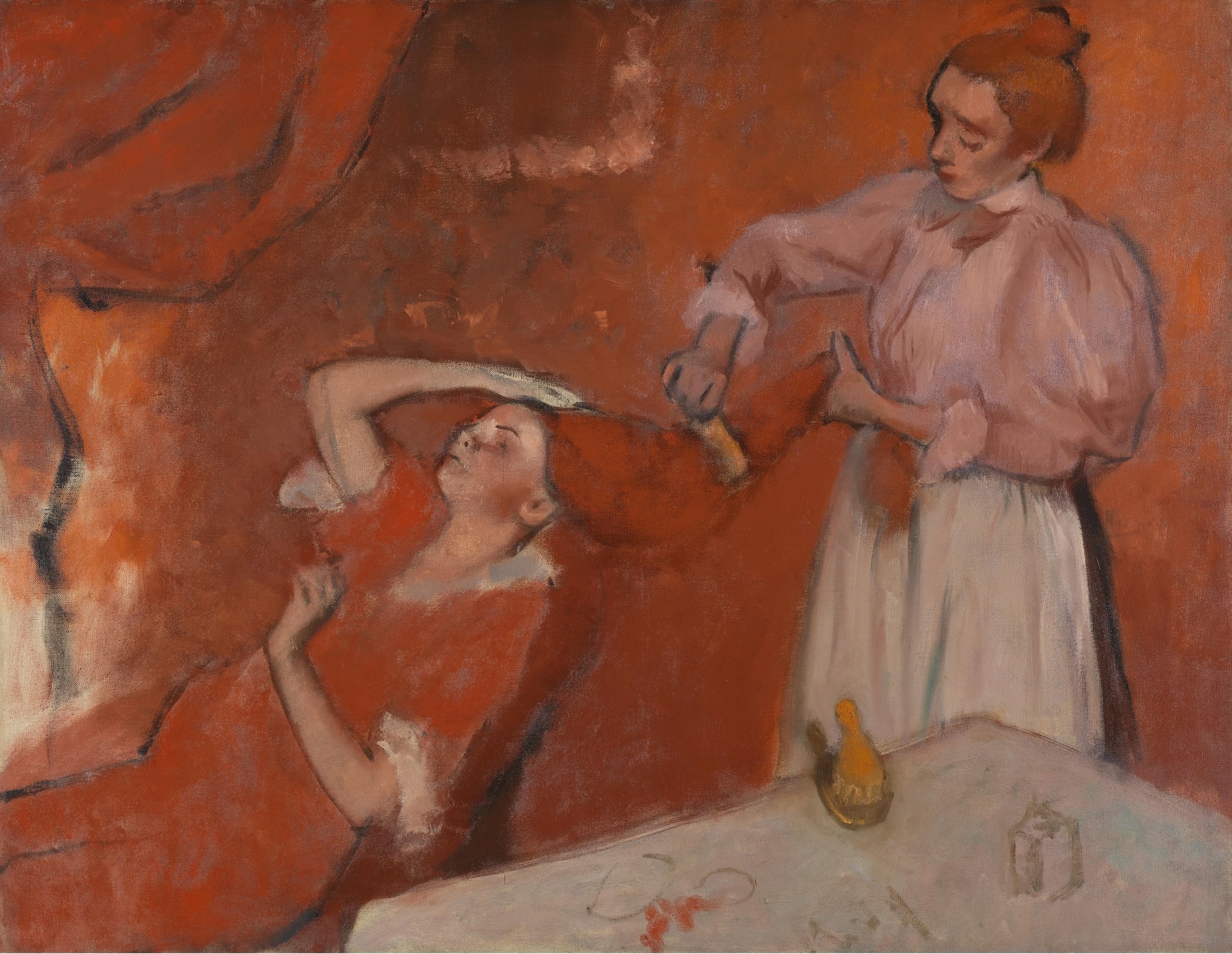
Combing the Hair
Edgar Degas (c.1896)
Edgar Degas’s Combing the Hair crystallizes a private ritual into a scene of <strong>compressed intimacy</strong> and <strong>classed labor</strong>. The incandescent field of red fuses figure and room, turning the hair into a <strong>binding ribbon</strong> between attendant and sitter <sup>[1]</sup>.
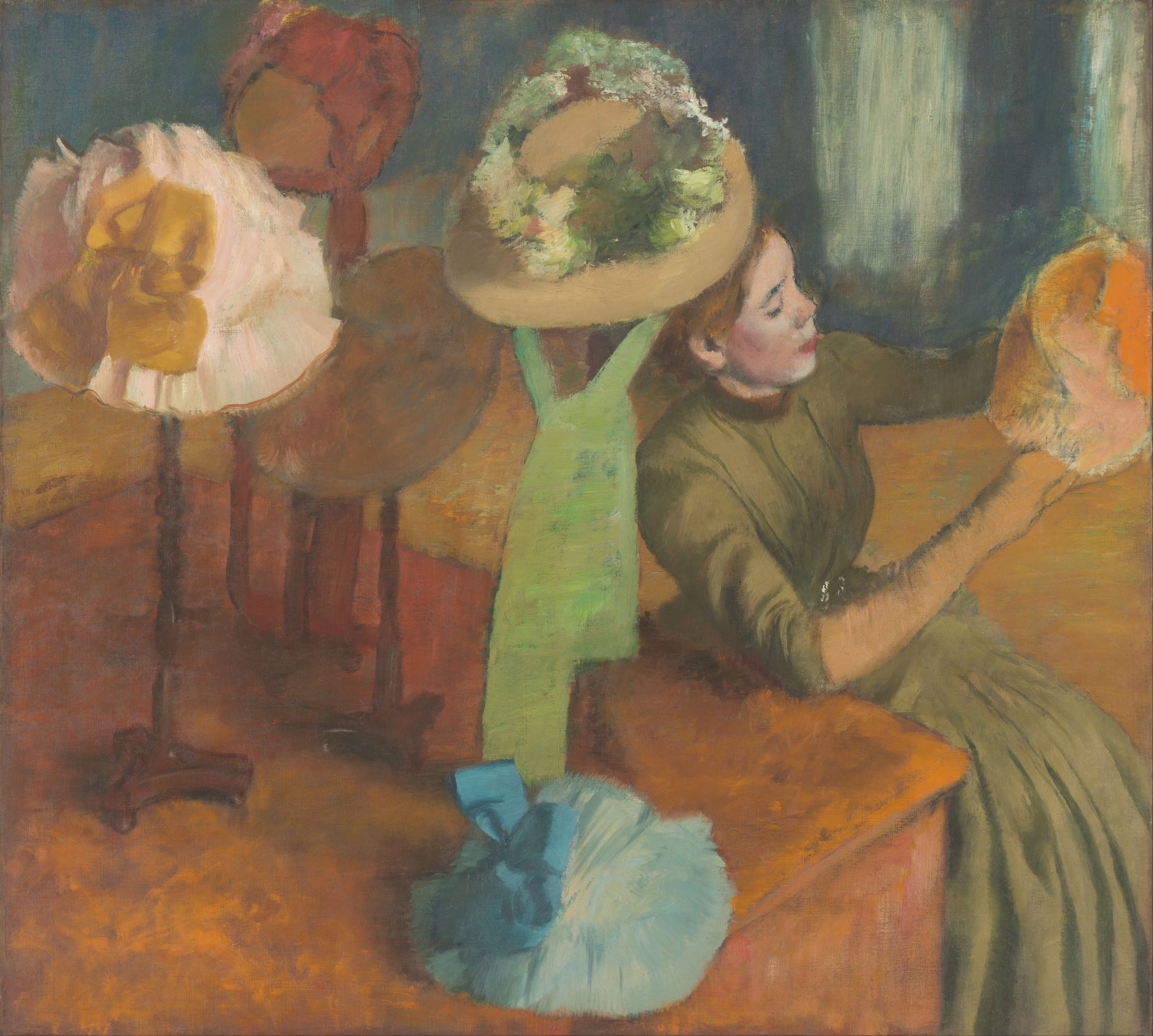
The Millinery Shop
Edgar Degas (1879–1886)
Edgar Degas’s The Millinery Shop stages modern Paris through a quiet act of <strong>work</strong> rather than display. A young woman, cropped in profile, studies a glowing <strong>orange hat</strong> while faceless stands crowned with ribbons and plumes press toward the picture plane. Degas turns a boutique into a meditation on <strong>labor, commodities, and identity</strong> <sup>[1]</sup><sup>[2]</sup>.