Monet vs Degas
Both artists rebuilt painting around how vision unfolds in time. Monet lets light, weather, and reflection organize what we see; Degas builds vision from vantage, discipline, and the machinery of modern rooms. Their shared ground is iterative looking; their decisive split is where they think perception is made.
Comparison frame: Where do Monet and Degas place the engine of seeing—out in the world’s envelope of light, or inside the staged frames of modern life?
Quick Comparison
| Topic | Claude Monet | Edgar Degas |
|---|---|---|
| Organizing force of vision | Environmental envelope (light, air, reflection) makes and unmakes form | Constructed vantage and institutional routines shape what is seen |
| Model of time | Cyclical and ecological (hours, seasons, weather) across series | Metronomic and social (drill, rehearsal, work‑rhythms) |
| Typical light | Ambient daylight, haze, fog; atmosphere as subject | Footlights, gaslight, contre‑jour interiors; light as technology |
| Working method | Serial plein‑air sessions, then studio unification from memory | Studio synthesis from observed fragments; recomposition across media |
| Role of motif | Architecture or stacks as armature to register light | Studios, stages, and shops as systems that regulate bodies |
| Vantage and space | Fixed outdoor viewpoints; reflections flatten and fuse planes | Off‑axis views, raked floors, emphatic crops meter action |
| Seriality | Ensembles (Haystacks, London, Venice) make difference-over-time the content | Recurring themes (ballet, laundresses, coiffure) refined across drawings, monotypes, oils, pastels |
| Social content | Environment and urban atmosphere (including pollution) register modernity | Labor, hierarchy, and patronage are visible inside the image |
Shared Ground
Monet and Degas share a fundamental project: to make painting register how modern vision actually arrives—piecemeal, time‑bound, and conditioned by setting. Neither trusts the single, decisive instant. Monet turns fixed motifs into instruments for tracking change: cathedrals, haystacks, bridges, or palaces serve as armatures while light and weather write the picture. Degas likewise builds from repetition, but his constancies are studios, stages, and shops where drilled bodies, props, and floorboards meter the eye. In both cases, the content is not an anecdote; it is the felt sequence of looking.
Each artist works serially and iteratively. Monet’s ensembles—Haystacks, Rouen, London, Venice—stage difference across hours and seasons. Degas returns to ballet, laundresses, and coiffure through drawings, monotypes, oils, and pastels, recomposing in the studio until structure reads as inevitability. Both absorb the compositional lessons of Japanese prints—cropping, asymmetry, and elevated viewpoints—to modernize space and attention. And both make light into subject, though of different kinds: Monet leans on fog, haze, and reflection; Degas on footlights, gaslight, and contre‑jour interiors.
Crucially, this is constructed seeing, not naïve snapshot. Monet often finished from memory to key up color and unify a set; Degas openly distrusted plein air spontaneity and preferred studio synthesis from observed fragments. The result in each case is a disciplined modernity: vision is made, compared, and revised. Their shared ground is the conviction that painting should not imitate a view so much as build the conditions under which a view becomes legible.
Decisive Difference
The decisive difference lies in where each artist locates the engine of seeing. For Monet it is outside, in the environmental envelope that continually makes and unmakes form. Architecture and motif function as scaffolds for atmosphere: the Houses of Parliament dissolve into colored fog; the Water‑Lily Pond turns garden, bridge, and sky into a single reflective field; the Haystacks series converts stored grain into a barometer of hour and season. Time here is cyclical and ecological—light moves, weather shifts, reflections tremble—and serial display lets those changes become the subject.
Degas, by contrast, places vision inside the staged frames of modern life. Sight is engineered through vantage, cropping, and institutional routine. The Ballet Class makes floorboard diagonals and a master’s cane meter attention; The Rehearsal of the Ballet Onstage exposes footlights and backstage watchers as part of what we “see”; Place de la Concorde fractures the city into missed encounters via radical cropping. Time here is drilled and social—rehearsal beats, shop labor, and urban intervals—made visible by repeated exercises, waiting, and surveillance. Light is not weather but technology that flattens, isolates, or dazzles. Monet’s paintings breathe with atmospheric continuity; Degas’s analyze the apertures, rules, and hierarchies that channel a look. In short, Monet makes the air the author of the image; Degas makes institutions and vantage the editors of what enters the frame.
Paired Works
Time as System: Field vs Studio
Focus question: What kind of time do you feel—seasonal light or drilled routine?
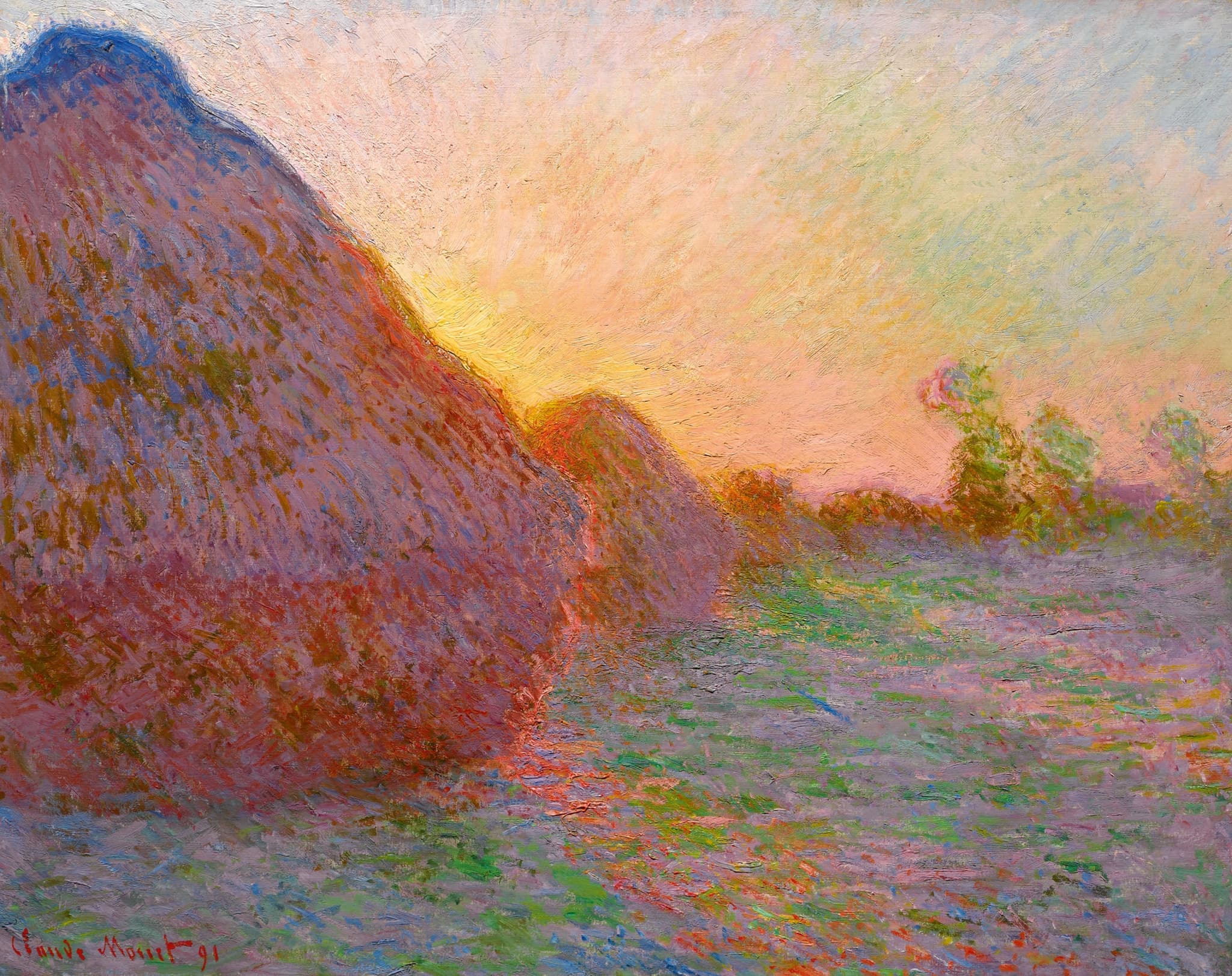
Haystacks Series by Claude Monet | Light, Time & Atmosphere vs The Ballet Class
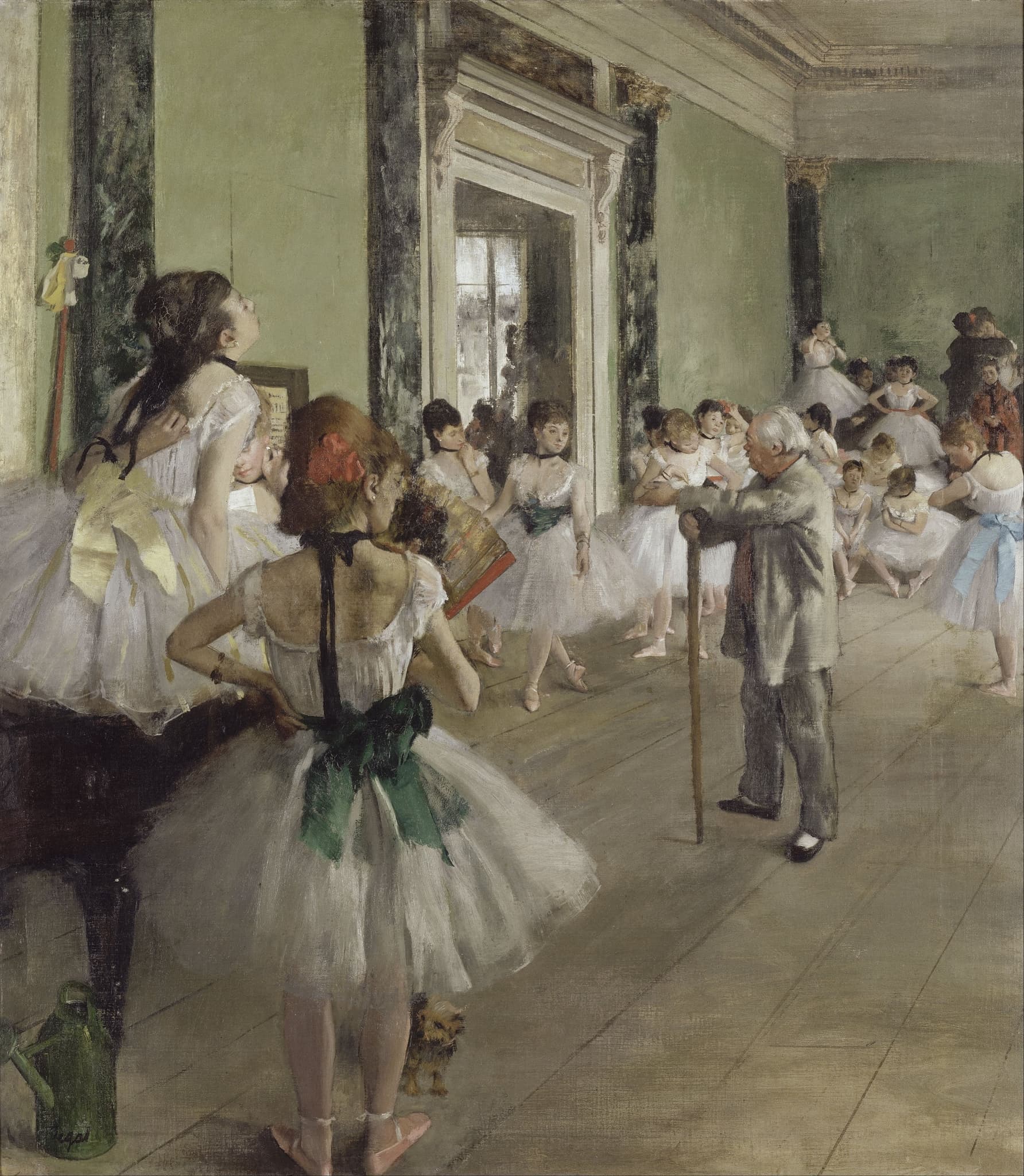
Monet’s Haystacks fix a rural motif so that hour and season can do the changing. Shifts of frost, haze, or sunset reorganize color and edge; the 1891 hanging of fifteen canvases made those differences the content. The haystacks become instruments that register the sky’s tempo. Degas’s The Ballet Class uses a constant studio and constant drill to reveal another kind of time: the baton’s beat, the diagonal floorboards that pace movement, the alternation of effort and waiting. A watering can, a piano, and scattered ribbons are not anecdotes but tools that mark rehearsal as work measured in intervals.
Both pictures turn repetition into meaning, yet they diverge in cause. In Monet, light governs form—shadow is color that changes with the air; the motif is a sensor. In Degas, authority and layout govern attention—Jules Perrot’s cane and the room’s rake meter bodies and glances. Monet’s temporality is ecological and serial, readable across canvases; Degas’s is institutional and metronomic, readable across bodies in a single room. Each makes rhythm the subject, but one is nature’s pulse, the other choreography’s count.
The Modern City, Two Ways
Focus question: Does the city dissolve into air or fracture into glances?
Houses of Parliament vs Place de la Concorde
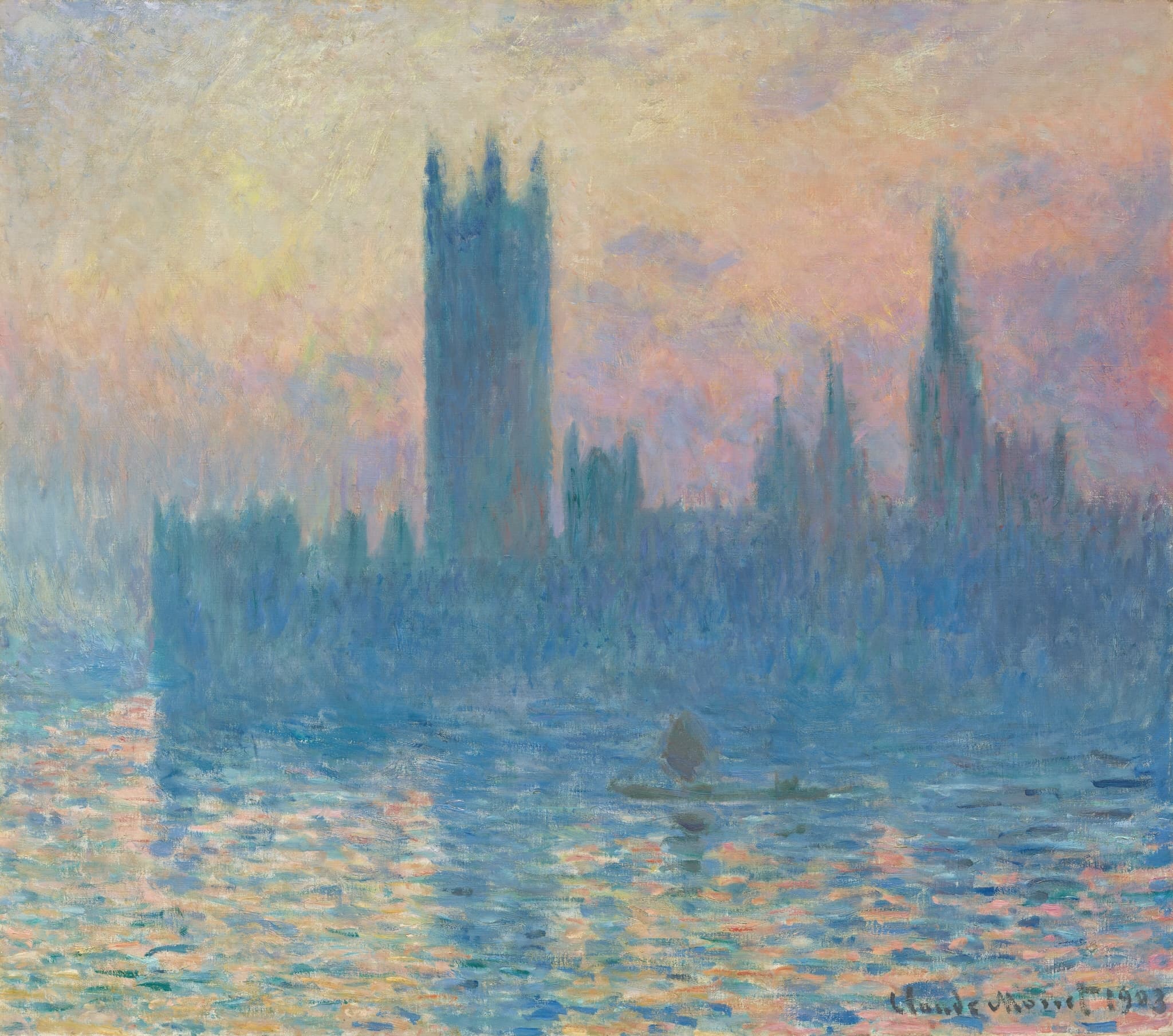
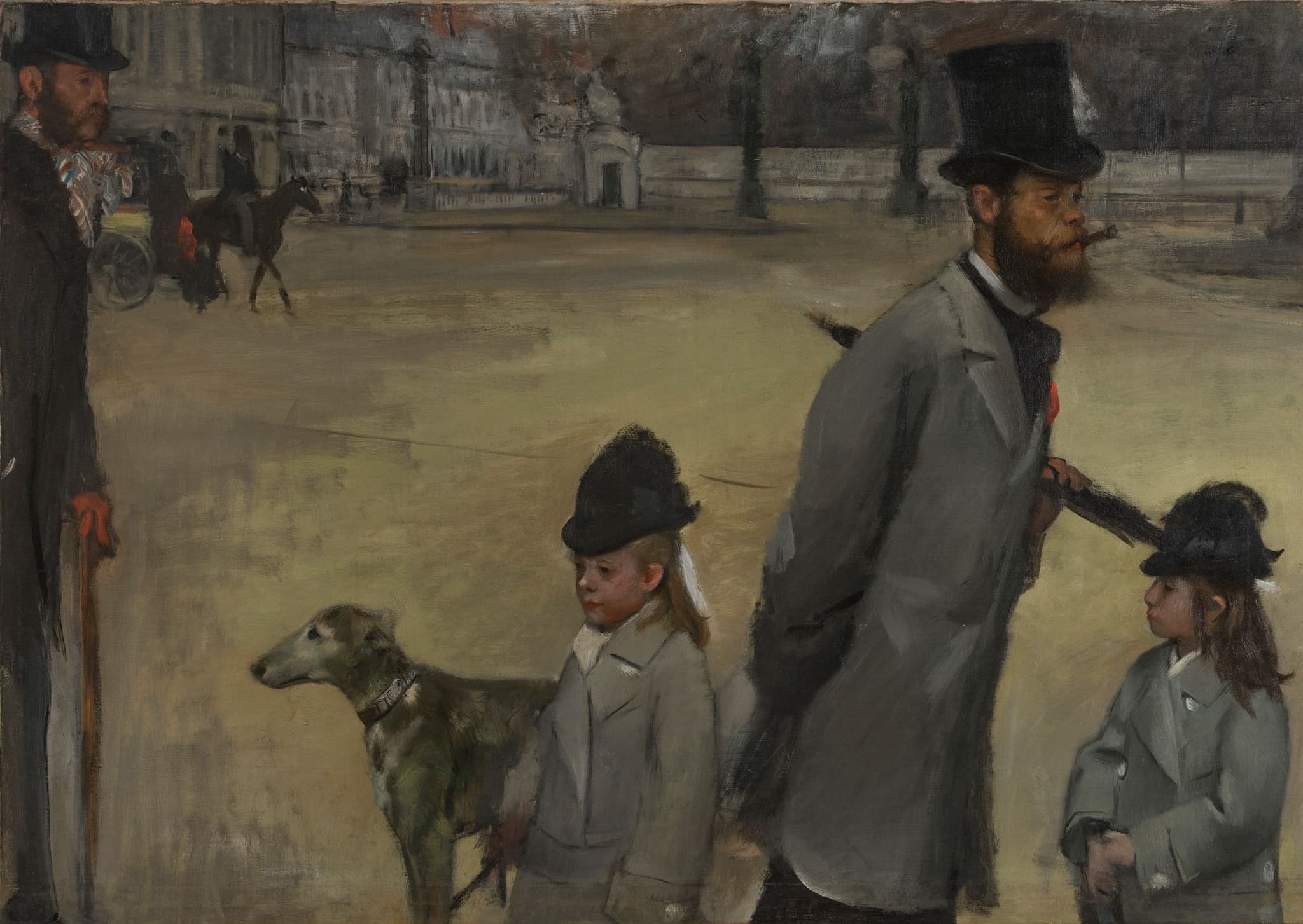
Monet’s Houses of Parliament reduces Westminster to silhouette and glow: a peach‑mauve sky and fog smear stone into atmosphere, the Thames catching the light as a second architecture. Scientific work has since tied such effects to industrial pollution and sun position—evidence that Monet’s poetry is also observation. The city appears as a climate, not a plan. Degas’s Place de la Concorde answers with fracture. Figures move past one another without contact; heads and canes are abruptly cropped; a cool, scumbled plaza opens a buffer of space that suspends connection. Modern Paris is not haze but a field of discontinuous glances.
Both redefine urban truth as a way of seeing. Monet’s city is made legible by air—power filtered by weather and hour. Degas’s city is made legible by cuts—vision edited by speed, framing, and social distance. One dissolves solidity into atmosphere; the other makes separation and instantaneity the grammar of the street.
Light as Subject
Focus question: Is light a surrounding envelope or a spotlight that isolates?
The Water Lily Pond vs The Star
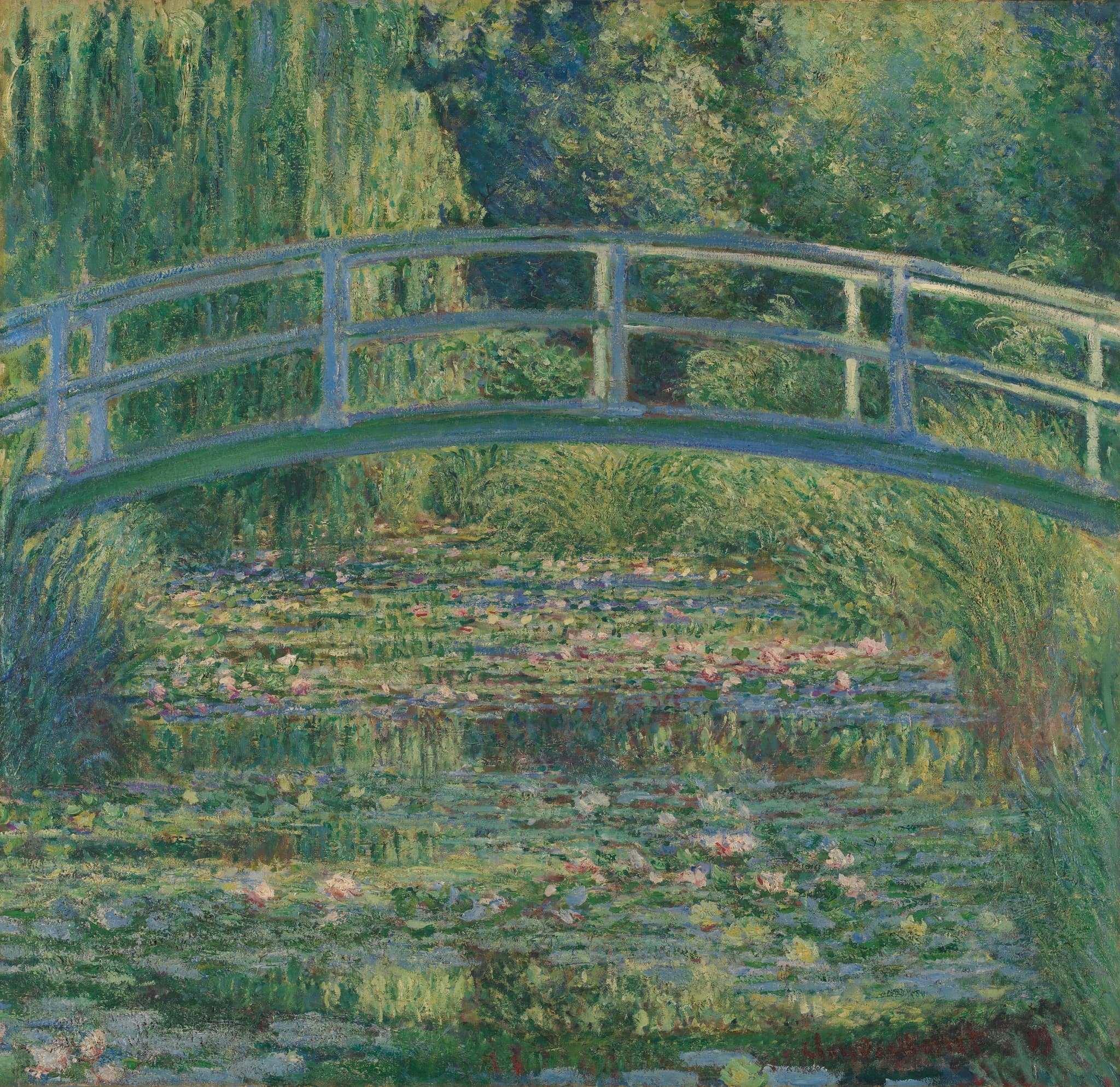
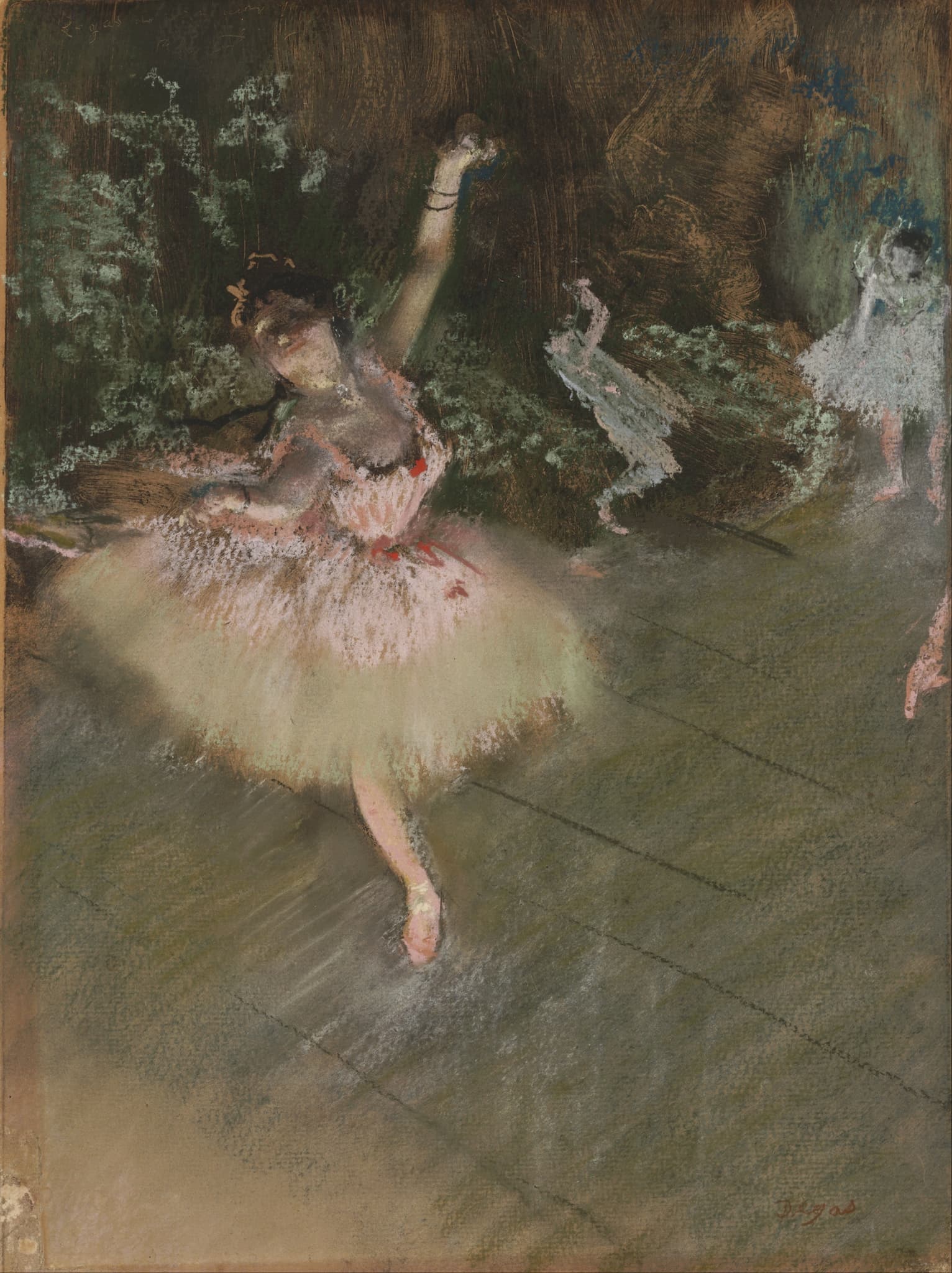
In The Water Lily Pond, Monet removes open sky and lets a constructed garden become a laboratory of reflections. The bridge is an armature; lilies are markers; the real subject is the ambient envelope that fuses up‑view and down‑view. Light is everywhere, continuous and shared. Degas’s The Star concentrates light to a knife point. Footlights bleach the ballerina into brilliance while the stage tilts toward us; ghosted figures linger in shadow and a dark watcher haunts the wing. Light is a technology that isolates, selects, and produces a star.
Both works equate light with meaning, but their ethics diverge. Monet’s light is ecological and leveling—water, bridge, and foliage carry equal weight. Degas’s light is institutional and selective—it creates visibility and power as it erases others. Envelope versus spotlight: two theories of how illumination constructs what we see.
Making Appearance
Focus question: Are we seeing leisure staged by light, or the labor that fabricates it?
Women in the Garden vs The Millinery Shop
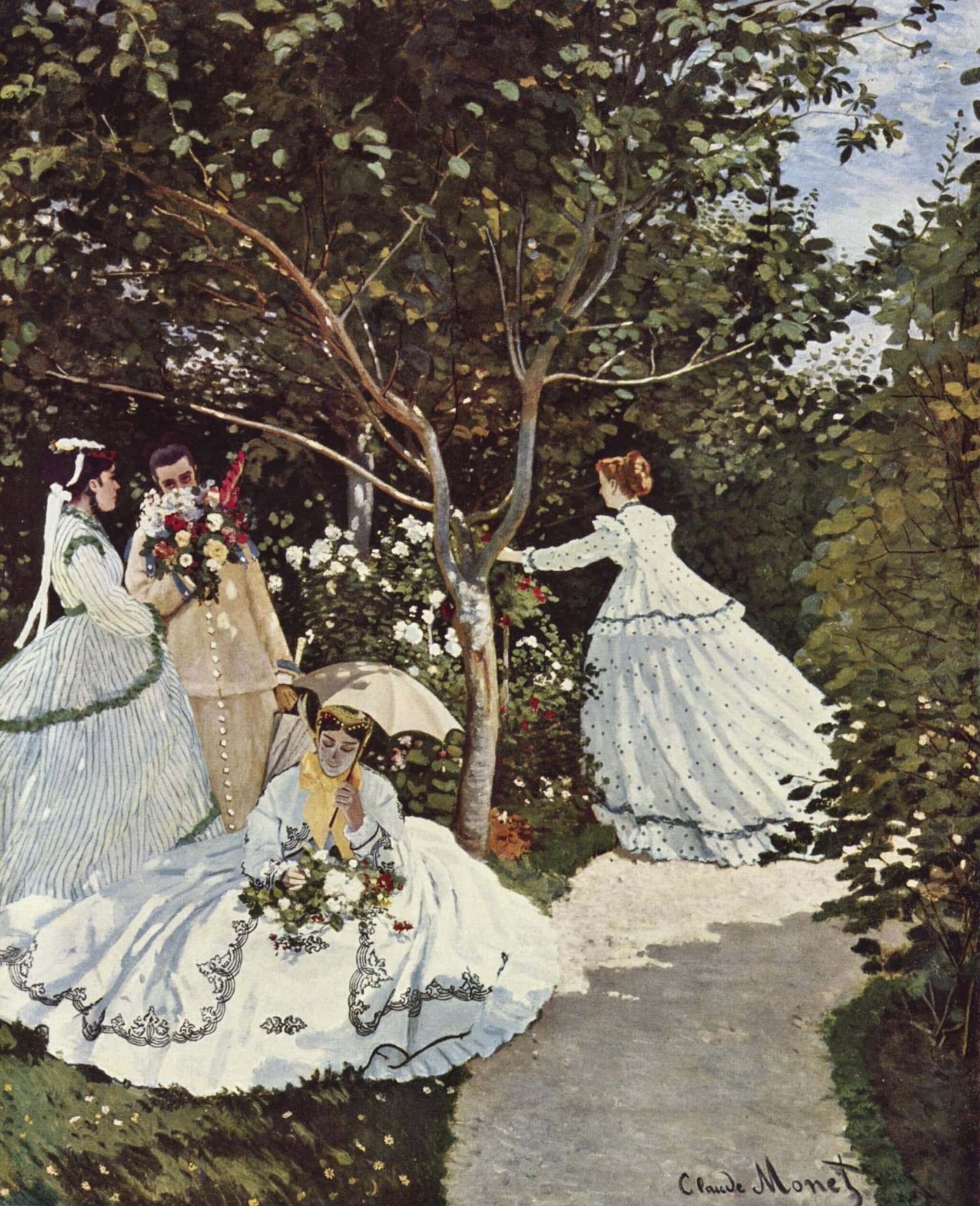
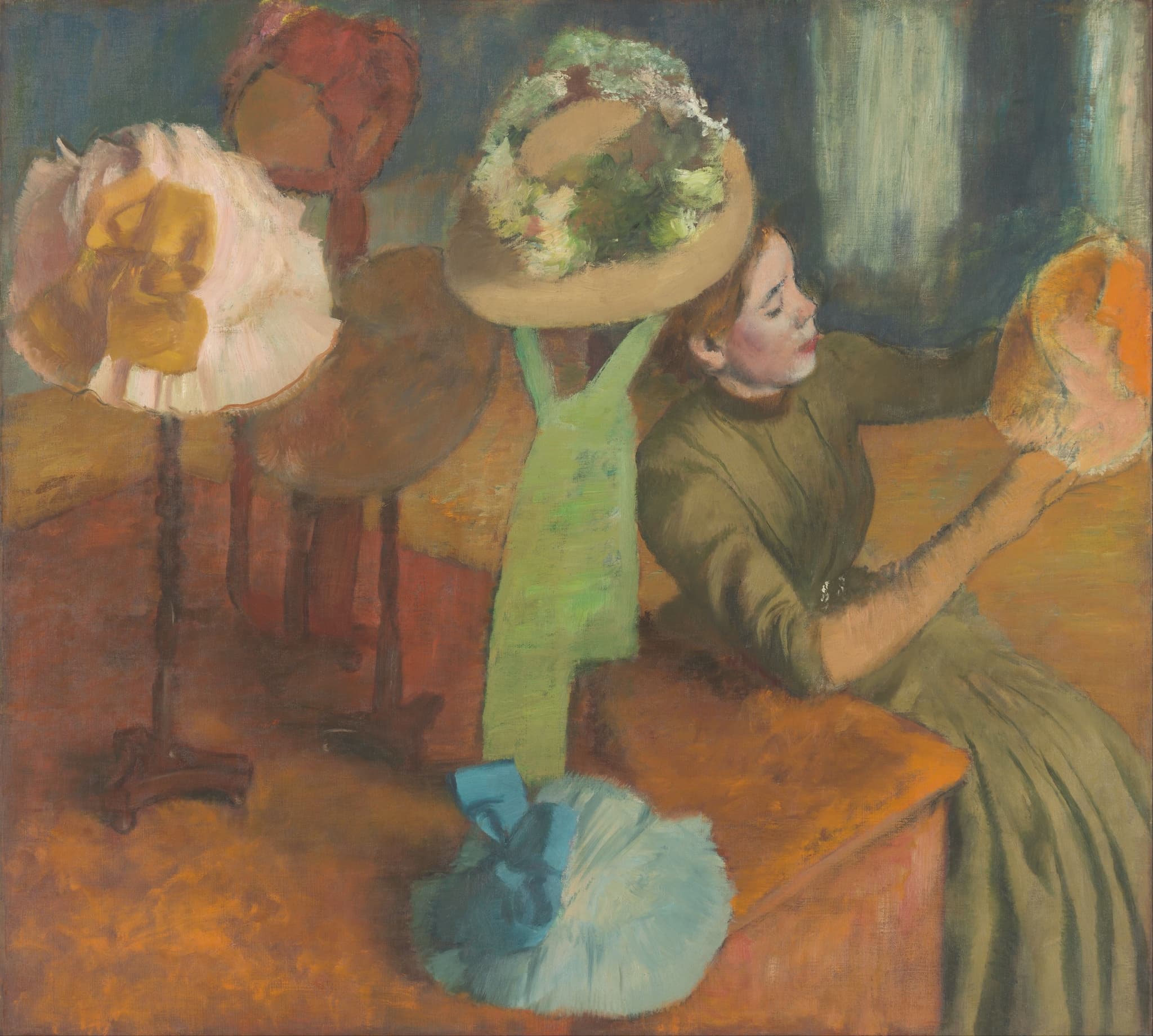
Monet’s Women in the Garden uses white dresses as optical screens for dappled light. Crinoline planes catch green and blue shadows; a parasol and clipped flowers register a spring interval outdoors. The scene reads as leisure, but its structure is optical experiment—the figures conduct light. Degas’s The Millinery Shop pulls us behind the surface of fashion. Faceless stands crowned with ribbons press forward; a young woman, likely a worker, studies a blazing orange hat. Cropping and tilted space put commodities first and leave status—client or maker—deliberately ambiguous.
Both pictures study how appearance is made. Monet shows how sunlight writes on fabric in real time; Degas shows how objects and skilled hands manufacture the forms that society displays. One turns fashion into a lens for atmosphere; the other turns a boutique into a studio of labor.
Why This Comparison Matters
This pairing clarifies two durable paths for modern art. Monet shows how truth can reside in conditions—light, air, and reflection—so that a painting becomes an instrument for perceiving ecological time. His serial method models how attention, revisited, yields knowledge. Degas shows how truth can reside in frames—vantage, drill, and institutional space—so that composition reveals the social machinery behind beauty. His controlled construction models how analysis, recomposed, yields clarity.
Together they expand what painting can do: make climate legible and make power visible. That matters now. Monet’s London and garden pictures read like early studies of environmental seeing; Degas’s Opéra and shop scenes read like diagrams of labor and surveillance within culture. Learning to look their way equips us to read our own world—its air, its lights, its rooms—with more precision and more care.
Related Links
Sources
- National Gallery, London — Monet, The Water-Lily Pond
- Art Institute of Chicago — Monet’s Wheatstacks (series and 1891 display)
- The Met — Monet, Houses of Parliament (object/essay)
- PNAS (2023) — Atmospheric pollution and Impressionist optics
- Royal Society (Baker & Thornes, 2006) — Solar geometry and Monet’s London series
- Musée d’Orsay — Degas à l’Opéra (backstage culture, abonnés)
- The Met — Degas, The Rehearsal of the Ballet Onstage
- The Met — Degas, The Ballet Class
- The Met — Japonisme (cropping, asymmetry, print influence)
- Actual Problems of Theory and History of Art — Degas’s Place de la Concorde and cropping