Haystacks Series by Claude Monet | Light, Time & Atmosphere
by Claude Monet
Market Value
$90-140 million
How much is Haystacks Series by Claude Monet | Light, Time & Atmosphere worth?Study Print Studio
Create a personal study print
Build a companion study sheet around the part of this painting that speaks to you most. Choose a detail, shape an interpretation, and walk away with something personal and display-worthy.
Fast Facts
Click on any numbered symbol to learn more about its meaning
Meaning & Symbolism
Explore Deeper with AI
Ask questions about Haystacks Series by Claude Monet | Light, Time & Atmosphere
Popular questions:
Powered by AI • Get instant insights about this artwork
Explore Specific Elements
Dive deeper into individual scenes and details within Haystacks Series by Claude Monet | Light, Time & Atmosphere.
The Grainstacks
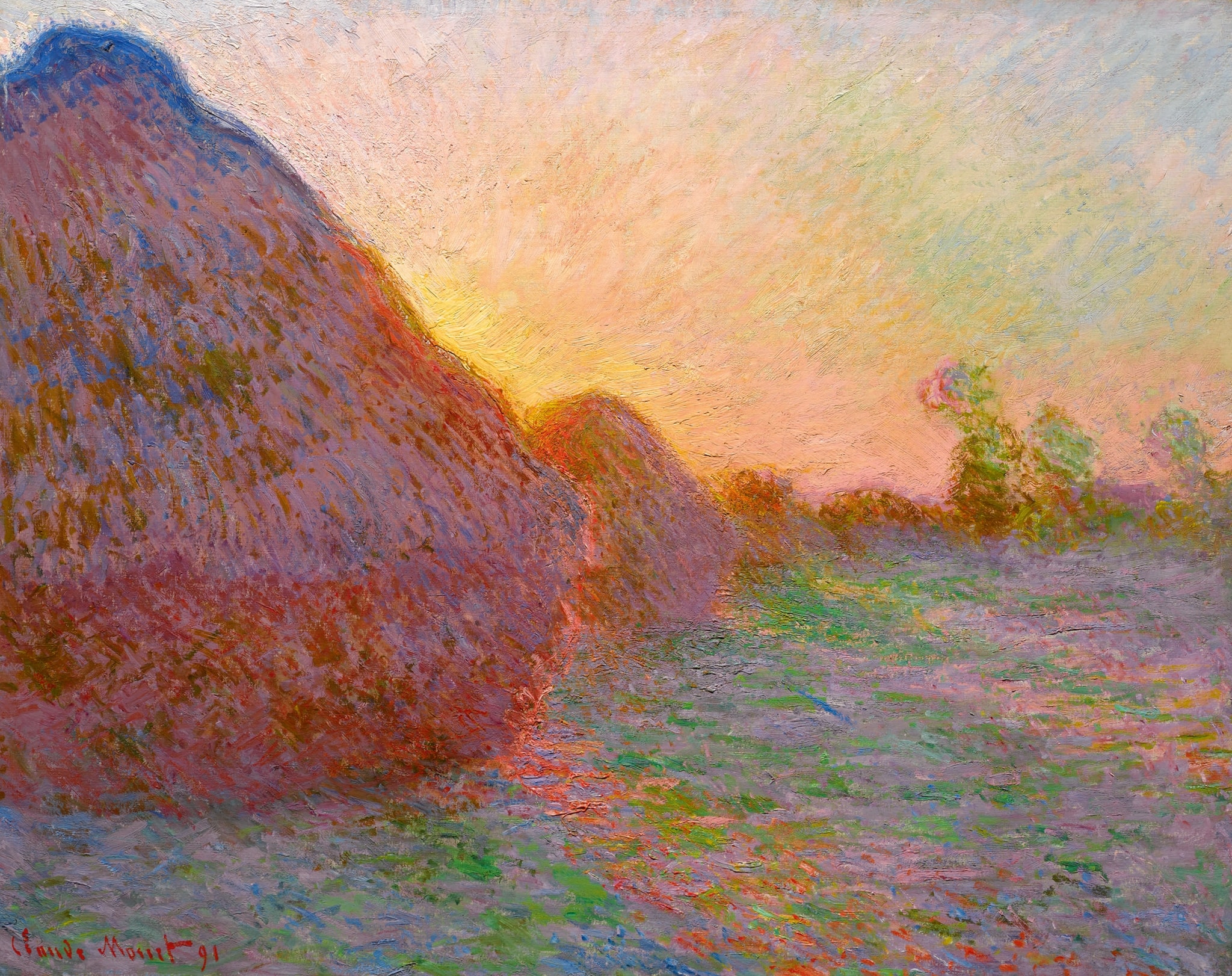
Monet’s grainstacks—the monumental, conical piles of unthreshed grain—anchor the Haystacks/Grainstacks (Meules) series. Placed left and center, they become fixed beacons against which sunrise, snow, mist, and twilight unfold, turning ordinary rural structures into a laboratory for seeing light, time, and atmosphere.
The Setting Sun
In Monet’s Haystacks, the setting sun is both the light source and the subject: a brief, blazing descent that floods field and snow with volatile color. By pinning a low, glowing disk to the horizon, Monet turns rural stacks into instruments for measuring how time and atmosphere remake the visible world.
The Violet Shadows
Monet’s violet shadows—cool blue‑purple passages along the haystacks and across the ground—are not mood coloring but observed effects of skylight and reflection. In the Haystacks series (1890–91), these hues turn shadow into a carrier of time and weather, binding forms into a shared atmosphere and intensifying the warm glow of sunlit straw.
Seen in Comparisons
Related Themes
About Claude Monet
More by Claude Monet
Women in the Garden
Claude Monet (1866–1867)
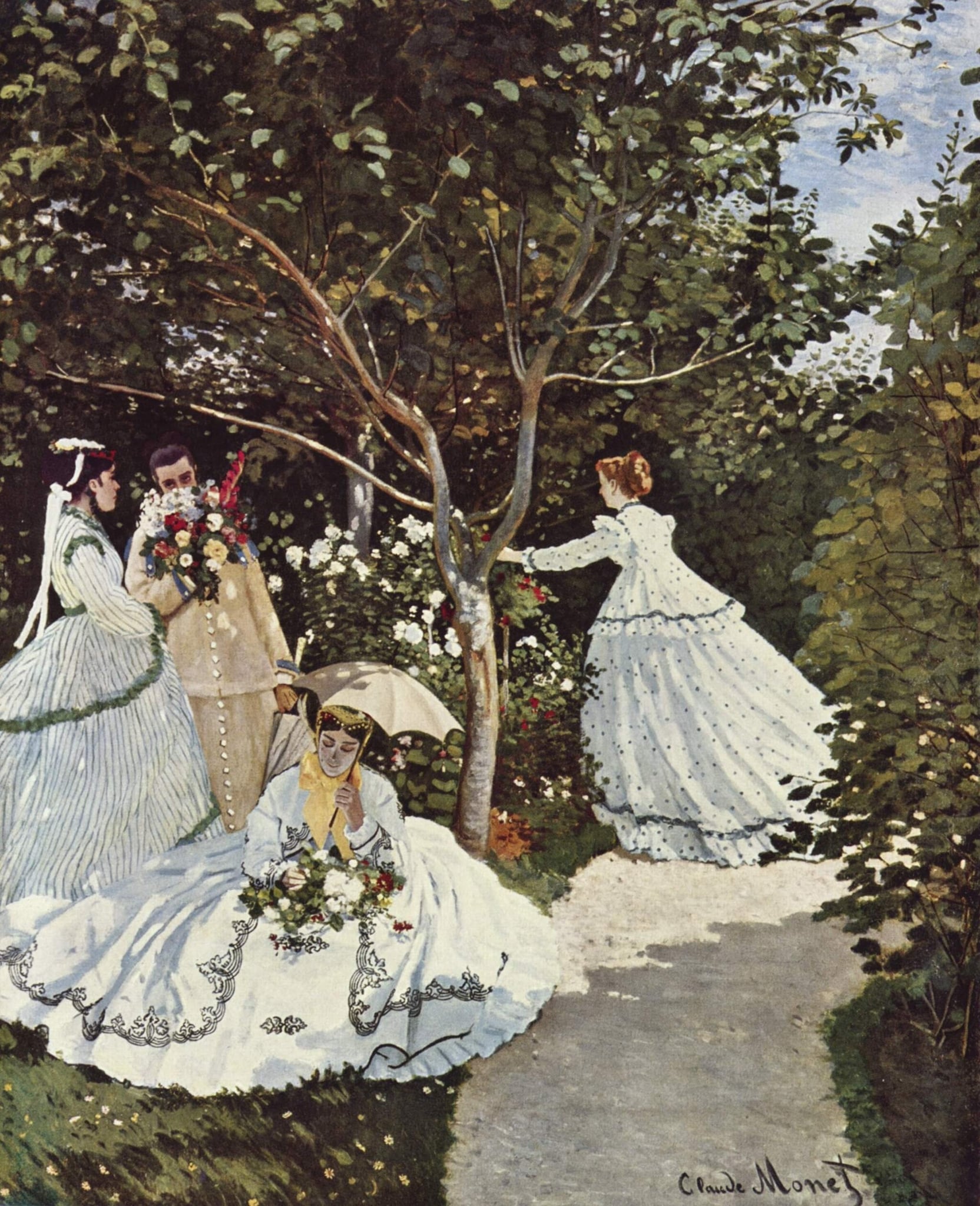
Claude Monet’s Women in the Garden choreographs four figures in a sunlit bower to test how <strong>white dresses</strong> register <strong>dappled light</strong> and shadow. The path, parasol, and clipped flowers frame a modern ritual of leisure while turning fashion into an instrument of <strong>perception</strong>. The scene reads less as portraiture than as a manifesto for painting the <strong>momentary</strong> outdoors <sup>[1]</sup><sup>[3]</sup>.
The Train in the Snow (The Locomotive)
Claude Monet (1875)
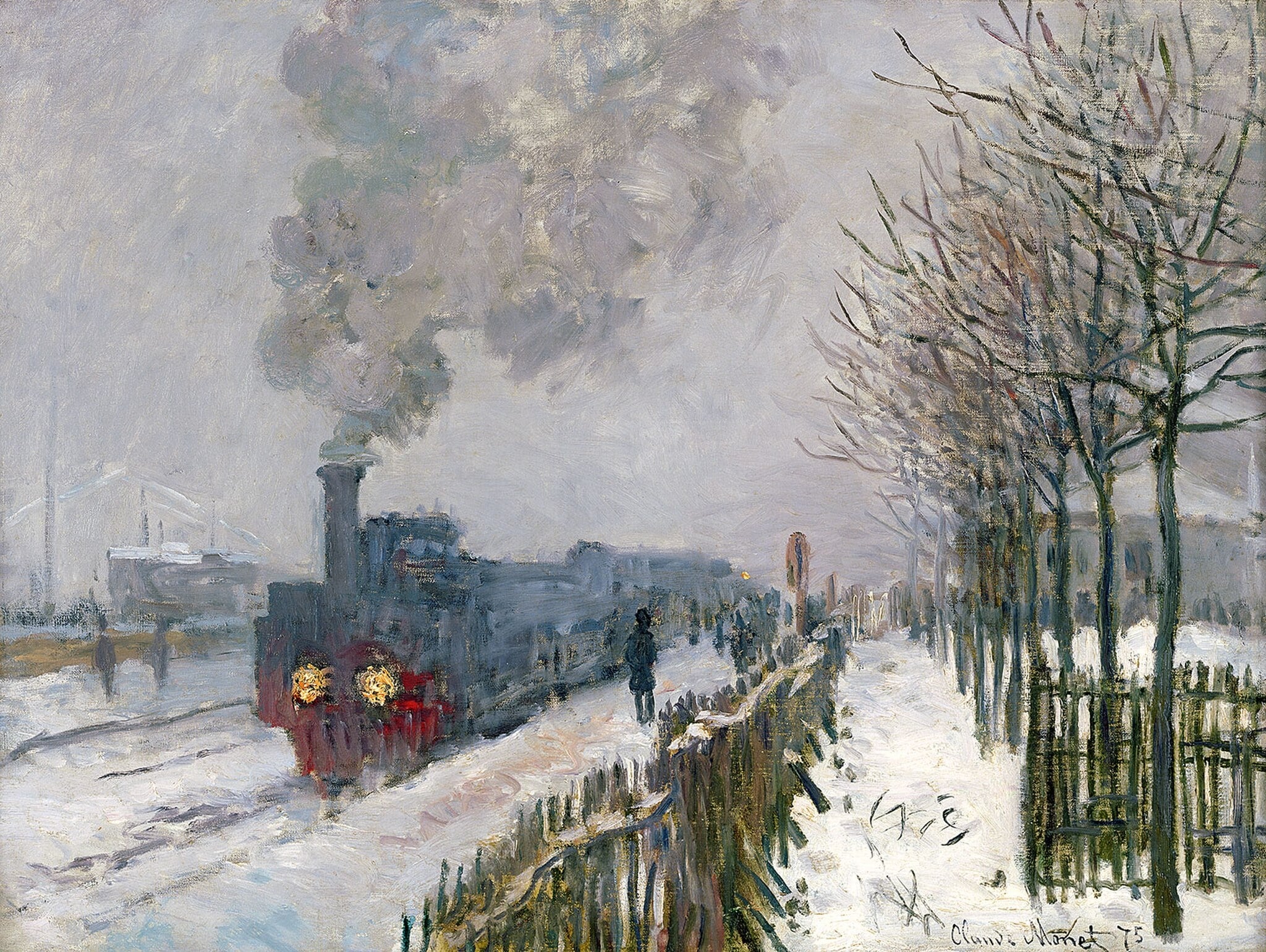
Claude Monet’s The Train in the Snow (The Locomotive) (1875) turns a suburban winter platform into a study of <strong>modernity absorbed by atmosphere</strong>. The engine’s twin yellow headlights and a smear of red push through a world of greys and violets as steam fuses with the low sky, while the right-hand fence and bare trees drill depth and cadence into the scene <sup>[1]</sup><sup>[4]</sup>. Monet fixes not an object but a <strong>moment of perception</strong>, where industry seems to dematerialize into weather <sup>[1]</sup><sup>[2]</sup>.
The Artist's Garden at Giverny
Claude Monet (1900)
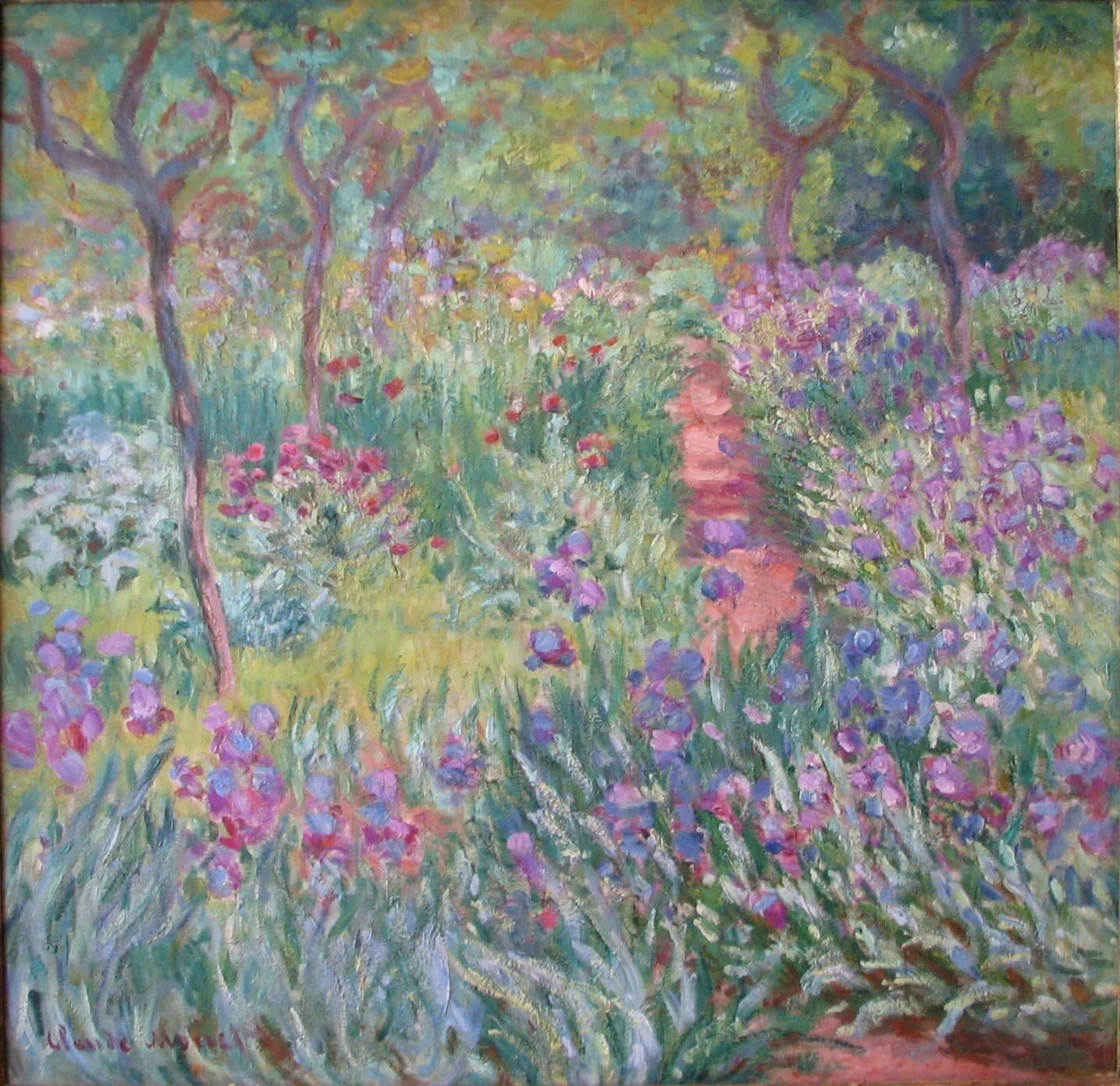
In The Artist's Garden at Giverny, Claude Monet turns his cultivated Clos Normand into a field of living color, where bands of violet <strong>irises</strong> surge toward a narrow, rose‑colored path. Broken, flickering strokes let greens, purples, and pinks mix optically so that light seems to tremble across the scene, while lilac‑toned tree trunks rhythmically guide the gaze inward <sup>[1]</sup><sup>[3]</sup>.
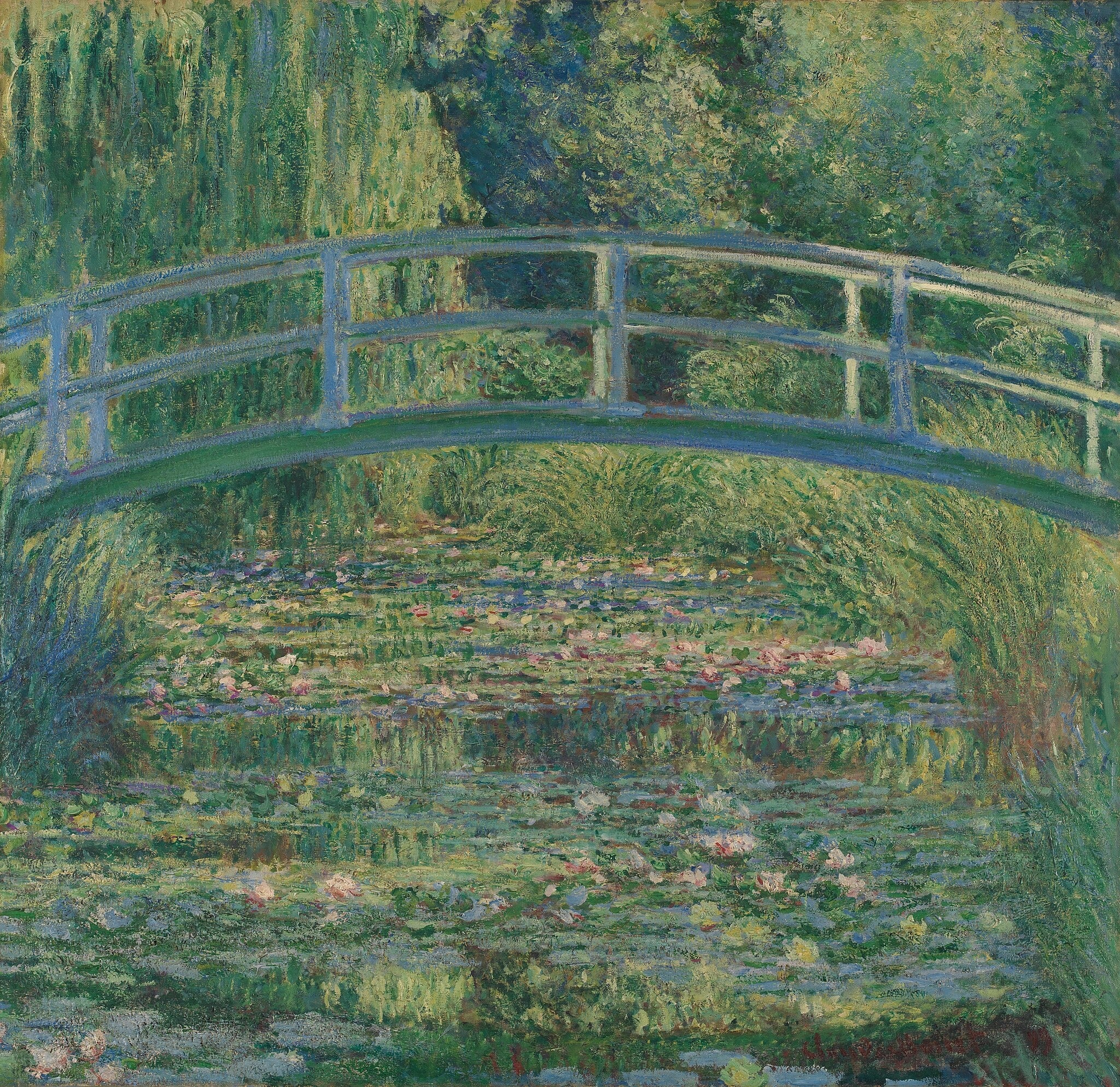
Water Lilies
Claude Monet (1899)
<strong>Water Lilies</strong> centers on an arched <strong>Japanese bridge</strong> suspended over a pond where lilies and rippling reflections fuse into a single, vibrating surface. Monet turns the scene into a study of <strong>perception-in-flux</strong>, letting water, foliage, and light dissolve hard edges into atmospheric continuity <sup>[1]</sup><sup>[3]</sup>.
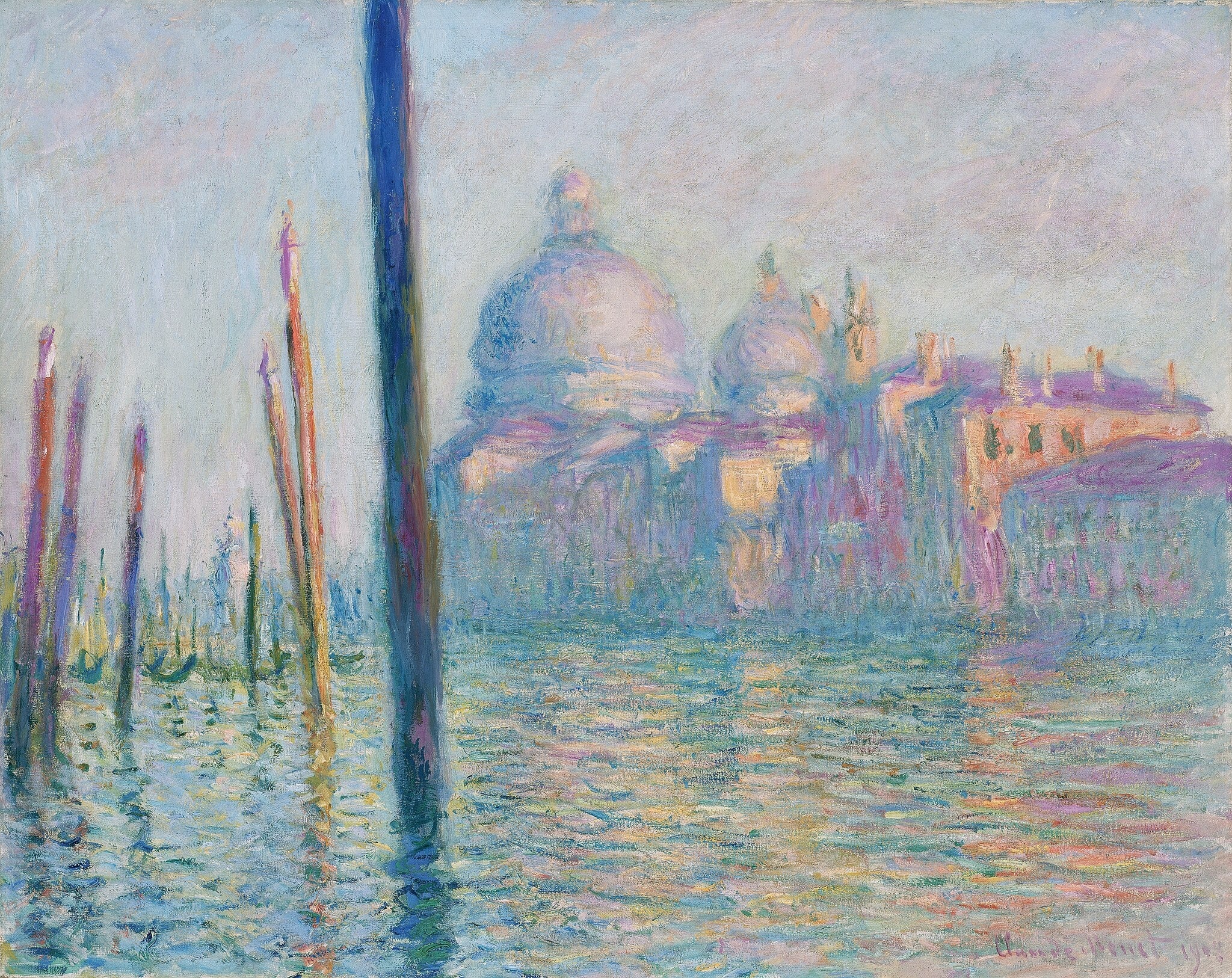
The Grand Canal
Claude Monet (1908)
Claude Monet’s The Grand Canal turns Venice into <strong>pure atmosphere</strong>: the domes of Santa Maria della Salute waver at right while a regiment of <strong>pali</strong> stands at left, their verticals reverberating in the water. The scene asserts <strong>light over architecture</strong>, transforming stone into memory and time into color <sup>[2]</sup><sup>[3]</sup>.
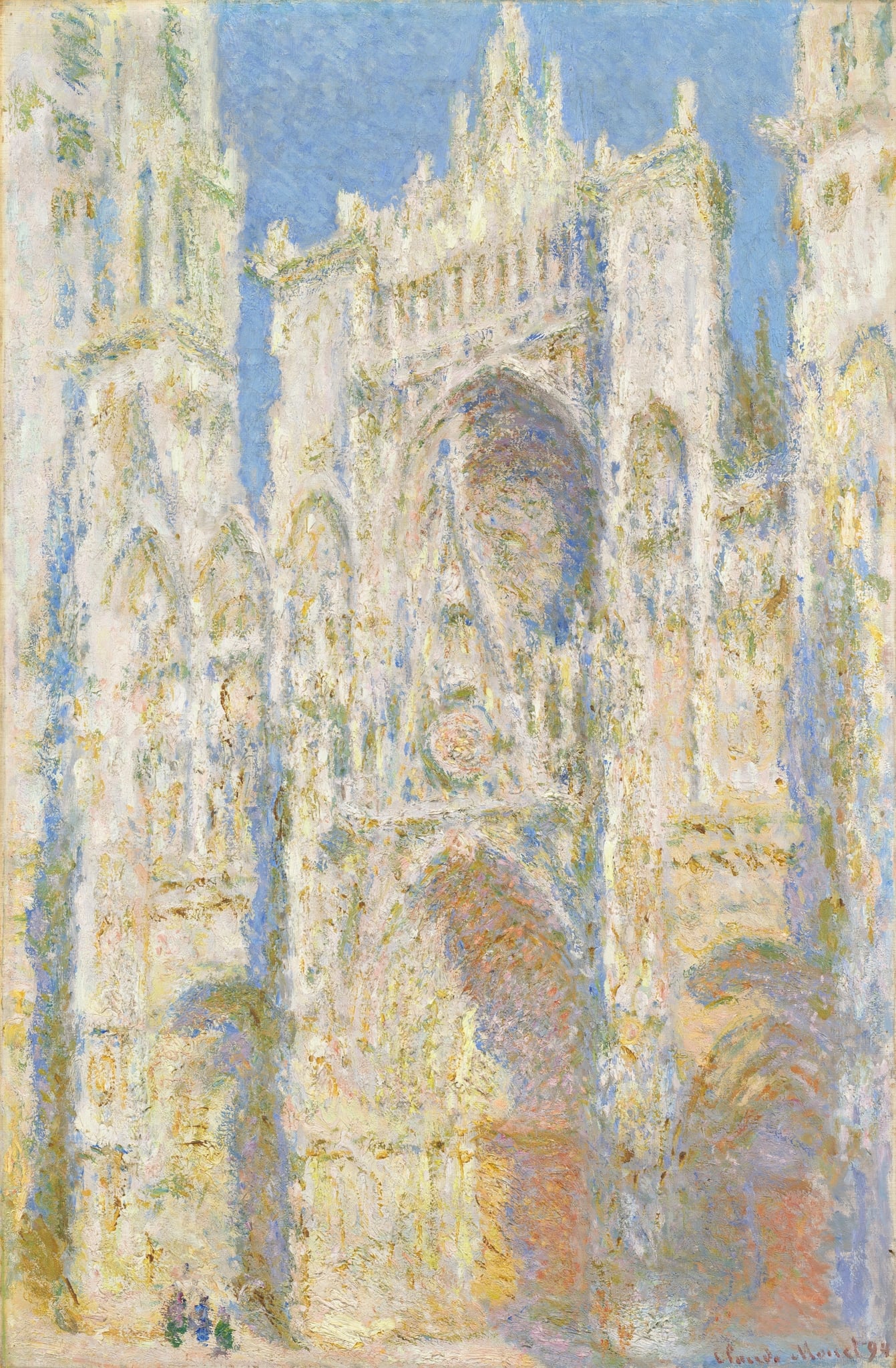
Rouen Cathedral Series
Claude Monet (1894)
Claude Monet’s Rouen Cathedral Series (1892–94) turns a Gothic monument into a laboratory of <strong>light, time, and perception</strong>. In this sunstruck façade, portals, gables, and a warm, orange-tinged rose window flicker in pearly violets and buttery yellows against a crystalline blue sky, while tiny figures at the base anchor the scale. The painting insists that <strong>light—not stone—is the true subject</strong> <sup>[1]</sup><sup>[2]</sup>.