The Tub
by Edgar Degas
Study Print Studio
Create a personal study print
Build a companion study sheet around the part of this painting that speaks to you most. Choose a detail, shape an interpretation, and walk away with something personal and display-worthy.
Fast Facts
- Year
- 1886
- Medium
- Pastel on cardboard
- Dimensions
- 60 × 83 cm
- Location
- Musée d’Orsay, Paris
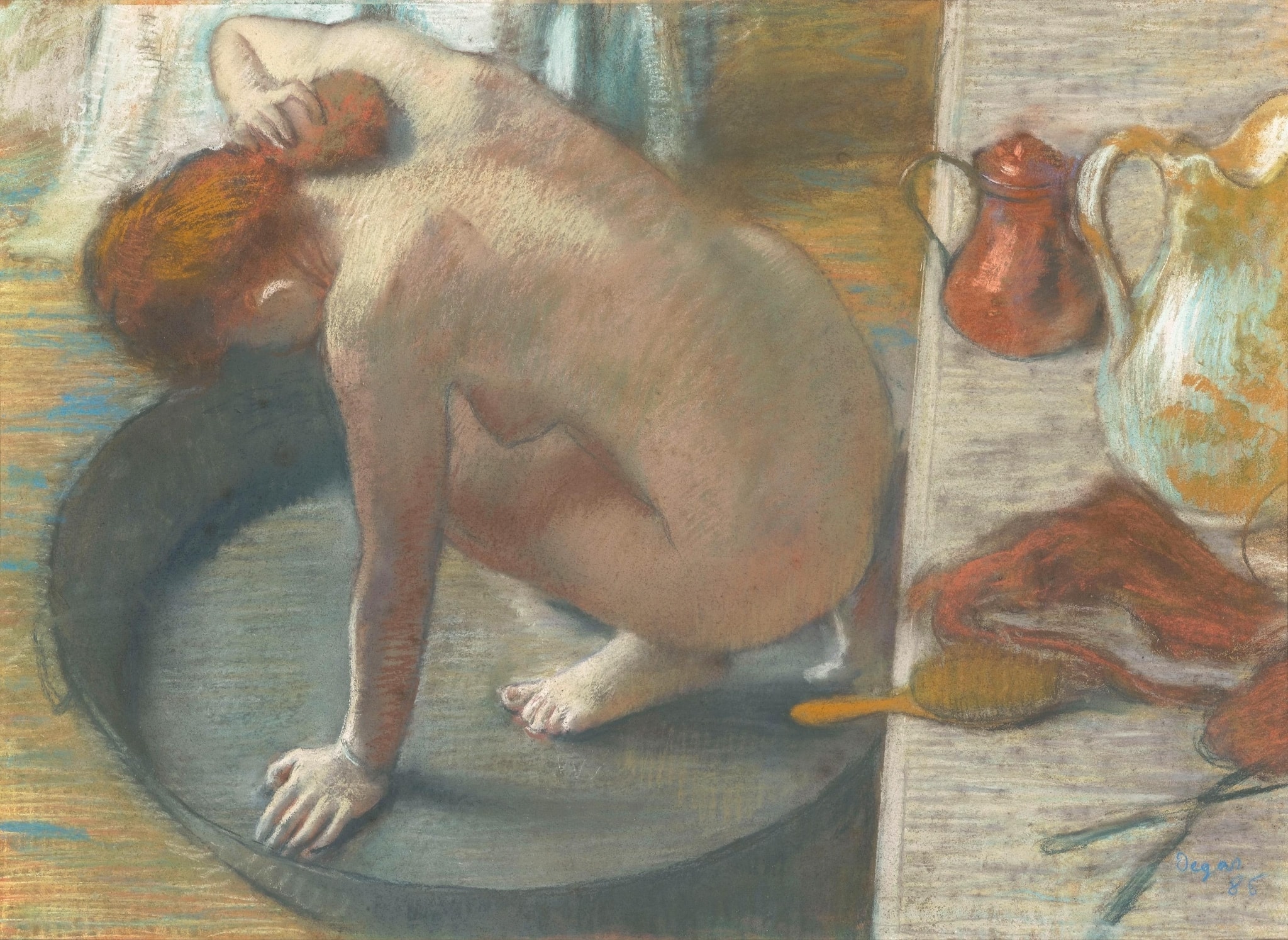
Click on any numbered symbol to learn more about its meaning
Meaning & Symbolism
Explore Deeper with AI
Ask questions about The Tub
Popular questions:
Powered by AI • Get instant insights about this artwork
Interpretations
Social History: Hygiene, Class, and the Policing of Bodies
Source: Anthea Callen; Musée d’Orsay
Japonisme and Spatial Ethics
Source: Musée d’Orsay; National Gallery of Art
Medium and Method: From Monotype to Woven Pastel
Source: MFA Boston (“Degas and the Nude”); Christie’s (catalogue essay with scholarly citations)
Gaze, Agency, and the Non-Theatrical Nude
Source: Concordia Open Textbook (synthesis of Broude/Lipton/Armstrong); National Gallery of Art; Washington Post (Sebastian Smee)
Still Life, Material Culture, and the Modern Nude
Source: Musée d’Orsay; Encyclopaedia Britannica
Seen in Comparisons
Related Themes
About Edgar Degas
More by Edgar Degas
The Opera Orchestra by Edgar Degas | Analysis
Edgar Degas
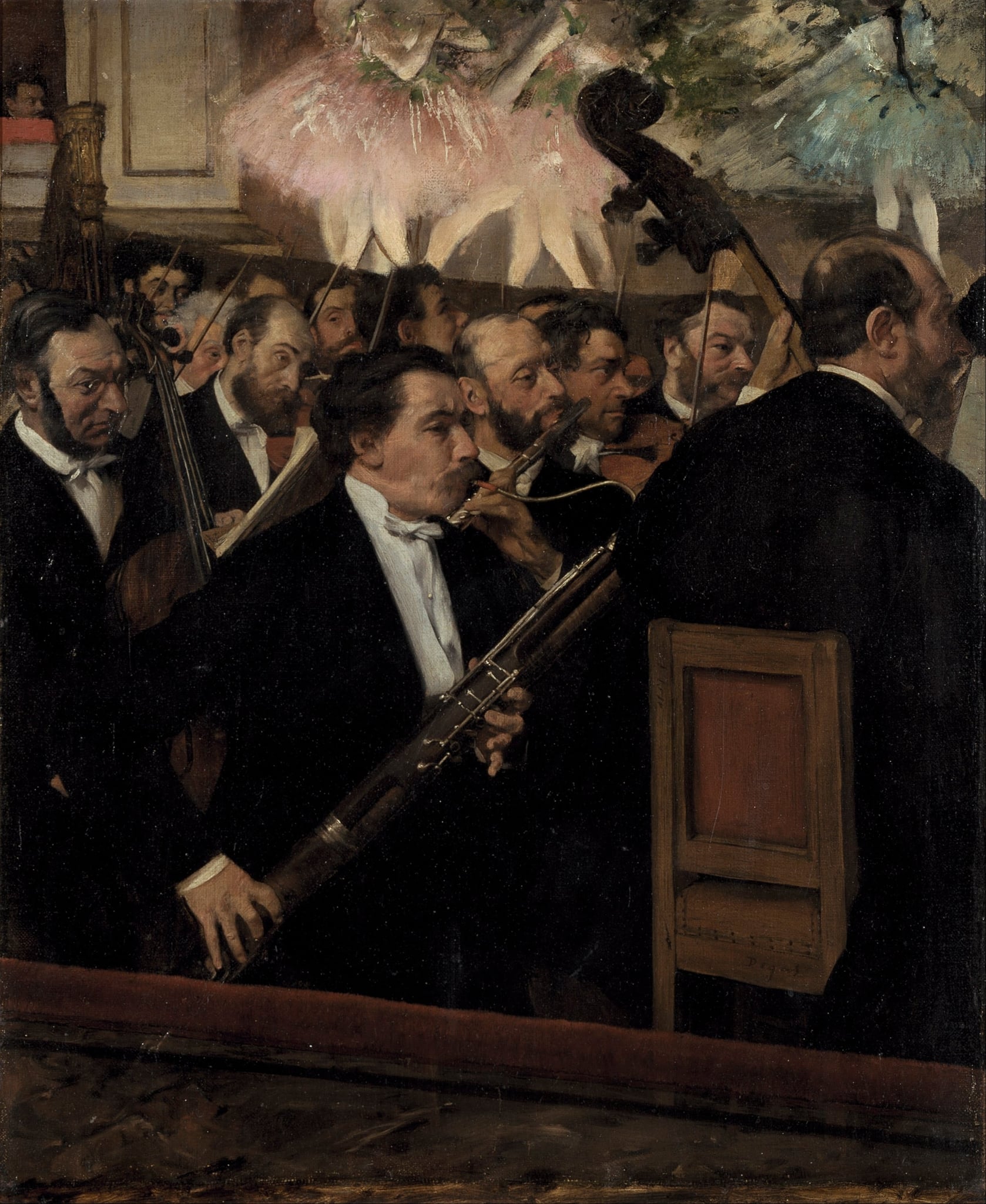
In The Opera Orchestra, Degas flips the theater’s hierarchy: the black-clad pit fills the frame while the ballerinas appear only as cropped tutus and legs, glittering above. The diagonal <strong>bassoon</strong> and looming <strong>double bass</strong> marshal a dense field of faces lit by footlights, turning backstage labor into the subject and spectacle into a fragment <sup>[1]</sup><sup>[2]</sup>.
Place de la Concorde
Edgar Degas (1875)
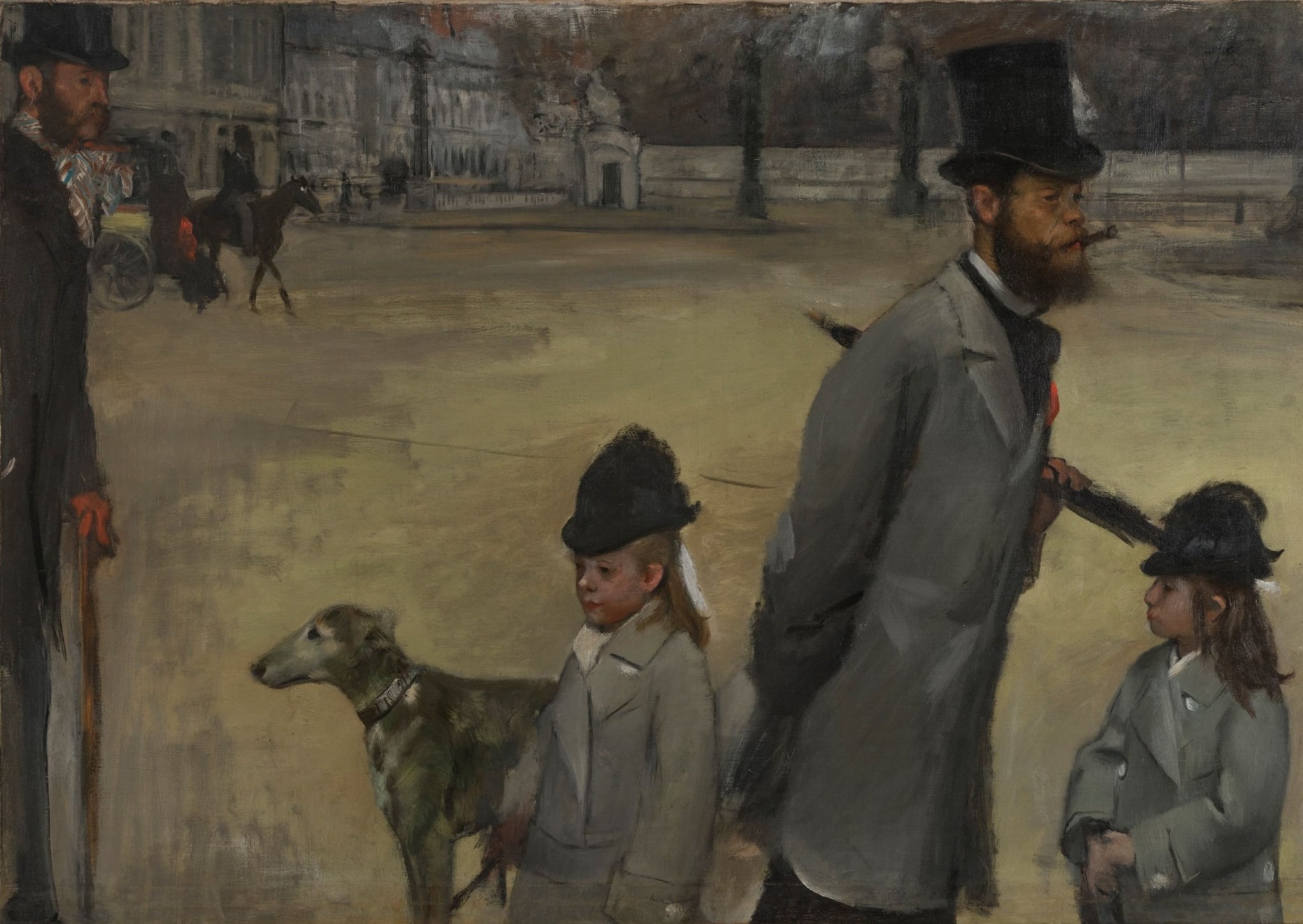
Degas’s Place de la Concorde turns a famous Paris square into a study of <strong>modern isolation</strong> and <strong>instantaneous vision</strong>. Figures stride past one another without contact, their bodies abruptly <strong>cropped</strong> and adrift in a wide, airless plaza—an urban stage where elegance masks estrangement <sup>[1]</sup><sup>[2]</sup>.
Woman Ironing
Edgar Degas (c. 1876–1887)
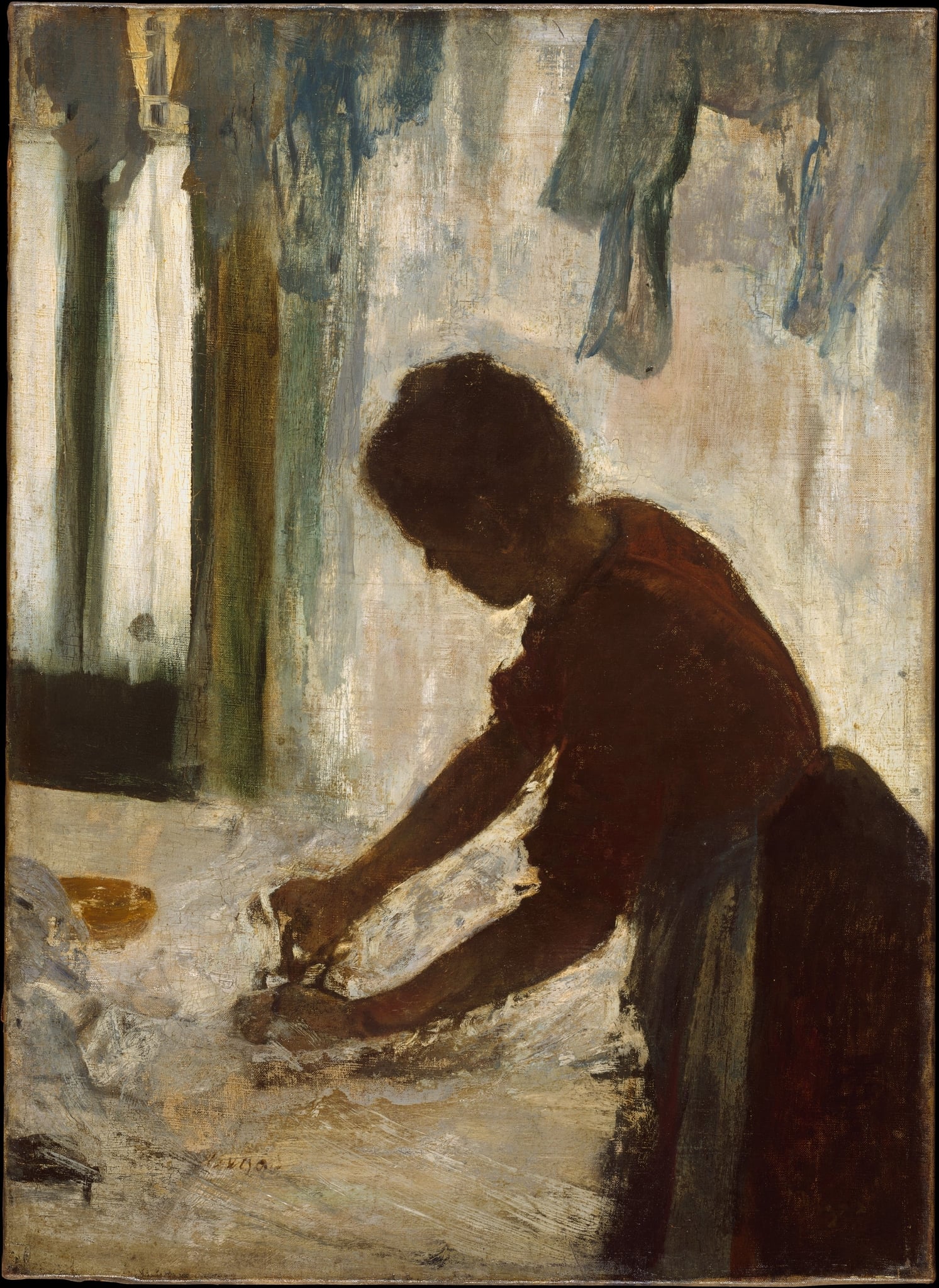
In Woman Ironing, Degas builds a modern icon of labor through <strong>contre‑jour</strong> light and a forceful diagonal from shoulder to iron. The worker’s silhouette, red-brown dress, and the cool, steamy whites around her turn repetition into <strong>ritualized transformation</strong>—wrinkled cloth to crisp order <sup>[1]</sup><sup>[2]</sup>.
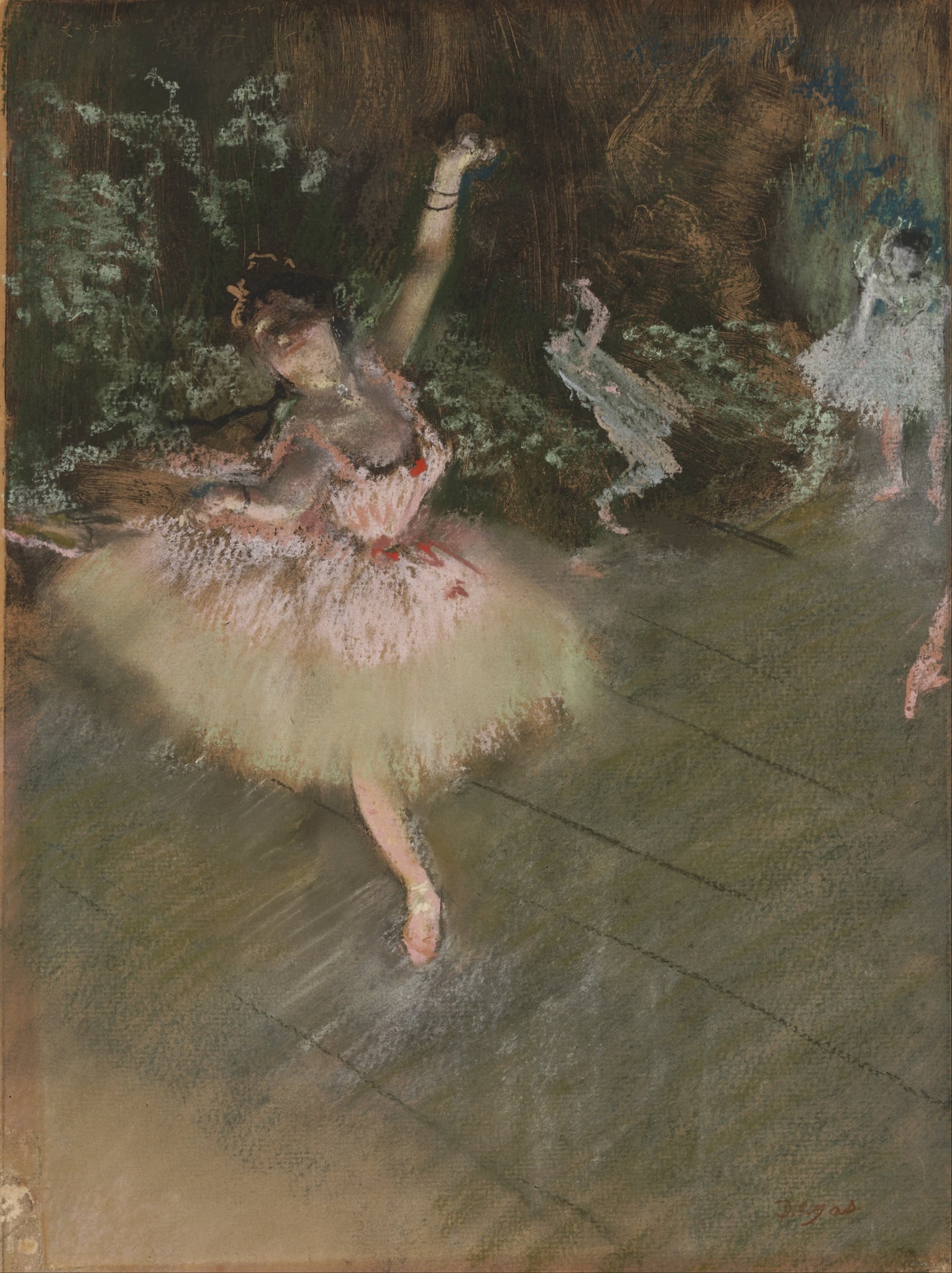
The Star
Edgar Degas (c. 1876–1878)
Edgar Degas’s The Star shows a prima ballerina caught at the crest of a pose, her tutu a <strong>vaporous flare</strong> against a <strong>murky, tilted stage</strong>. Diagonal floorboards rush beneath her single pointe, while pale, ghostlike dancers linger in the wings, turning triumph into a scene of <strong>radiant isolation</strong> <sup>[2]</sup><sup>[5]</sup>.
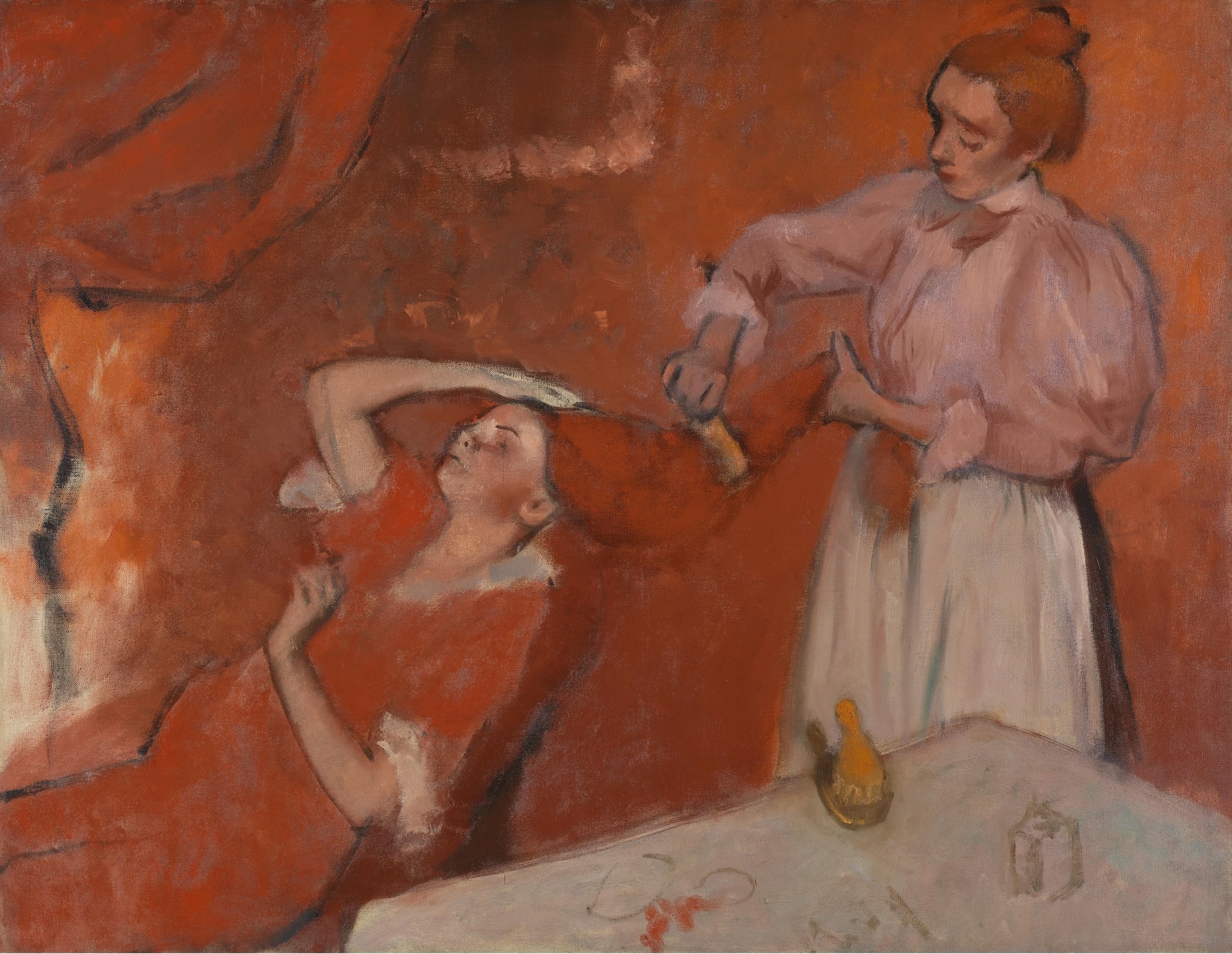
Combing the Hair
Edgar Degas (c.1896)
Edgar Degas’s Combing the Hair crystallizes a private ritual into a scene of <strong>compressed intimacy</strong> and <strong>classed labor</strong>. The incandescent field of red fuses figure and room, turning the hair into a <strong>binding ribbon</strong> between attendant and sitter <sup>[1]</sup>.
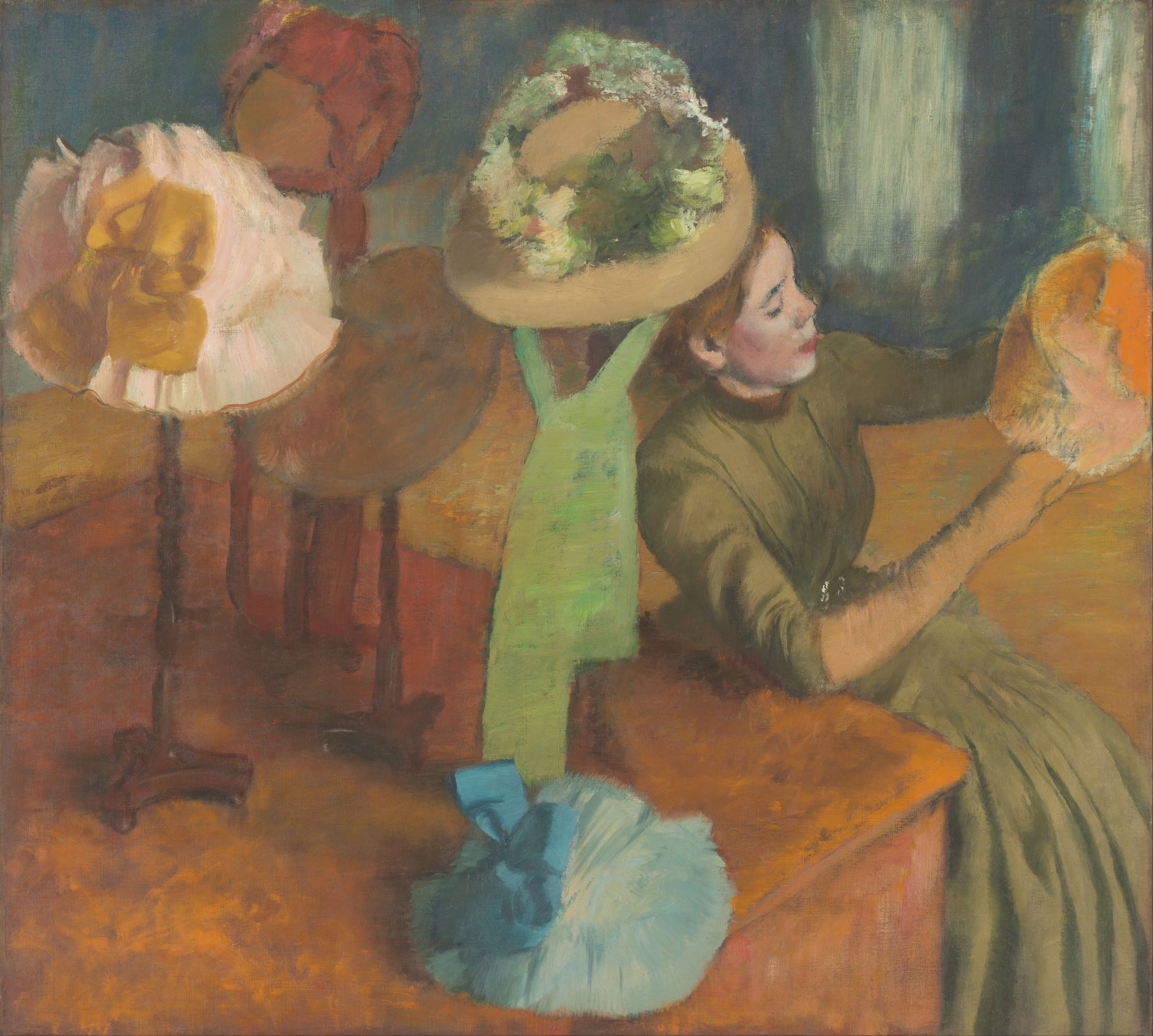
The Millinery Shop
Edgar Degas (1879–1886)
Edgar Degas’s The Millinery Shop stages modern Paris through a quiet act of <strong>work</strong> rather than display. A young woman, cropped in profile, studies a glowing <strong>orange hat</strong> while faceless stands crowned with ribbons and plumes press toward the picture plane. Degas turns a boutique into a meditation on <strong>labor, commodities, and identity</strong> <sup>[1]</sup><sup>[2]</sup>.