Vanitas & worldly vanity
Featured Artworks
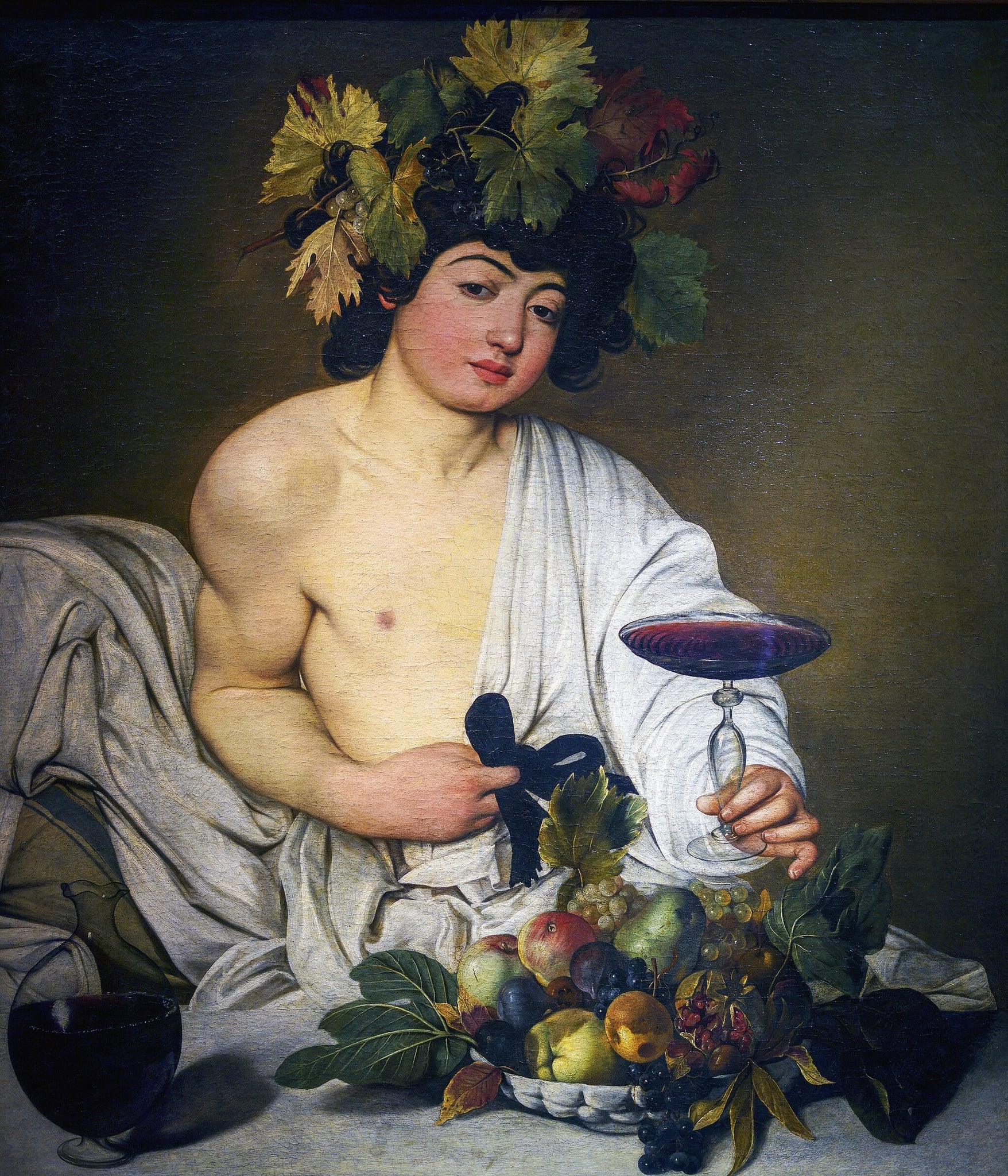
Bacchus
Caravaggio (c. 1598)
Caravaggio’s Bacchus stages a human-scaled god who offers wine with disarming immediacy, yoking <strong>sensual invitation</strong> to <strong>vanitas</strong> warning. The tilted goblet, blemished fruit, and wilting leaves insist that abundance and youth are <strong>precarious</strong>. A private Roman milieu under Cardinal del Monte shaped this refined, provocative image <sup>[1]</sup><sup>[2]</sup>.
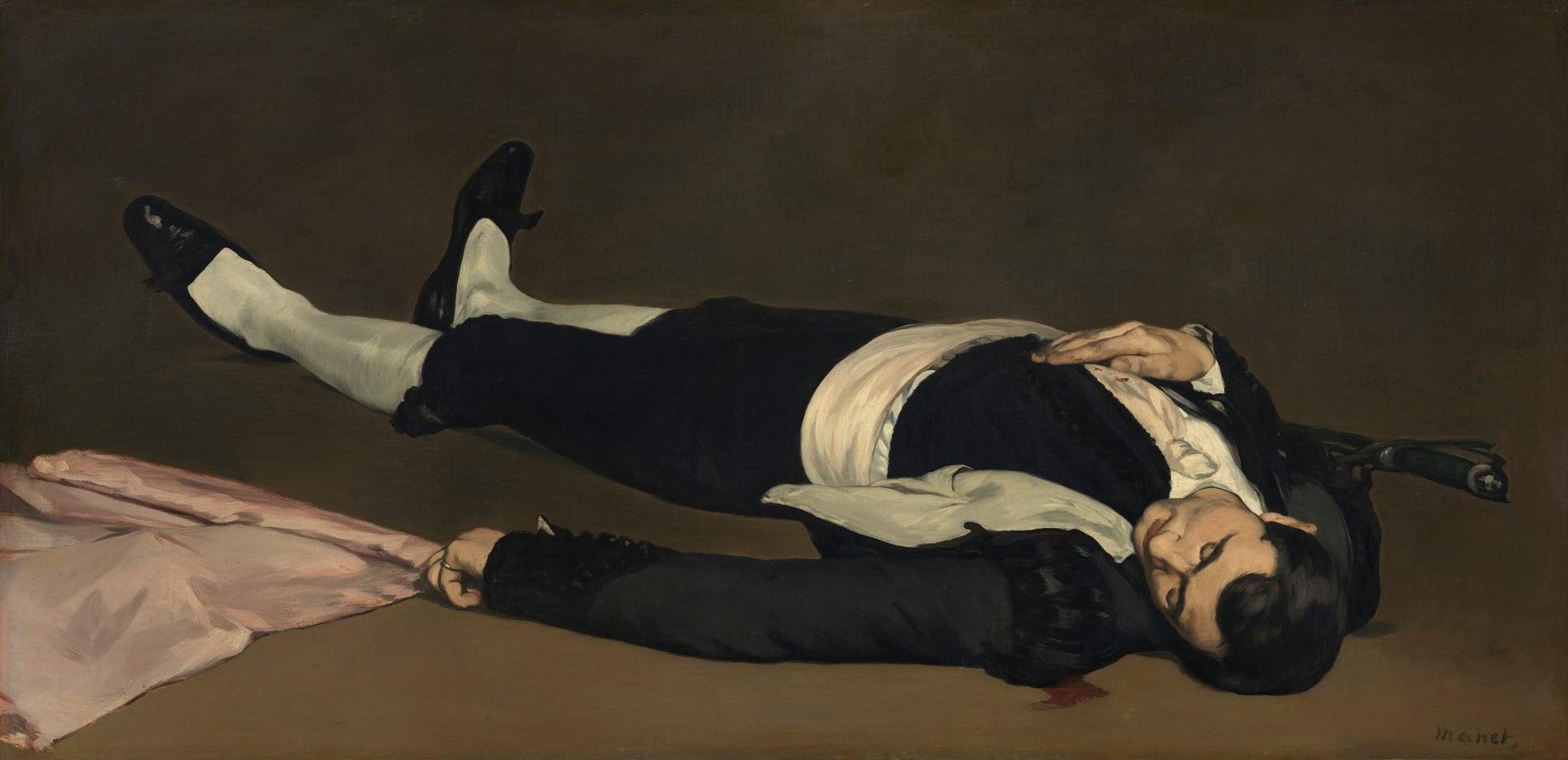
The Dead Toreador
Édouard Manet (probably 1864)
Manet’s The Dead Toreador isolates a matador’s corpse in a stark, horizontal close‑up, replacing the spectacle of the bullring with <strong>silence</strong> and <strong>abrupt finality</strong>. Black costume, white stockings, a pale pink cape, the sword’s hilt, and a small <strong>pool of blood</strong> become the painting’s cool, modern vocabulary of death <sup>[1]</sup>.
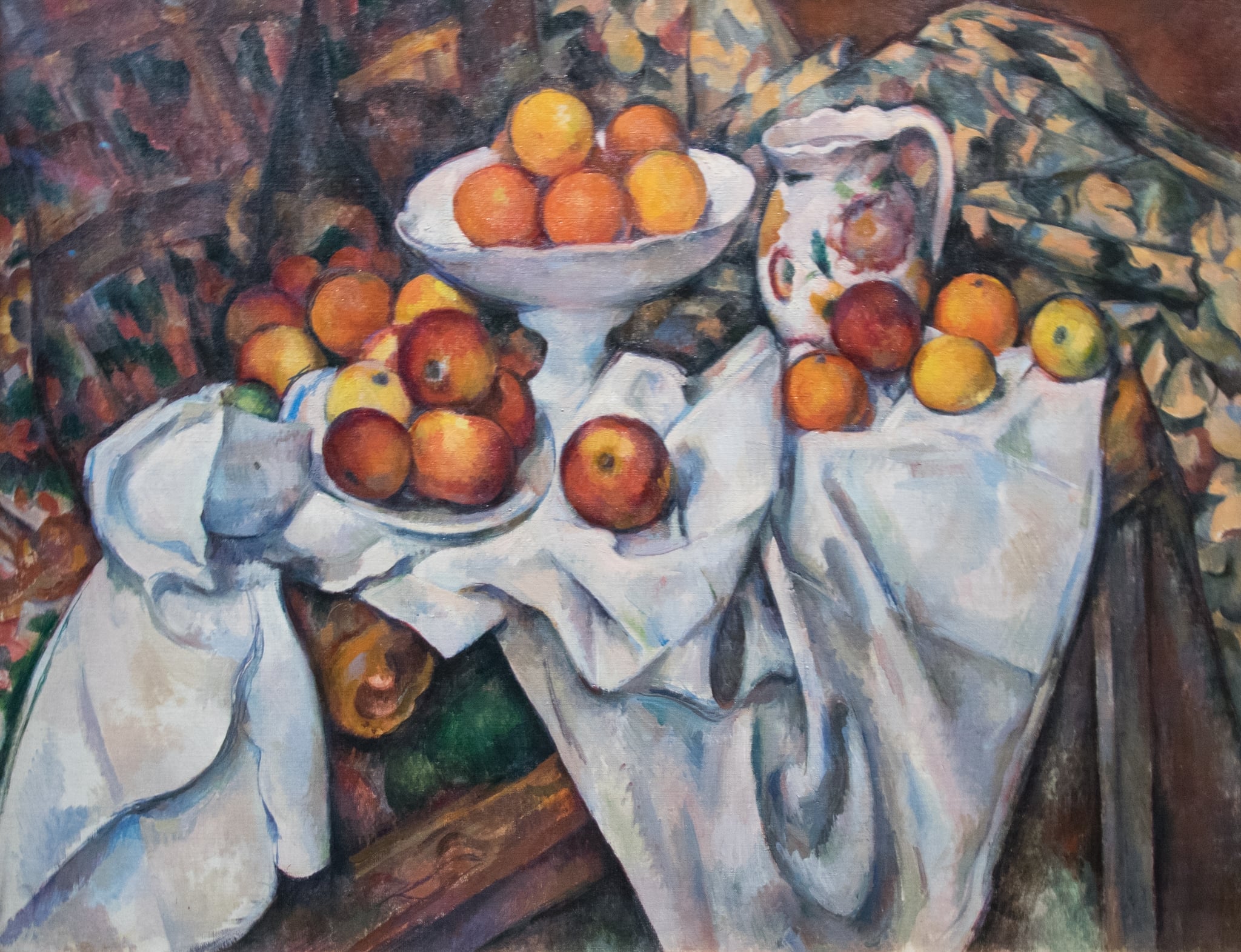
Still Life with Apples and Oranges
Paul Cézanne (c. 1899)
Paul Cézanne’s Still Life with Apples and Oranges builds a quietly monumental world from domestic things. A tilting table, a heaped white compote, a flowered jug, and cascading cloths turn fruit into <strong>durable forms</strong> stabilized by <strong>color relationships</strong> rather than single‑point perspective <sup>[1]</sup><sup>[2]</sup>. The result is a still life that feels both solid and subtly <strong>unstable</strong>, a meditation on how we construct vision.
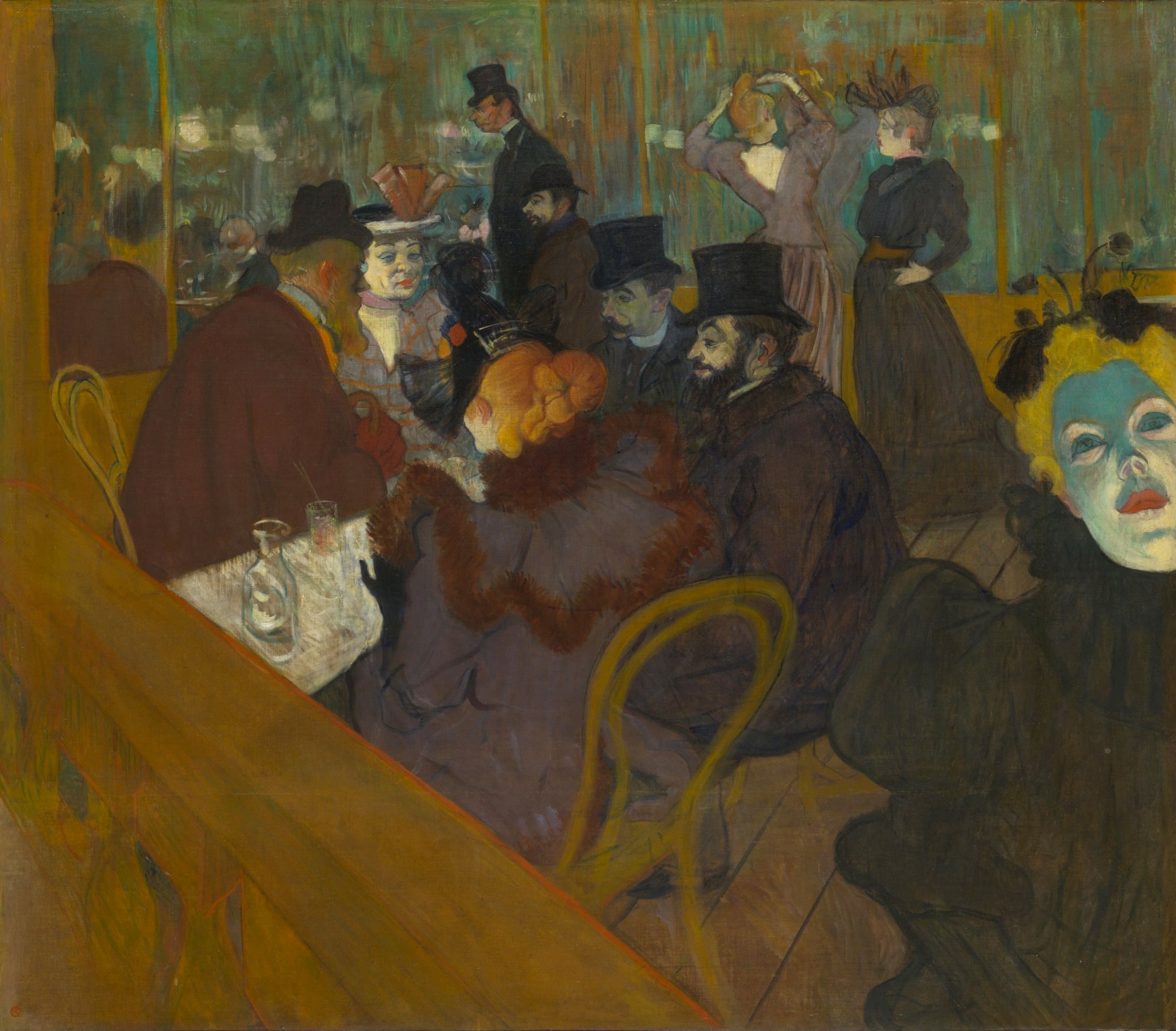
At the Moulin Rouge
Henri de Toulouse-Lautrec (1892–1895)
At the Moulin Rouge plunges us into the churn of Paris nightlife, staging a crowded room where spectacle and fatigue coexist. A diagonal banister and abrupt croppings create <strong>off‑kilter immediacy</strong>, while harsh artificial light turns faces <strong>masklike</strong> and cool. Mirrors multiply the crowd, amplifying a mood of allure tinged with <strong>urban alienation</strong> <sup>[1]</sup><sup>[3]</sup><sup>[4]</sup>.
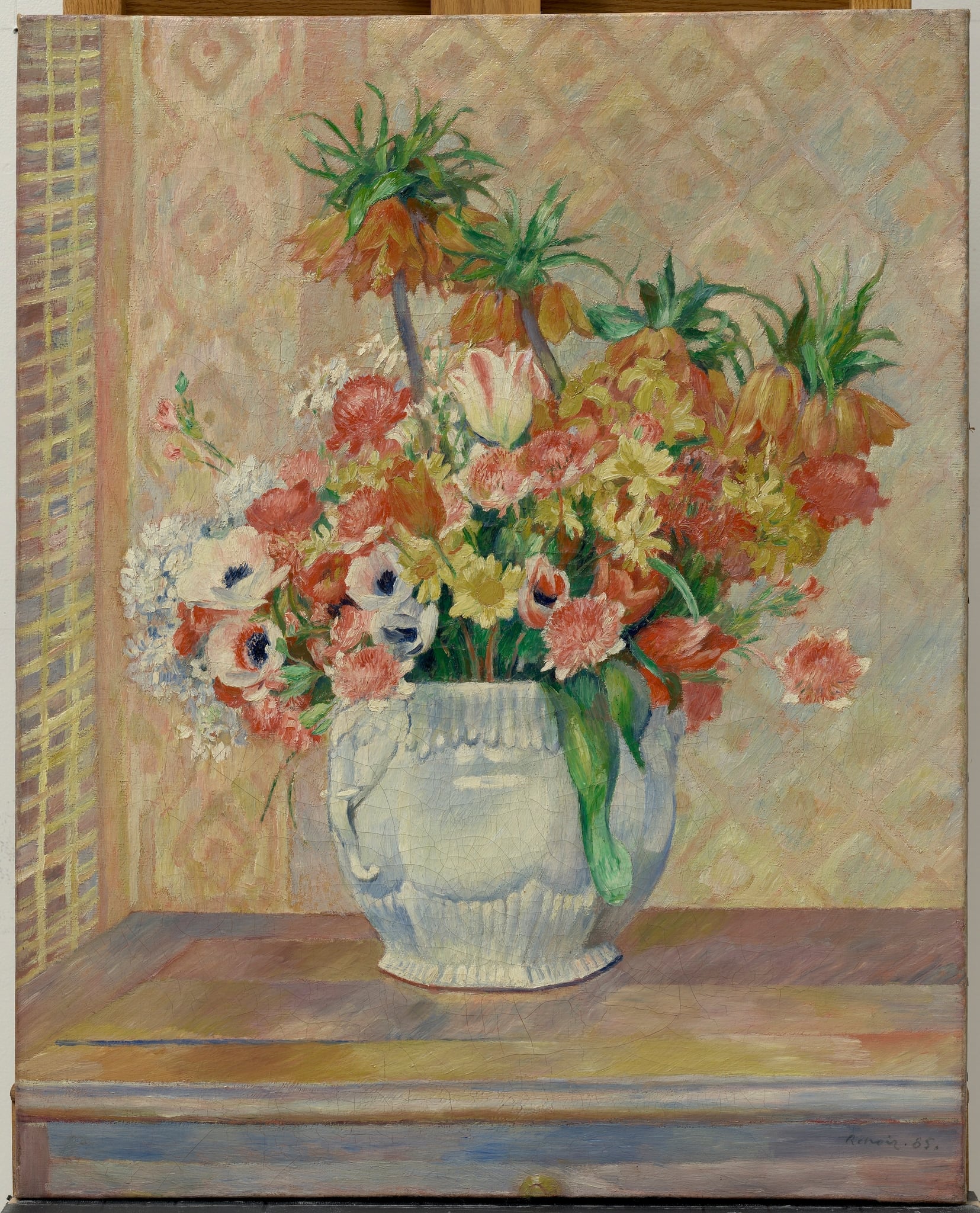
Still Life with Flowers
Pierre-Auguste Renoir (1885)
Pierre-Auguste Renoir’s Still Life with Flowers (1885) sets a jubilant bouquet in a pale, crackled vase against softly dissolving wallpaper and a wicker screen. With quick, clear strokes and a centered, oval mass, the painting unites <strong>Impressionist color</strong> with a <strong>classical, post-Italy structure</strong> <sup>[1]</sup><sup>[2]</sup><sup>[4]</sup>. The slight droop of blossoms turns the domestic scene into a gentle <strong>vanitas</strong>—a savoring of beauty before it fades <sup>[5]</sup>.
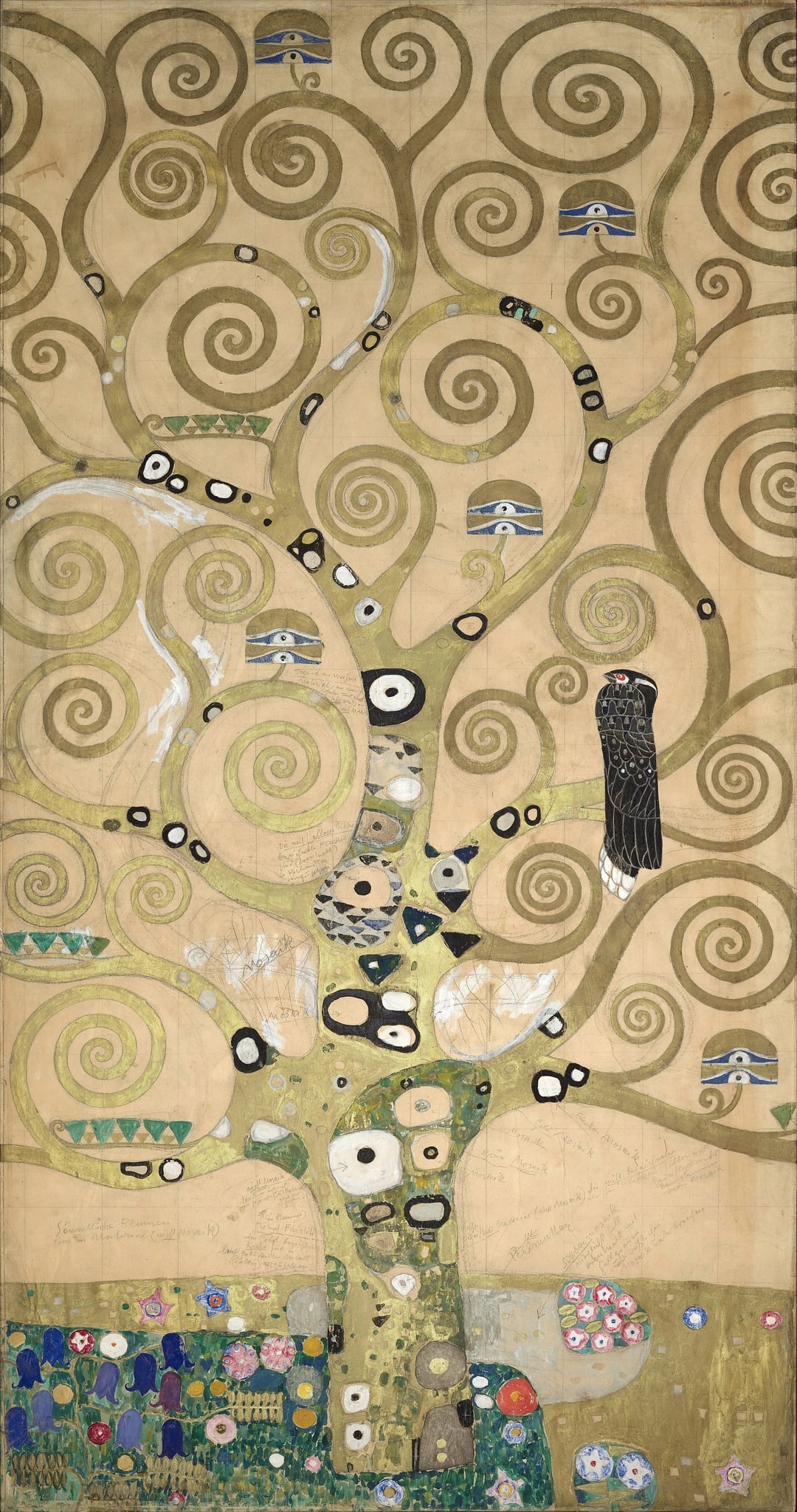
The Tree of Life
Gustav Klimt (1910–1911 (design; mosaic installed 1911))
Gustav Klimt’s The Tree of Life crystallizes a <strong>cosmological axis</strong> in a gilded ornamental language: a rooted trunk erupts into <strong>endless spirals</strong>, embedded with <strong>eye-like rosettes</strong> and shadowed by a black, red‑eyed bird. Designed as part of the Stoclet dining‑room frieze, it fuses <strong>symbolism and luxury materials</strong> to link earthly abundance with timeless transcendence <sup>[1]</sup><sup>[2]</sup>.
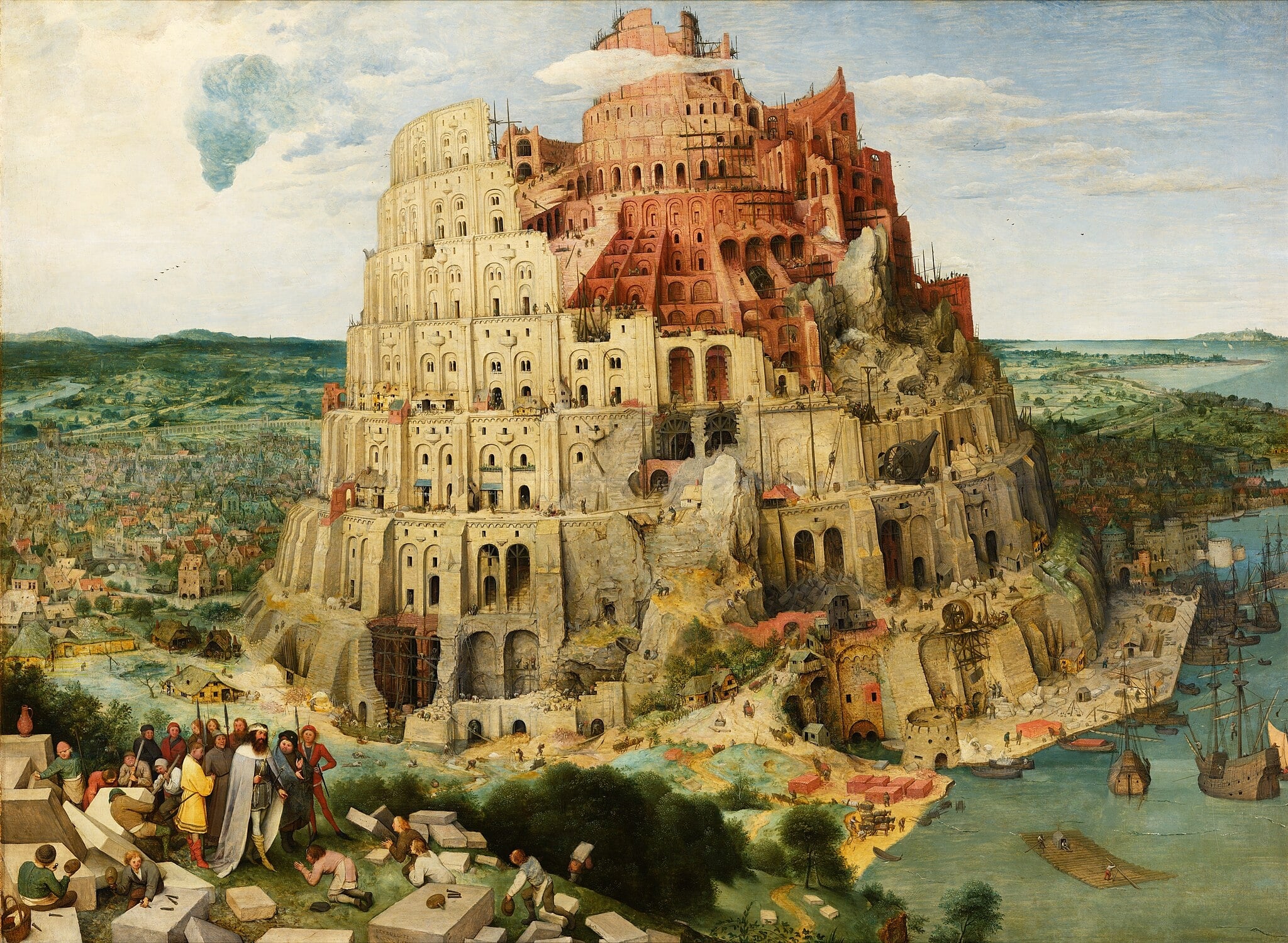
The Tower of Babel
Pieter Bruegel the Elder (1563)
In The Tower of Babel, Pieter Bruegel the Elder stages a spiraling, Roman‑style colossus whose arches, cranes, and swarming labor proclaim <strong>human industry</strong> even as cracked foundations and misaligned tiers foretell <strong>collapse</strong>. The pale, orderly left flank opposes the raw red masonry at right, while a ruler (often read as <strong>Nimrod</strong>) inspects kneeling builders before a bustling Flemish harbor—an image of ambition already undermined from within <sup>[1]</sup>.
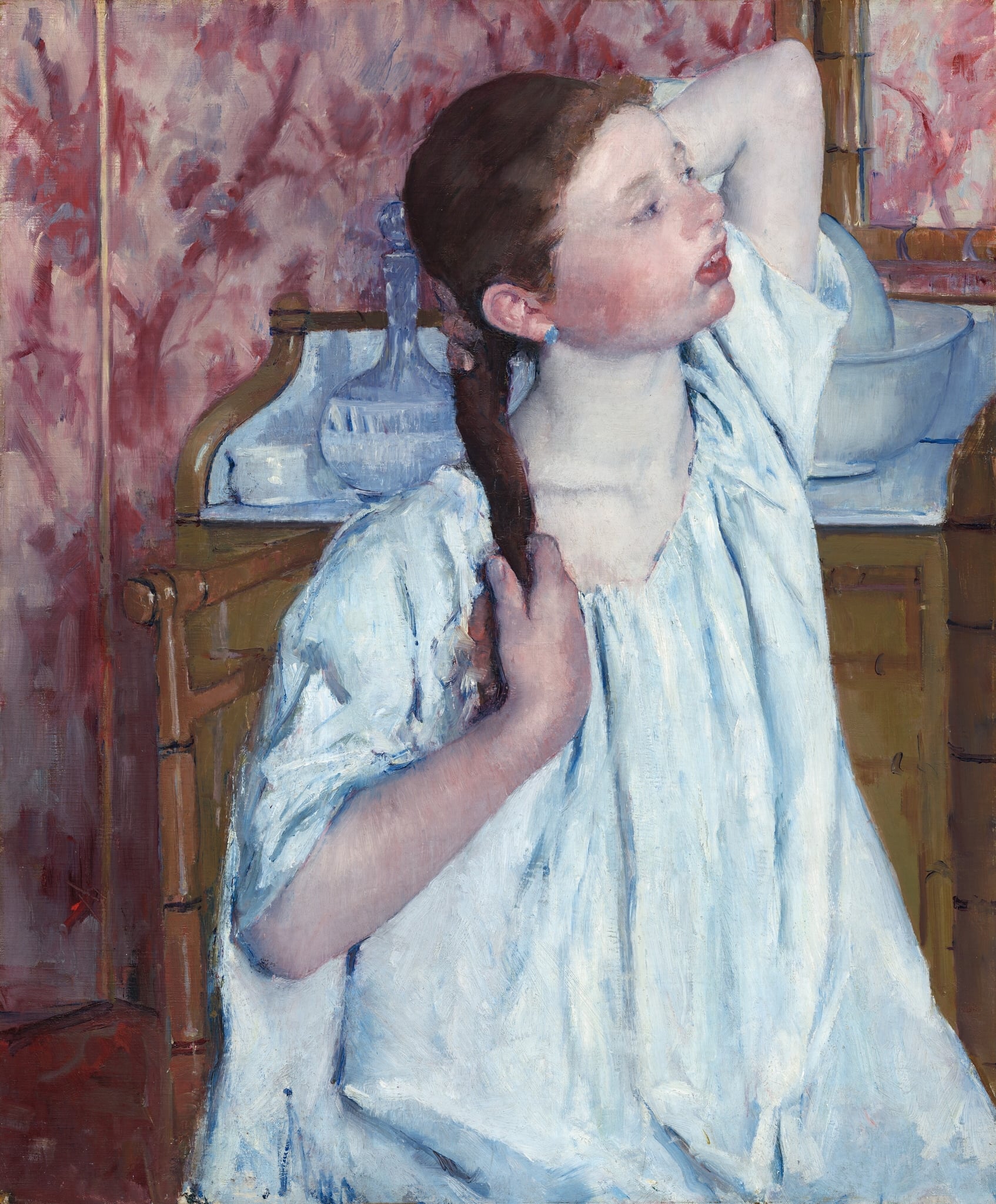
Girl Arranging Her Hair
Mary Cassatt (1886)
Mary Cassatt’s Girl Arranging Her Hair crystallizes a private rite of <strong>self‑regard</strong> into modern painting. Cool, broken strokes of the pale chemise meet the warm, patterned wall and bamboo furniture, staging a quiet drama of <strong>autonomy</strong> rather than display <sup>[1]</sup>. Exhibited in 1886, the work reframes the toilette as lived experience within Impressionism’s language of immediacy <sup>[2]</sup>.
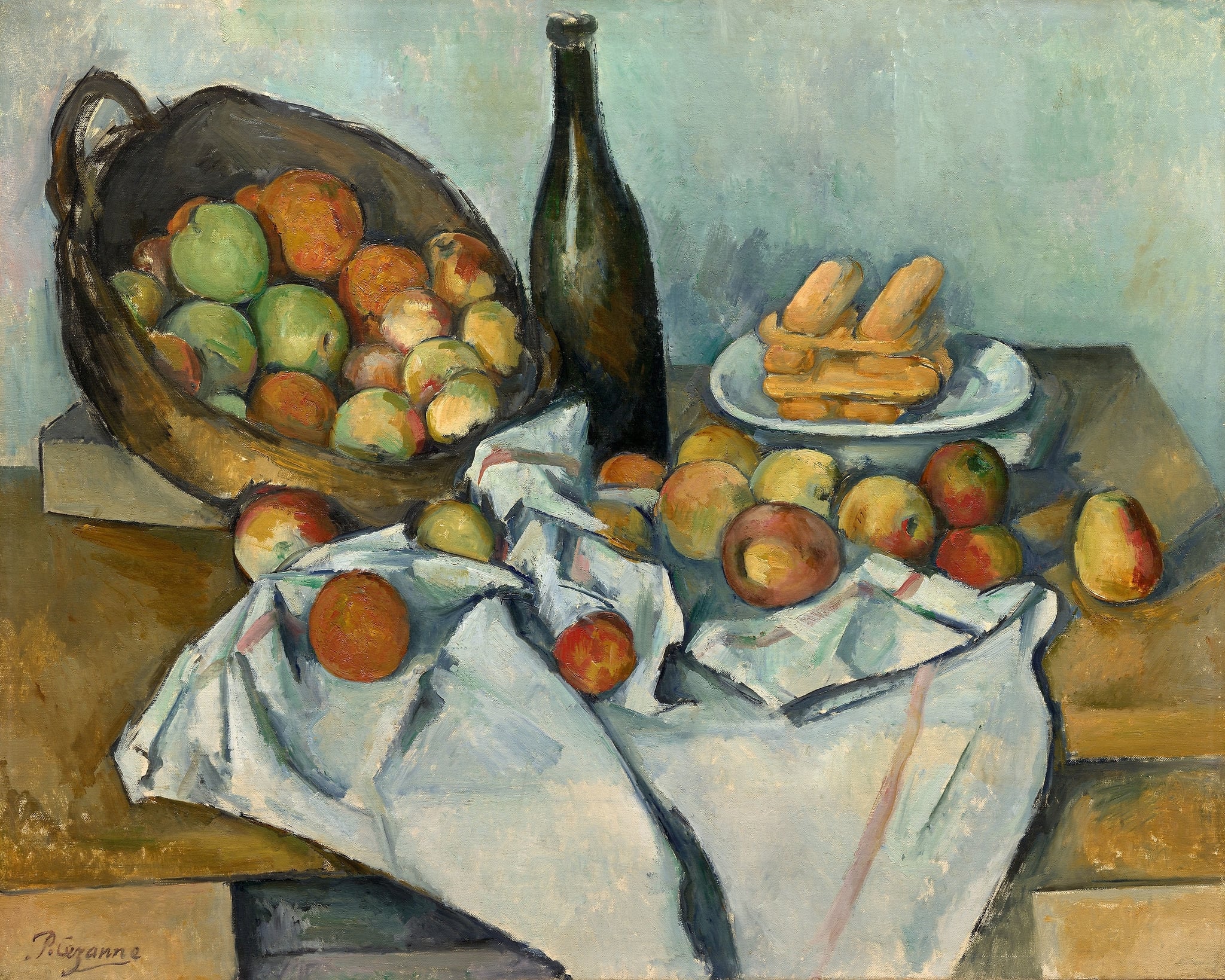
The Basket of Apples
Paul Cézanne (c. 1893)
Paul Cézanne’s The Basket of Apples stages a quiet drama of <strong>balance and perception</strong>. A tilted basket spills apples across a <strong>rumpled white cloth</strong> toward a <strong>dark vertical bottle</strong> and a plate of <strong>biscuits</strong>, while the tabletop’s edges refuse to align—an intentional play of <strong>multiple viewpoints</strong> <sup>[1]</sup><sup>[2]</sup><sup>[3]</sup>.
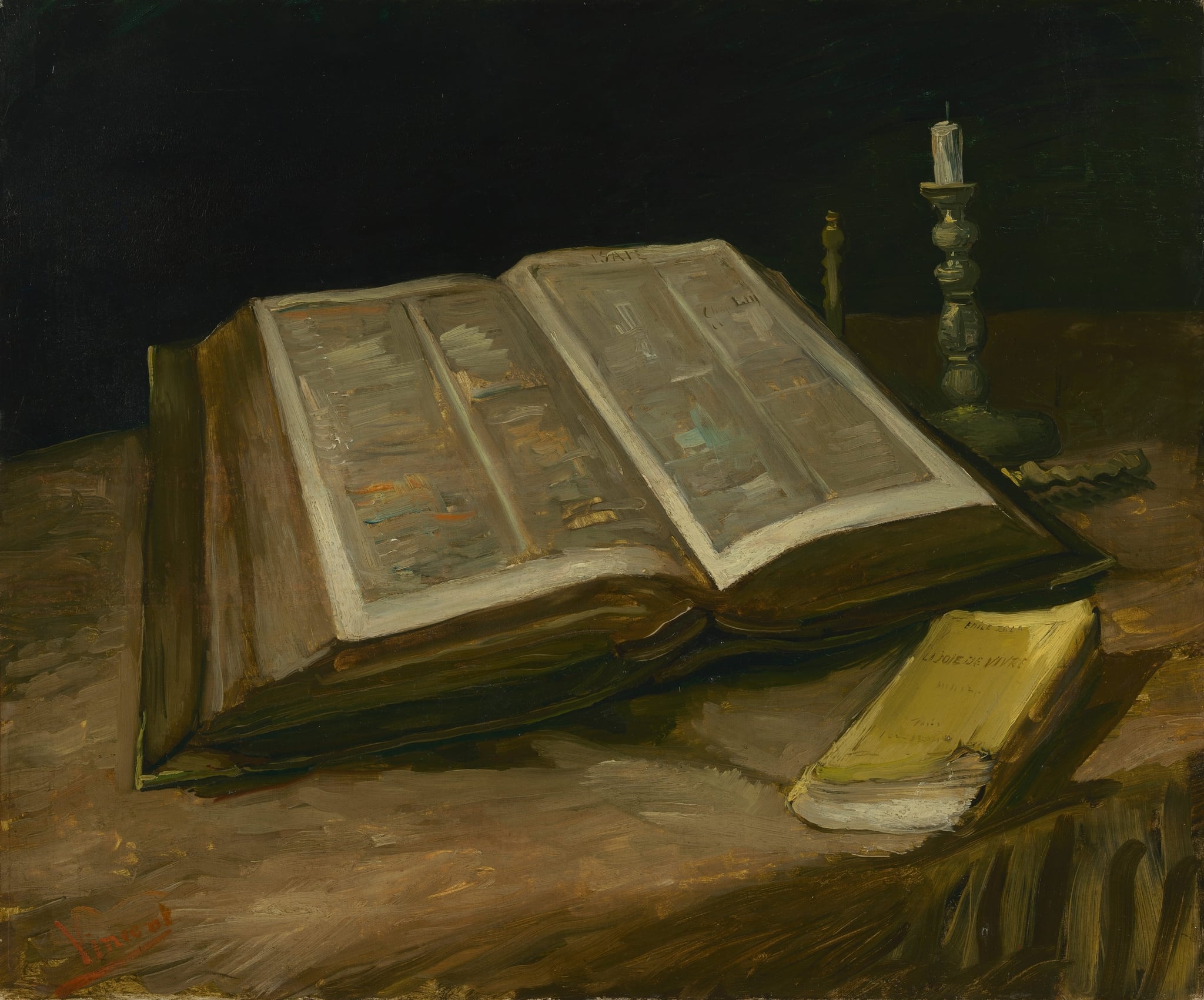
Still Life with Bible
Vincent van Gogh (1885)
Vincent van Gogh’s Still Life with Bible (1885) stages a stark encounter between a monumental family <strong>Bible</strong>, a snuffed <strong>candle</strong>, and Zola’s yellow‑covered <strong>La joie de vivre</strong>. The painting’s heavy, earthen brushwork and diagonal sweep forge a tense dialogue between <strong>inherited faith</strong> and <strong>modern experience</strong> <sup>[1]</sup><sup>[2]</sup>.
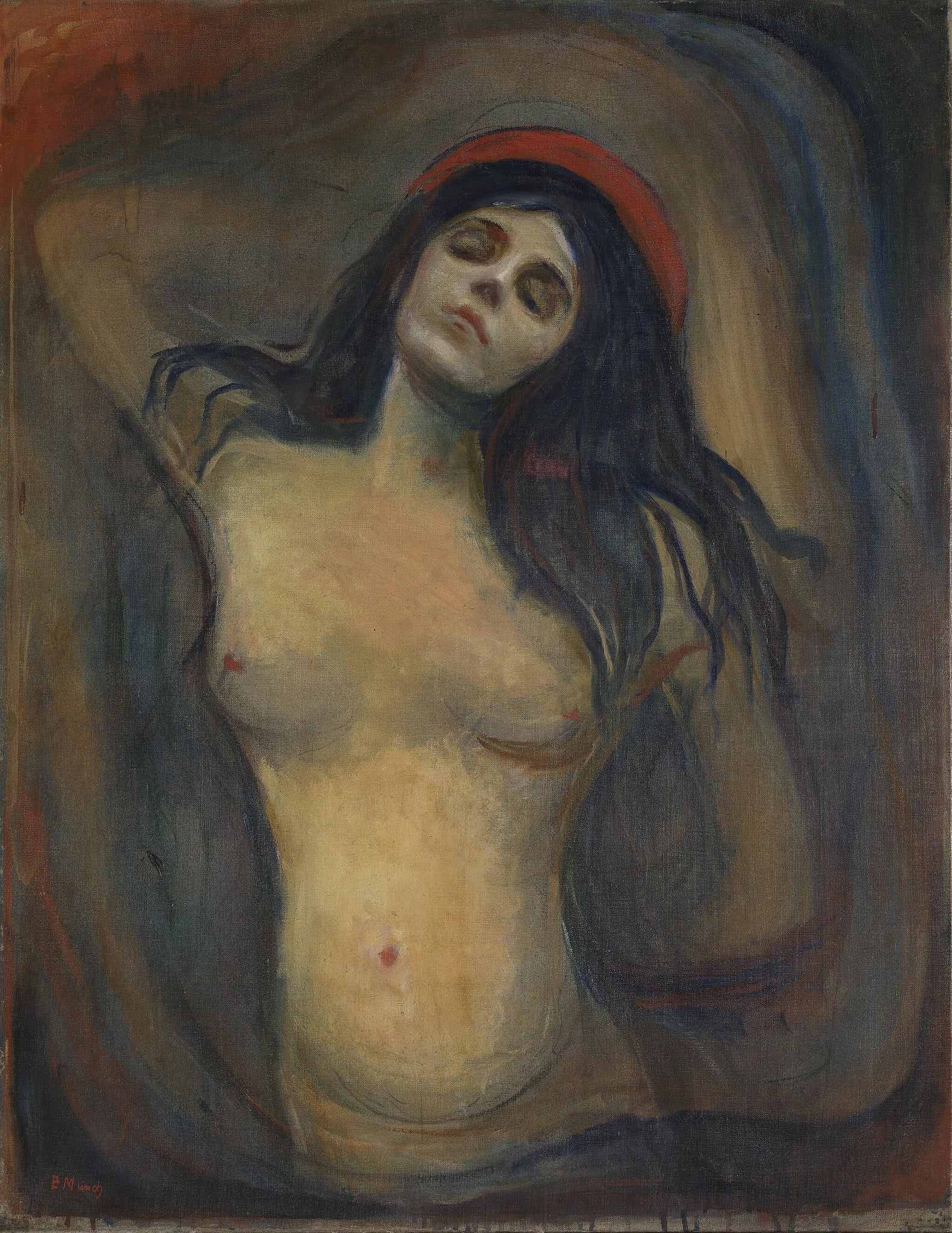
Madonna
Edvard Munch (1894)
Munch’s Madonna stages a collision of <strong>sanctity and sensuality</strong>: a half-length nude, eyes closed, tilts into a crimson nimbus while a dark, tidal field seems to carry her body. With smeared contours and a sparse palette, the figure hovers between emergence and dissolution, turning the Virgin’s icon into a modern emblem of <strong>eros, creation, and death</strong> <sup>[1]</sup><sup>[2]</sup><sup>[3]</sup>.
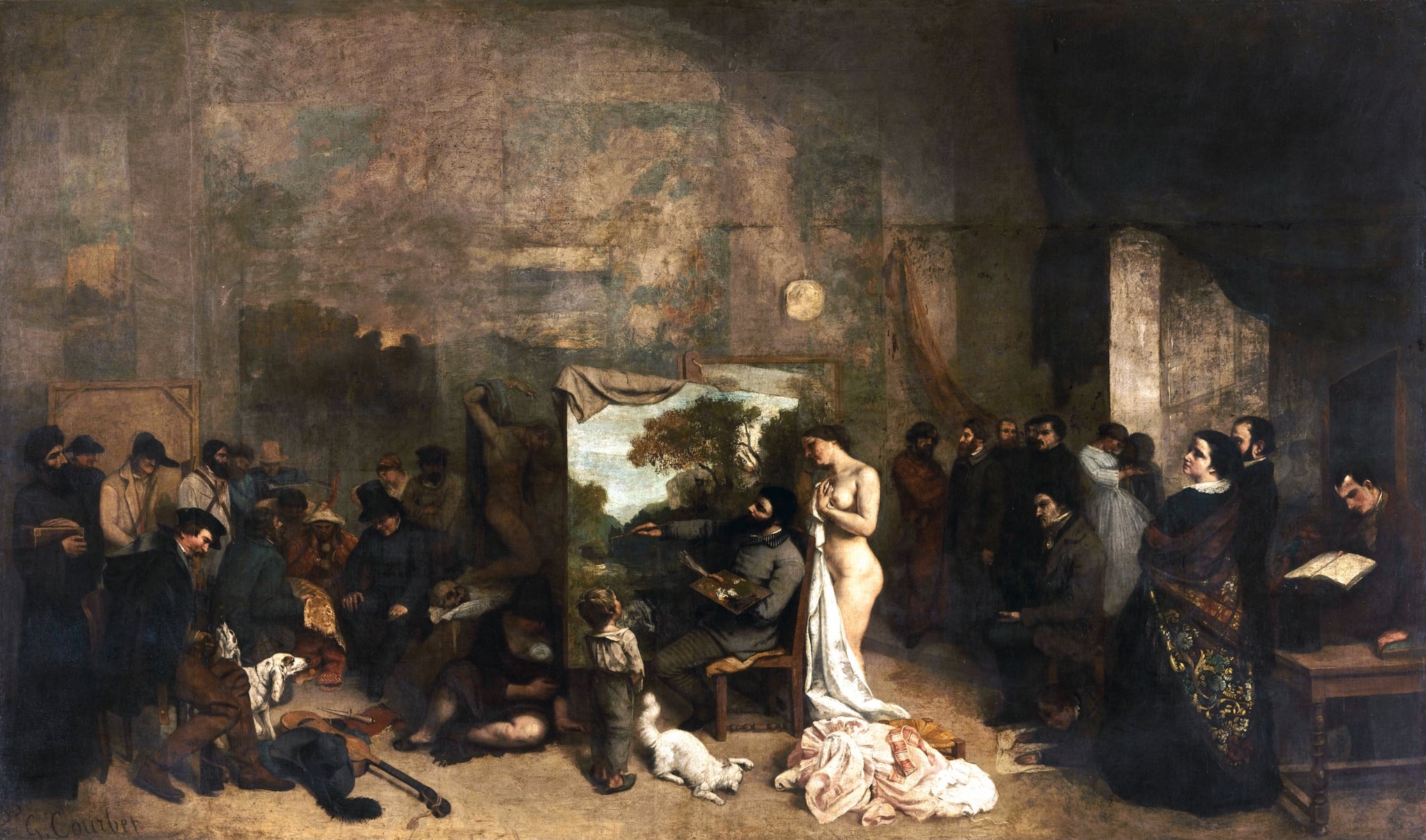
The Painter’s Studio
Gustave Courbet (1854–1855)
Gustave Courbet’s The Painter’s Studio stages a triptych-like drama: a radiant center where the artist paints a sunlit landscape before a child and a nude figure "naked like <strong>Truth</strong>," flanked by the "other world" of poverty and labor on the left and the "<strong>shareholders</strong>" of culture and patronage on the right <sup>[1]</sup>. The composition asserts <strong>Realism</strong> as a mediating force that translates lived experience into art without idealization.
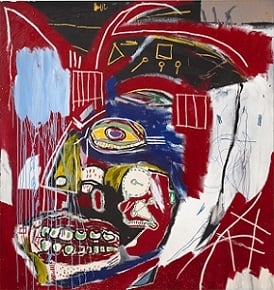
In This Case
Jean-Michel Basquiat (1983)
In This Case thrusts a flayed, X‑ray‑like head against a <strong>searing red field</strong>, where boxed teeth, a target‑bright <strong>single eye</strong>, and schematic glyphs above the brow turn the face into a site of <strong>classification and alarm</strong>. Jean-Michel Basquiat fuses anatomy with street mark‑making to stage a confrontation with <strong>mortality, surveillance, and Black embodiment</strong> <sup>[1]</sup><sup>[2]</sup>.
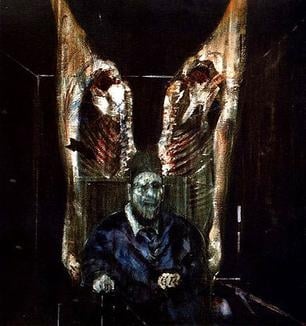
Figure with Meat
Francis Bacon (1954)
Francis Bacon’s Figure with Meat fuses a screaming pontiff with two flayed carcasses that hang like grotesque wings, locking power and flesh into the same dark box. Through <strong>cage-like lines</strong>, <strong>stage-lit isolation</strong>, and paint handled as <strong>raw meat</strong>, Bacon asserts a brutal equivalence: sanctity and sovereignty are only bodies destined to decay <sup>[1]</sup><sup>[2]</sup>.
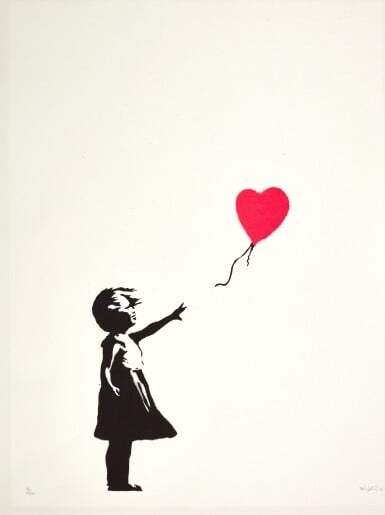
Girl with Balloon
Banksy (2002 (street motif); 2004–2005 (screenprint editions))
A lone, stenciled child reaches toward a bright red, heart-shaped balloon drifting into the blank field—an image that compresses <strong>hope</strong>, <strong>loss</strong>, and <strong>resilience</strong> into a single gesture. The monochrome figure and the one note of red make Girl with Balloon a portable emblem that moves easily from the street to prints and global campaigns <sup>[1]</sup><sup>[2]</sup>.
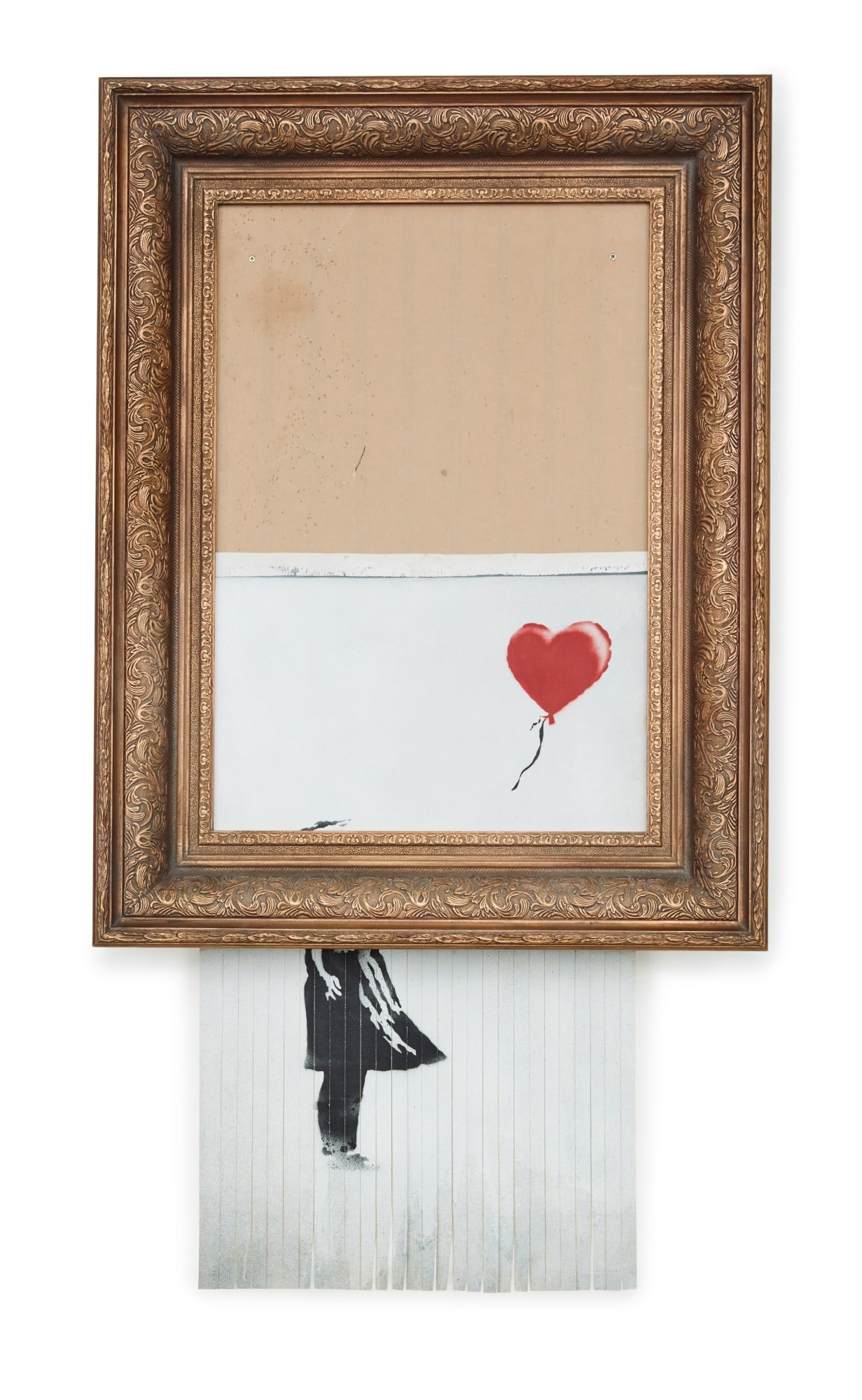
Love is in the Bin
Banksy (2018)
Banksy’s Love is in the Bin turns a familiar image into a live act of <strong>institutional critique</strong>: the ornate frame that normally guarantees value becomes a machine of <strong>auto‑destruction</strong>. The red, heart‑shaped balloon floats intact in a pale field while the lower half—showing the girl—hangs in vertical shreds, freezing the second when symbol survives but subject is sacrificed <sup>[1]</sup><sup>[3]</sup>. The work asserts that in contemporary art, <strong>spectacle and framing</strong> can fabricate value as surely as craftsmanship.
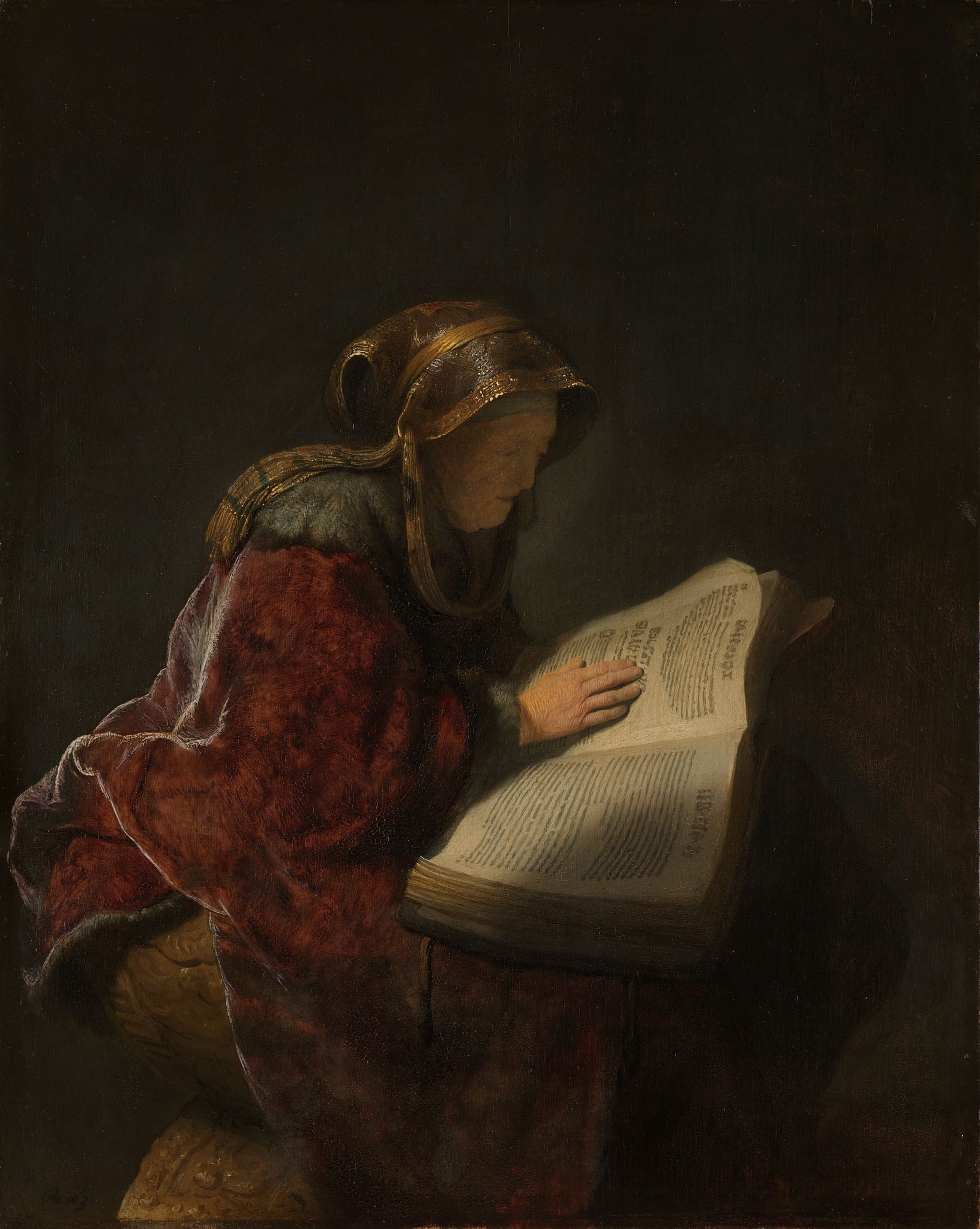
Old Woman Reading, Probably the Prophetess Anna
Rembrandt van Rijn (1631)
A solitary reader bends over a monumental book, its pages and her guiding finger catching the only concentrated light. Rembrandt van Rijn turns this quiet act into a scene of <strong>revelation</strong>, proposing the sitter as <strong>Anna the prophetess</strong>, whose lifelong devotion is embodied in the weight and glow of Scripture <sup>[1]</sup><sup>[4]</sup>.
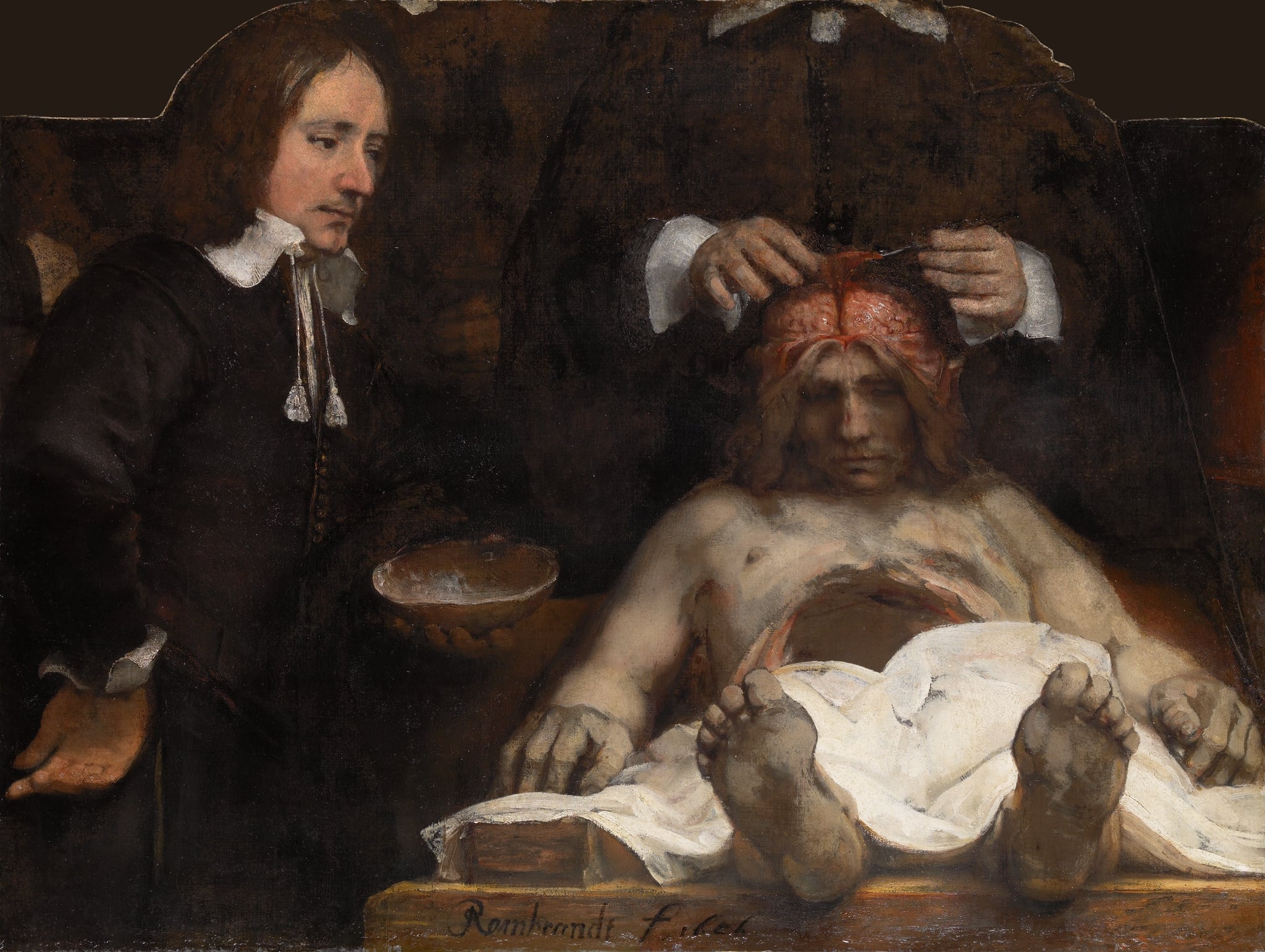
The Anatomy Lesson of Dr. Jan Deijman
Rembrandt van Rijn (1656)
Rembrandt van Rijn’s The Anatomy Lesson of Dr. Jan Deijman (1656) stages a public dissection in which the surgeon exposes the <strong>falx cerebri</strong> while a foreshortened corpse thrusts its feet toward us. The white sheet blazes under Rembrandt’s <strong>chiaroscuro</strong>, making inquiry itself the drama as instruments and cuffs emerge from shadow. What survives—now a fragment—is a riveting meditation on knowledge practiced at the edge of <strong>mortality</strong> <sup>[1]</sup><sup>[3]</sup><sup>[5]</sup>.
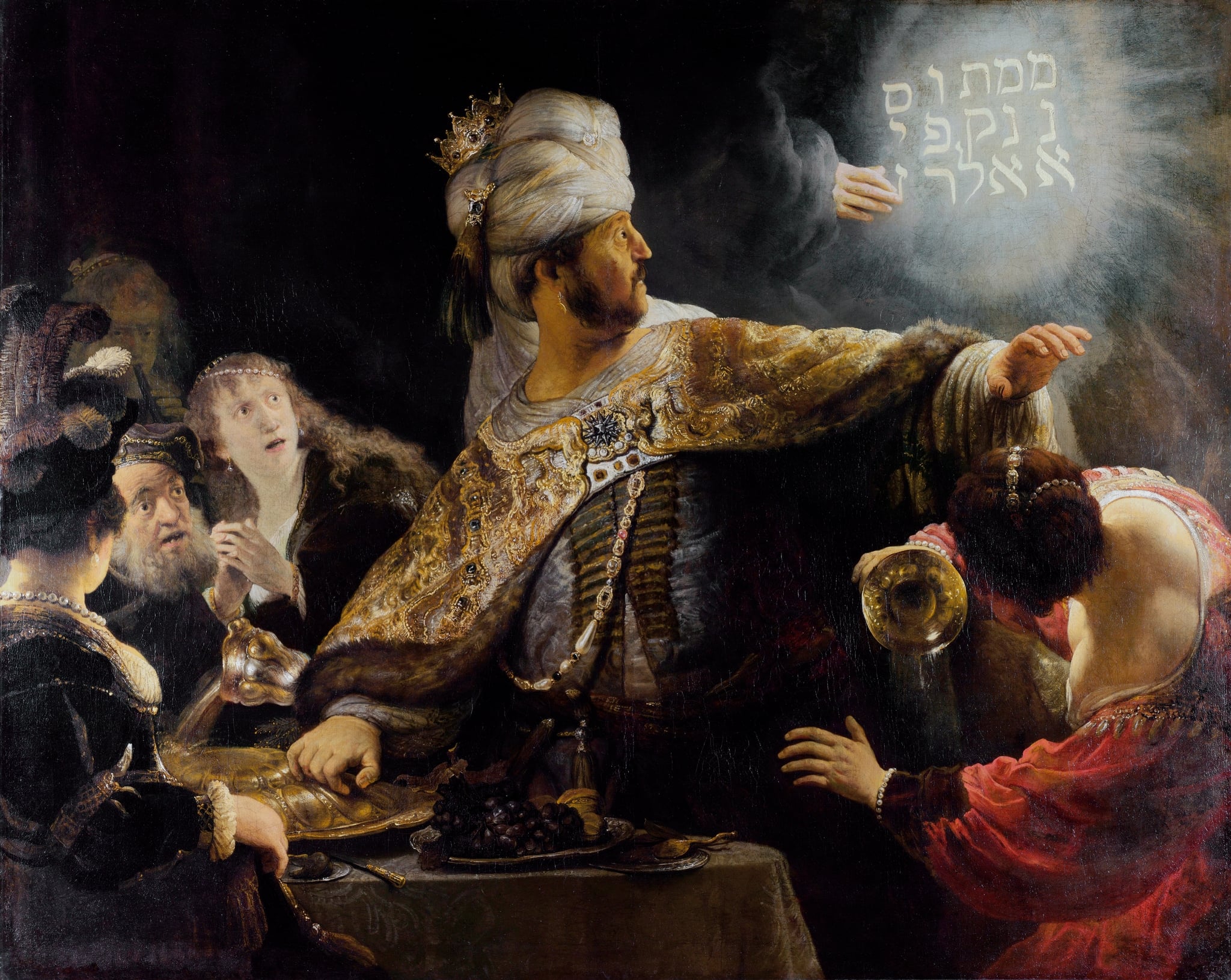
Belshazzar's Feast (study listed separately in some catalogues)
Rembrandt van Rijn (c. 1636–1638)
In Belshazzar's Feast (study listed separately in some catalogues), Rembrandt van Rijn arrests the instant a royal revel is judged by a <strong>supernatural decree</strong>. A radiant hand writes the fateful words while the bejeweled king jerks round, courtiers flinch, and sacred vessels glint—opulence set against <strong>divine judgment</strong> <sup>[1]</sup><sup>[2]</sup>.
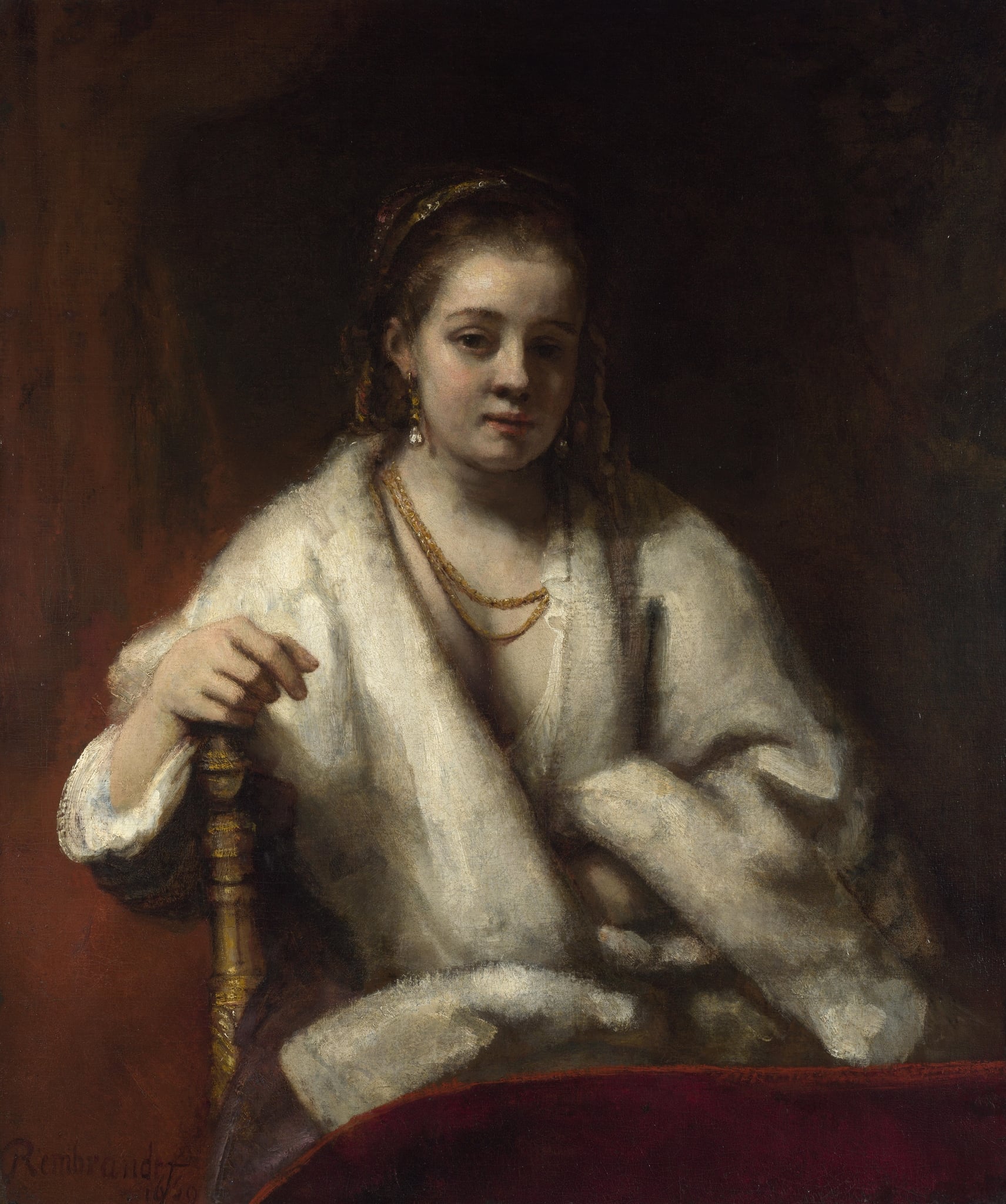
Portrait of Hendrickje Stoffels
Rembrandt van Rijn (c. 1654–1656)
In Portrait of Hendrickje Stoffels, Rembrandt van Rijn stages an intimate encounter in which a young woman leans from darkness into <strong>golden, directional light</strong>, her fur-trimmed wrap and jewelry catching the eye while her expression remains inward-looking. The thick impasto of the robe, the <strong>subtle glint of a gold chain and pearl earring</strong>, and the anchoring <strong>red table edge</strong> fuse touch, time, and tenderness into a single, contemplative presence <sup>[1]</sup>. Painted in the mid‑1650s, the work distills Rembrandt’s late style: psychological depth, restrained palette, and <strong>moral chiaroscuro</strong> <sup>[1]</sup>.
A Bearded Man in a Cap
Rembrandt van Rijn (late 1650s (probably 1657))
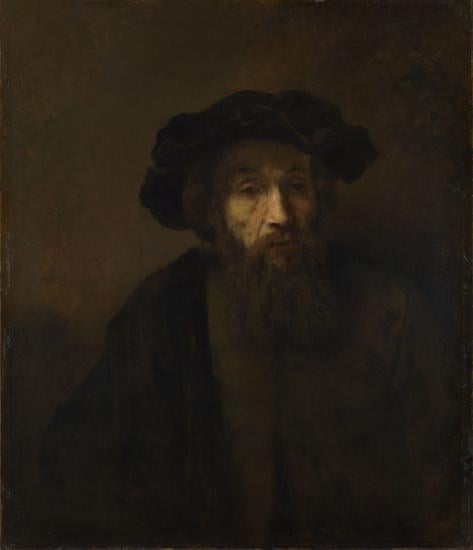
<strong>A Bearded Man in a Cap</strong> is a late‑1650s tronie by <strong>Rembrandt van Rijn</strong>, a meditative study where raking light grazes a timeworn face emerging from darkness. With a broad, soft <strong>cap</strong> and square‑cut <strong>beard</strong>, the figure embodies aged contemplation rather than social identity, rendered through Rembrandt’s late <strong>chiaroscuro</strong> and tactile brushwork <sup>[1]</sup>.
An Old Man in an Armchair
Rembrandt van Rijn (1652 (signed; generally dated 1650s))
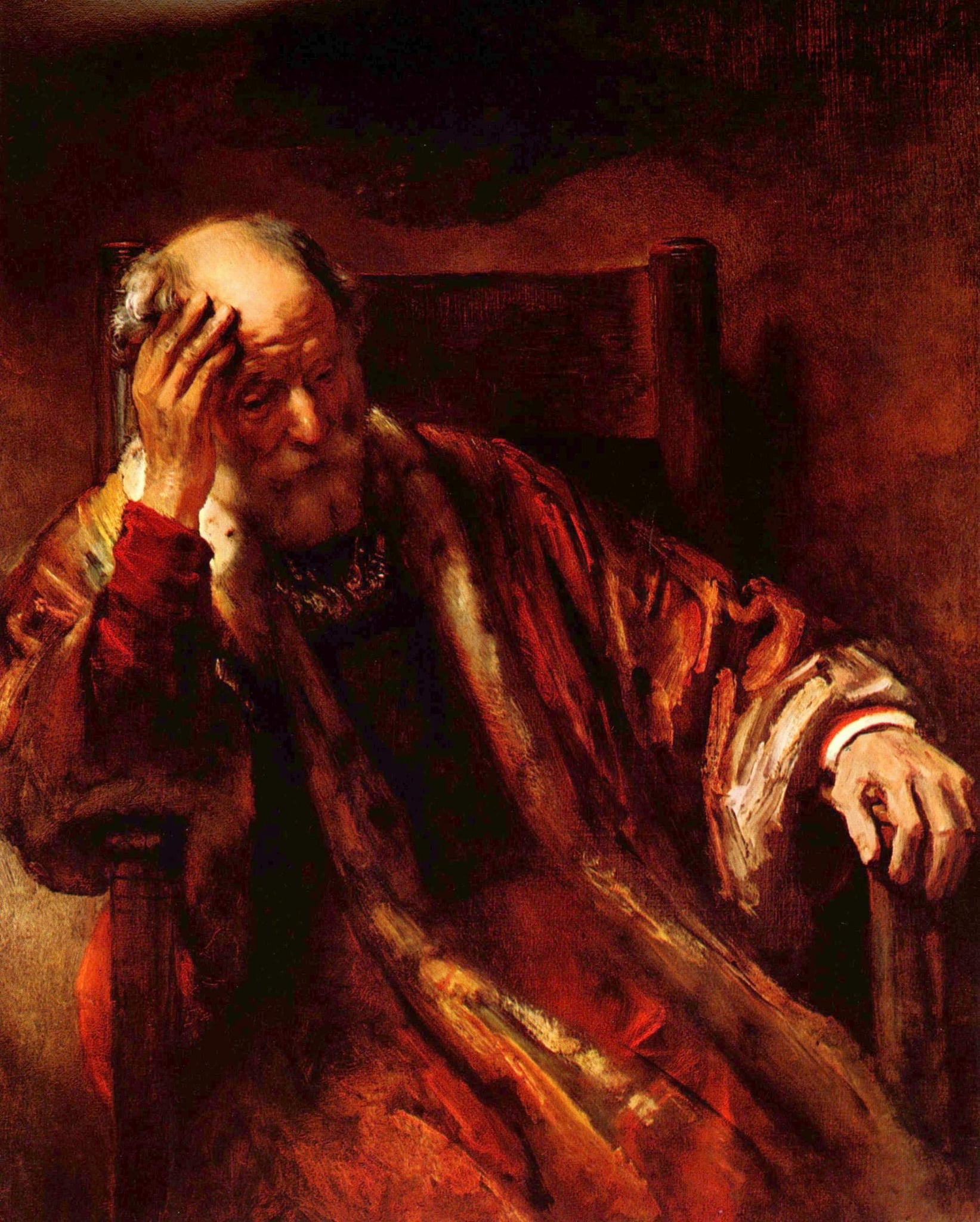
An Old Man in an Armchair stages a solitary figure caught between <strong>worldly dignity</strong> and <strong>inner reckoning</strong>. A warm beam isolates the bald head and right hand while the robe dissolves into <strong>rough, animated brushwork</strong>, turning the chair into a site of meditation and time’s weight <sup>[1]</sup>.