Loss, grief, and consolation
Featured Artworks
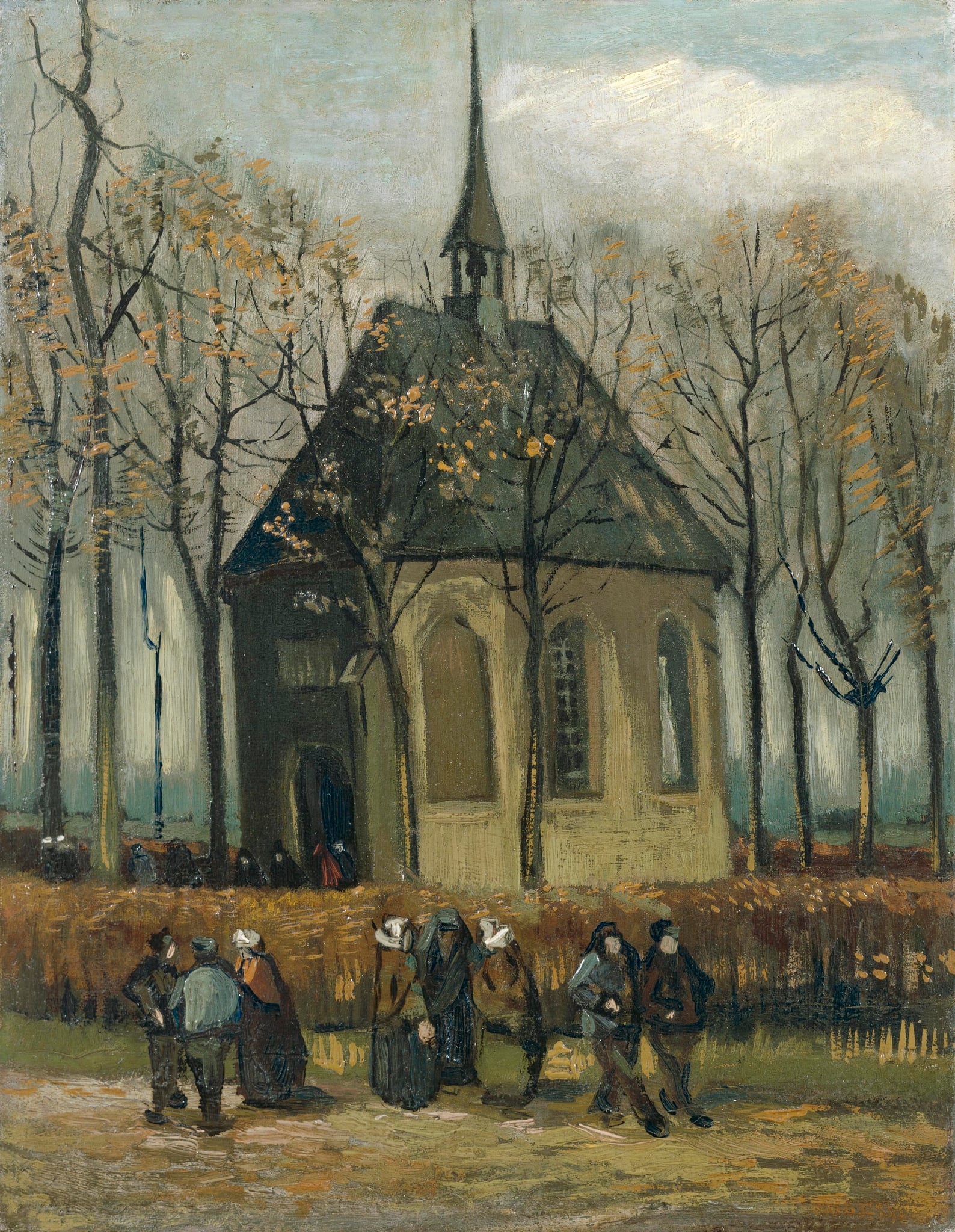
Congregation Leaving the Reformed Church in Nuenen
Vincent van Gogh (1884; reworked 1885)
Vincent van Gogh’s Congregation Leaving the Reformed Church in Nuenen turns a modest village service into a meditation on <strong>mourning</strong>, <strong>community</strong>, and <strong>thresholds</strong>. The low steeple, clipped hedge, and bundled figures in black shawls and white caps file past autumn-tinted, near-bare trees, shifting the scene from ordinary Sunday ritual to public grief. Painted in 1884 and <strong>reworked in 1885</strong> with the congregation and ocher leaves, the canvas folds private loss into rural Protestant life <sup>[1]</sup><sup>[2]</sup><sup>[3]</sup>.
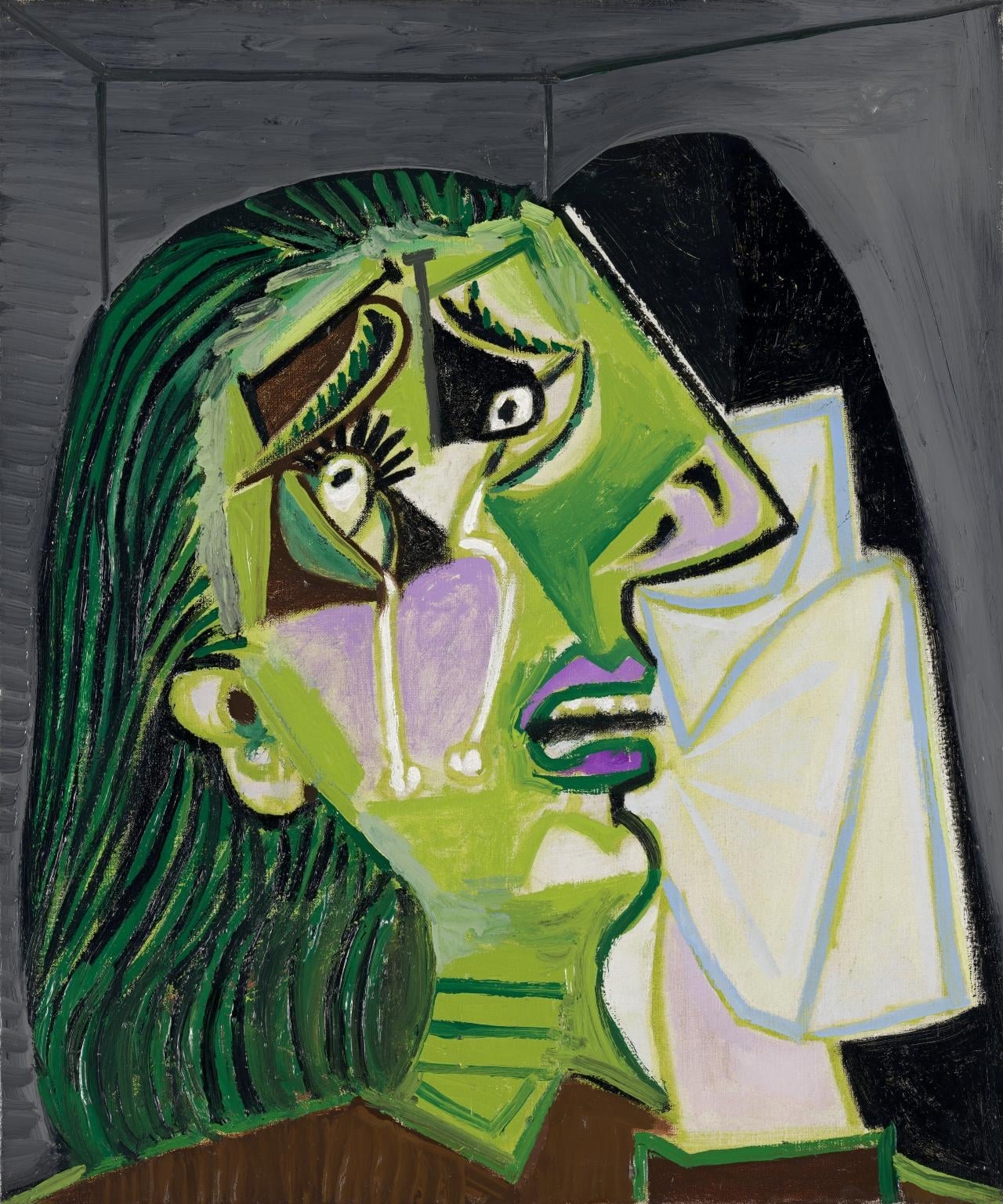
The Weeping Woman
Pablo Picasso (1937)
Picasso’s The Weeping Woman turns private mourning into a public, <strong>iconic emblem of civilian grief</strong>. Shattered planes, <strong>acidic greens and purples</strong>, and jewel-like tears force the viewer to feel the fracture of perception that follows trauma <sup>[1]</sup><sup>[2]</sup>.
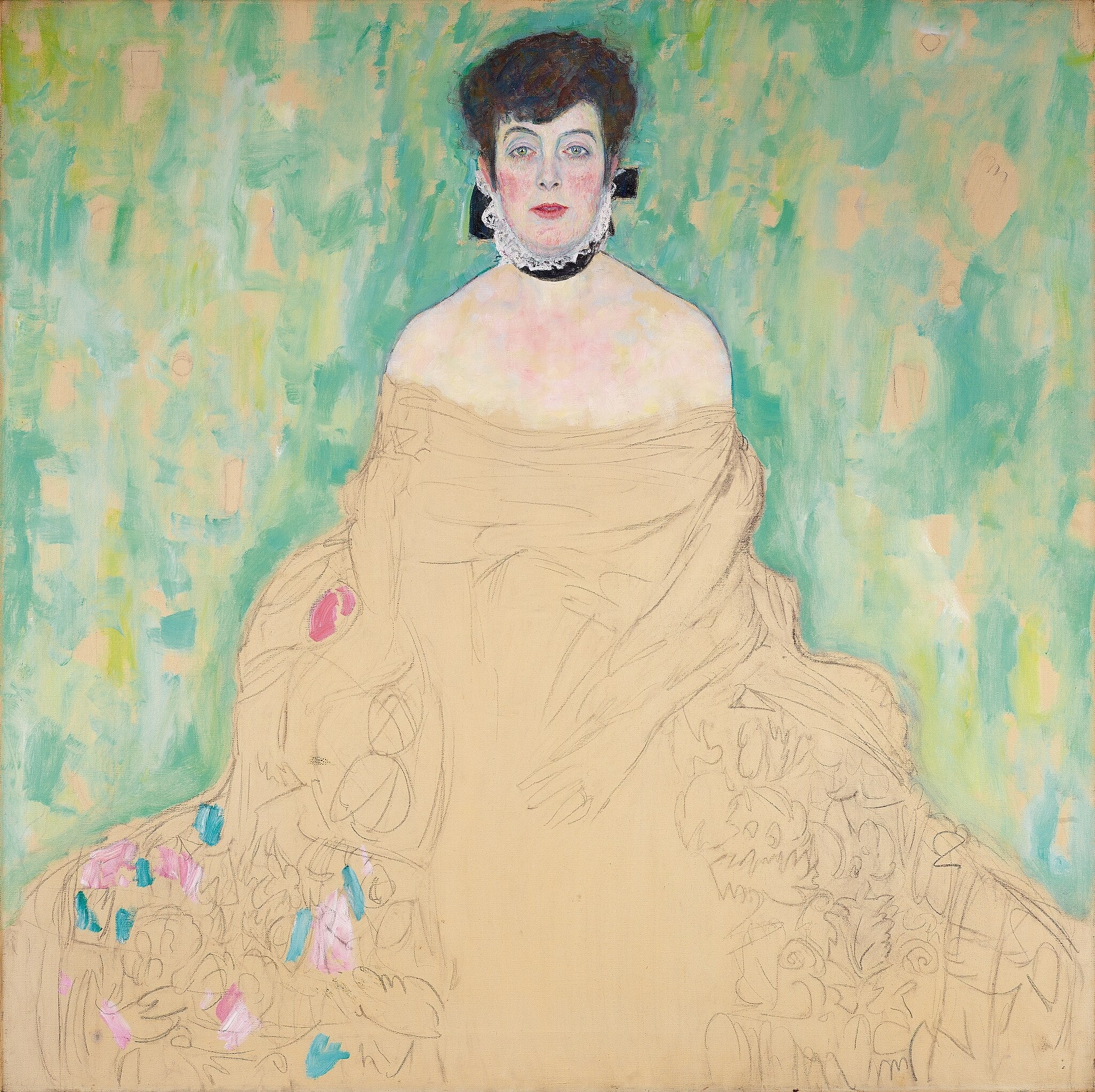
Amalie Zuckerkandl
Gustav Klimt (1917–1918)
Gustav Klimt’s Amalie Zuckerkandl is an <strong>unfinished</strong> late portrait in which a fully realized head and shoulders float above a gown left as <strong>skeletal graphite and washes</strong>. Set against a mottled, cool <strong>green ground</strong>, her flushed face, direct gaze, black <strong>choker</strong> and crisp lace collar stage a drama of poise, sensuality, and restraint <sup>[1]</sup><sup>[6]</sup>. The painting’s incompletion becomes the work’s meaning: a vivid selfhood <strong>emerging</strong> while ornament remains <strong>in potential</strong>.
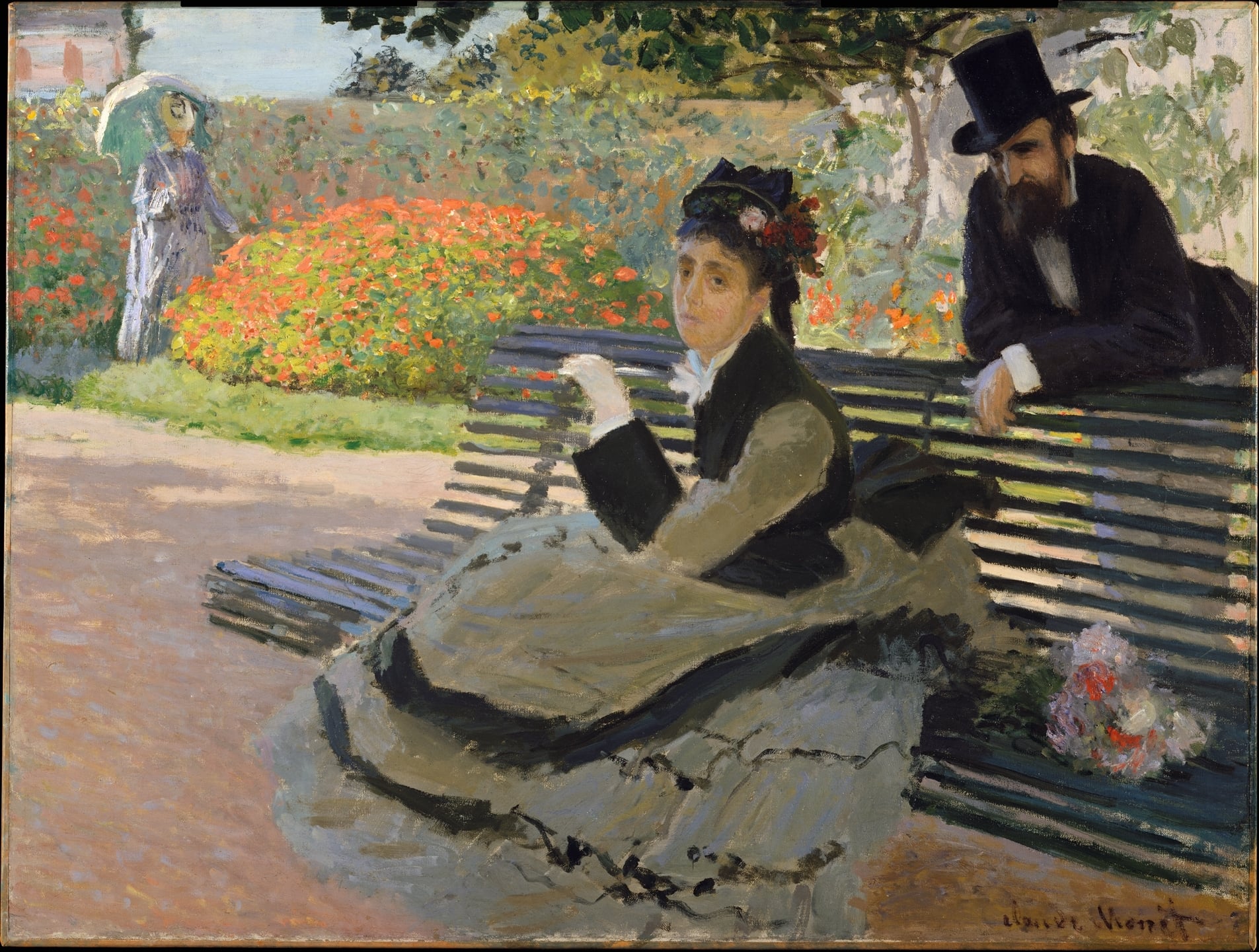
Camille Monet on a Garden Bench
Claude Monet (1873)
Claude Monet’s Camille Monet on a Garden Bench (1873) stages an intimate pause where <strong>light, grief, and modern leisure</strong> intersect. Camille, shaded and withdrawn, holds a letter while a <strong>top‑hatted neighbor</strong> hovers; a bright bank of <strong>red geraniums</strong> and a strolling woman with a parasol ignite the distance <sup>[1]</sup>. Monet converts a domestic garden into a scene about <strong>psychological distance</strong> amid fleeting sunlight.
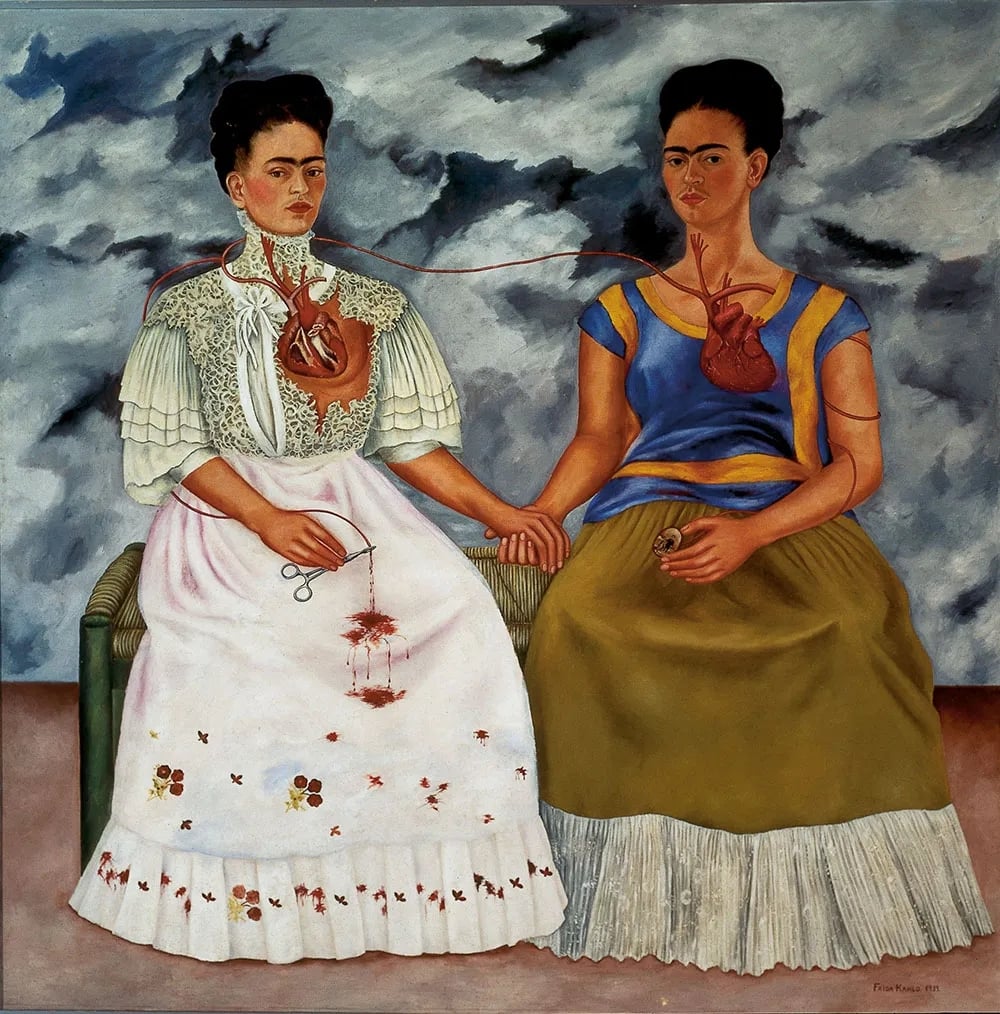
The Two Fridas
Frida Kahlo (1939)
The Two Fridas presents a doubled self seated under a storm-charged sky, their opened chests revealing two hearts joined by a single artery. One Frida in a European dress clamps the vessel with a surgical <strong>hemostat</strong> as blood stains her skirt, while the other in a <strong>Tehuana</strong> dress steadies a locket and the shared pulse. The canvas turns private injury into a public image of <strong>dual identity</strong> and endurance <sup>[1]</sup><sup>[2]</sup>.
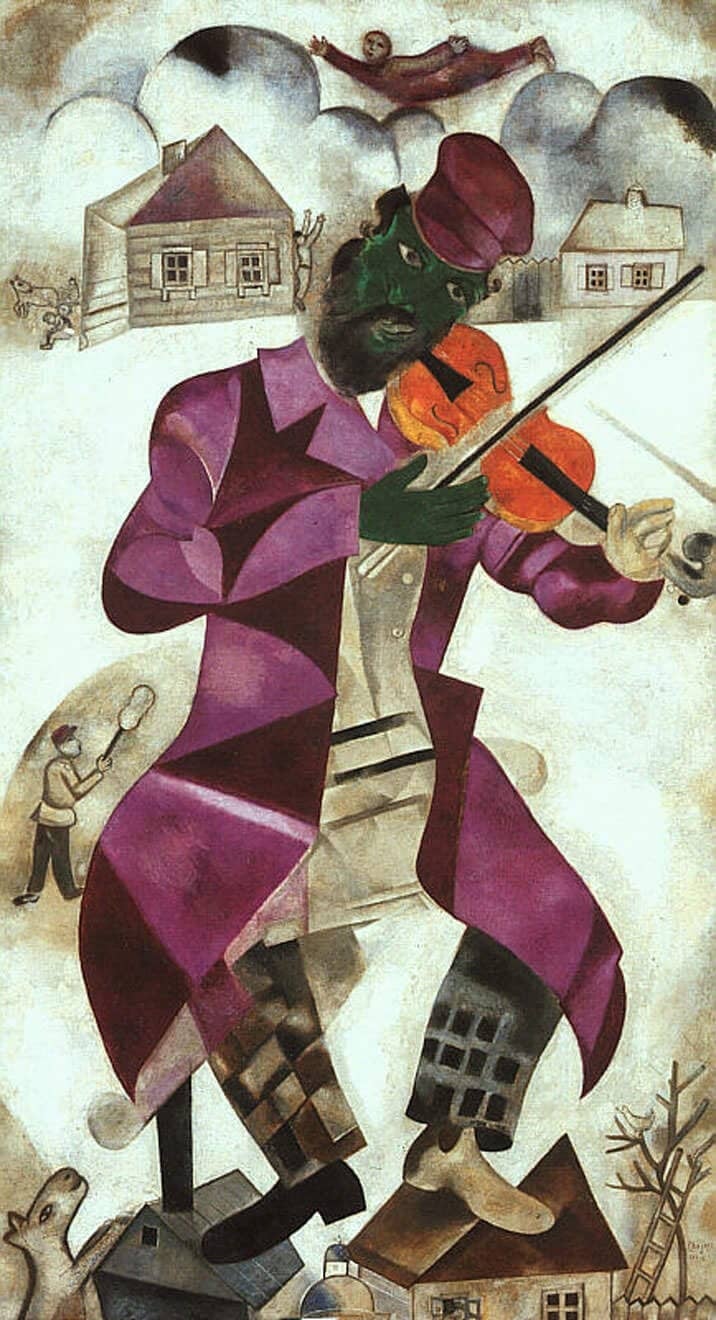
The Green Violinist
Marc Chagall (1923–1924)
The Green Violinist magnifies a village fiddler into a sky‑bridging guardian, his <strong>green face</strong> and <strong>purple coat</strong> turning him into a spiritual emissary rather than a mere entertainer. Striding across crooked <strong>rooftops</strong> without crushing them, he binds the shtetl’s houses, tree, clouds, and wandering figures into one continuous chord. Chagall fuses folkloric memory with modernist facets to assert music as the community’s sustaining force.
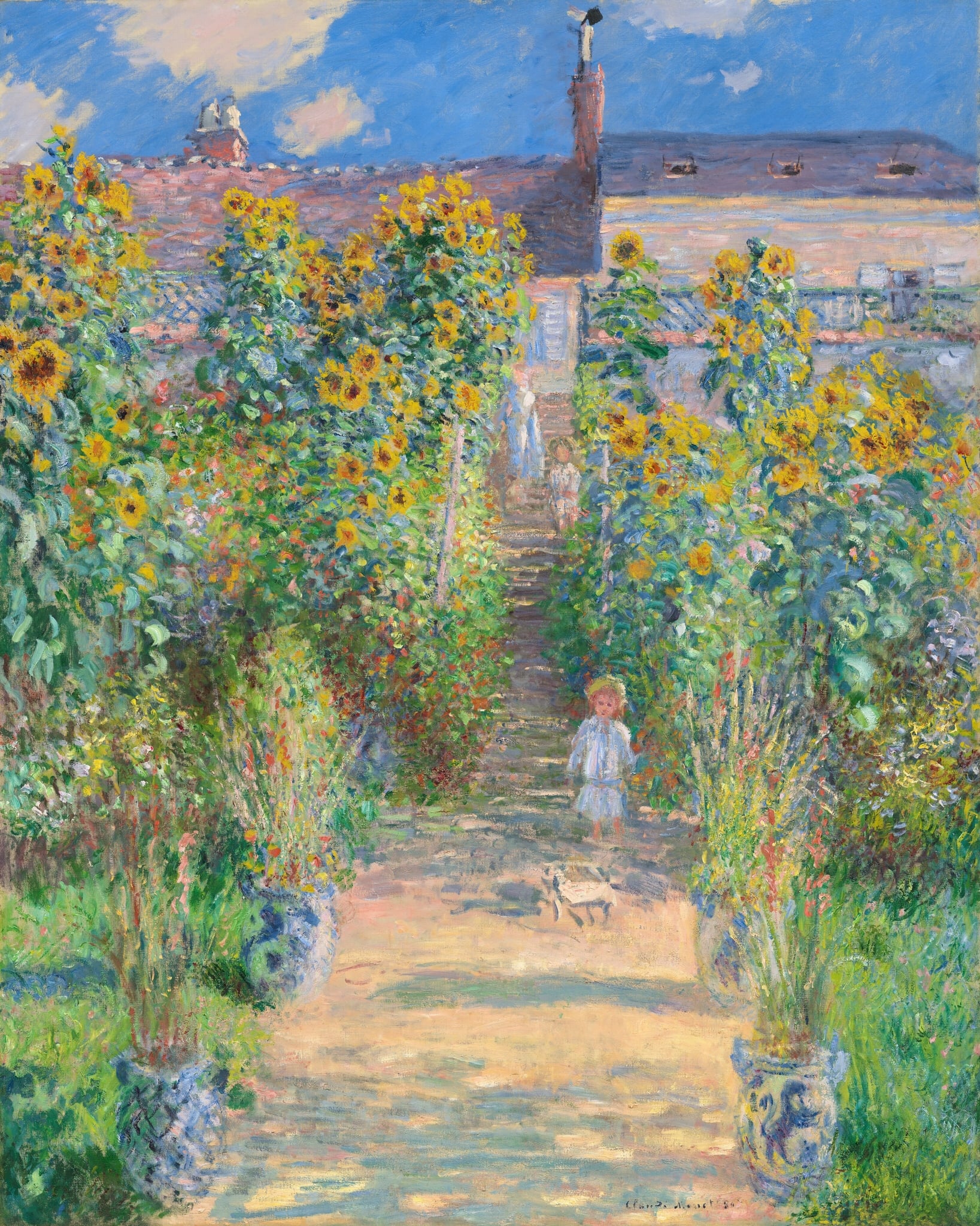
The Artist's Garden at Vétheuil
Claude Monet (1881)
Claude Monet’s The Artist’s Garden at Vétheuil stages a sunlit ascent through a corridor of towering sunflowers toward a modest house, where everyday life meets cultivated nature. Quick, broken strokes make leaves and shadows tremble, asserting <strong>light</strong> and <strong>painterly surface</strong> over linear contour. Blue‑and‑white <strong>jardinieres</strong> anchor the foreground, while a child and dog briefly pause on the path, turning the garden into a <strong>domestic sanctuary</strong> <sup>[1]</sup><sup>[2]</sup>.
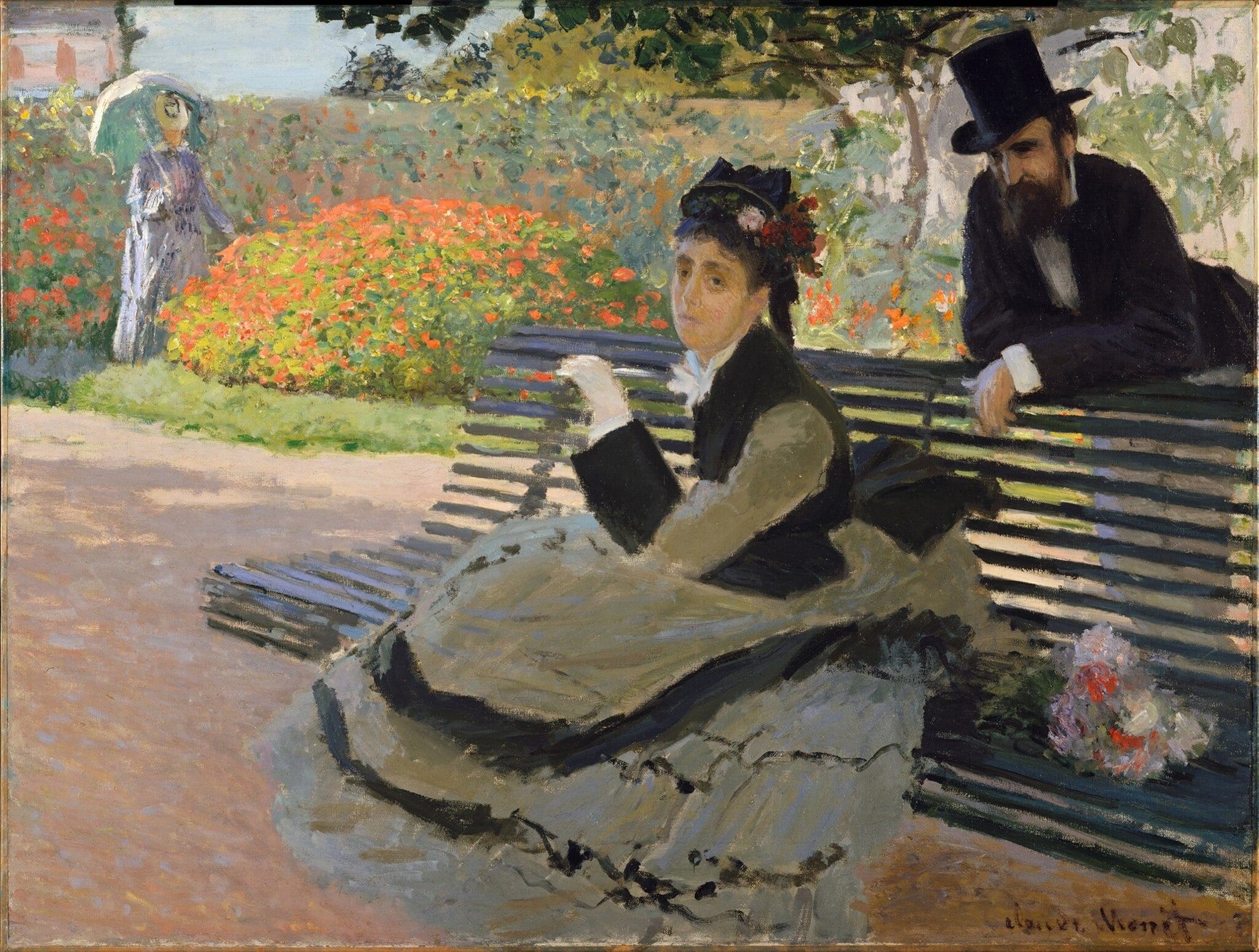
Camille Monet (1847–1879) on a Garden Bench
Claude Monet (1873)
Monet stages a modern garden drama along the <strong>diagonal bench</strong> that slices the foreground, setting Camille’s poised figure against a blaze of <strong>geraniums</strong> and dappled light. A <strong>top‑hatted neighbor</strong> leans over the slats as a second woman with a <strong>parasol</strong> wanders among blooms, while a <strong>note</strong> and a slightly tumbled <strong>bouquet</strong> cue a moment interrupted. Light, not contour, builds the scene, suspending private feeling within public leisure <sup>[1]</sup><sup>[2]</sup>.
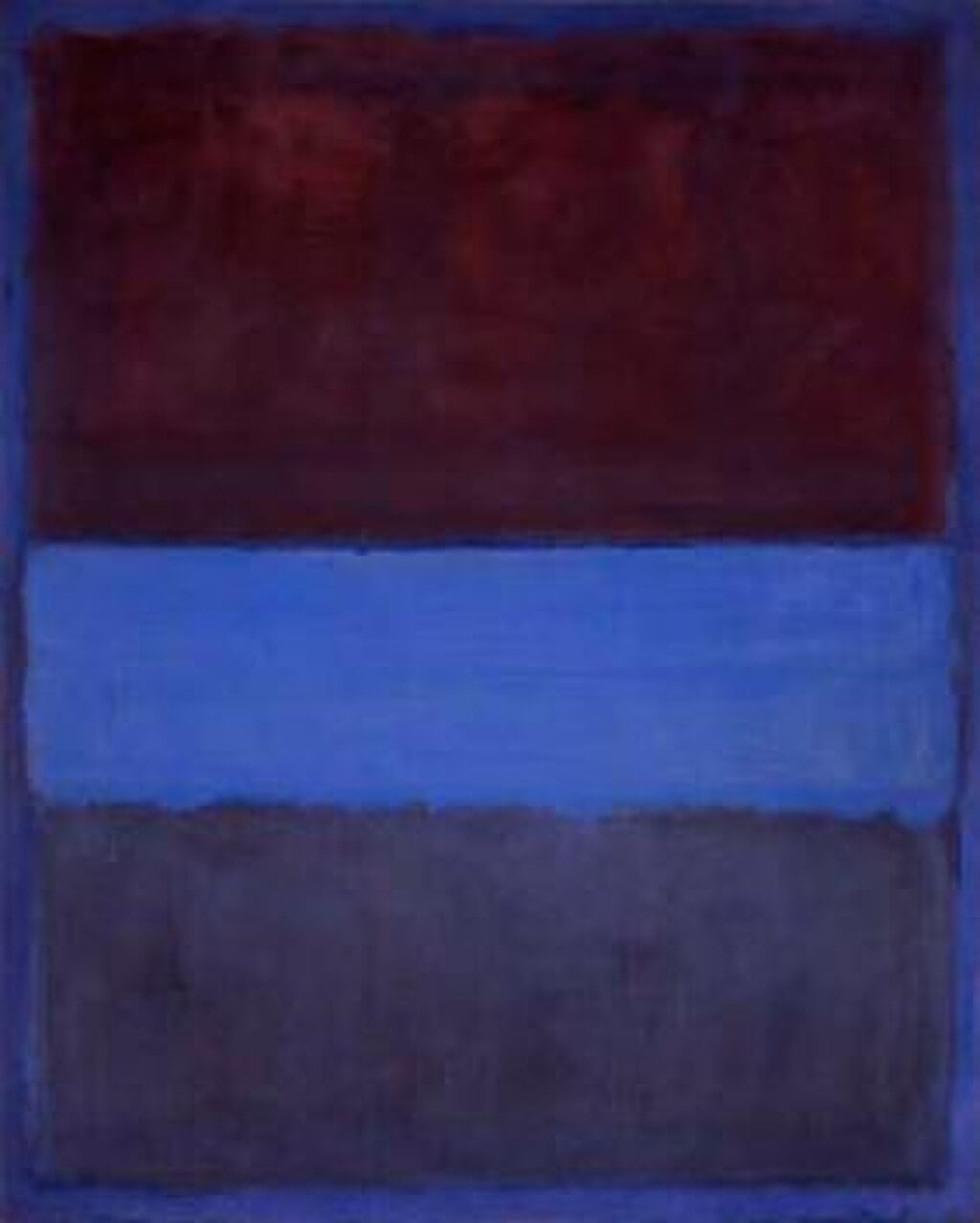
No. 61 (Rust and Blue)
Mark Rothko (1953)
<strong>No. 61 (Rust and Blue)</strong> (1953) stages three hovering color fields—rust, saturated blue, and indigo—within a deep blue perimeter. Through thin, layered oil and feathered borders, Mark Rothko turns color into a felt space where warmth and dusk meet, inviting a contemplative, immersive encounter <sup>[1]</sup><sup>[5]</sup>.
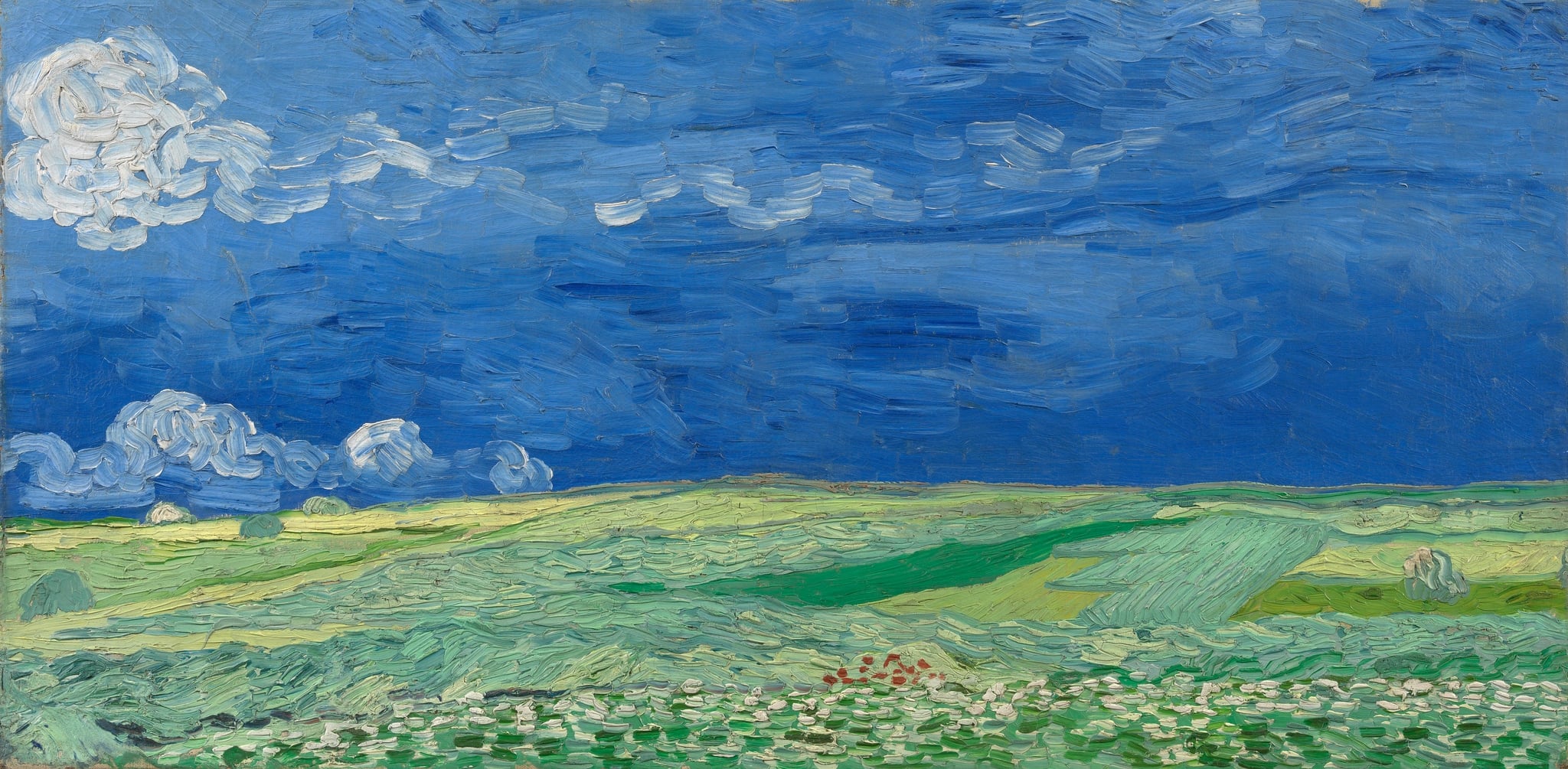
Wheatfield under Thunderclouds
Vincent van Gogh (1890)
A panoramic sweep of land and sky pits a wind‑combed wheatfield against an immense, <strong>thunder‑laden</strong> blue. Van Gogh uses a radically simple two‑band design and dense impasto to stage a confrontation between <strong>turbulence</strong> and <strong>endurance</strong> <sup>[1]</sup><sup>[2]</sup>.
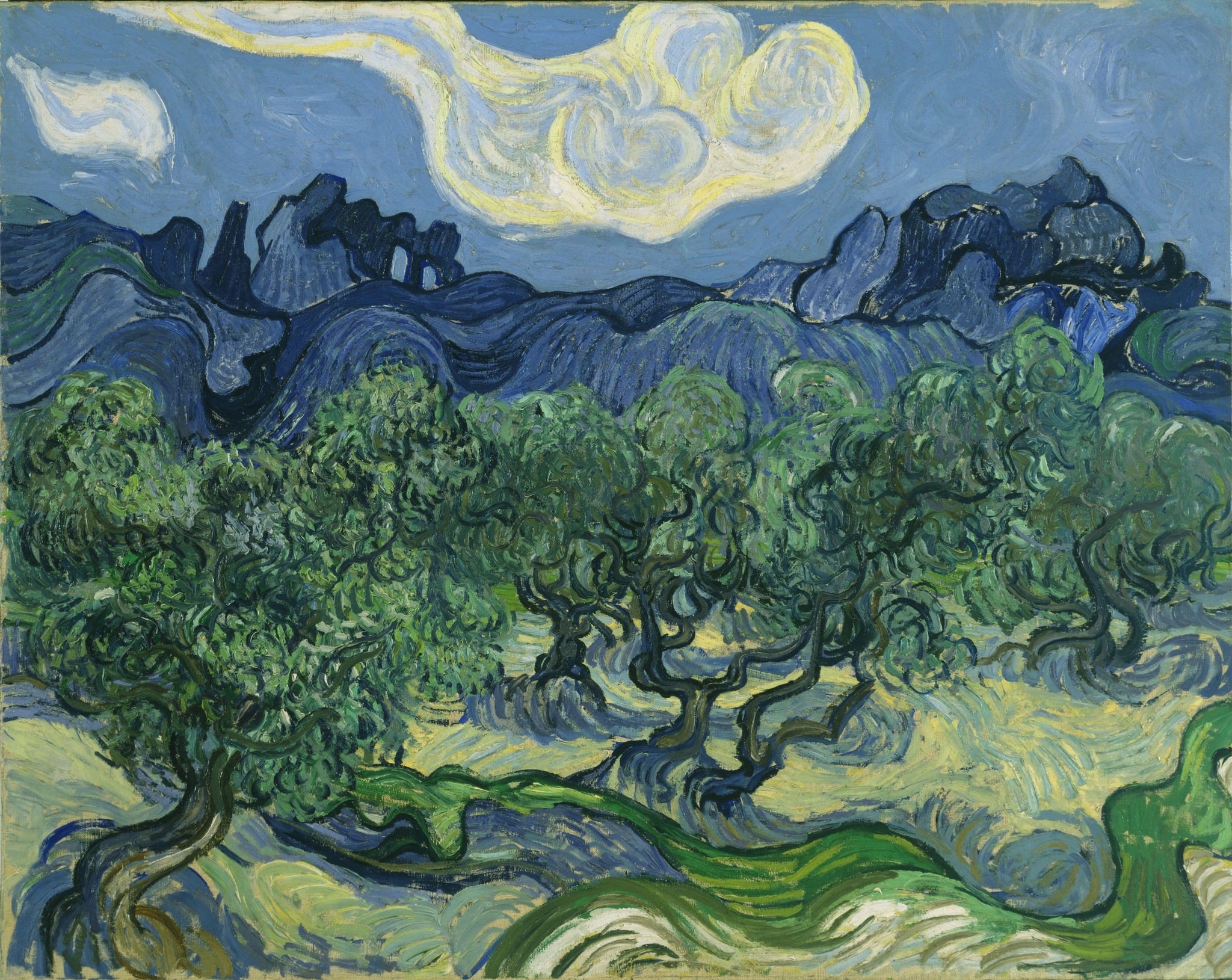
The Olive Trees
Vincent van Gogh (1889)
The Olive Trees courses with <strong>rhythmic, coiling strokes</strong> that bind earth and sky into a single pulse: twisted trunks, whorled foliage, and a pale, bundled <strong>cloud</strong> echo one another across the canvas. Van Gogh turns Provence’s grove before the <strong>Alpilles</strong> into a spiritual landscape where <strong>endurance and consolation</strong> feel visible in color and line <sup>[1]</sup>.
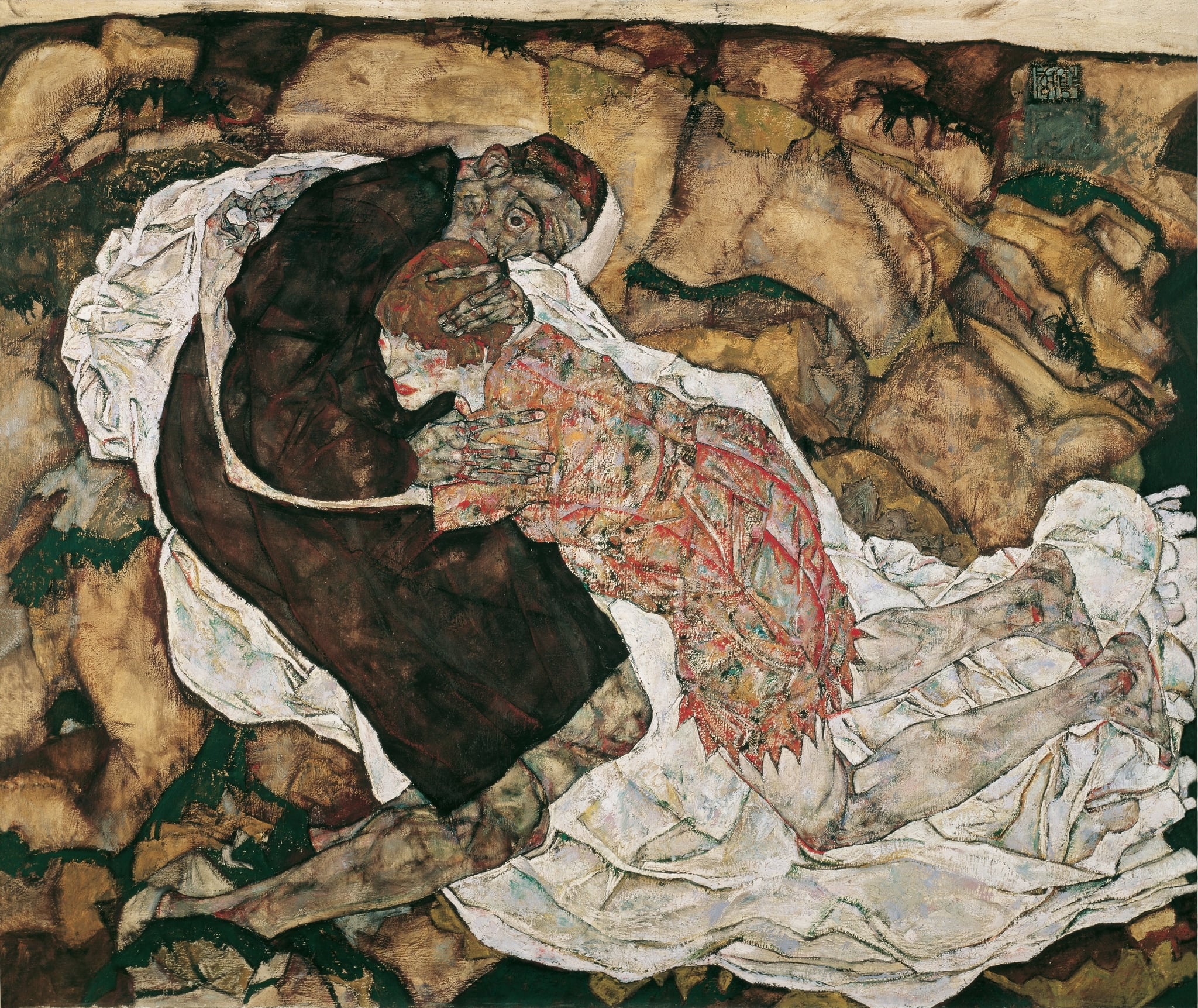
Death and the Maiden
Egon Schiele (1915)
In Death and the Maiden, Egon Schiele fuses <strong>eros and thanatos</strong> into a single, uneasy embrace: a gaunt, hooded figure in dark robes wraps himself around a young woman whose patterned dress and red mouth still signal life. On a crumpled <strong>white cloth</strong>—at once bed and shroud—their angular, ashen bodies kneel against <strong>barren ocher earth</strong>, turning intimacy into a memento of parting. The scene asserts that tenderness and terror are inseparable, especially under the shadow of war.
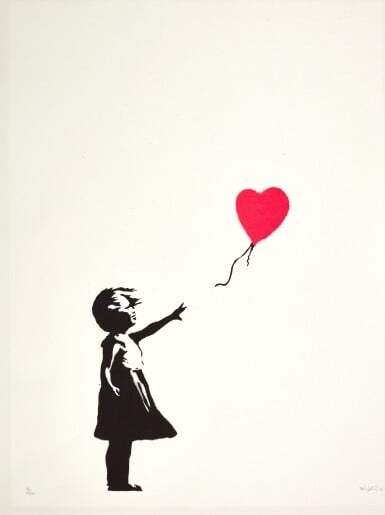
Girl with Balloon
Banksy (2002 (street motif); 2004–2005 (screenprint editions))
A lone, stenciled child reaches toward a bright red, heart-shaped balloon drifting into the blank field—an image that compresses <strong>hope</strong>, <strong>loss</strong>, and <strong>resilience</strong> into a single gesture. The monochrome figure and the one note of red make Girl with Balloon a portable emblem that moves easily from the street to prints and global campaigns <sup>[1]</sup><sup>[2]</sup>.