Francisco Goya Paintings in Madrid — Where to See Them
Madrid is essential for experiencing Francisco Goya because the city puts approximately 21 of his paintings on permanent display across four institutions, offering a rare chance to see his work in varied historical and domestic contexts: Museo Nacional Thyssen-Bornemisza (4), Real Academia de Bellas Artes de San Fernando (13), Museo Nacional del Romanticismo (1), and Palacio de Liria (Fundación Casa de Alba) (3). Together these museums and the private palace let you follow Goya’s range—from academic commissions and Romantic-era portraiture to intimate, privately held masterpieces—without leaving the city.
At a Glance
- Museums
- Museo Nacional Thyssen-Bornemisza, Real Academia de Bellas Artes de San Fernando, Museo Nacional del Romanticismo, Palacio de Liria (Fundación Casa de Alba)
- Highlight
- Don't miss the Real Academia's extensive Goya collection.
- Best For
- Art and history lovers, especially Goya enthusiasts.
Museo Nacional Thyssen-Bornemisza
The Thyssen places Goya within a broad European context, so its Goya paintings are valuable for seeing how he converses with Italian, Flemish and contemporary Spanish painters in a single hang. Because the Thyssen’s collection emphasizes private collecting tastes and transnational dialogues, the museum’s Goyas often illuminate his portrait practice and stylistic shifts when compared side-by-side with Northern and Italian masters.
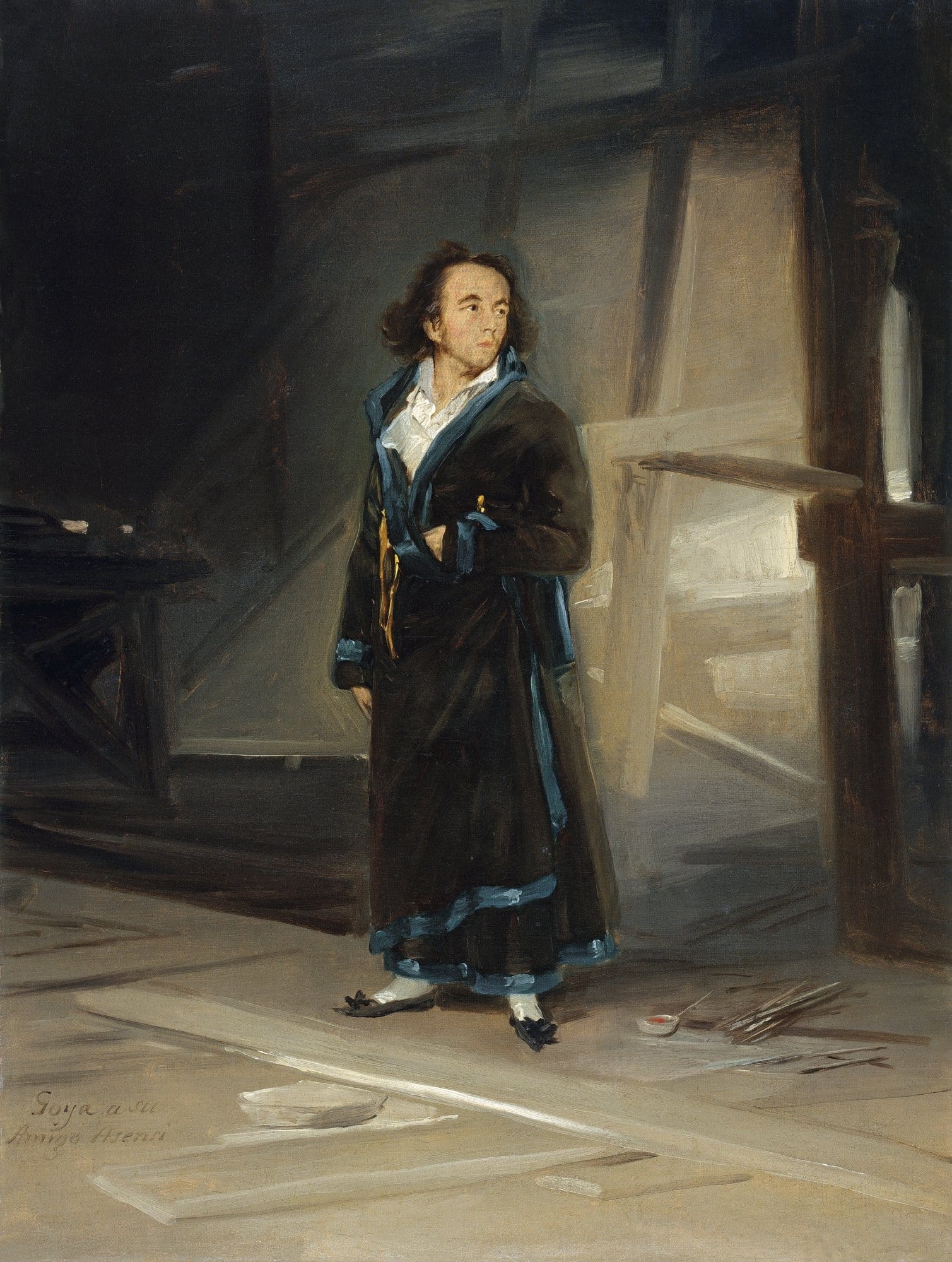
Retrato de Asensio Julià
1798
This portrait shows the painter Asensio Julià standing amid painterly props — brushes, scaffolding and tools — which links him to his collaboration with Goya on the frescoes of San Antonio de la Florida. It’s important as a working-artist portrait that documents Goya’s circle and studio practice at the turn of the century; look for the candid, informal pose, the direct inscription/dedication (Goya to his friend Asensi), and the visual cues (scaffolding and implements) that identify the sitter’s profession. ([museothyssen.org](https://www.museothyssen.org/sites/default/files/document/2024-06/v20_bases.pdf?utm_source=openai))
Must-see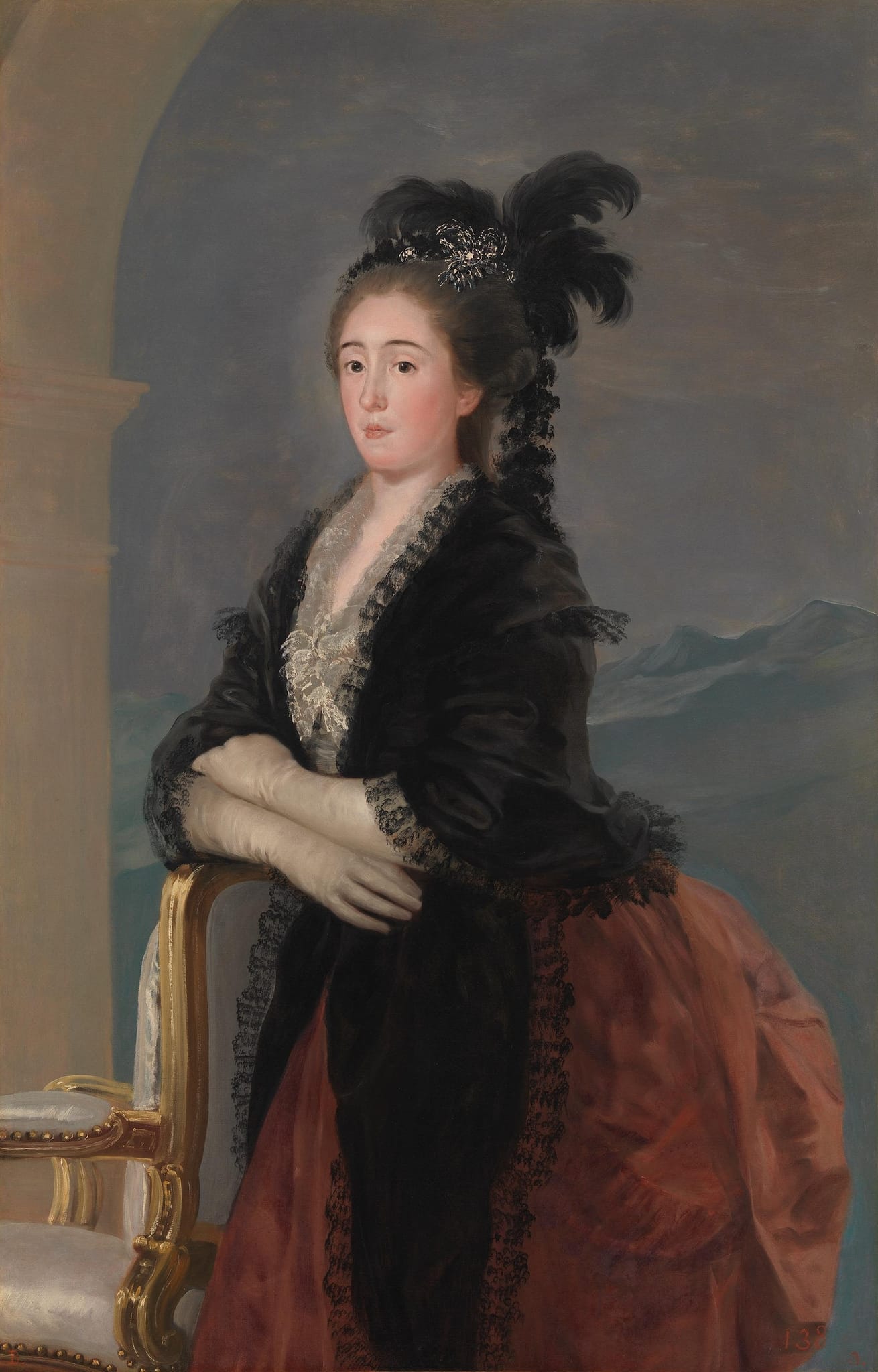
Retrato de Doña María Teresa de Vallabriga y Rozas
1783
Goya depicts Doña María Teresa, wife of Infante Luis Antonio, in an elegant, restrained three-quarter pose that emphasizes her social rank without flamboyance. The painting is significant as an example of Goya’s refined court portraiture in the 1780s, where psychological presence is conveyed through subtle posture and costume; viewers should note the delicate handling of flesh and fabric, the composed dignity of the sitter, and the intimate scale that invites close looking. ([commons.wikimedia.org](https://commons.wikimedia.org/wiki/File%3AMar%C3%ADa_Teresa_de_Vallabriga_by_Goya.jpg?utm_source=openai))
Real Academia de Bellas Artes de San Fernando
The Real Academia is central to Goya’s professional life: he was closely linked to the institution that trained Spain’s artists and judged official taste, and the Academy’s holdings preserve many works connected to his official roles, studies and commissions. With a comparatively large group of Goya paintings, the Academy lets you trace his development as a court and academic painter and to see works that relate directly to his involvement with Spain’s artistic institutions.
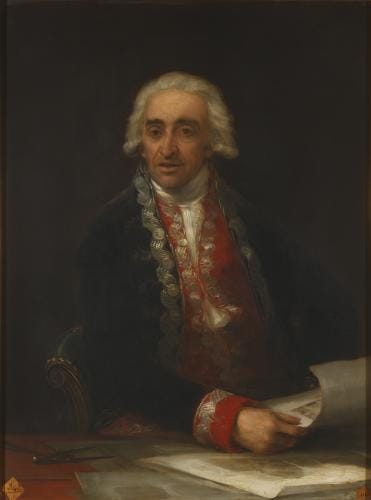
Retrato de Juan de Villanueva
This portrait depicts the architect Juan de Villanueva in dignified, measured fashion, often with attributes or a setting that suggest his professional role. It’s significant as a record of an important figure in Spanish neoclassical architecture and as an example of Goya’s ability to balance individual character with civic stature. Viewers should notice the calm, rational composition, the sitter’s thoughtful expression, and any architectural references or props that reinforce his identity.
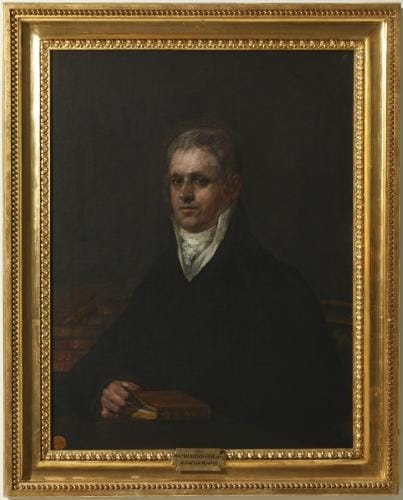
Retrato de José Munárriz
A formal portrait of José Munárriz that emphasizes decorum and social position through costume and bearing. Significant for its portrayal of a contemporary figure within Goya’s circle and for demonstrating the artist’s portrait technique—capturing texture, posture, and personality. Look closely at the rendering of fabrics and accessories, the sitter’s expression, and how subtle lighting defines facial planes.
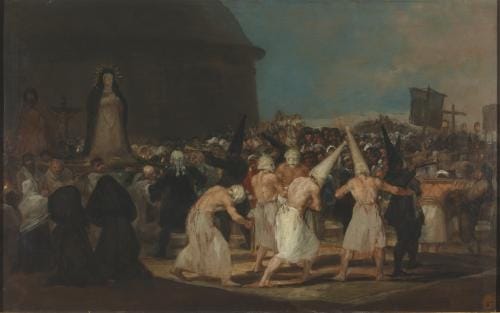
Procesión de disciplinantes
Shows a religious procession of flagellants (disciplinantes) engaged in public penance, a solemn and striking devotional spectacle. The painting is important for its exploration of popular religiosity, collective ritual, and the sometimes austere or unsettling aspects of Spanish faith practices. Look for the repetitive rhythms of the figures, contrasting expressions of devotion and fatigue, and any interplay between candlelight, cloth, and the sombre atmosphere.
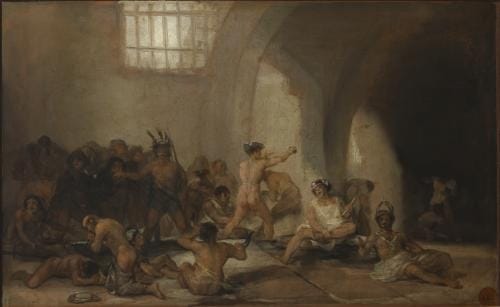
La casa de locos
An evocative scene of inmates in an asylum or madhouse, showing a variety of disturbed, melancholic, or deranged figures in a confined interior. Significant because it reveals Goya’s concern with human suffering, social marginalization, and the darker aspects of the human condition—anticipating the psychological intensity of his later works. Look for expressive faces, cramped spatial composition, and contrasts of light and shadow that heighten the unsettling, empathetic viewing experience.
Museo Nacional del Romanticismo
The Romanticismo museum places Goya within the cultural and emotional currents that shaped 19th‑century Spain, so its single Goya work functions as a key reference point for how his late aesthetic anticipated Romantic themes of feeling, domestic life and psychological complexity. Even one painting in this setting is telling: it’s shown in a house-museum context that highlights how Goya’s imagery resonated with private taste and the sentimental narratives prized by Romantic collectors.

San Gregorio Magno, Papa
1797
Large devotional portrait by Goya; central piece in the museum's oratory and part of the founding collection.
Must-seePalacio de Liria (Fundación Casa de Alba)
The Casa de Alba collection at Palacio de Liria holds works accumulated by one of Spain’s most important aristocratic collectors; Goya features prominently in that family connection because he painted numerous members of the Spanish nobility and the Alba circle. Seeing the Goya paintings in Liria is significant because they remain in the aristocratic, domestic setting closer to their historical context as private portraits and family commissions rather than museum showcases.
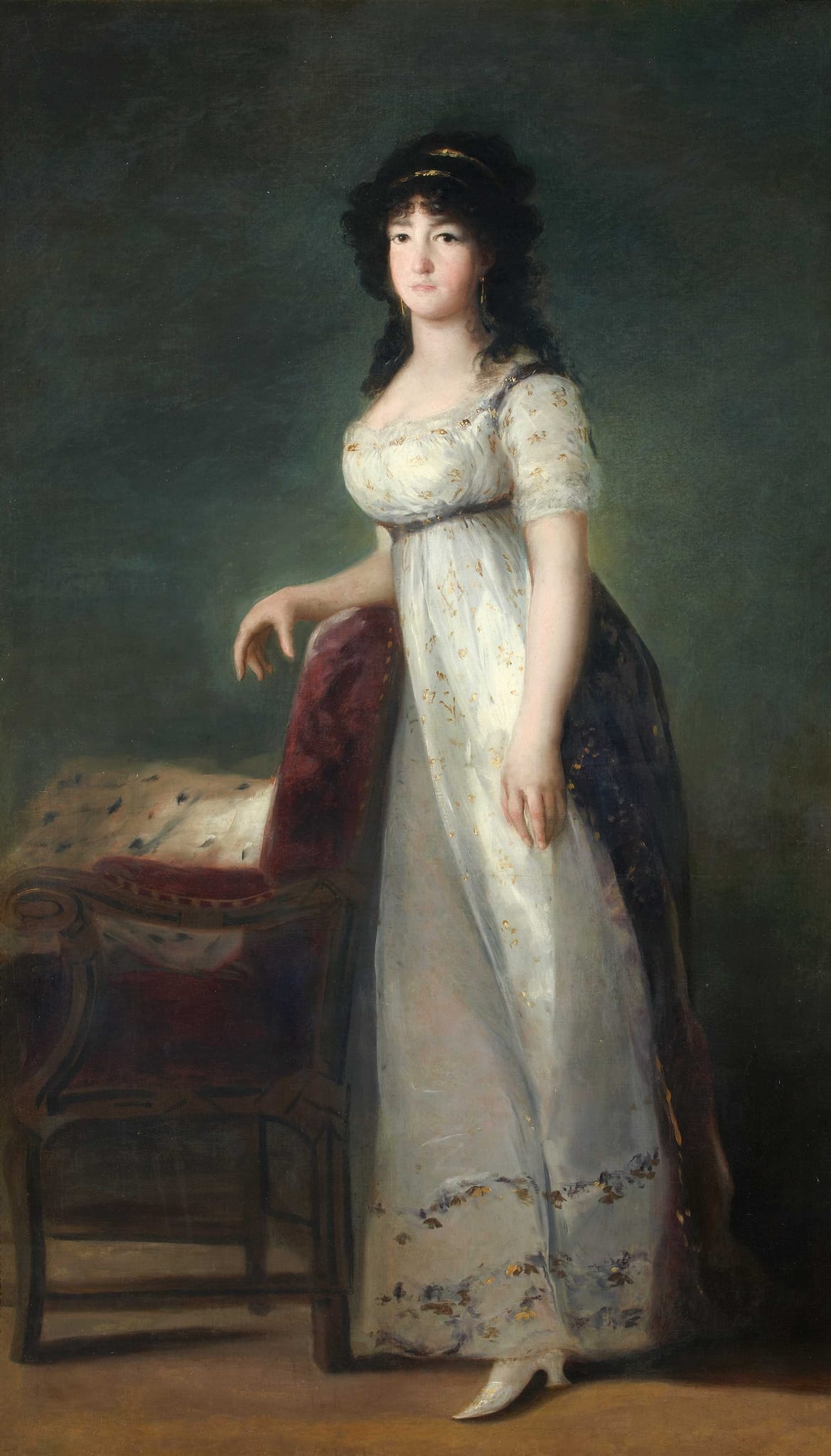
La marquesa de Lazán
Goya’s portrait of the Marquise (La marquesa de Lazán) presents a composed, aristocratic woman rendered with elegant costume detail and a penetrating, individualized expression. The painting’s significance lies in Goya’s ability to combine formal courtly representation with candid psychological observation, making the sitter both a status symbol and a distinct personality. Look closely at the fine treatment of costume and jewelry, the subtle brushwork around the face and eyes, and how light sculpts the features to convey both refinement and character.