Henri Matisse Paintings in Saint Petersburg — Where to See Them
Saint Petersburg matters for experiencing Henri Matisse because the State Hermitage Museum (approximately 18 paintings) holds his work on permanent display in a single, easily navigable collection. That concentration lets visitors trace key shifts in his palette and compositional approach—especially his mature color experiments and interior scenes—without hopping between institutions.
At a Glance
- Museums
- The State Hermitage Museum
- Highlight
- See Matisse's vibrant masterpieces at the State Hermitage
- Best For
- Lovers of Fauvism and early 20th-century modern art
The State Hermitage Museum
The Hermitage holds several of Henri Matisse’s most consequential works (including Dance and Harmony in Red), many of which entered the museum as part of Sergei Shchukin’s groundbreaking collection of early 20th‑century French modernism — viewing them there shows how Russian collectors shaped Matisse’s European reputation. ([en.wikipedia.org](https://en.wikipedia.org/wiki/Dance_%28Matisse%29?utm_source=openai)) The placement of these canvases inside the Winter Palace contextually contrasts Matisse’s radical color experiments with the museum’s imperial interiors, making the visual shock of his Fauvist and post‑Fauvist palette especially powerful. ([museoreinasofia.es](https://www.museoreinasofia.es/en/exhibition/henri-matisse-pinturas-dibujos-museos-pushkin-moscu-ermitage-leningrado?utm_source=openai))
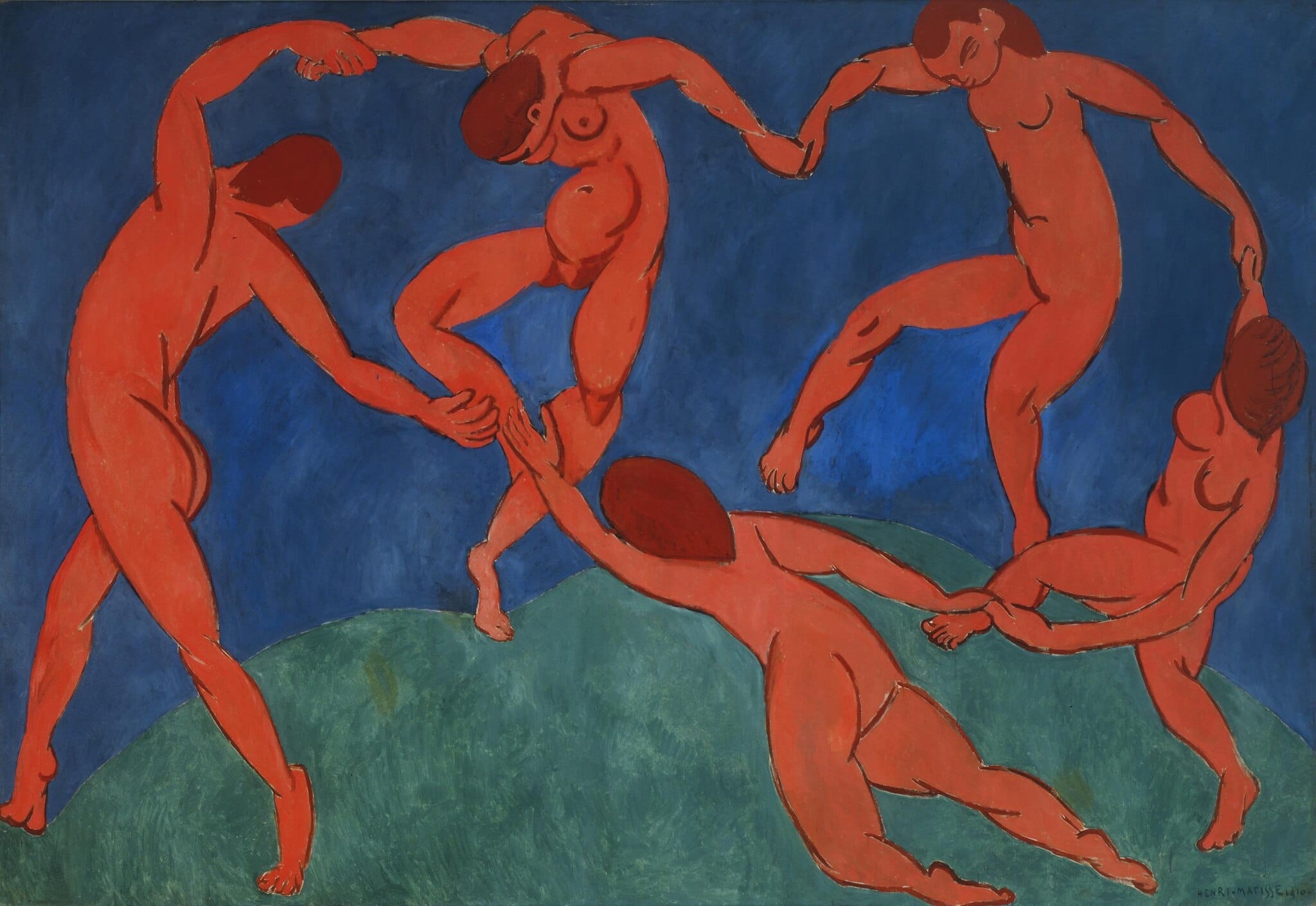
Dance
1910
A dynamic composition of simplified, rhythmically arranged figures joined in a circle, painted in bold flat areas of color that emphasize movement over detail. Significant as one of Matisse’s major works exploring primitive vitality and the expressive power of pure color and form; it helped define Fauvism’s break with academic illusion. Viewers should look for the sweeping circular motion, the contrast between the warm figures and the cool background, and how the simplified anatomy amplifies the sense of communal energy.
Must-see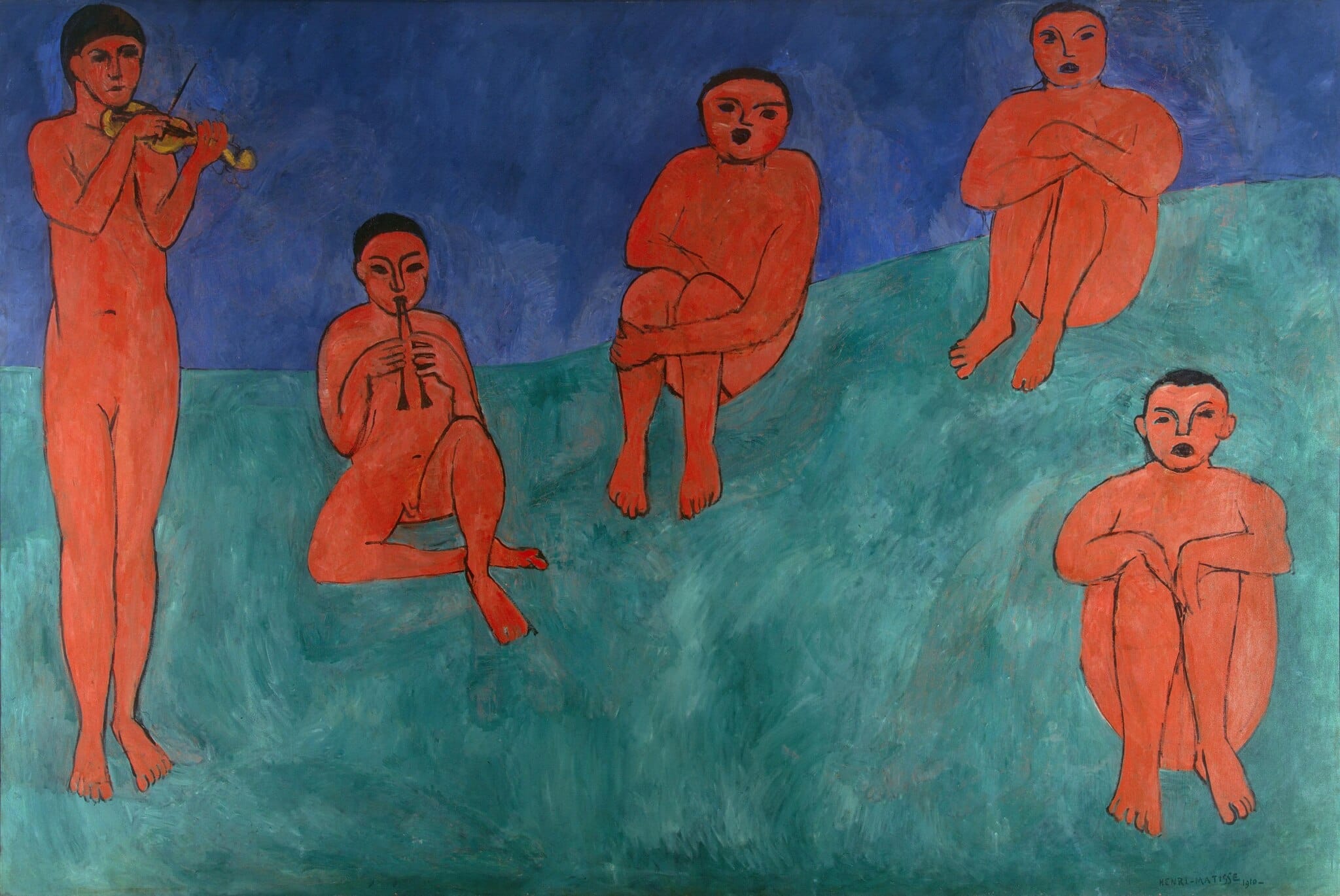
Music
1910
A companion work to Dance, this painting shows five figures clustered around a seated musician, reduced to essential shapes and tonal planes. It is significant for its investigation of harmony—both musical and visual—where color, line, and arrangement serve as compositional ‘chords.’ Notice the calm, meditative posture of the figures, the way color fields create spatial depth without modeling, and the relationship between the musician and the surrounding forms.
Must-see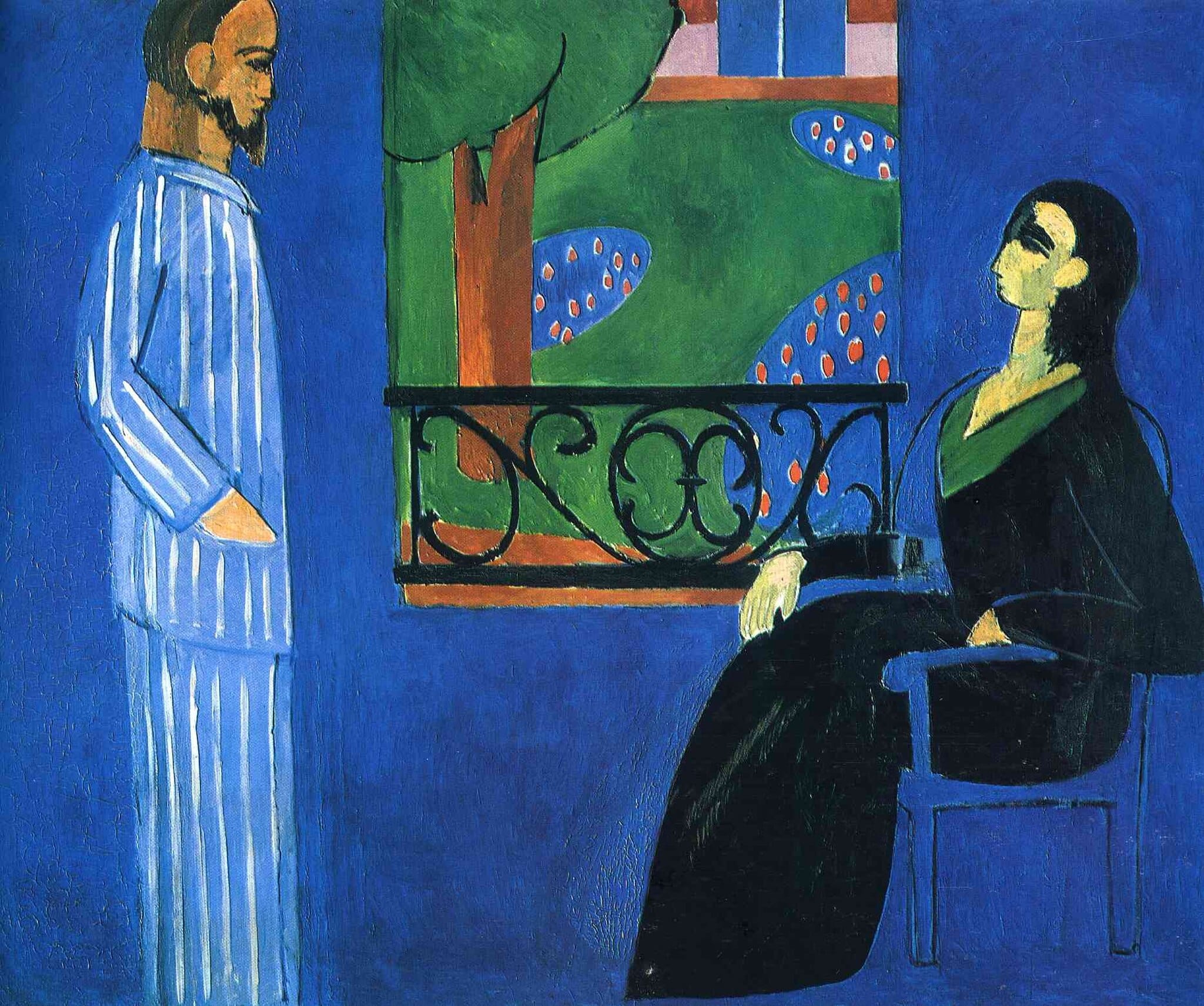
Conversation
between 1908 and 1912
Depicts two or more figures engaged in an intimate exchange, rendered with flattened planes and an emphasis on color relationships rather than detailed likenesses. The work is important for showing Matisse’s interest in interpersonal scenes as vehicles for compositional balance and emotional tone. Look for the positioning of the figures to create a pictorial dialogue, the use of color to separate but link forms, and subtle gestures that convey the mood of the exchange.
Must-see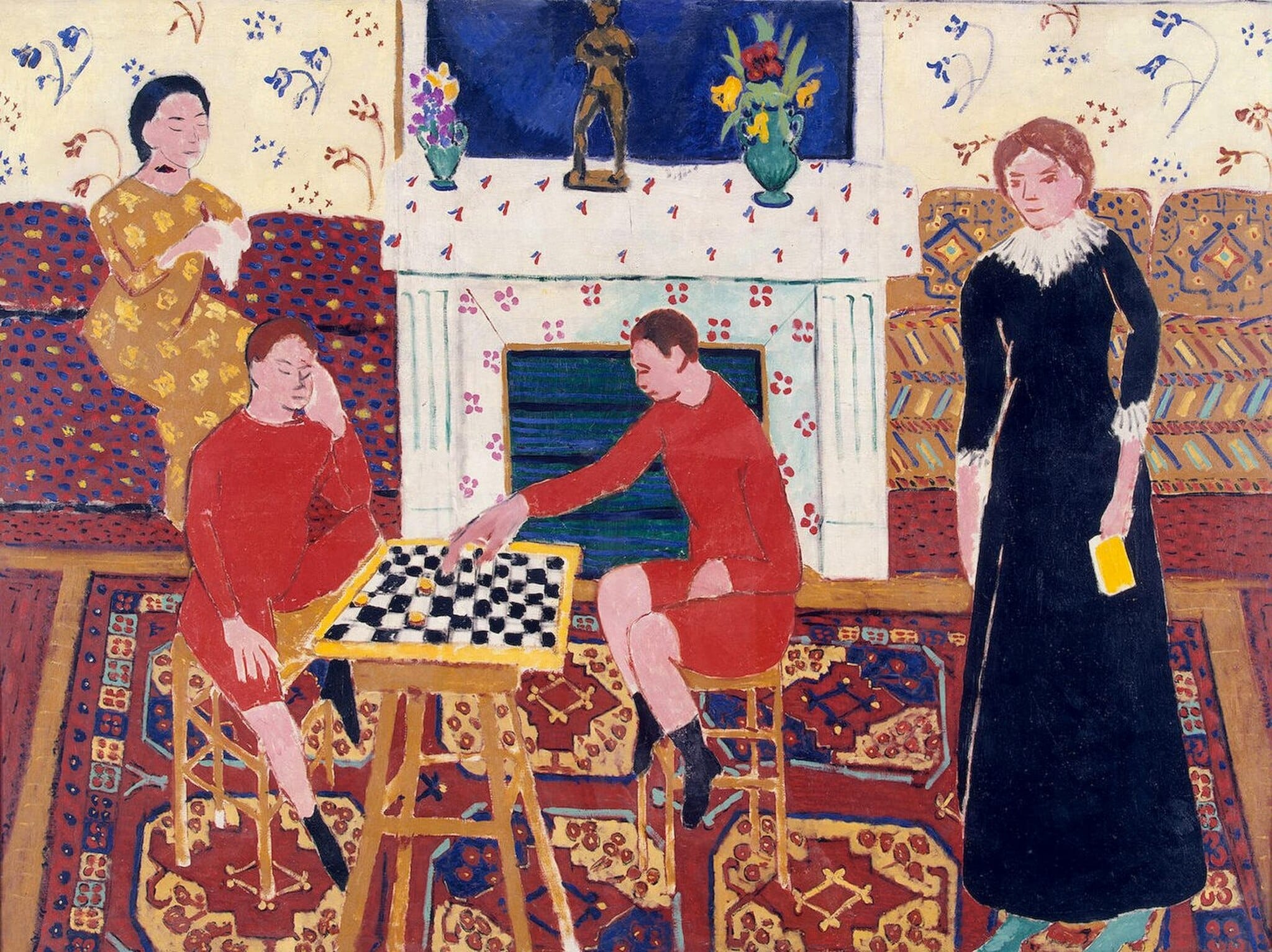
Family Portrait
1911
A group portrait that presents family members in a simplified, cohesive pictorial space where color and arrangement unify the group more than individual detail. Significant as an example of Matisse applying his modernist language to domestic and intimate subject matter, balancing abstraction with recognizable presence. Observe how posture and placement establish relationships, the restrained facial detail, and the way patterns or background planes help integrate the figures into a single composition.
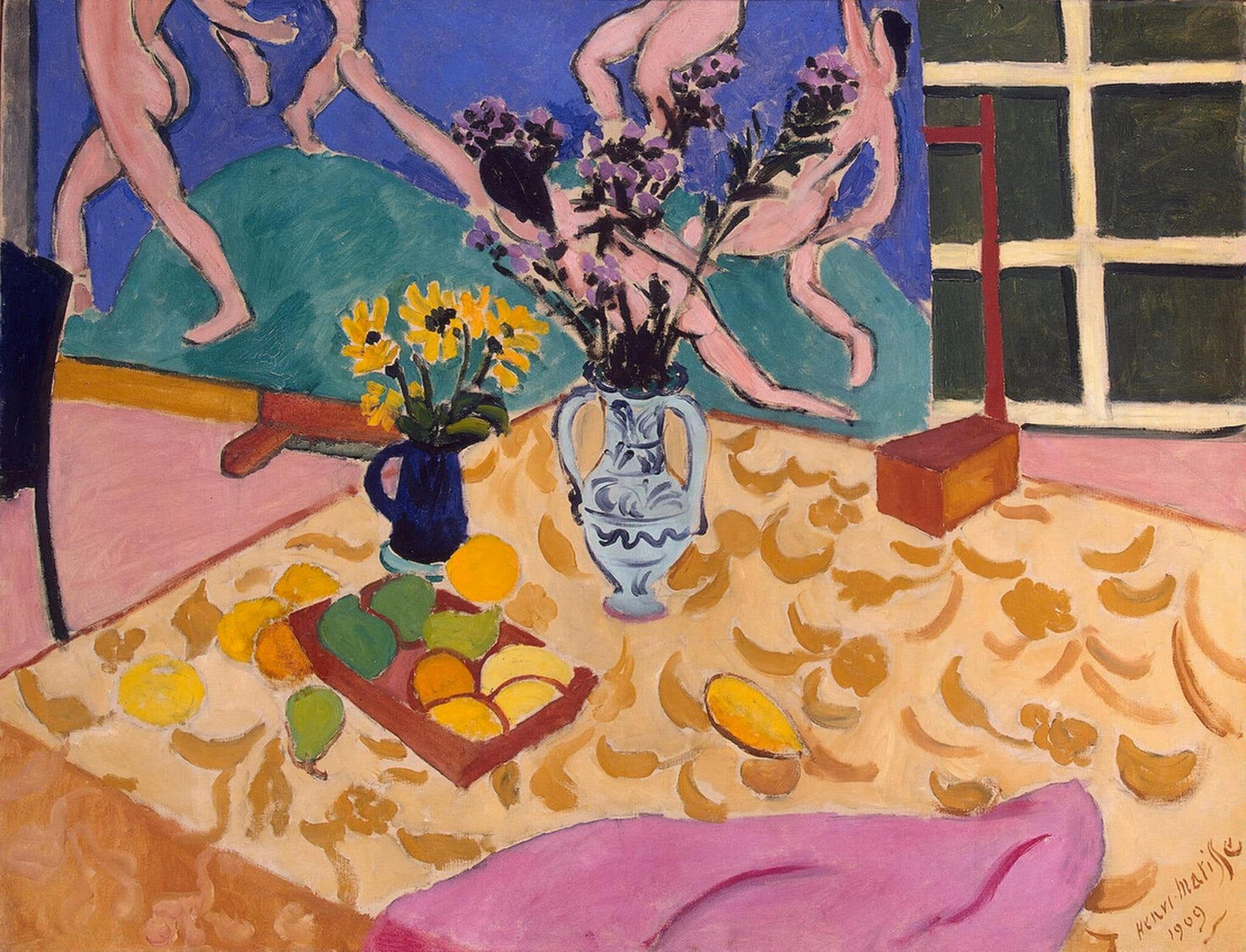
Fruits, Flowers, and the Panel 'Dance'
1909
A still life combining fruit and floral motifs with a painted panel reference—an early instance of Matisse juxtaposing decorative elements and figuration. This work is notable for its layering of objects and motifs, pointing to Matisse’s ongoing dialogue between ornament, color, and composition. Viewers should note the interplay of textures (fruit, flowers, painted panel), the decorative patterning, and how the inset panel (Dance) acts as a pictorial echo within the scene.
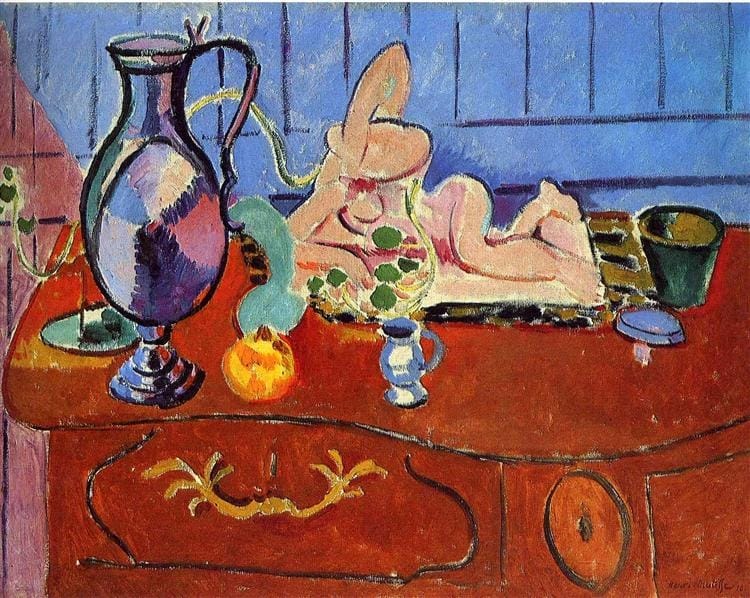
Pink Statuette and Jug on a Red Chest of Drawers
1910
A still life centered on a small sculpture and a jug set upon a vividly colored chest, using a limited palette and flattened perspective. It’s significant for Matisse’s treatment of everyday objects as vehicles for exploring color contrast and spatial compression. Look for the strong red plane of the chest, the sculptural silhouette of the statuette, and the way simplified forms and color surfaces create a decorative yet taut composition.
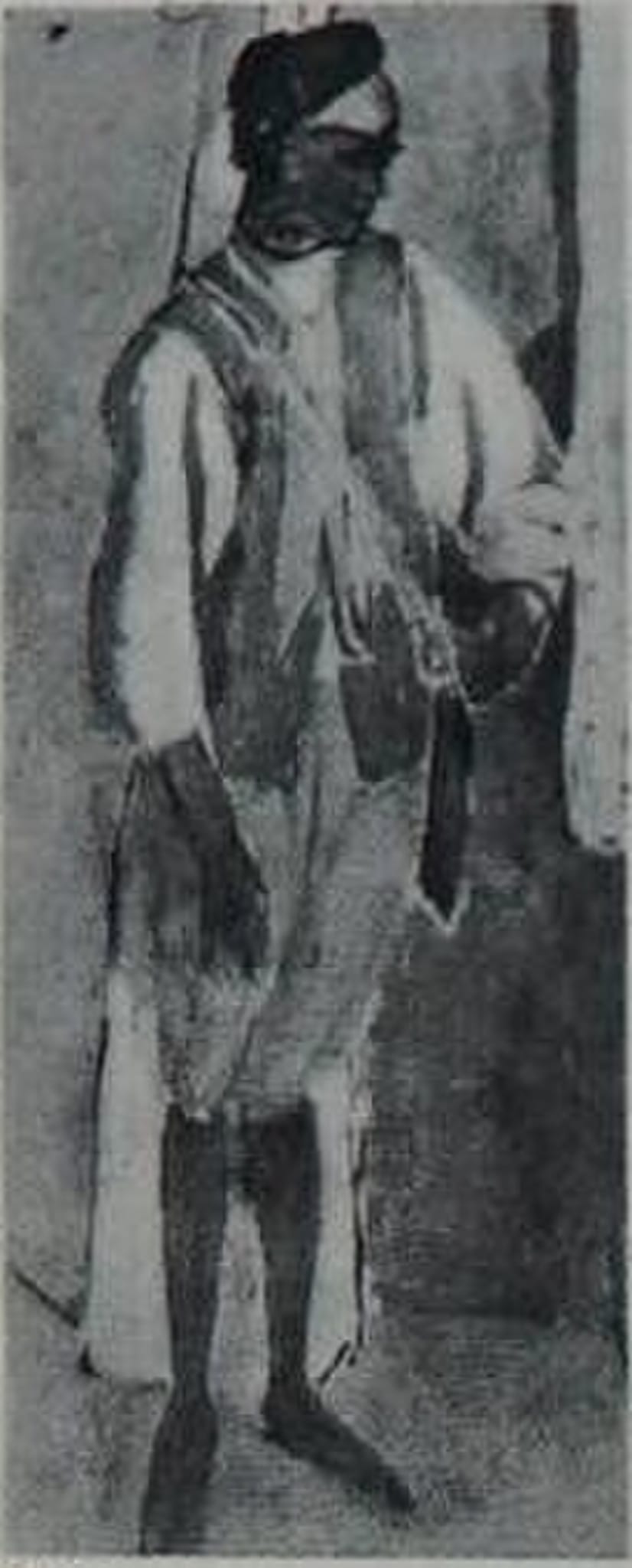
The Moroccan Amido
1912
Portrait of a Moroccan dignitary (an amîd or notable) shown with attention to costume and posture, yet filtered through Matisse’s simplified, color-focused style. Important for reflecting Matisse’s engagement with North African subjects and Orientalist motifs, which influenced his palette and decorative sensibility. Note the emphasis on clothing and ornament as compositional elements, the flattened treatment of volume, and the balance between likeness and stylization.
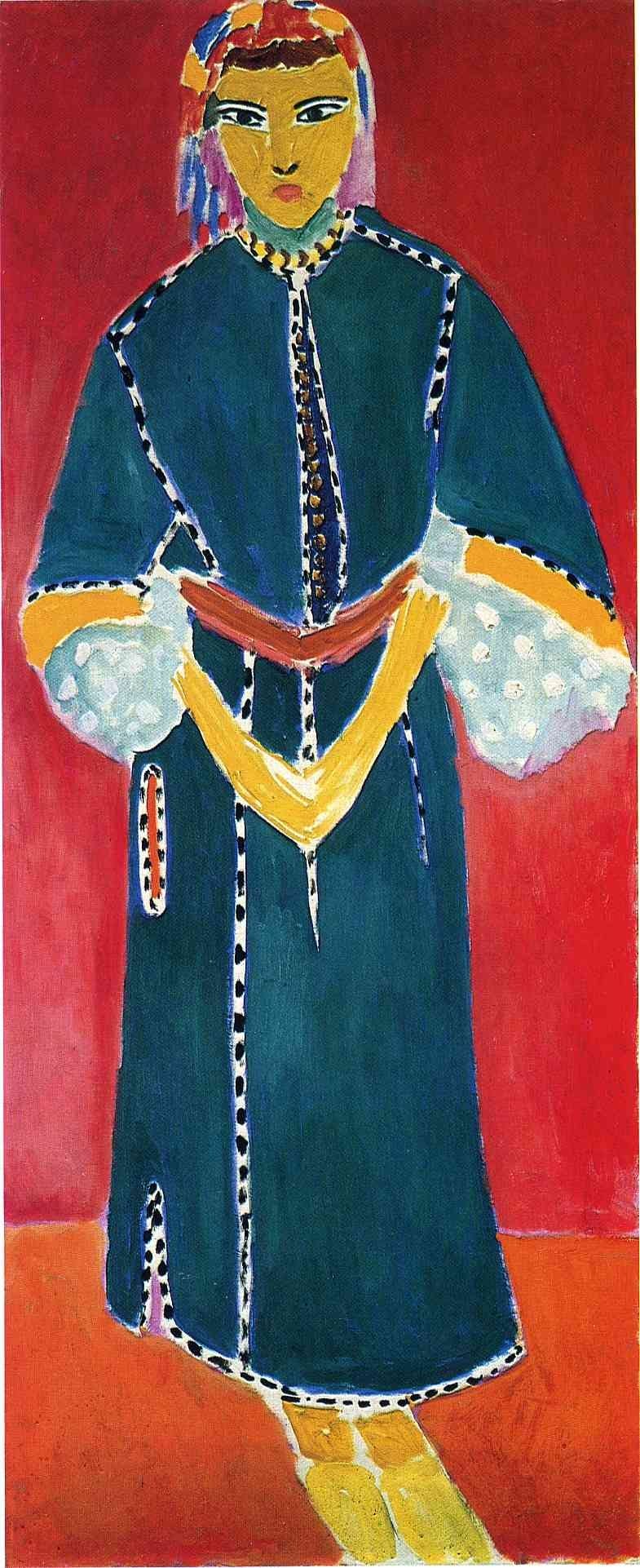
Zorah Standing
1912
A standing figure—Zorah—portrayed with serene dignity and reduced modeling, set against a simplified background that highlights her form. The work is significant for Matisse’s interest in individual sitters from North Africa and for how portraiture became a means to study color, silhouette, and presence. Viewers should focus on the verticality of the pose, the clarity of contour, and the relationship between costume detail and the surrounding color fields.
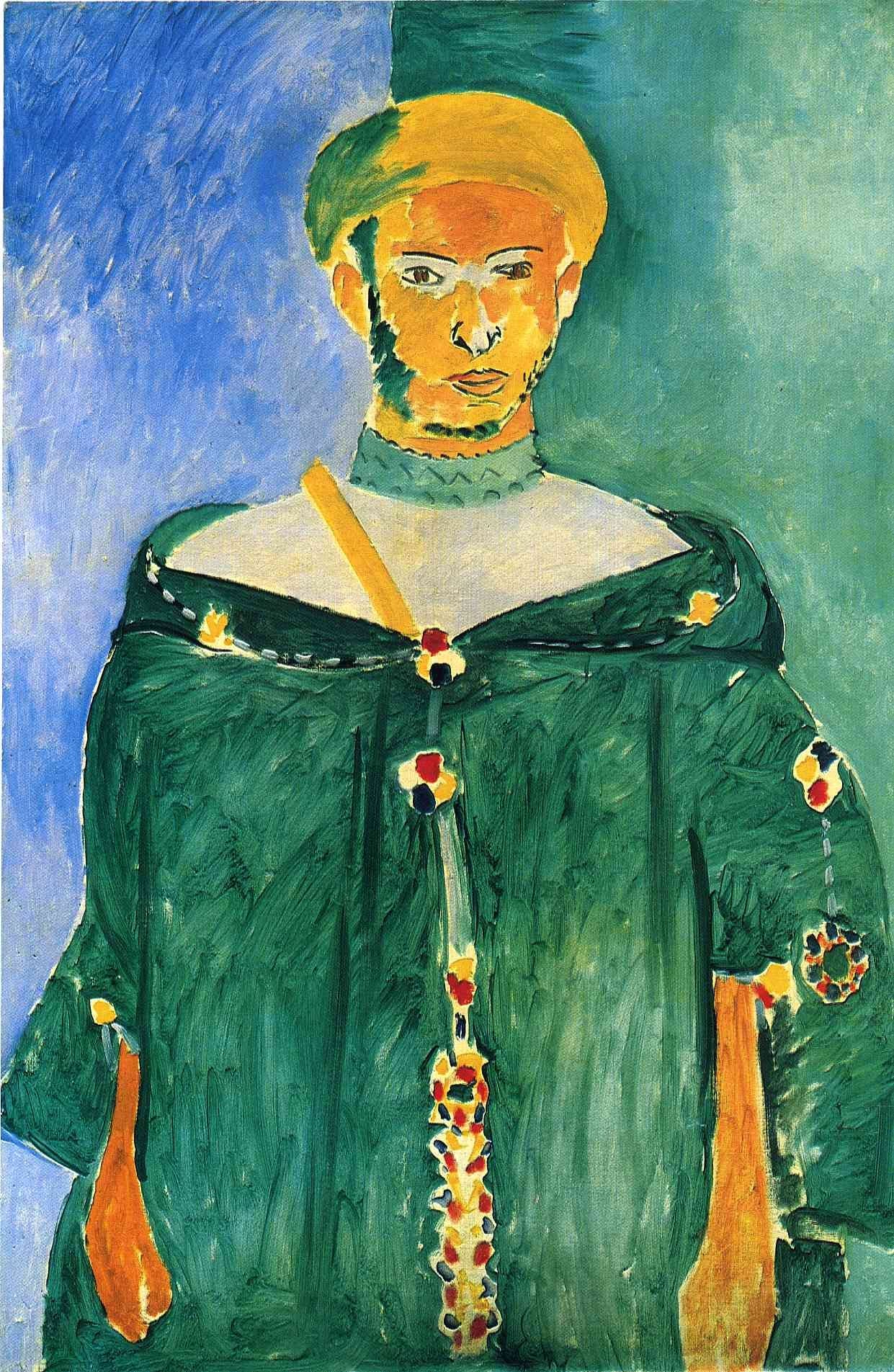
Standing Moroccan in Green (Standing Riff)
1912
Shows a Moroccan figure clothed in green, depicted with strong silhouette and an emphasis on decorative patterning rather than naturalistic depth. The painting is notable for integrating exotic costume, color emphasis, and flat spatial treatment—elements that fed Matisse’s decorative modernism. Look for the commanding green garment as the pictorial focal point, the flattened plane that foregrounds pattern over perspective, and subtle facial restraint that directs attention to posture and attire.
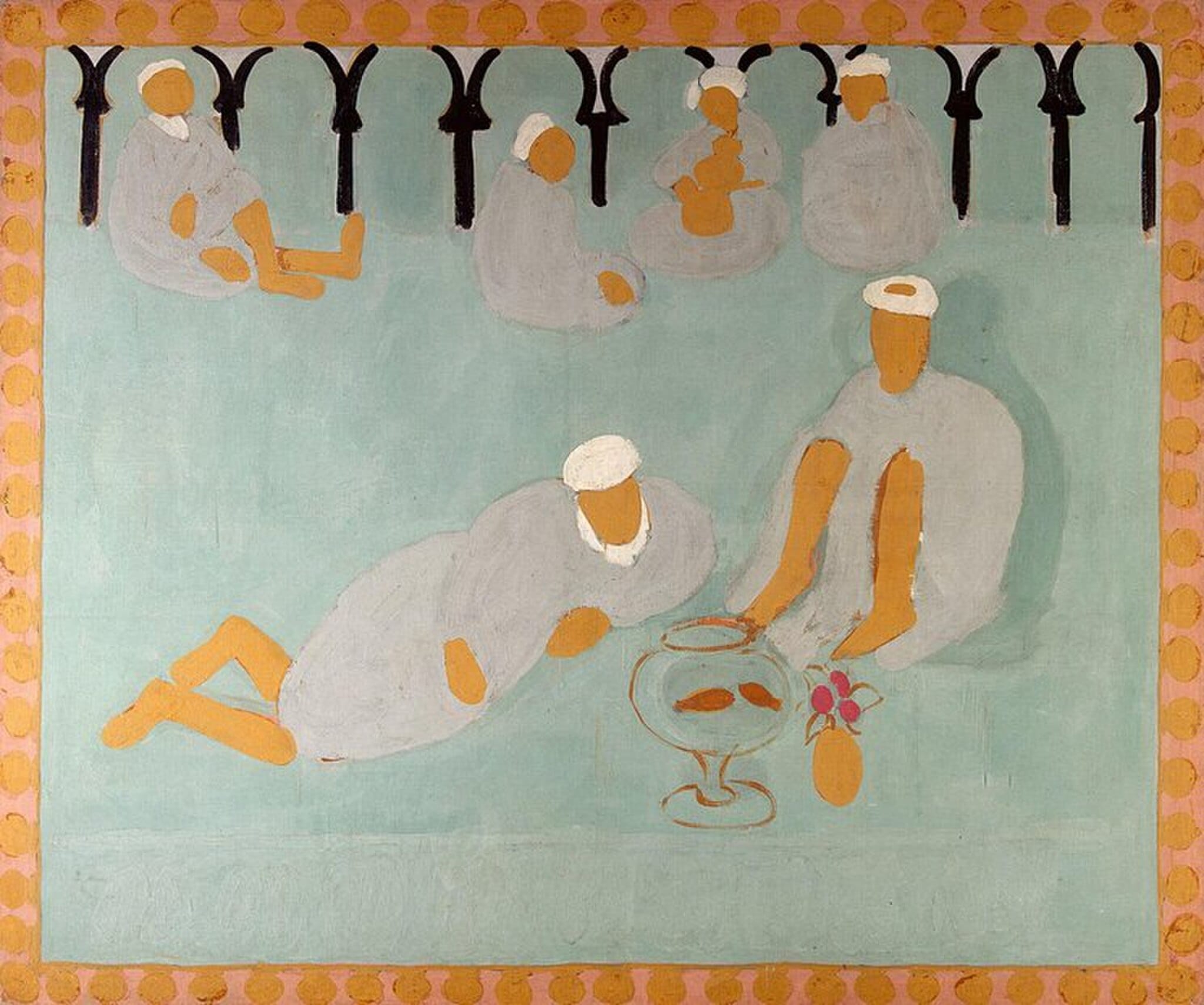
Arab Coffeehouse
1913
An interior scene portraying figures in a coffeehouse setting, reduced to simplified forms and unified by a warm, patterned environment. It’s significant for Matisse’s interest in everyday social spaces abroad and his synthesis of figurative content with decorative composition. Observe the grouping of figures, the patterned surfaces that frame them, and how Matisse uses color and repetition to convey atmosphere rather than detailed narrative.
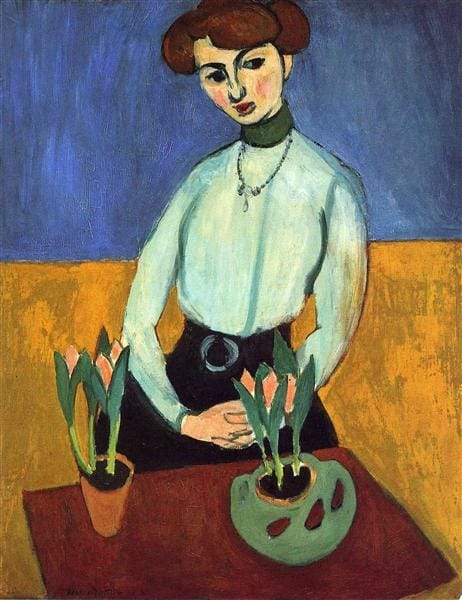
Girl with Tulips
1910
Depicts a young woman accompanied by tulips, combining portrait and still-life elements in a composition of clear shapes and vivid hues. This painting is significant for its gentle merging of figure and floral motif, illustrating Matisse’s sensitivity to pattern and decorative harmony. Look for the tulips as compositional counterpoints to the sitter, the simplified forms, and the balance between intimate gesture and flat color planes.
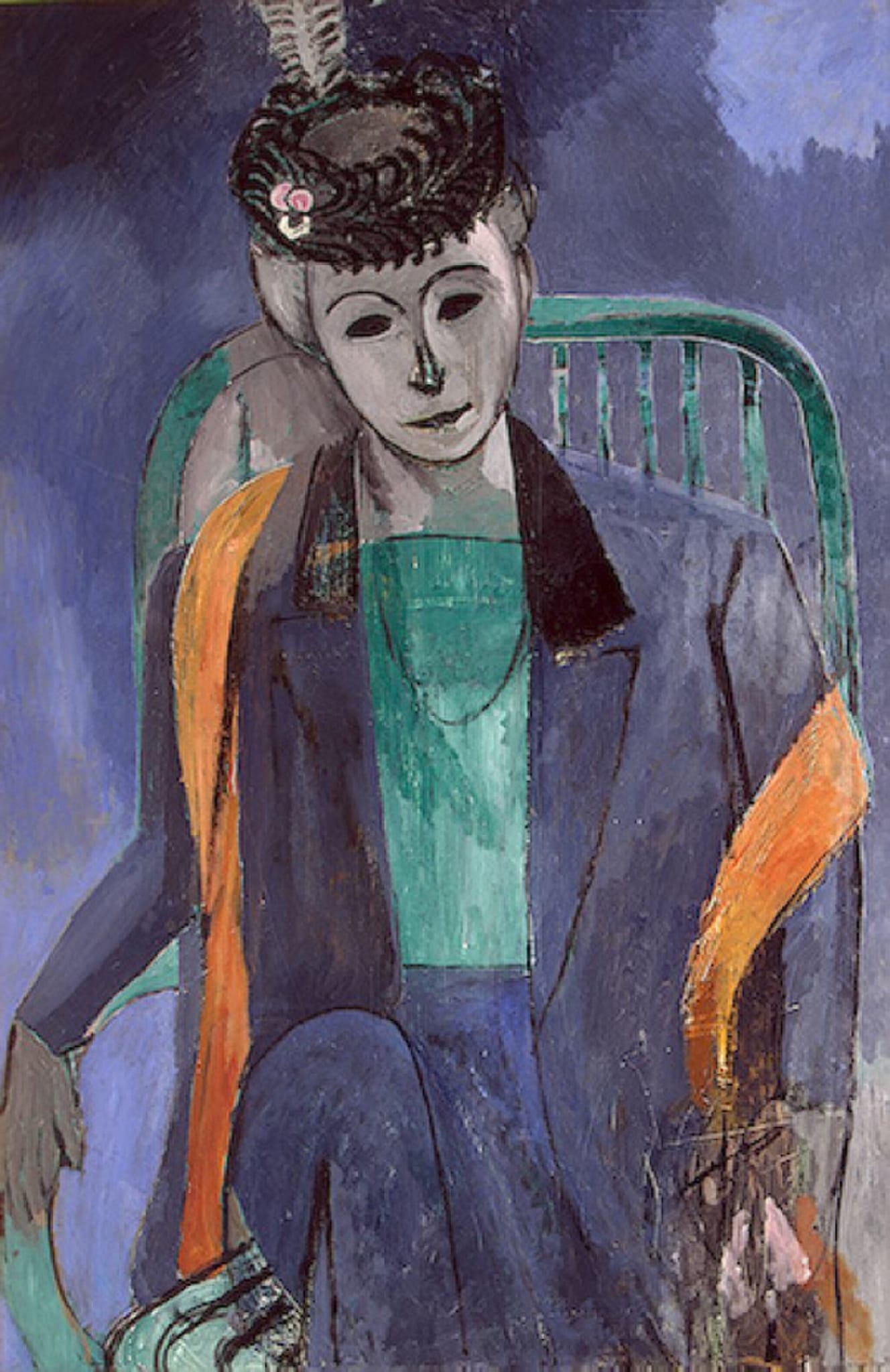
Portrait of the Artist's Wife
1913
A portrait of Matisse’s wife presented with restrained detail and an emphasis on compositional calm and color harmony. Important as a personal work that applies Matisse’s modernist vocabulary to domestic intimacy, revealing both affection and formal experimentation. Viewers should attend to posture and expression that suggest temperament, the way pattern and background integrate with the figure, and the subtle modulation of color that defines form.
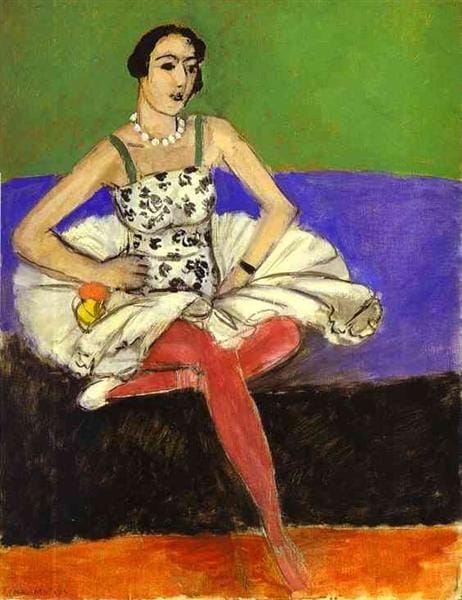
Ballerina
circa 1927
A poised depiction of a ballerina where line and rhythm convey grace more than anatomical exactitude, often set against a simplified stage-like space. The painting reflects Matisse’s long-term interest in dancers as subjects for exploring movement, costume, and elegant contour. Notice the flowing outlines, the emphasis on gesture and balance, and how costume and pose create a lyrical verticality.
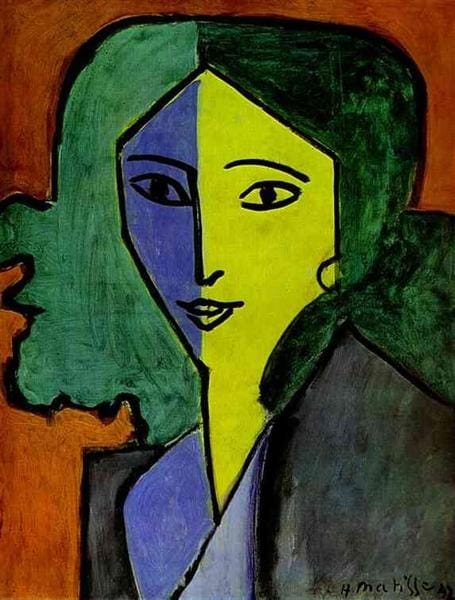
Portrait of Lydia Delectorskaya
1947
A later portrait of Lydia that distills her likeness into refined planes of color and assured, spare outlines characteristic of Matisse’s late style. The work is important as part of Matisse’s late-career focus on clarity and decorative synthesis, often produced in collaboration with Lydia. Observe the balance between flat color areas and delicate contour, the compositional simplicity that intensifies presence, and any subtle patterning or color contrasts that personalize the sitter.