Wassily Kandinsky Paintings in Munich — Where to See Them
Munich matters for experiencing Wassily Kandinsky because it was the city where he spent his formative years and helped launch the Der Blaue Reiter circle, so any Kandinsky on view here is shown within the local story of his turn to abstraction. Today you can see approximately one painting on permanent display in the city—housed at the Pinakothek der Moderne (Sammlung Moderne Kunst)—making a visit a focused opportunity to connect a single, well-situated work with the very place that shaped it.
At a Glance
- Museums
- Pinakothek der Moderne (Sammlung Moderne Kunst)
- Highlight
- View Kandinsky's work at Pinakothek der Moderne's Sammlung Moderne Kunst.
- Best For
- Modern art enthusiasts and Kandinsky admirers
Pinakothek der Moderne (Sammlung Moderne Kunst)
The Pinakothek der Moderne matters for experiencing Kandinsky because it sits in Munich — the city where Kandinsky lived, taught, and co‑founded the Der Blaue Reiter group — and its Sammlung Moderne Kunst deliberately displays his work alongside contemporaries (e.g., Franz Marc, Gabriele Münter) so you can see how his move toward abstraction grew from local collaborations and exchanges. The museum’s holdings and curatorial displays often pair Kandinsky paintings with preparatory drawings, prints, and works by fellow Blaue Reiter artists, making it possible to follow his formal and theoretical development in the very cultural setting that shaped it.
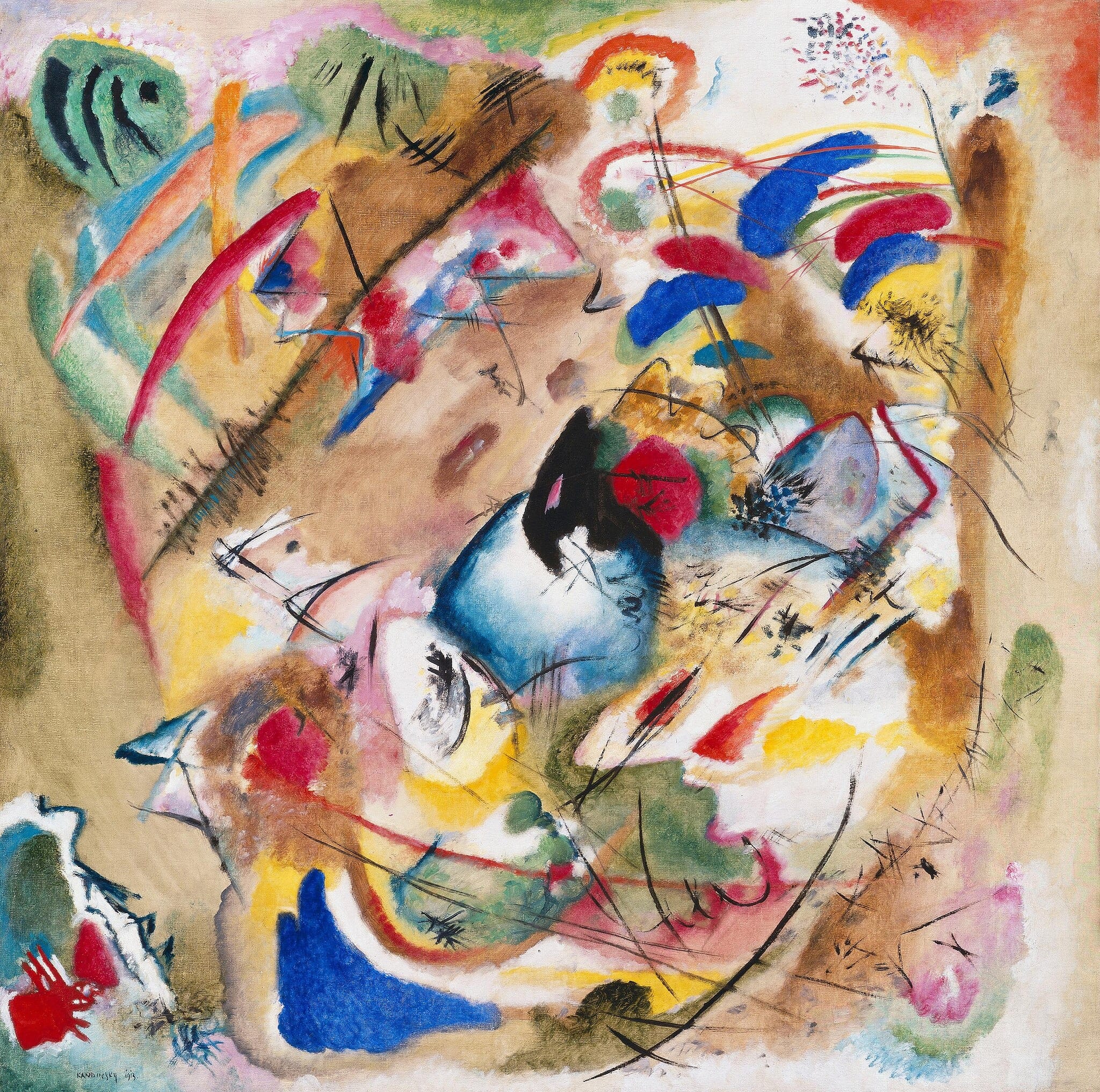
Träumerische Improvisation
1913
A swirling, near-abstract composition of lyrical shapes and muted colors that suggests floating figures, organic forms, and fragmented landscape elements rather than a single recognisable scene. It is significant as part of Kandinsky’s Improvisations—works in which he sought to translate inner, dreamlike states into visual ‘music’ following his 1912 theories about the spiritual in art. When viewing, look for the rhythmic placement of curved lines and color patches that create depth and motion, and note how small figurative hints (arched forms, dark clusters) emerge from the overall abstraction to anchor the composition.
Must-see