Wassily Kandinsky

Biography

Wassily Kandinsky (1866–1944) pioneered non-objective painting, cofounding Der Blaue Reiter and authoring key texts that linked color and form to spiritual experience. After World War I he joined the Bauhaus (1922–1933), where his work pivoted toward disciplined geometric languages. His relationship with Solomon R. Guggenheim seeded the museum’s founding collection, with Composition VIII as a cornerstone [1][2].

Themes in Their Work

Where to See Wassily Kandinsky's Paintings

Explore Wassily Kandinsky's works on display in museums around the world.

Featured in Essays
Compare Wassily Kandinsky

Most Expensive Wassily Kandinsky Paintings

Explore ranked valuations of Wassily Kandinsky's most valuable works →

Featured Artworks
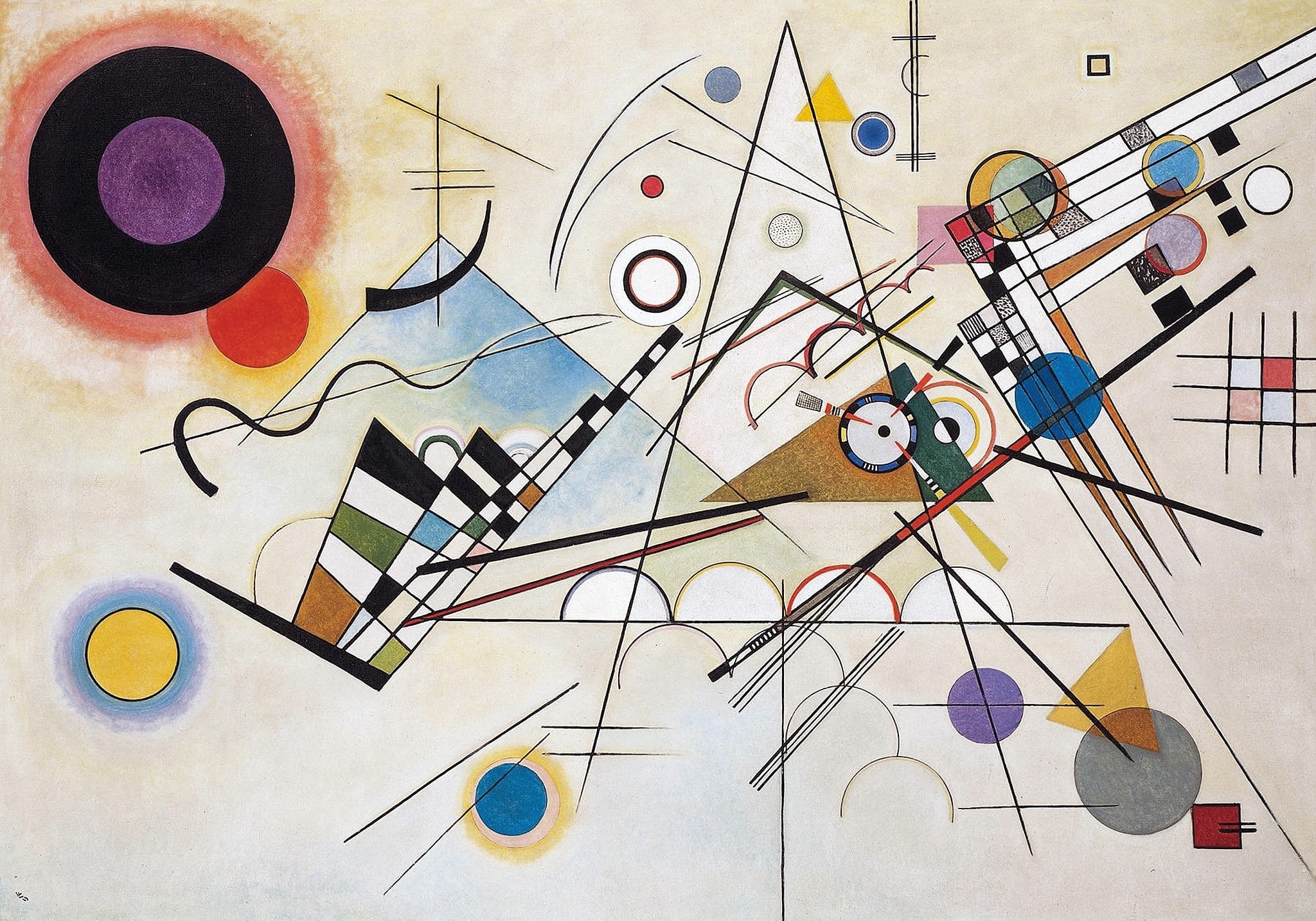
Composition VIII by Wassily Kandinsky

Composition VIII

Wassily Kandinsky (1923)

Composition VIII stages a <strong>musical drama in geometry</strong>: circles, vectors, and triangles surge across a cream field in calibrated counterpoint. A <strong>brooding black circle</strong> at left sets the tonal center while grids, checkerboards, and compass-like dials organize bursts of color and rhythm. The canvas becomes a <strong>score of invisible harmonies</strong>, where pure form conveys feeling.
Black Lines

Wassily Kandinsky (1913)

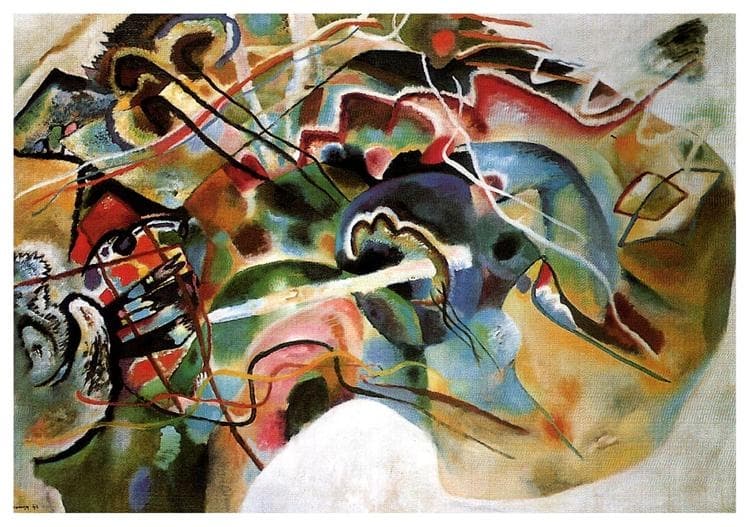
Painting with White Border by Wassily Kandinsky

Painting with White Border

Wassily Kandinsky (1913)

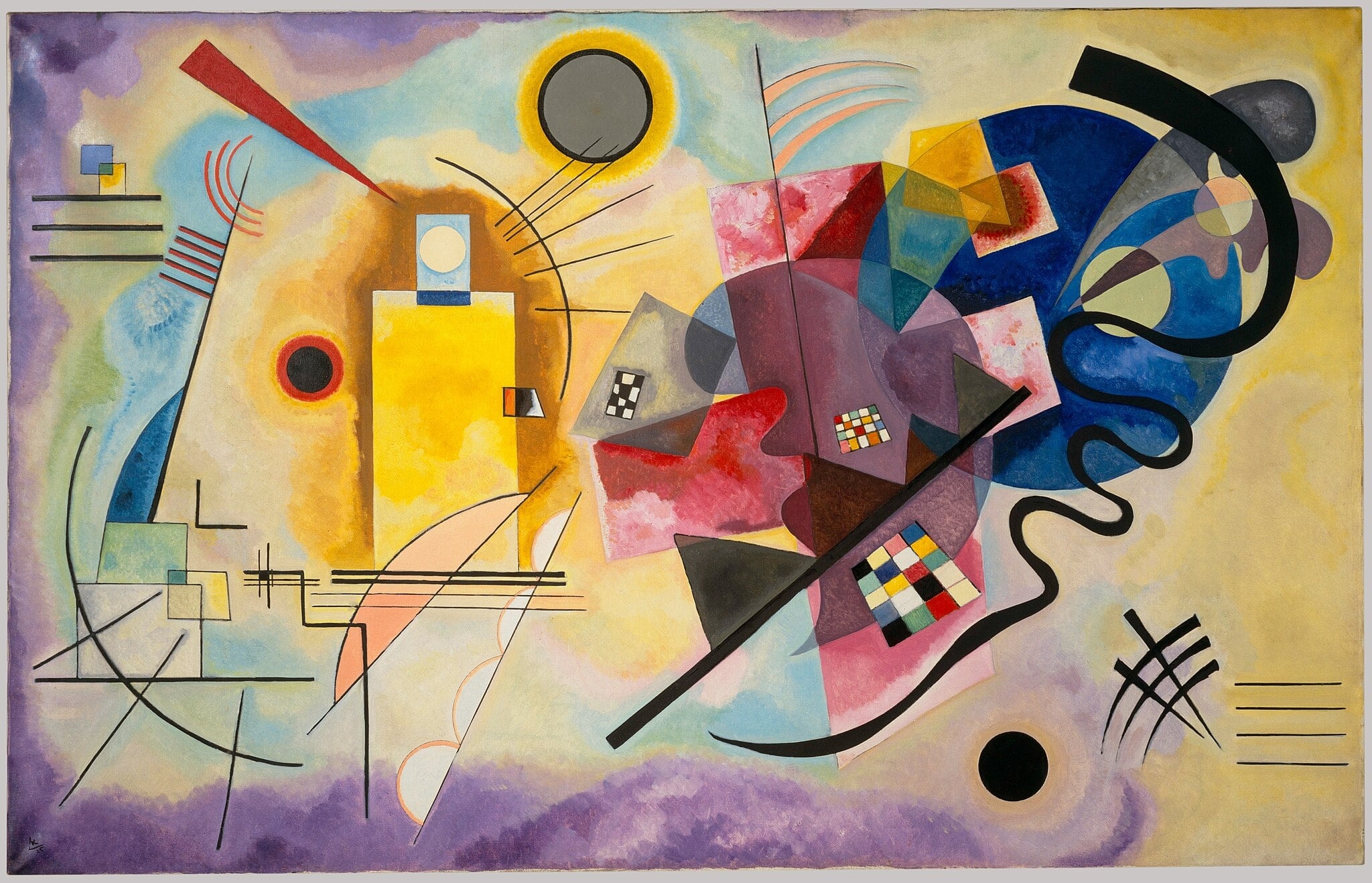
Yellow-Red-Blue by Wassily Kandinsky

Yellow-Red-Blue

Wassily Kandinsky (1925)

Yellow-Red-Blue stages a collision of <strong>order and impulse</strong> through primary color and geometry. A lucid field of yellow rectangles and orthogonals confronts a vortex of blues, reds, circles, and a serpentine black line, all bound by a commanding black diagonal. The canvas reads like a <strong>spiritual score</strong>, balancing tensions into dynamic equilibrium.

Several Circles by Wassily Kandinsky

Several Circles

Wassily Kandinsky (1926)

Murnau mit Kirche II (Murnau with Church II) by Wassily Kandinsky

Murnau mit Kirche II (Murnau with Church II)

Wassily Kandinsky (1910)

Weisses Oval (White Oval) by Wassily Kandinsky

Weisses Oval (White Oval)

Wassily Kandinsky (1921)

Color Study: Squares with Concentric Circles by Wassily Kandinsky

Color Study: Squares with Concentric Circles

Wassily Kandinsky

Bild mit Weissen Linien (Painting with White Lines) by Wassily Kandinsky

Bild mit Weissen Linien (Painting with White Lines)

Wassily Kandinsky (1913)

Improvisation 28 (Second Version) by Wassily Kandinsky

Improvisation 28 (Second Version)

Wassily Kandinsky (1912)

Composition VII by Wassily Kandinsky

Composition VII

Wassily Kandinsky (1913)

Murnau – Landschaft mit grünem Haus (Murnau – Landscape with Green House) by Wassily Kandinsky

Murnau – Landschaft mit grünem Haus (Murnau – Landscape with Green House)

Wassily Kandinsky (1909)

Improvisation 31 (Sea Battle) by Wassily Kandinsky

Improvisation 31 (Sea Battle)

Wassily Kandinsky (1913)

Circles in a Circle

Wassily Kandinsky (1923)

Composition VI

Wassily Kandinsky (1913)