Most Expensive Wassily Kandinsky Paintings
Wassily Kandinsky’s canvases occupy a rarefied space in the global art market, prized for their pioneering abstraction, chromatic daring, and historical importance as some of modernism’s definitive statements. At the pinnacle sits Composition VIII, a geometric tour de force estimated at $100–150 million, whose iconic balance of form and color commands top-tier collections and record prices. Nearby, Yellow-Red-Blue—valued around $70–120 million—epitomizes Kandinsky’s intense color harmonies that have made his work highly collectible to museums and private patrons alike. Other auction standouts, from Composition VII ($30–80 million) and Composition VI ($30–50 million) to Painting with White Lines (Bild mit Weissen Linien) ($35–60 million), demonstrate how rarity, provenance, and artistic significance sustain multimillion-dollar valuations. Landscapes such as Murnau with Church II ($40–55 million) and Murnau – Landscape with Green House ($30–50 million) show the market’s appetite for his transitional works, while Black Lines ($20–50 million), Improvisation 28 (Second Version) ($22–45 million), and Improvisation 31 (Sea Battle) ($15–45 million) round out a top ten that reflects both investment potential and enduring cultural cachet.
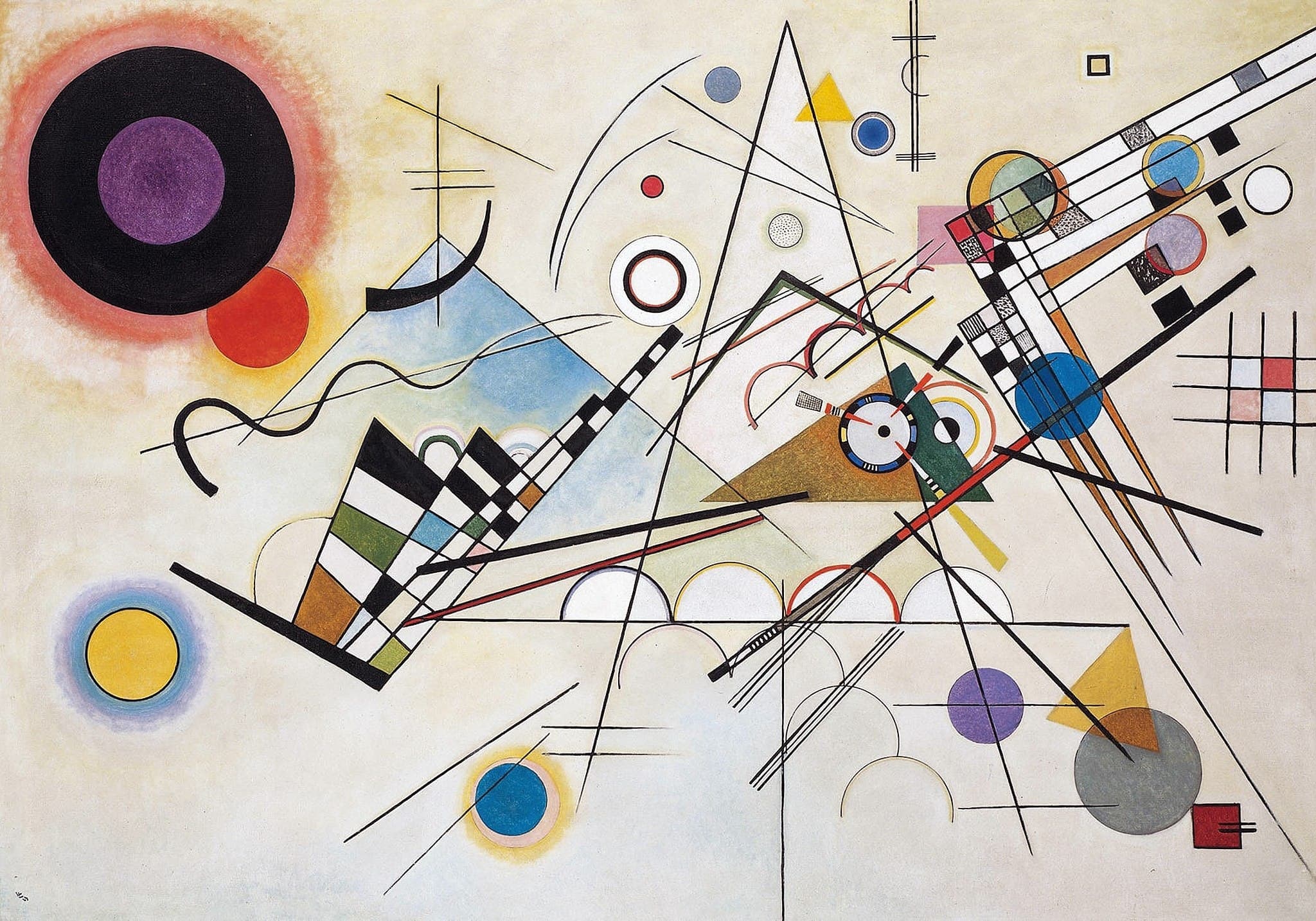
$100-150 million
Estimated $100–150M because it would surpass Kandinsky’s $44.9M auction record, reflecting museum‑defining status and trophy demand for a canonical Bauhaus masterpiece.
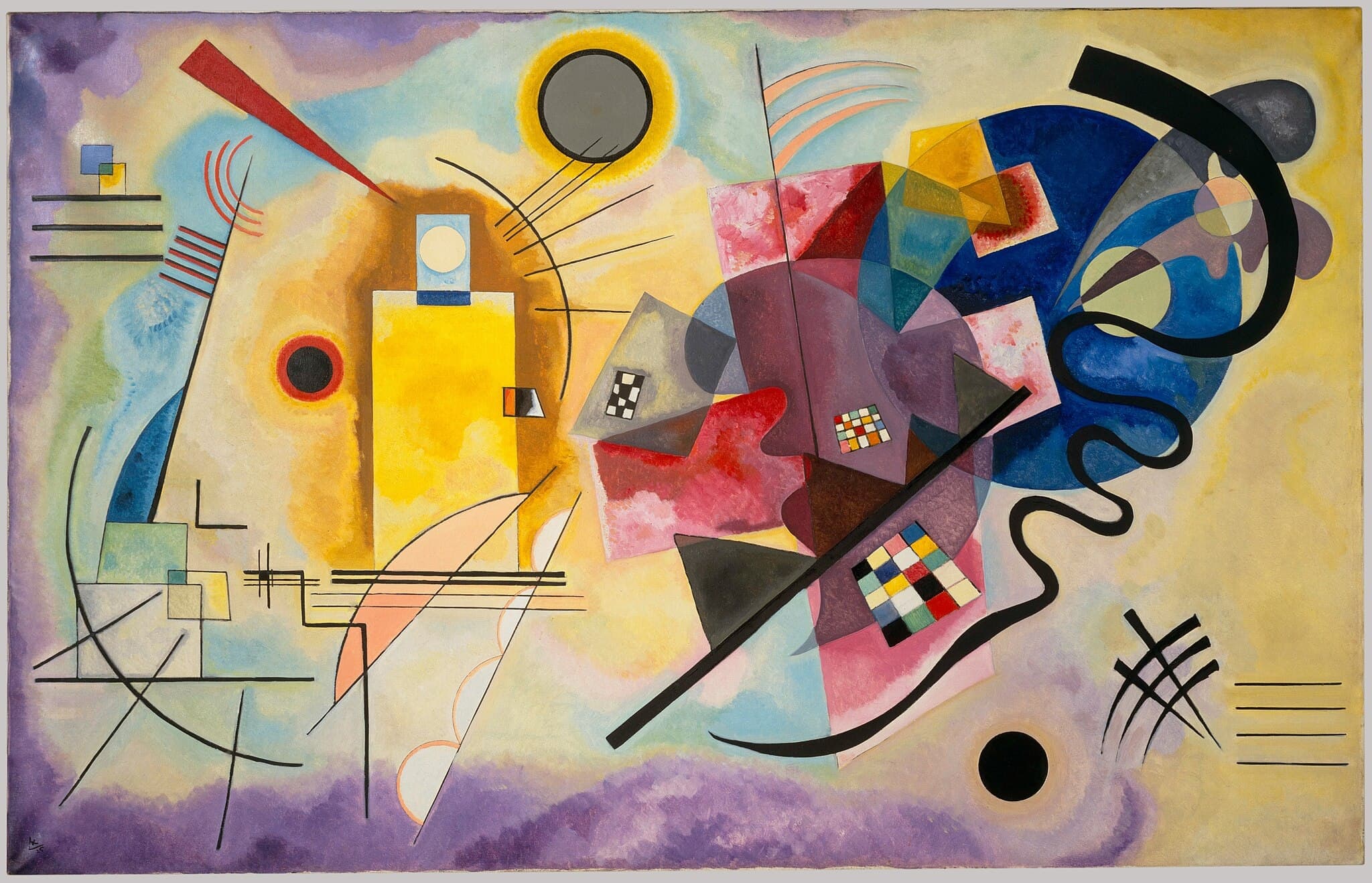
$70-120 million
Valued $70–120M as a Centre Pompidou‑held, large canonical 1925 Bauhaus masterpiece with no sale history, anchored to Kandinsky’s $44.9M auction record and trophy comparables.
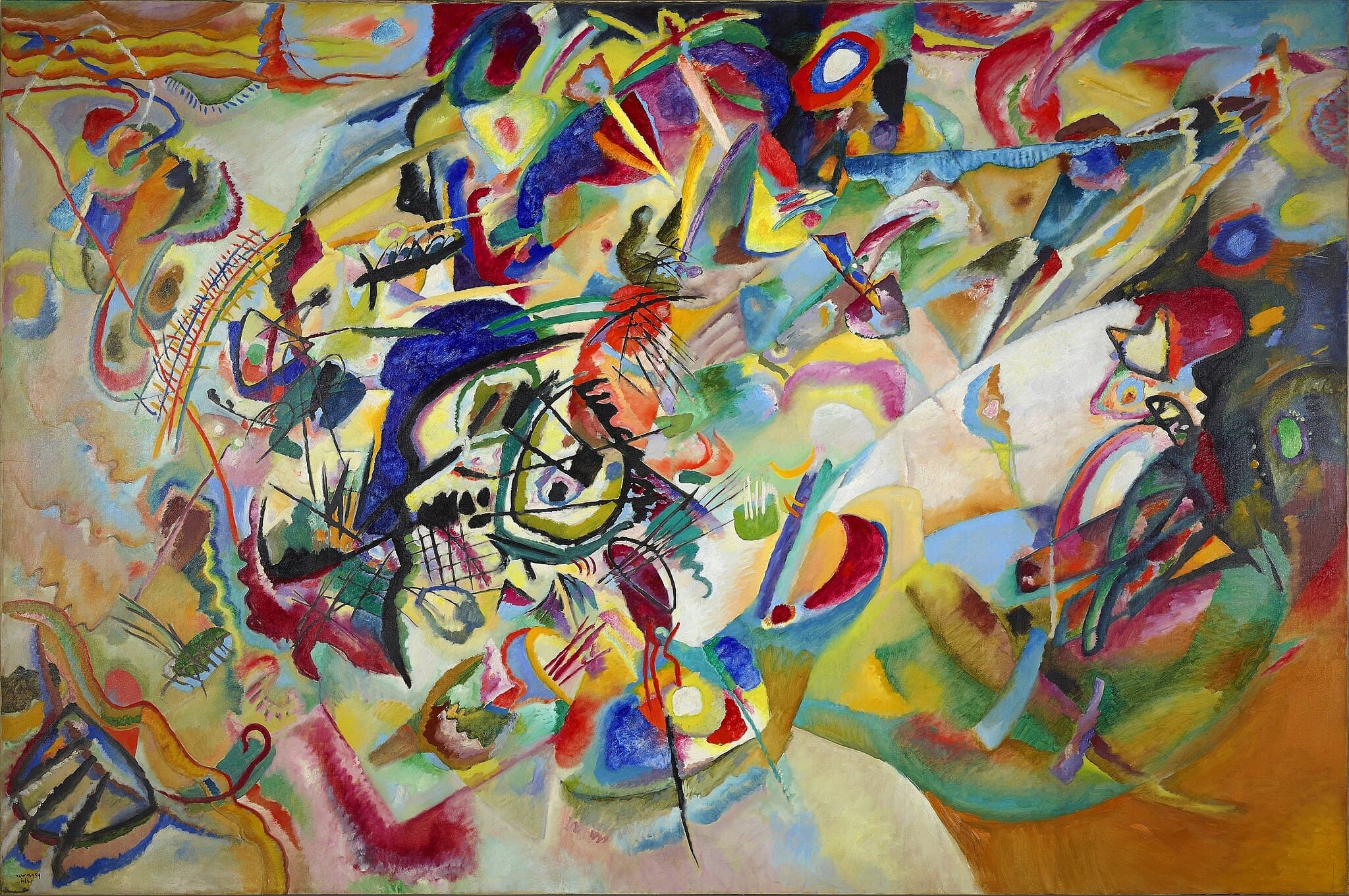
$30-80 million
Estimated $30–80M based on top public‑auction Kandinsky comparables, adjusted upward for Composition VII’s museum‑held, canonical pre‑WWI significance and large scale.
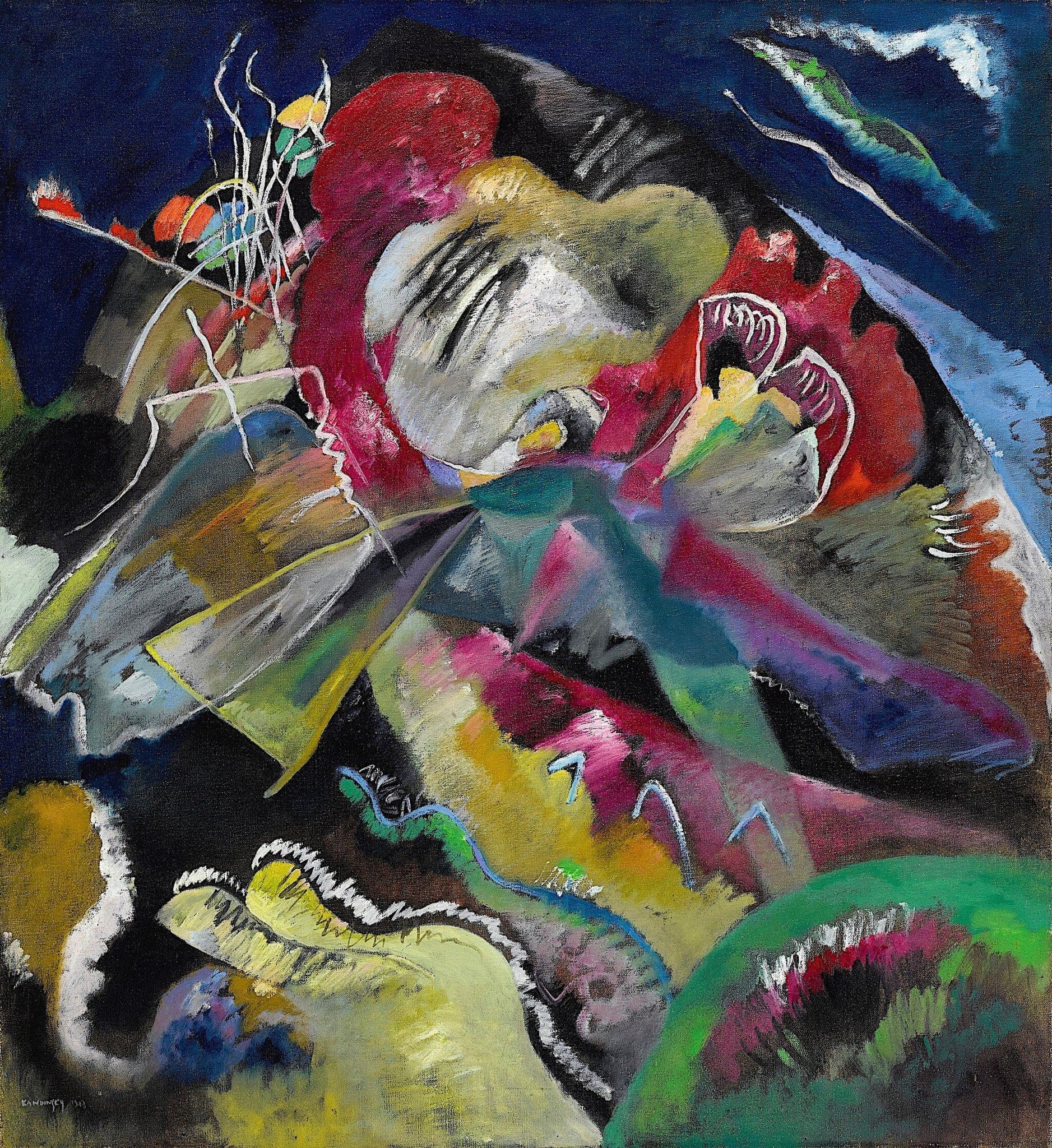
$35-60 million
Placed at $35–60M anchored to the documented 21 June 2017 Sotheby’s sale (realized £33,008,750 ≈ $41.6M), with uplift for superior provenance and market movement.
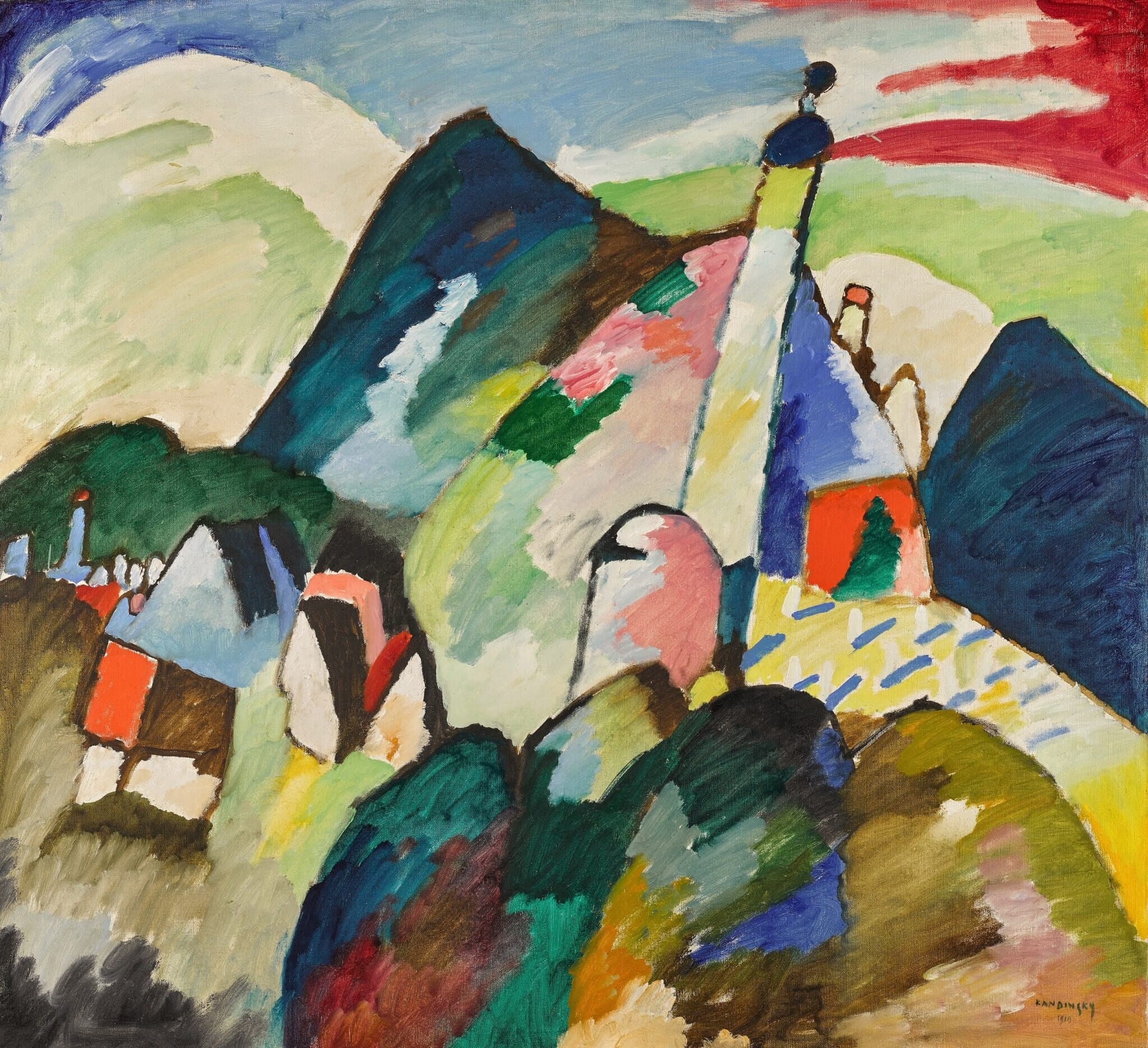
$40-55 million
Valued $40–55M using the identical painting’s Sotheby’s London 1 March 2023 sale (~$44.8M) as the primary benchmark adjusted for costs and market volatility.
$20-50 million
Estimated $20–50M for the Guggenheim’s large 1913 Black Lines, anchored by museum provenance, scale, and recent top‑end 1910–1920 Kandinsky auction results.
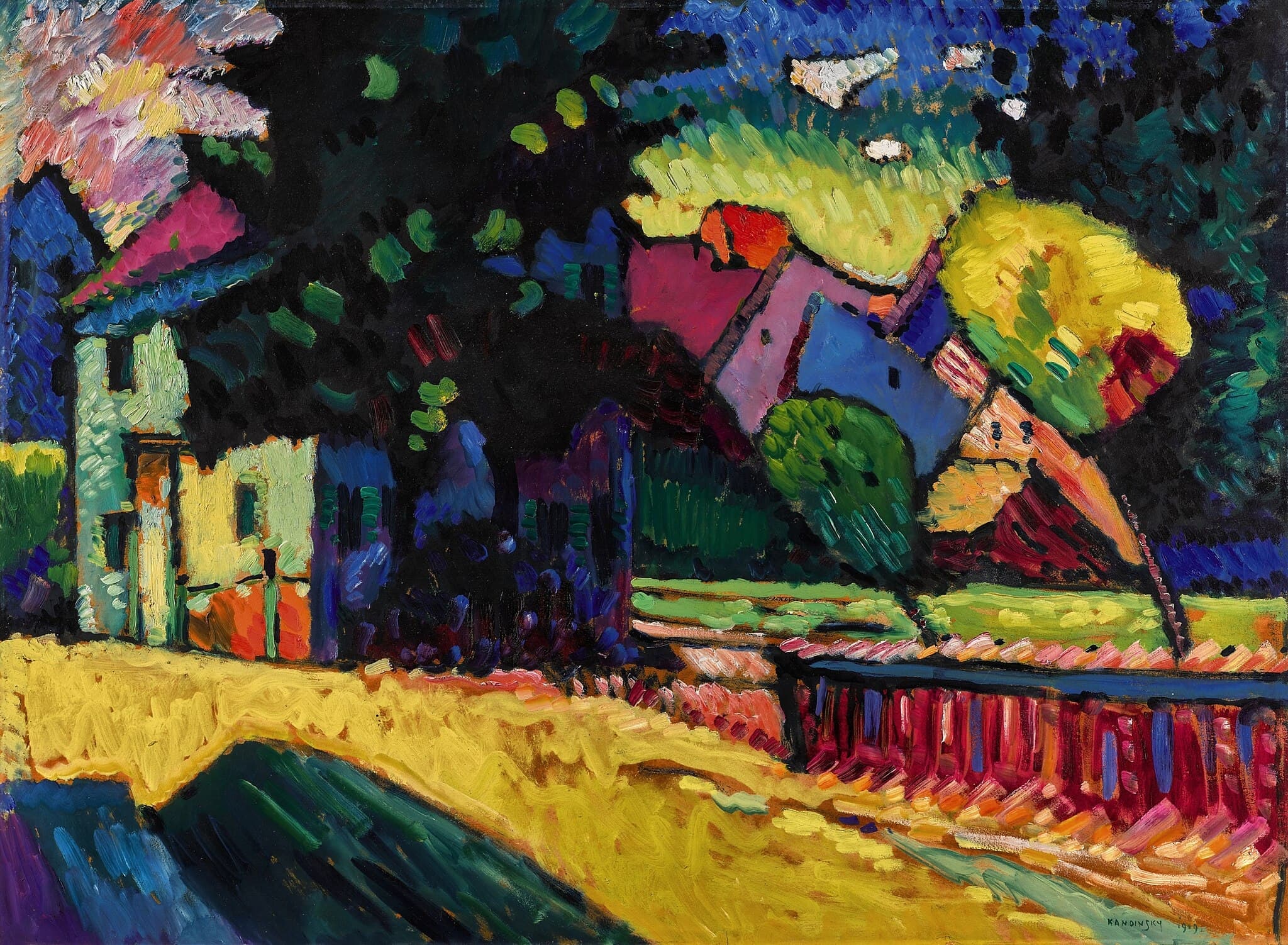
$30-50 million
Market‑anchored $30–50M if identical to the 21 June 2017 Sotheby’s lot (realized ≈ $26.4M), reflecting upward adjustment from strengthened Murnau comparables since 2017.
$30-50 million
Projected $30–50M assuming authenticity and museum‑quality condition, based on high‑quality pre‑WWI Kandinsky auction comparables for large canonical compositions.
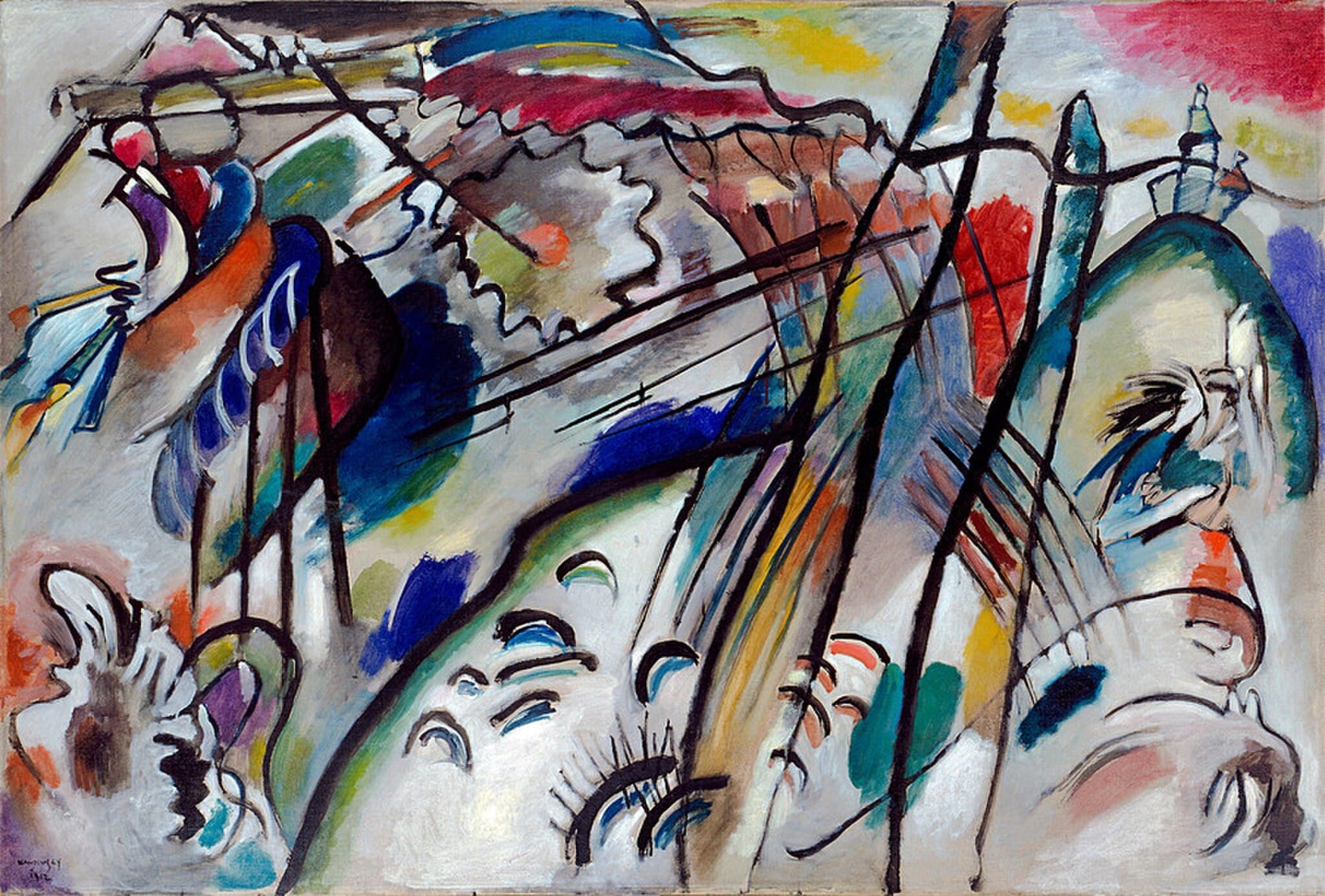
$22-45 million
Estimated $22–45M for Improvisation 28 (2nd version) (Guggenheim acc. 37.239) based on early‑improvisation comparables, substantial scale (111.4×162.1 cm) and museum provenance.
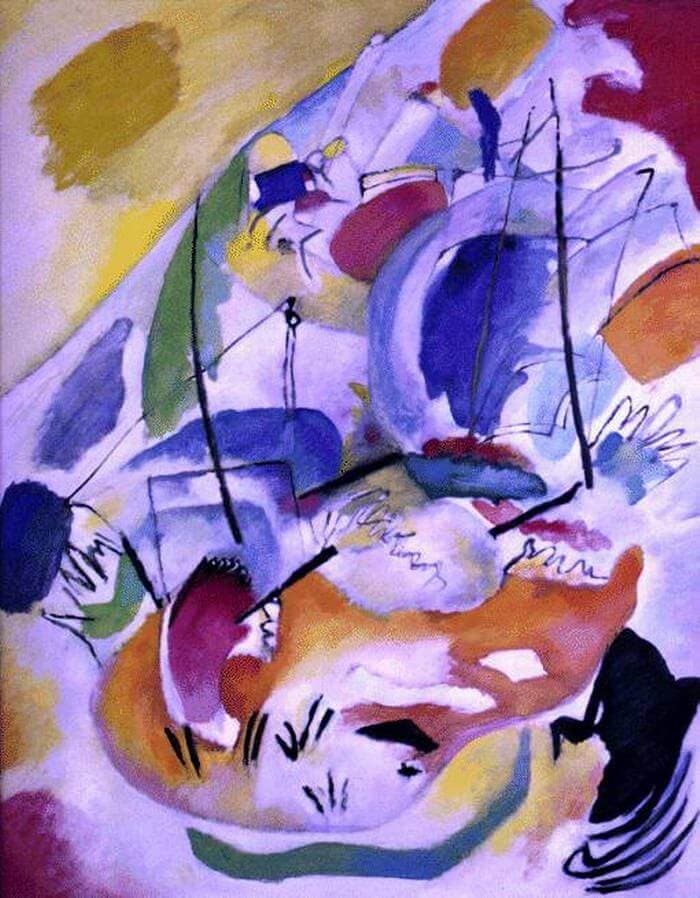
$15-45 million
Valued $15–45M for the National Gallery’s Improvisation 31 (Sea Battle), grounded in its 1913 date, institutional provenance, scale, and recent top Kandinsky comparables.
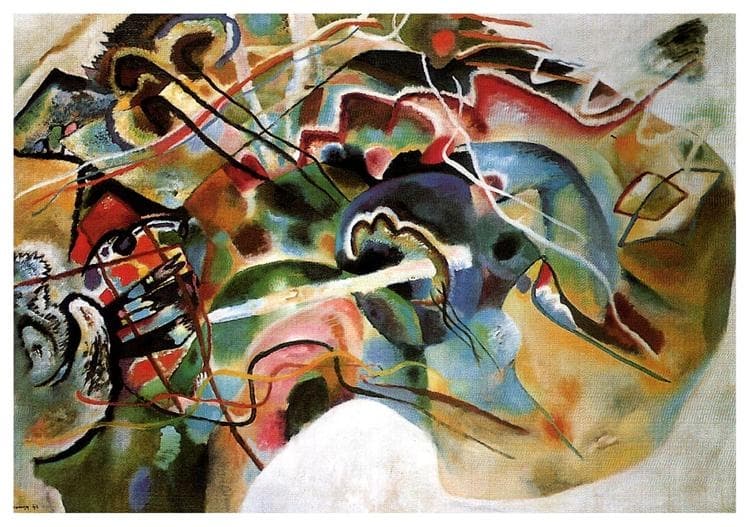
$20-45 million
Estimated $20–45M for Painting with White Border (Guggenheim acc. 37.245), reflecting museum‑grade provenance, large 1913 canvas, and high‑end Kandinsky comparables.
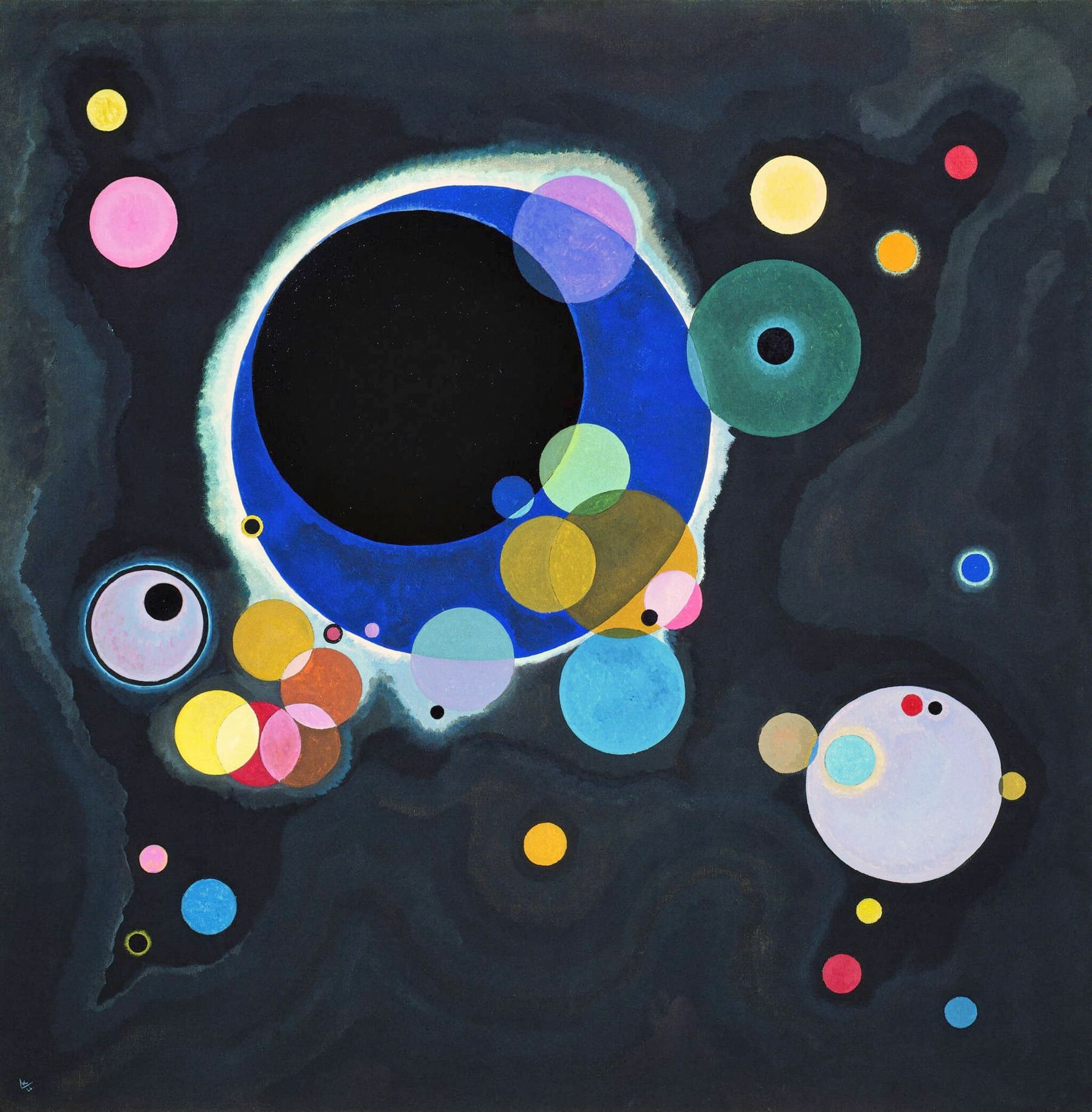
$20-40 million
Placed at $20–40M for Several Circles (1926) given its large scale (~140×140 cm), canonical motif, and Guggenheim provenance supporting mid‑to‑high placement among Bauhaus comparables.
$3-30 million
Hypothetical deaccession value $3–30M for Circles in a Circle (1923, Philadelphia Museum), most likely $3–12M unless offered as a pristine museum‑quality trophy.
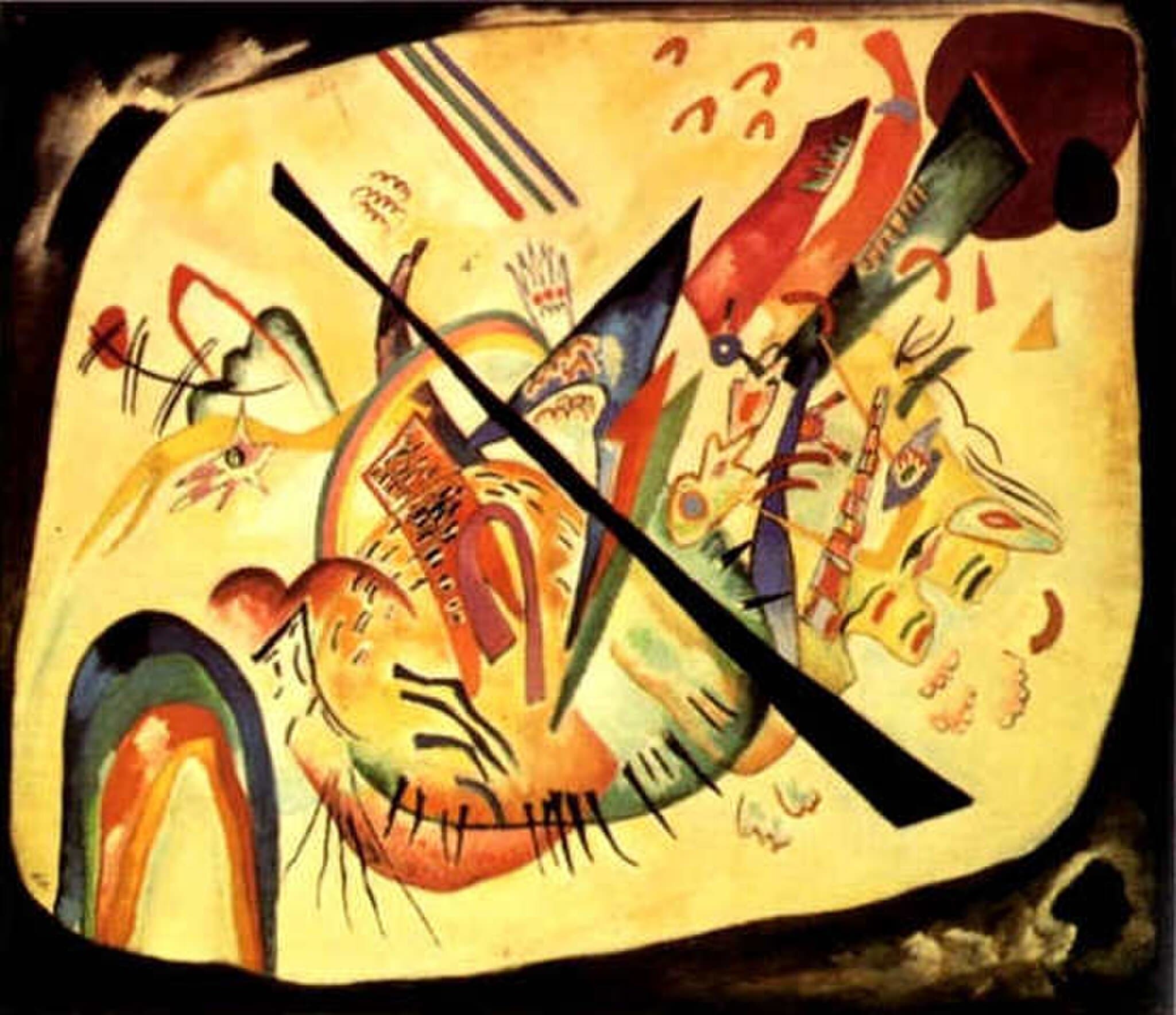
$18-26 million
Final band $18–26M anchored to the Sotheby’s 19 Nov 2024 realized price of $21.61M for Weisses Oval, adjusted with recent Bauhaus comparables.
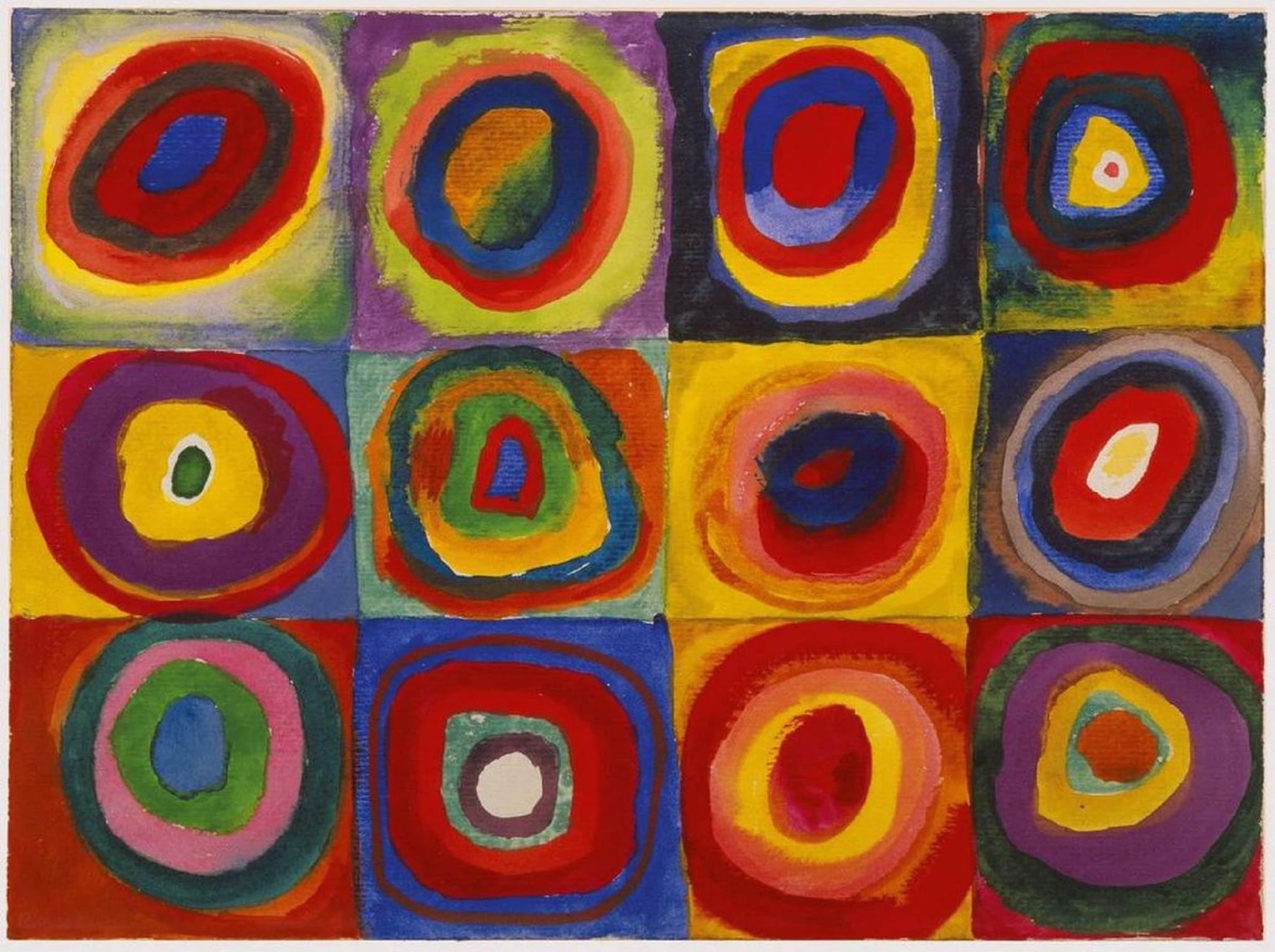
$50,000–1,000,000
Market range $50,000–1,000,000 for the Lenbachhaus sheet, with likely mid‑six‑figure outcomes only if RK authentication, firm provenance, and excellent condition accompany the paper.
What Drives Value in Wassily Kandinsky's Work
Period / Series Hierarchy (1910s vs Murnau vs Bauhaus)
Kandinsky’s market is tiered by tight, artist‑specific periods. Large pre‑WWI Improvisations and Compositions (c.1912–1914) — e.g., Composition VI, VII, Black Lines, Improvisation 31 — set the highest scholarly and price ceiling. Murnau works (c.1908–1911) trade highly when museum‑quality (see Murnau mit Kirche II’s record), while Bauhaus geometric canvases (1920s, e.g., Several Circles, Circles in a Circle, Weisses Oval) form a separate, robust band. Buyers price against these internal Kandinsky hierarchies rather than generic modernist categories.
Named, Iconic Compositions and Image Recognition
Certain titled monuments—Composition VIII and Yellow‑Red‑Blue—carry an outsized trophy premium because their imagery is globally reproduced and institutionally linked (Composition VIII → Guggenheim identity; Yellow‑Red‑Blue → Pompidou). That iconography converts works from ‘museum‑quality’ into category‑defining assets, expanding bidder pools beyond specialists and justifying bids well above normal period comparables. For Kandinsky, name recognition and a single defining image materially raise realized prices.
Museum/Founding‑Collection Provenance vs. Liquidity
Institutional ownership is a Kandinsky‑specific value multiplier: Guggenheim, NGA, Pompidou holdings (e.g., Black Lines 37.241; Improvisation 28 37.239; Several Circles 41.283) practically certify authenticity and attract premium bids. But museum provenance also constrains availability — deaccessions are rare and some holdings (Centre Pompidou donation; national collections) are effectively inalienable — creating a paradox where provenance both uplifts theoretical value and suppresses real‑world liquidity or makes prices hypothetical.
Provenance Clarity & Restitution Resolution
Clear, published ownership chains and resolved restitution dramatically affect Kandinsky pricing. The high‑profile restitution and clean title of Murnau mit Kirche II (Siegbert Stern provenance, Van Abbemuseum → heirs) cleared legal risk and helped produce a record result; by contrast, works embedded in state collections (Composition VII, Tretyakov) face export/legal obstacles that reduce marketability. For Kandinsky, provenance quality and remediation of wartime title issues are decisive, binary price drivers.
Market Context
Wassily Kandinsky occupies a blue‑chip position in the Modern market: his auction record is $44.9m for Murnau mit Kirche II (1910) at Sotheby’s London in 2023, with other landmark results including Painting with White Lines (~$41.6m, 2017), Weisses Oval ($21.6m, 2024) and Le rond rouge (c.$16.8m, 2026). Institutional collections and major private collectors worldwide underpin demand, and museum‑quality, early Blue Rider and Bauhaus canvases remain the clearest drivers of top prices. Supply of premier, well‑provenanced works is extremely thin; restituted or fresh‑to‑market examples and strong exhibition histories regularly catalyze competitive bidding. After a 2024 contraction, late‑2025/early‑2026 sales reaffirmed robust liquidity at the upper tier, with continued selectivity and price sensitivity below the trophy level.