How Much Is Improvisation 28 (Second Version) Worth?
Last updated: April 13, 2026
Quick Facts
- Methodology
- comparable analysis
Hypothetical public‑auction estimate for Wassily Kandinsky’s Improvisation 28 (Second Version), 1912 (Solomon R. Guggenheim Museum, accession 37.239): $22–45 million. This band reflects recent auction comparables for Kandinsky’s early improvisations and major Bauhaus works, adjusted for museum provenance, scale (~111.4 × 162.1 cm) and rarity; a formal, binding figure requires a condition report and confirmation of saleability.
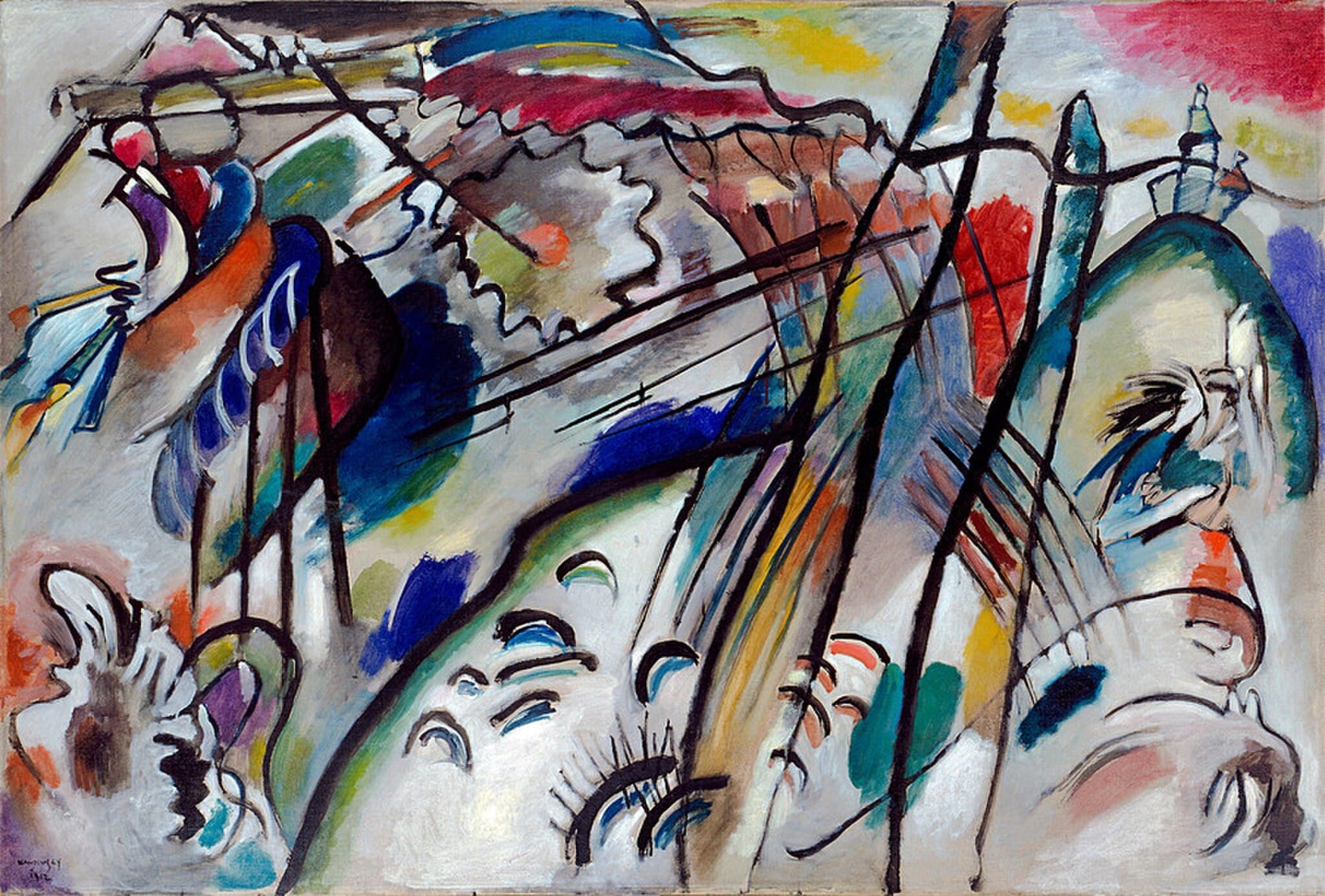
Improvisation 28 (Second Version)
Wassily Kandinsky, 1912 • Oil on canvas
View more by Wassily Kandinsky →Valuation Analysis
Hypothetical auction valuation and rationale: For Wassily Kandinsky’s Improvisation 28 (Second Version), 1912 (Solomon R. Guggenheim Museum, accession 37.239), I estimate a theoretical public‑auction pre‑sale range of $22,000,000 – $45,000,000. This valuation is conditional and assumes the painting is available for sale, in stable condition, with clear title and documented exhibition/bibliography. The band is derived by benchmarking recent, high‑quality auction results for Kandinsky’s pre‑1914 improvisations and closely related Bauhaus canvases, and then adjusting for museum provenance, scale and rarity [1][2].
Why this amount: Kandinsky’s early improvisations are art‑historically pivotal and among the most sought‑after works in his market. Recent saleroom evidence shows museum‑quality early works and fresh‑to‑market canvases performing strongly: the 1910 Murnau composition that set the modern auction ceiling is a direct market anchor, while other comparable early and Bauhaus‑era canvases have realized in the low‑ to mid‑eight‑figure band [2][3][4]. Given Interrupted accessibility of museum‑held examples, a Guggenheim accession of this scale and date would be expected to sit toward the middle‑to‑upper part of that distribution if released.
Key adjustments and caveats: The upper end of the band assumes exceptional condition, full autograph attribution, and a demonstrable exhibition/publication history that elevates the work above ordinary examples. The lower end represents a conservatively adjusted market outcome reflecting realized prices for high‑quality but less singular Kandinsky canvases. Critical contingencies that would materially alter the estimate: confirmed condition report (restorations or relining can reduce market confidence), donor/deaccession restrictions (which may prevent sale), and contemporaneous market depth for Modernist abstraction at the time of offering.
Practical considerations: Because the object is part of the Guggenheim Founding Collection, public sale is unlikely; when museums do deaccession canonical works they typically draw exceptional institutional and private interest and price premiums. If a firm market figure is required (for insurance, loan collateral, or a hypothetical deaccession), obtain high‑res photography, a professional condition report, provenance and exhibition documentation, and solicit formal pre‑sale opinions from major houses (Sotheby’s/Christie’s/Phillips). Auction houses will typically model reserves and guarantees against the same comparables used here [1][2].
Conclusion: The $22–45M band is a reasoned, market‑anchored, hypothetical auction estimate based on comparable auction realizations and the painting’s institutional stature. For a binding valuation, commission the technical/condition assessment and engage an auction‑house specialist to test market appetite and possible guarantee strategies.
Key Valuation Factors
Art Historical Significance
High ImpactImprovisation 28 belongs to Kandinsky’s critical pre‑World War I phase (c.1909–1914) during which he advanced toward full abstraction. Paintings from this period are viewed as formative milestones in the history of abstract art and therefore carry a pronounced premium in the market. Collectors and institutions prize works that demonstrably sit within this transitional moment: such pieces not only command higher bids but also attract institutional interest for exhibition and publication. If the work is fully autograph, well documented and demonstrably integral to Kandinsky’s improvisation series, its art‑historical weight will be a primary driver pushing value toward the upper part of the comparable band.
Provenance & Museum Ownership
High ImpactThe painting’s inclusion in the Solomon R. Guggenheim Museum’s Founding Collection (accession 37.239) materially strengthens provenance and virtually eliminates key attribution/title risks — factors that raise buyer confidence and price expectations. Institutional provenance is highly valued by collectors and often yields a premium at auction. However, museum ownership also typically reduces immediate market availability: deaccession is rare and controlled, which makes a hypothetical sale both exceptional and likely to attract heightened competitive bidding if it were to occur. Any valuation for transactional use must confirm deaccession authority and absence of encumbrances.
Condition, Size & Medium
High ImpactReported dimensions (approx. 111.4 × 162.1 cm) and oil‑on‑canvas medium place the work in a size class that favors strong auction performance: large, museum‑scale Kandinsky works typically command higher prices than small studies. Physical condition is determinative; museum stewardship suggests good conservation, but specific interventions (relining, inpainting) materially affect market confidence and pricing. A formal condition report (including technical imaging) is required to lock a firm reserve. Absent significant conservation issues, size and medium are positive contributors to the valuation presented.
Comparable Auction Results & Demand
High ImpactRecent headline sales provide the primary market anchors: a 1910 Murnau canvas achieved the modern auction ceiling for Kandinsky and demonstrates the upper market potential; additional high‑quality pre‑1914 and Bauhaus works have realized in the $20–25M range. These comparables inform both the mid‑range and the ceiling of the present band. Market demand for museum‑quality, fresh‑to‑market Modernist canvases remains robust, but results vary widely by provenance, condition, and narrative. Auction appetite, use of guarantees and the presence of institutional bidders will influence final hammer outcomes.
Availability & Rarity
High ImpactLarge, canonical Kandinsky canvases from the Blue Rider/early abstraction period are rare on the open market, especially those with prominent museum provenance. Rarity increases theoretical value but also reduces liquidity; museum holdings are seldom sold, meaning there are fewer direct comparables and a higher degree of price sensitivity when such works appear. If the Guggenheim were to offer the painting, the singular nature of the opportunity would likely attract multiple bid streams (institutions, private collectors and foundations), which supports the upper half of the valuation band.
Sale History
Improvisation 28 (Second Version) has never been sold at public auction.
Wassily Kandinsky's Market
Wassily Kandinsky is firmly established as a blue‑chip Modern master. The market has shown the capacity to reach mid‑ to high‑eight‑figure results for museum‑quality early abstractions, with a 2023 sale that reset his auction ceiling. Demand remains focused on canonical pre‑1914 works (the improvisations and seminal Blue Rider canvases) and on fresh‑to‑market Bauhaus‑era paintings. Buyer interest is global and institutional, but results are selective: provenance, exhibition history and condition determine who competes at the top end.
Comparable Sales
Murnau mit Kirche II
Wassily Kandinsky
Same artist and same early (pre-1914) period; large-scale, museum-quality work that set the modern auction record for Kandinsky in 2023—a market ceiling reference for early improvisations.
$44.9M
2023, Sotheby's London
~$47.1M adjusted
Studie für Improvisation 8
Wassily Kandinsky
Directly comparable by subject and period (early improvisations, 1909). Useful precedent for buyer interest and pricing for early improvisation studies at auction.
$23.0M
2012, Christie's New York
~$31.1M adjusted
Tiefes Braun (Deep Brown)
Wassily Kandinsky
Recent high-value Kandinsky sale (1924, Bauhaus period). While from a later period than the 1912 Improvisation, it indicates sustained demand for museum-quality Kandinsky works in the $20–25M range.
$23.3M
2022, Christie's New York
~$25.6M adjusted
Weisses Oval (White Oval)
Wassily Kandinsky
Fresh-to-market, museum-quality Bauhaus-era Kandinsky (c.1921). Demonstrates continued appetite for high-quality works and helps define the lower/mid range for top Kandinsky lots.
$21.6M
2024, Sotheby's New York (Sydell Miller single-owner sale)
~$22.0M adjusted
Current Market Trends
Since the 2023 record sale the Kandinsky market has become more selective: museum‑quality and fresh works still command premiums, but price dispersion has increased and provenance/exhibition narratives matter more. Auction houses increasingly employ guarantees and irrevocables; institutional programming and anniversaries drive episodic spikes in demand. Overall, top‑quality Modernist canvases remain collectible, but successful realization now depends on a tight combination of condition, provenance and market timing.
Sources
- Solomon R. Guggenheim Museum — press kit (Vasily Kandinsky: Around the Circle); lists Improvisation 28 (Second Version), accession 37.239
- Sotheby’s — Murnau mit Kirche II (Wassily Kandinsky), Modern & Contemporary Evening Auction, 1 March 2023 (market ceiling comparable)
- Christie’s — Press materials and sale report for Studie für Improvisation 8 (2012), precedent for early improvisations at auction
- Sotheby’s — Weisses Oval (White Oval), A Legacy of Beauty: The Collection of Sydell Miller (2024), recent high‑value Bauhaus‑era comparable