How Much Is Several Circles Worth?
Last updated: April 13, 2026
Quick Facts
- Methodology
- comparable analysis
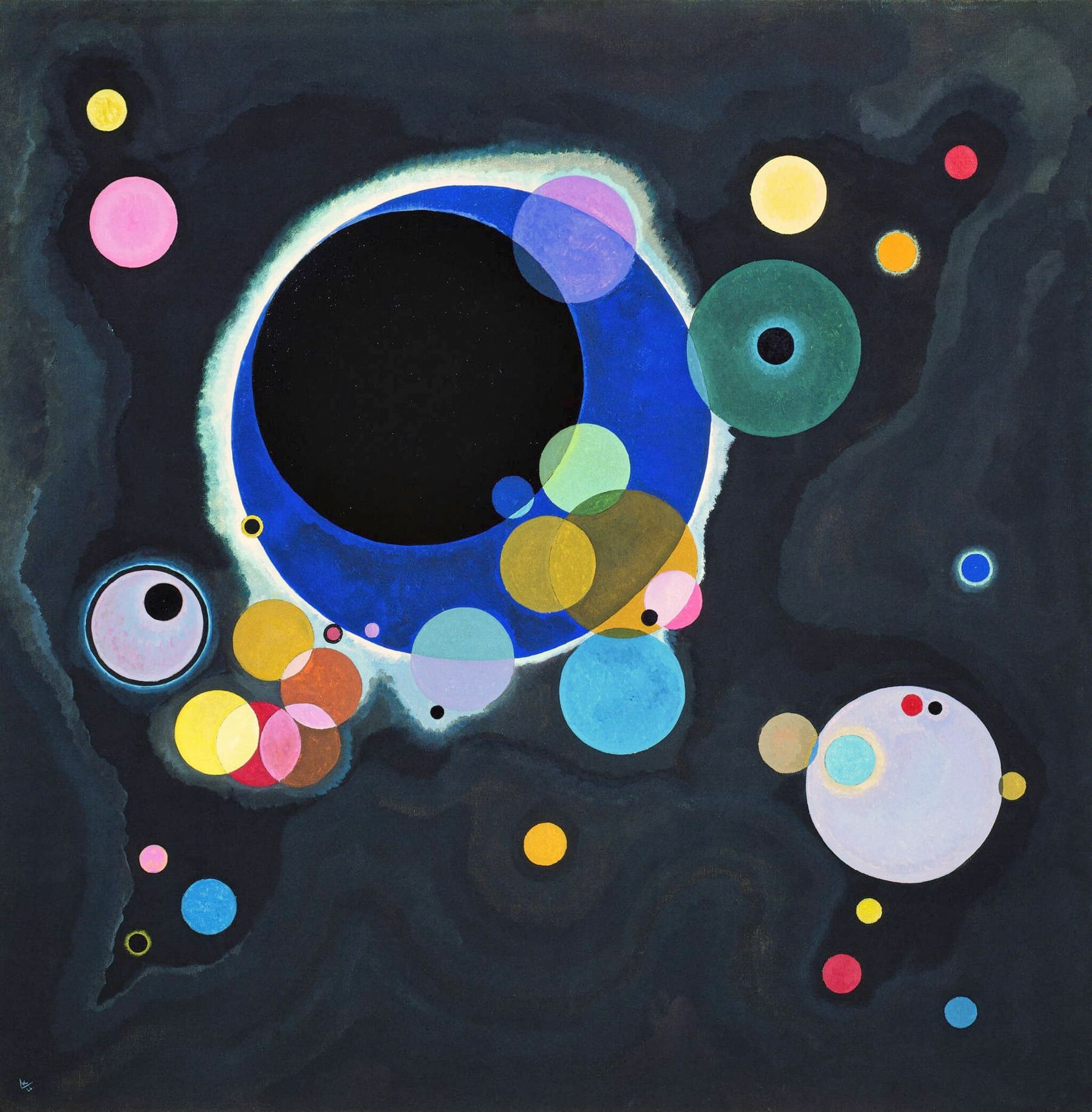
Based on recent auction comparables for large Bauhaus‑period Kandinskys and the painting’s museum provenance, a reasonable auction estimate for Wassily Kandinsky’s Several Circles (1926) is USD 20–40 million under normal sale conditions. The work’s large scale (≈140.7 × 140.3 cm), canonical circle motif, and Guggenheim provenance support placement in the mid‑to‑high end of that range; exceptional circumstances (museum deaccession or an unusually competitive sale) could push the price higher.
Valuation Analysis
Valuation conclusion: Using a comparable‑sales framework, I estimate that Wassily Kandinsky’s Several Circles (1926) would reasonably be expected to achieve approximately USD 20–40 million at auction under normal, competitive market conditions, assuming clear title and museum‑quality conservation. The painting is held in the Solomon R. Guggenheim Museum (Founding Collection, inventory 41.283), which strongly confirms attribution and exhibition history and therefore supports a higher estimate within the stated band [1].
Market support and comparables: The estimate is grounded in recent, high‑profile Kandinsky results. Important large Kandinskys have established a market ceiling in the low‑to‑mid‑$40M range (for example, Murnau mit Kirche II at Sotheby’s in March 2023) and a reliable mid‑market band in the low‑to‑mid‑$20M range for Bauhaus/geometric works (e.g., Tiefes Braun, Christie’s 2022) [2][3]. Early‑masterpiece sales such as Painting with White Lines (Sotheby’s, 2017) demonstrate that exceptional historical importance and provenance can push outcomes well above the mid band [4]. Several Circles — a large, museum‑quality 1926 work featuring Kandinsky’s signature circles motif — sits stylistically and materially within that comparables set.
Drivers and risks: Primary upward drivers are canonical art‑historical status, stable museum provenance and exhibition/publication history, and large scale (≈140.7 × 140.3 cm), all of which increase institutional and high‑net‑worth demand [1]. Downside risks that would materially reduce value include unresolved provenance disputes, significant condition or restoration issues, or the unlikely scenario of contested attribution. Because the painting is museum‑held, deaccession would be uncommon and would itself shape market reception and result; a well‑managed institutional sale can attract intense competitive bidding and premium pricing, but most museum holdings never enter the market.
Practical next steps: For a sale‑grade valuation, confirm the painting’s current legal/collection status with the Guggenheim, obtain an up‑to‑date technical/condition report and conservation history, and update auction comparables immediately prior to offering (market dynamics change). Consult specialists at major houses (Sotheby’s/Christie’s) for presale positioning; a formal, house‑led sale or super‑high‑profile private placement would likely maximize proceeds. The USD 20–40M band reflects the present comparables distribution and the painting’s museum provenance; exceptional circumstances could press a realized price above this band, while condition or title issues could lower it significantly.
Key Valuation Factors
Art Historical Significance
High ImpactSeveral Circles is a canonical example of Kandinsky’s Bauhaus‑period geometric abstraction and one of the artist’s most recognizable uses of the circle motif. Created in 1926, the work sits at a moment when Kandinsky distilled color, geometry and spiritual theory into tightly controlled forms; that makes it an important representative work for exhibitions and scholarly narratives about his late 1920s output. Collectors and institutions frequently pay premiums for pieces that exemplify an artist’s defining style or pivotal period. The painting’s prominence in scholarship and exhibitions increases desirability and supports prices above those for lesser‑known or workshop pieces.
Provenance & Exhibition History
High ImpactThe painting’s presence in the Solomon R. Guggenheim Museum’s Founding Collection (inventory 41.283) provides strong, museum‑level provenance and a public exhibition record that reduces attribution risk and increases buyer confidence. Museum provenance often functions as a price multiplier because it signals institutional vetting and sustained scholarly attention; works with continuous museum provenance typically command higher estimates than comparable works lacking such history. Conversely, because institutional holdings rarely come to market, a deaccession would be exceptional and would shape bidder perception — potentially increasing competitive interest if well documented and publicized.
Condition & Size
High ImpactThe painting’s large dimensions (≈140.7 × 140.3 cm) make it highly visible and institutionally attractive; large scale is a positive for prominence but can narrow the pool of private buyers due to installation constraints. Condition must be confirmed with a technical report: museum stewardship suggests conservation was performed, but the market impact of any major restoration or structural issues can be material. Pristine or professionally conserved canvases of this size and date generally achieve top comparables, while works requiring significant intervention trade at a discount.
Comparable Sales & Auction Record
High ImpactRecent auction history for Kandinsky sets a useful pricing framework: a small number of top lots (e.g., Murnau mit Kirche II, Sotheby’s 2023) established a ceiling in the low‑to‑mid‑$40M range, while multiple Bauhaus/geometric works have realized in the low‑to‑mid‑$20M band (e.g., Tiefes Braun, Christie’s 2022). These outcomes create a distribution with a realistic mid‑market around $20–30M and a demonstrable upside in the low‑$40M range for market‑defining works. Several Circles fits the mid‑to‑upper portion of that distribution given its quality and provenance [2][3][4].
Market Liquidity & Buyer Demand
Medium ImpactKandinsky is a blue‑chip modern artist with a stable pool of institutional and high‑net‑worth buyers. Demand for canonical 1920s works remains robust, but the high‑end market is selective: sales of major works can be headline events but liquidity is concentrated in top auctions and private channels. Market cycles, macroeconomic conditions, and competing blue‑chip opportunities will influence the timing and realized price. A transparent, well‑publicized offering (especially tied to exhibition history) will attract the deepest competition.
Sale History
Wassily Kandinsky's Market
Wassily Kandinsky is a recognized blue‑chip Modernist whose works consistently perform strongly at auction. Record results in recent years have approached the low‑to‑mid tens of millions for museum‑quality and historically important works, with a few standout pieces exceeding $40M. Demand is strongest for canonical pieces from key periods (early abstraction and the Bauhaus years), where scarcity of high‑quality examples and institutional interest combine to support premium pricing. Collectors include major museums, long‑term private collectors and foundations; outcomes hinge on provenance, condition and exhibition history.
Comparable Sales
Murnau mit Kirche II (Murnau with Church II)
Wassily Kandinsky
Record Kandinsky sale and a top-market benchmark; large, museum-quality work that sets the auction ceiling for the artist.
$44.8M
2023, Sotheby's, London
~$47.5M adjusted
Painting with White Lines (Bild mit Weißen Linien)
Wassily Kandinsky
Major early-abstraction Kandinsky; historically important work and a high-prestige sale that helps define the market ceiling.
$41.6M
2017, Sotheby's, London
~$52.0M adjusted
Tiefes Braun (1924)
Wassily Kandinsky
Close in date to Several Circles (mid-1920s), comparable market tier and realized price band for Bauhaus/geometric Kandinsky works.
$23.3M
2022, Christie's, New York
~$25.1M adjusted
Rigide et courbé (1935)
Wassily Kandinsky
Later-period geometric Kandinsky with similar abstraction vocabulary; sold in the low‑to‑mid $20M range—useful for mid-market comparison.
$23.3M
2016, Christie's, New York
~$29.8M adjusted
Current Market Trends
Top‑tier Modern and early‑20th‑century markets remain resilient, with institutional buyers and deep private collectors active for canonical works. Periodic record sales set new ceilings but realized prices remain sensitive to provenance, condition, timing and macroeconomic factors. Supply of comparable high‑quality 1920s Kandinskys is limited, which supports pricing power for well‑provenanced works; however, each sale is unique and requires up‑to‑date comparables at the moment of offer.
Sources
- Solomon R. Guggenheim Museum — press kit / collection entry for Vasily Kandinsky: Around the Circle (Several Circles entry, inventory 41.283)
- Sotheby's — Murnau mit Kirche II (Murnau with Church II) lot / sale page (1 March 2023)
- Christie's — sale coverage / reporting for Tiefes Braun (1924) (Nov 9, 2022)
- Sotheby's / market press — Painting with White Lines (Bild mit Weißen Linien) (June 2017) and related market reports