How Much Is Tête Worth?
Last updated: May 30, 2026
Quick Facts
- Methodology
- comparable analysis
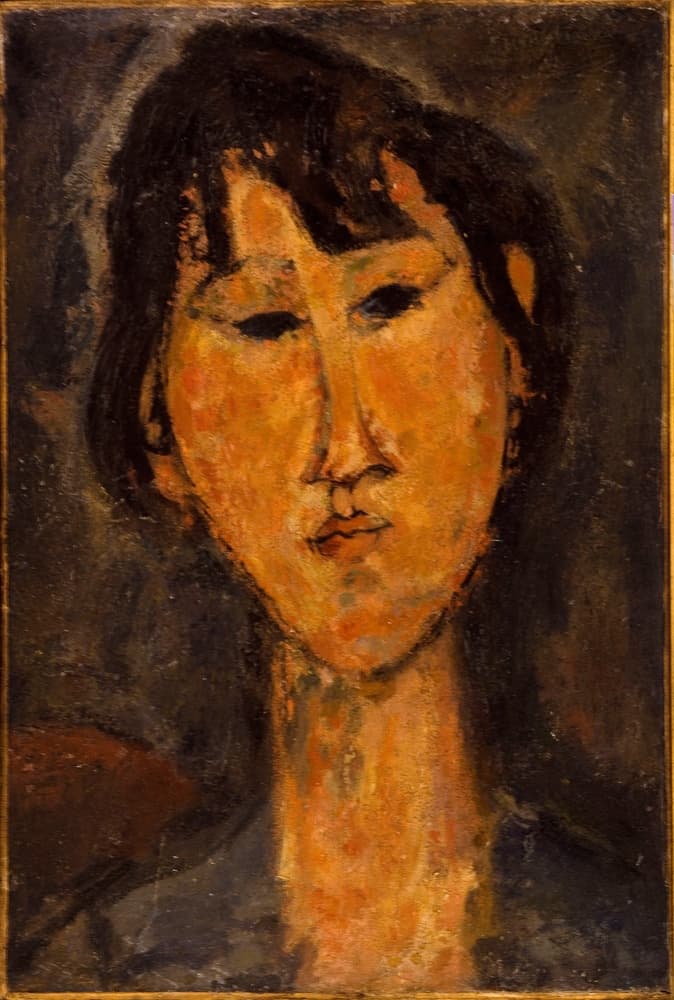
Hypothetical fair-market value for Modigliani’s Tête (1915, oil on cardboard) at the Centre Pompidou is $12–20 million. The range reflects strong demand for prime-year Modigliani balanced against the work’s support (cardboard) and generic 'head' subject, priced below marquee canvases yet above drawing-level material.
Valuation Analysis
Conclusion: A defensible hypothetical fair‑market value for Amedeo Modigliani’s Tête (1915, oil on cardboard, 54 × 42.5 cm), held by the Musée national d’Art moderne, Centre Pompidou, is $12–20 million. This synthesis assumes a lawful, deaccession-approved sale with clear title, exportability, and excellent condition. The work is documented on the Centre Pompidou’s collection page as Tête rouge, signed and acquired in 1964 following the André Lefèvre sale at the Palais Gallièra [1].
Methodology and key comparables: The estimate is anchored in same-artist, same-period comparables, then adjusted for subject, support, and provenance weight. The closest medium/subject comp is Tête de jeune fille (Louise), an oil-on-board head dated 1915 that sold for $5.868 million at Phillips New York in 2023—establishing the floor for high-quality board/cardboard “head” imagery from this moment [2]. By contrast, solid but non-trophy Modigliani oils on canvas (often portraits with named sitters) transact in the mid‑eight figures: e.g., Beatrice Hastings (devant une porte), 1915, realized $17.565 million at Christie’s New York in 2022 [5]. The upper context for the artist remains defined by late nudes, led by Nu couché at $170.4 million (Christie’s, 2015) [3], while recent strength for portraits in Paris (Elvire en buste, ~$31.1 million, Sotheby’s, 2025) underscores robust demand for prime material in the current Franco‑European hub [4].
Positioning of this work: Tête occupies a mid‑tier but art‑historically meaningful niche. The 1915 date is a prime inflection in Modigliani’s mature idiom, connecting directly to his head/caryatid vocabulary that informs both his rare carved Têtes and his most iconic portraits. The subject—a stylized, generalized head—carries strong brand recognizability even without a named sitter. Long-term museum provenance (Centre Pompidou, acquired 1964) typically enhances confidence and scholarship, factors that can support competitive bidding in a deaccession scenario [1].
Constraints and adjustments: The support (oil on cardboard) is materially less prestigious and more conservation‑sensitive than canvas, with elevated risks around planarity, edge fragility, and prior mountings. These risks usually warrant a pricing discount versus comparable canvas works, and any stability or retouch issues would move value toward the low end of the range. Additionally, because the work is part of a French national collection, deaccession is tightly regulated; we treat any sale as strictly hypothetical and assume full legal clearance for the purposes of valuation [6].
Resulting estimate: Triangulating the 1915 oil‑on‑board head comp (~$5.9m) [2] with the mid‑teens results for comparable‑quality canvas portraits [5] and the broader ceiling for strong portraits in today’s Paris‑centric market [4], we place Tête at $12–20 million. In exceptional, conservator‑vetted condition with deep publication/exhibition history, the work should command the upper half of the band; if condition or mounting history prove challenging, the lower‑teens outcome is more probable. The midpoint (~$16m–$17m) is the most likely clearing level in a well‑orchestrated sale.
Key Valuation Factors
Art Historical Significance
Medium ImpactDated 1915, Tête aligns with a pivotal phase in Modigliani’s mature development, when his elongated, mask‑like visages and caryatid/“head” vocabulary crystallized. While not a marquee portrait or nude, the subject encapsulates the distilled geometry, almond eyes, and attenuated features that define his signature style. The work sits within the continuum that links his rare stone sculptures to his celebrated late portraits, offering collectors a concentrated emblem of his language without the cost of a major canvas. As a result, it carries meaningful scholarly and aesthetic weight within the oeuvre, though it remains secondary to named portraits and the market‑leading nudes in both prestige and price.
Medium/Support and Condition Risk
High ImpactOil on cardboard is materially less robust than canvas: it is prone to warping, edge losses, and sensitivity to humidity, and it often bears complex histories of secondary mountings or consolidations. These risks directly affect marketability and price, with buyers prioritizing planarity, surface coherence, and minimal retouch. A pristine surface with stable support and sympathetic past conservation can command a significant premium within this category; conversely, visible distortions, abrasions, or heavy restorations would quickly compress demand. For this valuation, we assume excellent condition vetted by a modern technical report; any adverse findings would warrant revising the estimate downward, possibly materially.
Provenance and Institutional Ownership
Medium ImpactAcquired by the Centre Pompidou in 1964 and held since, the work benefits from blue‑chip institutional provenance and presumed deep exhibition/publication history. Ex‑museum status typically bolsters buyer confidence and can lift bidding—particularly for artists with authenticity scrutiny. However, as part of a French national collection, the object is ordinarily inalienable; any sale would require formal declassification and approvals. This analysis treats such approvals as granted for a hypothetical sale. If realized in practice, the institutional cachet should support strong participation, but logistical/legal complexity could narrow timing options or venue choice, modestly tempering price elasticity relative to a straightforward private consignment.
Market Comparables and Demand
High ImpactDirect medium/subject comparables—most notably a 1915 oil‑on‑board head at Phillips (2023) around $5.9m—set the category floor. Meanwhile, mid‑tier oils on canvas of similar quality regularly trade in the mid‑teens to high‑teens, with standout portraits reaching or exceeding $30m in today’s Paris‑centric Modern market. At the top end, Modigliani’s nudes anchor the artist’s value structure above $150m, affirming robust global demand. Plotted within this matrix, Tête’s prime year, recognizable vocabulary, and museum provenance argue for a premium over board/cardboard heads lacking such pedigree, but the support and generic subject cap the work below comparable canvases—yielding the $12–20m range.
Sale History
Tête has never been sold at public auction.
Amedeo Modigliani's Market
Amedeo Modigliani remains a blue‑chip pillar of the Modern market, with deep, global demand across major regions. His auction record is $170.4 million for Nu couché (Christie’s New York, 2015), followed by $157.2 million for another iconic nude (Sotheby’s New York, 2018). Within his price structure, late nudes dominate, followed by important portraits on canvas and, in a different medium, his scarce stone heads. Quality mid‑tier portraits have recently transacted in the mid‑eight figures, while exceptional works continue to command competition in New York and Paris. Buyers are highly sensitive to authenticity, provenance, and condition, leading to strong dispersion between A‑ and B‑level material and premiums for works with deep scholarship and pristine states.
Comparable Sales
Tête de jeune fille (Louise)
Amedeo Modigliani
Closest direct comp: same artist, same circa‑1915 period, oil on board ‘head’ subject; very similar support and intent.
$5.9M
2023, Phillips New York
~$6.0M adjusted
Beatrice Hastings (devant une porte)
Amedeo Modigliani
Same artist and year (1915); oil on canvas portrait with a named sitter—key benchmark for quality and demand near the target work’s date.
$17.6M
2022, Christie's New York
~$18.8M adjusted
Jeune fille assise, les cheveux dénoués (Jeune fille en bleu)
Amedeo Modigliani
Blue‑chip Modigliani oil on canvas (1919); establishes pricing for mid‑tier portraits, typically trading above board/cardboard works.
$16.4M
2021, Sotheby's New York
~$18.8M adjusted
Elvire en buste
Amedeo Modigliani
Recent marquee Modigliani oil on canvas in Paris; shows current ceiling for strong portraits in the French market context.
$31.1M
2025, Sotheby's Paris
Portrait of Paulette Jourdain
Amedeo Modigliani
Iconic canvas portrait (1919) resold in 2023; sets upper‑tier benchmark for late portraits and broader demand for the artist.
$34.9M
2023, Sotheby's Hong Kong
~$35.8M adjusted
Portrait de Beatrice Hastings
Amedeo Modigliani
Same artist; oil on canvas portrait sold at a regional European house in 2025; illustrates dispersion at the lower end versus marquee venues.
$3.3M
2025, Il Ponte, Milan
Current Market Trends
The Modern segment has stabilized and, in 2025, rebounded selectively as high‑quality supply returned to the marquee sales. Paris has strengthened as a selling center for European Moderns, with strong Modigliani results underscoring depth of demand. Trophy appetite remains intact but more discerning, and buyers are rewarding works with unimpeachable documentation and exhibition histories. At the same time, category bifurcation persists: best‑of‑breed works outperform, while secondary examples or condition‑challenged pieces meet resistance. For Modigliani specifically, portraits and prime‑period oils continue to attract robust bidding, though premiums over 2015–2018 peaks are now reserved for top‑decile material.
Study print
Study this painting as a print
Pair the full artwork with a museum-style study sheet focused on one meaningful detail.
Sources
- Centre Pompidou collection entry: Tête rouge (1915)
- Phillips New York (Nov 14, 2023): Tête de jeune fille (Louise)
- Christie’s New York (Nov 9, 2015): Nu couché press release
- Sotheby’s Paris (Oct 24, 2025): Elvire en buste achieves €27m
- Christie’s New York (Nov 17, 2022): Beatrice Hastings (devant une porte)
- French Ministry of Culture: Legal status of national museum collections