How Much Is The Little Peasant Worth?
Last updated: June 1, 2026
Quick Facts
- Methodology
- comparable analysis
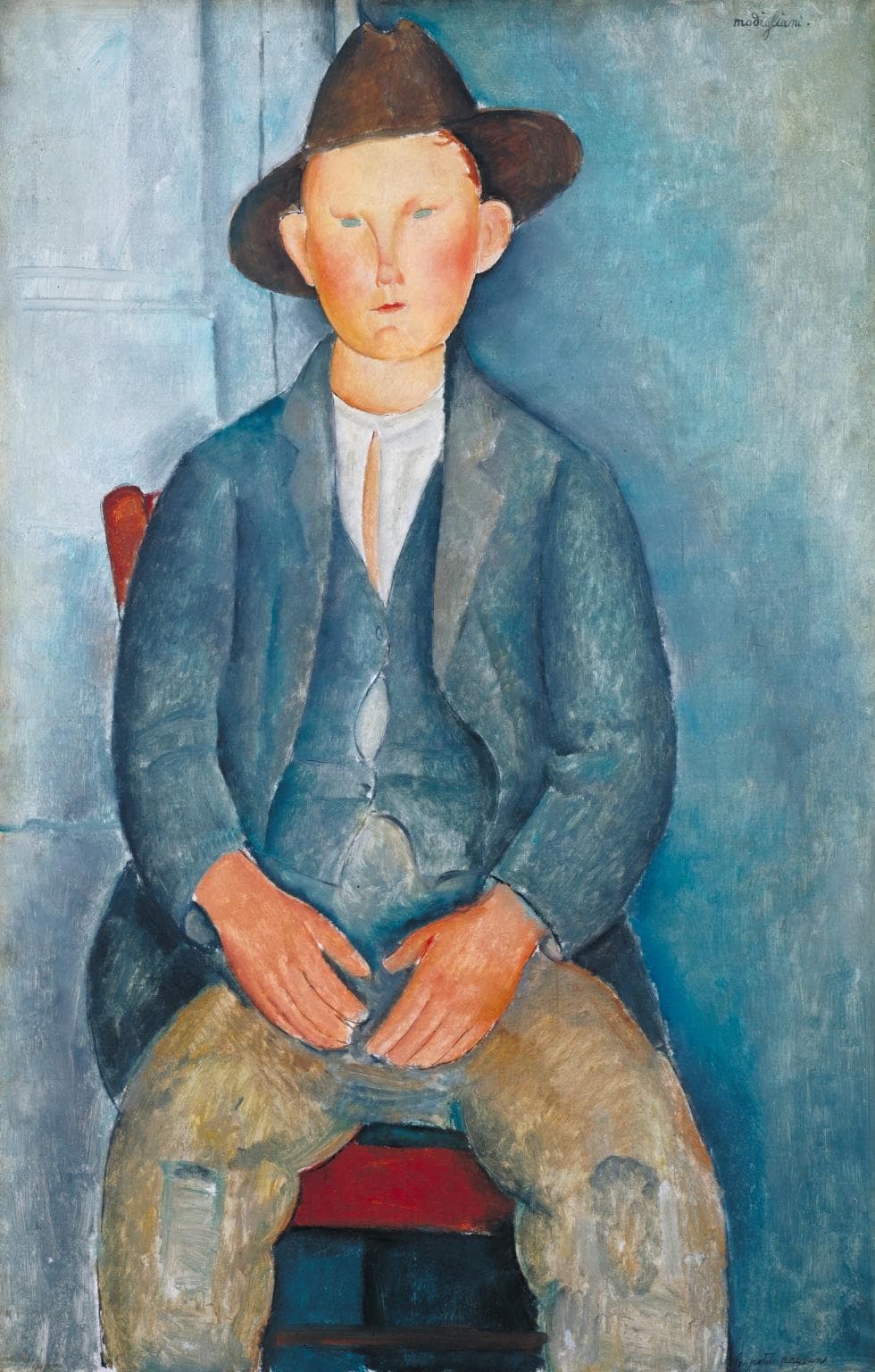
Assuming secure attribution, catalogue‑raisonné acceptance and good condition, the Tate‑held The Little Peasant (c.1918) would likely realize between USD 15 million and USD 40 million if offered on the open market. This band is derived from recent high‑end portrait comparables and the premium afforded by museum provenance and published catalogue entries.
Valuation Analysis
Valuation conclusion: If The Little Peasant (Le Petit Paysan), c.1918, oil on canvas (approx. 100 × 64.5 cm), securely attributed to Amedeo Modigliani and in sound condition, were to be offered on the open market it would most plausibly fall in the USD 15,000,000–40,000,000 range. The estimate rests on direct comparables from major houses for Modigliani portraits of the 1916–1919 period and the painting’s museum provenance, catalogue presence and date, which materially reduce attribution and title risk [1].[2]
Why this range: Modigliani portrait prices cluster depending on quality, provenance and exhibition/literature history. Recent sales such as Portrait of Paulette Jourdain (Sotheby’s Hong Kong, Oct 2023) and Madame Dorival (Sotheby’s New York, May 2022) demonstrate that high‑quality, well‑provenanced portraits from the late 1910s routinely achieve mid‑teens to mid‑thirties of millions in major sales rooms [2][3]. A documented, museum‑held canvas from 1918 sits comfortably among those comparables and thus commands a premium relative to privately held or poorly documented works.
Upward and downward drivers: The top of the band (≈USD 40M) would be reached only if the painting is demonstrably an exceptional picture for Modigliani—striking pictorial presence, first‑rate condition, broad exhibition history and prominent catalogue‑raisonné and monographic citations. The lower end (≈USD 15M) applies to genuinely authentic works that are solid but not exceptional in composition or condition, or that lack a high‑impact exhibition or literature history. Significant conservation issues, large-scale overpainting, or any provenance gaps (especially wartime provenance concerns) would depress value materially.
Market context and liquidity: Modigliani remains a blue‑chip Modern name: top nudes and portraits can set very high benchmarks (the artist ceiling was established by the Nu couché sales) while a two‑tier market means that only the rarest, freshest, best‑provenanced portraits receive headlining prices at auction [5]. Regional demand and sale venue also matter — examples of high results in Hong Kong, Paris and New York show that strategic sale placement can influence price achievement [2][3][4].
Practical note: The Little Peasant is in public collection ownership (presented to Tate in 1941), so it has no recent public‑sale history; museum ownership is strong provenance but makes market realization hypothetical unless a deaccession occurs [1]. For any formal sale process the owner should obtain a current conservation/technical report, confirm catalogue‑raisonné entries, and consult major auction house specialists to refine the estimate and the optimal sale strategy.
Key Valuation Factors
Art Historical Significance
High ImpactThe Little Peasant dates to c.1918, the mature Paris portrait period when Modigliani developed the elongated heads and simplified planes that define his marketable oeuvre. While not widely cited as one of the handful of canonical single masterpieces, a dated, well‑executed portrait from 1918 carries substantial art‑historical weight because it sits within the artist’s most collectible phase. Museum ownership and catalogue citations increase its academic importance and attractiveness to institutions and high‑end private collectors, translating into stronger market interest and bidding when compared with undocumented studio works.
Attribution & Catalogue Raisonné
High ImpactIn the Modigliani market, formal acceptance in the principal catalogue raisonnés and endorsement by recognized scholars materially reduces buyer risk and elevates price expectation. A secure catalogue entry confirms authenticity, date and often provenance or exhibition history. Works lacking clear catalogue‑raisonné documentation face discounting or reluctance from major houses to offer them in high‑estimate sales. For The Little Peasant, existing catalogue citations and published illustrations (where present) are therefore a primary value driver.
Provenance & Museum Ownership
High ImpactProvenance—here a direct chain through Léopold Zborowski, early gallery exhibition and subsequent acquisition by Hugh Blaker with presentation to Tate in 1941—provides title security and reduces litigation and authenticity risk. Museum ownership is one of the strongest provenance signals; it typically enhances market confidence and a work’s marketability. That said, museum ownership also makes actual market availability unlikely without formal deaccession, and if a sale is contemplated the public provenance will attract strong institutional and private interest.
Condition & Conservation
Medium ImpactCondition is a determinative commercial factor: stable original paint, minimal retouching, and well‑documented conservation history preserve value; conversely, heavy restorations, relining, inpainting losses and structural instabilities can reduce bids materially. Technical analysis (X‑ray, IRR, pigment tests) can both confirm period materials and identify interventions; a clean technical dossier tends to increase buyer confidence and support higher estimates. A formal condition report is therefore essential before any market engagement.
Market Comparables & Demand
High ImpactRecent auction comparables for Modigliani portraits (mid‑2010s through 2025) show realized prices clustering in mid‑teens to mid‑thirties of millions for well‑provenanced, museum‑quality works. Regional auction hubs and the ‘fresh‑to‑market’ effect can lift prices, while a general flight‑to‑quality dynamic concentrates demand on a small cohort of blue‑chip works. These dynamics underpin the USD 15–40M band for a Tate‑provenanced, c.1918 portrait—comparables provide the concrete market anchors for the estimate.
Sale History
The Little Peasant has never been sold at public auction.
Amedeo Modigliani's Market
Amedeo Modigliani is a blue‑chip Modern artist: his highest‑quality nudes and portraits achieve the market’s strongest prices and occasionally set national or global records. The artist’s market is highly stratified—exceptional, well‑documented canvases command seven to eight figures, while drawings, small studies and works with provenance or condition questions trade at substantially lower levels. Demand remains concentrated among major collectors and institutions, and prices are highly sensitive to provenance, catalogue‑raisonné status and condition.
Comparable Sales
Nu couché (Reclining Nude), 1917–18
Amedeo Modigliani
Signature masterpiece from the same 1917–18 period; establishes the artist's market ceiling and demand for top-tier works.
$170.4M
2015, Christie's New York
~$233.5M adjusted
Portrait of Paulette Jourdain, c.1919
Amedeo Modigliani
High‑value, dated portrait from the same era (c.1919); a top recent portrait sale showing strong demand for museum‑quality Modigliani portraits.
$34.8M
2023, Sotheby's Hong Kong
~$36.2M adjusted
Madame Dorival, 1916
Amedeo Modigliani
Characteristic dated portrait (1916) sold at a major house — a useful mid‑market portrait comparator for period, scale and commercial interest.
$17.6M
2022, Sotheby's New York
~$19.0M adjusted
Elvire en buste
Amedeo Modigliani
Strong 2025 Paris result for a portrait/bust from the same period — shows regional/top‑lot strength and pushes pricing for museum‑quality portraits.
$31.3M
2025, Sotheby's Paris
Raymond, 1915
Amedeo Modigliani
Earlier‑date portrait sold in the same Paris sale series (2025); a lower‑tier portrait result useful for the lower bound of comparables.
$12.4M
2025, Sotheby's Paris
Current Market Trends
Current market conditions show a two‑tier dynamic: top, museum‑quality Modigliani works continue to attract competitive bids while mid‑market lots face greater selectivity. Regional hubs (Hong Kong, Paris, New York) and fresh‑to‑market status materially influence outcomes. Increased due diligence around provenance and wartime histories has become a near‑term factor affecting buyer confidence and pricing.
Sources
- Courtauld Institute / Artist and Sitter Learning Resource (references Tate provenance)
- Sotheby's — Modigliani: Portrait of Paulette Jourdain (article & sale coverage, Oct 2023)
- Sotheby's — Lot page: Madame Dorival (May 17, 2022 sale)
- Sotheby's — Paris coverage: Elvire en buste (Oct 24, 2025 result)
- Christie's — Press material on landmark Nu couché sale (2015) — market ceiling reference
- The Art Newspaper — April 2026 restitution ruling (provenance legal risk context)